Photography terms
Last update: 06/22/2026
Our blog continues to grow thanks to you, our readers. This post may contain affiliate links, which means we can earn a small commission if you make a purchase through them, at no extra cost to you. This helps us to continue to bring you more and support our work!
After writing on this photography blog for a year and a half, I thought it was time to put together a complete glossary — or at least as exhaustive a one as possible — of the basic definitions in photography. In my articles, I often use terms that can sound fairly obscure at first: ISO, depth of field, aperture, macro, hyperfocal distance, and so on. In short, plenty of photography terms that may seem a little complicated when you are just starting out.
I also regularly cover the basics of photography on this blog. Even so, I do not think I can explain every technical term in detail in separate articles. Some are worth knowing and mastering, such as exposure and the three settings that control it, while others are more secondary and can be considered minor notions in some ways.
So this article will not be exciting in the literal sense of the word. It is more of a large photography dictionary you can use as a reminder, or as a reference if certain concepts are still unclear when you are new to photography. The goal is to summarize notions, techniques and vocabulary with the simplest possible definitions. I will also include common photography jargon you may come across on forums, blogs or photography websites in general. Everything is listed in alphabetical order so you can find your way around more easily. Some terms are missing, and some definitions will become more precise over time. Let’s go!



Photography terms
Adapter ring
This camera accessory allows you, for example, to use a filter with a different thread size from your lens. It is an economical way to avoid buying several filters for several lenses.
Angle of view
Also called the “field of view,” this is simply the angle covered by the lens, corresponding to the visible part of the image. It is directly related to focal length, measured in millimeters. The longer the focal length, the narrower the angle of view, and vice versa.
Aperture
This is one of the three elements of the exposure triangle, the other two being ISO and shutter speed. Aperture is often associated with a lens through its “maximum aperture.” The wider the aperture, the more light reaches the sensor.
Aperture priority
This is a semi-automatic camera mode found on cameras that allow you to control exposure settings. The photographer chooses only the aperture, and the camera handles the ISO and shutter speed.
APS-C
This refers to a camera sensor format used in DSLR and mirrorless cameras, and sometimes in advanced compact cameras. It describes a sensor smaller than a full-frame sensor, usually around 23 x 15 mm.


Artifact
This is a defect visible in an image, often caused by excessive compression, especially in JPEG files, resulting in degraded image quality.
Autofocus
This is the system that allows you to focus on a subject automatically. There are several types, depending on the camera.
Autofocus point
These are the small red dots or markers that appear in your camera’s viewfinder. They determine the area where the camera will focus. They are also known as focus points or focusing points.
Background
This is the area behind the main subject being photographed. Depending on several parameters, especially the chosen aperture, focusing distance and focal length, the background may appear blurred or sharp.
Backlight
In a backlit photo, the subject is positioned between the light source and the camera. The result often creates a silhouette or shadow-like effect.
B / “Bulb” mode
This is a special mode that lets you take photos with exposure times that are not preset in advance. You use this mode to decide the exact exposure time yourself. Photos lasting several minutes, or even several hours, can be taken in “B” or Bulb mode.

Blue hour
This is the short period of time just after sunset or just before sunrise. The blue hour does not last long, but it allows you to capture cooler, softer images while the sky is filled with blue tones.
Body
This is the part that, together with a lens, forms your camera. You can buy a body alone, meaning without a lens, or as a kit sold with a lens. A body alone, as you might guess, does not let you take photos without a lens.
Bokeh
This technical term refers to the out-of-focus background or foreground in your images, as well as the quality of that blur. It can be soft, nervous, creamy, grainy, and so on. This blur is generally achieved by using a wide aperture, such as f/1.4.
Bracketing
This technique allows your camera to take the same photo at several different exposure values. Very often, the goal is to merge these photos in post-processing to create a single final image. HDR is the most common example.
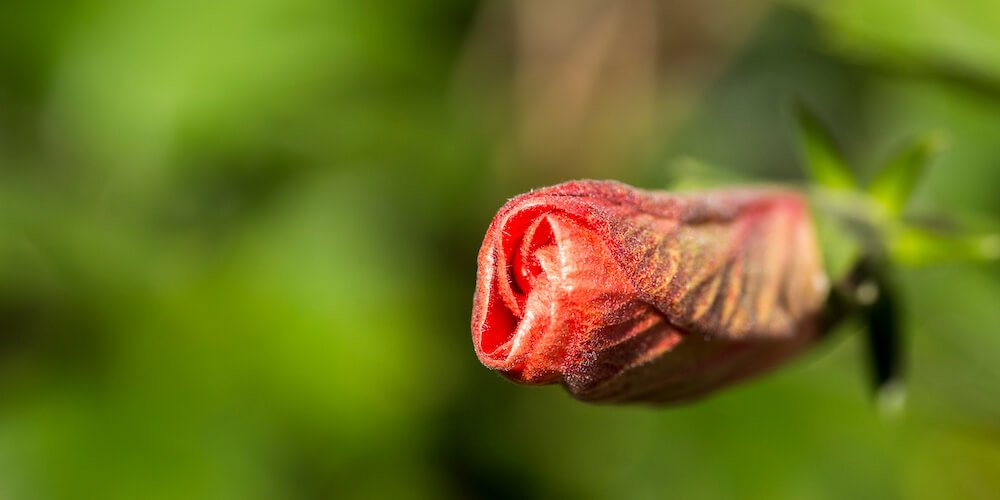

Mastering bokeh in photography is one way to clearly improve your shots.
Bridge
A type of camera positioned between a point-and-shoot camera and a DSLR. You usually get some manual controls, a long-range zoom and a viewfinder, but you cannot change lenses.
Bright (lens)
A lens with a very wide maximum aperture, such as f/1.4.
Burned / burnt
In photography jargon, this describes an image, or part of an image, whose brightness is too high, sometimes making it completely white. No detail is visible in this so-called “burnt” area.
Burst rate
This is the number of consecutive shots a camera can take. When using this mode, images are temporarily stored in buffer memory before being transferred to your memory card.
Camera shake
This is blur caused by the movement of the camera or lens while taking the shot. Basically, you shook or slightly moved the camera while capturing the photo.
Camera mode
These are the automatic and semi-automatic modes found on most advanced cameras, including DSLRs, mirrorless cameras and point-and-shoot models. The most common are Auto, Shutter Priority, Aperture Priority, Program and Manual.
Chromatic aberration
This is an optical defect found on some camera lenses when they fail to focus all colors at exactly the same point. In practice, on a high-contrast photo, you may see colored fringes or halos along the border between two contrasting areas, such as a tree against a white sky.
Color space
A color space defines the range of colors that can be displayed or exported in an image. The most common one for the web is sRGB, while Adobe RGB and ProPhoto RGB offer wider color ranges and are often used for printing or advanced post-processing.
Color temperature / Kelvin
Color temperature, measured in Kelvin (K), describes the color of light, from warm tones to cooler blue tones. It is closely linked to white balance and helps you correct or deliberately adjust the overall color cast of a photo.
Composition
You can think of it as the art of highlighting one or more subjects in an image according to visual rules or principles.
Crop
The act of trimming part of an image during post-processing on a computer.


Cropping an image can be useful, for example, if the original composition was not ideal.
Crop factor
This describes the proportion of a sensor’s size compared with a full-frame camera, historically based on 35mm film. Each brand uses a different crop factor. For example, Canon uses a 1.6x crop factor on its APS-C bodies, while brands such as Nikon and Sony use a 1.5x ratio.
To give you an example, if you use a 50mm lens on a Canon 6D, which has a full-frame sensor and a 1x crop factor, you get the equivalent field of view of a 50mm lens. But if you use that same 50mm lens on a Canon 90D, an APS-C body with a 1.6x crop factor, you get the equivalent field of view of an 80mm lens on full frame, so a tighter framing.
Definition (of an image)
This is simply the number of horizontal and vertical pixels in your image.
Depth of field
This is the area of sharpness in your photo. We talk about a large depth of field when the image is sharp throughout, and a shallow depth of field when parts of the image are blurred -> Here is our full article on depth of field! You can change your DOF by modifying your aperture, getting closer to your subject, changing your focal length, or using a different camera sensor.
Desaturate
The process of removing colors from a photo, either partially or completely, while keeping its luminosity.
Diaphragm
This is the mechanism inside a camera lens that changes the lens aperture. It allows more or less light to enter and can also help blur backgrounds.
Diffraction
This is a phenomenon that affects every lens at very small apertures. It also depends on your camera sensor, because diffraction appears earlier on smaller sensors than on full-frame sensors, for example on a Micro Four Thirds sensor. In practice, the smaller the aperture you use, the more your image can become slightly soft. The “sweet spot” is the aperture at which your lens delivers its best image quality and sharpness.
Distortion
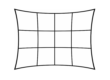
This is an optical defect found on some lenses, especially wide-angle and ultra-wide-angle lenses. Horizontal or vertical lines in your photos may appear bent. There are three types of distortion: barrel, pincushion and mustache, or wavy, distortion. You should also know that some lenses are designed to create distortion naturally, such as fisheye lenses.
DOF
Abbreviation for depth of field. You will often see it used on photography forums.
DSLR camera
A DSLR is a “digital single-lens reflex” camera. Along with mirrorless cameras, it is one of the camera types most commonly used by photographers. A DSLR has a mirror inside the body. Light passing through the lens is directed to an optical viewfinder.
Dynamic range
This can be understood as the range of luminance between the lightest and darkest tones in an image.

Exposure compensation
A camera function that allows you to adjust the brightness of your image. You can choose to deliberately overexpose or underexpose the image.
EV
Exposure value, also known as a stop. It is a way of measuring the exposure of your image.
EXIF
This is information about your image stored at the time of shooting. It contains the key settings used, such as aperture, shutter speed, ISO, and so on.
Exposing to the right (ETTR)
A photography technique that consists of exposing your photo slightly brighter. The main goal is to avoid losing information in the shadow areas of your image. It also gives you more room for adjustment in post-processing.
Exposure
This is the amount of light in an image. It is determined by the three parameters of the exposure triangle: ISO sensitivity, aperture and shutter speed. We talk about underexposure and overexposure. Read our full article on exposure in photography.
Exposure time
Also known as shutter speed, this is the time it takes to capture a photo, measured in fractions of a second, seconds or minutes. It is part of the exposure triangle. Below a certain shutter speed, handheld photography becomes impossible without blur.
Focal length
This is an optical property of a lens, measured in millimeters. It measures the distance between the camera sensor and the optical center of the lens. Focal length determines the angle of view of your shot.
Foreground
Unlike the background, this is simply the area in front of your subject. You can choose to blur the foreground for an aesthetic effect, for example.
FPS
Also known as “frames per second,” this determines how many images a camera can shoot per second.
Framing
The act of placing a subject within a scene through the camera viewfinder. You can also change the image orientation, using either vertical or horizontal format. Framing contributes directly to image composition.
Filters
Accessories that are more or less essential, depending on who you ask, and that create specific effects while shooting. The main ones include polarizing filters, neutral density filters (ND) and graduated neutral density filters (GND). Personally, I would rather use them in the field than spend too much time correcting things on a computer in post-processing.
Flare
This is stray light caused by an optical behavior of the lens. It can appear as colored haze, blur or occasional spots.
Flash
A system that can be built into the camera body or used externally, such as a speedlight or external flash, to artificially illuminate a scene while shooting.
Focus breathing
Focus breathing is the slight change in framing or angle of view that can happen when a lens focuses from one distance to another. It is especially noticeable in video, but can also matter in focus stacking or precise framing.
Focus stacking
A technique that consists of taking several photos of the same scene with different focus points, then blending them in post-processing. It is often used in macro, landscape or product photography to obtain a greater depth of field.
Focusing
The act of controlling the sharp area of your image. It can be done manually or automatically with autofocus.
Full frame
A term used for full-frame sensors, measuring 24x36mm. These are generally used by advanced amateurs and professionals. They often offer better performance, especially at high ISO, improved noise management, or a larger and more capable autofocus system.
Graduated neutral density filter
Also known as a GND filter, for “graduated neutral density,” it is mainly used to compensate for a difference in brightness between the foreground, often darker, and the background of a scene, usually a brighter sky.
Golden hours
Also known as “magic hours,” this term refers to the soft light shortly before sunset and just after sunrise. The softer tones and light make it easier to create beautiful images.
Highlights
These are the brightest areas of your image, just before pure whites.
HDR
Abbreviation for “High Dynamic Range.” This is a photographic technique that consists of merging several images of the same scene taken at different exposures. The goal is to obtain a final image with a balanced exposure across the whole scene. When pushed too far, this technique can almost look like a drawing.
High key
A photographic technique in which bright and white areas are deliberately emphasized. The opposite is called “low key.”
Histogram
This is a visual, graph-like representation of the brightness of your image. Once you know how to read it, you can quickly identify the different exposure zones in the image.
Hyperfocal
A rather intimidating term that defines the ideal focusing distance, based on the focal length and aperture used, to keep the whole image acceptably sharp. The calculation is fairly complex, but it is now done directly by apps.


Image stabilization
This is a feature found on many camera lenses and, increasingly, on camera sensors, especially in recent mirrorless cameras. Image stabilization is very useful in low light or when using a long focal length. It can usually give you around 3 to 6 stops of compensation, allowing you to use a slower shutter speed without ending up with a blurry image.
Intervalometer
This is an accessory that allows you to take pictures at regular intervals. Time-lapse videos are often shot with this type of accessory.
ISO
Also known as “ISO sensitivity,” it is the sensor’s ability to capture light from a scene. The higher the ISO, the more light the sensor effectively captures. Be careful, though: high ISO values can generate digital noise.
JPEG
This is the classic image format produced by your camera. It is an image that has already been processed by the camera. RAW, by contrast, is a raw format, as its name suggests.
Low angle shot
This is simply an image shot from a low position, usually below eye level, looking upward.
Low light
This refers to the darkest, least illuminated areas of your image — in other words, the shadow areas. It can also describe shooting conditions, for example at sunrise or sunset, when the light is low, as in “this lens is perfect for shooting in low light.”
Lens extenders
Also known as teleconverters (TC), these camera accessories are placed between the lens and the camera body to increase focal length. There are several types of extender, usually 1.4x and 2x.
Live view
This is an on-screen viewing mode found on some cameras, similar to what you see on a simple point-and-shoot camera.
Long exposure
A photographic technique based on shooting with a very slow shutter speed. Exposure times can range from a few seconds to several minutes, or even several hours. This technique is particularly used for seascapes, waterfalls, merry-go-rounds or stars. Pushed to its extreme, it can even make passers-by disappear from a scene.
Low key
A technical term, the opposite of high key, referring to an exposure deliberately darkened to emphasize a particular mood or atmosphere in a scene.
Lightroom
A very well-known post-processing software program used to edit photos, especially from RAW files before exporting them to JPEG format.
Memory card
An essential accessory for saving photos in your camera. There are several types, the best known being SD, SDHC and CF, or CompactFlash, cards.
Mirrorless camera
This is the main modern rival to DSLR cameras. It is a camera with no mirror mechanism. Mirrorless cameras have some advantages over DSLRs, and vice versa. We wrote a full article on choosing a DSLR vs mirrorless camera.
Minimum focusing distance
The shortest distance at which a lens can focus on a subject. If you get closer than this distance, the lens will no longer be able to focus correctly. It is an important specification for macro, close-up photography and tight portraits.

Motion blur
This is blur caused not by the photographer, but by the subject being photographed. For example, it can be caused by a passing car or a walking pedestrian. In that case, the shutter speed is too slow for the movement.
Megapixel
This is the unit used to measure the size of your images. It is also a good selling point used to make people believe they necessarily need “more megapixels” to take beautiful photos. If you do not print your photos, or only print them in standard sizes, there is no point in chasing more and more megapixels.
Macro photography
A field of photography focused on capturing small to very small subjects up close, such as insects, flowers, drops of water, and so on.
Millimeters
This is the reference unit for focal length. When we talk about a 70-200mm lens, it means the focal length varies from 70mm to 200mm. The longer the focal length, the more you can zoom in without physically moving closer.
Manual mode
This is the trickiest camera mode when you are learning photography. You need to fully understand shutter speed, ISO and aperture before using it comfortably.

Noise
This is a phenomenon that appears in digital images as artifacts or colored pixels. It is generally caused by ISO sensitivity, ambient light, sensor size, or a combination of these factors.
ND filter
Also known as a neutral density filter, this is mainly useful for long exposures. It blocks part of the light reaching the sensor, allowing you to increase the exposure time while shooting.
Opacity
A technical term often used for filters. It describes the level of transparency of the filter. Filters can be more or less opaque, or dark. For example, an ND1000 filter is almost completely black.
Overexposure
An image whose exposure value is higher than it should be. White areas with no detail, often called “burned” areas, appear in the image.
Panoramic
An image with a wide width-to-height ratio. It is often two to four times wider than it is tall. This technique is frequently used in landscape or architectural photography.
Point-and-shoot camera
A small camera type that is usually inexpensive. However, image quality is often limited compared with DSLR or mirrorless cameras, mainly because of the very small sensor size. That said, some advanced point-and-shoot cameras can be very expensive and may even use APS-C or full-frame sensors.
Polarizing filter
Also known as a polarizer, this is an essential filter for many landscape photographers. Among other things, it can enrich colors, increase contrast and saturation, reduce reflections and cut through distant haze.


The polarizing filter is one of the most useful filters for increasing contrast and saturation while shooting.
Post-processing
A term referring to editing an image on a computer after it has been shot, using specialized software.
Prime
This describes a lens with a fixed focal length, such as 14mm, 85mm or 300mm. Prime lenses are often faster, lighter and smaller than zoom lenses.
RAW conversion
RAW files are native, unprocessed camera files, unlike JPEGs. RAW conversion is the process of converting this type of file into a standard image format, such as JPEG. Software programs such as Photoshop and Lightroom are among the best known for this type of processing.
RAW
A digital raw image format. It is the digital equivalent of a film negative. Unlike JPEG, the file has not already been processed. You therefore need post-processing software to process the image manually.
Rule of thirds
This is a basic principle of photographic composition: placing subjects along imaginary lines that divide the image into thirds, both horizontally and vertically.
Sensor
An electronic component in your camera that transforms light into information, allowing the colors and tones of each point in the image to appear. It is the digital equivalent of film.

Here is an example of a lens: the excellent Canon 85mm f/1.8, with very good value for money for portrait photography! – More details on Amazon
Sharpness
A notion that describes the perceived clarity of an image. We talk about a sharp image when it appears very detailed to the naked eye.
Shadow clipping / blocked shadows
This happens when the darkest parts of an image become completely black and lose all usable detail. On a histogram, this often appears when the graph touches the far left edge.
Shutter
This is a small device inside the camera that allows light to reach the sensor for a specific amount of time in order to capture an image.
Shutter speed priority
Another semi-automatic camera mode that allows the photographer to choose the desired shutter speed for a scene. The camera then chooses the other settings, such as aperture and ISO, to expose the scene correctly.
Stop (F-stop)
A technical term generally related to aperture. We often talk about an “aperture stop” when opening or closing the diaphragm, for example moving from f/5.6 to f/4. Opening by one stop lets twice as much light reach the sensor. The term is also used for shutter speed and ISO sensitivity.
Soft (image)
An image that does not look very sharp to the naked eye. This is often related to the lens used and its optical quality.
Stabilization
A system built into some camera lenses or camera bodies. It reduces the risk of blur caused by camera shake by allowing you to use a slower shutter speed. Depending on the stabilization system, you can gain several stops.
Sweet spot
The aperture range where a lens usually delivers its best image quality, often with the best balance between sharpness, contrast and limited optical defects. It is generally not at the widest or smallest aperture.
Trigger
This is simply the button you press to take a picture. If autofocus is active, pressing it halfway will activate focusing through the autofocus points.
Underexposed
This refers to an image whose exposure value is lower than necessary. The result is an image that is too dark.
UV filter
This is essentially a protective filter that absorbs ultraviolet (UV) light. UV filters are used less and less in photography.
Telephoto lens
A type of lens also commonly known as a long lens. It can be either a zoom or a fixed focal length lens, such as a 300mm. This type of lens allows you to capture distant subjects without moving closer.
Tripod
A tripod can be used when the shutter speed, or exposure time, is too slow for handheld shooting. It is simply an accessory that lets you set the camera down and take pictures at very slow shutter speeds.
UWA/Ultra-wide angle
This is a type of lens with a very wide angle of view. Its field of view is even wider than that of a standard wide-angle lens. Be careful with composition when using it, as it can distort elements in the image.


The Tokina AT-X 11-16 PRO DXII, my first wide-angle lens on my APS-C camera – More details on Amazon
Vignetting
A darkening of the corners or edges of an image compared with the center. It can be caused by the lens, a filter, a lens hood, or simply by shooting at a very wide aperture.
White balance
This is the system that allows you to keep color balance consistent in an image. By default, it is automatic, but you can adjust it according to the scene you are about to shoot. In RAW format, white balance is often adjusted in post-processing.
White clipping / clipped highlights
This happens when the brightest parts of an image become pure white and lose all detail. On a histogram, this often appears when the graph touches the far right edge.
Wide-angle
A generic term for a camera lens with a wide angle of view. We can generally consider a lens to be wide-angle below 24mm on full frame, or below around 18mm on APS-C. This type of lens offers a very wide field of view and is perfect for landscape photography, for example.
Working distance
The practical distance between the front of the lens and the subject when focusing. It is especially important in macro photography, because a longer working distance makes it easier to light the subject and avoid frightening insects or casting shadows.

Zoom
This describes a lens with a variable focal length, such as a 70-200mm or 16-35mm. With a zoom lens, you can zoom in and out without moving from where you are.
Well, I’ll stop here for now. There are already plenty of terms to remember, and I think this is a good starting point in photography. Do you see any other useful terms you would like me to add to this list? Clearly, not everything is here, and I have certainly forgotten a few things. If you are just starting out, come and have a look at the articles about photography basics.
Speak to you soon,

Written by Sylvain PONS
I've been passionate about photography since 2010, learning as I went along. Today, I dedicate myself to guiding others in their choice of camera gear and sharing a variety of tips to improve their photography skills.
Despite our care, a mistake may have slipped into this article. If you find any, please don't hesitate to let us know so we can correct it as soon as possible and keep our information up-to-date!