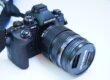
Nikon APS-C mirrorless cameras
Last update: 06/16/2026
Our blog continues to grow thanks to you, our readers. This post may contain affiliate links, which means we can earn a small commission if you make a purchase through them, at no extra cost to you. This helps us to continue to bring you more and support our work!
If you follow this blog, you may have already seen my article about Nikon full-frame mirrorless cameras using the new Nikon Z mount. Today, we are focusing on another part of Nikon’s lineup: APS-C mirrorless cameras. Nikon’s APS-C Z range now includes several bodies, including the Z50, Z fc, Z30, and Z50 II, all using the same Z mount as the brand’s full-frame mirrorless cameras. This article will of course be updated if Nikon releases other APS-C mirrorless cameras. If you are still unsure about your purchase, I recommend taking a look at the page listing all the Nikon Z lenses available for both APS-C and full-frame cameras.
In fall 2018, Nikon followed its new full-frame cameras, the Nikon Z6 and Z7, with a more modest sensor format using the same Z mount: the Z50. Unlike the Z6 and Z7, which are equipped with full-frame sensors, this entry-level camera uses an APS-C sensor. Nikon clearly wanted to expand its new mirrorless ecosystem with an APS-C camera using Z-mount lenses, although the choice of lenses designed specifically for APS-C was still very limited at the time. In summer 2021, Nikon released another camera, the Nikon Z fc. As you probably already know, I do not usually go into every technical detail of a camera body. Instead, let’s look at what the Z50 offers, how it differs from Nikon’s other mirrorless cameras, and what Nikon left out to offer a good value-for-money camera. The Z50 is now positioned to challenge established competitors such as Fujifilm’s X-T30 or the Canon EOS M6 Mark II.
In summer 2022, Nikon expanded the range again and focused on young content creators starting out with a new APS-C mirrorless camera: the Nikon Z30. This was the third camera to use the Z mount.
If you are still hesitating about making the leap into mirrorless cameras, it may be worth looking at what other brands offer. Canon has announced its first two Canon RF APS-C cameras.
- No updates at the moment
If you want to compare the cameras on this page with other brands in detail, we've created our own free comparison tool, so don't hesitate to try it out!
| Nikon APS-C mirrorless cameras | Release date |
|---|---|
| Nikon Z50 II | November 2024 |
| Nikon Z30 | July 2022 |
| Nikon Zfc | June 2021 |
| Nikon Z50 | October 2019 |
The table opposite shows the release dates for Nikon’s APS-C mirrorless cameras, starting with the Nikon Z50 in October 2019.
Nikon APS-C mirrorless cameras
If you are still unsure which body to choose, here is our complete guide to help you choose your camera. It covers the main criteria to consider before making the right choice.
Nikon Z50 II
Released in November 2024, the Nikon Z50 II marks a significant evolution in Nikon’s APS-C mirrorless range. It keeps the same core features as its predecessor, the Nikon Z50 released four years earlier, including a 20.9 MP CMOS sensor, a native ISO range of 100 to 51,200, and a 2.36-million-dot OLED electronic viewfinder. However, it also brings several notable improvements. These include the new EXPEED 7 processor, also found in the professional Z8 and Z9, which promises better noise management and much faster, more accurate, and more efficient autofocus. Although the sensor is not stabilized, the camera has a weather-sealed design, making it suitable for a wide range of shooting conditions.
On the back, a fully articulated 8 cm touchscreen with 1.04 million dots replaces the previous tilting screen, making framing easier, especially for vloggers and videographers. Connectivity has also improved with UHS-II SD card support and a USB-C port for charging and data transfer.

When it comes to video, the Nikon Z50 II brings the range up to date with 4K UHD at 60 fps, although with a slight crop. Content creators will also appreciate uncropped 4K at 30 fps and Full HD at 120 fps for smooth slow motion. Nikon has also included advanced features such as N-Log, RED LUT compatibility for professional color grading, and a dedicated focus mode for product presentations.
Although it weighs slightly more than its predecessor, 550 g versus 470 g, and is a little larger, the Z50 II remains compact and easy to carry. Its new EN-EL25a battery offers improved battery life according to CIPA standards, which is useful for longer shooting sessions. The Nikon Z50 II is an excellent choice for photographers and videographers looking for a capable, affordable APS-C hybrid camera.
Nikon Z fc
Released in summer 2021, the Z fc was the second Nikon APS-C camera to use the Z mount. Nikon continued developing its APS-C mirrorless range with a camera closely related to the Z50, but housed in a vintage-inspired body reminiscent of the brand’s classic FM and FE film cameras. This model clearly targets a younger audience that cares about the style of the camera, especially young vloggers.
The Z fc is built around the same 20.9 MP sensor as the Nikon Z50, but adds dedicated dials for ISO, shutter speed, and exposure compensation to match its retro styling. Like the Z50, its ISO sensitivity ranges from 100 to 51,200, and its burst rate reaches 11 frames per second in RAW. For video, the Z fc records uncropped 4K at up to 30p and Full HD at 120p.

It also brings a few new features that prevent it from being just a restyled Z50. First, it adds real-time eye-detection autofocus in video mode. For stills, face and eye autofocus are easier to control. Second, it has a fully articulated screen. The Z fc was the first Z-mount camera to feature a fully articulated rear LCD. In terms of connectivity, USB-C power delivery has also been added. Finally, firmware updates can be installed from a smartphone.
The Nikon Z fc successfully captures the design spirit of the company’s film cameras. Like the Z50, it is not the best camera in its class, but it remains a solid and capable option for photography and vlogging, with very good value for money.
Nikon Z30
Released in July 2022, the Nikon Z30 is the third APS-C mirrorless camera in the series, after the Nikon Z50 and Nikon Z fc, and it targets vloggers and content creators even more directly.
Like its two predecessors, the Z30 offers similar build quality and very close photo and video capabilities. The main difference is the body design, because there is a camera shape for everyone.
Inside this small 405 g body, you get the same 20.9 MP sensor as Nikon’s other APS-C mirrorless cameras, paired with the EXPEED 6 processor. ISO sensitivity still extends from 100 to 51,200, and burst shooting reaches 11 fps. Eye, human face, and pet detection have been improved. For video, the Z30 records 4K UHD at 30p, while 120 fps footage is limited to Full HD. One big improvement over the Z50 and Z fc is that the Z30 has no 4K recording time limit. Connectivity includes an HDMI port and a microphone input.

The body looks very similar to the Z50, but without the viewfinder and with a new front tally light. From its bigger sibling, it keeps a comfortable grip and a well-thought-out dual-dial control interface. The buttons have been rearranged to make the REC button easier to reach when the camera is held facing you. From the Z fc, it takes the fully articulated rear screen, which activates a self-portrait mode with simplified touch controls that can be used at arm’s length. This feature makes perfect sense given the intended audience. Another useful addition is the ability to adjust exposure compensation in auto mode.
The Z30 is the least expensive camera in the series. With its compact, viewfinder-free, video-oriented design, it offers very good value for beginner vloggers.
Previous Nikon APS-C mirrorless cameras
Nikon Z50
Here is a quick overview of the Z50’s technical specifications. While Nikon included some interesting video features on the Z6 and Z7, the Z50 is clearly more photo-oriented. The first interesting point is that this camera is built without a low-pass filter, like the Z7 and Z7 II, Nikon’s full-frame mirrorless cameras aimed primarily at photography. I will not go over the importance of the low-pass filter again, as you can refer to the dedicated paragraph in my article on Nikon full-frame mirrorless cameras. However, note that this is one of the Nikon Z mirrorless cameras without a stabilized sensor. This may discourage some people, but it is understandable that Nikon skipped certain technologies to keep the camera affordable. The body is described as weather-sealed.
In terms of photography, this camera features a 20.9 MP sensor, an ISO range from 100 to 51,200, RAW burst shooting at up to 11 frames per second, a maximum shutter speed of 1/4000, and 209 focus points. Nikon chose to place a single UHS-I SD card slot under the camera. For connections, there is a microphone jack, micro-USB, and micro-HDMI. There is no USB-C and no headphone jack. Battery life is almost identical to the Nikon Z6, at around 300 shots. As for video, the Z50 offers 4K/UHD up to 30p. For frame rates up to 120 fps, you need to switch to Full HD.
| Features | Visual |
|---|---|
|

In addition to its very reasonable price, the Z50 is compact and lightweight at 395 g compared with the Z6 and Z7. Its autofocus is also considered very responsive, it has a good burst rate, no low-pass filter, and a BSI CMOS sensor. It also includes a built-in flash.
Of course, it does not sit in the same range as Nikon’s full-frame mirrorless cameras. The sensor resolution is relatively modest at only 20.9 MP, the sensor is not stabilized, the viewfinder resolution is lower, at 2.36 million dots versus 3.6 million dots on the Z6 and Z7, and there is only one card slot under the body. The maximum shutter speed is limited to 1/4000, and the number of AF points is lower. Also note that you cannot attach a grip, the LCD screen resolution is roughly half that of the Z6 and Z7, and there is no eye detection in video. Another important point in my opinion is that the choice of lenses designed specifically for APS-C sensors remains limited in Z mount. But this should continue to evolve.
Nikon APS-C mirrorless cameras - Specifications overview
The table below summarizes the main specifications.
| Nikon mirrorless aps-c | Definition | Stab. | Weight | Dim. | Burst(electr.) | Video | Battery Life(Viewfinder) | Battery | Approx.price | Best price |
|---|---|---|---|---|---|---|---|---|---|---|
| Nikon Z30 | 20.9 Mp | NO | 0.9 lb / 405g | 128 x 74 x 60 mm | 11 fps | 4K UHD 30 fps | - | EN-EL25 | $806 | Amazon B&H |
| Nikon Z50 | 20.9 Mp | NO | 1 lb / 450g | 127 x 94 x 60 mm | 11 fps | 4K UHD 30 fps | 280 images | EN-EL25 | $1 086 | Amazon |
| Nikon Zfc | 20.9 Mp | NO | 1 lb / 445g | 135 x 94 x 44 mm | 11 fps | 4K UHD 30 fps | 300 images | EN-EL25 | $1 196 | Amazon B&H |
| Nikon Z50 II | 20.9 Mp | NO | 1.2 lb / 550g | 127 x 97 x 67 mm | 15 fps | 4K UHD 60 fps | 300 images | EN-EL25a | $1 006 | Amazon B&H |
By the way, if you are interested in this mount, we have published a full guide featuring the best Nikon Z wide-angle lenses. We mainly discuss full-frame lenses, which are more numerous, but we also mention wide-angle lenses that may be worth considering for Nikon Z APS-C cameras.
Which Nikon APS-C mirrorless to choose?
The Nikon Z50 II is aimed at photo enthusiasts looking for a versatile and affordable camera without moving to full frame, although it still lacks sensor stabilization. It is a direct evolution of the Z50 and works well for both video and a wide range of still photography thanks to its EXPEED 7 processor, faster and more accurate autofocus, and fully articulated touchscreen. With its 20.9 MP sensor, 15 fps burst rate, and weather-sealed construction, it is well suited to travel, landscape, and family photography, even if its build remains below Nikon’s full-frame cameras. For video, it offers 4K UHD at 60 fps with a slight crop. Compact, lightweight, and good value for money, it is a strong choice for beginners or as a second camera.
The Nikon Z fc combines modern performance with a retro design inspired by the brand’s film SLRs. With the same 20.9 MP sensor as the Z50 II, it offers similar image quality, but stands out thanks to its dedicated ISO, shutter speed, and exposure dials. Its fully articulated screen and effective autofocus make it a good choice for street photographers or vloggers looking for a stylish camera. Although it still lacks stabilization, its retro feel and build quality will appeal to those who value design without giving up performance.
Designed for young vloggers and new content creators, the Nikon Z30 offers an affordable and capable alternative to smartphones. Compact and without an electronic viewfinder, it features a fully articulated touchscreen that is ideal for selfie videos. With a 20.9 MP sensor, 11 fps burst shooting, and unlimited 4K UHD at 30 fps, it is well suited to longer sequences such as vlogs or tutorials. Available with a 16-50 mm zoom lens, it combines simplicity and quality, despite the lack of stabilization and headphone jack.
That brings us to the end of this page about Nikon APS-C mirrorless cameras. I hope it helped you understand the range a little better. If you are thinking about buying a Nikon mirrorless camera, you may also want to take a look at the page dedicated to Nikon full-frame mirrorless cameras.
This page will of course be updated as Nikon releases new APS-C cameras.
Feel free to let me know what you think of these cameras in the comments section.

Written by Sylvain PONS
I've been passionate about photography since 2010, learning as I went along. Today, I dedicate myself to guiding others in their choice of camera gear and sharing a variety of tips to improve their photography skills.
Despite our care, a mistake may have slipped into this article. If you find any, please don't hesitate to let us know so we can correct it as soon as possible and keep our information up-to-date!