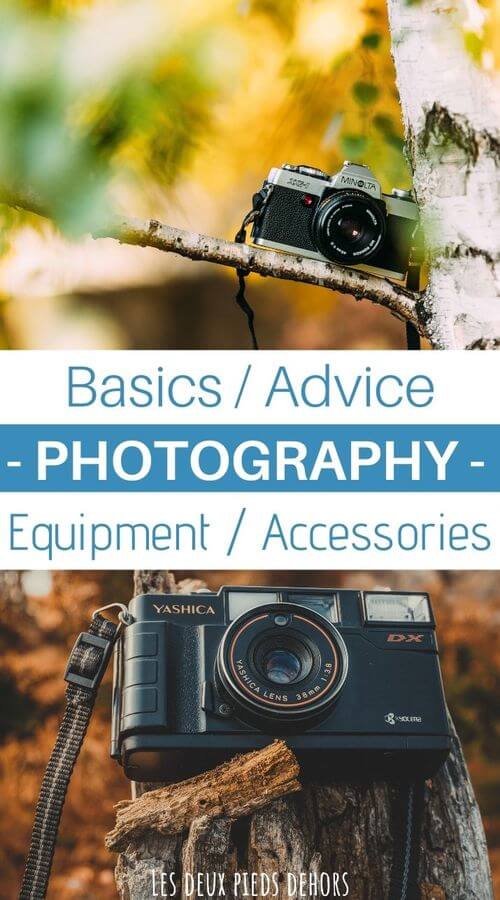
Simply click the Pinterest button or hover over the pinned photos below to share them 😆
Photography blog
WHY AND HOW?
Close
My photography blog
Let’s start at the beginning. When I came back from my trip to Southeast Asia, I already had the idea of starting a photography blog. I had started writing on a blog in 2013 to share and document my travel experiences and my passion for photography. But I didn’t jump into it right away, for lack of time, motivation, courage… I’m not quite sure.
Learning photography has been a real passion of mine for many years, ever since I bought my first digital DSLR, a Canon 500D, in 2012. As someone who loves travel and adventure, I mainly bought that first camera to take travel photos and try to capture the best of what I came across along the way. My passion kept growing, and that year in Southeast Asia was a real eye-opener. I loved taking pictures in all kinds of travel situations.
I never planned to become a professional photographer. I simply wanted to improve, learn how to shoot properly, take better photos, understand manual mode and long exposure, and learn how to post-process my images.
I had never taken a photography course or class, apart from a few tips I found online to help me understand technical terms that sounded pretty intimidating at first, such as focal length, shutter speed, hyperfocal distance, and so on…

In June 2017, I decided to create a website that brought together my two passions: travel and photography. That’s how Les Deux Pieds Dehors finally came to life! I have to admit that the beginning was a little complicated. I focused much more on the travel side of the site than on the photography side. Then, little by little, I found my way back to it. I started timidly, I must admit, in a world where there was already so much photography content online. At the beginning, I often asked myself the same question: how do you create a photography blog that makes sense when there are already so many photography techniques and tips out there? In the end, you just have to take the first step and tell yourself that it doesn’t matter if the topic already exists. I wanted to share my passion for photography and try to teach beginners in the simplest way possible.
It can feel a little unsettling when you first get started. I thought I should begin with the basics of photography, in other words, share my advice so people could understand the subject and learn on their own. If someone wanted to start a photography blog, I would tell them to take inspiration from existing websites, but not to focus on them too much. If you start reading everything that has already been written about landscape photography, macro photography, or wildlife photography, you may get scared and never dare to begin. The most important thing is to write, share what you write, and share your passion, even if you don’t write like Shakespeare. That’s exactly what I’m trying to do.
If you want to grow your photography or travel blog and see where it can take you, you’ll have to take the bull by the horns and roll up your sleeves. Why? Because if you want to rank at the top of Google for broad terms like depth of field, backlighting, street photography, bokeh, or exposure time, you’ll need to work hard and understand SEO (Search Engine Optimization). Honestly, without it, your chances of reaching the top of page 1 on Google for topics like landscape photography or how to choose a polarizing filter are very low…

Anyway, enough talking, I’m rambling. Let’s get to the heart of the matter: my photography blog, what it contains, and how I’ve organized it so far. During the major blog update in March 2018, I wanted to redesign the website to organize things more clearly, both for the photography section and the travel section. For photography, I divided the blog into two parts:
- The essentials for learning photography
- Choosing and using your camera gear
Below, I explain in a little more detail what you’ll find in each section.
Thank you for following along and reading this short introduction. I hope you’ll enjoy reading my photography posts. See you soon, and above all, don’t hesitate to leave a comment at the bottom of the articles if you want more details or if you notice an error or inaccuracy.
Do you want to learn photography?
FROM THE BEGINNING
Close
This is the starting point on my blog if you’re new to photography. You’re probably wondering how to take beautiful pictures or how to create stronger images. Maybe you already know a little, but you want to improve and take better photos. You’re in the right place. I’m a little obsessed with my blog, so I deliberately decided to split this first part into two sections.
The first part is simply about the basics of photography. If you know nothing about photography and want to become an amateur photographer (or even go further), this is where to start. I agree that it isn’t the most exciting part, but I’m convinced you need to understand the technical terms of photography if you want to improve. That’s my logic. How can you expect to take good pictures if you don’t already know how to use your DSLR? If you don’t know what white balance, aperture, or shutter speed mean? If you don’t know how to focus with a focus point or use autofocus properly? I see many people who received a DSLR for Christmas or a birthday and still shoot in automatic mode years later, hoping to take beautiful pictures simply because it’s a DSLR. Frankly, photography doesn’t quite work like that.
This first part is therefore a collection of photography tips designed to help you learn the basic technical terms and definitions. For example, understanding how exposure works through its three key parameters is essential before going any further. At first, I struggled a little with writing technical photography definitions because I wanted to find the right balance between explaining things simply and going into too much detail. In general, people looking for advice online are beginners. Professionals, or people who already know the subject well, probably won’t be reading photography blogs, that’s for sure. So I do my best to publish articles on the basics and all the technical terms that come to mind. So far, the feedback has been almost entirely positive, and honestly, I’m quite happy with the result. This section isn’t complete yet, but it will continue to grow as the blog develops.

The second part of this larger section on learning photography is called “photography tips and techniques.” It naturally follows the first part on the basics. Here, we go a little further and focus more on practical photography advice for different types of shooting situations. To understand the articles in this section, you can refer back to the photography basics I mentioned above.
This is not the section where I explain different types of photography gear or accessories. Another part of the blog is dedicated to that. Here, I focus more on shooting situations and photography styles. To give you just a few examples already available on the blog:
- How to take night photos?
- How to take beautiful photos while traveling?
- The essentials for mastering long exposure
- How to take beautiful pictures of waterfalls?
- My best tips for a successful photo safari
- How to take great landscape photos?
Anyway, you get the idea, right? There are many subjects I don’t cover in detail simply because I don’t necessarily know them well enough: light painting, studio portraits, black-and-white photography, food photography, wedding photography, and so on. As things stand, I can’t write about them properly because I don’t have enough knowledge of those subjects. I’m thinking about inviting professional photographers from each field to share their advice with my readers. So, to be continued…
Choosing your camera gear
TO GO FURTHER
Close
Camera gear
This is the second major section of this photography and travel blog. You could see it as a complement to the “learn photography” section. Here, I focus on everything related to camera gear. It’s a very broad topic: I can talk about camera bags, full-frame cameras, or how to choose a lens. I also wanted to include the technical side of photography equipment. Once again, I divided it into two separate but complementary sections. This section really matters to me because I enjoy gear, reading lens tests, and learning about things like wide-angle lenses and polarizing filters, so it’s an area I know quite well.
The first section is called digital “photography equipment.” Why digital, you might ask? Simply because I grew up with digital photography, and film photography is not something I know well. At the time of writing, this section is not yet very extensive, but it will grow. Here, we talk about everything related to camera bodies and lenses, especially DSLR cameras, which I know very well. Since I don’t have a mirrorless camera, I don’t necessarily want to write about that topic just yet. For example, this section includes articles such as:
- Which is the best camera to choose for travel?
- Find the best DSLR for you.
- Which wide-angle lens should you choose, and how?
- Which lens should you choose for a trip? What gear should you take on safari?

In short, it covers everything directly or indirectly related to your camera and lenses. I’ll do my best to update the posts as new releases come out. I started with camera bodies and wide-angle lenses, but there are still many articles I need to write, such as how to choose a telephoto lens, whether to choose a prime lens or a zoom, why a 50mm lens is ideal in many situations, and so on.
The second part of this important camera gear section is called “camera accessories.” This is the area where I feel most comfortable talking about photography on the blog: everything related to camera accessories. So no, I don’t master every accessory out there, we can agree on that, but I really enjoy writing about photo filters and related gear. Filters are among the accessories I use most in everyday life and while traveling. I’d rather spend time behind my DSLR, using filters, than sitting behind my computer doing post-processing…
As a result, you’ll find many articles on different types of photo filters: ND filters, GND filters, polarizing filters, and more. Each time, I explain what they are used for, how to choose them, and how to use them. I also talk about tripods and other photography accessories…
Now, I haven’t told you my whole life story, but you know a little more about what you’ll find in the photography sections of the blog.
Sylvain
Camera gear lists
GOING EVEN FURTHER
Close
Camera gear lists
I’ll tell you a little more about what’s happening around here. I came to blogging quite late and discovered WordPress well after many other bloggers. Yet, three years after starting this travel and photography blog, I — or rather we — are still here. I must say I’m glad we focused on organic SEO rather than on the “influencer” side of things, as people call it today. In short, the passion is still there, and although I don’t consider myself a professional blogger in the strictest sense, the idea is slowly making its way.
Three years after creating this photography landing page, we’re expanding the website again with a new category dedicated to gear lists. So what will you find in this section? For now, we’ve started by focusing on camera lens lists, for both DSLR and mirrorless cameras. Not everything is available yet, because digging, researching, checking information, and building the pages takes a huge amount of time. But we sincerely hope these pages will help you and prove useful.
This category should continue to grow in the future with camera and photography accessory lists. See you soon!