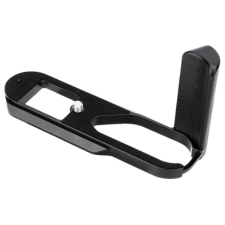
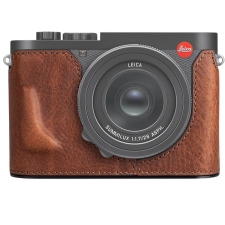
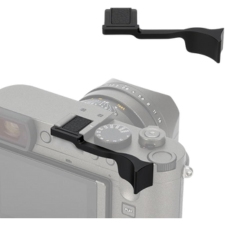
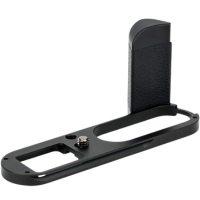
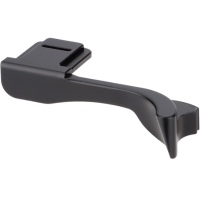
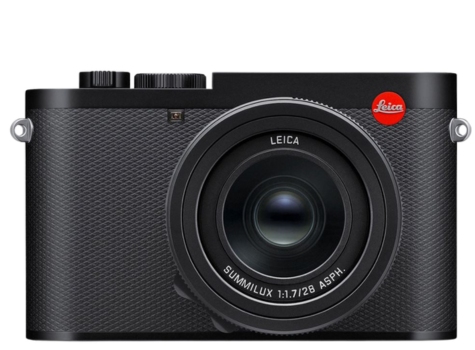
The Leica Q3 was introduced in the spring of 2023. It embodies the brand's new generation of compact experts and succeeds the Q2 with significant improvements. While retaining Leica's iconic design, this model is distinguished by its advanced technical features. It features a 60-megapixel sensor, the Maestro IV processor and the Summilux 28mm f/1.7 ASPH lens. It has a burst rate of 15 frames per second and an ISO sensitivity of up to 100,000. The Q3 also introduces cutting-edge video features, with recording options in 8K at 30 fps and 4K at 60 fps, significantly enhancing its multimedia capabilities.
This model retains the size and weight of its predecessor, ensuring aesthetic continuity while improving performance. However, autofocus tracking in burst mode is limited to 4 fps, an aspect that could limit its use by professional photographers who require greater responsiveness. Priced at €5,950 at launch, the Q3 is clearly aimed at brand enthusiasts and professionals looking for excellence in a compact format.
The Q3 is not designed for the general public, but for users who value superior construction, exceptional optical performance and outstanding image quality, while benefiting from the latest advances in video.
Launched in March 2019, the Leica Q2 is an exceptional combination of outstanding image quality and ease of use. This compact full-frame model is equipped with a 47.3-megapixel sensor and a 28mm f/1.7 ASPH. Leica Summilux lens for crisp, clear images even in low light. The electronic viewfinder combined with a touchscreen makes camera operation intuitive and photo composition easy.
Sharing is easy with Wi-Fi connectivity, despite the lack of a USB port. The Q2 also excels at video recording, capturing footage in 4K UHD at 30 fps and C4K at 24 fps, as well as offering a 1080p slow-motion mode at 120 fps. Weighing in at 718g, this camera can handle bursts of up to 10fps, ideal for capturing fast motion.
Support for an SD UHS-II card enables efficient processing of large files. Designed for photographers who demand a compact yet durable camera, the Leica Q2 will be replaced by the Q3 in May 2023, but remains the benchmark for performance and image quality in Leica's compact category.
As a photography enthusiast, I've spent a lot of time exploring, comparing and analysing these cameras' features to help you make the right choice!
This comparison may contain affiliate links, and we may earn a commission if you decide to buy your camera through our links. Of course, the price doesn't change for you. If you've enjoyed this page, it's your way of supporting our work. Thanks!
Month and year the mirrorless camera was released. A newer model often includes significant technological improvements, such as optimized noise handling, improved autofocus, broader connectivity, and cutting-edge features that can result in better image quality and a more intuitive shooting experience.
Camera mount reminder. A camera’s mount is essential because it determines compatibility with different lenses, which is crucial for adapting your gear to your specific photographic needs. It is important to carefully check which lenses are compatible with the mount to make sure you can take full advantage of your camera’s capabilities.
Camera megapixel count. More megapixels (MP) means your camera can capture more detail in each image. The main advantage of a higher MP count is the ability to make large prints and crop images more precisely without compromising image quality. However, a high MP count can also result in larger files, requiring more storage space and more processing power. In addition, to get the most out of a high-resolution sensor, you often need to use high-quality lenses.
Camera sensor size. A larger sensor, such as full frame, generally delivers better low-light performance, wider dynamic range, and overall improved image quality. This type of sensor captures more light and often provides better tonal separation. However, the benefits of a larger sensor usually come with a higher cost and bulkier gear.
In-body image stabilization. It helps significantly reduce camera shake, improve image sharpness even in low-light conditions, and shoot at slower shutter speeds without sacrificing clarity. It also makes it possible to record smoother video, giving you more flexibility and creative freedom in certain shooting situations. Thanks to stabilization, you can make better use of your camera body’s potential, even in situations where a tripod cannot be used.
A camera’s ISO range determines how sensitive its sensor is to light. A higher ISO makes it possible to capture fast-moving subjects at a faster shutter speed, or to shoot in low-light conditions without using a flash. However, increasing ISO sensitivity reduces image quality, mainly by introducing digital noise. So while high ISO performance can be useful in certain situations, it is important to find the right balance to avoid compromising image clarity.
Expanded ISO sensitivity on digital cameras is a feature that allows the camera’s standard ISO range to be pushed beyond its usual limits. This makes it possible to shoot in even lower-light conditions without relying on additional lighting, such as a flash. For example, if a camera has a standard ISO range of 100 to 31,200, the expanded ISO option could extend it to 51,200 or higher.
Number of memory card slots available in the camera. This not only increases the total storage capacity, but also provides extra data security by allowing simultaneous recording to two cards. It also makes file management easier by letting you separate different types of data, for example by saving RAW photos to one card and JPEGs or videos to the other.
Type of memory card accepted by the camera body: There are mainly two types of cards: SD and CF. SD cards are more common and affordable, making them suitable for most users, while CF cards, often used in high-end camera bodies, offer faster transfer speeds and higher storage capacity.
Camera processor: A newer processor can significantly improve several aspects of performance, such as image processing speed and autofocus efficiency. It can also enable new in-camera features, further enhancing the overall photography experience.
Camera resistance to moisture and dust. A weather-sealed camera gives you greater peace of mind when shooting in challenging conditions, such as snow, wind, sand, or rain. This lets you focus more fully on your shot without worrying as much about your gear. In typical shooting situations, however, most camera bodies will do the job perfectly well.
Total weight. A lighter camera body is often considered an advantage, as it makes shooting more comfortable over long periods, such as during photo sessions or travel. It helps reduce fatigue and makes the overall photography experience more enjoyable.
Camera body size. A smaller body is easier to store in a bag or cabinet and is generally easier to handle, although this depends on personal preference. This makes it easier to take with you anywhere without adding too much bulk.
Camera body volume in cm³. This is, of course, related to its dimensions. A smaller body volume makes the camera easier to store and will often also make it lighter. This makes carrying your gear more practical and comfortable.
Number of shots possible using the viewfinder, based on the CIPA standard. Better viewfinder battery life lets you take more photos. In real-world use, you can often capture many more images than the CIPA rating suggests, giving you greater flexibility during your photo sessions.
Number of shots possible using the LCD screen, based on CIPA testing. Better LCD battery life lets you take more photos. In practice, you can often exceed CIPA rating estimates, giving you more flexibility during your shoots.
A built-in flash, integrated directly into the camera body, can help in certain low-light situations. However, most mid-range and high-end camera bodies do not include one, giving you the option to use more powerful and flexible external lighting solutions.
Flash sync speed. A faster sync speed allows the flash burst to be synchronized with the shutter opening, properly exposing the image sensor. This is ideal for lighting backlit subjects without motion blur, and for giving you more flexibility when balancing flash with ambient light for sharper, more detailed photos.
This is the slowest minimum shutter speed available on your camera body. Most cameras offer a minimum shutter speed of 30 seconds, which can of course be exceeded by using specific camera modes. This is a less important criterion when choosing a camera body, but it can be useful in certain shooting situations.
The camera’s maximum shutter speed can be an important factor depending on the type of photography you want to do. It makes it easier to freeze motion in a scene and shoot in bright conditions with very wide apertures, without having to use ND filters, for example. This gives you more flexibility and creative control when taking photos.
Maximum number of frames per second your camera body can shoot. This speed will also depend on the size of the images being captured. A faster burst rate lets you capture fast-moving scenes in greater detail, increasing your chances of getting the perfect moment. This is especially useful for sports or action photography.
Equivalent to your camera’s temporary working memory while images are being saved to the memory card. A larger buffer lets you keep shooting in burst mode without the camera slowing down or locking up, helping you avoid missing the decisive moment. This makes it less likely that you’ll miss an important shot.
Refers to the clarity and sharpness of what you can see through the viewfinder, measured in millions of dots. The higher the resolution, the more image detail you can see, resulting in a better experience when composing and focusing your shot.
Viewfinder magnification indicates how much the image is enlarged when looking through the viewfinder. A higher magnification makes it easier to see scene details, helping with both composition and focusing.
Camera bodies can feature different types of LCD screens: tilting, articulating, or fully articulating, giving you more flexibility when framing your shots from various angles. Depending on your needs, make sure you choose a screen type that improves both your comfort and creative possibilities.
A higher resolution allows you to check your images more accurately, especially focus areas, image exposure, and composition. Depending on your needs, make sure you choose a screen with a suitable resolution to help achieve optimal results.
The larger the screen diagonal, the bigger the overall display will be. This makes it easier to review images on the spot and frame your shots while shooting. Depending on your needs, make sure you choose a screen size that improves your overall comfort of use
A touchscreen provides a faster, more intuitive experience, allowing you to change settings, navigate menus, and select precise options more quickly. It also makes focusing easier by letting you tap directly on the screen, making your shooting workflow even more efficient.
The minimum ISO sensitivity of a camera body helps reduce digital noise, improving image quality and dynamic range. It is useful for long exposures and bright lighting conditions, allowing for creative settings without the risk of overexposure. It also helps preserve color accuracy and deliver better saturation.
The maximum ISO sensitivity of a camera body is crucial in low-light situations. It helps maintain faster shutter speeds and avoid motion blur. However, a high ISO setting can increase digital noise, reducing image quality. Using a high ISO is therefore a trade-off between brightness and image quality.
The number of focus points refers to the focusing points available in a camera body’s viewfinder. The more focus points there are, the easier it is to achieve precise focus on moving subjects or in complex compositions.
The maximum video resolution determines the quality and clarity of the footage you can capture with your camera body. A higher resolution, such as 4K or 8K, makes it possible to capture finer details. The frame rate, such as 30 fps or 60 fps, is also crucial, as it affects video smoothness, making movement look more natural and action scenes appear sharper.
Some camera models have recording time limits, which can also depend on the selected video output quality. For videographers, this is a key factor when choosing a camera body, as longer recordings are often needed to capture scenes in a single take.
The presence of Wi-Fi and Bluetooth on a camera body allows for fast wireless transfer of images and videos to other devices, making it easier to share and back up your files.
The presence of a headphone jack on a camera body is especially useful for videographers, as it allows them to monitor audio directly while recording video. This helps provide better control over sound quality, which is essential for professional productions.
The USB version on a camera body affects the data transfer speed between the camera and other devices, such as a computer or external storage. A newer version, such as USB 3.0 or USB-C, allows for faster transfers, which is essential when handling large files such as high-resolution photos and 4K videos.
To provide the best experiences, we use technologies such as cookies to store and/or access device information. Consenting to these technologies will allow us to process data such as browsing behavior or unique IDs on this site. Failure to consent or withdrawal of consent may adversely affect certain features and functions.
Functional
Always active
Technical access or storage is strictly necessary for the legitimate purpose of enabling the use of a specific service explicitly requested by the subscriber or user, or for the sole purpose of transmitting a communication over an electronic communications network.
Preferences
Technical access or storage is necessary for the legitimate purpose of storing preferences not requested by the subscriber or Internet user.
Statistics
Storage or technical access used exclusively for statistical purposes.Storage or technical access which is used exclusively for anonymous statistical purposes. In the absence of a subpoena, voluntary compliance by your Internet service provider or additional third-party records, information stored or retrieved for this sole purpose generally cannot be used to identify you.
Marketing
Technical access or storage is necessary to create user profiles in order to send advertisements, or to track the user on a website or on several websites with similar marketing purposes.



 Release Date
 Mount
Mount Definition
 Sensor Size
 Image Stabilization
 ISO Sensitivity
 Card Slots
 Processor
 Prix recommandé
 Magnification
 Sensibilité AF
 Number of Focus Points
 Maximum Resolution
 Format d'enregistrement
 Recording Time Limit
 Général
 Portrait
 Paysage
 Sports
 Weather-Sealed
 Type de batterie
 Weight
 Dimensions (W×H×D)
 Volume
 Viewfinder Battery Life
 Built-in Flash
 Maximum Flash Sync Speed
 Vitesse min.
 Rafale max. (méca.)
 RAW Buffer
 Diagonal
 Touchscreen
 Wi-Fi / Bluetooth
 Headphone Jack
 USB Version
 GPS
GPS Time Lapse