


The animals of Guadeloupe
Last update: 04/23/2026
Our blog continues to grow thanks to you, our readers. This post may contain affiliate links, which means we can earn a small commission if you make a purchase through them, at no extra cost to you. This helps us to continue to bring you more and support our work!
Hello, this time I’m back with a fun topic that might interest you! It’s about the animals of Guadeloupe. As you know, we’ve been living here for over 4 years now, and we’ve had the chance to come across quite a few animals, even in our garden or our house (yes, yes, I promise!). You have to say that the archipelago brings together all the ideal conditions to offer truly exceptional biodiversity. Between tropical forests, mangroves, rivers, not to mention the seabed and coral reefs, you can bet that each natural environment is home to different species.
In Guadeloupe, there are birds, reptiles, amphibians, insects, and marine species that live alongside each other, but also alongside us. That’s also what makes our archipelago so charming! In fact, there are some endemic species that can’t be found anywhere else. You’ll surely have the chance to encounter them on hikes deep in the forest, during a river swim, or on a visit to the Guadeloupe Zoo.
You got it: in this article, I’m already suggesting you set off to meet the animals of Guadeloupe, their natural habitats, and a few anecdotes we’ve experienced over 4 years here. So, are you in?
Guadeloupe’s land wildlife
I’ll give you that: Guadeloupe’s land wildlife is less well known than what’s under the sea. Still, it holds plenty of surprises! Some are more or less discreet, but we run into some of them in our garden!
Wild mammals
Let’s start by discovering the wild mammals found in Guadeloupe. There aren’t many, but there are still some well-established species, sometimes for quite a long time.
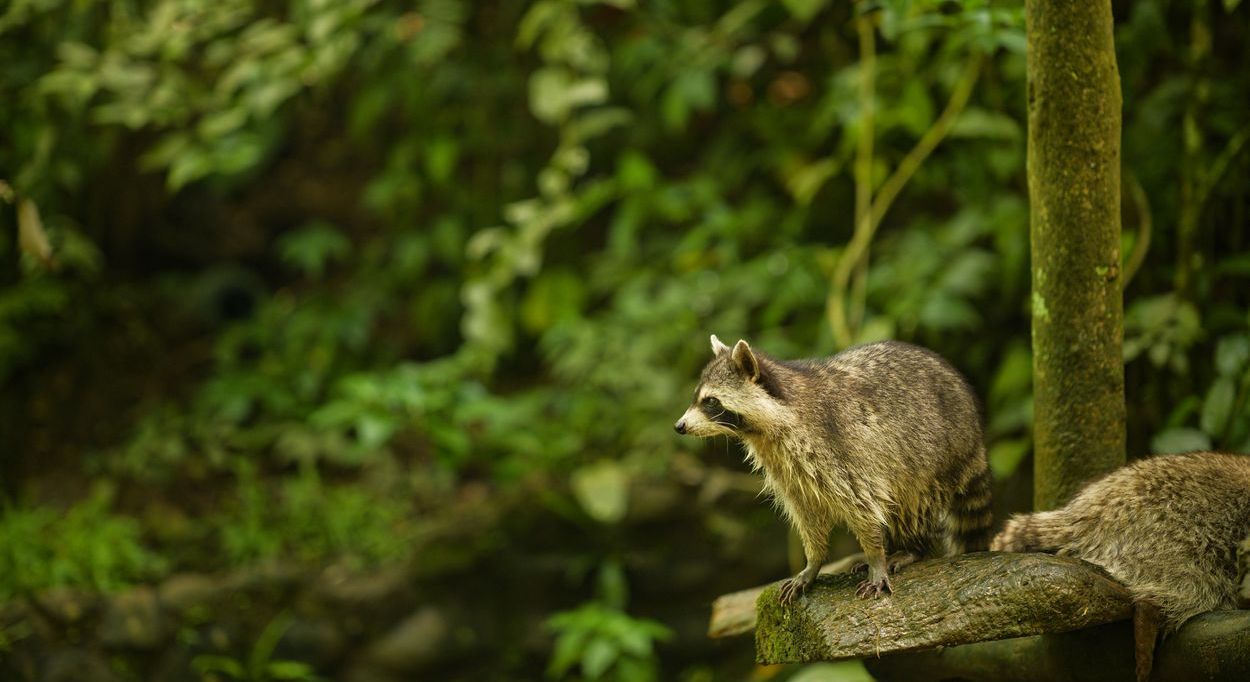
The raccoon
It’s not for nothing that we’re starting with the raccoon. We often even have some that come into our kitchen to eat the cat’s kibble, haha. More seriously, the raccoon is one of the best-known animals in the Guadeloupe archipelago. For the record, it was originally introduced to Guadeloupe, was protected, and therefore multiplied widely! The problem is that it causes quite a bit of damage to crops and threatens certain local insect and bird species. When talking with Guadeloupeans, many will tell you that “it’s edible,” and it’s even very popular, although in theory it’s forbidden to hunt it… Only facilities like the Guadeloupe Zoo that I mentioned above are allowed to keep raccoons. In the wild, you’ll mostly see it late in the day or at night, especially near wooded areas and water sources.
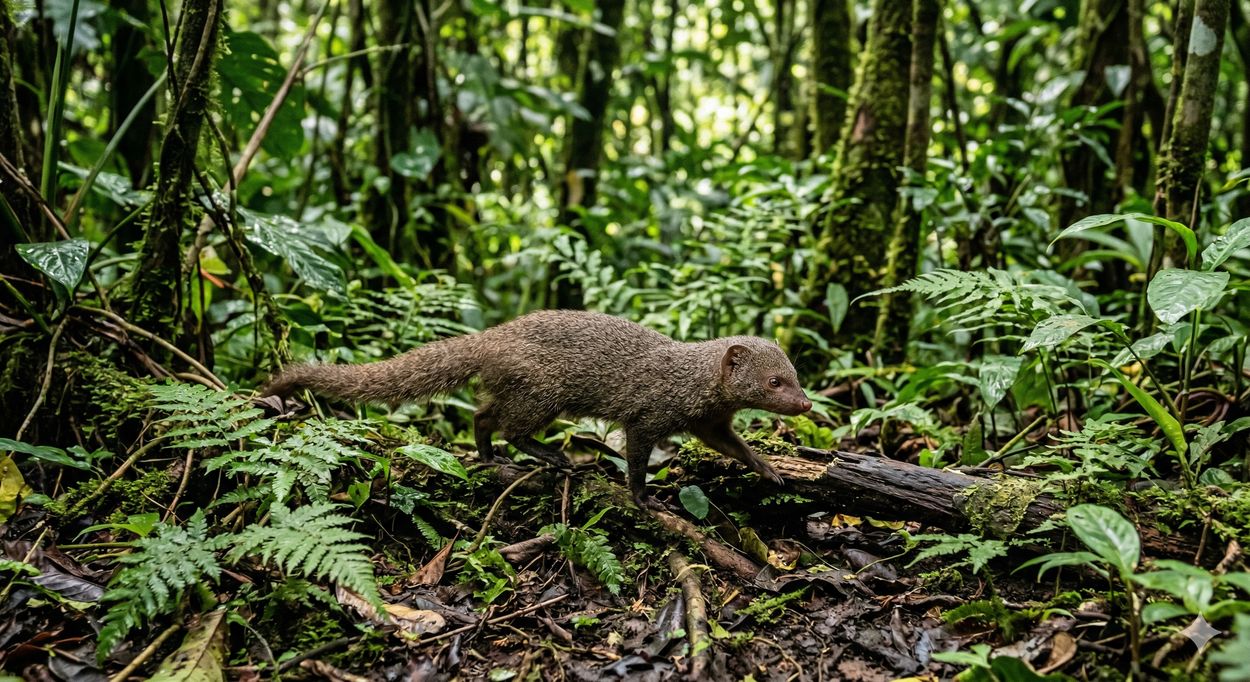
The mongoose, an invasive species
Let’s go back a bit in time… The mongoose was introduced to Guadeloupe in 1888 to fight rats and snakes in plantations. It also multiplied quickly and became invasive, even threatening certain local species such as birds and reptiles. It even helps spread certain diseases like leptospirosis. In fact, it’s among the 100 most invasive species in the world according to the IUCN. You’ll mostly see them crossing the road late in the day or in the evening. As for us, we found them pretty cute, until the day they started helping themselves directly in our garden and eating our fruit. So we bought a gun and we shoot when they come through the garden. Just kidding!
Bats, protected species
It’s not the first animal you think of in Guadeloupe. Yet bats are very common here, and they’re even very important to the ecosystem, especially for pollination and insect control. You should know that in Guadeloupe, all species are protected. In fact, one day, Jackson (our cat) brought one back to us as a “gift”… Luckily, we managed to save it and release it. It’s a good reminder of how important it is to respect these often disliked animals, yet they’re essential.
Guadeloupe’s reptiles
Now we’re getting to reptiles! It was simply impossible for me to talk about the animals here without mentioning them. They’re everywhere—often discreet, sometimes impressive—but they’re completely part of everyday life in the archipelago.
The Lesser Antillean iguana and the green iguana
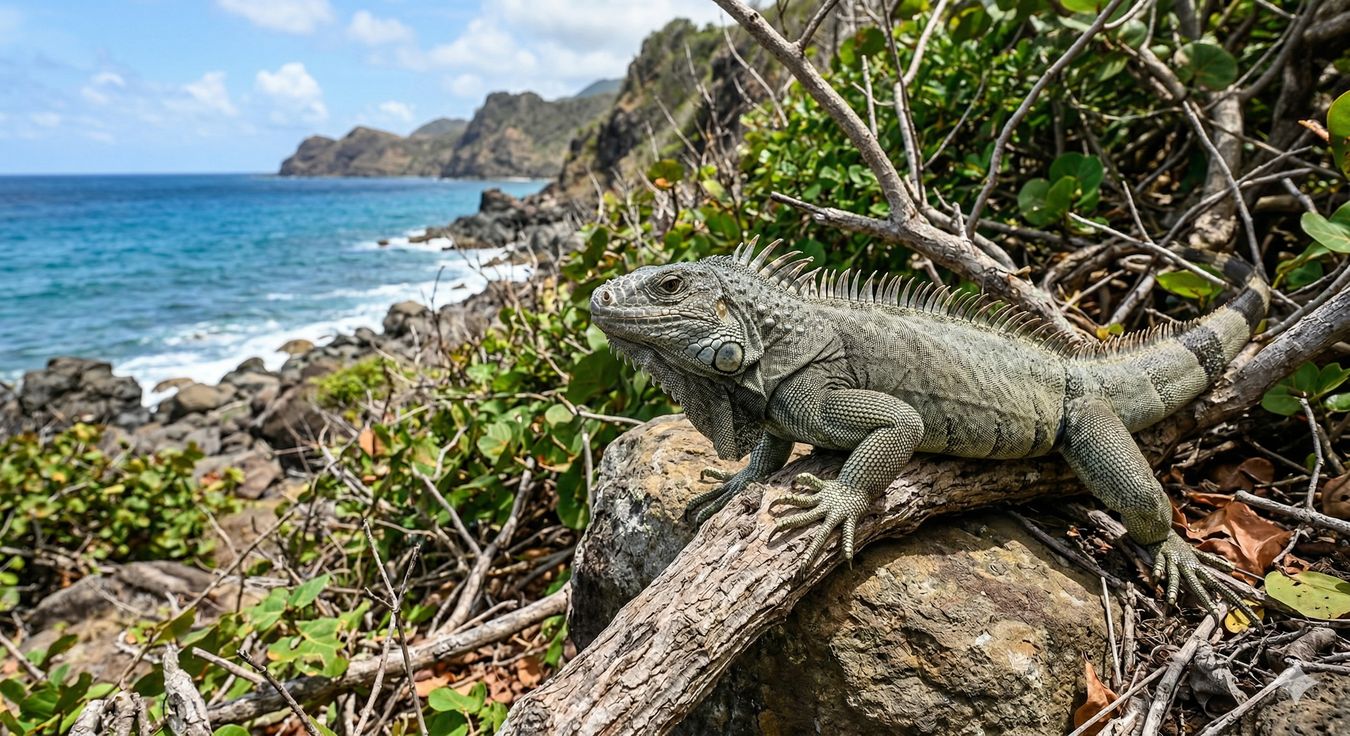
People often confuse the Lesser Antillean iguana with the green iguana with a banded tail, which is much more widespread. To explain it better: the Lesser Antillean iguana is a protected and threatened species, seen mostly on certain islands like Petite-Terre. In fact, on these small islands, many preservation actions are regularly put in place. If you come across one, it’s pretty rare, so it’s a real stroke of luck!
It’s smaller, often lighter in color, and above all more vulnerable compared with the green iguana, which is gradually taking its place. So, in terms of actions, there are restrictions on moving green iguanas in certain areas, as well as awareness campaigns. As for us, we’ve already seen more than one green iguana in our garden, around the pool. There’s even one that invited itself into our home. Don’t worry: it’s harmless to humans unless it feels threatened. But if you don’t bother it, it’ll be more afraid of you than you are of it. When Jackson (the cat) is feeling energetic, we often see him chasing them around the garden too (well, when they’re small).
Anoles and geckos
We were super happy to see anoles again, those famous neon-green lizards. They reminded us of the ones we had in Mayotte. By contrast, in Tahiti, we mostly saw geckos, also called mabouyas, often a bit translucent. They’re really useful since they eat insects in the house, but let’s be honest: not everyone loves them. If you’re wondering why, it’s because of the little droppings they leave everywhere, which are hard to remove (you could say “they’re a pain,” right?!). So even though they’re very cute, some people prefer to chase them out of their homes. To tell you the truth, there are even repellents specially designed to keep them away… go figure.
Guadeloupe’s snakes: racers (couresse)
Let us reassure you right away: there are no dangerous venomous snakes in Guadeloupe. In 4 years of living here, the only snakes we’ve seen were on Terre-de-Bas, in Les Saintes. They’re slender, fast, and very discreet. According to locals, they’re totally harmless and even pretty nice. Well, nice… I might not go that far, but there’s really nothing to worry about. You can go on beautiful hikes in Guadeloupe without worrying about snakes.
Guadeloupe’s amphibians
You can probably guess it: amphibians are very numerous here, especially during the wet season. At that time of year, rivers, ditches, and even gardens are real playgrounds for these little creatures. And at nightfall, you’ll even get a concert—they sing a lot. We got used to it quickly.
The cane toad
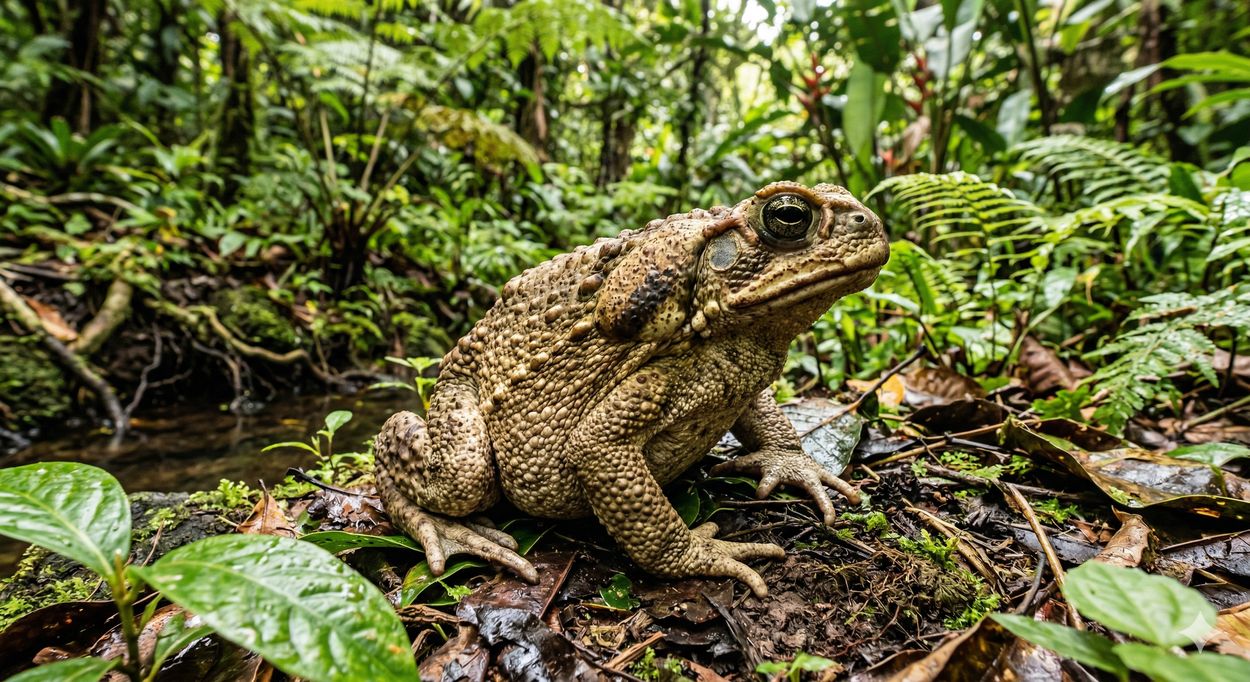
The cane toad—an amphibian that’s pretty impressive because of its size—is not necessarily what you expect before you see it. It was introduced to the archipelago and adapted well. It likes humid areas, gardens, and roads after rain. You’ll mostly see it in the evening or at night, often staying still!
As I was saying, it can be surprising at first glance, but it isn’t aggressive. However, you shouldn’t touch it because it secretes a toxic substance to defend itself against predators. In fact, this toxin can be dangerous for pets, especially dogs (which can die after licking it). You get used to its presence quickly—just don’t touch it, and make sure your pets or your kids don’t touch it either.
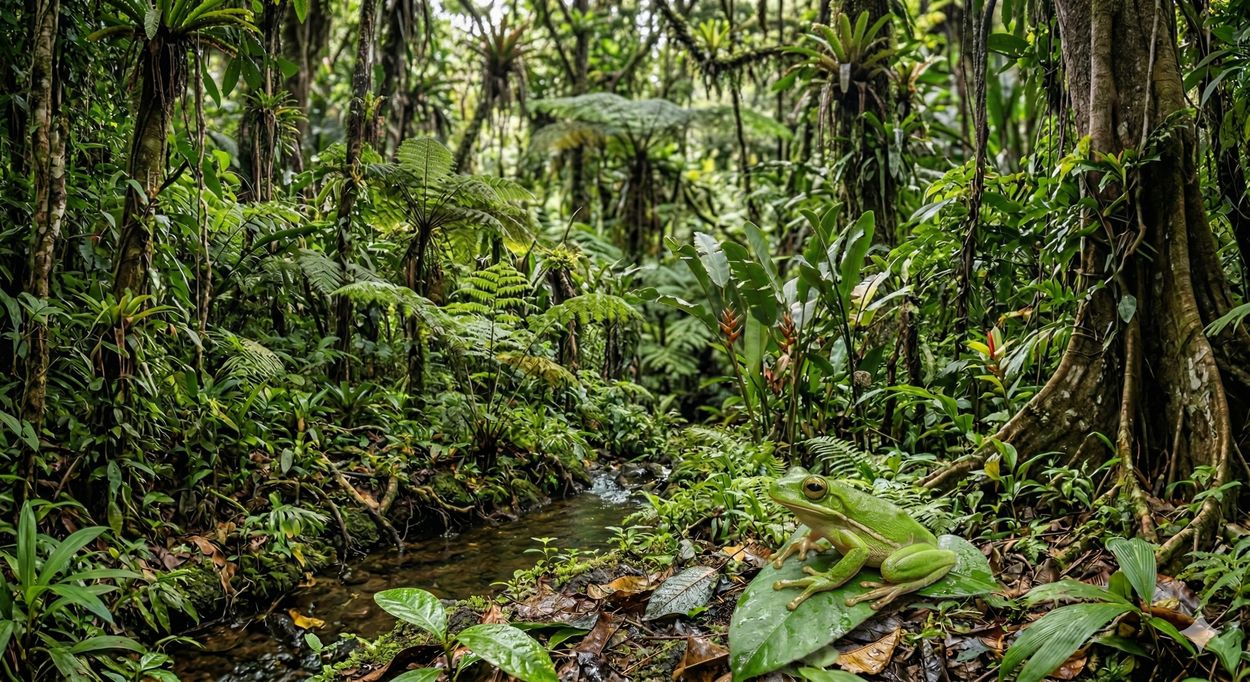
Tree frogs
Earlier, when I said amphibians sing a lot at nightfall, I was mainly talking about tree frogs. At first, it can be surprising when you arrive from mainland France. But you get used to it very quickly, almost like a little lullaby before going to sleep, haha. In fact, quite a few tourists have told us that once they got back home, they missed those calls. So you can bet these tree frogs are part of the Guadeloupe experience too! But I’ll admit that during our first two weeks in Guadeloupe, we were blown away by how loud it was at first, haha.
Guadeloupe’s birds
It’s well known: Guadeloupe is a great place for birds. Whether in the forest, the mangroves, the mountains, or even right in the city, they’re everywhere. Some are very discreet, others less so; you’ll have the chance to see some up close if you eat outside on a patio.
Guadeloupe’s endemic and iconic birds
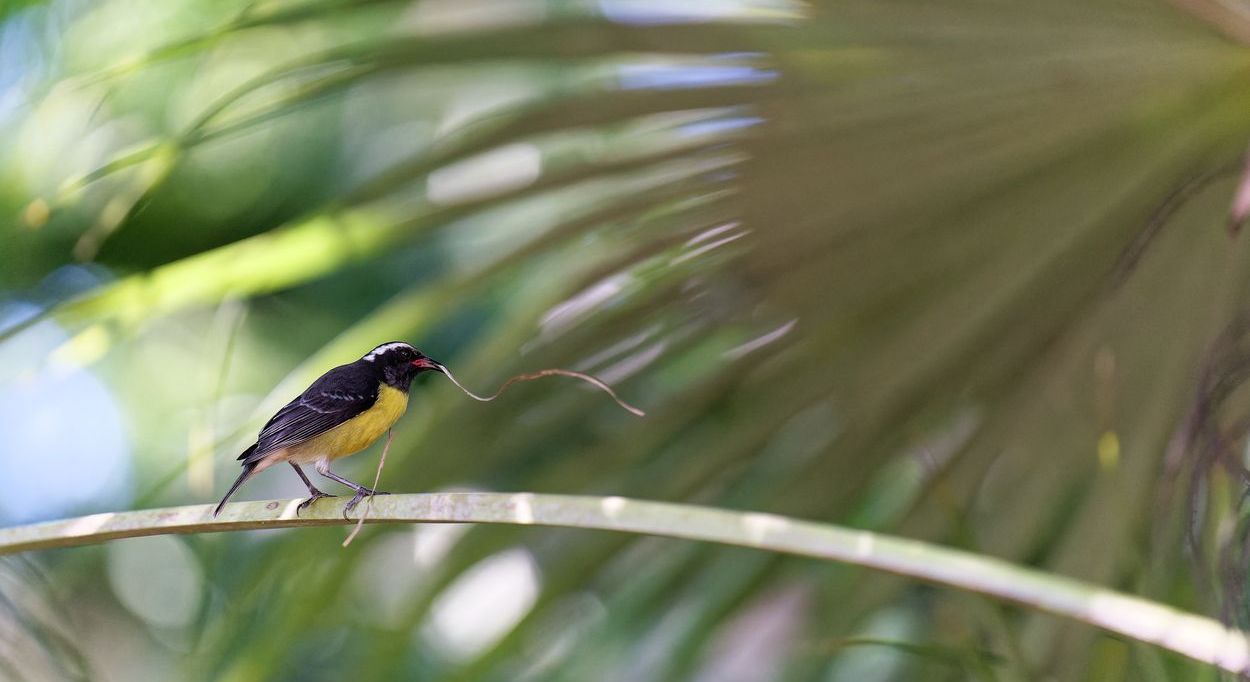
The yellow-bellied sugarbird
The bananaquit is the bird you see most often in Guadeloupe. I’d even say it’s impossible to miss: it’s truly everywhere. It’s small, lively, and curious; it doesn’t hesitate to come close to homes—and especially to plates. In restaurants, you’ll often see it come peck directly at dishes, looking for something sweet. I’ll give you that: the first time can be surprising, but it’s totally normal here—after all, it has to eat too, right?
Hummingbirds
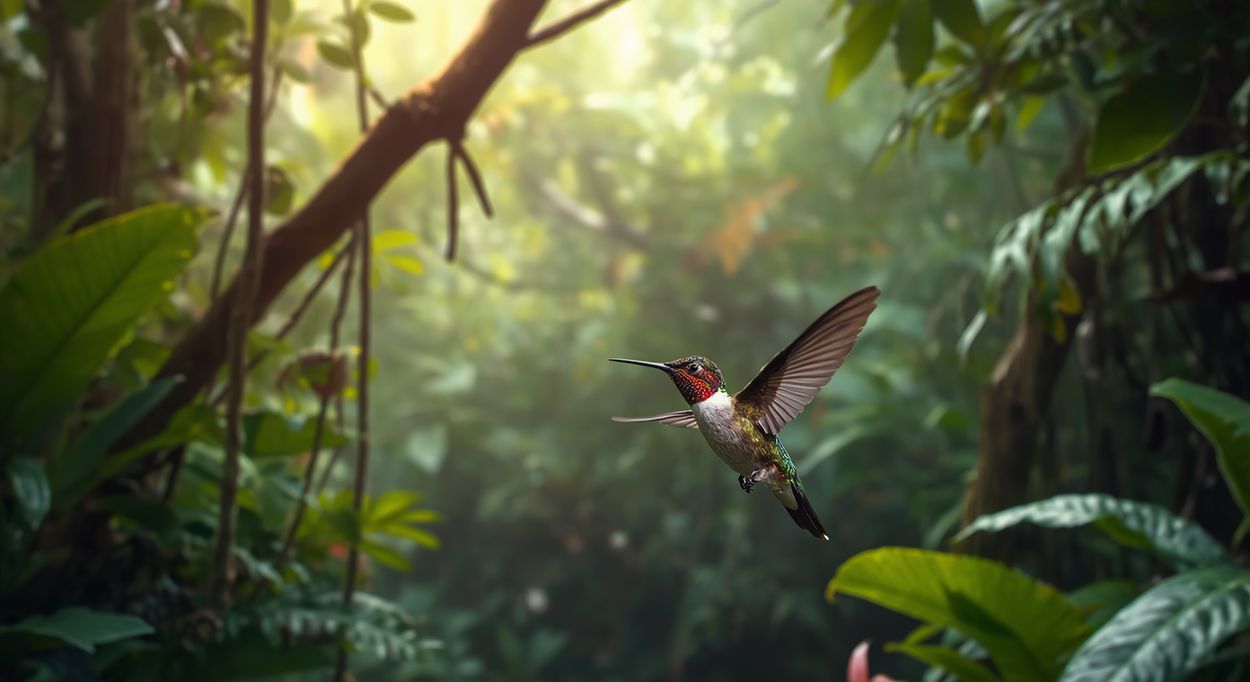
I have to admit we really enjoy watching hummingbirds! We were lucky enough to observe several species when we stayed at Jardin des Colibris, an ecolodge we loved that’s just incredible for nature lovers. We definitely plan to go back! They’re rather small, but you spot them quickly thanks to their colors. In particular, we had the chance to see:
- the Antillean crested hummingbird (foufou in Creole): the smallest hummingbird in the Antilles (only about 8 to 9 centimeters), it lives in mangroves, forests, and clearings. It mainly feeds on nectar and insects. And for your information, it can beat its wings up to 60 times per second, which is huge for such a small bird.
- the ruby-topaz hummingbird (Madé falwouj): the largest of the Antillean hummingbirds (12 cm), it stands out with its bright red throat. It mainly lives in humid forest and is also very fast.
- the green-throated carib (Falvè): the green-throated carib (11–12 cm) lives in the mountains, dry forests, and flower gardens. You’ll recognize it thanks to its green and blue iridescence!
The robin
Here’s another bird we often see here! It isn’t wild—you can even observe it up close. To recognize it, the male is almost entirely black except for its tail and throat. The female is more brown and gray. At our place, it’s almost become their home too. They aren’t even afraid of the cat, and they like flying from beam to beam inside the house. Even though they’re now part of our daily life, it still makes us smile.
The Guadeloupe woodpecker (Toto bwa)
This bird is an endemic species of our beautiful archipelago. You’ll see it more in Guadeloupe National Park (but not only!), as long as you look carefully around you and in the trees. For your information, it’s listed as a vulnerable species, notably because of deforestation and rats, which attack its eggs. As for us, we had never seen it (but we often heard it) until one weekend about a year ago. Louis was doing his homework, and we were suddenly surprised by the sound of the bird. That’s when we saw two woodpeckers fighting on a tree right next to the house. We really didn’t expect it, but I think it’s an awesome moment to share.
Guadeloupe’s coastal and seabirds
Since the archipelago is surrounded by the Caribbean Sea and the Atlantic Ocean, it’s an ideal playground for many coastal and seabirds. You’ll surely have the chance to observe them on a boat trip or from the beach or the harbors.
Magnificent frigatebirds
Honestly, they’re pretty impressive to watch, especially with their large size and very elegant look (it’s not for nothing they’re called “the majestic ones”). What’s more, we were lucky enough to see some during our trip to Grand Cul-de-Sac Marin, and then again during our excursion to Petite-Terre. It was just incredible! They glide for a long time in the sky, taking advantage of air currents, and spend a large part of their time in flight. To help you recognize them, males have an inflatable red pouch. It’s really amazing, especially when you see them above turquoise water.
Brown pelicans
If you come to Guadeloupe, you’ll definitely run into brown pelicans. You can easily see them near beaches, harbors, or out at sea. In fact, I’m willing to bet you’ll see them suddenly dive into the water to catch fish. From far away, they seem pretty cool… but honestly, up close, they’re a bit less elegant. It’s kind of like iguanas, in the end: not necessarily pretty up close, but iconic to the archipelago.
Herons and egrets
To wrap up the birds, herons and egrets are also very common in Guadeloupe, especially in wetlands, mangroves, ponds… and even in gardens. For example, they love coming to peck at the lawn right after we’ve mowed. They’re probably attracted by insects and small animals that are more exposed, and that’s when our garden becomes their hunting ground. I always find it a pleasant moment to watch, since their movements are so calm and precise.
Guadeloupe’s marine wildlife
As you can imagine, with its lagoons, coral reefs, and warm waters, the Guadeloupe archipelago is home to incredibly rich marine biodiversity. Whether from the beach, while snorkeling, or on a boat trip, we hope you get to meet some of it!
Marine mammals
I’ll start with the marine mammals that can be seen year-round or only during certain periods in Guadeloupe. With a bit of luck and patience, a trip out to sea can quickly turn into a wonderful moment!
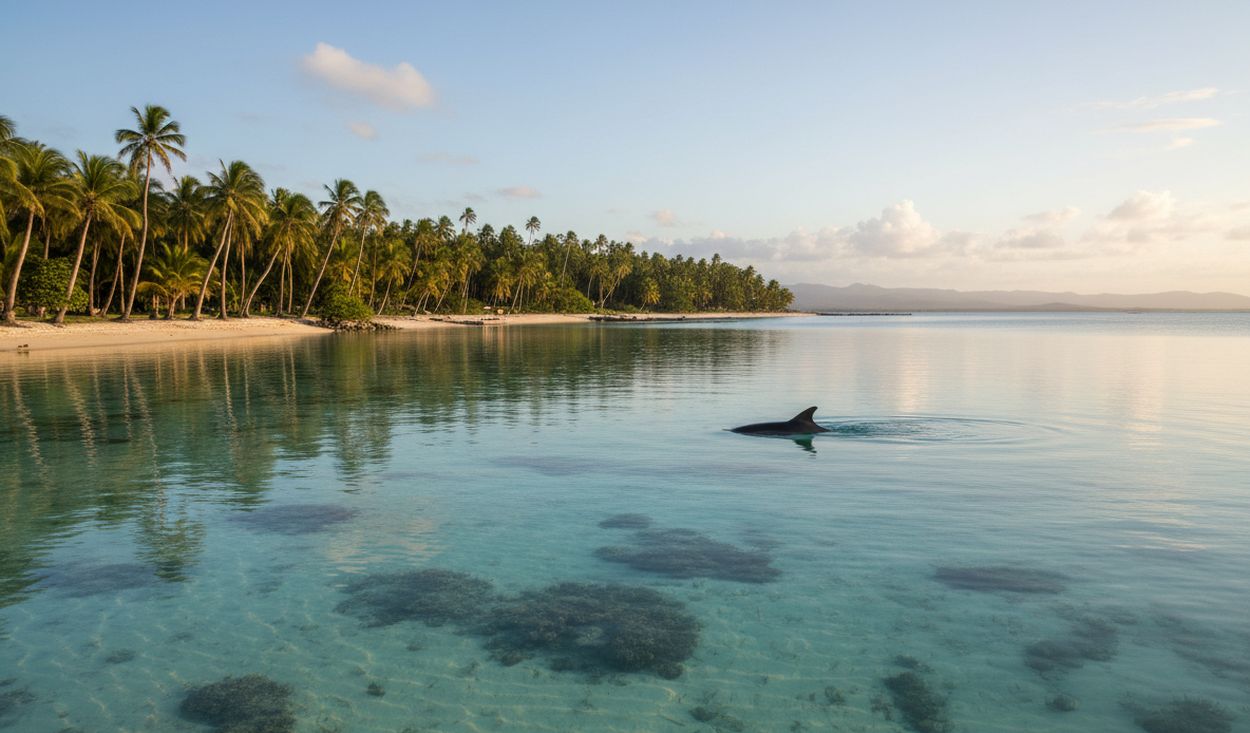
Dolphins
So, we still haven’t had the chance to see dolphins here in Guadeloupe. But since we’re not leaving anytime soon, we’ll definitely get to observe them one day. Plus, there are some species that live year-round in Guadeloupe waters. As for us, we were lucky enough to swim with dolphins in Mayotte and in Rangiroa—it was just incredible! We’ll remember it for a long time. So we hope to experience that again in Guadeloupe!
Humpback whales
Just like with dolphins, we haven’t had the chance to see humpback whales here yet, but they are definitely present. Every year, between December and May, they migrate to the warm waters of the Antilles to breed and give birth. With a bit of luck, you might be able to spot them on trips out to sea! Even from far away, they’re still impressive. And it’s the kind of moment you remember for a long time.
The Caribbean manatee
Even though manatees have disappeared from Guadeloupe waters today, they were present for a long time. They’re even behind many mermaid legends told by sailors. It’s because of intensive hunting that they disappeared… But a reintroduction project in the bay of Grand Cul-de-Sac Marin is underway. We hope this project will restore the manatee’s place in Guadeloupe’s marine ecosystem. To be continued…
Sea turtles
To all snorkeling or diving lovers: you’ll be able to observe sea turtles in their natural habitat. The archipelago is home to certain turtle species. Here’s more so you can recognize them:
- the hawksbill turtle: with its colorful shell, you can’t miss it if you come across one. In fact, it’s often seen near coral reefs. It’s still fairly discreet and spends a lot of time eating sponges. So even if it’s really cute and you might want to get closer, keep in mind you should watch it from a distance without disturbing it, because it’s a fragile, protected species.
- the green sea turtle: it’s simply the turtle you’ll encounter most often in the archipelago. You can see it in shallow areas, and it isn’t that skittish. In fact, some beaches are a real refuge for them during nesting season. In that sense, many protection actions are put in place to protect this species that’s so emblematic of Guadeloupe.
- the leatherback turtle: even from far away, it’s impressive to see! You have to say it’s the largest sea turtle in the world, and it sometimes comes to nest on certain beaches in Guadeloupe (usually at night). You might see tracks in the sand in the morning! Once again, it’s very important to respect this species if you see it.
Fish, crustaceans, and corals
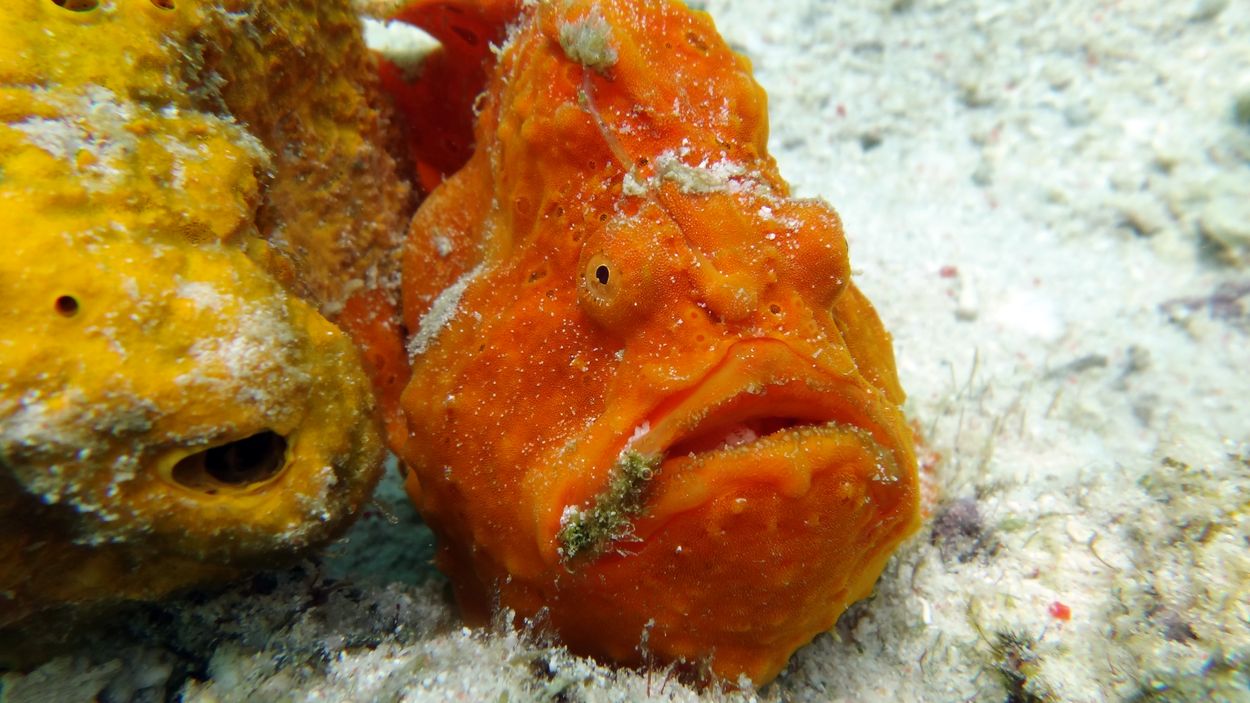
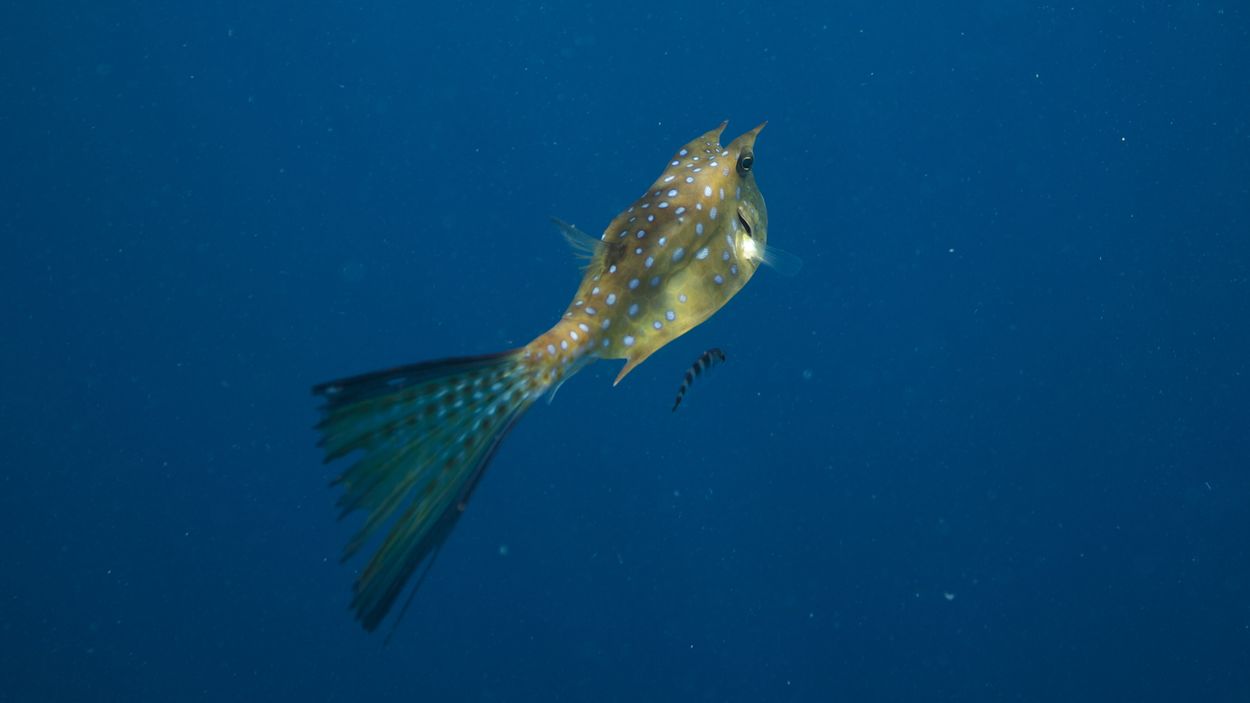
As you’ve understood, underwater, Guadeloupe reveals another side of itself! Indeed, reefs, seagrass beds, and mangroves are home to many fish and crustaceans. One thing is certain: I really encourage you to go snorkeling or diving. Plenty of surprises ahead!
Reef fish
As I already mentioned a bit, coral reefs are true natural aquariums. It’s simple: you’ll observe fish with incredible shapes and colors, sometimes very close to shore. I’m thinking especially of these fish:
- lionfish (scorpionfish): for the record, they were accidentally introduced into Guadeloupe waters. But now, lionfish threaten local biodiversity. They consume large quantities of small fish, which throws reefs off balance. Plus, their sting is dangerous, so you need to be careful when swimming or diving.
- parrotfish: unlike lionfish, parrotfish play an important role in reef balance. To explain it better, they scrape algae and dead coral while producing white sand. In fact, a single fish can produce up to 90 kg of sand per year.
Spiny lobsters
Another iconic species of the seabed here (and more generally, throughout the tropics). They’re mostly found in reefs or rocky areas, where they hide well. They’re highly valued for their meat. But there are regulated fishing seasons to preserve them. And while diving, it’s always nice to spot a lobster well hidden. If you see at least one, it means you really kept your eyes open!
Queen conch & land crabs
If you don’t know it, conch is a large shellfish found in the Antilles. It’s very easy to recognize thanks to its pink shell interior. It mainly lives in seagrass beds. It’s widely eaten in Guadeloupe. So fishing is now regulated with minimum sizes and closed seasons in order to preserve the species.
Know that land crabs are numerous here, especially at certain specific times of the year. They migrate during the rainy season, and it’s always impressive to see. They’re truly part of local culture and the ecosystem. More concretely, they even play an important role in recycling organic matter!
The importance of coral reefs and mangroves
Coral reefs and mangroves are essential to Guadeloupe’s biodiversity. To explain it better, they protect coasts from erosion and they play an important role in the reproduction of the fish and crustaceans we just talked about (and many others!). Today, they are still fragile and threatened by pollution and climate change. So many protection actions are being put in place to preserve them because, as I was saying, they are very important for all marine wildlife. Not to mention the beauty of the underwater landscapes they offer.
Guadeloupe’s insects and arthropods
Now we’re getting to insects and arthropods that are truly part of our daily life. There are tons of them—some are cute while others are less loved. You’ll find them mostly in gardens, forests, and sometimes even in houses. In any case, it’s almost impossible to avoid them!
Butterflies and beetles
So, let’s start with some fairly unique insects that you can see quite often here:
- the majestic blue morpho: in my eyes, it’s one of the most beautiful butterflies in Guadeloupe. With its intense blue wings, you spot it quickly on a trail. In fact, you mostly see it in the forest or near humid areas.
- the rhinoceros beetle: honestly, it’s more impressive than beautiful. With its large size and horn, it can surprise you the first time you come across one! Don’t worry, it’s harmless—you’re not at risk.
Guadeloupe’s least appreciated insects
I’ll give you that: there are some insects that not everyone loves, and that’s understandable:
- mosquitoes: if you’ve looked into Guadeloupe a bit, you already know there are lots of mosquitoes. They’re mainly present during the wet season, and they can quickly become overwhelming, especially late in the day and at night. Remember to use repellent and sleep with mosquito nets. Those are good solutions, and that’s all I can really recommend.
- manioc ants: those… Melanie hates them, haha, especially since they attacked her beautiful jasmine in our garden. They’re small, numerous, very organized, and able to destroy a plant very quickly. Of course, we respect them and they’re part of the ecosystem, but when they settle in the garden, they quickly become annoying.
- Spiders: let’s be clear, there are spiders in Guadeloupe—small ones, big ones, hairy ones or not, haha. I’d say it depends on where you live in Guadeloupe, in humid areas or not. Here in Saint-Claude, we have quite a few, and sometimes some really big ones!
Protecting Guadeloupe’s animals and biodiversity
To wrap up this article about animals in Guadeloupe, I’d like to talk more about the actions put in place to preserve the archipelago’s species. I mentioned them throughout the article, but I still wanted to give them a section. Honestly, biodiversity here is really great, but it remains fragile for different reasons. Here’s more about the many actions that exist to protect this exceptional biodiversity:
Guadeloupe National Park and nature reserves
It plays a very important role for local wildlife. It stretches across a large part of Basse-Terre with tropical forests, rivers, mountains, and marine areas. The goal of this place is to preserve natural environments while raising awareness among locals and tourists. More concretely, the trails are well marked with rules and monitoring areas.
In addition to the national park, nature reserves are meant to protect specific places where wildlife is rich and fragile, like Petite-Terre or certain mangroves. Basically, these reserves are subject to even stricter rules, with limited access and tightly supervised activities. These reserves help preserve threatened species I told you about, like sea turtles or the Lesser Antillean iguana.
Conservation programs and awareness-raising efforts
Here, conservation programs are often carried out with scientists, local associations, and even public institutions. They include, for example: protecting sea turtles and their nesting sites, preserving coral reefs, monitoring bird and reptile populations, and fighting invasive species. That already gives you a better idea of how important these actions are for protecting Guadeloupe’s animals.
To protect the archipelago’s species, it also involves information and awareness. There are many campaigns to explain to both locals and visitors the right things to do, such as: not feeding animals, respecting protected areas, avoiding touching marine wildlife, or leaving trash in nature.
That’s it—our article on animals in Guadeloupe is coming to an end. At least, if you come here, you’ll know which species you’re likely to encounter. As you’ve seen, we enjoy rich and exceptional biodiversity here. It was also important for me to talk about the importance of preserving these species. Indeed, there are quite a few challenges, but everyone can act at their own level.
As visitors or residents, adopting responsible and respectful tourism is essential. Observe without disturbing, respect nature and local rules—that’s already contributing to protecting our superb biodiversity! So it’s your turn for your trip to Guadeloupe!

Written by Sylvain PONS
Since 2021, I've been living in the Guadeloupe archipelago with Mélanie and our two children. We are exploring these beautiful islands and discovering the treasures that we are happy to share with you!
Despite our care, a mistake may have slipped into this article. If you find any, please don't hesitate to let us know so we can correct it as soon as possible and keep our information up-to-date!