Planning a road trip in the United States: the complete guide
Last update: 06/13/2026
Our blog continues to grow thanks to you, our readers. This post may contain affiliate links, which means we can earn a small commission if you make a purchase through them, at no extra cost to you. This helps us to continue to bring you more and support our work!
Here we are: at almost 34 years old, I finally set foot on the North American continent for the first time during a family trip. I had already passed through LAX, as Los Angeles International Airport is commonly known, several times, but I had never had the opportunity to spend a vacation in the country. That has now changed. I had just returned from a month-long road trip in the United States, taking me from San Francisco and its famous Golden Gate Bridge to the arid landscapes around Salt Lake City and the Canadian Rockies, where I was lucky enough to spend a week. The vastness of the West, its breathtaking open spaces, the dramatic California coast, the magnificent landscapes of Yosemite National Park, and the striking scenery of the Florida Keys and Everglades—does that appeal to you? It certainly sounds like the American dream. Have a look at our guide to the beautiful Bryce Canyon National Park!
I cannot claim to know the United States very well after having spent only one month there. Even so, the trip gave me a very positive impression of the country and the regions I was able to explore. Who has not dreamed of taking such a road trip, honestly? Who has not imagined driving for hours on endless roads in the middle of the desert? In this article, the first in this series about the United States, I’ll explain everything you need to know to plan your trip to the United States: itinerary, weather, organization, practical logistics once you arrive, etc. Depending on how you travel, there are several ways to plan a road trip to the United States. Planning such a trip is never easy, and I hope this article will help you! For those who are interested, here is the website of the U.S. Embassy.




1 - When to take a road trip in the USA
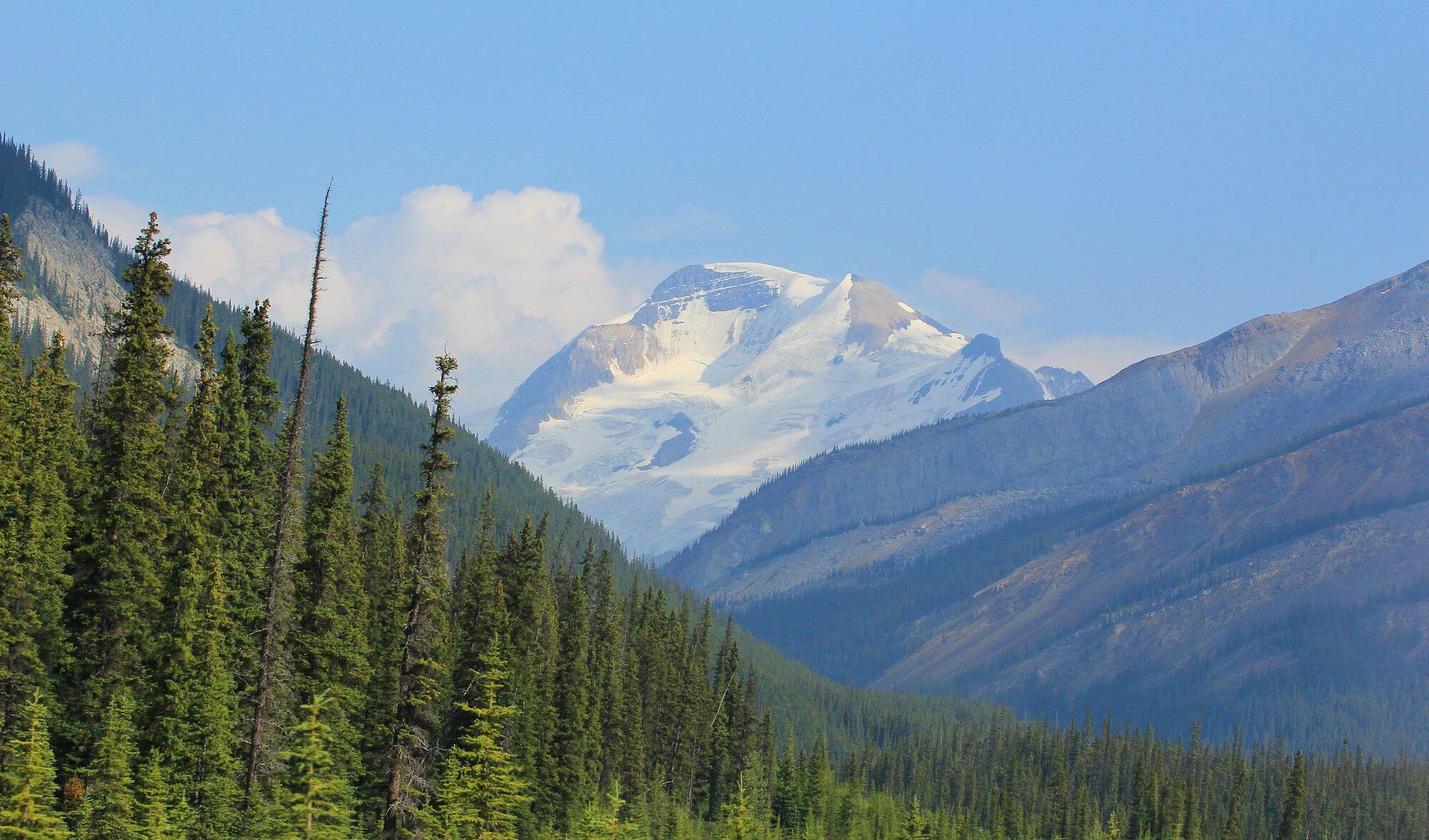
In my opinion, this is one of the first questions to consider if you are planning a road trip in the United States. More precisely, you should consider the timing alongside your itinerary and the cost of flights. These factors are closely connected. Of course, you can travel to the United States at any time of year. But is there a better time to visit the Great Lakes? The immensity of Alaska? The Sierra Nevada? Cape Cod? Depending on what you want to see and do, you will need to choose the most suitable season, since visiting the Grand Canyon in December would be very different than visiting it in August… (well, it’s especially much colder… yes, this very popular destination does receive snow in winter!). Speaking of Alaska, we visited the Seward region, a great place!
The country is enormous, and the possibilities for road trip itineraries are almost endless. You can see everything, from deserts and mountains to bears, dolphins, and forests stretching as far as the eye can see, sometimes all within a single trip. You can also decide to split it into several road trips. Travelers who enjoy remote destinations and getting off the beaten path will find plenty to explore. You do not necessarily need to visit Mesa Verde, Lake Powell or Tahoe, the majestic Arches National Park, etc. to truly enjoy your American trip.
When it comes to the climate, the main point to remember is simple: the southern United States is, on average, much warmer than the North. Traveling to Texas or Louisiana in the middle of summer can mean dealing with extreme heat. I am not going to give you the average temperatures and rainfall for the entire United States. There are some very good websites for that, such as Where&When, for example. Start by researching the climate in the areas you’re interested in. Chances are you won’t be able to choose your vacation dates, for example, because of work commitments.
Be aware that most tourists plan their U.S. road trips between May and September (roughly), and a very large majority of them will be there in July and August. These are also among the hottest months. You should also know that even in the middle of summer, some areas can be very cold at night. After spending several nights around 0°C in Yellowstone and Grand Teton, I can certainly confirm that. So, choose your season carefully depending on which places you want to go. Conversely, some places (Utah, Arizona, New Mexico, etc.) can be very hot during the day.

To summarize, here is what I recommend:
- In winter: you could, for example, plan a road trip on the east coast of the United States (under the snow), or explore the West Coast, discovering the big American cities and their surroundings (New York, San Francisco, etc.). Seeing New York or the Golden Gate area in winter could be a memorable experience. It can also be an opportunity for winter sports fans to discover the northwestern United States for a little skiing or snowboarding, like Utah, Idaho or Montana. Overall, the classic road trip states can be cold or even extremely cold in winter, so a minority of people will decide to visit Monument Valley, the Grand Canyon or Bryce Canyon under the snow. Remember that the Pacific Coast is not always as warm as people imagine. One of the big advantages is that there will be far fewer people, obviously. Know that:
- The vast majority of the Western American parks will be open,
- It is the perfect season to visit the hottest areas (Vegas, the mythical Death Valley, etc.),
- Some parks, however, may be totally or partially closed (Yellowstone, Yosemite, Sequoia National Park, etc.),
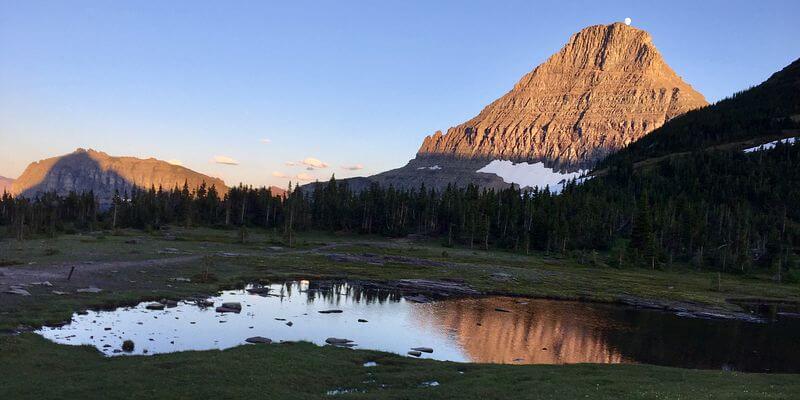
- In summer: you can consider going anywhere in the United States. I would say the only limit will be the overwhelming heat during the day in certain areas. I am thinking in particular of Arizona, Utah, and all of the southern United States (Texas, etc.). Another drawback is the crowds. You are unlikely to have the main attractions entirely to yourself, and don’t be surprised to see (too) many tourists. Be aware that some parks are only open during this period (Yellowstone N.P), as this is generally when conditions are most accessible (Glacier N.P).
In my opinion, I would advise you to travel to the United States during the shoulder seasons, namely the months of May/June and September/October. Many will not have any choice (like me) because of the school holidays for example, and a majority will do the road trip in the American West, between San Francisco and Las Vegas. So, I think it’s not a bad idea to avoid some of the heat and the largest crowds, isn’t it? Traveling outside the main season, particularly in winter, will allow you to go for a walk while being almost alone in the world. You will also be able to find more affordable accommodation (lower prices).
2 - How long should you spend in the United States?
This is one of the other questions to ask yourself for your road trip in the USA. If your vacation dates are fixed, you may have little flexibility. In most cases, In most cases, you will need to adapt your itinerary to the amount of time available. Travelers with more flexibility will do the opposite and choose an itinerary in the country and then adapt the time spent.

So, start by choosing in which scenario you are. Once you’ve decided on a two-week, three-week, or one-month road trip in the US, you can move forward on your itinerary and start planning what to do next. That is when the planning truly begins. I don’t think there is an ideal length of time for your road trip in the US. It will also depend on how you travel (moving quickly or traveling slowly), how much time you can take for your vacation, and most likely your budget as well. The United States is not Thailand, and traveling there for a month will end up being quite expensive (and I know what I’m talking about!).
I have one piece of advice, although this is only my opinion: I would rather see fewer places and experience them properly. For me, it seems unthinkable to want to see “all the most famous parks” in a single road trip. The national parks are sometimes quite far apart, and I prefer to enjoy a few days in a single park rather than spend only two hours there just to be able to say “I did it!”. It is worth thinking about this carefully based on what you genuinely want from the trip.
3 - How to plan your itinerary for a road trip in the USA?
Here is the most difficult part, the stage that requires the most time and organization and forces you to make difficult choices (well, several…) … Seeing everything is simply impossible, you will inevitably miss things. But in the end, it is also what makes the process exciting, the most rewarding and motivating. Planning is an integral part of the journey, right? We could open a debate on whether or not it is necessary to plan your road trip to the USA. It is a question that can be discussed, and the answer depends entirely on personal preference. Personally, I plan my trips less and less, but I still outline the main stages. For example, for this road trip, I had planned which national parks I wanted to go to. For the rest, I usually go with the flow!
Once you know how much time you have available for your vacation, it’s time to think about what you want to see and do there. What do you have in mind for your road trip in the USA? Visit the deserted lands of Arizona? See a geyser, a skyscraper, sunbathe on the beaches of California or Florida? Go hiking for several days in Yellowstone or Glacier National Park? The desert area of Utah? In short, as you will have realized, you first have to decide what matters most to you and what you wish to see.
It is possible that you will work through this stage alongside the first one (the climate one), but also with the next one, which is the purchase and cost of your flights to get to the United States.
I would tend to advise you to make a list of the regions you want to see, often including the country’s national parks. Once you have more or less everything in mind as well as your final destination, you can then look at a map of the USA, for example on Google Maps, and try to map out a detailed route for your road trip in the USA. You should allow more time than route planners suggest. You will inevitably make stops to take pictures, take restroom breaks, make an unscheduled visit, have a bite to eat somewhere, etc. In short, allow plenty of extra time.
Personally, I had planned the main national parks and other beautiful places, keeping in mind the time I had (1 month) and the way we travel (at a relaxed pace with a two-year-old child).
Examples of road trips in the United States?
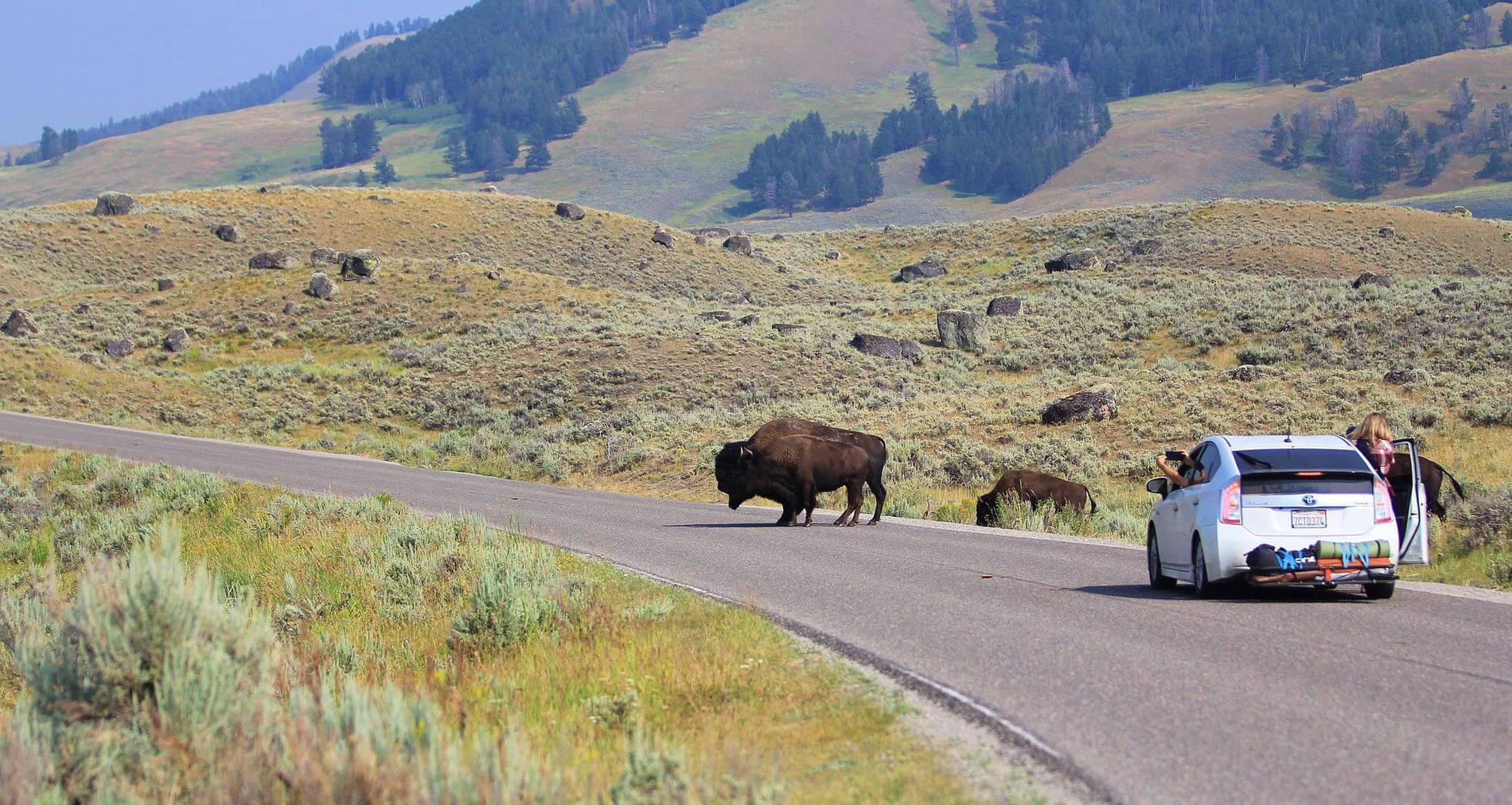
It would be impossible for me to list every possible road trip, and it would take many trips in the USA to explore all these iconic destinations. This is also the beauty of the USA: there is something for every taste and budget. Most people who come here often take advantage of the beautiful roads crossing the big national parks to discover the natural wonders this country has to offer: volcanoes, giant sequoias, sand dunes, whale- and dolphin-watching trips, canyons, geysers, deserts, and so on… I only had the opportunity to take one month-long road trip between Salt Lake City and Banff in Canada, passing through Yellowstone, Grand Teton and other beautiful places. But here are some ideas that you might like if you are preparing your trip for traveling across the United States.
A classic road trip in the Western United States (18–21 days)
This is the great classic, the route commonly offered by travel agencies and organized tours. The road trip starts from San Francisco or Los Angeles. On the program: Los Angeles -> The Grand Canyon -> Monument Valley -> Page (Arizona) -> Horseshoe Bend -> Antelope Canyon -> Lake Powell -> Bryce Canyon / Coral Pink Sand Dunes -> Zion National Park -> Las Vegas -> Lake Mead and Valley of Fire -> Death Valley -> Yosemite -> San Francisco.
Road trip from Las Vegas (15–18 days)
Here is another classic in the American Southwest, lasting around 17–20 days:
Las Vegas -> Lake Mead + Valley of Fire -> Zion National Park -> Bryce Canyon -> Capitol Reef National Park -> Moab -> Arches National Park -> Canyonlands NP -> Dead Horse -> Monument Valley -> Page -> Horseshoe Bend -> Antelope Canyon -> Grand Canyon -> return to Las Vegas.
Another road trip idea from Seattle
We didn’t leave from Seattle, but you can consider doing some of what we did. You can think of doing Seattle -> Olympic National Park -> Mount Rainier National Park -> Boise -> Grand Teton NP -> Yellowstone NP -> Glacier National Park -> North Cascades National Park -> return to Seattle
4 - Traveling to the USA and finding affordable flights
Once you have decided how long to travel and have roughly planned your itinerary (more or less), you may be interested in booking your flights. We’re all looking for cheap flights, aren’t we? Here are some key points to know:
- Be flexible with your dates, schedules and airlines. Consider flying into and out of different cities for your arrival and departure,
- International airfares vary greatly, but good deals can sometimes be found to Los Angeles, New York or Miami (yes, I promise) from Paris or some major town in Europe. And for the airline, you will usually have several airlines to choose from!
- I personally use Skyscanner, which I consider one of the best flight comparison tools. One useful option is to search by “cheapest month” and adapt your travel dates to the ticket price, as far as you can.
- Remember that, the price of the flight will mainly depend on the season you are traveling, but also on the city you are arriving in.
- It is of course possible to arrive in one city and depart from another. You can then consider taking two one-way tickets for example, or even take a domestic flight.
For my part, I personally decided to fly from Papeete to San Francisco with French bee, which sometimes offers competitive fares depending on the dates. Then, I flew with Delta Air Lines for the San Francisco – Salt Lake City section. The idea was to avoid the four extra days of travel (two return journeys).
5 - Passport and ESTA to travel to the United States
The requirements are relatively straightforward. There are two essential points to keep in mind:
- You must have a passport that meets the applicable validity requirements when you enter the United States. If you have a biometric passport, you may be eligible to stay in the country for 90 days.
- The other essential requirement when visiting the USA is the ESTA application. It is done online and there is only one official website. Be wary of unofficial websites with related sites that try to make you believe they are official… The fee should be checked on the official website before applying, and you usually receive a response quickly. An approved ESTA is generally valid for two years, unless your passport expires sooner.
Travelers with questions about border crossings, often the Canadian one, may come across conflicting information. At the time of my trip, it appeared that you have to pay $6 per person to cross the border. I passed through in August 2018, and I only had a passport check, both on the way to and from Canada. and I was not charged anything.
6 - Getting around during a stay in the United States
You also need to decide how you will travel around the country, because a road trip in the United States naturally involves choosing a vehicle and accounting for travel time, that’s the goal, isn’t it? The range of options is extensive and everything will mainly depend on your desires and your budget. Between compact cars, campervans, 4×4, SUV, etc. there is something for everyone, I think.
If you are looking for a campervans or a van for your road trip in the USA, I recommend take a look at the comparator below. It is, in my opinion, the best way to compare prices directly in a large number of rental companies. It is a convenient way to compare several offers in one place.


There are countless places to explore, so choose the right rental vehicle for your trip.
Here are the key points to keep in mind when renting a vehicle for your road trip in the USA:
- Insurance: carefully check what your rental agreement does and does not include. Personally, we decided to add at the last moment a additional assistance and vehicle replacement coverage.
- Age: it’s simple, many rental companies require drivers to be at least 21, and additional young-driver fees often apply if you’re between 21 and 25 years old.
- International driving permit: in theory, it is not mandatory, but some people have already had problems with it. As a precaution, I obtained one.
- Gasoline prices are often lower than in France, although they vary by state. You fill up to the gallon (about 3.8 L). Very often, you will have the choice to pay either by credit card or in advance in cash, inside the store, before filling up. Gas stations are generally easy to find, although they may be farther apart in remote areas.
- Options: you can very often add a GPS, a baby seat, etc.
- Additional driver: this is an important detail. We didn’t pay attention and it cost $20 per day extra for the second driver. So, be careful when renting your car!
One useful tip: do not automatically assume that picking up your car at the airport will be the cheapest option. Daily rental prices vary considerably depending on the location, season, vehicle category, and booking dates.
Long story short, I had two possibilities to pick up my car in Salt Lake City: at the airport or downtown. In my case, the downtown option was $300 cheaper. I simply took a $25 cab from the airport to the rental company. You can also use the Uber app, which works very well for a stay in the USA.
7 - Should you book your accommodation in advance?
During your road trip in the USA, this question will inevitably arise: where should you stay? Over time, I have tended to plan less in advance, even since my little one was born.
Everyone approaches this differently: some travelers prefer to organize and plan everything during their trip, and others who prefer to remain flexible and decide as they go. Take into account these few important points:
- The season: during the summer, it is generally wiser to book in advance, at least more than in winter.
- Some parks may be full several months in advance, so if you want to stay inside the park, you will have to book well in advance. You should also know that sometimes, you can find very good accommodations just outside, for less money…
- There are also many Couchsurfing and Airbnb options across the country.

Personally, I would not necessarily recommend booking everything, far from it, but it’s my own way of looking at things and of traveling. Nevertheless, I had booked my first two nights in San Francisco and Salt Lake City, to make our arrival easier given the flight schedules. On the way back, I had also booked all four nights in San Francisco. During my whole trip, the only other nights booked were the campgrounds in Yellowstone Park. It’s only open a few months of the year, and the campgrounds fill up quickly.
For short vacation periods (less than two weeks), and if you are the type of traveler who plans everything to the letter, then book your accommodations. For those who have time and a little latitude, you can manage perfectly well one day at a time. I had no worries during all my road trip in the United States, and I was right in the middle of the tourist season, in August.
Here are a few general ideas for your accommodation on site:
- Campsites: you can find them at all prices, from free (see this website) to higher prices at private campgrounds (private campsites). I will write a complete article on the subject as soon as I have time, but camping in the country is easy and it’s by far what I prefer doing, with Airbnb.
- Motels: budget motels can sometimes offer relatively low rates, although prices vary widely. Usually on the roadside, they can help out but lack charm in my opinion!
- Lodges/cabins: prices can quickly exceed $100 per night, or even much more. I did not stay in one myself.
I personally prefer camping during U.S. road trips, but it is just a matter of taste. However, it does require all the camping equipment. It is what I prefer, in order to be as close as possible to the parks and nature. I have to admit that when it’s cold, it’s not always fun (especially with a two-and-a-half-year-old child). I enjoyed a few warm nights in an Airbnb! You can also use the Booking website, which works very well and offers many accommodations in the American West.
8 - Arrange travel insurance for your road trip in the USA
This is a point I haven’t yet taken the time to develop on this blog. However, it is an important point that should not be overlooked when traveling in the USA, and if you want if you want greater peace of mind… You’re going to tell me: why especially in the USA? Because when you travel to countries where medical care may be less expensive, hospitalization or a doctor’s appointment costs little or nothing. I have visited a dentist in Laos, a doctor in Malaysia and spent several days in hospitals in Indonesia. And even without any insurance, you can afford it.
In the United States, many travelers have shared stories who have had problems there without insurance. Medical costs can be extremely high and can easily exceed hundreds of thousands of euros.
I had therefore chosen to take out insurance with my bank for the three of us, to cover all the medical expenses and any possible repatriation costs we might have for this road trip in the USA. For your information, this cost me a little more than 100€ per person for the year.
In reality, there are some insurance companies specializing in travel insurance (AVI, Chapka Assurances, etc.) and they all offer weekly or monthly packages for individual trips. Prices vary depending on the destinations you are going to. Be careful to take a good look at the destinations covered, and especially at the coverage limits. For your information, the highest premiums (this is not a coincidence) are displayed for Canada and the USA.
For your information, if you bought your ticket with your credit card, you usually have a basic insurance coverage for up to 90 days (almost 3 months). Its limits are quite low, so be careful. With a premium or Gold-level card, it’s already much better.
Remember also that you will spend a lot of time on the road, and we all know that an accident can happen very quickly. If you have to go to the hospital or if someone files a complaint against you for an accident, you will be glad to have suitable insurance. Wouldn’t it be a shame to ruin such a trip for that?
9 - What budget should you plan to visit the United States?
This question will surely interest everyone, because unless your budget is unlimited, you will have to set a budget or at least prepare an estimate. As always, it’s quite tricky to answer and provide a single ready-made answer.
Depending on how you travel, where you sleep (campsites, motels or hotels), how you eat (snacks, restaurants, or groceries), the activities you want to do on site (hiking, kayaking, helicopter, etc.), your budget for a road trip in the USA could be very variable, vary considerably, I would say. It is therefore difficult to give precise figures.

The main expenses to consider are (excluding air tickets):
- Car rental: prices vary widely depending on the season, location, and vehicle category
- Fuel: the cost of a full tank depends on the vehicle and local gasoline prices
- Accommodation: costs vary considerably between campsites, private rentals, motels, and hotels Remember to include tips in your budget, about 15 to 20% of the bill.
- Food: groceries are generally reasonably priced in Walmart-type supermarkets. It all depends on your habits and where you originally live. Compared to Tahiti, the USA is not expensive at all. It will cost you less to eat your own lunch and dinner. A menu at fast-food for 7$, a meal in a snack bar or small restaurant for 20/25$.
- Activities: excursions such as helicopter flights can significantly increase the overall budget.
- National park entrance fees vary by park. Do not hesitate to get the “America the beautiful” card, which allows you to visit participating federal recreation sites for 80$.
- Additional expenses (shopping, ESTA, credit card fees, gifts, etc.).
If you are looking to plan activities during your road trip in the USA, I recommend you take a look at this website.
As a rule of thumb, based on my own experience and that of other travelers in the country, your daily budget can vary dramatically depending on your travel style, accommodation, route, and activities.
10 - What to pack in your luggage?
The final important point to consider for your trip to the USA is what to pack. It will obviously depend on several points:
- Season: it is the first thing to think about. Don’t think that because you’re leaving in the middle of August, the weather will always be hot and you’ll only have to take shorts and T-shirts! Many parks in Utah, Colorado, Wyoming, Montana, etc. are at high altitudes and can therefore get chilly or cold in the evening, and especially at night.
- Parks you’ll visit: As mentioned above, even in summer, some parks are known for their cool temperatures. We had voluntarily chosen to avoid the hottest parks (Grand Canyon, Bryce Canyon, Antelope Canyon, etc.) and focus on the ones in Idaho, Montana and Wyoming. To give you an idea, we had a few nights around 0°C in Grand Teton National Park, and also many cold nights in Yellowstone as well as all over Montana. Very often, it was around 4°C at night. Same on the Canadian side around Banff and Jasper, so be careful.

- Type of accommodation: if you are in a camper van for example or in a tent, it makes a major difference. If you sleep in Airbnb, you are less exposed to the cold…
In any case, even in the middle of summer, I advise you to take a good look at the average temperatures of the parks you will go to during your road trip. In any case, bring warm clothing if you’re going to camp in tents!
A few useful items include:
- Warm layers, a poncho for the rain or the wind,
- Appropriate hiking equipment,
- A swimsuit (for hot springs or rivers and lakes!),
- Adapters for local plugs (you can take a universal adapter).
That brings me to the end of this long article, and I hope you will find it useful when planning of your road trip in the USA. This road trip really made me want to discover the United States and Western Canada on a future trip, to discover more of its national parks. I have wonderful memories of the journey, and I am already longing for the next trip. As I go through my travel photos, I am amazed all over again.
If you have any questions about this article, feel free to leave a comment! What are you planning for your first trip?
Have a wonderful trip and enjoy the road. One of the natural destinations and landscapes I loved most was the Grand Teton National Park? I will always remember the unforgettable panoramas of the Tetons.
I’m curious, where did you feel the greatest sense of escape in the United States? What were your favorite excursions or waterfalls?

Written by Sylvain PONS
Twice, over a period of about 2 months, I had the opportunity to explore several corners of the United States, taking advantage of the best it has to offer. I decided to share some of my experiences with you!
Despite our care, a mistake may have slipped into this article. If you find any, please don't hesitate to let us know so we can correct it as soon as possible and keep our information up-to-date!
Enjoy your travels!