


Best Nikon Z telephoto lenses for portraits, sports and wildlife photography
Last update: 06/16/2026
Our blog continues to grow thanks to you, our readers. This post may contain affiliate links, which means we can earn a small commission if you make a purchase through them, at no extra cost to you. This helps us to continue to bring you more and support our work!
In 2018, Nikon joined Sony in the full-frame mirrorless market with the Z6 and Z7. With the move to the Z-mount, Nikon had to build an entirely new lens lineup. Since then, the range has expanded significantly, even though there is still room for it to grow. Nikon now offers several telephoto lenses for this mount, and this article will help you choose the one that best fits your needs. Here, we’ll look at the best current Nikon Z telephoto lenses, mainly for the brand’s full-frame Z cameras. If you’ve recently bought a Nikon Z body, we’ve also written a complete guide to the best wide-angle lenses for Nikon Z.
For convenience, I’ll divide the lenses into two categories: portrait and sports lenses, meaning lenses covering focal lengths up to around 200mm, and wildlife lenses, meaning lenses that go beyond 200mm. If this subject interests you, you can also read our article on the best cameras for sports.


By the way, if you’re looking for lenses for your camera, we’ve summarized all existing Nikon Z lenses on a page that is updated regularly.
Nikon Z portrait and sports telephoto lenses - from 70 to 200mm
The table below gives you the key characteristics of each lens.

- Edges weaker wide open
- Very versatile lens
- Good construction
- Consistent pricing
- Excellent image quality
- High-end construction
- AF slightly behind the best
- Average compactness

- Bright zoom lens
- Compact, affordable alternative
- Smooth autofocus
- No stabilization
- Excellent image quality
- Perfect construction
- Stabilized lens
- The best 70-200 f/2.8
Here is the list of the lenses I find most interesting:
- Nikon Z 24-120mm f/4 S
- Nikon Z 85mm f/1.8 S
- Nikon Z 85mm f/1.2 S
- Nikon Z 70-180mm f/2.8
- Nikon Z 70-200mm f/2.8 S VR
- Nikon Z 105mm f/2.8 S MC VR
Below, you’ll find a comparison of the main features of these lenses.
1. Nikon Z 24-120mm f/4 S
| Features | Visual |
|---|---|
|
|
At the end of 2021, Nikon released the 24-120mm f/4, the successor to a fairly successful DSLR version. This new Z-mount version clearly raises the level of performance.
The 24-120mm f/4 S delivers very good image quality, even if the edges are a little weaker wide open, and the build quality is solid. Autofocus is reasonably fast and quiet. The focal range starts well before the telephoto zone, but it still reaches 120mm, covering classic 50mm, 85mm and 105mm focal lengths that are popular for this kind of photography. The AF is not especially fast, but it can still handle some sports use.
At around €1,250, a price in line with competing 24-105mm f/4 lenses, this zoom offers excellent versatility and works well for many different uses.
2. Nikon Z 85mm f/1.8 S
| Features | Visual |
|---|---|
|
|
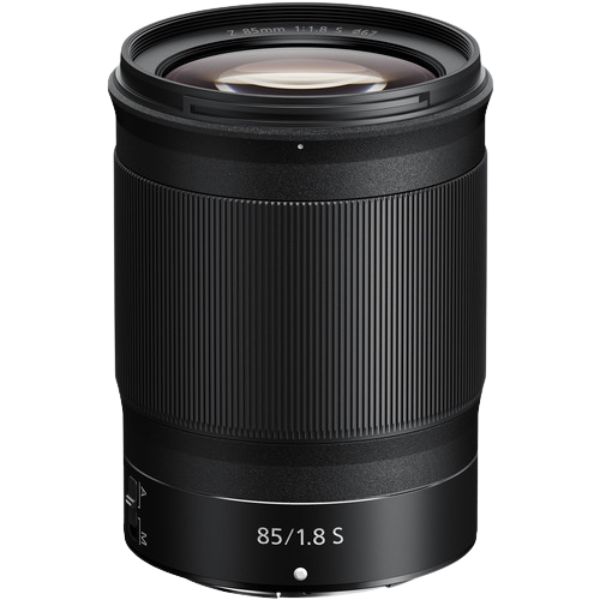
In fall 2019, alongside the early Z-mount cameras, Nikon released this 85mm f/1.8 S, one of the first lenses designed for the system. Compared with the simpler and less ambitious DSLR version, this mirrorless version is larger and heavier.
The DSLR version was already popular and very good, but this new version goes even further, with excellent image quality, especially from f/2.8. The build quality is in line with the rest of the S series: very good and weather-sealed. Autofocus is not the fastest, so this is more of a portrait lens than a true sports lens, although it can still be used in that context. It is probably one of the best 85mm f/1.8 lenses available.
This level of quality comes at a price, since it costs around €950, much more than the DSLR version. Still, it is hard to find better in this category.
3. Nikon Z 85mm f/1.2 S
| Features | Visual |
|---|---|
|
|
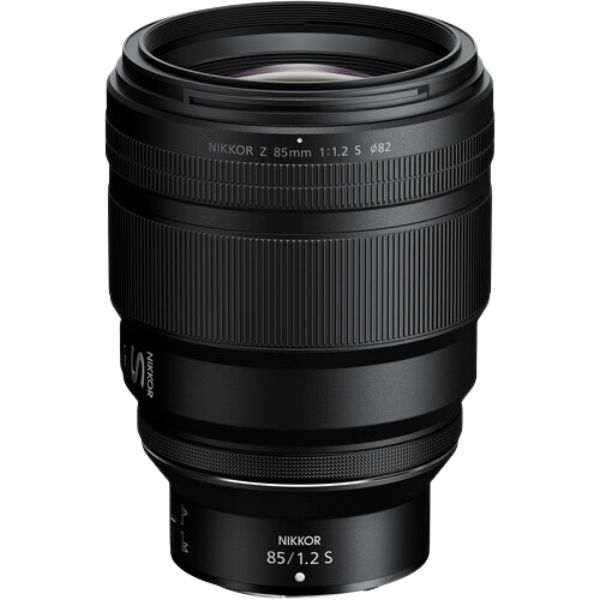
The NIKKOR Z 85mm f/1.2 S is a premium prime lens for the Z-mount. It stands out for its bokeh rendering and optical quality. Thanks to its f/1.2 aperture and 11-blade diaphragm, it produces smooth, pleasing background blur.
Optically, it uses 15 elements in 10 groups, including 2 aspherical elements and 1 ED glass element. The minimum focusing distance is 85cm, which is standard for this type of focal length. Its fast, efficient autofocus also helps compensate for the very shallow depth of field.
This lens is also well suited to video thanks to its reduced focus breathing. The main downside is its size: it is quite bulky, so it is not the easiest lens to carry during long photo or video sessions.
In short, if you are looking for a high-quality portrait lens, the NIKKOR Z 85mm f/1.2 S should suit you very well.
4. Nikon Z 70-180mm f/2.8
| Features | Visual |
|---|---|
|
|
Announced in June 2023, the Nikon Z 70-180mm f/2.8 is a bright telephoto zoom for the Z-mount. It sits as a more affordable and more compact alternative to the NIKKOR Z 70-200mm f/2.8 VR S. Its weight and dimensions remain very reasonable, so it is easy enough to carry.
Optically, it is built around 19 elements in 14 groups to keep aberrations under control. It also has a 9-blade aperture, smooth autofocus and an external zoom design. The main drawback is the lack of optical stabilization, which is a shame.
In short, this Nikon lens is versatile, well made and, above all, more affordable. It ticks many boxes: performance, attractive pricing and compactness. And yes, it does look very similar to the Tamron 70-180mm I use for the FE mount.
5. Nikon Z 70-200mm f/2.8 S VR
| Features | Visual |
|---|---|
|
|
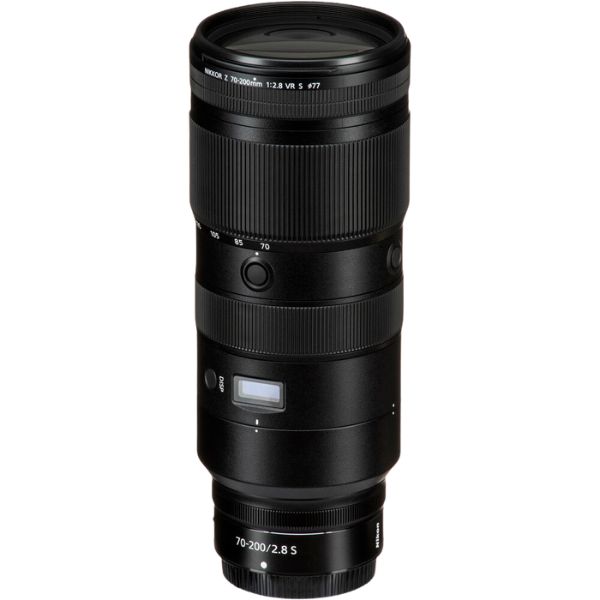
In early 2020, Nikon released one of the classic full-frame professional zooms: a 70-200mm f/2.8. This Z-mount version is slightly lighter than the DSLR version, although it is still quite bulky.
Image quality is excellent wide open across the entire focal range, which is a strong performance despite a slight drop at 200mm that will barely be noticeable. The build is high-end, like the 14-24mm and 24-70mm f/2.8, with an LCD display. Autofocus is very fast and quiet, making it a strong choice for sports photography. Stabilization is effective too, which is useful at this focal length, especially with such a large lens.
At around €2,950, this is not a lens for casual users, but that is true of most manufacturer 70-200mm f/2.8 zooms. You can rely on it, although this level of performance is expected from a professional zoom in this class.
6. Nikon Z 105mm f/2.8 S MC VR
| Features | Visual |
|---|---|
|

|
In June 2021, Nikon announced its first native Z-mount macro lens, the 105mm f/2.8 S VR. Compared with the DSLR version, this one is longer but a few dozen grams lighter.
Image quality is excellent from full aperture, as you would expect from a serious macro lens. Build quality is exemplary, and all the useful macro features are included: a focus limiter, a focus distance and magnification ratio display, and stabilization. Autofocus is not the fastest, as is often the case with macro lenses, but it is still good enough for portraits.
At around €1,200, this is the best Z-mount macro lens, and it is also interesting for portraits. By the way, I cover it in detail in my article on the best current Nikon Z macro lenses.
Below is a comparison of the lenses mentioned so far.
| Nikon Z telephoto portrait lenses | Focallength | Max.Aperture | Weight | Dim. (Ø x L) | Min. FocusDist. | Approx.price | Best price | |||
|---|---|---|---|---|---|---|---|---|---|---|
| + | Nikon Z 24-120mm f/4 S | 24-120mm | f/4 | 1.4 lb / 630g | 3.3 x 4.6" / 84 x 118 mm | 1.1' / 35 cm | $1 095 | Amazon B&H | More info + | |
|
||||||||||
| + | Nikon Z 70-180mm f/2.8 | 70-180mm | f/2.8 | 1.8 lb / 795g | 3.3 x 5.9" / 84 x 151 mm | 10.6" / 27 cm | $1 245 | Amazon B&H | More info + | |
|
||||||||||
| + | Nikon Z 70-200mm f/2.8 S VR | 70-200mm | f/2.8 | 3 lb / 1360g | 3.5 x 8.7" / 89 x 220 mm | 1.6' / 50 cm | $2 695 | Amazon B&H | More info + | |
|
||||||||||
| + | Nikon Z 85mm f/1.8 S | 85mm | f/1.8 | 1 lb / 470g | 3 x 3.9" / 75 x 99 mm | 2.6' / 80 cm | $795 | Amazon B&H | More info + | |
|
||||||||||
| + | Nikon Z 85mm f/1.2 S | 85mm | f/1.2 | 2.6 lb / 1160g | 4 x 5.6" / 103 x 142 mm | 2.8' / 85 cm | $2 795 | Amazon B&H | More info + | |
|
||||||||||
| + | Nikon Z MC 105mm f/2.8 VR S | 105mm | f/2.8 | 1.4 lb / 630g | 3.3 x 5.5" / 85 x 140 mm | 11.4" / 29 cm | $1 045 | Amazon B&H | More info + | |
|
||||||||||
Z telephoto lenses for sports and wildlife - beyond 200mm
The choice of very long focal length lenses for the Nikon Z-mount has grown, but it remains more limited than on older systems. A few third-party brands now offer this type of lens too.
- Entry-level zoom
- Non-stabilized
- AF a bit slow
- Good sharpness in the center

- Top build quality
- Excellent image
- Best suited for wildlife photography
- Fast and silent AF
- High-performance zoom lens
- Efficient optical stabilization
- Robust, tropicalized construction
- Fast, accurate AF

- Versatile zoom lens
- Efficient stabilization (5.5 stops)
- Smooth, silent AF
- Internal zoom for easy handling

- Top quality construction
- Lightweight/compact
- Superb sharpness
- Much cheaper (vs f/2.8)

- Integrated teleconverter
- Exemplary image quality
- Top of the line construction
- Very high-end lens
- Exceptional sharpness
- Built-in teleconverter
- Superb build construction
- Excellent AF
Here is the list of Z-mount sports and wildlife telephoto lenses over 200mm:
- Tamron 70-300mm f/4.5-6.3 Di III RXD Z
- Nikon Z 100-400mm f/4.5-5.6 S VR
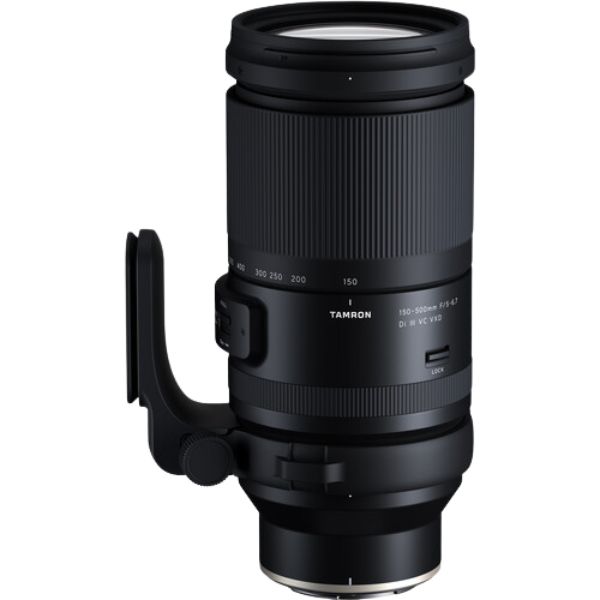
- Tamron 150-500 mm f/5-6.7 Di III VC VXD
- Nikon Z 180-600 mm f/5.6-6.3 VR
- Nikon Z 400mm f/4.5 S VR
- Nikon Z 400mm f/2.8 S TC VR
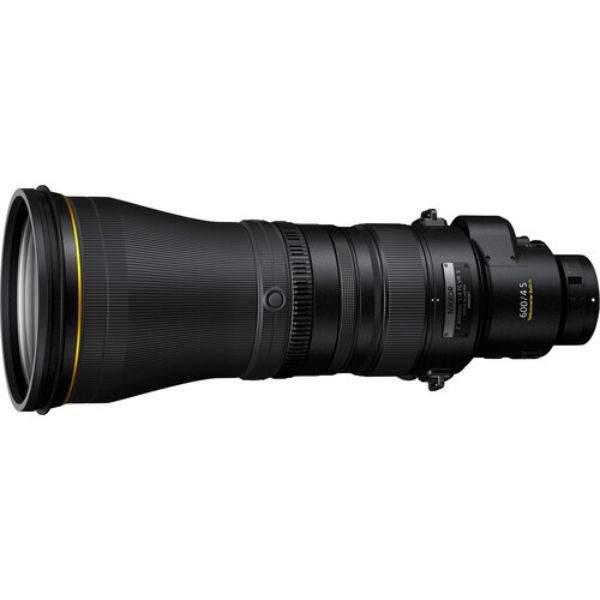
- Nikon Z 600mm f/4 S TC VR
- Nikon Z 800mm f/6.3 S VR
The following table lists the main features of the telephoto lenses below.
1. Tamron 70-300mm f/4.5-6.3 Di III RXD Z
| Features | Visual |
|---|---|
|
|
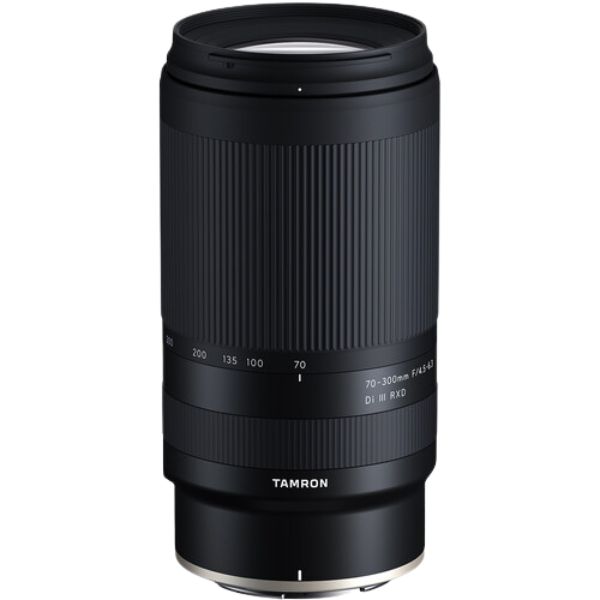
At the end of 2022, Tamron released its first Nikon Z-mount lens under its own name. As usual, the brand started with a traditional entry-level telephoto zoom: the 70-300mm f/4.5-6.3, a lens it had already been selling for a few years in Sony E-mount.
As often with this type of zoom, the center is good even wide open, but sharpness drops quickly toward the edges. Stopping down one or two stops improves consistency, even if it still does not reach an excellent level. Autofocus is decent but can be a little slow, as the RXD motor remains limited, especially compared with the VXD motor Tamron uses on its more recent lenses. Optical flaws are typical, with vignetting and distortion, but they are easy to correct. Flare resistance is fairly good and chromatic aberration is well controlled. The less pleasing bokeh and lack of optical stabilization are drawbacks, although the stabilized sensors in most Nikon Z bodies help compensate.
At around €700, it remains one of the most affordable ways to reach this kind of focal length, with Nikon’s 100-400mm costing far more. If you are getting started in wildlife photography or want a lightweight, affordable telephoto zoom, it is a very good choice.
2. Nikon Z 100-400mm f/4.5-5.6 S VR
| Features | Visual |
|---|---|
|
|
At the end of 2021, following Sony’s lead, Nikon released a Z-mount 100-400mm f/4.5-5.6 with the same focal length and aperture range as the Sony GM.
Image quality is very good wide open at every focal length, which is what you expect from this type of lens: if it is not good wide open, there is little chance it will become excellent simply by stopping down. Build quality is top-tier, with an LCD display, and the autofocus is fast and quiet.
At around €3,000, the price is similar to the Sony GM: high, but in line with the competition.
3. Tamron 150-500 mm f/5-6.7 Di III VC VXD
| Features | Visual |
|---|---|
|
|
The Tamron 150-500mm f/5-6.7 Di III VC VXD is a well-established telephoto zoom. It expands the range of third-party options for the Z-mount and carries over several features from the Sony E-mount version. Its optical construction uses 25 elements in 16 groups, including XLD and LD glass. Its variable maximum aperture, from f/5 to f/6.7, is rather modest, but it is helped by VC optical stabilization, which is very useful at long focal lengths.
Its size and weight remain reasonable for this category. It is sturdy and weather-sealed, and it also includes several physical controls: an AF/MF switch, a focus limiter and a VC stabilization selector. Autofocus is fast and precise too. Thanks to its extended focal range, the lens is well suited to wildlife and sports photography.
Overall, the Tamron 150-500mm f/5-6.7 Di III VC VXD is a strong alternative to the Nikon 100-400mm and 180-600mm. In my opinion, it offers a good balance between performance, portability and price. Personally, I bought it for my Sony system!
4. Nikon Z 180-600 mm f/5.6-6.3 VR
| Features | Visual |
|---|---|
|
|
Introduced in June 2023, the NIKKOR Z 180-600mm f/5.6-6.3 VR is a versatile telephoto zoom. In a way, it succeeds the AF-S NIKKOR 200-500mm f/5.6E ED VR for DSLRs, while offering a wider range. Its optical design uses 25 elements in 17 groups, including six ED elements. Autofocus is smooth and quiet. Its VR stabilization system offers up to 5.5 stops of compensation, helping offset the modest f/5.6 to f/6.3 maximum aperture.
Although it is large and heavy, the lens is easy to handle. It also uses an internal zoom design, which helps maintain better balance. In the field, the 0.25x maximum magnification makes it useful for capturing distant subjects with good precision.
In short, the NIKKOR Z 180-600mm f/5.6-6.3 VR competes with lenses such as the Sony FE 200-600mm f/5.6-6.3 G OSS or the Sigma 150-600mm f/5-6.3 DG DN OS Sports. It is also available at a more attractive price. A very appealing option!
5. Nikon Z 400mm f/4.5 S VR
| Features | Visual |
|---|---|
|
|
In July 2022, Nikon released a 400mm f/4.5. The brand had already introduced a very high-end and very expensive f/2.8 version at around €15,000, so it was interesting to see Nikon offer a more affordable alternative, even if this one still costs around €3,700.
For the price, this 400mm delivers remarkable image quality and very well-controlled optical flaws. Autofocus is fast and accurate, and stabilization is effective. The appeal of this f/4.5 version, beyond its lower price compared with the f/2.8 model, is that it is lighter and more compact.
For photographers who cannot afford the f/2.8 version, or who simply want a lighter lens to carry in the field, Nikon offers an excellent option here. Personally, I would love to see this kind of lens from other brands too, especially Sony, since that is the system I use.
6. Nikon Z 400mm f/2.8 S TC VR
| Features | Visual |
|---|---|
|
|
At the beginning of 2022, Nikon released its first large-aperture Z-mount prime telephoto lens: the 400mm f/2.8 S. It includes a built-in teleconverter that can be activated on the lens, turning it into a 560mm f/4.
Image quality is exemplary, as you would expect from a high-end prime of this kind (fortunately, given the price, haha). Build quality is equally impressive, with all the features you would expect from a professional Nikon lens. The built-in teleconverter effectively gives you two lenses in one. Autofocus is very fast and quiet.
At almost €15,000, this is a very high-end lens reserved for wildlife professionals, or for enthusiasts hesitating between buying a car or a lens, haha.
7. Nikon Z 600mm f/4 S TC VR
| Features | Visual |
|---|---|
|
|
At the end of 2022, Nikon announced the 600mm f/4 S TC VR. With its €17,250 price tag, this lens is clearly aimed at a very small audience and intensive sports or wildlife use.
Optical quality is extremely high, but that is the least you can expect at this price. It has a built-in teleconverter that gives you an 840mm equivalent focal length without cropping digitally and without taking your eye away from the viewfinder. Stabilization is very effective, and autofocus is highly efficient, which is again expected from a lens at this level and price.
If your budget and your work require a lens of this caliber, then enjoy it: it is a seriously high-end lens.
8. Nikon Z 800mm f/6.3 S VR
| Features | Visual |
|---|---|
|

|
In April 2022, Nikon announced an 800mm f/6.3, an unusual lens both because of its maximum aperture and because of its design, which uses a Phase Fresnel element to reduce weight and size.
Image quality is excellent from full aperture, which is reassuring given the relatively modest maximum aperture. Build quality is again very high-end, with an LCD display and a drop-in filter slot. Autofocus is fast and quiet.
At around €7,300, this is once again an outstanding lens at a price that will not suit everyone. We can always comfort ourselves by saying it costs almost half as much as the 400mm f/2.8, haha.
Here is the comparison of the lenses mentioned above.
| telephoto lenses sports/wildlife Z | Focallength | Max.Aperture | Weight | Dim. (Ø x L) | Min. FocusDist. | Approx.price | Best price | |||
|---|---|---|---|---|---|---|---|---|---|---|
| + | Tamron 70-300mm f/4.5-6.3 Di III RXD Z | 70-300mm | f/4.5-6.3 | 1.2 lb / 545g | 3 x 5.8" / 77 x 148 mm | 2.6' / 80 cm | $599 | Amazon B&H | More info + | |
|
||||||||||
| + | Nikon Z 100-400mm f/4.5-5.6 VR S | 100-400mm | f/4.5-5.6 | 3.2 lb / 1435g | 3.9 x 8.7" / 98 x 222 mm | 2.5' / 75 cm | $2 695 | Amazon B&H | More info + | |
|
||||||||||
| + | Tamron 150-500mm f/5-6.7 Di III VC VXD Z | 150-500mm | f/5-6.7 | 3.8 lb / 1720g | 3.7 x 8.4" / 93 x 212 mm | 2' / 60 cm | $1 199 | Amazon B&H | More info + | |
|
||||||||||
| + | Nikon Z 180-600mm f/5.6-6.3 VR | 180-600mm | f/5.6-6.3 | 4.4 lb / 1995g | 4.3 x 12.4" / 110 x 316 mm | 4.3' / 130 cm | $1 899 | Amazon B&H | More info + | |
|
||||||||||
| + | Nikon Z 400mm f/2.8 TC VR S | 400mm | f/2.8 | 6.5 lb / 2950g | 6.1 x 15" / 156 x 380 mm | 8.2' / 250 cm | $13 995 | Amazon B&H | More info + | |
|
||||||||||
| + | Nikon Z 400mm f/4.5 VR S | 400mm | f/4.5 | 2.7 lb / 1245g | 4.1 x 9.2" / 104 x 235 mm | 8.2' / 250 cm | $3 245 | Amazon B&H | More info + | |
|
||||||||||
| + | Nikon Z 600mm f/4 TC VR S | 600mm | f/4 | 3.2 lb / 1470g | 4.2 x 10.9" / 107 x 278 mm | 13.1' / 400 cm | $4 795 | Amazon B&H | More info + | |
|
||||||||||
| + | Nikon Z 800mm f/6.3 VR S | 800mm | f/6.3 | 5.3 lb / 2385g | 5.5 x 15.2" / 140 x 385 mm | 16.4' / 500 cm | $6 495 | Amazon B&H | More info + | |
|
||||||||||
Alternatives
You’ll also find third-party brands offering telephoto lenses in this focal length range. Quality is generally lower, but they are also much cheaper, so they are worth considering. They are summarized in the table below:
| Third-party brand alternatives | Focallength | Max.Aperture | Weight | Dim. (Ø x L) | Min. FocusDist. | Approx.price | Best price | |||
|---|---|---|---|---|---|---|---|---|---|---|
| + | TTArtisan AF 75mm f/2 Z | 75mm | f/2 | 11.99 oz / 340g | 2.6 x 3" / 67 x 76 mm | 2.5' / 75 cm | $178 | Amazon B&H | More info + | |
|
||||||||||
| + | Meike 85mm f/1.8 AF Z | 85mm | f/1.8 | 13.62 oz / 386g | - | 2.8' / 85 cm | $199 | Amazon B&H | More info + | |
|
||||||||||
| + | Meike 85mm f/1.4 AF Z | 85mm | f/1.4 | - | - | 3.2' / 98 cm | $469 | Amazon B&H | More info + | |
|
||||||||||
| + | Viltrox AF 85mm f/1.8 STM ED IF Z | 85mm | f/1.8 | 1.2 lb / 540g | 3.1 x 3.6" / 80 x 92 mm | 2.6' / 80 cm | $399 | Amazon B&H | More info + | |
|
||||||||||
| + | 7artisans 85mm f/1.8 AF Z | 85mm | f/1.8 | - | 2.8 x 3.8" / 72 x 96 mm | 2.6' / 80 cm | $299 | Amazon B&H | More info + | |
|
||||||||||
As for manual focus lenses, there are also:
| Manual focus alternatives | Focallength | Max.Aperture | Weight | Dim. (Ø x L) | Min. FocusDist. | Approx.price | Best price | |||
|---|---|---|---|---|---|---|---|---|---|---|
| + | Samyang MF 85mm f/1.4 Nikon Z | 85mm | f/1.4 | 1.6 lb / 740g | 3.1 x 4" / 78 x 103 mm | 3.6' / 110 cm | $399 | Amazon B&H | More info + | |
|
||||||||||
| + | Yongnuo YN85mm f/1.8Z DF DSM Z | 85mm | f/1.8 | 0.9 lb / 405g | 2.6 x 3.5" / 67 x 88 mm | 2.6' / 80 cm | $379 | Amazon B&H | More info + | |
|
||||||||||
| + | AstrHori 120mm f/2.8 2X Macro Z | 120mm | f/2.8 | 2.1 lb / 930g | 3 x 6.5" / 77 x 165 mm | 1' / 30 cm | $369 | Amazon B&H | More info + | |
|
||||||||||
The FTZ adapter, and its more recent version II, lets you adapt F-mount lenses. Still, native Z-mount options remain the best way to take full advantage of the system.
What if I have a Nikon Z APS-C body?
I’m not going to write a detailed article about the best Nikon Z APS-C lenses here, because at the time this article was first written, the choice was still very limited, haha. However, if you own a Nikon Z APS-C body, there are two telephoto lenses to consider: the Nikkor Z DX 18-140mm f/3.5-6.3 VR and the Nikkor Z DX 50-250mm f/4.5-6.3 VR.


These two lenses are obviously different, but both are stabilized. If you are looking for a telephoto lens suited to an APS-C body and have a smaller budget, they are two possible options. The 50-250mm may be especially interesting if you want more reach while trying an affordable entry-level telephoto lens under €400.
There is also a great option from Viltrox: the Viltrox AF 75mm f/1.2 Z, an ultra-bright telephoto lens with autofocus that has received excellent feedback, especially for its price, under €600. It is a very appealing portrait lens, with a wide aperture that helps isolate your subject.
Choosing your telephoto lens - reminders
Focal length
It is generally considered, on full-frame sensors, that a telephoto lens starts above 70mm. Beyond 200mm, you often move into what is called super-telephoto territory.
Telephoto lenses are usually bought to photograph distant subjects that cannot be approached easily, and/or to isolate and highlight a subject. Classic uses include portraits, wildlife and sports photography.
There is no single answer to which focal length you should use for each type of photography. For sports and portraits, focal lengths between 70 and 200mm are often recommended, especially when the lens remains bright, from f/1.8 to f/2.8 for example. This makes it easier to isolate the subject and shoot at faster shutter speeds.
Wildlife photography often requires longer focal lengths, depending on the subject. As a general idea, 200mm is often a minimum, while birds usually require at least 400mm or 500mm.
The Nikon Z-mount now has more third-party options than it used to, but for the most specialized and high-end telephoto lenses, Nikon still dominates the system, and prices can climb quickly.
Maximum aperture
A few quick words on maximum aperture. In general, a lens with a large aperture allows you to:
- Shoot at faster shutter speeds,
- Isolate your subject more effectively from the background,
- Reduce depth of field, meaning the area that appears sharp around your subject.
Of course, a “bright” zoom lens, meaning one with a large maximum aperture such as f/2.8, will be heavier, larger and more expensive than a lens that opens “only” to f/4. It is mainly a question of choice and budget, even if the number of alternatives still depends on the focal range you need.
Stabilization
Even though most of the lenses mentioned in this article are stabilized, except for the 85mm Z and the 24-120mm Z, stabilization is still worth discussing. Long lenses are often fairly heavy, and the risk of camera shake is clearly higher than with a standard or wide-angle lens.
Since telephoto lenses are often used for moving subjects, I find it more useful to have a larger aperture, so you can shoot faster, than to rely only on stabilization to lower your shutter speed. That said, as mentioned above, many telephoto lenses are stabilized.
Also keep in mind that most full-frame Nikon Z cameras have in-body stabilization, so even if your lens does not have optical stabilization, the camera can still help reduce camera shake at slow shutter speeds.
Conclusion
So there you have it: the best Nikon Z-mount telephoto lenses currently available for portraits, sports and wildlife photography. The range has grown, but many of the most interesting options are still fairly high-end and expensive.
I hope this article helps you make your choice and that you’ll be happy with the lens you eventually buy. Feel free to add other options in the comments if you know of any.
In any case, I also invite you to read our article on the best current Nikon Z lenses, which includes all available focal lengths!
See you soon

Written by Sylvain PONS
I've been passionate about photography since 2010, learning as I went along. Today, I dedicate myself to guiding others in their choice of camera gear and sharing a variety of tips to improve their photography skills.
Despite our care, a mistake may have slipped into this article. If you find any, please don't hesitate to let us know so we can correct it as soon as possible and keep our information up-to-date!

Hello,
what do you think about Laowa 95mm for Nikon Z?
Thank you.
He a great reviews from what I heard.