Viltrox AF 85mm f/1.4 Pro FE, the full review
Last update: 06/27/2026
Our blog continues to grow thanks to you, our readers. This post may contain affiliate links, which means we can earn a small commission if you make a purchase through them, at no extra cost to you. This helps us to continue to bring you more and support our work!
To be honest, it had been a little while since I last took the time to test a lens in depth. I’m back with a full review of the Viltrox AF 85mm f/1.4 Pro FE, a lens designed mainly, though not only, for portrait photography on Sony full-frame bodies.
I have to say I was more than pleasantly surprised when I received this email from Viltrox. Last year, I had already tested the Viltrox 56mm f/1.4 STM, a fast standard lens that works very well for portrait photography, this time on Sony APS-C bodies. Since we travel a lot and this blog is part of our day-to-day life, we decided to keep one APS-C body and one full-frame body.
So I was quite happy to spend time properly testing this Viltrox 85mm and sharing my honest opinion with you. Of course, I’d like to thank Viltrox for agreeing to send me a copy of the lens for this review. That said, this review remains entirely independent, and I have full control over what I write in this article. I tested the lens on my Sony A7 III, while I wait to decide whether or not to move to a more advanced body, even though this camera still suits most of my photography needs very well.
Overview and context
To give you a bit of context, I think many photographers probably still see Viltrox as an average-quality Chinese third-party brand. But the brand has clearly gained a lot of momentum. You only need to look at its latest releases to see how far it has come and how strong some of its recent lenses have become. And I’m not only talking about Sony, since Viltrox now offers many lenses for several mounts. Among the brand’s recent standouts, we can mention the Viltrox AF 75mm f/1.2 Pro and the Viltrox AF 27mm f/1.2 Pro, both for Fujifilm X mount.
More recently, Viltrox officially launched its higher-end full-frame “LAB” line with the Viltrox AF 135mm f/1.8 LAB FE, a lens that has received very strong reviews overall. So it would not be surprising to see an even higher-end 85mm appear at some point. And that says a lot, because this 85mm f/1.4 is already extremely impressive. In my opinion, its quality is worthy of the biggest brands in many respects. What really makes the difference compared with those major brands is the price. Available around €535 to €670 depending on the retailer, it offers excellent value for money for anyone looking for a high-quality portrait lens with a very wide aperture. Yes, of course, Sigma and Sony also offer 85mm f/1.4 lenses, but both remain considerably more expensive.
I find the 85mm focal length especially interesting for portraits because it still gives you some framing flexibility. To me, it is often a good compromise between a 50mm, which can sometimes feel too wide and isolate the subject a little less, and a 135mm, which requires more working distance. As always, though, it comes down to taste and needs.
Suffice it to say I was quite excited to bring you this field test. I’ll do my best to highlight this lens and its strengths. Here we go!
Essential specs
Before diving into the lens in detail, here are the key points to remember.
In addition to these elements, here is some extra information.
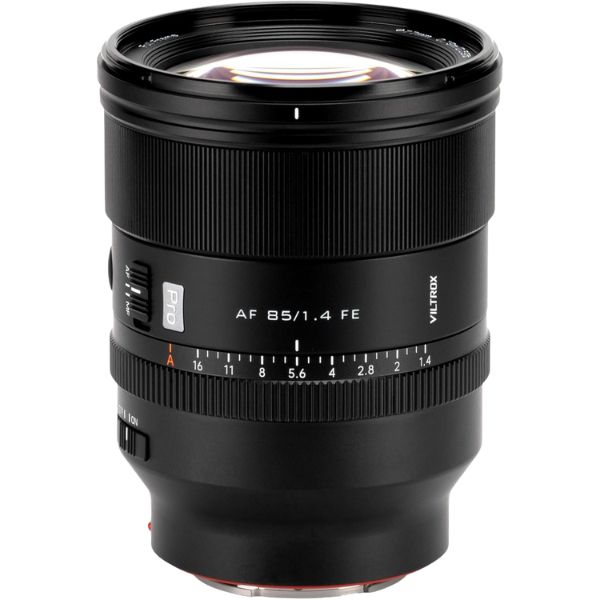
- Optical construction: the optical design of this 85mm is based on a complex formula of 15 elements in 11 groups, including 3 ED elements to reduce chromatic aberrations, 9 HR elements to maintain high resolution while keeping the lens relatively compact, and 1 UA aspherical element designed to limit distortion and optical artifacts. There is also an HD nano multi-coating to reduce flare and ghosting while maintaining good contrast.
- Autofocus: Dual HyperVCM motor. This system is designed to provide fast, quiet and precise autofocus in both photo and video, with smooth focusing transitions.
- Weather sealing: yes, with several seals around the lens body.
| Features | Visual |
|---|---|
|
|
Unboxing
Let’s start at the beginning: the unboxing, or the moment you take the lens out of the box. I received this package here in Guadeloupe from China, and everything arrived in perfect condition, very well protected. The lens comes in a beautiful glossy black box, itself protected by a good-quality outer cardboard sleeve. Even from the packaging, you can tell Viltrox is taking this lens seriously.
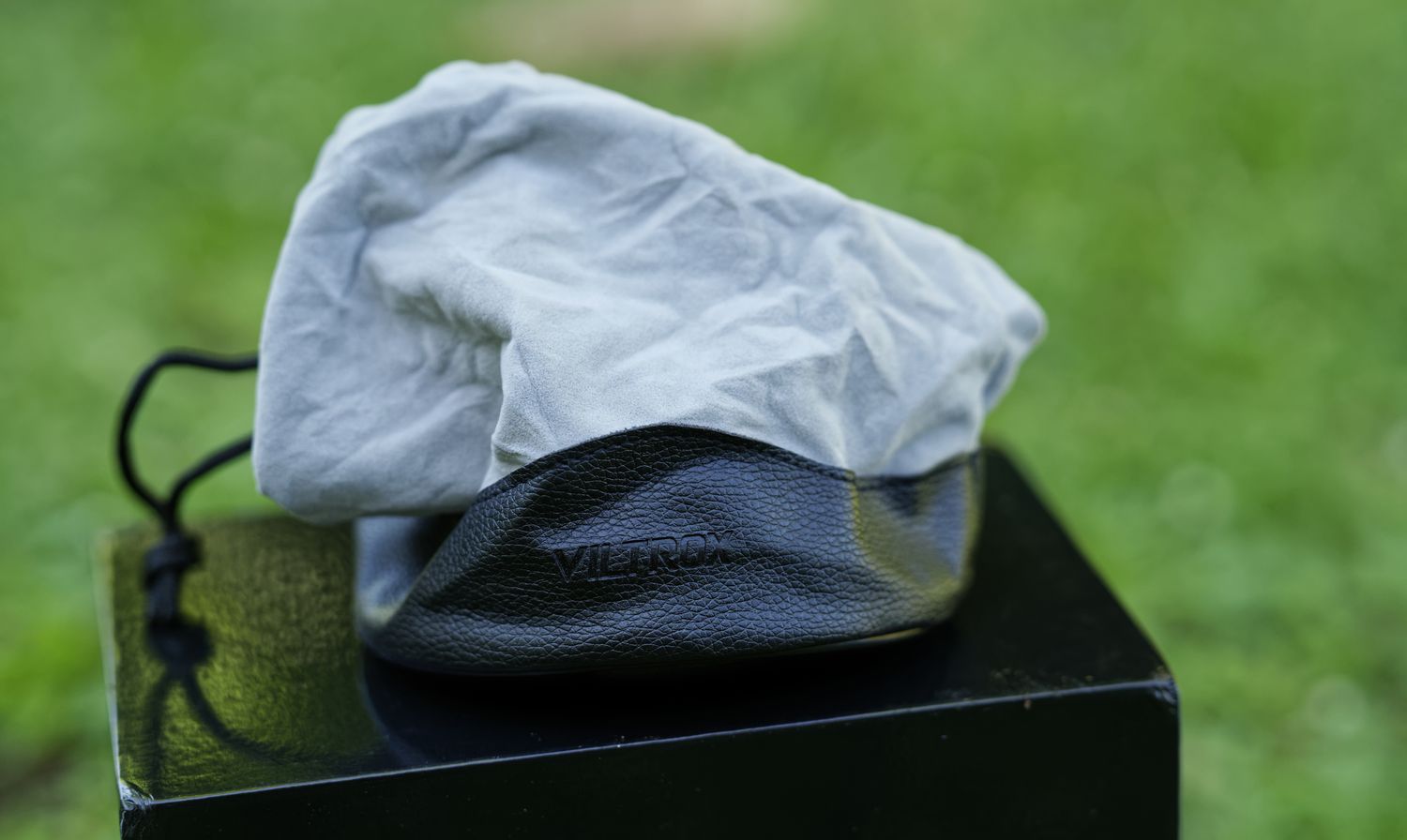

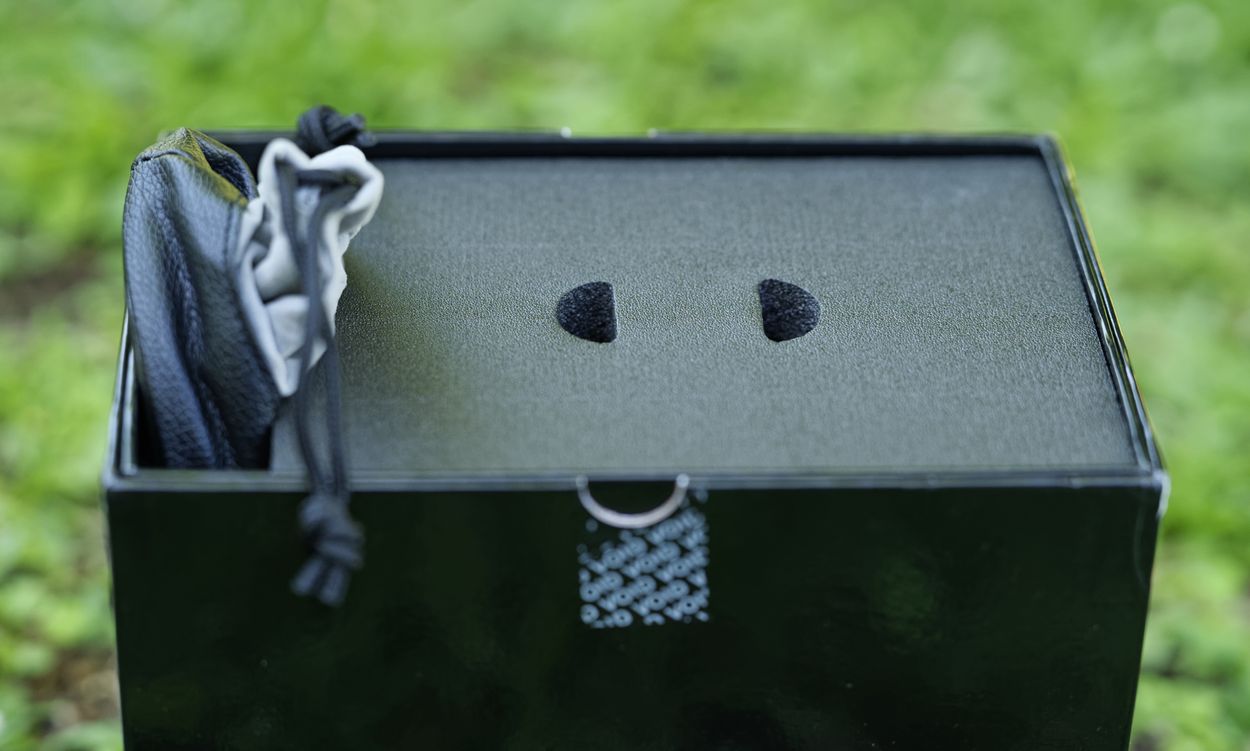
When you open the box, the lens is firmly set into hard foam. On the side, you also get a good-quality gray and black pouch, reinforced at the base. It almost reminds me of the pouches Canon provides with its L-series lenses. In any case, it’s always nice to see this kind of attention to detail.
Ergonomics, design and handling
I’ve kept you waiting long enough. The first time I took the lens out of the box, I was genuinely impressed by the overall quality. It is not the lightest or most compact lens, but once you hold it, you immediately feel a very high level of build quality. To put it simply, I had an even better impression of solidity than when handling, for example, my Sigma 150–600mm or even some Canon L lenses from my DSLR days.
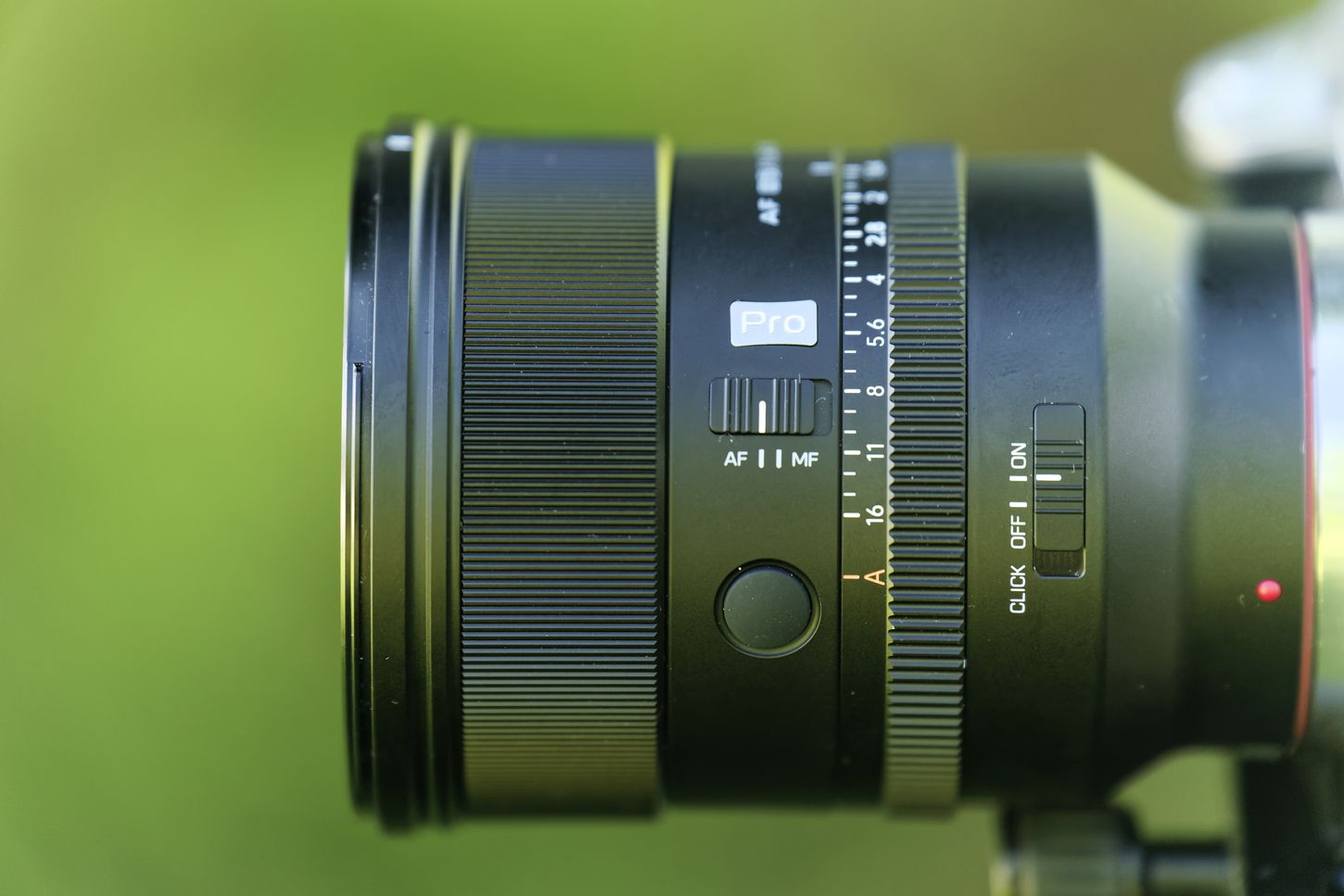
The lens really gives off a premium feeling, with a magnesium-aluminum alloy similar to what is often used in recent mirrorless bodies. The all-metal construction makes an excellent first impression. Yes, mounted on my A7 III, which is not the heaviest mirrorless body, it does have some heft. But I still find the whole setup well balanced. You also clearly see the brand’s “PRO” designation and the “AF 85/1.4 FE” marking on the barrel.
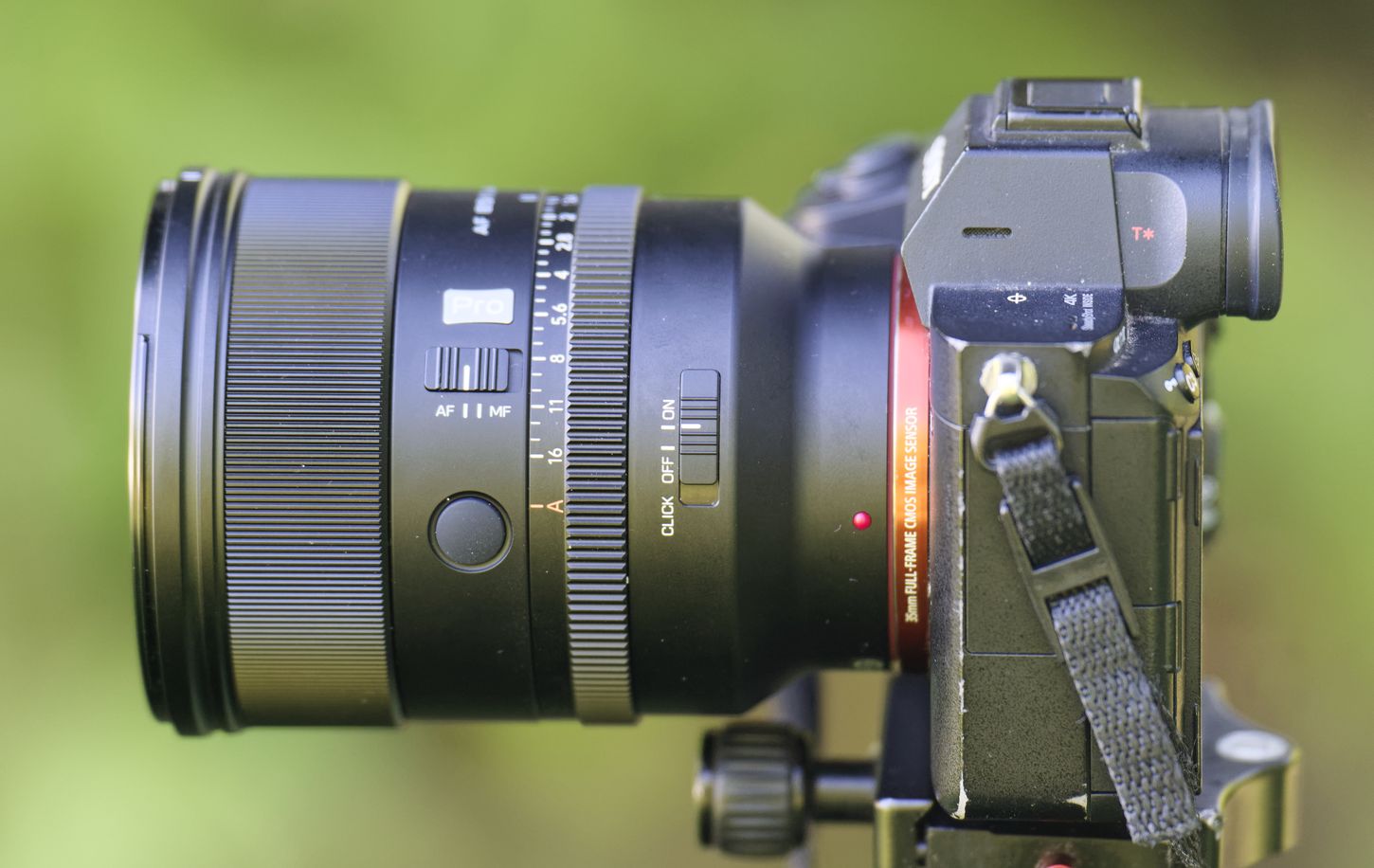
On the lens, you’ll find plenty of controls, just like on a major-brand optic. There is an AF/MF switch that works perfectly, a manual focus ring, and an aperture ring with a switch to make it clicked or de-clicked. There is also a small round button that works as a customizable Fn button. It can be used as a shortcut for certain functions, such as AF lock, subject detection, switching between MF and AF, or other settings depending on your camera. It can also be configured more precisely through the Viltrox Lens App via the integrated USB-C port.
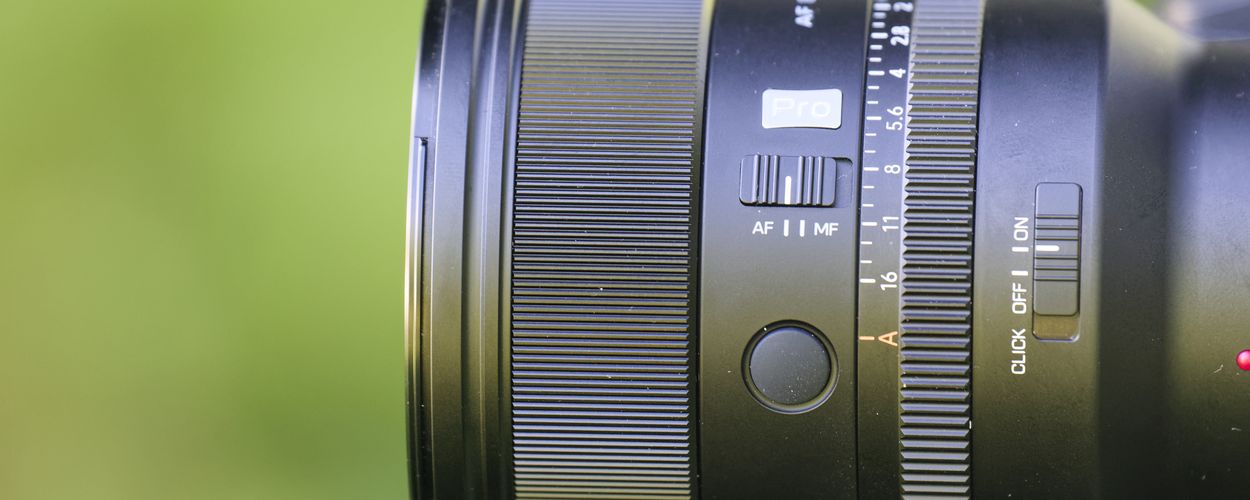
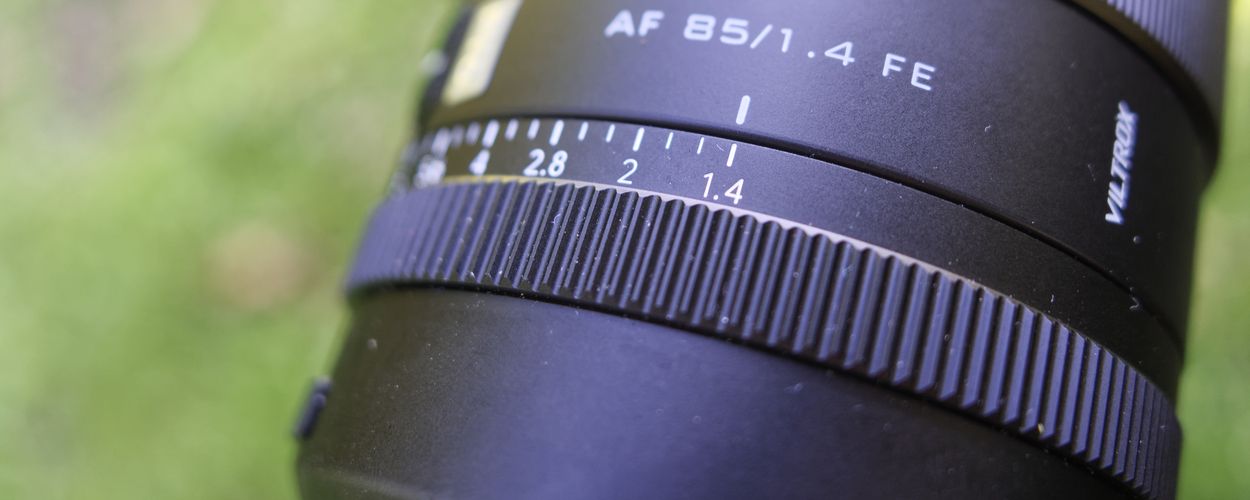
The aperture ring is superb. It is marked in full stops, from f/1.4 to f/16, and the third stops are also engraved on the metal barrel. Moving from f/1.4 to f/16 is very smooth and pleasant, and the ring is simply a joy to use. After f/16, you get an “A” auto position, which lets you control the aperture from the camera body. But the ring feels so good that I often found myself staying wide open and using the ring directly. You also have a switch to click or de-click the aperture ring. No issue there either: it works perfectly, and the clicks make it easy to know where you are.
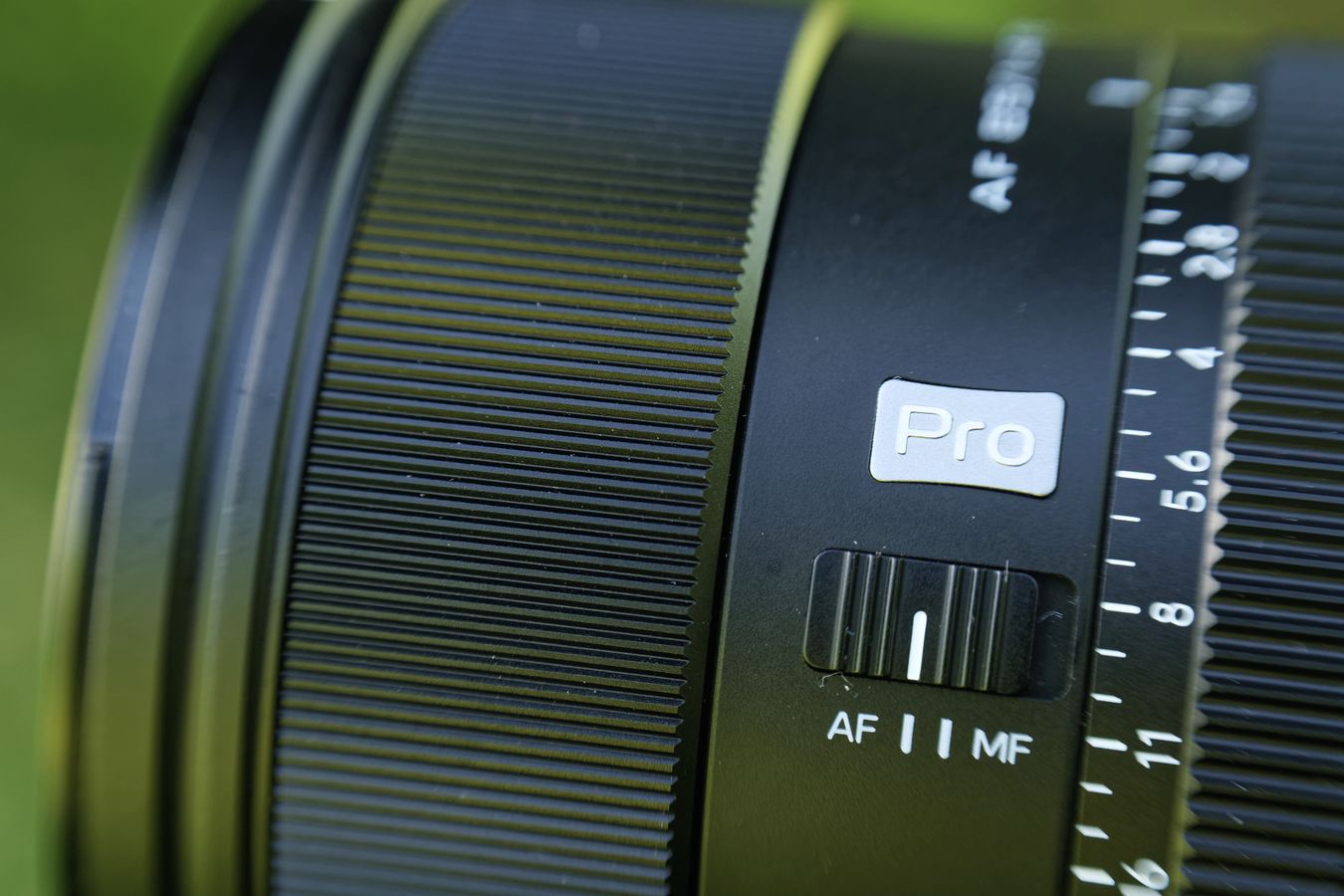
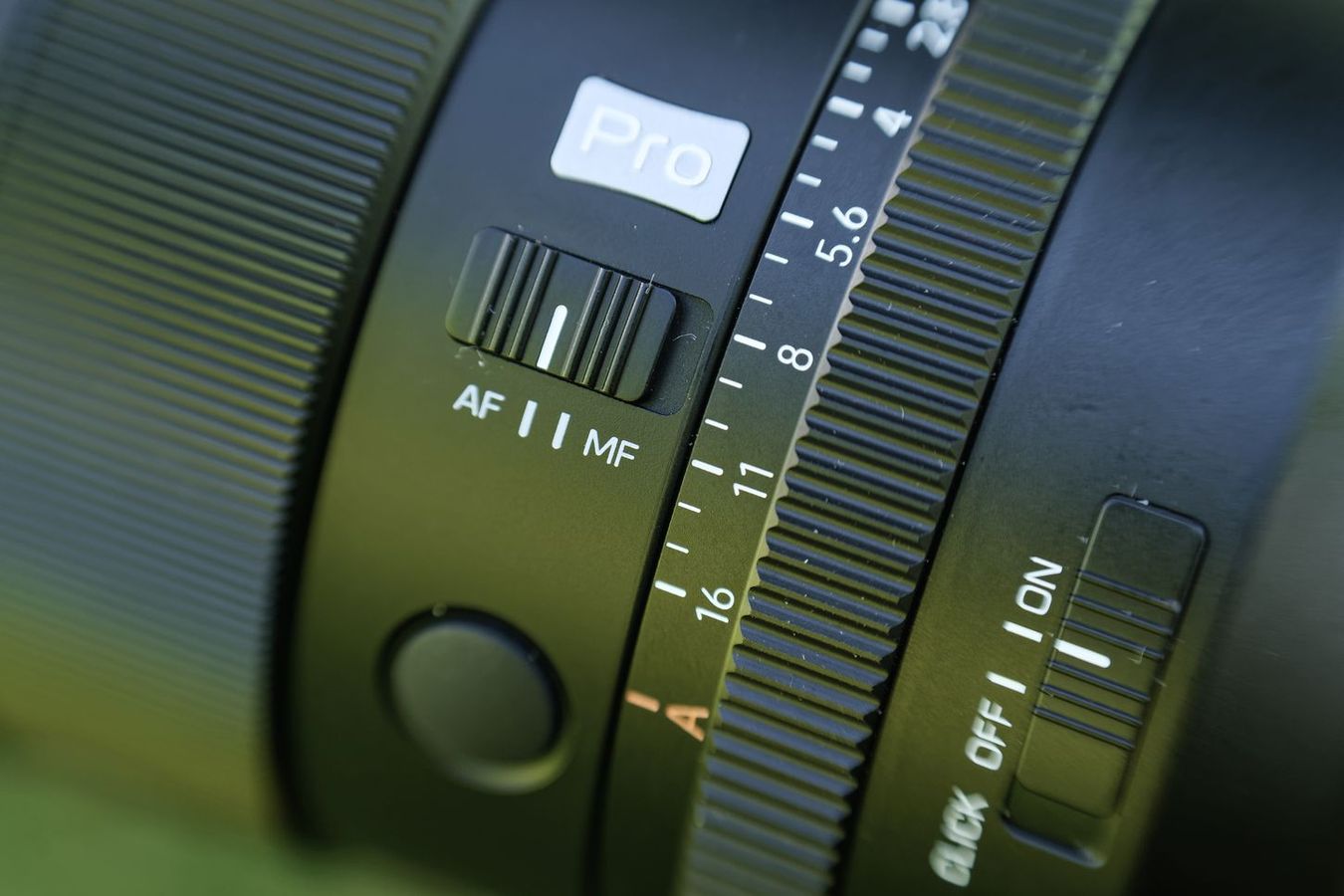
The manual focus ring is also fairly wide and feels very good, in my opinion. It is neither too loose nor too stiff. For me, it is just right. I did a few close-up tests, for example on flowers, and the manual focus ring makes it easy to place focus exactly where you want it.

The lens also comes with a good-quality lens hood, and I have nothing to complain about there. One small detail I like: you can see the red sealing gasket at the mount, which adds a nice touch. You’ll also notice the USB-C port, which makes firmware updates easy. More recently, and still with the aim of offering more flexibility, Viltrox has also provided an iOS/Android app that lets you update the lens via Bluetooth or by connecting it directly to your phone.
When the lens is off, you may feel something moving inside the barrel. This disappears once the lens is mounted on a powered-on camera body. These are the floating optical elements. It can feel a little strange at first, but don’t worry: it does not cause any issue in normal use.
Autofocus (photo)
I was really curious to test this lens’s autofocus, and overall, I was not disappointed at all. Yes, if you read other reviews of this Viltrox 85mm, some say its autofocus is still slightly behind the Sony 85mm f/1.4 GM II. But honestly, given the price difference, that is hardly surprising. I couldn’t test the Sony myself, which costs several times more, but according to several tests, the difference in AF performance is fairly small. That says a lot about the quality of the Viltrox.
Personally, in everyday use and during my test days, I found the autofocus very good, if not excellent. In AF-S mode, I didn’t encounter any particular issue, even though I rarely use this mode, even for static subjects such as details or landscapes. In AF-C mode, I also obtained very good results. Eye tracking locks on very well and, frankly, I didn’t find much to criticize here.
That said, as with all very fast lenses, you need to be careful when shooting portraits of several people. At f/1.4, some people will inevitably fall outside the focus plane, as you can see in the photo below of my two sons.



I also did quite a few tests in poor light, at sunrise, sunset, in dark rooms and so on, and autofocus still locks very well, even wide open. In my view, that is a very good result.
Given the interesting close focusing distance of 79cm and 0.13x magnification, I also spent some time using manual focus. Honestly, it is very pleasant. As mentioned above, the ring is wide, well damped and easy to control, so you can fine-tune focus very precisely. Obviously, when shooting wide open, the depth of field is so shallow that manual focus can sometimes be useful if you want to place focus on a very specific detail. At that distance, with an 85mm lens wide open, the bokeh is gorgeous.


Autofocus (video)
To be honest, I shoot very little video; it is simply not my thing. Still, I spent some time doing a few tests, and once again I was impressed by the autofocus in video. The Dual HyperVCM motor is supposed to offer smoother transitions than classic STM motors, and in practice, I found it very good.
I was able to film quite a few lively scenes, including my kids in the garden, passersby in the street and people running. Autofocus generally locked onto the subject very well, as it should. I also tried a few slightly tougher AF tests, switching from a very close subject to a more distant one and then back again, and the lens still handled it well. So for video, I think the result is very good.
There is a little focus breathing, but honestly, it remains acceptable.
Image quality
Assessing image quality is always a little subjective, I agree. I also prefer testing image quality in the field rather than spending days photographing brick walls. But unfortunately, for certain aspects, you more or less have to do it.
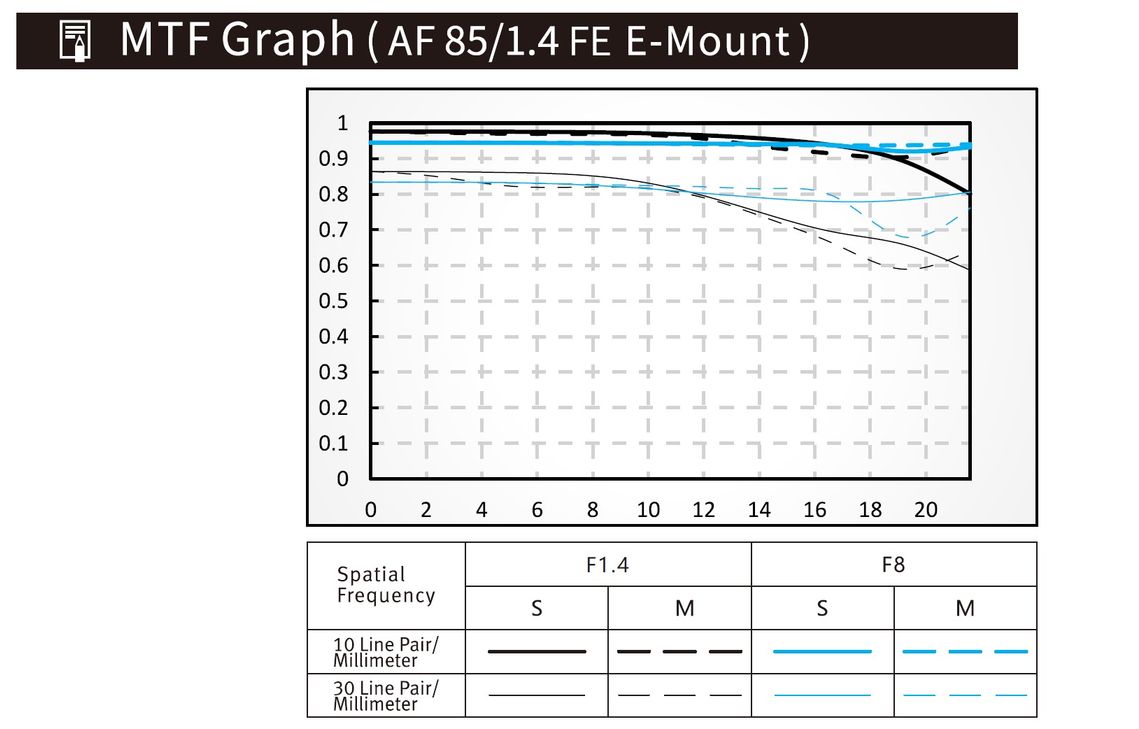
According to the MTF charts provided by Viltrox, the lens delivers very good sharpness in the center and through the mid-frame, with only a slight drop in the corners at f/1.4. At f/8, the center loses a little sharpness because of diffraction, but the whole frame becomes more even, with a balanced rendering across the image. At the same time, you don’t buy an 85mm f/1.4 to avoid shooting wide open, right? As a reminder, MTF (Modulation Transfer Function) charts illustrate a lens’s ability to reproduce contrast and fine detail from the center to the edges of the frame.
Generally speaking, before getting into the detailed tests below, I was genuinely blown away by the image quality from the very first minutes. I’m not necessarily a portrait specialist, although I increasingly enjoy photographing Mélanie and the kids. It is always enjoyable, and frankly, the sharpness of this 85mm f/1.4 and, more broadly, its rendering are superb. Images are detailed and sharp, whether at short or longer distances. The wide f/1.4 aperture really helps subjects stand out, with a beautiful “pop” or 3D effect. In short, I have nothing to complain about regarding image quality.
Sharpness
To test the sharpness of this Viltrox 85mm f/1.4, I chose a test scene at home. All tests were carried out on my Sony A7 III on a tripod. Below are the 100% crop results from the center of the frame.

(Hover over the aperture values below the images to see how sharpness changes – 100% crop – center of the image)
As you can see from the images above, center sharpness wide open at f/1.4 is already excellent in my view. Stopping down to f/2 doesn’t make a huge difference in the center, although the edges gain slightly in sharpness and contrast. Stopping down further to f/2.8 continues in the same direction, mainly improving the edges. Beyond that, you don’t see much difference in sharpness. This means that although it is not what you primarily buy this lens for, it can also be excellent for landscape photography from f/2.8.
Although I don’t own either the Sigma 85mm f/1.4 DG DN Art or the Sony FE 85mm f/1.4 GM II, I can still say a few words based on the reviews I’ve read. In short, the difference in sharpness compared with the Sigma is not really visible, while the Sony probably remains slightly ahead, but at a much higher price. In any case, almost everyone seems to agree that Viltrox has done an excellent job on image quality.
Bokeh
Let’s talk about bokeh now, that famous blur produced by fast-aperture lenses. Obviously, with an 85mm lens and an f/1.4 aperture, you expect good things. And you know what? I was not disappointed. To my eyes, the bokeh quality is truly outstanding. It is smooth and creamy, as people often say, and the separation between subject and background or foreground is genuinely beautiful.
Here are two images that show the difference in bokeh.


Here are three more images to show the quality of the bokeh you can get with this Viltrox 85mm f/1.4.



To show you something interesting, I photographed a scene in my garden with two different lenses: the Viltrox 56mm f/1.4 STM on an APS-C body and the Viltrox 85mm f/1.4 Pro FE on full frame. Since the APS-C sensor is about 1.5 times smaller than full frame, the framing is almost identical in both photos. However, the bokeh difference is obvious. With the 56mm, the background remains more present and less blurred, whereas the 85mm f/1.4 image delivers a creamier, more aesthetic blur. To get a comparable look with the 56mm, you would need an aperture around f/0.9, which clearly explains the difference between the two systems.


(Ignore the difference in RAW processing and color rendering…)
Distortion
The lens handles distortion extremely well. There is a very slight pincushion distortion, but in practice it is almost invisible to the naked eye and won’t cause any real problem in everyday photography. On the contrary, this type of rendering can even be flattering for portrait photography, as it avoids any obvious deformation. On this point, Viltrox has clearly done an excellent job. Note, however, that at the time of writing, there is not yet a dedicated DxO correction profile. In practice, though, correction is almost unnecessary because distortion is already so well controlled. From what I have read, the Viltrox performs as well as the Sony in this respect and much better than the Sigma, which makes more compromises here.
Vignetting
As for vignetting, it was obviously expected with such a wide f/1.4 aperture. Measurements indicate around –2 EV, which remains very reasonable and comparable to what Sony offers. In my view, there is really no reason to complain. From f/2.8, vignetting becomes subtle, at around –0.8 EV.
Here is an example showing how vignetting evolves.


Chromatic aberrations
Regarding chromatic aberrations, the tests I performed show that they remain very discreet. They do exist and can appear wide open, especially on outdoor bokeh balls, but Viltrox controls them very well. As always, if you shoot RAW, this is rarely a real problem because you can correct them in a few seconds in post-processing.
Flare
As with chromatic aberrations, I would say you will have a hard time finding flare. We know that very fast lenses like this one can sometimes produce flare, particularly when the sun is on the side or directly facing the lens. So yes, in the worst-case scenarios, for example if you shoot straight into the midday sun, you can find a little flare, but it remains minor.
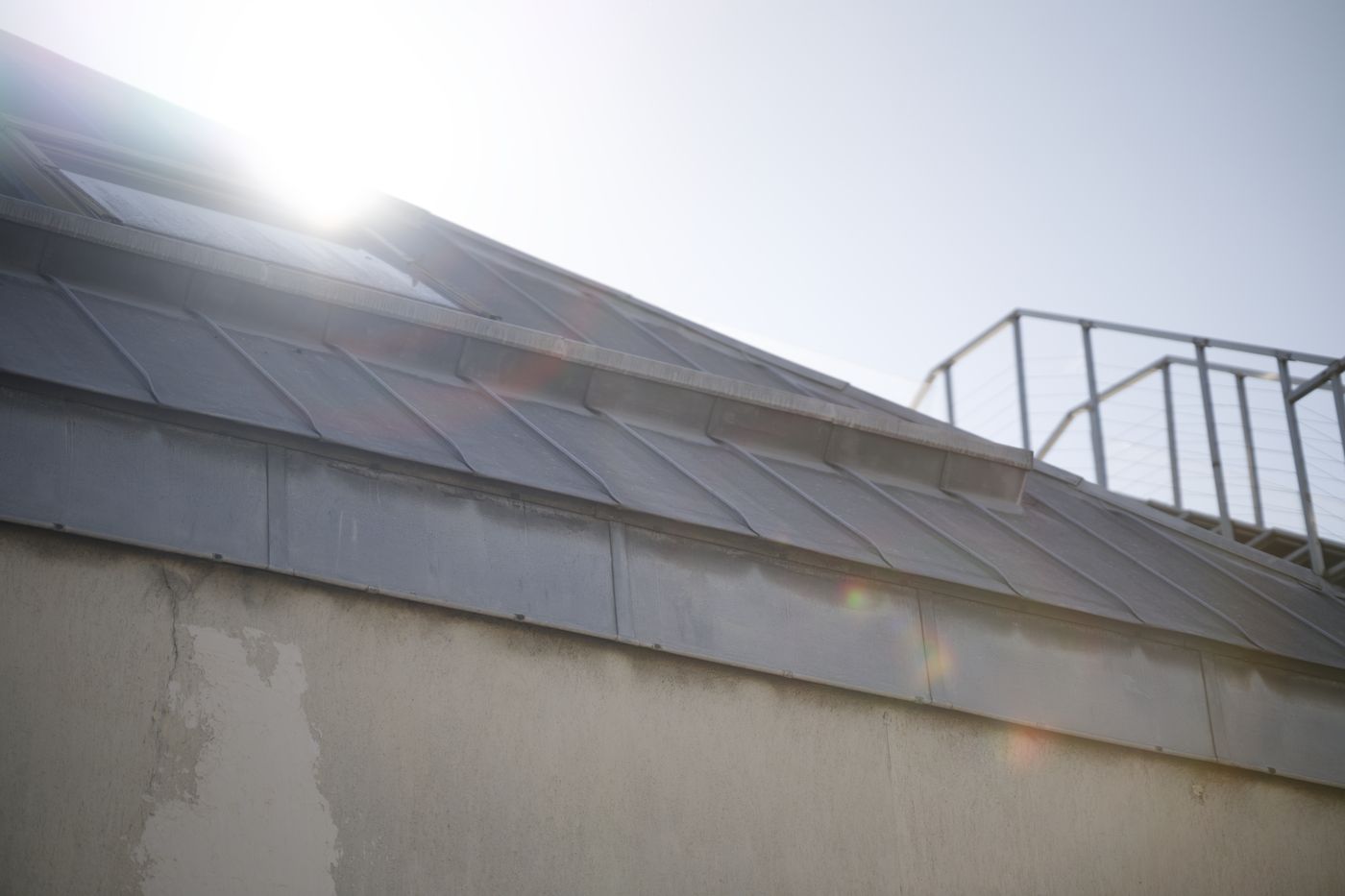
In more typical situations, such as a sunset with softer light, even backlit, I did not notice any particular issue.
Coma / astrophotography
I haven’t tested it personally yet, but from the feedback I’ve read, the Viltrox 85mm f/1.4 Pro shows decent coma, with a slight wing-shaped spread on stars in the corners. It is a respectable result, without being exceptional.
More images of the Viltrox 85mm f/1.4 Pro FE
Feel free to take a look at the image gallery shot with this lens to get a clearer idea of the photos you could take!
I’ll check it outPros / cons
| ✅ Advantages | ❌ Disadvantages |
|---|---|
|
|
What 85mm f/1.4 alternatives are there?
Although this is not really the main point of the article, it is always useful to discuss possible alternatives if you are looking for an 85mm f/1.4.
This is the high-end rival. Overall, it offers better autofocus than the Viltrox, especially in bursts beyond 15 fps. Sharpness is slightly better too, although the difference is not huge. It also has the unique advantage of focus breathing compensation. On the other hand, it costs several times more than the Viltrox and remains fairly large, even if it has lost weight compared with the first GM version. In practice, it is the ultimate option, but in my opinion, the Viltrox keeps a value-for-money advantage that is very hard to beat.
The Sigma is extremely close to the Sony GM II in sharpness, so it may be slightly ahead of the Viltrox, especially wide open. It is also lighter, at around 625g versus roughly 800g for the Viltrox. Build quality is at a similarly high level, but the color rendering seems less pleasing to me than on the Viltrox. It also shows more pronounced distortion and vignetting. Its price is significantly higher, which makes the Viltrox the more balanced option, with a flattering rendering and a more accessible price.
The Samyang remains compact and very light, at 509g versus roughly 800g for the Viltrox, and its autofocus is relatively fast and quiet. On the other hand, it falls behind the Viltrox in several areas: ergonomics are more basic, there is no real aperture ring, bokeh quality drops more noticeably from f/2.8, and color rendering is less natural. Build quality is also a step below. It is a lightweight alternative, but overall it feels less consistent and less interesting, especially when you compare it with what the Viltrox offers.
The Sirui plays the lighter-weight card, at 540g versus roughly 800g for the Viltrox, while also offering an attractive price. It delivers very pleasant color rendering, soft bokeh and a nice 3D effect, somewhat close to the Viltrox look. Conversely, it is weaker in sharpness wide open, and its autofocus lags behind, especially in bursts. It also suffers from more pronounced distortion and vignetting, where the Viltrox does better. Its build and ergonomics are decent but less refined. In short, it is tempting for its price and weight, but less complete than the Viltrox.
In the end, looking at the alternatives, I find it hard to recommend the Sony unless budget is not a concern. Yes, it is better in certain respects, but it costs several times more. The Sirui and the Samyang are, in my view, a step below and less compelling overall.
Conclusion
That brings us to the end of this full review of the Viltrox 85mm f/1.4 Pro FE. I was genuinely impressed by both its build quality and its image quality. To be honest, I can sometimes be a little skeptical at first about lenses from certain third-party brands, but here I was very pleasantly surprised.
Some people consider the lens a little heavy, and that is often one of the only drawbacks mentioned. But honestly, I did not find it problematic. Sure, it is not a light lens, but mounted on a full-frame body, I find the combination well balanced. If I had to sum up the key strengths, I would mention the exemplary all-metal build, superb image quality even wide open, soft and creamy bokeh that isolates subjects beautifully, very reliable autofocus in my experience, well-controlled optical flaws overall and, above all, a price that is hard to beat.
As you’ve probably gathered, I was completely won over by this lens. If you want to buy it, you can use the links below.
I hope I’ll have the opportunity to test the LAB series lenses soon, especially the 135mm, and maybe even the 35mm f/1.2, which looks excellent. In the meantime, I invite you to read our full review of the Sony FE 20mm f/1.8 G, a very high-quality wide-angle lens.
See you soon for a new review!

Written by Sylvain PONS
I've been passionate about photography since 2010, learning as I went along. Today, I dedicate myself to guiding others in their choice of camera gear and sharing a variety of tips to improve their photography skills.
Despite our care, a mistake may have slipped into this article. If you find any, please don't hesitate to let us know so we can correct it as soon as possible and keep our information up-to-date!