The best Fujifilm zoom lenses
Last update: 06/16/2026
Our blog continues to grow thanks to you, our readers. This post may contain affiliate links, which means we can earn a small commission if you make a purchase through them, at no extra cost to you. This helps us to continue to bring you more and support our work!
Hello everyone! I’m back with a brand-new article about camera gear. I’ve started writing new guides dedicated to lenses and camera bodies again. At the end of 2024, we carried out a major overhaul of the photography section of the blog. More specifically, we created two comprehensive databases: one for camera bodies and one for lenses. That’s what helps us keep track of new releases and share them with you!
So, I’m continuing in that direction with a guide to the best Fujifilm zoom lenses available right now.
Fujifilm offers APS-C mirrorless cameras that have long been well known and highly regarded among photographers. In this article, I’ll focus exclusively on Fujifilm lenses for the X-mount. I won’t be covering the brand’s medium format lenses here.
If you haven’t seen it yet, I recently put together a complete guide to the best Fujifilm lenses for portrait photography. You’ll find some of the same zooms I’ll cover in this article. While portraits are more often shot with prime lenses, usually with a wide aperture, it’s absolutely possible to use a zoom too. Anyway, that was just a quick side note—let’s get back to the main topic.
As I mentioned, I’m going to introduce the current top Fujifilm zoom lenses. In most cases, a lens with a relatively broad focal range makes it easier to adapt to a variety of shooting situations. Standard focal lengths like 16–55mm or 18–55mm, for example, work well for landscapes, street photography, and even portraits. Of course, you’ll also find lenses with longer focal ranges that are better suited to sports or wildlife photography, at least to some extent depending on the conditions.
As always, I had to make some choices—Fujifilm and third-party brands offer quite a few zoom lenses. The goal here isn’t to list them all, but to highlight a selection of lenses that really stand out and, in my opinion, are worth considering. Don’t worry, I’ll also suggest a few alternatives throughout the article. Alright, let’s get into it!
Best Fujifilm zoom lenses
The best Fuji X wide-angle zoom lenses
Very often, when we think about zoom lenses, wide-angle zooms aren’t the first options that come to mind. But if you’re looking for a lens with a very wide field of view, you don’t necessarily have to choose a Fujifilm zoom. Let me explain: there are now several third-party brands offering solid alternatives, which I’ll mention below. And if you’re open to using a prime lens, I strongly recommend looking at those third-party options as well. You’ll often find lenses that are just as good—if not better—in terms of brightness, which can be especially useful in low light.
By the way, we’ve already put together a complete guide to the best wide-angle lenses for Fujifilm X-mount. Feel free to take a look!
Sigma 10-18mm f/2.8 DC DN Contemporary X
| Features | Visual |
|---|---|
|

|
Available for Fujifilm X-mount, the Sigma 10-18mm f/2.8 DC DN Contemporary is a third-party APS-C lens designed for mirrorless cameras. More specifically, it’s a compact, bright, and affordable ultra-wide-angle zoom. Thanks to its light weight and small size, this zoom is a practical, high-performing option for landscape photography, architecture, and vlogging.
In terms of build, the construction is mostly plastic, but the lens still feels solid and well made, with a metal mount. This weather-sealed lens is quite minimalist, with no switches or aperture ring. Optically, it includes 13 elements in 10 groups, with 3 FLD glass elements, 1 SLD element, and 4 aspherical lenses. It’s clearly an effective design for reducing aberrations and flare. Autofocus is fast, accurate, and quiet. As for performance, center sharpness is excellent even wide open. To improve edge sharpness, you simply need to stop down to f/4.
On the downside, vignetting is noticeable at 10mm when shooting wide open, though it’s easy to correct in post-processing. Distortion is present but remains well controlled. Chromatic aberrations are also handled well. In short, the Sigma 10-18mm f/2.8 DC DN Contemporary is mainly aimed at landscape and architecture photography, as well as vlogging. If you’re a content creator who’s often on the move, it’s a lightweight, bright, and capable option. Priced at around €800, it offers excellent value for money—I’d say it sits at a very reasonable price point.
Fujifilm XF 10-24mm f/4 R OIS WR
| Features | Visual |
|---|---|
|
|
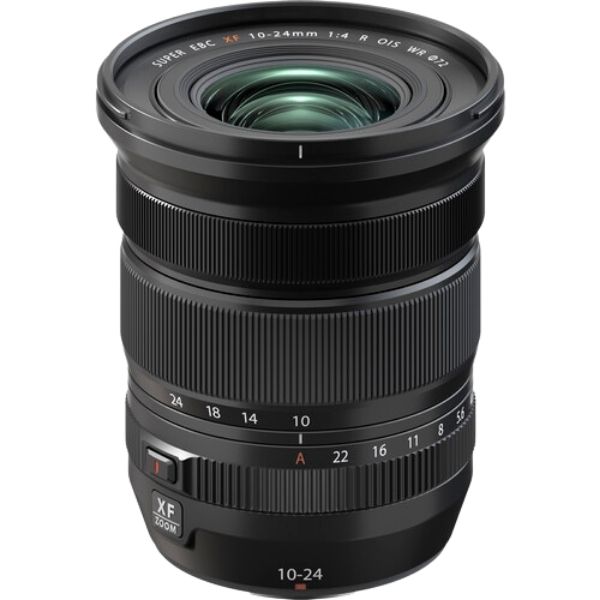
At the end of 2020, Fujifilm released the XF 10-24mm f/4 R OIS WR, an updated version of its ultra-wide-angle APS-C zoom that has earned a strong reputation among X-mount users. With its light, compact design, the lens keeps the main strengths of its predecessor while adding practical ergonomic improvements. It offers a full-frame equivalent focal range of 15–36mm, making it ideal for landscape and architectural photography.
In terms of build quality, the lens is excellent, with a polycarbonate barrel and refined finishes. The main upgrade in this version is weather sealing, which makes it better suited to outdoor use. The design has also been refined with the removal of side switches, improving the overall handling. Image stabilization has been improved too, offering up to 3.5 stops of compensation. The optical formula remains unchanged, with 14 elements in 10 groups, including aspherical and extra-low dispersion elements. Performance-wise, sharpness is impressively consistent throughout the zoom range. Center sharpness is excellent even wide open, while edge sharpness peaks between f/5.6 and f/8. Optical flaws are well controlled: there is some minor vignetting at 10mm and f/4, and distortion is present but automatically corrected in-camera. Chromatic aberrations are virtually nonexistent, even in backlit conditions.
In short, the Fujifilm XF 10-24mm f/4 R OIS WR is a very strong choice for demanding photographers looking for a versatile and durable ultra-wide-angle lens. Alongside its optical qualities, it’s also easy to carry, making it perfect for long shooting sessions. This updated version is ideal for travel and field work, even in more challenging conditions. It fits nicely into the upper mid-range segment, just below the high-end XF 8-16mm f/2.8, while remaining more compact and affordable.
Tamron 11-20mm f/2.8 Di III-A RXD X
| Features | Visual |
|---|---|
|
|
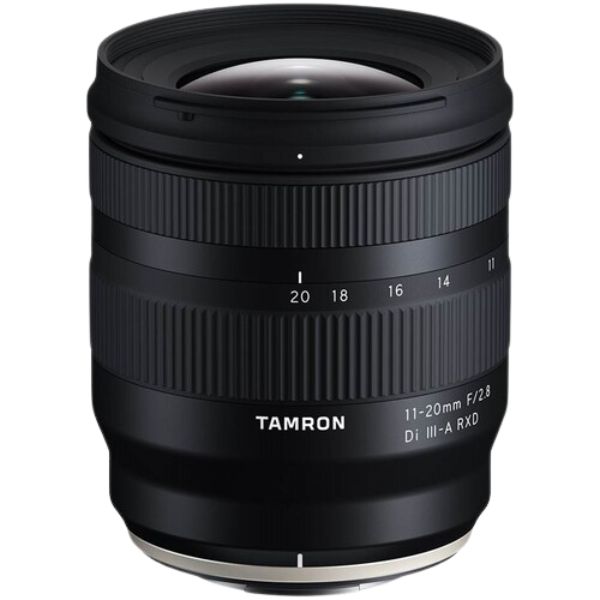
In 2023, Tamron released the 11-20mm f/2.8 Di III-A RXD for the X-mount, after first making it available for Sony E-mount in June 2021. From the moment it launched, this lens stood out as a strong alternative for photographers looking for a bright ultra-wide-angle zoom at a reasonable price. Of course, there are two other options to consider: the Fujinon XF 8-16mm f/2.8 R LM WR, which is much bulkier and more expensive, and the Fujinon XF 10-24mm f/4 R OIS WR, which does not offer the same maximum aperture.
In terms of build, this Tamron is solid and moisture-resistant. Its size and weight make it a compact, travel-friendly option. Note that it does not include an aperture ring. Autofocus is fast and quiet, and the minimum focusing distance ranges from 15 to 24 cm depending on the focal length. As for performance, center sharpness is excellent even wide open, though the edges are slightly softer. For a more even result, simply stop down to f/4 or f/5.6. In terms of flaws, vignetting and distortion are noticeable but remain well controlled. Chromatic aberrations are also kept to a minimum.
All in all, the Tamron 11-20mm f/2.8 Di III-A RXD X is a strong option for Fujifilm users looking for a bright, high-performing, and affordable ultra-wide-angle lens. Of course, it does not fully replace the XF 10-24mm f/4 if you need image stabilization or a slightly wider focal range. But it is a true ultra-wide zoom with excellent image quality and strong optical performance. If you ask me, for a lens this capable, the price is more than fair—so why not take advantage of it?
To help you visualize and compare the features of the three lenses discussed, I’ve put together the following summary table. It’s always useful when you’re trying to decide!
| Wide-Angle Zoom Lenses for Fuji X | Focallength | Max.Aperture | Weight | Dim. (Ø x L) | Min. FocusDist. | Approx.price | Best price | |||
|---|---|---|---|---|---|---|---|---|---|---|
| + | Sigma 10-18mm f/2.8 DC DN Contemporary X | 10-18mm | f/2.8 | 8.82 oz / 250g | 2.8 x 2.5" / 72 x 64 mm | 4.7" / 12 cm | $599 | Amazon B&H | More info + | |
|
||||||||||
| + | Fujifilm XF 10-24mm f/4 R OIS WR | 10-24mm | f/4 | 13.58 oz / 385g | 3.1 x 3.4" / 78 x 87 mm | 9.4" / 24 cm | $999 | Amazon B&H | More info + | |
|
||||||||||
| + | Tamron 11-20mm f/2.8 Di III-A RXD X | 11-20mm | f/2.8 | 11.82 oz / 335g | 2.9 x 3.4" / 73 x 86 mm | 5.9" / 15 cm | $699 | Amazon B&H | More info + | |
|
||||||||||
As usual, I’m also including a few alternatives to the selected lenses. Admittedly, there aren’t many autofocus zoom options available, but one alternative still comes to mind:
- Fujifilm XF 8-16mm f/2.8 R LM WR: this is by far the widest focal range in Fuji’s lineup. As you might expect, it doesn’t come cheap, but the image quality is outstanding!
The best standard zoom lenses
Once again, I had to make a selection, as there are plenty of options on the market. I chose to present four lenses suited to different uses: everyday photography, landscapes, and portraits. That way, whatever you’re looking for, you should be able to find a lens that fits your needs.
Speaking of portraits, we’ve put together a complete article on the best Fujifilm lenses for portrait photography. You’ll find some of the zooms mentioned here, but mostly brighter prime lenses that are better suited to that kind of work.
Fujifilm XF 16-55mm f/2.8 R LM WR II
| Features | Visual |
|---|---|
|

|
Announced in October 2024 and available from late November 2024, the Fujifilm XF 16-55mm f/2.8 R LM WR II stands out as a highly regarded standard zoom for the X-mount. It offers a full-frame equivalent focal range of 24–70mm, making it a very useful choice for portraits, travel, reportage, and everyday photography. One of its main advantages over the previous version is its more compact and lighter design, which makes it easier to carry around.
As for build quality, it’s both solid and weather-sealed. The optical formula has been refined, now featuring 16 elements in 11 groups, including 4 aspherical lenses, 3 ED elements, and 1 Super ED element. The 11-blade aperture also helps produce smooth, natural bokeh. While the lens does not have built-in stabilization, it can rely on the IBIS found in newer camera bodies. In terms of performance, this lens has already proven itself. Sharpness is excellent across the frame, especially at longer focal lengths. Center sharpness is outstanding from f/2.8, with consistent results toward the edges. Chromatic aberrations are well controlled, and distortion is minimal.
In short, the Fujinon XF 16-55mm f/2.8 R LM WR II is a solid upgrade for X-mount users. If you’re looking for a bright, versatile standard zoom, this one won’t disappoint. It’s perfectly suited to reportage, travel, weddings, and natural-light portrait photography. While it does cost more than its predecessor, I think its improved image quality and better ergonomics justify the price.
Fujifilm XF 16-80mm f/4 R OIS WR
| Features | Visual |
|---|---|
|
|
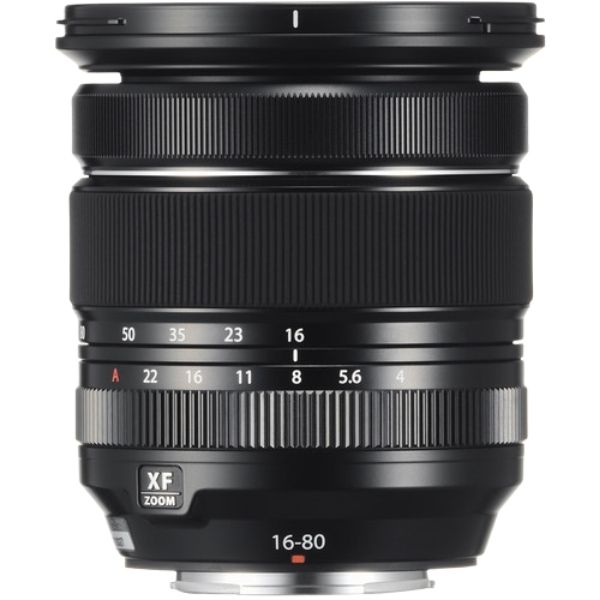
Released in July 2019, the Fujinon XF 16-80mm f/4 R OIS WR stands out as a versatile lens for Fuji’s X-mount. It offers a full-frame equivalent focal range of 24–122mm. In terms of size and compactness, it sits between the XF 18-55mm f/2.8-4 R LM OIS and the XF 16-55mm f/2.8 R LM WR.
As expected, the build quality is excellent, with a polycarbonate construction throughout. The lens consists of 16 elements in 12 groups, including aspherical elements. It delivers smooth, pleasant bokeh, although the constant f/4 aperture can be limiting in low light. Among its strong points are the highly effective optical image stabilization system and the fast, accurate autofocus. When it comes to performance, center sharpness is solid throughout the zoom range. Although edge sharpness lags slightly from 16mm to 80mm, there is a noticeable improvement between 22mm and 50mm. Vignetting is present, but chromatic aberrations are well controlled.
To sum up, the Fujinon XF 16-80mm f/4 R OIS WR is well suited to travel, street, and portrait photography. It combines optical performance with flexibility. Thanks to its ergonomic design, it’s easy to carry without weighing you down. Pretty convenient, right? Honestly, this is a safe bet—you really can’t go wrong with it!
Tamron 17-70mm f/2.8 Di III-A VC RXD X
| Features | Visual |
|---|---|
|

|
Released in 2023 for the Fuji X-mount, the Tamron 17-70mm f/2.8 Di III-A VC RXD is an excellent alternative to the Fujinon XF 16-80mm f/4. Its main advantages over the Fujinon are its wider maximum aperture and more attractive price point. It offers a full-frame equivalent focal range of 25.5–105mm. Its size also makes it suitable for everyday use, even if it is not the smallest option in this category.
Although the lens is made of plastic, it feels solid and modern. This weather-sealed lens consists of 16 elements in 12 groups, including 5 aspherical elements. Compared with Fujifilm’s own options, it stands out by combining image stabilization with efficient autofocus—two strong assets that set it apart. On the downside, it does not include an aperture ring. Image quality is very good overall. More specifically, it delivers excellent center sharpness from f/2.8. For better edge sharpness and more even results across the frame, stopping down to f/5.6 is recommended. In terms of flaws, both vignetting and chromatic aberrations are noticeable but easy to fix in post-processing.
In conclusion, the Tamron 17-70mm f/2.8 Di III-A VC RXD is well suited to portrait and landscape photography. Overall, it’s a high-quality lens with very good value for money. In my opinion, it’s a serious competitor to Fujifilm’s zoom lenses—and definitely worth your attention!
Sigma 18-50mm f/2.8 DC DN Contemporary X
| Features | Visual |
|---|---|
|

|
Announced in November 2022 for the X-mount, the Sigma 18-50mm f/2.8 DC DN X positions itself as a bright, compact zoom lens. It offers a full-frame equivalent focal range of 27–75mm with a constant f/2.8 aperture. Its weight and dimensions are very reasonable, making it a great match for cameras like the X-T50 or X-M5.
This weather-sealed Sigma lens is made entirely of polycarbonate, giving it solid durability even in tougher conditions. Its optical design consists of 13 elements in 10 groups, including 3 aspherical lenses and one SLD element. It uses a standard 55mm filter thread and does not include optical stabilization. In terms of performance, the lens delivers strong overall consistency thanks to its sharpness. It also produces smooth, natural bokeh for pleasing results. As for drawbacks, distortion and vignetting are present but automatically corrected in-camera.
In short, the Sigma 18-50mm is a solid alternative to the first version of the 16-55. It’s well suited to street, portrait, and travel photography. It’s clearly a high-quality, high-performing lens at an attractive price point. If you ask me, this is definitely an option worth considering!
To help you make your choice, here’s a summary table of the four lenses mentioned above. It’s designed to let you compare them at a glance, which is always useful.
| Standard Zooms for Fuji X | Focallength | Max.Aperture | Weight | Dim. (Ø x L) | Min. FocusDist. | Approx.price | Best price | |||
|---|---|---|---|---|---|---|---|---|---|---|
| + | Fujifilm XF 16-55mm f/2.8 R LM WR II | 16-55mm | f/2.8 | 0.9 lb / 410g | 3.1 x 3.7" / 78 x 95 mm | 1' / 30 cm | $1 199 | B&H | More info + | |
|
||||||||||
| + | Fujifilm XF 16-80mm f/4 R OIS WR | 16-80mm | f/4 | 1 lb / 440g | 3.1 x 3.5" / 78 x 89 mm | 1.1' / 35 cm | $799 | Amazon B&H | More info + | |
|
||||||||||
| + | Tamron 17-70mm f/2.8 Di III-A VC RXD X | 17-70mm | f/2.8 | 1.2 lb / 525g | 2.9 x 4.7" / 75 x 119 mm | 7.5" / 19 cm | $699 | Amazon B&H | More info + | |
|
||||||||||
| + | Sigma 18-50mm f/2.8 DC DN Contemporary X | 18-50mm | f/2.8 | 10.05 oz / 285g | 2.4 x 3" / 62 x 77 mm | 4.7" / 12 cm | $529 | Amazon B&H | More info + | |
|
||||||||||
Since there are many interesting alternatives out there, I’ve put together a selection based on different budget levels:
For smaller budgets
- Fujifilm XC 15-45mm f/3.5-5.6 OIS PZ: a lightweight, easy-to-carry lens that delivers decent image quality—and it’s very affordable at under €300. Definitely worth considering!
- Fujifilm XF 16-55mm f/2.8 R LM WR: this is the first version of the Mark II model mentioned earlier. It delivers excellent image quality and is significantly cheaper. It’s still available if you look around!
- Fujifilm XF 18-55mm f/2.8-4 R LM OIS: another great option with solid image quality and zoom versatility. Its maximum aperture is quite wide at the shortest focal length.
Mid-range budget and longer focal length
- Fujifilm XF 18-120mm f/4 LM PZ WR: a popular all-in-one lens, perfect for landscape and portrait photography alike.
- Fujifilm XF 18-135mm f/3.5-5.6 R LM OIS WR: a good alternative if you want a much broader focal range.
The best X-series telephoto zoom lenses
I know I’m repeating myself, but since there are quite a few options out there, I had to make a selection. By the way, we’ve also written a complete guide to the best telephoto lenses—feel free to check it out!
Fujifilm XF 50-140mm f/2.8 R LM OIS WR X
| Features | Visual |
|---|---|
|

|
Released in 2014 (yes, it’s been a while!), the Fujinon XF 50-140mm f/2.8 OIS WR remains the only long telephoto zoom I truly recommend for portrait photography. It offers a full-frame equivalent focal range of 76–213mm and features a constant f/2.8 aperture, which makes it easy to isolate your subject from the background.
This Fuji lens is built from weather-sealed metal and has excellent finishes—it’s clearly a high-end piece of glass. Optically, it consists of 23 elements in 16 groups, including 5 ED elements and 1 Super ED element. Autofocus is fast and responsive, and it’s paired with a stabilization system offering up to 5 stops of compensation. In terms of image quality, sharpness is excellent and consistent even wide open. The bokeh is smooth and pleasing, even at f/2.8. Chromatic aberrations and vignetting are well controlled, while distortion is minimal and flare is nicely handled.
In short, the Fujinon XF 50-140mm f/2.8 OIS WR is a high-end telephoto lens that works beautifully for portraits. Yes, it’s expensive, but considering the performance, image quality, and built-in stabilization, I’d say the price is justified. It’s clearly a worthwhile investment for demanding photographers!
Fujifilm XF 70-300mm f/4-5.6 R LM OIS WR
| Features | Visual |
|---|---|
|

|
Released in January 2021, the Fujinon XF 70-300mm f/4-5.6 R LM OIS WR is a versatile option for wildlife, sports, and travel photography, and it can also work well for everyday use. Its full-frame equivalent focal range is approximately 110–460mm. Thanks to its compact size and relatively light weight, it’s a more affordable and portable alternative to 100-400mm lenses.
While the build does include some plastic elements, it still feels solid and dependable. The optical design includes 17 elements in 12 groups, with one aspherical element and two ED elements. It also comes with effective optical image stabilization and is compatible with Fujifilm’s 1.4x and 2x teleconverters. Center sharpness is very good even wide open, though the edges are slightly softer, especially at 300mm. For more uniform image quality, stopping down to f/7.1 or f/8 helps. Vignetting and distortion are well controlled.
To sum up, the Fujinon XF 70-300mm f/4-5.6 R LM OIS WR stands out for its versatility and solid performance. It also offers excellent value for money. While it does have some limitations, such as a variable aperture that is less ideal in low light, these are well balanced by its strong performance and built-in stabilization. Compared with the Fujifilm XF 55-200mm f/3.5-4.8 R LM OIS, I find the 70-300mm to be the better option: lighter, more affordable, and more versatile at the long end.
Sigma 100-400mm f/5-6.3 DG DN OS Contemporary X
| Features | Visual |
|---|---|
|
|
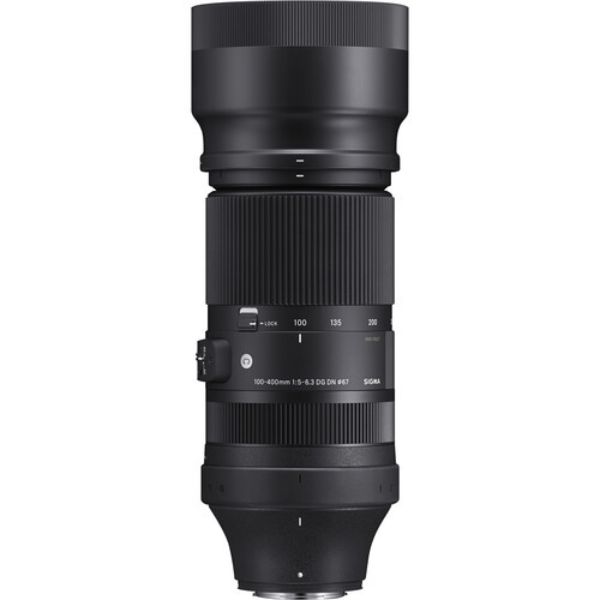
The Sigma 100-400mm f/5-6.3 DG DN OS Contemporary, available for Fujifilm X-mount since 2023, is a more accessible and practical option compared with other X-mount telephoto zooms. It offers a full-frame equivalent focal range of 150–600mm. Among its competitors, it stands out as one of the lighter and more compact telephoto options.
This weather-sealed Sigma lens features an external zoom design and several switches, including a focus limiter and two stabilization modes. Its optical construction consists of 22 elements in 16 groups, with a maximum aperture of f/5 to f/6.3. Optical quality is very strong, with excellent sharpness overall. At shorter focal lengths, around 100mm and 200mm, this telephoto zoom can even rival the renowned Fujifilm XF 100-400mm. At 400mm, however, the Fuji does provide better overall rendering. The Sigma’s bokeh is generally pleasing, though slightly less smooth than the Fuji’s. As for flaws, there is little to complain about: vignetting and chromatic aberrations are minimal.
In the end, this Sigma is an excellent third-party option, offering long reach, fast autofocus, and consistent sharpness. All of this comes at a more affordable price than Fujifilm’s native telephoto lenses. It’s definitely a worthwhile alternative to consider alongside the Fujifilm XF 70-300mm f/4-5.6 R LM OIS WR and the XF 100-400mm.
Tamron 150-500mm f/5-6.7 Di III VC VXD X
| Features | Visual |
|---|---|
|
|
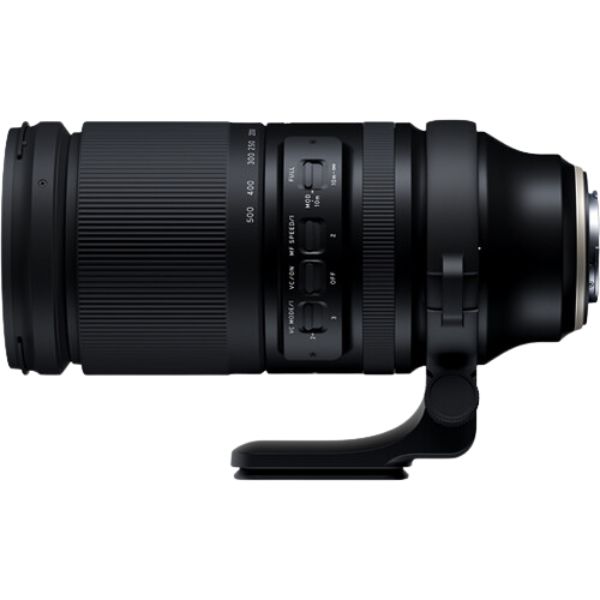
The Tamron 150-500mm f/5-6.7 Di III VC VXD, available for Fujifilm X-mount since August 2023, is a strong alternative to Fujifilm’s own telephoto lenses. In fact, I personally use it on Sony FE mount, and I’m very happy with it. It offers a full-frame equivalent focal range of 225–750mm. While it’s certainly on the heavier and bulkier side, it falls somewhere between Fuji’s two main telephoto zooms in terms of size and weight.
In terms of build, the lens is made from a combination of magnesium and metal, ensuring solid reliability and durability. It features 25 elements in 16 groups, including 5 LD elements and 1 XLD element. Image stabilization is very effective, and autofocus is both fast and accurate. Optically, it performs at a level comparable to Fujifilm’s own lenses. Center sharpness is excellent, though the edges are slightly softer. As for flaws, distortion and vignetting are virtually nonexistent, and flare is well controlled. The bokeh is smooth and natural, making it easy to isolate subjects from the background.
In short, the Tamron 150-500mm f/5-6.7 Di III VC VXD is a more affordable option than Fujifilm’s telephoto offerings. While it may fall slightly behind in edge sharpness, it more than makes up for that with strong optical performance overall. In my opinion, it’s an excellent fit for wildlife, sports, and landscape photography, and it offers great value for money.
As always, I recommend checking out the summary table below. It highlights the key specs if you’re hesitating between several telephoto lenses.
| Telephoto Zoom Lenses for Fuji X | Focallength | Max.Aperture | Weight | Dim. (Ø x L) | Min. FocusDist. | Approx.price | Best price | |||
|---|---|---|---|---|---|---|---|---|---|---|
| + | Fujifilm XF 50-140mm f/2.8 R LM OIS WR X | 50-140mm | f/2.8 | 2.2 lb / 995g | 3.3 x 6.9" / 83 x 176 mm | 3.3' / 100 cm | $1 599 | Amazon B&H | More info + | |
|
||||||||||
| + | Fujifilm XF 70-300mm f/4-5.6 R LM OIS WR | 70-300mm | f/4-5.6 | 1.3 lb / 588g | 3 x 5.2" / 75 x 133 mm | 2.7' / 83 cm | $799 | Amazon B&H | More info + | |
|
||||||||||
| + | Sigma 100-400mm f/5-6.3 DG DN OS Contemporary X | 100-400mm | f/5-6.3 | 2.5 lb / 1135g | 3.4 x 7.8" / 86 x 197 mm | 3.6' / 110 cm | $789 | Amazon B&H | More info + | |
|
||||||||||
| + | Tamron 150-500mm f/5-6.7 Di III VC VXD X | 150-500mm | f/5-6.7 | 3.8 lb / 1710g | 3.7 x 8.3" / 93 x 210 mm | 2' / 60 cm | $1 499 | Amazon B&H | More info + | |
|
||||||||||
Here are a few alternative options worth considering:
- Fujifilm XC 50-230mm f/4.5-6.7 OIS II: a telephoto lens that delivers decent image quality. Its biggest strength? Affordability, which makes it great for getting started!
- Fujifilm XF 55-200mm f/3.5-4.8 R LM OIS: a brighter lens than the one above. The focal range is similar, but the price is a bit higher.
This article on the best Fujifilm zoom lenses is coming to an end. I hope it helps you find the right fit. Between Fujifilm’s own lenses and third-party alternatives, there’s plenty to choose from depending on your needs.
I also recommend checking out our guide to the best Fujifilm lenses!
In the meantime, feel free to share your thoughts in the comments, and I’ll see you soon in a new article!

Written by Sylvain PONS
I've been passionate about photography since 2010, learning as I went along. Today, I dedicate myself to guiding others in their choice of camera gear and sharing a variety of tips to improve their photography skills.
Despite our care, a mistake may have slipped into this article. If you find any, please don't hesitate to let us know so we can correct it as soon as possible and keep our information up-to-date!