What to do in Valletta - The must-sees
Last update: 04/20/2026
Our blog continues to grow thanks to you, our readers. This post may contain affiliate links, which means we can earn a small commission if you make a purchase through them, at no extra cost to you. This helps us to continue to bring you more and support our work!
Following on from the article about things to do in Malta, I suggest we take a closer look at its capital city: Valletta. This comprehensive guide to the must-see attractions will give you all the information you need about what to do in Valletta. To give you some context, I spent 12 days on holiday in the Maltese archipelago. To be honest, I didn’t know what to expect from Valletta. On previous trips, I had always thought that the capital of an island wouldn’t be the most beautiful place. Well, this time, I was pleasantly surprised! For the capital of an island, I think it has a certain charm, and there are plenty of things to see and do. Yes, it’s tiny, with an area of just 0.8 km² and a population of only 6,000 (I was surprised too).
This is because it is fortified and considered a museum city, with its historic centre listed as a UNESCO World Heritage Site. Even its colourful streets are listed as a UNESCO World Heritage Site. It also has some beautiful historic monuments, which I’ll tell you more about later. To give you a comparison, Sliema and St Julian’s, which are coastal towns right next to the Maltese capital, have populations of around 14,000 and 17,000 respectively. In any case, once you’re in Valletta, you won’t feel like there are few inhabitants. It’s a city that attracts quite a few tourists and workers. It wasn’t always easy to navigate the streets of the city centre when I was there in early April.
The aim of this article is to provide a guide to the must-see sights in Valletta. As an aside, I spent my first and last days in Valletta. I was left feeling slightly unsatisfied as I wanted to enjoy it more and spend more time discovering the Maltese capital and its attractions.
Just so you know, there are lots of other towns and villages in Malta that are well worth a visit, each with their own unique charm and atmosphere.
What to do in Valletta? 8 must-see attractions
1. Visit St. John's Co-Cathedral
When you arrive in Valletta, St. John’s Co-Cathedral is hard to miss. It is clearly one of the most iconic buildings in the Maltese capital. Although some say that the exterior is simple, I still found it impressive. As soon as you arrive in the square, your attention is drawn to it. The interior lives up to the exterior with its Baroque gilding and marble.
Unfortunately, I wasn’t able to visit because there were too many people that day. I can tell you that the queue was very long. If you really want to see inside the co-cathedral, I recommend arriving very early in the morning and booking your tickets online in advance. Admission is very reasonable at $15 for adults and free for children under 12.
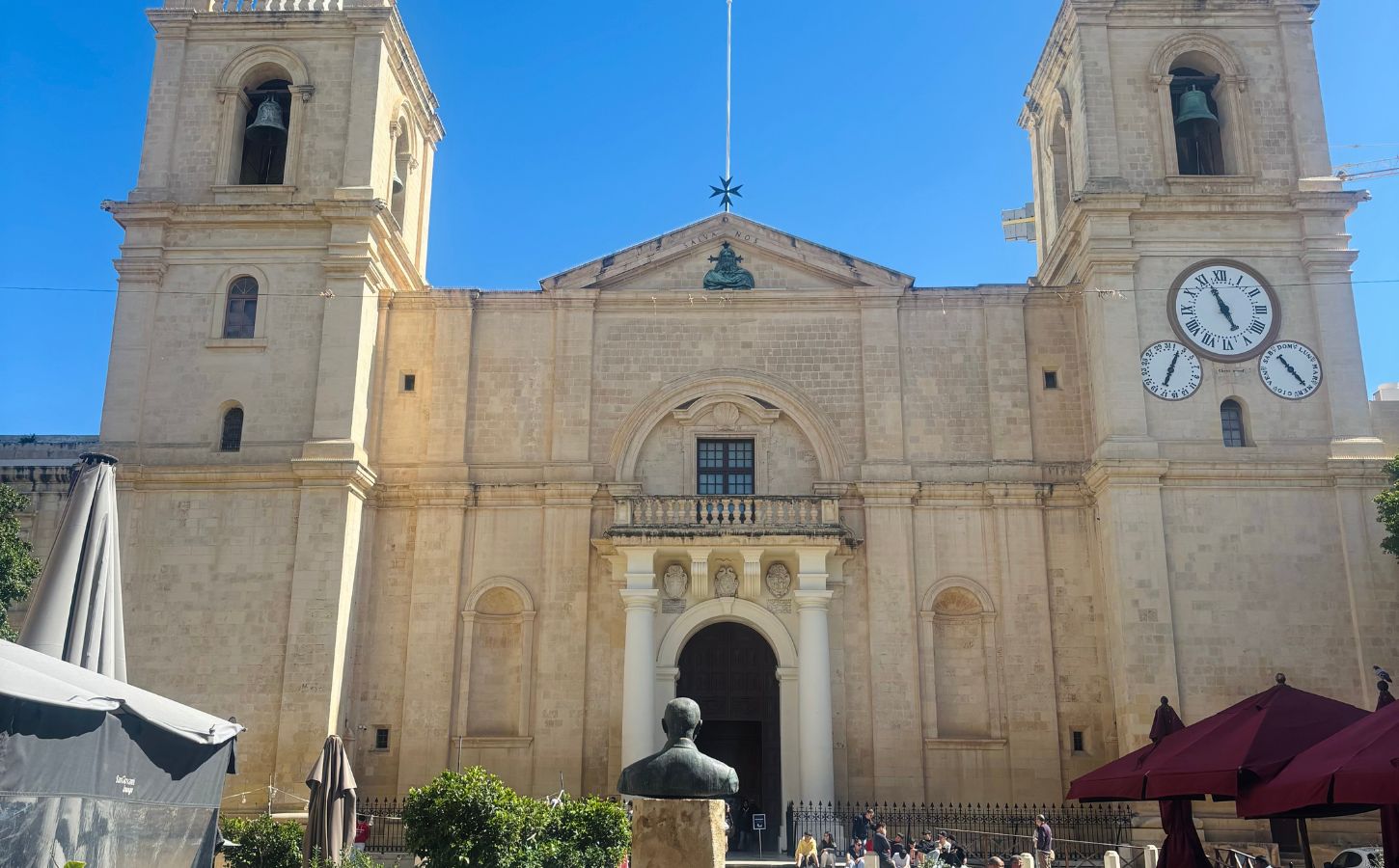
If you’re interested in history, Malta’s “real cathedral” is located in Mdina, also known as the “silent city”. Mdina was originally the island’s capital before Valletta took over. The co-cathedral was built later for the Knights of the Order of St John, which is why it is also known as St John’s Co-Cathedral. That’s where the name St. John’s Co-Cathedral comes from. I just thought you might like to know a little about Malta’s history!
2. The palace of the grand masters
This is another iconic building in Malta, also constructed by the Order of Saint John. As I walked past, I witnessed a rather special scene. Suddenly, there was a lot of movement as an official procession formed, with police and military personnel lining up. Within seconds, everything fell into place and a diplomat was escorted to his car. Everything happened so quickly that I didn’t have time to get my phone out! I just had time to recognise the flag of Bangladesh. I then did some research and found out that it was the High Commissioner of Bangladesh. Even though it’s a historic building, it’s now the official seat of the Presidency of Malta.
You can visit some parts of the building if you’re interested, by the way. You can enter the state rooms if they are unoccupied, as well as the armoury and weapons collection, which includes helmets and armour. Admission prices vary between €6 and €10, depending on when you visit. You can easily explore independently with the information panels and an audio guide.
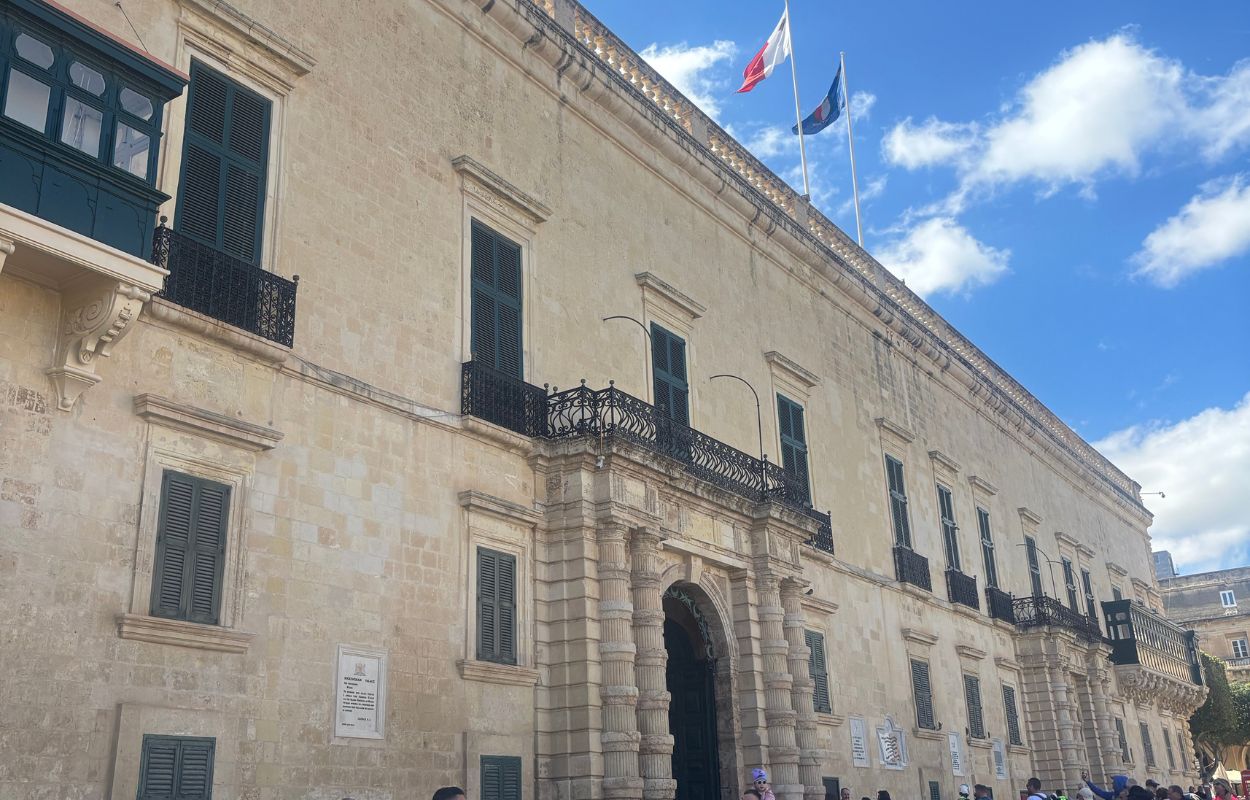
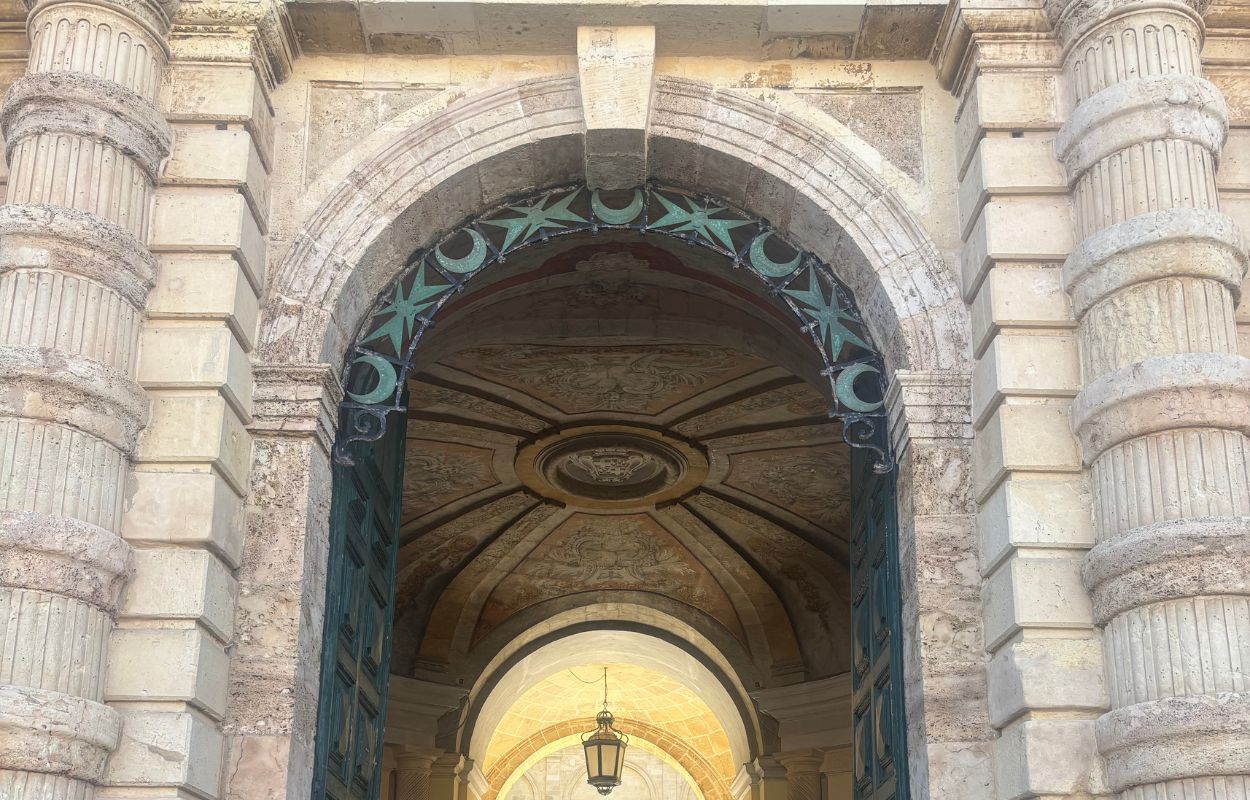
However, if you really want to visit, check that all the rooms will be accessible on your chosen date, as this depends on official events. Even if you don’t go inside, the Grand Masters’ Palace is well worth a look! You might even be lucky enough to witness a special event!
3. Admire the view from the Upper Barrakka Gardens
Surrounded by the typical stone buildings of Valletta and Malta in general, the Upper Barrakka Gardens provide a welcome touch of greenery. At first glance, it’s just a small, quiet public garden, which seems nice enough, but nothing special. However, once you take in the magnificent view of Valletta’s Grand Harbour and the Three Cities of Malta, located just opposite, you will realise that it is truly exceptional. In fact, I would even say that it’s one of the most beautiful gardens on the whole island.
It’s a bit of a climb to get there, but if you’re at the bottom of the city near the port, there’s a huge elevator that takes you straight there for €1 per ride. I took it at the end of the day after walking quite a few miles, and it was really convenient. And even if you’re afraid of heights, it’s a quick ride, so don’t worry!

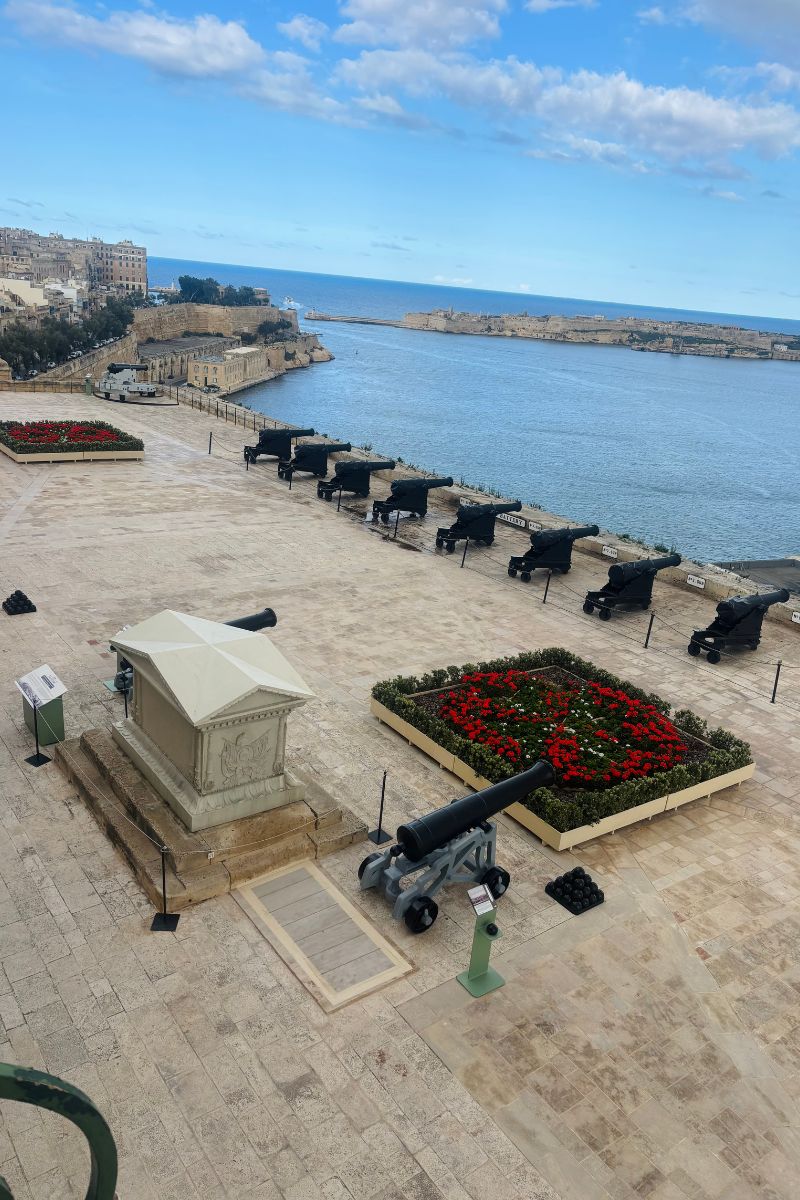
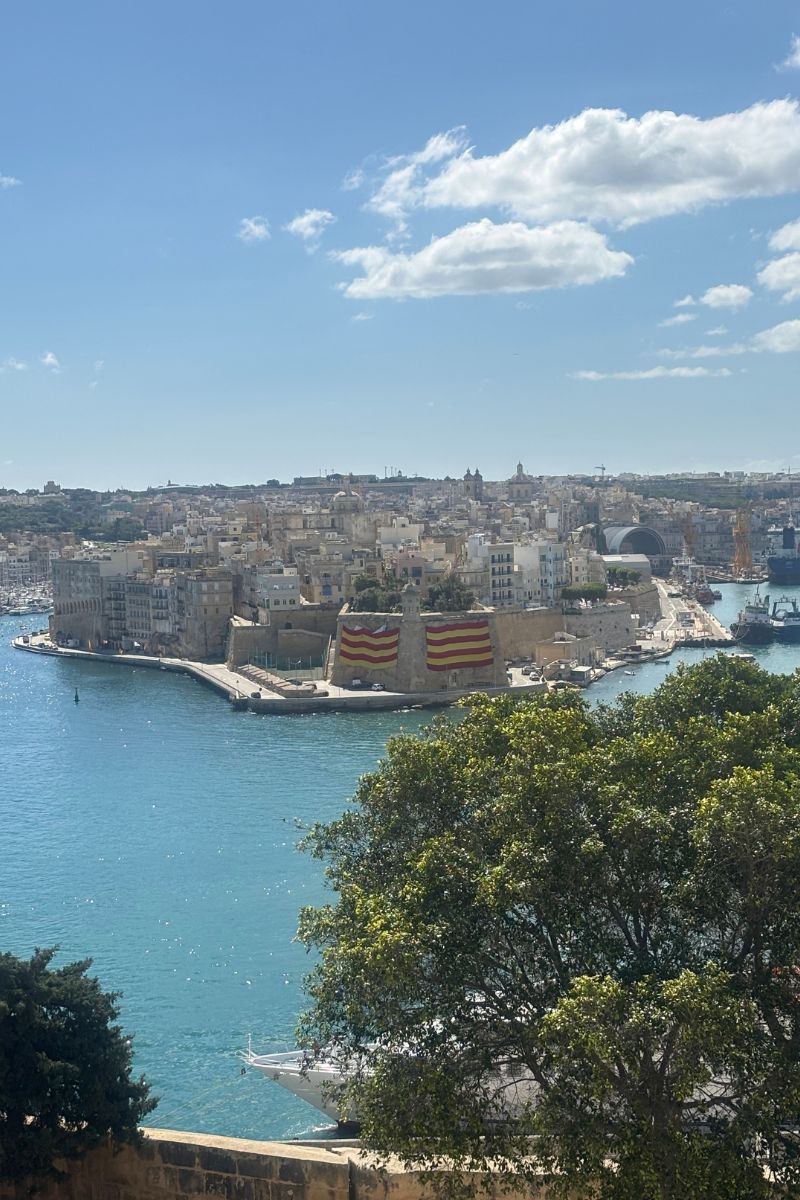
One little-known fact that always surprises visitors is that two cannon shots are fired every day at noon and 4 p.m. from the Saluting Battery below the garden. If you’re not aware of this, I can tell you that it makes you jump! But once you know about them, you almost get used to them. The noise is so loud that you can hear it from the Three Cities on the opposite shore. When the 4 pm cannon was fired, I was right opposite in Senglea. It’s fun to watch, and in fact the gardens are full of tourists who have gathered to witness this famous event. These cannon shots date back to a military tradition that goes back several centuries. In short, it’s an almost obligatory stop in Valletta, particularly for the incredible view from the gardens. It’s also a good place to take a break in the shade.
4. Discover Fort Saint Elmo and the War Museum
From the Upper Barrakka Gardens, you can see the famous Fort Saint Elmo at the tip of Valletta. It is located just opposite Fort Saint Angelo, on the other side of the Grand Harbour in the city of Vittoriosa, which is the oldest city on the island. Its location at the tip of the peninsula is no coincidence: it played a key role alongside Fort Saint Elmo in resisting the Ottomans during the Great Siege of 1565. Frankly, it looks quite imposing from the outside.
If you are curious to learn more, you can visit the National War Museum inside the fort. It traces the island’s entire military history up to World War II. History buffs will be delighted. For my part, I chose to visit the older Fort Saint-Ange, which dates back much further. However, the War Museum is well worth a visit, with uniforms, testimonials and British history!
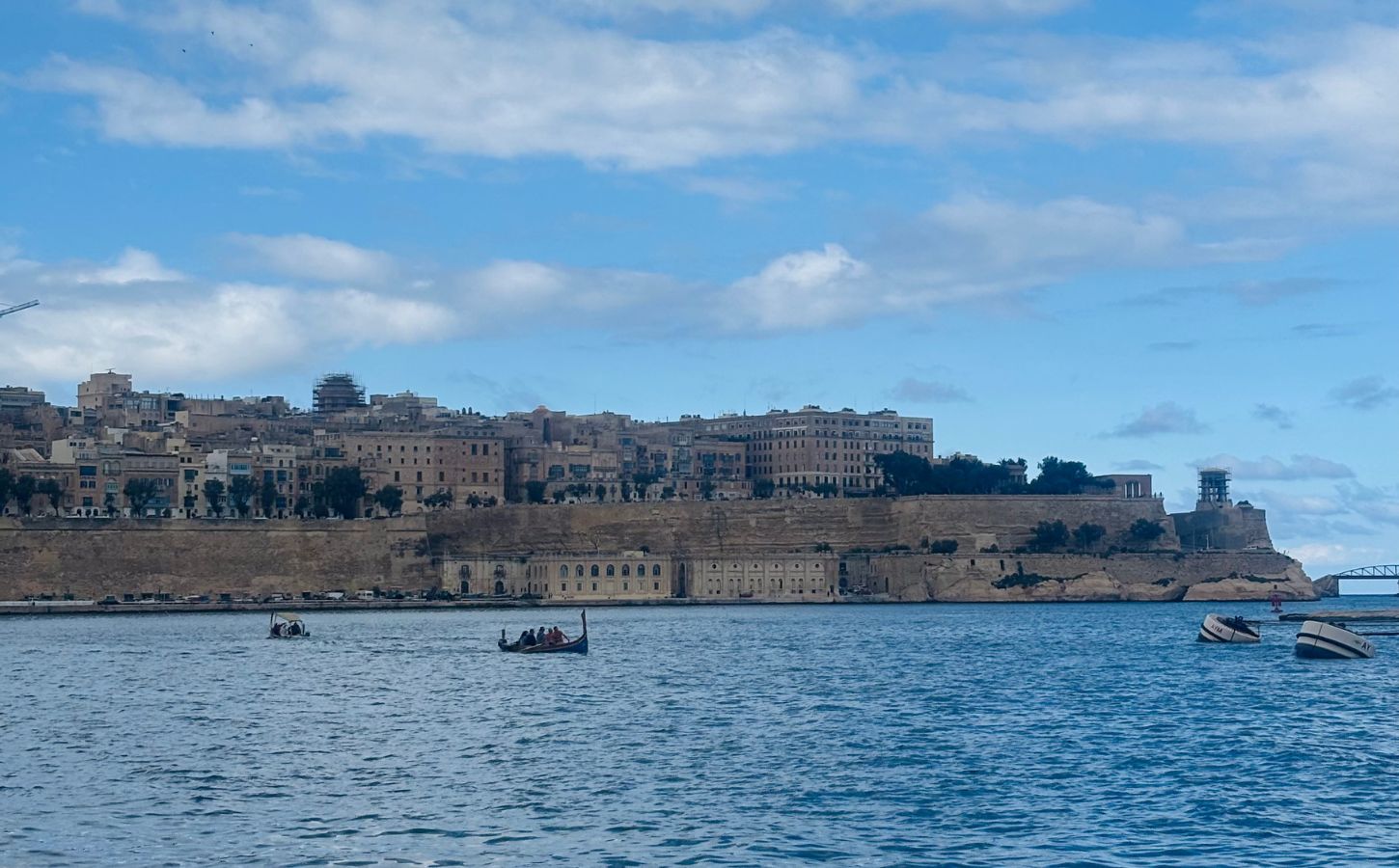
As an added bonus, you can enjoy stunning views of the sea and Grand Harbour from the ramparts of the fort! It’s simply magnificent!
5. Stroll through the streets of Valletta
Strolling through the streets of Valletta was a real pleasure! The golden stone buildings were designed to keep the inhabitants cool and protect them from the intense heat, especially in summer when the temperature quickly rises and rarely drops below 35°C. The narrow streets feature typical Maltese balconies in bright colours, usually red, blue and green, which contrast nicely with the golden stone. The pavements are old too, so walking there is a bit like stepping back in time.
Some people think that everything is old, but that’s what gives Valletta its charm and makes this European capital unique. In fact, this fortified style has been deliberately preserved. These narrow streets are also listed as a UNESCO World Heritage Site. At the beginning of April, the streets were already busy. Well, it depended on the street; some were quiet and peaceful. A special mention goes to the narrowest pedestrian streets, which offer magnificent views of the Mediterranean Sea and the Three Cities. These streets often have steps that you immediately want to climb down to get closer to the sea. Climbing back up, however, is a different story!
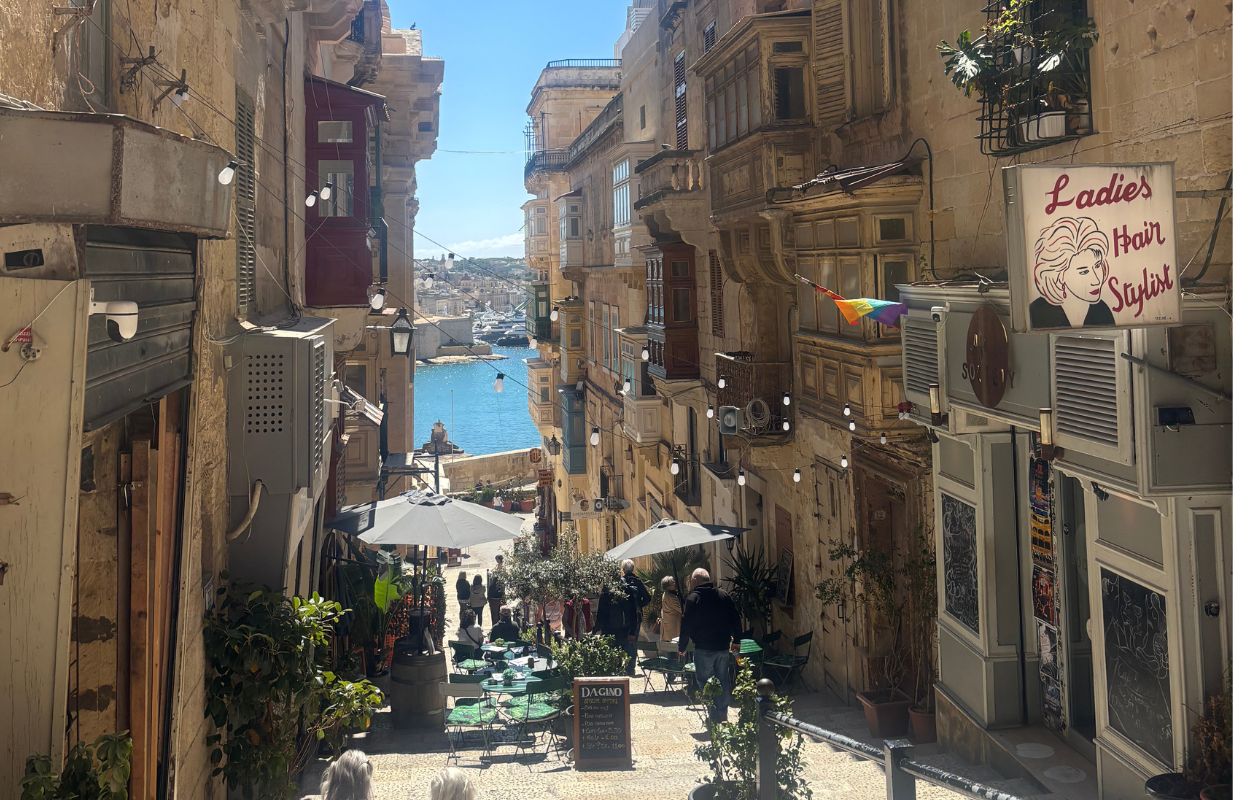
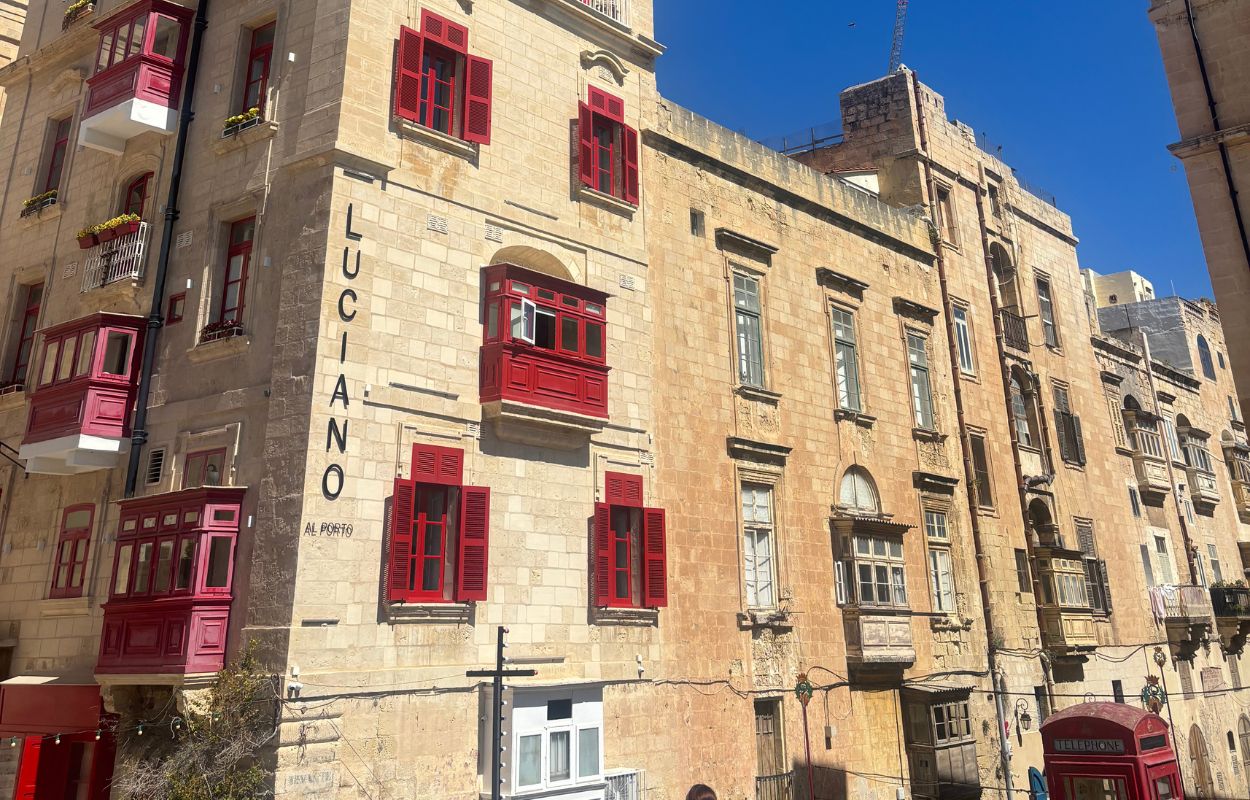
There are also livelier streets around Republic Street, which I’ll tell you more about below. What struck me was that even though these streets are small and narrow, they are full of sights, with little hidden cafés and laundry hanging on the balconies. Although you’re in a capital city, it feels like a small Mediterranean town. I really like this atmosphere!
6. Go shopping on Republic Street and Merchant Street
If you’re looking to do some shopping in Valletta, I’d recommend heading to Republic Street and Merchant Street, which are the two main shopping streets in the city centre. Even if you don’t have anything specific in mind, it’s always nice to just stroll around. I can assure you that the atmosphere is vibrant. Although it’s busy, you can still walk around in April without feeling too overwhelmed. However, as in all crowded places, be careful of pickpockets.
On Republic Street, you’ll find everything from clothing stores and jewellery shops to more local boutiques. The great thing is that there are some wonderful ice cream parlours and cafés where you can take a break. Merchant Street is slightly less busy and has open-air markets and craft shops selling more authentic souvenirs. This is the place to go if you want to pick up a gift for yourself or a loved one!
As an added bonus, at the end of the day when the golden light reflects off the stone facades, it’s really pretty. Even if you’re not shopping and you don’t mind the crowds, it’s worth a visit!
7. Visit the MUZA (National Museum of Fine Arts)
If you’re looking for a cultural break during your visit to Valletta, the National Museum of Fine Arts of Malta is an excellent choice! Housed in a historic building — specifically, the former headquarters of the Order of Saint John — it is well worth a visit. The façade alone is magnificent, with its stunning architecture! It is both modern and ancient, and it is this combination that makes it so beautiful!
The museum houses religious and contemporary works by Maltese and European artists. If that sounds appealing, don’t hesitate to go! Admission is around €10 for adults. Residents can enjoy free admission on certain days. If you plan to visit several cultural sites, I recommend buying the Heritage Malta Pass, which starts at €35 and gives you access to over 20 museums on the island. It’s well worth it!


8. Go to the Manoel Theater
It’s easy to miss from the outside because it’s not very imposing. But I really liked the façade — you can tell it’s an old building! It dates back to the 18^(th) century! Once you step inside, you’ll find that it’s small and made entirely of wood, with gilding and rounded balconies. It’s one of the oldest theatres in Europe still in operation, which is quite something!
You can go for a show or a daytime tour! If you opt for the tour, admission is only €10. The price of the plays depends on the troupe and whether it’s a weekend or weekday evening. Of course, the plays are performed in English, not French! If you’re passing through Valletta, I think it’s worth a visit! Personally, I’d prefer an evening show. From what I’ve seen, the prices are quite reasonable!
What to do around Valletta? 3 activities nearby
Discover Malta's three cities
If you’re visiting Valletta, be sure to check out Malta’s Three Cities too! They’re just across the water, only a seven-minute ferry ride away. That’s what I did, but it was almost too quick to enjoy the views and take photos. But it was still a nice addition to the trip. For a more authentic experience, I recommend taking the traditional taxi boats, known as ‘Dgħajsa’ in Maltese. On the day I was there, the sea was a bit rough, haha!
Once you’re there, it’s much quieter than in Valletta. There are very few tourists and no traffic.
You’ll arrive in Cospicua, which connects the other two cities: Vittoriosa and Senglea. I must admit that I fell in love with Vittoriosa and Cospicua, but I was a little disappointed by Senglea. In Vittoriosa, you can really sense its age, especially when you visit the famous Fort St. Angelo. As I said, it’s definitely worth a visit! With its historical aspect and views of the Grand Harbour, the port of Vittoriosa and Senglea opposite, it was fantastic. I liked Cospicua’s typical narrow streets, which are colourful and quieter than those in Valletta.
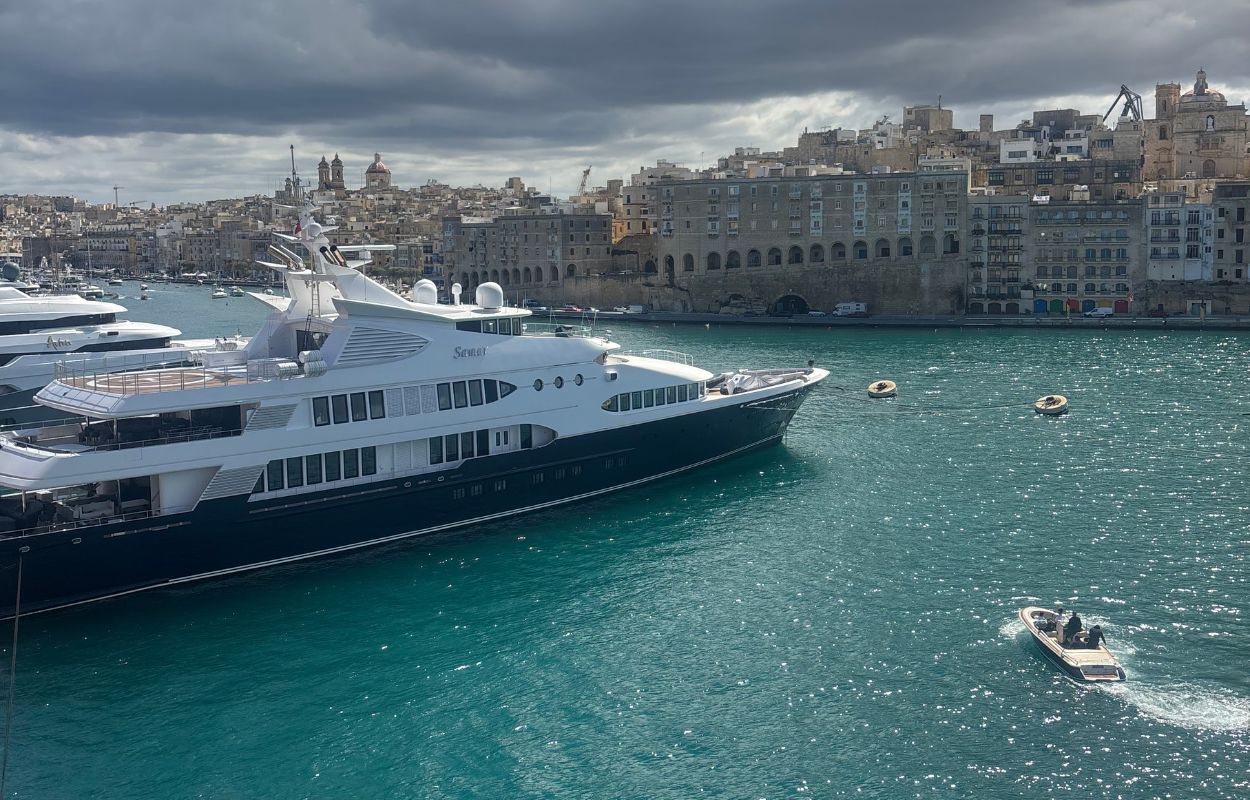
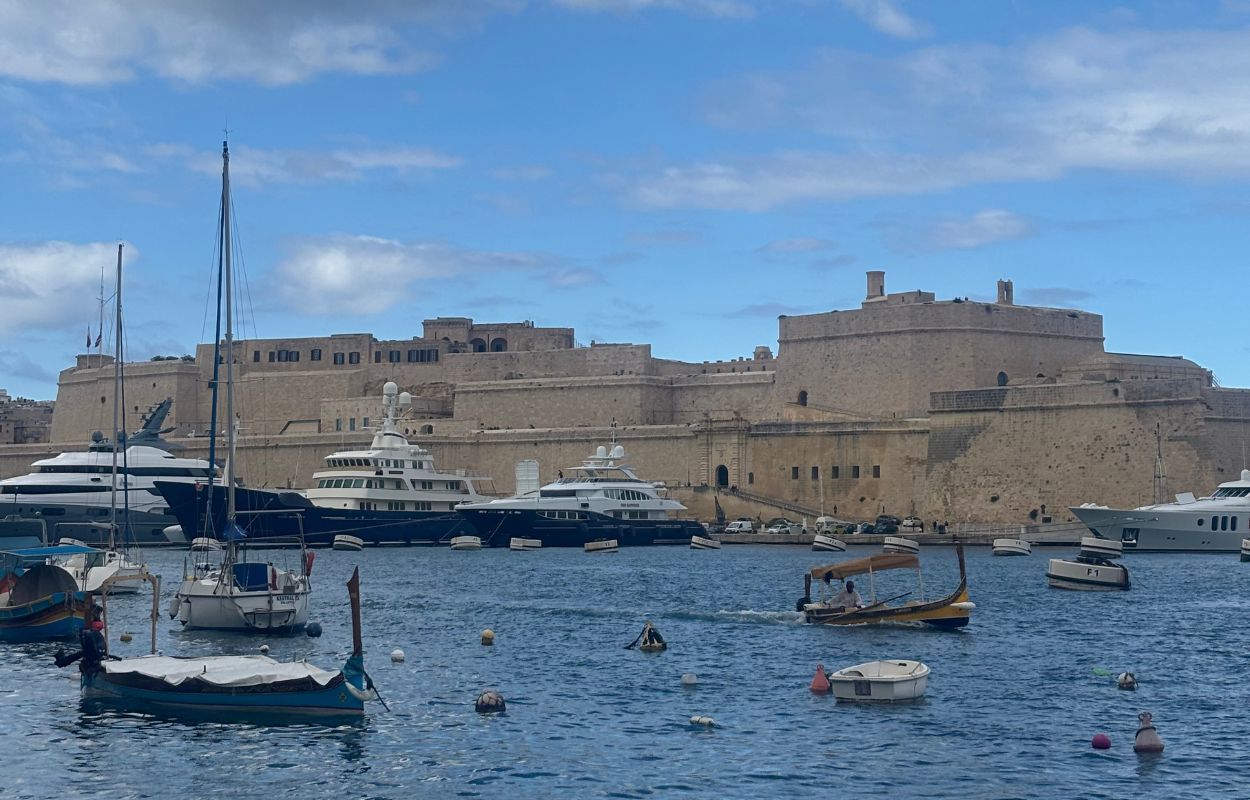
I visited Valletta and the Three Cities on the same day. It was a busy day, but entirely feasible if you want to see all the main attractions! However, if you prefer to take your time, I recommend spreading the visits over two days.
If I’ve inspired you to discover Malta’s Three Cities, I invite you to read our dedicated article.
Explore Mdina and Rabat
We arrive in two authentic Maltese towns. They are neighbours and each offers a very local atmosphere. Despite Mdina’s popularity with tourists, I was still able to enjoy its unique atmosphere, which is why it is known as the City of Silence. Walking through the narrow, tall, golden stone streets, I was struck by the calm. I had a good feeling about the place!
To be honest, even though the most interesting part of the fortifications can be visited in less than two hours at a leisurely pace, I could have stayed longer. Perched on a hill, Mdina’s ramparts offer magnificent panoramic views as far as the eye can see. In fact, a scene from Game of Thrones was filmed here.
In contrast, the atmosphere in the neighbouring town of Rabat is more lively: make way for noise!
It’s impossible to visit Malta without stopping in Mdina and Rabat, two neighbouring towns offering a real journey back in time. Mdina, nicknamed the City of Silence, was once the island’s capital. As soon as you step through its gates, you are struck by its unique atmosphere of narrow streets, golden stone palaces and an almost religious silence. It’s a real pleasure to lose yourself here on foot. It’s easy to see why it was chosen as the setting for Game of Thrones!
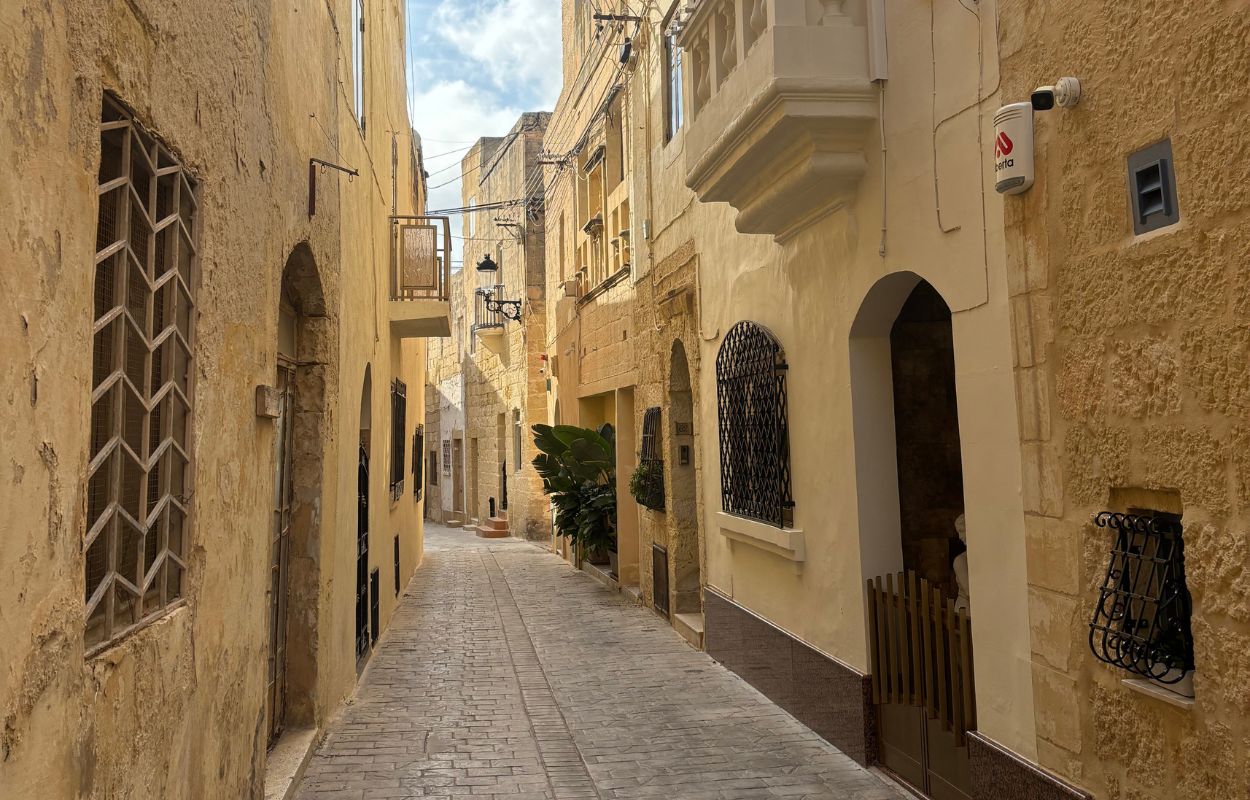
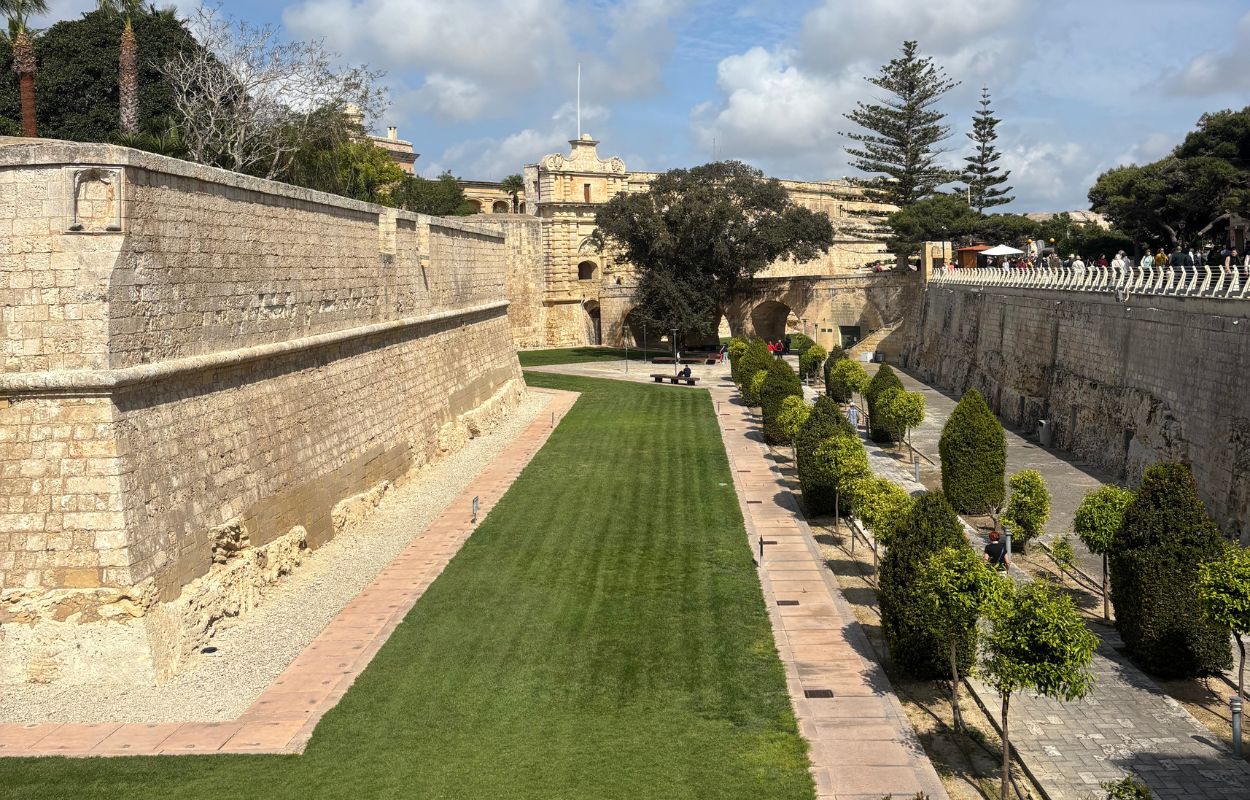
Just next door, Rabat is a more lively and authentic place, and is just as interesting. There are many catacombs to visit here. History buffs will love it! It’s also the perfect place to relax on a terrace, sample local specialities and soak up the culture. Honestly, these are two cities that left a lasting impression on me and are well worth a visit, whether for half a day or longer.
Take a cruise to the Blue Lagoon Comino
I’ll admit, the Blue Lagoon isn’t exactly next door to Valletta, since it’s on the island of Comino. However, if you take a guided excursion to the Blue Lagoon, some depart directly from Valletta’s Grand Harbour—especially in summer. The rest of the year, you’ll need a 45-minute drive up to Ċirkewwa in northern Malta to catch the 25-minute ferry to the Blue Lagoon. In reality, I don’t think it takes that long to hop over to another island.
And honestly, you can’t miss the Blue Lagoon. The water is a translucent, postcard-perfect turquoise. It’s amazing to have such scenery just a 2½-hour flight away! As you might expect, it can get busy on site. But in the off-season, it remains quite reasonable. If you take a guided boat excursion to the Blue Lagoon, I recommend staying on board and swimming around the boat. You’ll feel like you have that blue lagoon all to yourself! That’s exactly what I did, and it felt incredible.
Visiting Valletta: Practical information
Where to eat in Valletta?
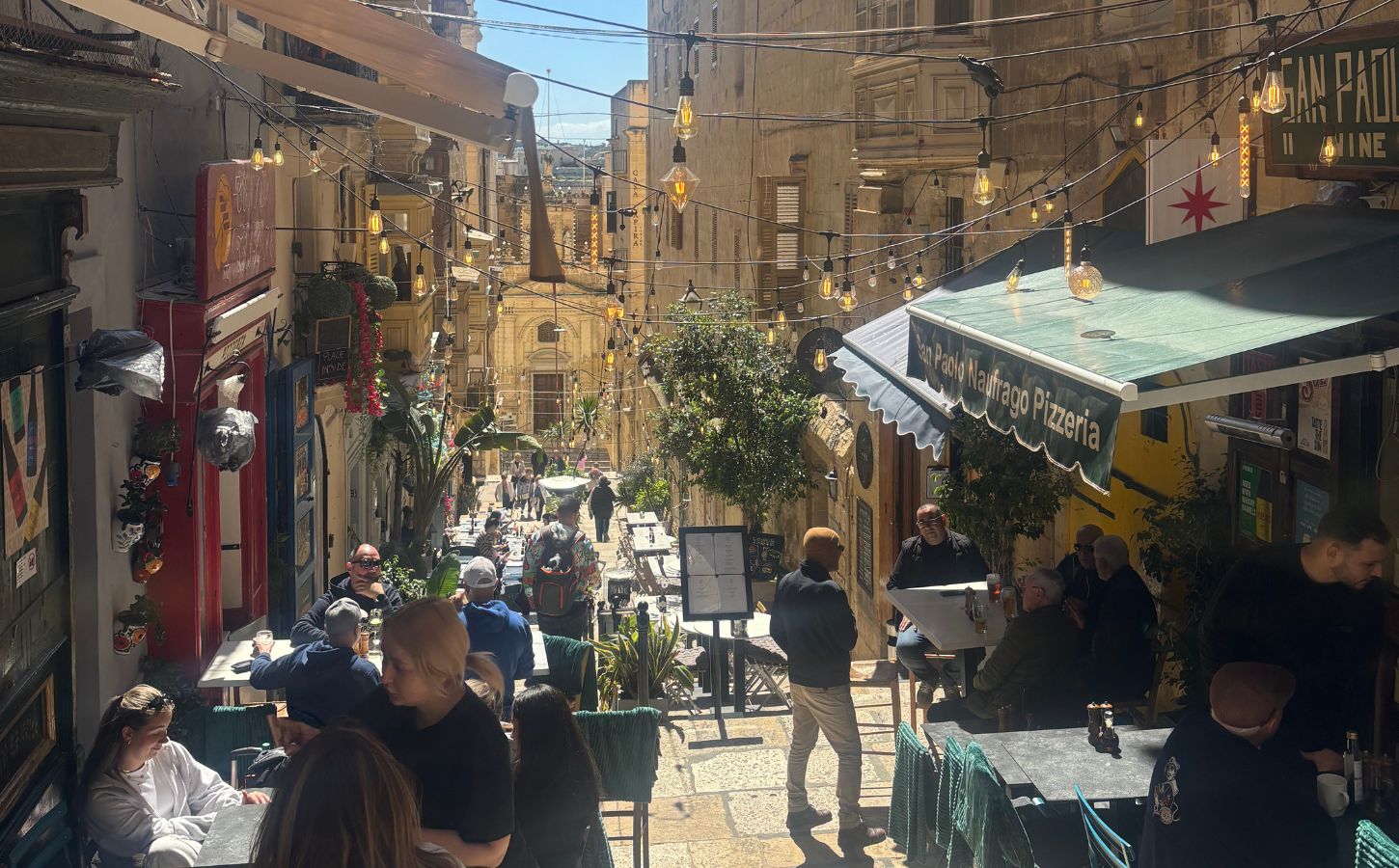
Calling all food lovers: you won’t be short of restaurant choices in Valletta! Here are some great spots :
- Noni : If you want to treat yourself to dinner in an elegant setting, you’re in the right place! The dishes are inspired by Maltese specialties, reimagined with flair. Reviews are unanimous: the service is highly professional and the food is delicious. It’s no coincidence that it boasts a Michelin star !
- Zero Sei : A 100 % Italian restaurant serving authentic carbonara (no cream, of course, haha). The portions are generous ! It’s a convivial spot where you’ll eat well.
- Rubino : This time, you’ll find a restaurant offering exclusively local dishes. It’s the perfect opportunity to sample the flavors of Maltese gastronomy ! The dishes are simple but expertly prepared. That’s all you could ask for, really. Fun fact : this restaurant has been around for over a century.
- The Harbour Club : As the name suggests, this restaurant overlooks Valletta’s Grand Harbour! Just imagine the view. Whether for lunch or dinner, the setting is top-notch ! You can even drop by for a drink on the terrace and admire the sunset. On the menu are varied Mediterranean dishes—you’re bound to find something you love!
Where to stay in Valletta?
If you’re tempted to visit Valletta or use it as your starting point to explore Malta, here are a few accommodation suggestions.
For a luxury experience in Valletta:
- The Gomerino Hotel: This 4-star hotel in the heart of Valletta blends historic charm with modern comfort. The rooms are well-appointed and high-end! And the cherry on top: there’s a rooftop pool offering an incredible view over the city.
- Palais Le Brun: Another top-tier hotel set in a 17th-century palace! It features a contemporary‐baroque style, huge rooms—some even with private jacuzzis—and a dreamy rooftop pool.
If you’re looking for comfortable, good-value accommodation:
- Hotel Castille: A cosy, well-equipped hotel whose real strength is its location—you can explore the entire city on foot! The décor could use a refresh, but that’s part of its character.
- Barrakka Suites: As the name suggests, this small establishment sits next to the Upper Barrakka Gardens. It’s cosy, with several well-furnished studios—perfect if you want more autonomy. The location is ideal and the hosts are very welcoming.
Finally, for budget-friendly stays in Valletta:
- Grand Harbour Hotel: A simple hotel but very well located! Some rooms offer magnificent views of Valletta’s harbour. Even though it’s affordable, it remains a reliable choice.
- The Manoel Boutique Hotel: A small, peaceful hotel on a typical Maltese street. It offers great value without compromising on comfort. It’s the perfect base for exploring the city at your own pace without breaking the bank!
To find more places to stay, check out our guide on where to sleep in Malta.
How to get around Valletta?
Let me reassure you right away that getting around Valletta is pretty easy! The city is tiny, covering less than 1 km². In fact, you can do everything on foot without any problems. That’s what I did, and I really enjoyed it. I strolled through the colourful streets with their stairways and, in some cases, sea views.
Although I was staying in Saint Paul’s Bay, I parked my rental car in a car park the first time I went to Valletta. It’s a secure car park that costs €4 for the whole day. Honestly, it’s worth it! The second time, I was luckier and was able to park close to the centre in a white-lined space (these are the only spaces where tourists are allowed to park).

If you don’t have a car, the bus network is connected to Valletta—it’s truly the hub. You won’t have any trouble finding one. Within the city itself, numerous buses link Valletta’s main points. Not to mention the famous panoramic lift, so handy for going from the Grand Harbour quays up to the city center. Honestly, it’s super convenient! I can tell you I was relieved when I discovered this option. Otherwise, I was ready to take a taxi, haha. By the way, you always have that option to get around Valletta. Plus, fares aren’t expensive!
I almost forgot: there are also the famous double-decker buses for a Valletta city tour. It’s not very practical if you only want to visit Valletta itself, since the historic center is very compact with narrow streets. If you want to take that kind of tour, I recommend adding other towns, spots, and must-see sights to your itinerary.
Well, you can say the Maltese capital holds no more secrets for you! You now know all the things to see and do in Valletta.
As I mentioned, I was pleasantly surprised by this city. Even though at first glance its buildings look old, I think it’s great that they preserved the golden stone style. Between us, that’s what sets it apart most from other European capitals.
More broadly, I’ll let you discover our complete guide on: things to do in Gozo. You might be planning a visit. I even suggest spending several days there to uncover all its hidden treasures: the salt pans, small coves, basilicas, megalithic temples (older than the Egyptian pyramids!), churches, cliffs, caves, and hiking trails. You’ll see, you won’t regret it!
See you soon for more experiences in the Maltese archipelago.

Written by Laura CALLES
Thanks to Mélanie and Sylvain, I had the chance to explore the beautiful Maltese archipelago and share all the beauty of its islands with you. A little piece of paradise not to be missed!
Thanks to you, our readers, our blog can continue to grow. This page may contain affiliate links, which means we may earn a commission if you make a purchase through them, at no extra cost to you. This helps us keep offering you more and support our work!
Despite our vigilance, an error may have slipped into this article. If you spot one, please let us know so we can correct it and keep our information up to date!