What to do in Malta
Last update: 06/22/2026
Our blog continues to grow thanks to you, our readers. This post may contain affiliate links, which means we can earn a small commission if you make a purchase through them, at no extra cost to you. This helps us to continue to bring you more and support our work!
If you’re considering Malta for your next trip, this article is for you! After spending 12 days exploring the archipelago—the main island, Gozo, and Comino—I’m sharing everything you need to know about what to do in Malta. The time flew by; there is so much to experience. Travelers often stay for only a few days, but 12 days gave me the chance to explore the islands from every angle. Beyond the white-sand beaches, lagoons, secluded coves, hiking trails, and picturesque towns and villages, I also fell in love with the local atmosphere, history, and culture.
Malta is about far more than parties and beaches—it is full of other treasures. This article covers all the must-see attractions—and believe me, there are plenty.
Just to be clear, I’m talking about Malta as a whole, not only the main island.
What to see and do in Malta: the highlights you shouldn’t miss
1. Discover Valletta, the historic capital
Valletta is the obvious place to begin. Although it is one of Europe’s smallest capitals, it has plenty of character. Its historic center is also a UNESCO World Heritage Site. The golden-stone streets lined with colorful balconies are quintessentially Maltese. Careful preservation has helped Valletta retain its distinctive atmosphere and architecture.
Wandering through the streets—some of which lead straight to the sea—was one of my favorite things about the capital. Laundry hangs from the balconies above the narrow alleys. The atmosphere feels distinctly Mediterranean and reminded me of an Italian village. Among the capital’s attractions, I especially recommend the Upper Barrakka Gardens. The gardens themselves are fairly simple, but the view is beautiful, stretching across the sea, the Grand Harbour, and the Three Cities.
For more culture and history, consider visiting the Manoel Theatre, the Grand Master’s Palace, or the Museum of Fine Arts. And do not miss St. John’s Co-Cathedral. Even seeing these monuments from the outside is worthwhile. For the co-cathedral, I recommend buying tickets online in advance and arriving early. When I visited, the line was so long that the wait was at least an hour.


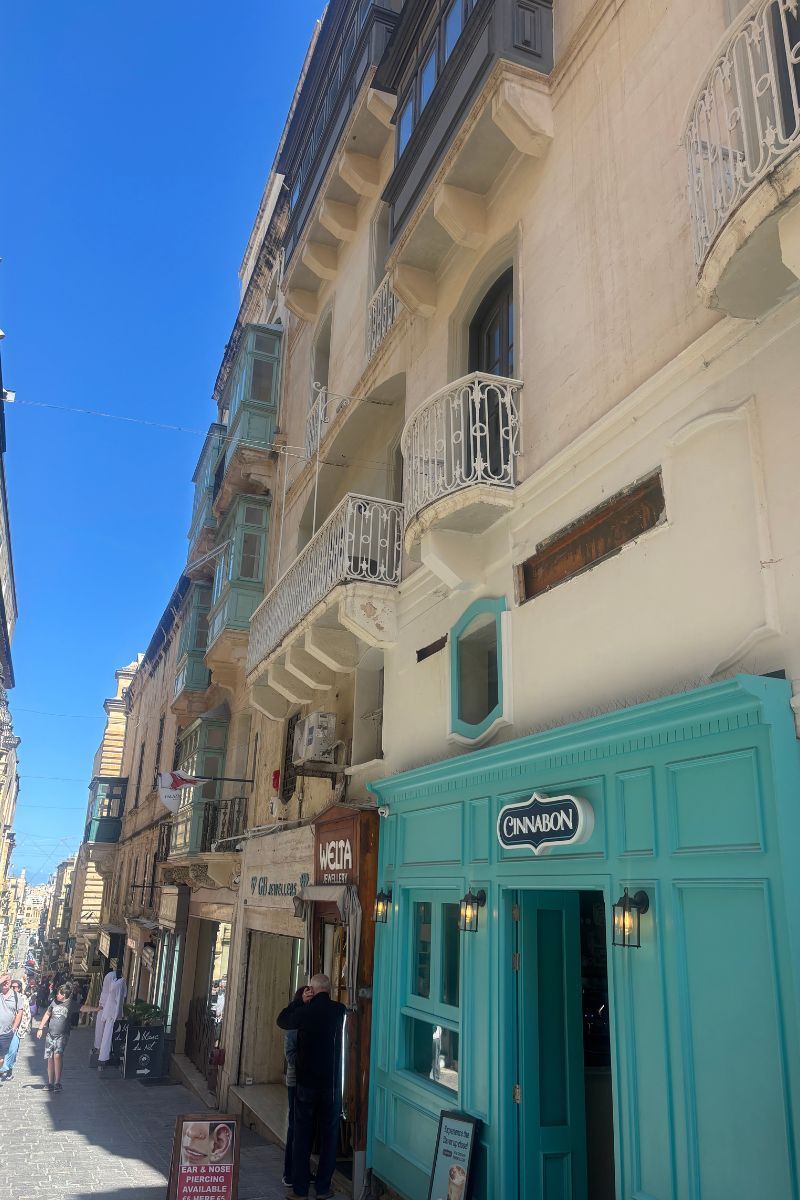
If you are staying in Valletta, the city is easy to explore on foot. From elsewhere on the island, you can get there by rental car or public transportation. I had a rental car and found a parking lot before continuing through the city on foot. As in most capitals, finding a space can be tricky. Still, the guarded parking lots I found charged only €4 for the day, which felt well worth it.
For more details on visiting Valletta, I recommend reading our complete guide to Malta’s capital.
2. Visit Mdina
I admit that I didn’t do much research beforehand, but I knew it was a place I had to see. When I arrived, I quickly understood why. For your information, it is Malta’s former capital and home to St. Paul’s Cathedral. The fortified city is fascinating to explore. You enter through a monumental old gateway, and the medieval character is immediately apparent. Mdina is known as the Silent City.
The streets within the walls are narrow and, above all, quiet—hence the nickname. That silence gives the city a distinctive atmosphere. You will want to follow every street and peer around every corner. Did you know that some scenes from Game of Thrones were filmed here? Signs throughout the fortified city ask visitors to respect the quiet. Unfortunately, not everyone does. There were only a few noisy visitors, though, and talking is perfectly fine—just avoid shouting.
I was fortunate to visit in early April, in the middle of the afternoon. There were tourists around, but most were leaving as I arrived. I made my way to the edge of the medieval walls, where the view across the surrounding landscape was beautiful, especially at sunset. Another highlight is the cathedral. Its Baroque architecture is beautiful both inside and out. Unlike when I visited, general tourist admission is no longer free: the current combo ticket for the cathedral and museum costs €15 for adults. It is still worth checking opening times before your visit, as access may be restricted during services and private ceremonies.
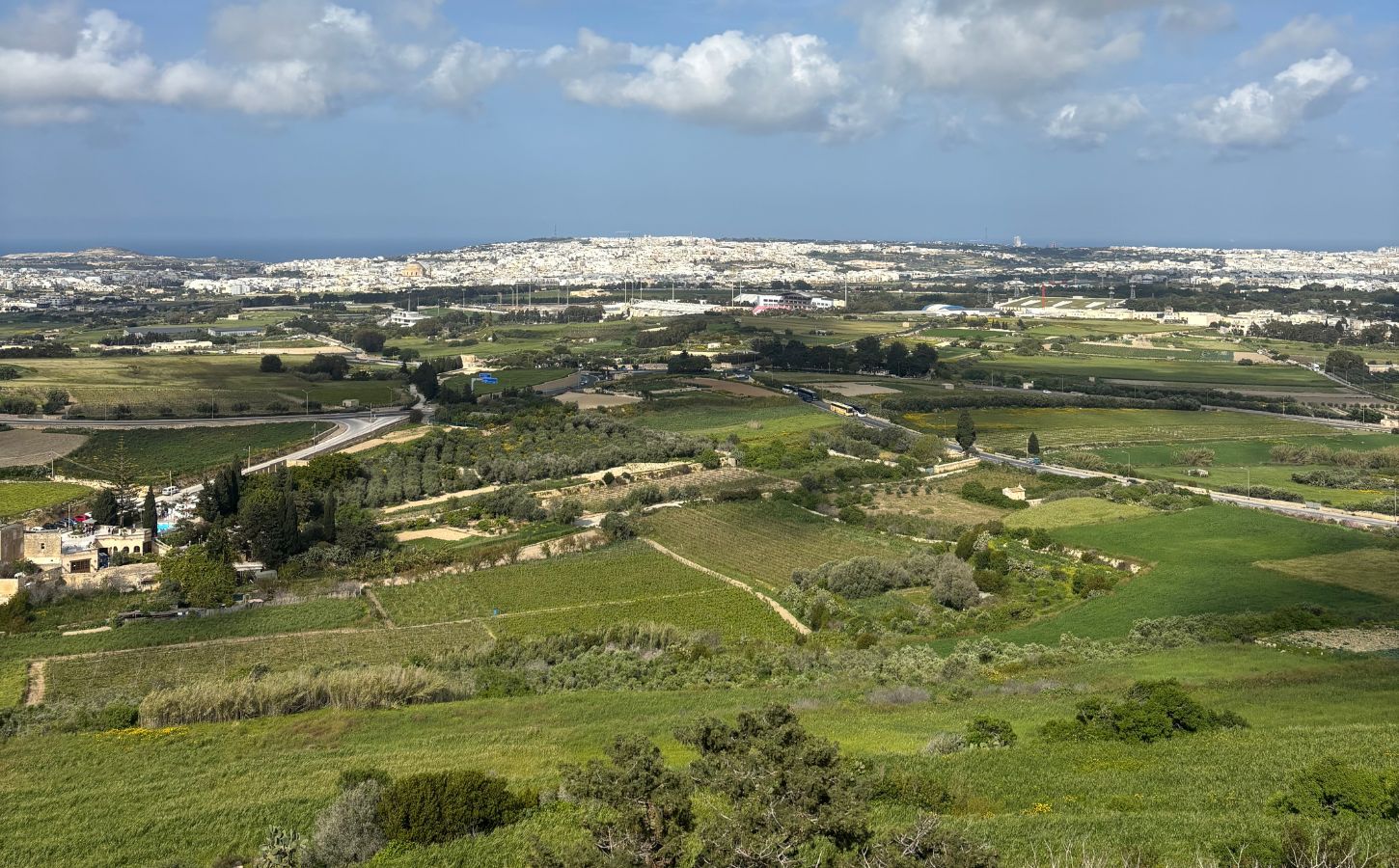
Outside the medieval walls, you will find plenty of inviting Maltese spots, including tearooms, restaurants, and artisan shops. That is where I tried imqaret—delicious Maltese date pastries—as well as the local take on cannoli. The Italian-style gelato at Fior di Latte was excellent too.
As you can probably guess, I really enjoyed Mdina and its atmosphere. Because it is so compact, half a day is enough to explore the town at a relaxed pace. Mdina is easily one of the best places to visit in Malta.
3. Explore the Three Cities: Vittoriosa, Cospicua, and Senglea
As I mentioned earlier, the Three Cities are located directly opposite Valletta. Cospicua is only a few minutes away by ferry or luzzu, a traditional Maltese taxi boat. You can also get there by bus without going through the capital. However, I recommend taking the ferry: you’ll get a closer view of Valletta and the Three Cities. The ride is short, but it is a lovely way to arrive.
Once in Cospicua, take the opportunity to stroll through the narrow streets. They are just as attractive as those in Valletta, but quieter and cleaner. With far fewer people around, you can take your time. As the newest of the Three Cities, Cospicua has fewer historic sites. For a deeper dive into history, head to Vittoriosa. It is the oldest of the Three Cities. It predates Valletta and played a central role in Malta’s history. Malta has certainly had its share of capitals.

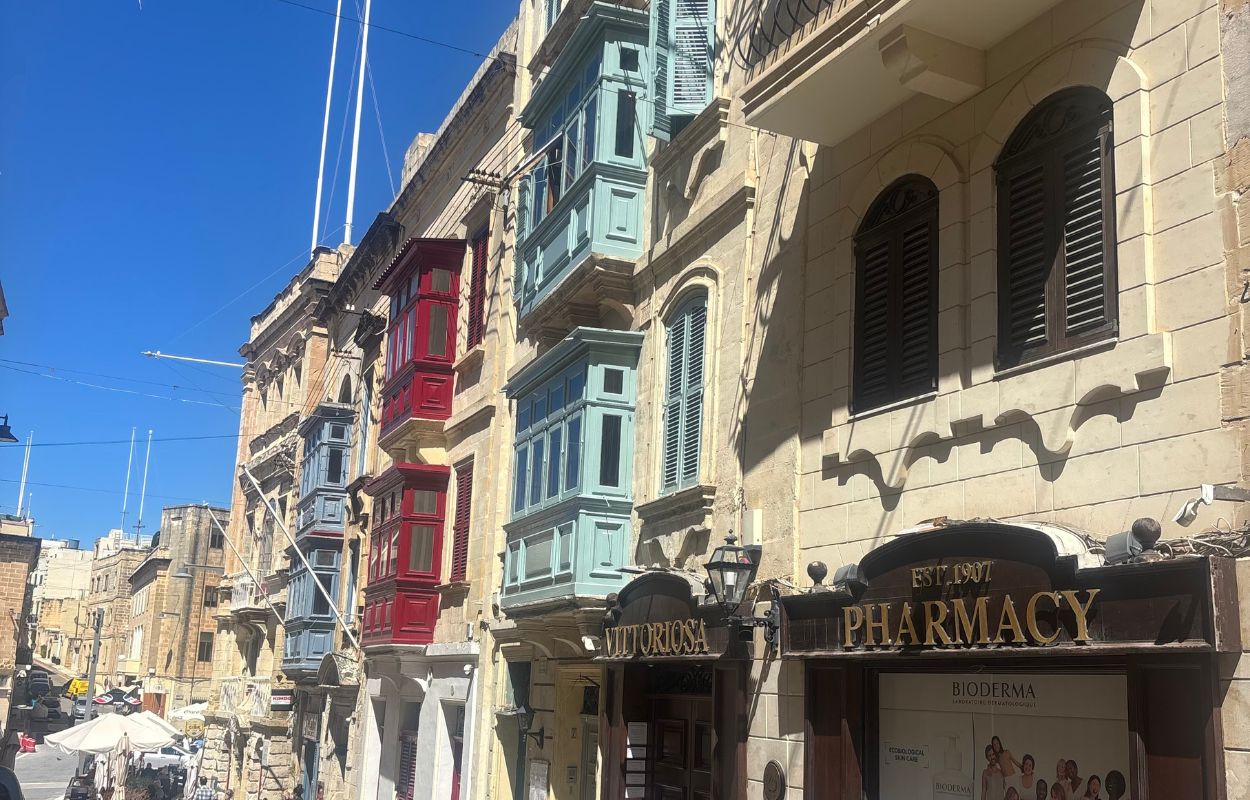
Fort St. Angelo is Vittoriosa’s must-see landmark. It sits at the very tip of the city, directly opposite Valletta. I highly recommend visiting for the views across Valletta, Senglea, and Vittoriosa’s harbor. The history is just as compelling, offering a clear sense of Malta’s strategic importance in European conflicts over the centuries. Adult admission currently costs €10, and I would allow roughly three hours for the visit. You can also buy a combo ticket covering the fort and the Inquisitor’s Palace. I visited only the Fort because I was short on time and it appealed to me more, but from what I’ve heard, the Inquisitor’s Palace is worth seeing as well.
After visiting Valletta and the Three Cities in a single day, I admit I almost skipped Senglea. But since I was already there, I wanted to complete the trio. The main stop here is Gardjola Gardens. The gardens themselves are simple, but the panoramic view of fortified Valletta is exceptional—the closest perspective from the Three Cities. While I was there, the famous ceremonial cannon was fired from the Upper Barrakka Gardens. From Senglea, we could see and hear it clearly, without any crowds around us. Along the way, you will also pass the Church of Our Lady of Victory. It was closed when I passed by, but even from the outside you can feel its importance. Overall, I found Senglea’s alleys less attractive and less tidy than those in the other two cities. For me, Senglea is worth the detour mainly for the view of Valletta.
I strongly recommend making time for the Three Cities: they are beautiful and far less touristy than Valletta. As you’ve probably guessed, I preferred Vittoriosa and Cospicua!
If you’d like more information, feel free to consult our guide on the Three Cities of Malta.
4. Explore Malta’s most beautiful beaches
As you probably expected, Malta’s beaches are definitely worth a visit! I especially liked the beaches in the north of the island. For me, Golden Bay, Ghajn Tuffieha, and Anchor Bay are among the island’s most beautiful beaches. They are also fairly close to one another. Ghajn Tuffieha is my personal favorite. Surrounded by hills, it feels secluded and peaceful. The turquoise, crystal-clear water contrasts beautifully with the reddish sand. It looks quite different from the beaches many travelers are used to.
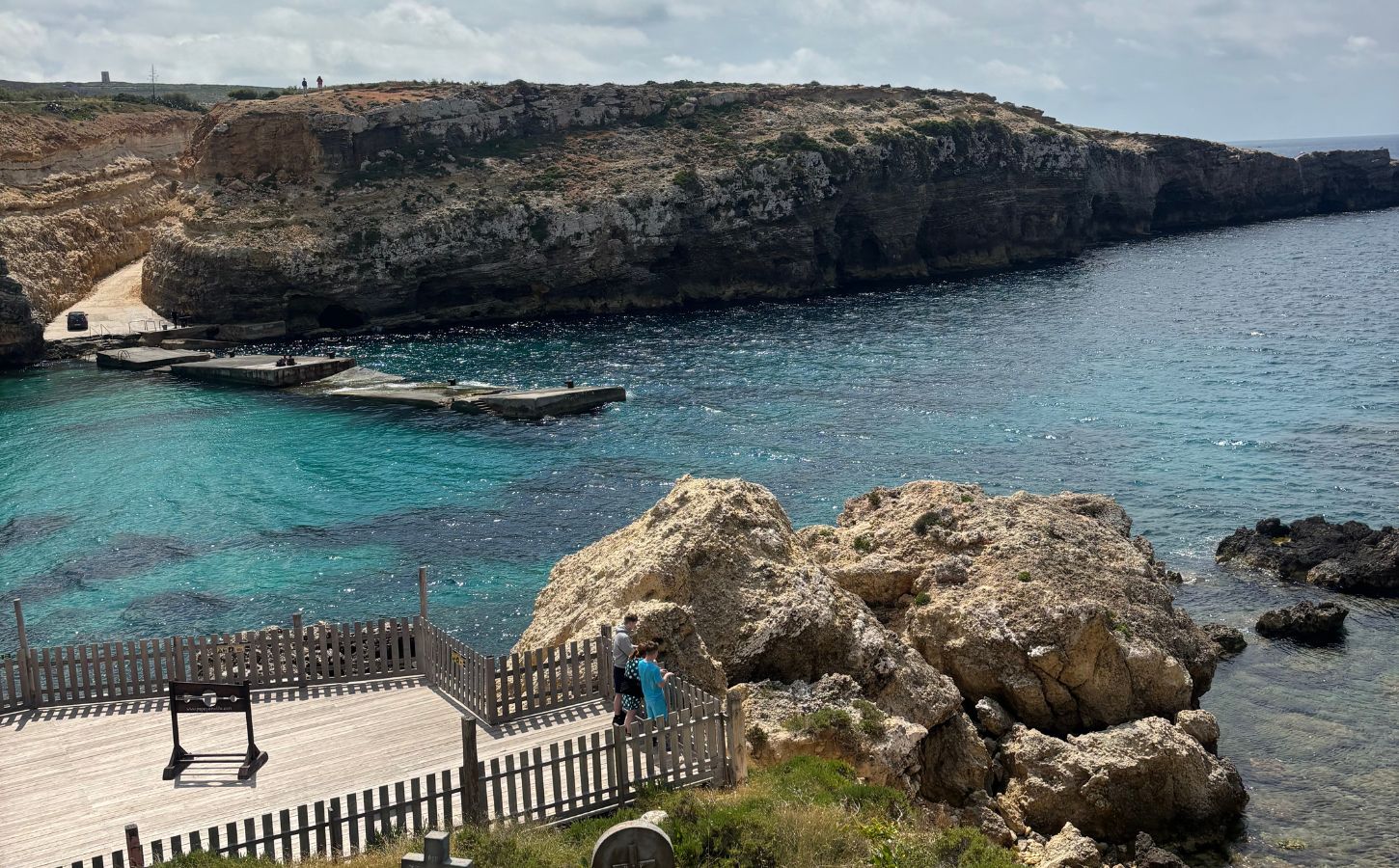
Golden Bay is also stunning! As its name suggests, it has golden sand and is also surrounded by hills. The sunsets are especially beautiful. It also attracts plenty of locals. There are a few food stalls, but they don’t encroach on the beach, making it an ideal place to spend the afternoon. I will say more about Anchor Bay below, as it borders the famous Popeye Village. There is not much sand, but you will find several flat stone platforms. It is a great place to relax, with crystal-clear water that is ideal for snorkeling.
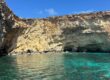
You have almost certainly heard of the Blue Lagoon while planning your trip to Malta. It’s located in the Maltese archipelago on the island of Comino. It is more of a cove than a beach, with barely any sand and cliffs all around. It lives up to its reputation: the water is an intense, almost fluorescent blue. It was lovely to swim there, even though the water was a bit cold in early April. Then there is Crystal Lagoon, which draws fewer visitors but is every bit as beautiful to me. I think it is underrated. It’s surrounded by cliffs and the water is crystal clear. It makes you want to dive straight in. As well as these two lagoons, Comino has two small bays: San Niklaw Bay and Santa Marija Bay.
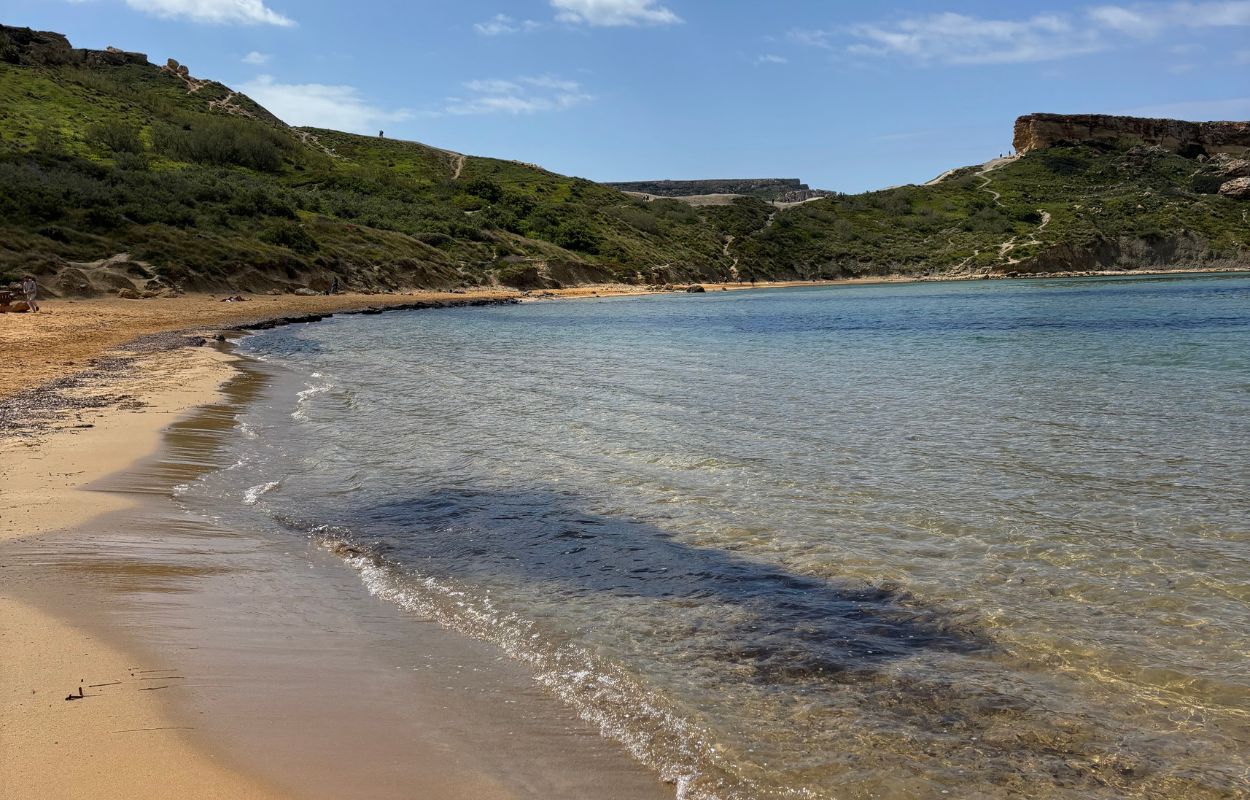
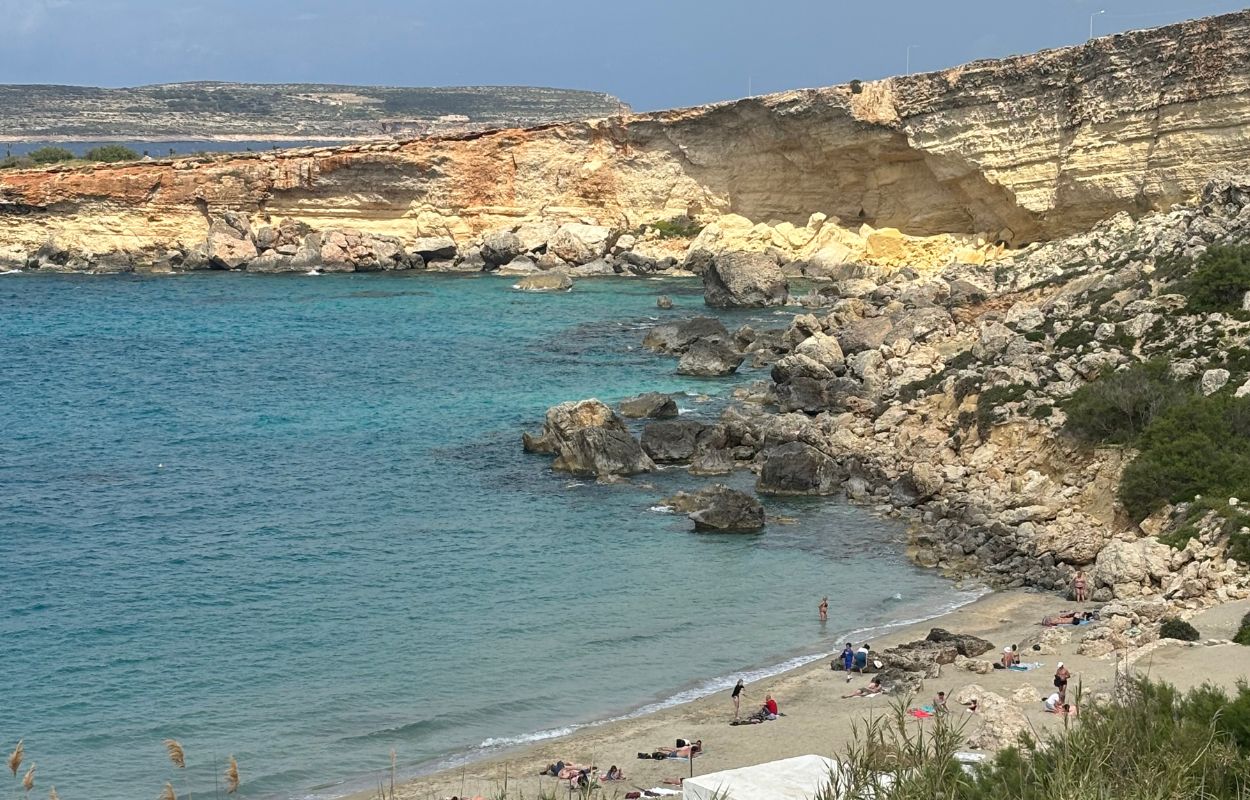
To round out this tour of Malta’s beaches, let’s head to Gozo. Ramla Bay is the largest and most famous beach on the island. Wild and relatively unspoiled, it curves into a broad semicircle. The sand is much redder than at Ghajn Tuffieha. I absolutely loved this beach. Xlendi Bay was another favorite. There is hardly any sand here—just turquoise water stretching between the cliffs. It is a beautiful setting. The rest of the island has more secluded coves where you feel like you have the place to yourself, such as Dwejra Bay, San Blas Bay and Hondoq ir-Rummien (in the far south, with the Blue Lagoon on Comino in the distance!).
Malta has no shortage of beaches, so anyone coming mainly to swim and relax will have plenty to choose from. I’ll provide more information about the best beaches in Malta in a dedicated article.
5. Hike along the Dingli Cliffs
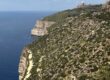
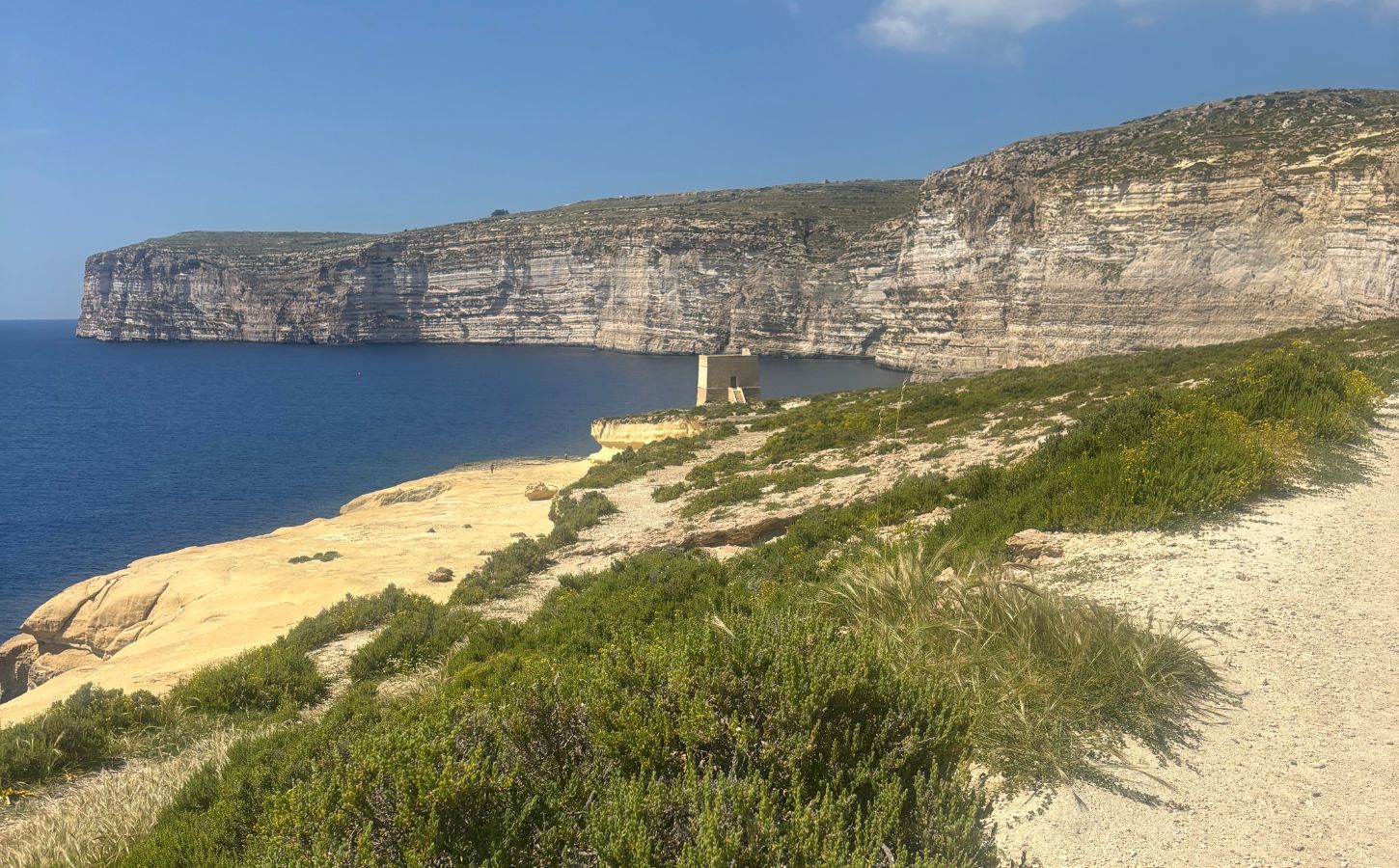
If there is one hike to prioritize in Malta, make it this one. At around 250 meters above sea level, this is Malta’s highest point. Admittedly, that may not sound like much to mountain lovers. It’s also the most famous hike in Malta. The views along the Dingli Cliffs are remarkable. The trail follows the high ground above the cliffs, with the Mediterranean stretching to the horizon. It is hard to imagine a better backdrop.
The main drawback is that the trail is not always well maintained. At times, you may find yourself walking along the roadside as trucks pass. This is especially true at the beginning! It becomes quieter as you continue, although the trail and its views still attract other travelers.
The trails are a mix of pebbles, rocks and the famous Maltese scrubland, which consists of aromatic herbs, carob trees and succulents. Allow roughly 90 minutes to two hours, even at a leisurely pace with a few breaks. It is especially beautiful late in the day, when the sunset lights up the cliffs. I thoroughly enjoyed the hike, and it made a welcome change from Malta’s beaches, towns, and villages.
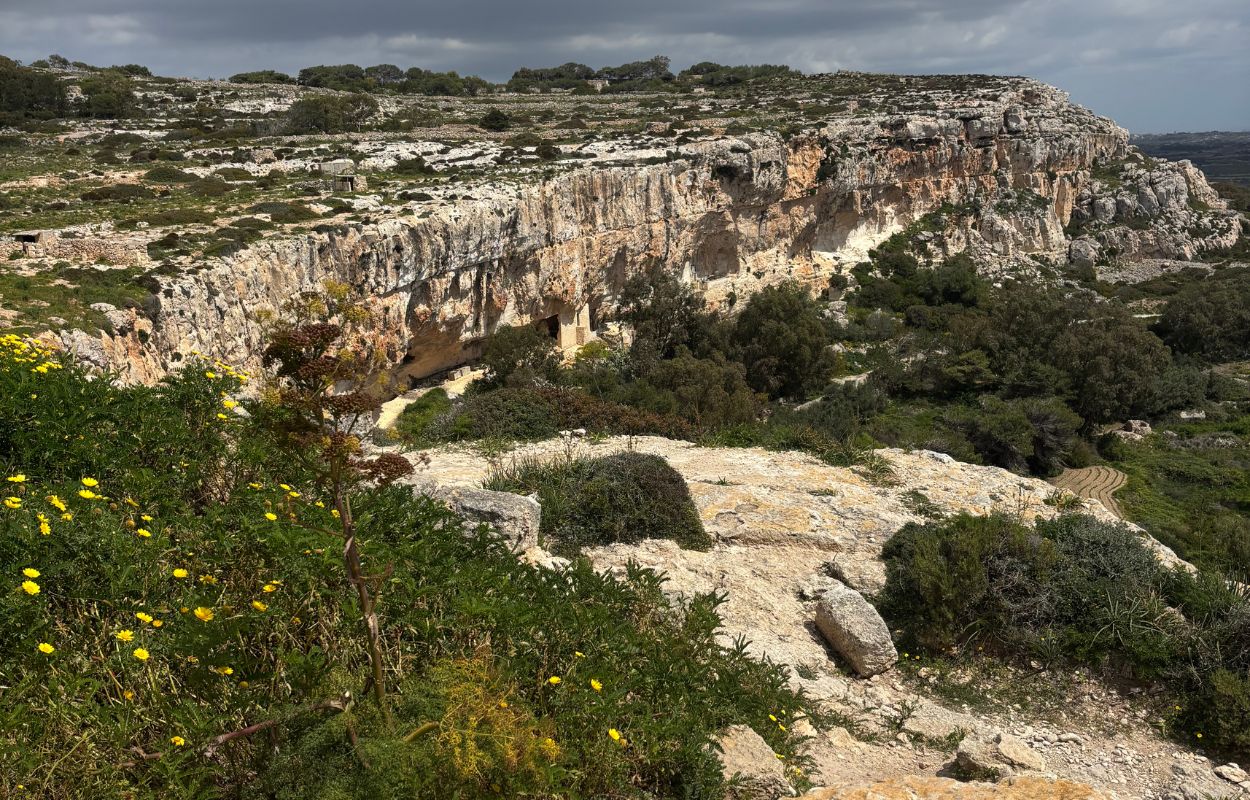
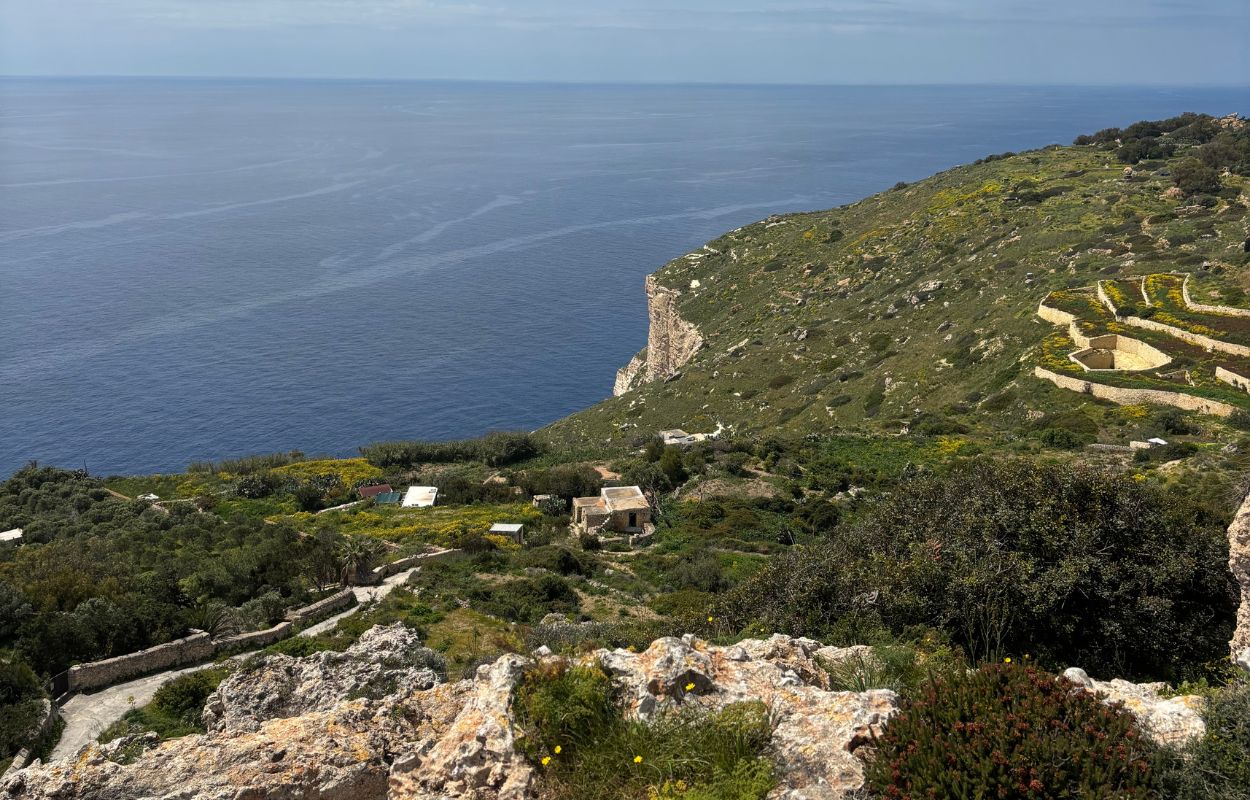
Although Malta offers plenty of hiking, I found Gozo even better for exploring on foot. The island feels wilder and less developed. Even when there aren’t any official, marked trails, it’s just as nice to explore. I even got into the habit of completing some outings on foot. Many of the dirt roads are far easier to explore on foot.
If you’re tempted to go hiking in Malta, you’ll find all the information you need in our comprehensive guide!
6. Go scuba diving and snorkeling
With all the beaches mentioned above, you’ll find plenty of great spots for scuba diving and snorkeling. As for me, I did my very first dive in Malta! I was a little nervous, but the experience was fantastic. The instructor took the time to explain the basics.
We then put on all the gear—a wetsuit, fins, tank, BCD, and everything else. It felt heavy, but once in the water you don’t notice it. I spent almost an hour underwater. It felt daunting at first, but once I realized I could breathe comfortably, the fun began. Because it was an introductory dive, we descended gradually to six meters. I spotted several small, colorful fish, along with a starfish and a clownfish that immediately made me think of Nemo. I did not see any rays, but you may be lucky enough to spot one. Whether it’s a first dive or a regular session, there are beautiful underwater sites to explore, including wrecks and areas with richer marine life.
If you prefer to stay on the surface, snorkeling is a great activity in Malta. I went snorkeling in Gozo, where the spots are quieter and less crowded—and it was easy to get started with just a mask and snorkel. A couple of good sites are Dwejra Bay and Xlendi Bay. You can go on your own or opt for a guided snorkeling excursion. The added benefit is pickup from your accommodation and a destination chosen according to the day’s weather conditions. All you need to do is relax and enjoy the experience.
7. Visit Popeye Village
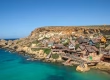
You may already have heard of it: Popeye Village is the surviving set from the 1980 film Popeye, starring Robin Williams. The set was preserved and later turned into a theme park. Fans of the film, or anyone feeling nostalgic, are likely to enjoy it.
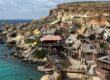
Even if you’re not familiar with the film or its iconic characters, such as Popeye and Olive, it’s a great place to visit with your family. There’s plenty to do: watch activities, take part in them, play games, enjoy the view of Anchor Bay, and have a good time with family or friends. Many travelers stop simply to admire the village and turquoise water from the cliff opposite. The view is beautiful. Even if Popeye Village itself does not appeal to you, the viewpoint is still worth the detour.
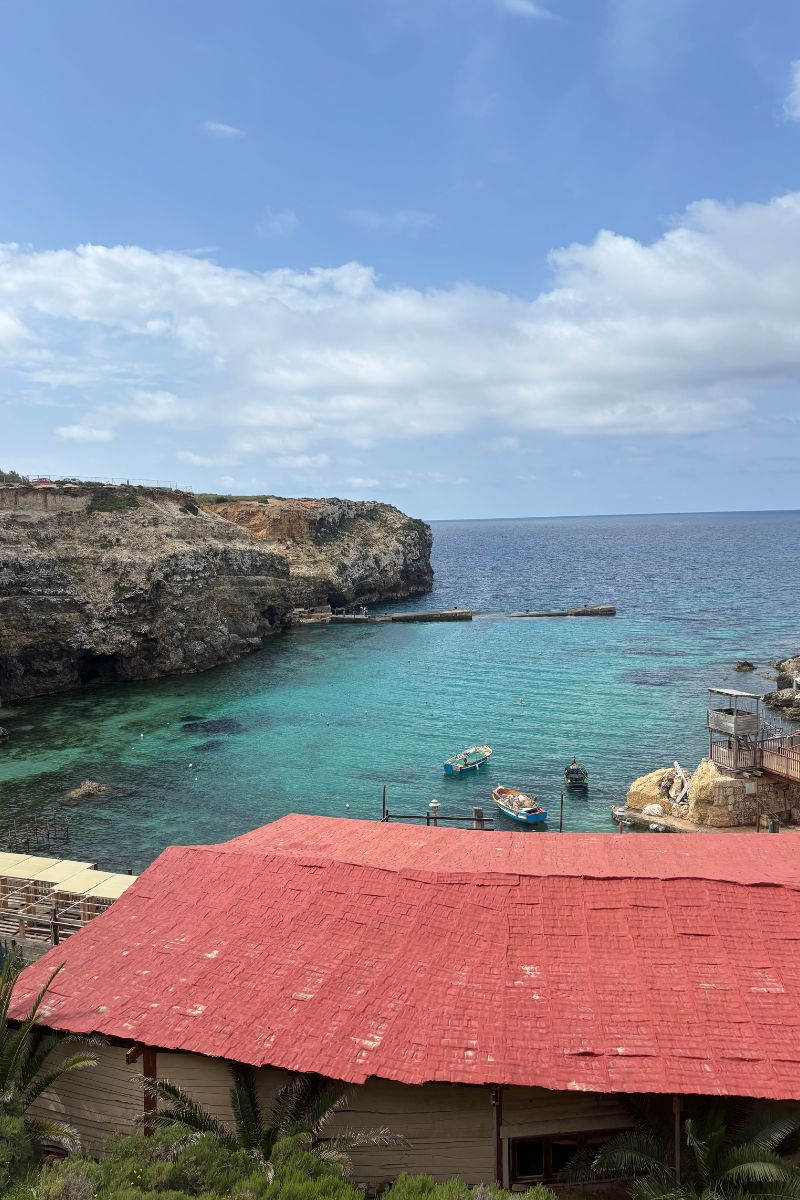
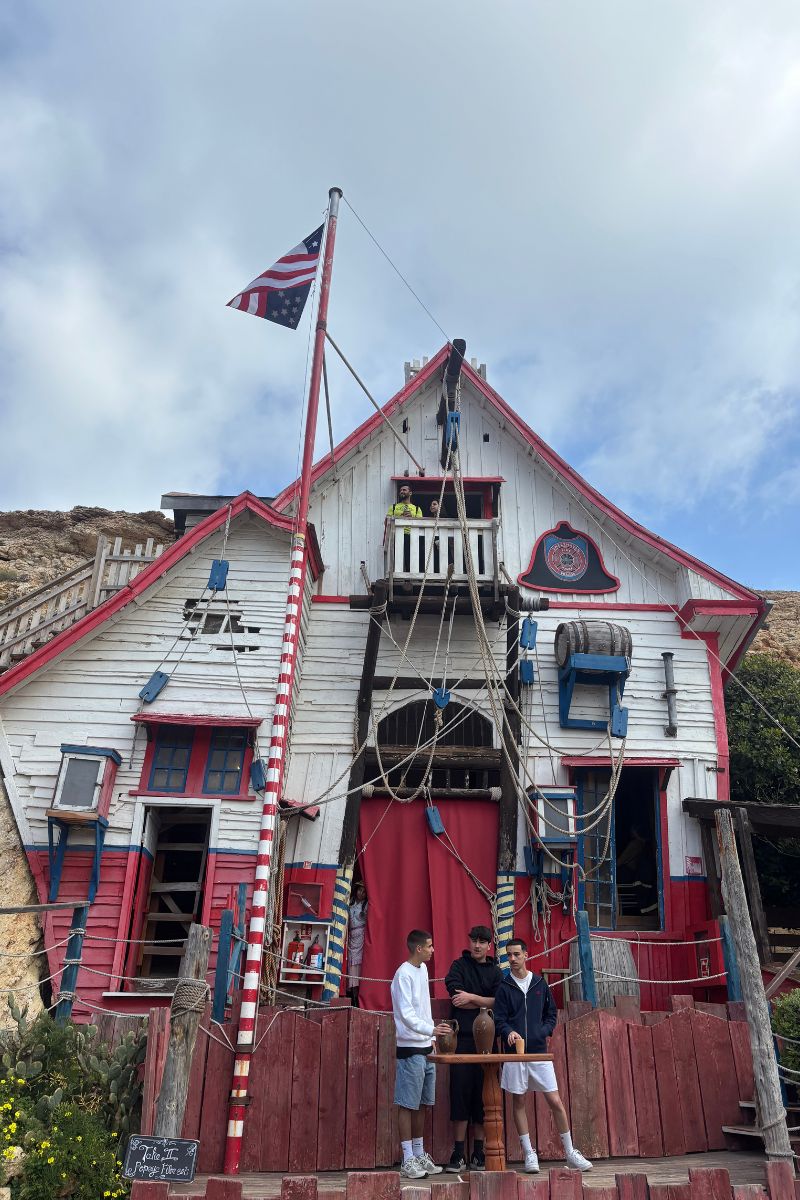
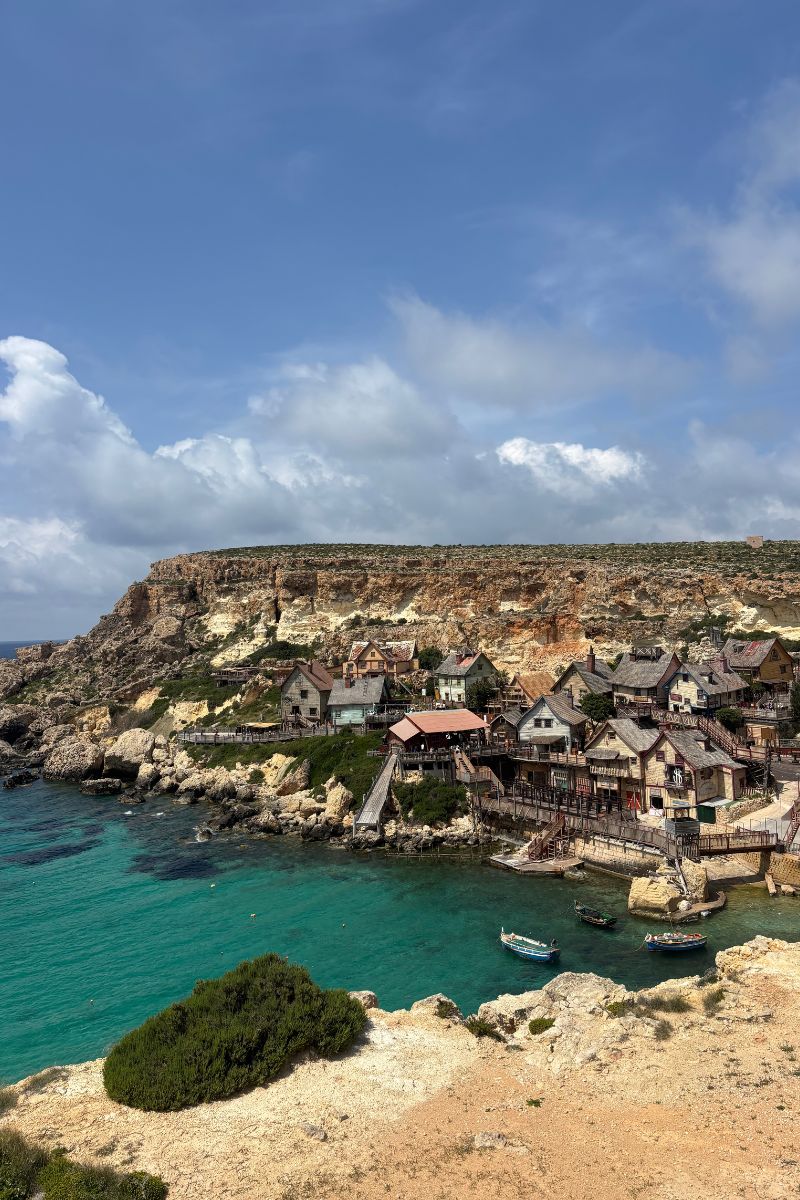
Whether Popeye Village is worth visiting depends on your tastes and expectations. It is undeniably a little kitschy, but that is part of its charm. Between the colorful, well-preserved wooden houses and the entertainment, the experience is designed to be lighthearted and fun. The village cinema is a pleasant extra. You can eat popcorn while watching a documentary about the film and its history. At the entrance, you are given a program of events so you can choose which ones you want to see: puppet shows, scenes from the film with visitors, etc. It is simple, cheerful fun.
Ticket prices vary by season. In summer 2026, admission costs €25 for adults and teenagers and €16 for children ages 3–12 and seniors, with the seasonal water attractions included. To enjoy Popeye Village, allow at least two or three hours, or longer if you stop at the bar and restaurant.
8. Take a boat trip to the Blue Lagoon on Comino
Even though I’ve already mentioned it, the Blue Lagoon is truly a must-see in Malta. You can easily get there on your own by taking the ferry from Cirkewwa or Marfa, which will drop you off right at the Blue Lagoon. Alternatively, you can opt for a guided tour of the Blue Lagoon in Comino. I genuinely recommend it.
I went on a half-day boat trip combining Comino and Gozo, and it was fantastic. The four hours flew by as we moved from one stop to the next. I had just under an hour to swim in the Blue Lagoon and also visited Crystal Lagoon and Santa Maria. I saw the caves around Gozo and the famous Elephant Rock around Comino up close. It felt like a well-rounded experience, and I would happily recommend it. Some excursions last a full day and include meals. These give you more time at each stop and let you enjoy the day at a slower pace. I would gladly have stayed longer, although the itinerary felt balanced and gave us enough time overall.
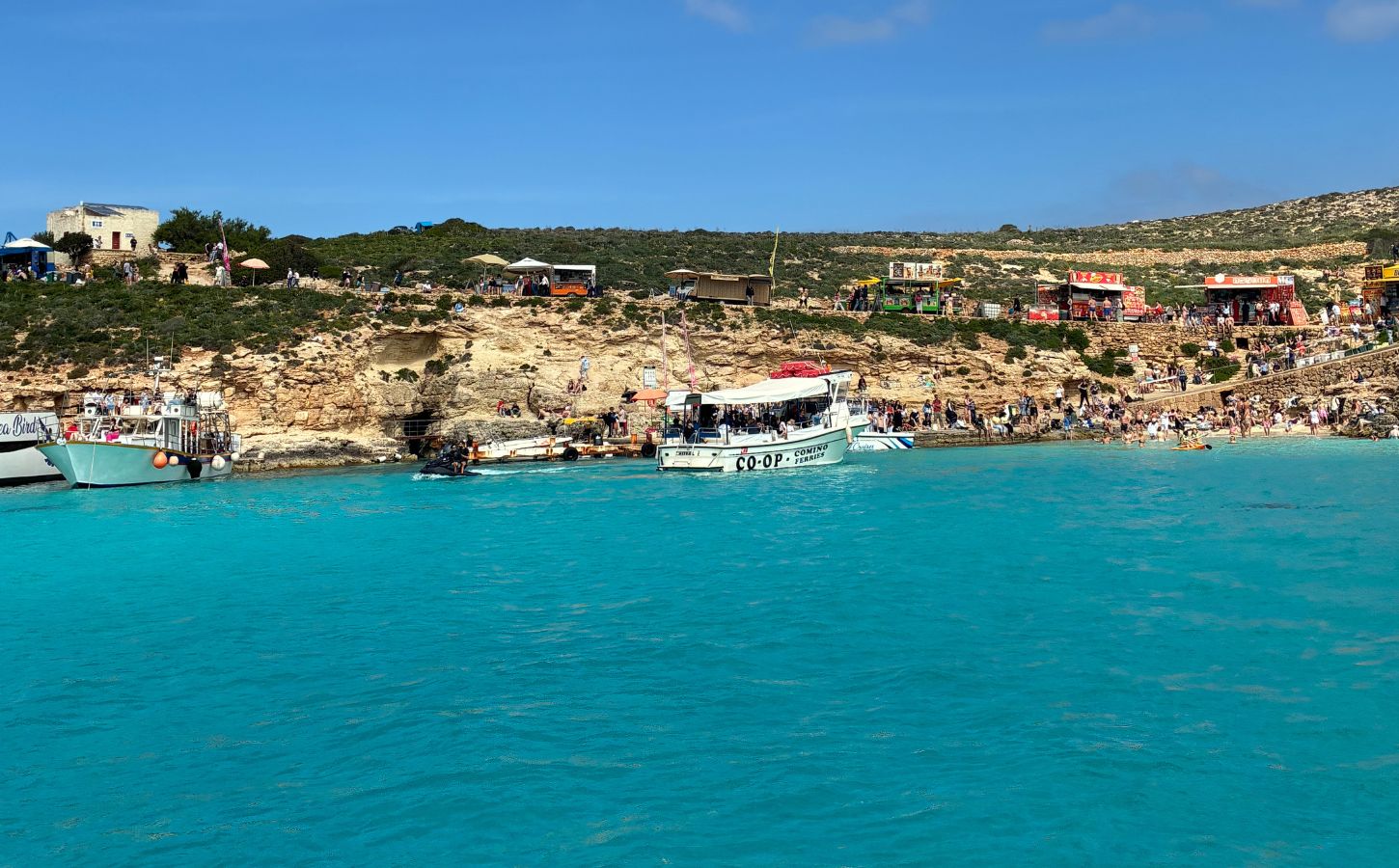
For me, the best way to experience the Blue Lagoon and its surroundings is by boat. A small group and music on board created a relaxed atmosphere. You feel removed from the outside world, with nothing to do but relax and enjoy the ride.
The Blue Lagoon’s beautiful water naturally attracts large crowds. However, since I took a boat trip to get there, I was able to swim around the boat with the snorkeling equipment I had borrowed. There were not many people nearby, so I could swim freely and enjoy the relative quiet. I don’t think I would’ve had the same experience if I’d taken the ferry with everyone else to the small stretch of sand or around the cliffs.
The only drawback is that there are quite a few food stalls. They detract from the landscape a little. On the other hand, they are convenient if you plan to spend the entire day there. In any case, if you come to Malta, I would highly recommend taking a guided boat tour to the Blue Lagoon, Comino, and Gozo. I still have wonderful memories of the trip and would do it again without hesitation.
9. Explore the island of Gozo
Many visitors set aside a single day to explore Gozo. If you’re only spending a few days in Malta, I understand why you would choose this option. To cover as much ground as possible, consider a guided quad-bike tour. That’s what I did, and it was a great day! However, if you’re staying in the archipelago for a week or more, I recommend setting aside a few days for Gozo. For example, I spent 12 days in Malta, including five in Gozo. Although Gozo is much smaller than Malta, it has plenty of must-see sights in Gozo.
Start with the island’s coves and beaches. In particular, I recommend Dwejra Bay, Ramla Bay, and Xlendi Bay. I was lucky enough to stay only a short walk away, so I made the most of the location. Each has a different setting, but they all have beautiful water and are much less crowded than the beaches in Malta or the Blue Lagoon. They feel more rugged, which I personally prefer.
Gozo is also home to remarkable megalithic temples. They predate the pyramids of Egypt and are listed as a UNESCO World Heritage Site. They are a must for history enthusiasts. Even if museums are not usually your thing, the site is still worth visiting. If you look at pictures, you’ll see that some of the temples have collapsed, with parts supported by scaffolding. What makes the visit memorable is the experience as a whole. You begin in the museum, learning about the civilization that built the temples, before heading outside to wander among the ruins on a hill overlooking Gozo. It is an evocative setting that makes the distant past feel surprisingly tangible.
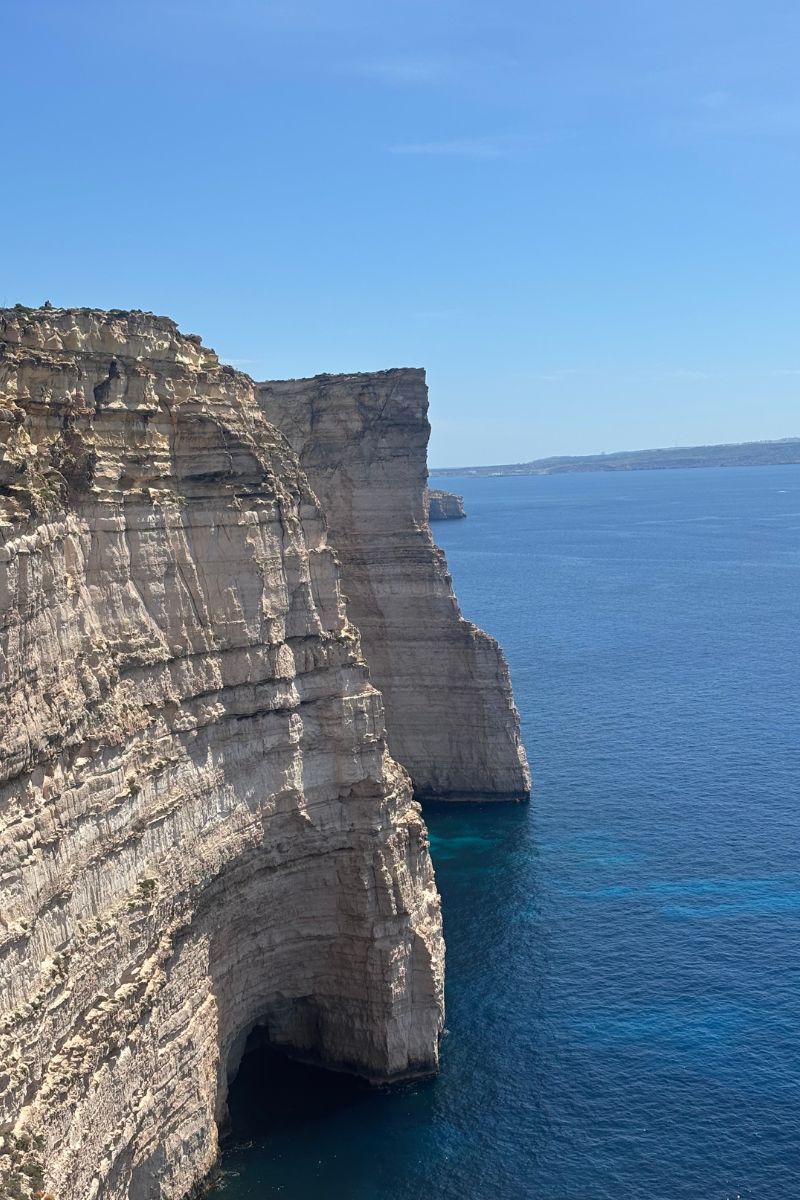
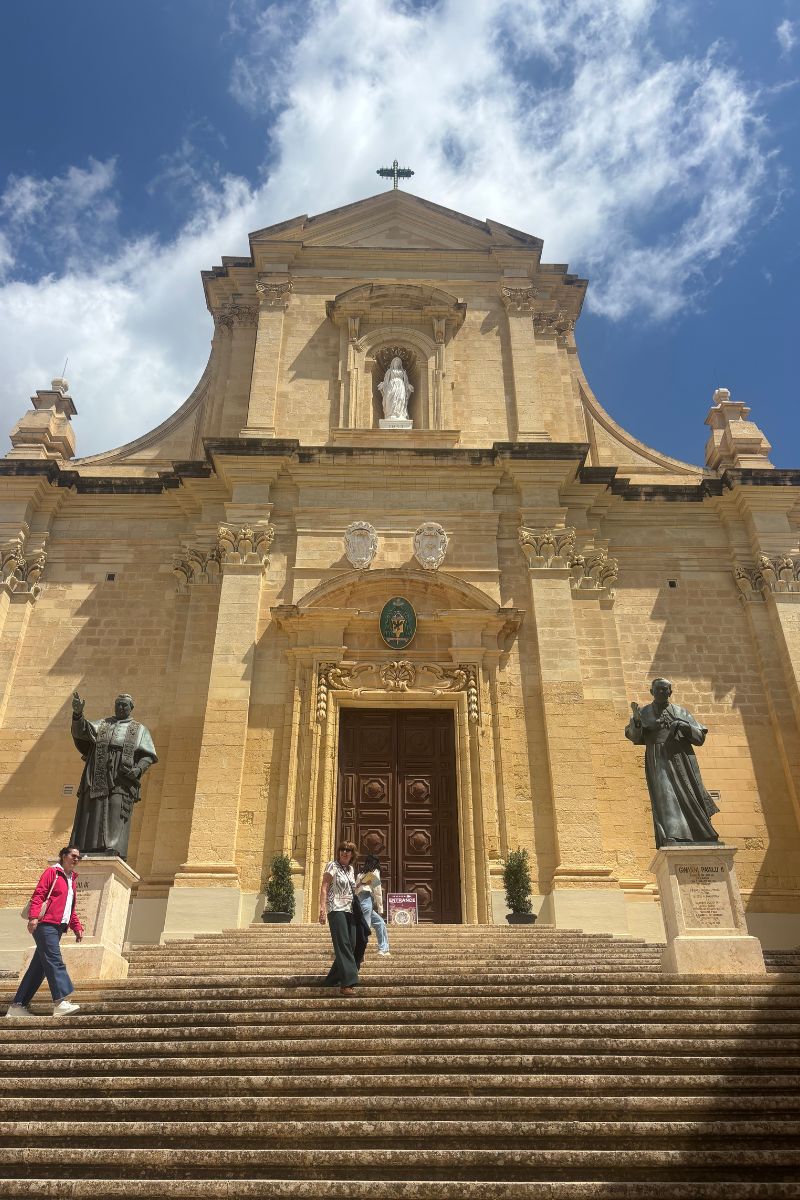
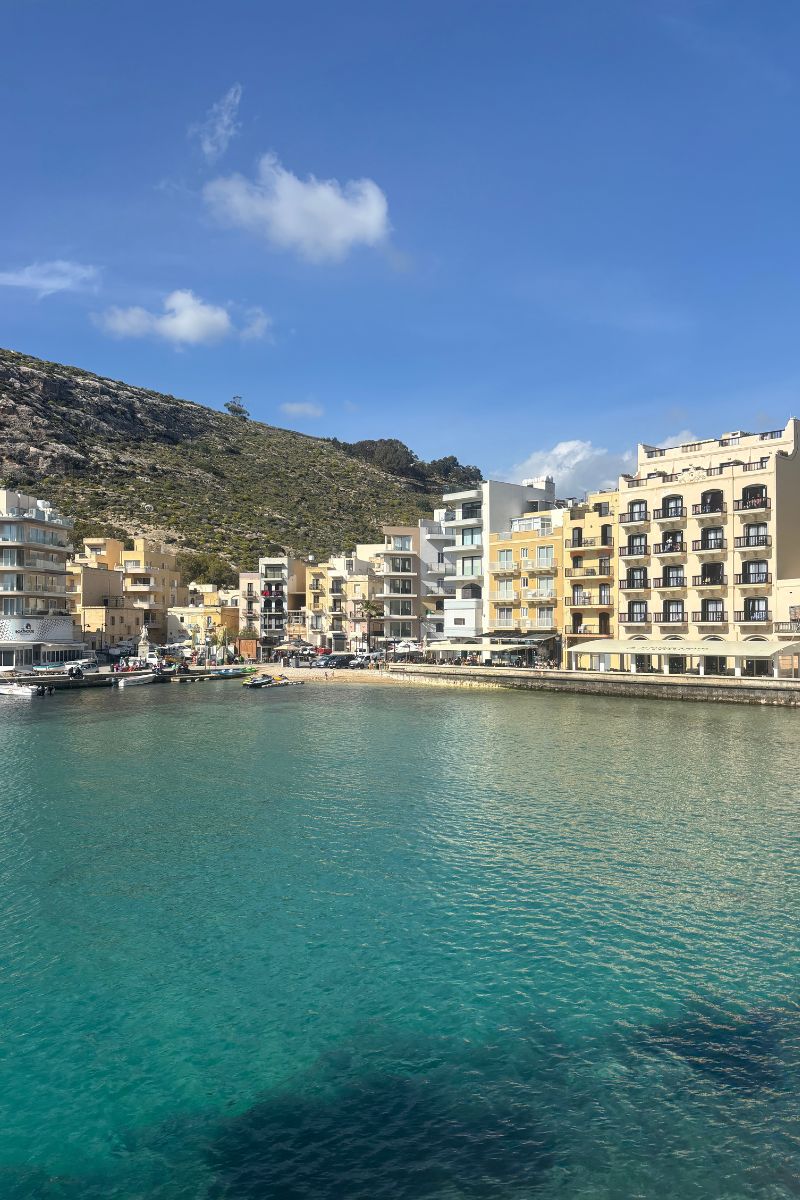
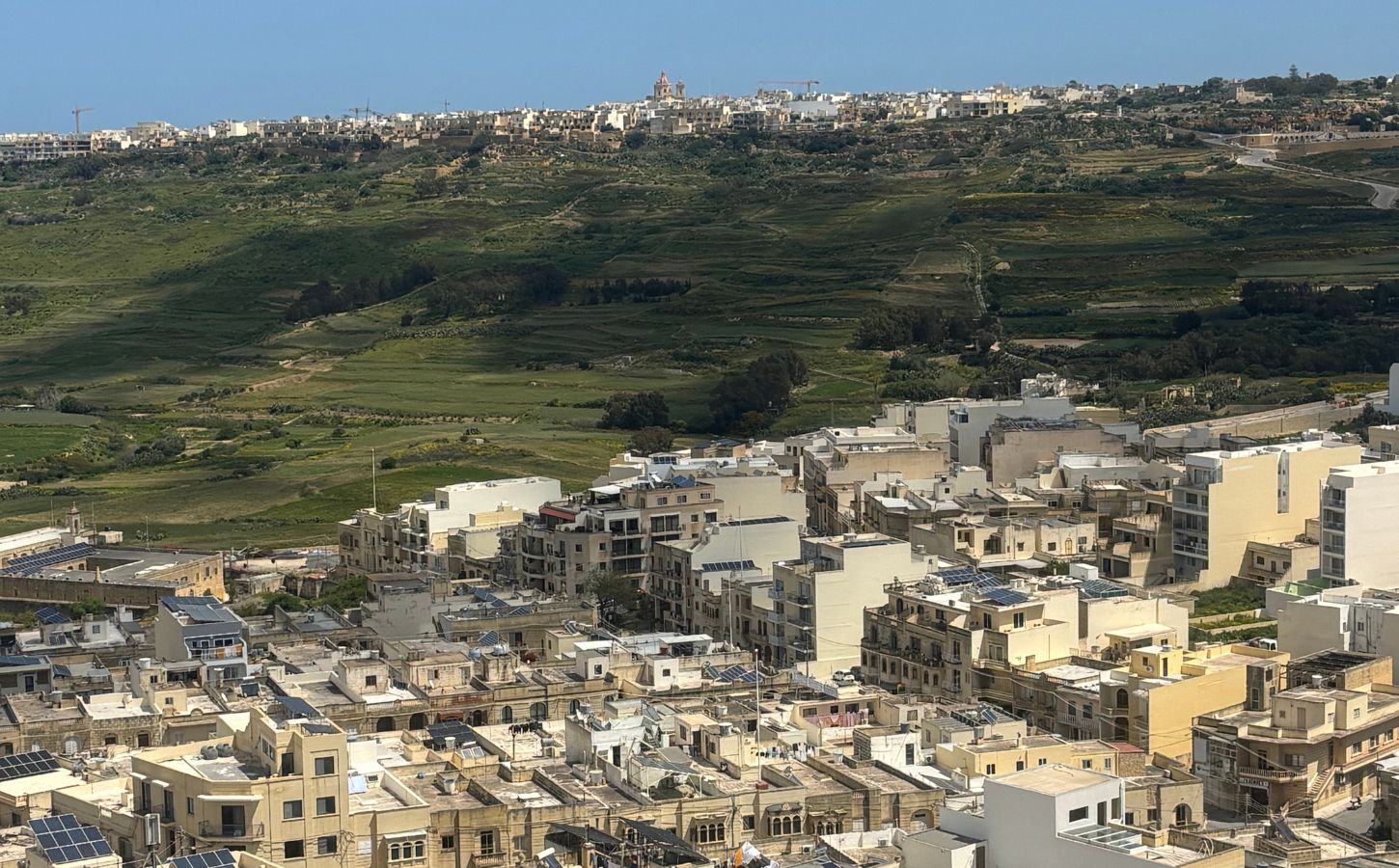
You should also visit the Citadel in Victoria, Gozo’s capital. The Citadel is a pleasure to explore, and its ramparts offer sweeping views across the island. I really loved it! I also enjoyed Victoria itself. Like many Maltese towns, it has narrow streets and is home to the famous St. George’s Basilica. It’s as beautiful inside as it is outside. I also found that more of Gozo’s religious sites were open to visitors. Be sure to visit the Ta’ Pinu Basilica as well. It’s the most famous on the island, and it’s easy to see why. I highly recommend stopping there!
Gozo offers an impressively varied range of experiences.
10. Discover the Blue Grotto
The Blue Grotto is a vast natural arch carved into the cliffs above turquoise water. It is an impressive sight. The contrast between the golden cliffs and the deep blue water is beautiful. For the best view, stop at the overlook above the grotto. There is a small parking lot and a bus stop nearby. Follow the winding path down to the best vantage point. If you’re afraid of heights, it might be a bit scary.

You can also head down to the small harbor at Wied iż-Żurrieq to see the Blue Grotto from the water. The trip takes place in a traditional boat. The roughly 20-minute ride passes beneath the arch and through several other caves, where the light creates striking reflections. If you can, I think the best option is to combine the two: the viewpoint and the boat trip. Boat-trip prices now generally run around €10–€12 per adult and may vary by season. Tickets are usually purchased on site. It can become busy in high season, so morning is usually the best time to go.
11. Visit Marsaxlokk
The fishing village of Marsaxlokk lies in southern Malta. Although it is now a popular destination, the village has retained much of its Maltese character. A promenade runs along the harbor, where you will find the famous fish market and stalls selling local crafts. More stalls appear on Sundays, when locals arrive to shop. I went during the week and still found some interesting stalls.
The harbor is filled with colorful boats. With the town behind them, they create a beautiful scene. It is a good place to get a feel for local life. I recommend staying for a meal and trying the fresh fish. You’ll see that there are many restaurants along the harbor. Do not automatically choose the first restaurant you see; walk a little farther and you may find quieter options. I ate at Harbour by Joann and loved it! It was no more expensive than the other restaurants and felt more authentic. We ordered lobster pasta and crab risotto, and both were delicious. When I visited, fresh fish cost around €6 per 100 grams, although the total can rise quickly. If you want to treat yourself, now’s the time!
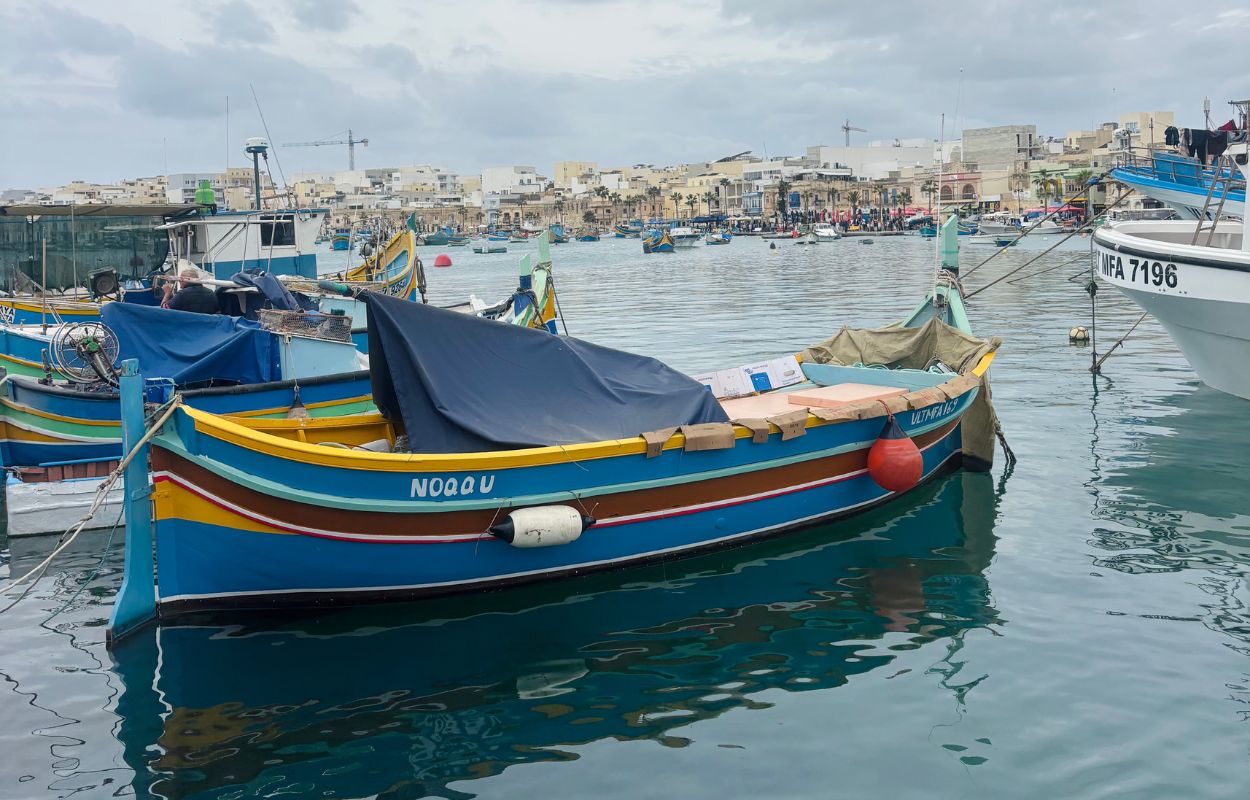

Between lunch and a walk around the fishing village—mainly the harbor—you will not need more than half a day. From Marsaxlokk, I recommend heading to St. Peter’s Pool, a stunning natural swimming pool. It is about a 10-minute drive or a 30-minute walk away. I walked there myself. The route involves some climbing, but the view from the top made it worthwhile. The sea was rough when I was there, but in the summer, you can swim or snorkel. It’s located right in the middle of cliffs where you can see erosion, and the sea is a beautiful shade of turquoise blue. Together, Marsaxlokk and St. Peter’s Pool make an easy half-day combination in southern Malta.
Planning a trip to Malta: practical information
Now that we have covered Malta’s main attractions, here is the practical information you need to plan your stay.
How to get to Malta
Getting to Malta is fairly straightforward. Direct flights are available from several major French cities, including Paris, Nantes, Bordeaux, and Toulouse, although routes vary by season. Depending on your departure city, direct flights generally take between two and three hours. Malta International Airport in Luqa is roughly 20 minutes from Valletta by car under light traffic. Low-cost carriers such as Ryanair and easyJet operate many of these routes. Booking in advance can help you find lower fares. Travelers from Belgium and Switzerland can also find direct flights from Brussels and Geneva, depending on the season.
From Sicily, you can also continue to Malta by ferry from Pozzallo. The crossing takes around one hour and 45 minutes and can be a convenient alternative.
When to visit Malta
Choosing the right dates can be more complicated than it seems. Malta is a year-round destination. It has a Mediterranean climate. As you might imagine, it gets very hot in the summer. Daytime temperatures can rise above 95°F during hot spells. You can generally expect abundant sunshine and warm water for swimming, although weather is never guaranteed. If you’re looking to enjoy the beaches and nightlife in St. Julian’s, come in the summer! You can still sightsee, but it’s best to do so early in the morning or late in the afternoon.
I went in the spring, and I highly recommend it! The temperatures are mild, and there’s even some greenery. Depending on where you go, there aren’t many tourists, but it’s still reasonable. You can enjoy the main attractions in a calmer atmosphere, which I personally find more pleasant. For me, spring and fall are the best times to visit Malta. From September onward, the island becomes quieter and less touristy while still enjoying pleasant temperatures. The water is also warmer than in the spring.
Winter, from December through February, is often the least expensive time to visit Malta. Airfares and accommodation prices are lower. This is generally when you will find the best deals. Daytime temperatures often hover around 15°C. Rainy and windy days are possible, which is the main drawback of winter. On the other hand, you’ll be able to visit all of Malta’s must-see attractions without crowds: a real bonus!
If you want more details to help you choose your dates, we’ve written a comprehensive article on when to go to Malta.
How to get around Malta
Although Malta is compact, it is worth comparing the different ways to get around:
- The bus: this is usually the least expensive option. The network covers both Malta and Gozo. The seven-day Explore Adult card currently costs €25 and includes unlimited travel on day and night routes, excluding tallinja Direct services. During high season, however, buses can be crowded and delayed, so build extra time into your schedule.
- By car: a rental car gives you the freedom to reach more isolated places, including the Dingli Cliffs, Popeye Village, and Gozo. Remember that traffic drives on the left. It can feel unfamiliar at first, but most drivers adjust quickly. I rented a car through the Discover Cars comparison site. The comparison process was convenient, and I found several appealing rates within a few minutes.
- Ride-hailing apps: services such as Bolt, Uber, and eCabs operate in Malta and can be less expensive than traditional taxis, especially when the fare is shared. Because distances are relatively short, this can be a practical option.
- Ferries and taxi boats: ferries connect Valletta with the Three Cities, while other services run to Gozo and Comino. Traditional taxi boats known as luzzus offer another way to travel across the harbor. They provide a more intimate, traditional experience without costing a great deal.
- On foot or by bike: walking is ideal in towns and villages such as Valletta, Mdina, and Marsaxlokk. It is the best way to explore them while taking in the local atmosphere. Cycling is not the easiest way to get around Malta, but it is more appealing on Gozo. There is less traffic, making the ride more enjoyable. An electric bike is worth considering—the islands’ hills make the extra assistance welcome.
How many days do you need in Malta
I recommend spending at least a week in Malta if possible. A week gives you time for a full itinerary covering many of the archipelago’s highlights. As mentioned, I stayed for 12 days and thoroughly enjoyed it. I had time to visit all the must-see places and explore the archipelago in more depth. I never felt bored and would return in a heartbeat. A stay of more than a week—or even 10 days—is well worth considering.
Many travelers also visit Malta for a long weekend. It is a good destination for a quick break and a first look at the essentials. A short getaway may easily leave you wanting to return for longer. With limited time, prioritize Valletta, the Three Cities, Mdina, and the Blue Lagoon.
To give you an idea of itineraries in Malta depending on the length of your stay, I recommend reading our article on the subject!
Where to eat in Malta
Malta offers plenty of choice, with something for most tastes—although you may notice more Italian restaurants than Maltese ones.
In Valletta
- Noni: this Michelin-starred restaurant is a good place to start. If you want to treat yourself and discover Maltese cuisine in a different way, this is a great place to go.
In Mdina
- Fontanella Tea Garden: located in the heart of the walled city, this café offers excellent pastries and is ideal for a light lunch! Its terrace, set along Mdina’s ramparts, offers panoramic views across the Maltese countryside to the distant sea.
In Saint Paul’s Bay
- Apulia: given the name, there’s no doubt that this is an Italian restaurant. It was literally a 3-minute walk from my hotel in Malta, so I was able to go there 2-3 times! The food was excellent, especially the penne with salmon and pistachios! The terrace overlooks the bay, and the restaurant’s elevated position makes the view even better.
In Victoria (Gozo)
- Ta’ Rikardu: this small local restaurant serves straightforward Maltese food, including goat-cheese specialties and pasta dishes. The food is good, and it’s located in the narrow streets of the citadel: the setting is especially charming.
In Xlendi Bay (Gozo)
- Le Zafiro Restaurant: this restaurant was right next to my accommodation and directly on the waterfront in Xlendi Bay. The food was very good, with dishes made from fresh ingredients, and I would happily recommend it.
Where to stay in Malta
Now for accommodation. Here are several options worth considering:
The Phoenicia Malta: This luxury hotel at the entrance to Valletta offers an elegant setting overlooking the Grand Harbour. Here, you can enjoy an infinity pool, a spa, and spacious rooms. Some rooms also have sea views. A night here is not inexpensive, but it may be worth considering if your budget allows.
Iniala Harbour House: This is another five-star property in Valletta. Its elevated position provides broad views over the Grand Harbour and the Three Cities. Amenities include a pool, a spa, and a Michelin-starred restaurant.
Grand Harbour Hotel: Also in the capital, this mid-range hotel overlooks the harbor and the Three Cities and offers good value for money. It is a more affordable way to stay in central Valletta. There is also a pleasant rooftop terrace. The location is convenient for exploring Valletta on foot.
Ambassador Hotel: This is where I stayed on the main island, and it has plenty going for it. It is a small, family-run hotel with a welcoming atmosphere. The staff were warm and consistently friendly. The rooms are small but comfortable, and I slept very well. Some rooms also offer attractive sea views. I would readily recommend it.
Corner Hostel: For travelers on a budget, this hostel in Sliema is a strong option. It is only 200 meters from the beach and nearby bus stops, which is very convenient. At this hostel, you can stay in a dormitory or a private room with a bathroom. The common areas are clean, well designed, and suited to meeting other travelers.
If you’re looking for more accommodation options in Malta, I highly recommend checking out our dedicated guide.
That brings this guide to Malta’s best things to see and do to a close. I hope it has answered your main questions. As you can see, the Maltese archipelago offers far more than white-sand beaches.
To help you prepare for your trip to Malta, I recommend reading our article on how much to budget!
See you soon for more Malta travel tips.

Written by Laura CALLES
Thanks to Mélanie and Sylvain, I had the chance to explore the beautiful Maltese archipelago and share all the beauty of its islands with you. A little piece of paradise not to be missed!
Thanks to you, our readers, our blog can continue to grow. This page may contain affiliate links, which means we may earn a commission if you make a purchase through them, at no extra cost to you. This helps us keep offering you more and support our work!
Despite our vigilance, an error may have slipped into this article. If you spot one, please let us know so we can correct it and keep our information up to date!