Traveling to the Canary Islands

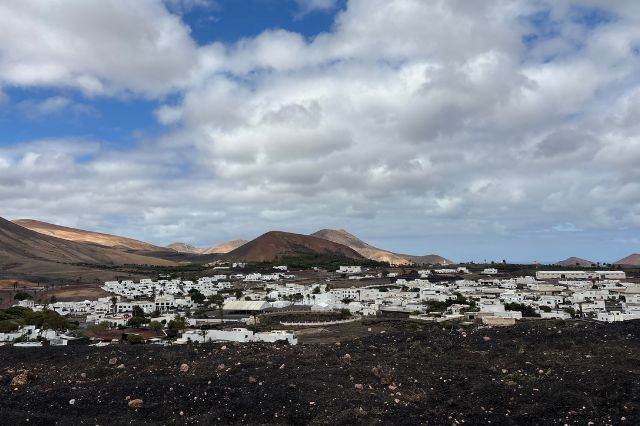
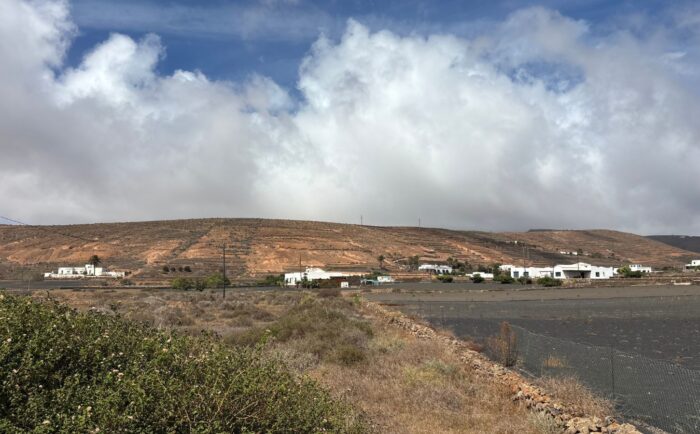
When you think of the Canary Islands, you mostly think of one island, the most touristy and the largest of them all: Tenerife. But in reality, the archipelago is made up of seven islands in total, not counting the small islets located to the west of the African continent. What’s more, each island has a distinct identity and strikingly different landscapes. For now, we’ve had the chance to discover Tenerife and Lanzarote. Already, between these two, there’s a big gap. For example, Tenerife is complete, with microclimates and varied landscapes — from black sand beaches, but also golden ones, to Teide National Park, the aridity of the south, and the humidity and chill of the north with its lush vegetation. As for Lanzarote, it’s a less mountainous but more volcanic island, with over 300 volcanoes on a surface area six times smaller.

Whichever island you choose, know that this is a very sunny destination where the climate balances warmth and mildness. In fact, the archipelago racks up more than 300 days of sunshine a year. Lanzarote averages only 10 days of rain per year — that’s nothing at all! Plus, the Canary Islands are made for several types of trips: hiking, relaxing, beaches, cultural visits. In other words, there’s definitely a Canary Island that matches your wishes. For now, we’ll stick to Tenerife and Lanzarote, but there will undoubtedly be more to come. We’ll continue our exploration of the Canary archipelago. So, ready to learn more about this multifaceted Spanish archipelago?

canary islands

Not sure where to stay in the Canary Islands ?

We’ve put together many in-depth guides to help you find the accommodation that suits you best, based on your budget and travel style.

Discover where to stay in the Canary Islands

5 Must-Sees in Tenerife

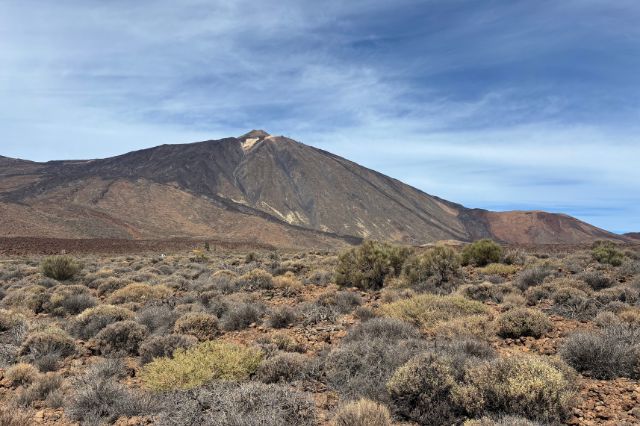
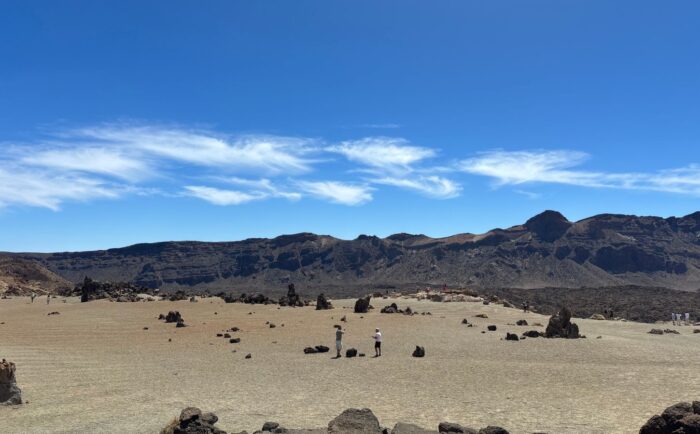
  1. Explore Teide National Park : it’s no coincidence I’m starting with Teide National Park (a UNESCO World Heritage Site)! You absolutely must see Teide, Spain’s highest peak, not to mention its volcanic and lunar landscapes. I went there twice, and even on my second visit, I was just as impressed.
  2. Visit Santa Cruz de Tenerife, the capital : a lively, colorful city on the ocean, the capital has that little something extra. You can stroll between cultural visits and local markets, like Nuestra Señora de África. I really liked the vibe there!
  3. Discover San Cristóbal de La Laguna : for the record, it’s the former capital of Tenerife. I find it full of charm with its cobbled streets and colorful facades. I loved wandering around in peace. Even if there are tourists, I think it’s a city that has managed to keep its authenticity.
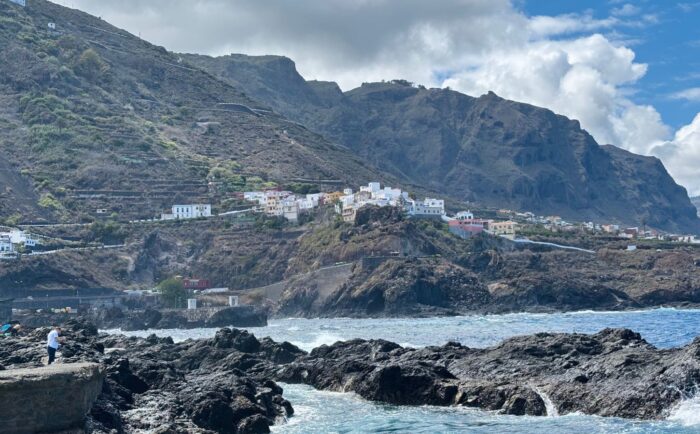
  4. Swim in the natural pools of Garachico : formed by lava and surrounded by rocks, these natural pools have been fitted with small paths to link them. Even if the first ones are crowded, just go a little further and you can swim peacefully in a gorgeous setting!
  5. Admire the cliffs of Los Gigantes : given their name, you can guess it — these cliffs are huge. They’re up to 600 meters high! I can tell you that when you approach by boat and swim along the edge, you feel so small in front of these cliffs. But again, it’s a unique setting not to be missed. Besides, right near the cliffs, there are often pretty fish to discover by simply putting on a mask and snorkel.
visit tenerife in canary islands

5 Must-Sees in Lanzarote

  1. Explore Timanfaya National Park : it’s the place not to miss in Lanzarote. You’ll be in the heart of lunar landscapes — lava fields, fumaroles, and red volcanoes: it feels like another planet, like Mars. Honestly, I had a real crush on the park — the visit went by super fast!
  2. Go to La Graciosa from Lanzarote : if you’re vacationing in Lanzarote, I recommend dedicating a day to La Graciosa. It’s only 2 km away, with a crossing of about twenty-five minutes by ferry. The island is completely unspoiled; I loved its spots, each more disorienting than the last!
  3. Go to Los Volcanes Park : I recommend taking a guided hike in the Volcanoes Park. Some parts are off-limits without a guide — and yet so immersive! You’ll be in the middle of the volcanoes, and with a guide’s explanations, it makes the experience even more interesting.
  4. Relax at Playa de Papagayo : located at the very south of the island, this beach is a little slice of paradise. What’s surprising is that it feels like the Mediterranean, with turquoise water, golden sand, and ocher cliffs… It’s the ideal beach to settle down and enjoy a preserved natural setting. However, it attracts quite a lot of people. Right next door, there are also El Pozo and Las Mujeres, two larger, less crowded natural beaches. In my opinion, you’ll find them more pleasant!
  5. Explore La Geria, the wine valley : if you love wine (and unique landscapes), you’ll be charmed by this place. The vines grow in small craters dug into volcanic ash, protected from the wind by stone walls. The result is as beautiful as it is surprising. You can only see these landscapes in Lanzarote. And, of course, you can taste the famous Malvasía white wine, typical of Lanzarote!

The Canary Islands - Practical info

Languages spoken

Unsurprisingly, the official language of the Canary Islands is Spanish, with an accent and a few expressions specific to the archipelago. Rest assured, even if you don’t speak Spanish, you’ll still be able to communicate and make yourself understood. In general, in tourist areas, people speak to you in English or German. Even if French is less common, there are excursions offered in this language. I even met several French expats who had set up their own dive club. They truly fell in love with the Canaries and have been living there for years. To communicate with the locals, a little “hola” or “gracias” will always make them happy!

Formalities

Let me reassure you right away: going to the Canary Islands is very simple! Since the archipelago is Spanish and the country is part of the European Union, you won’t need a visa if you’re an EU citizen. You don’t even need a passport — your valid ID card is enough for the entire duration of your vacation there. If you’re coming from Canada or another non-EU country, I recommend checking the entry conditions on the official website of the Spanish government or the Ministry of Foreign Affairs. That way, you can’t go wrong and you can prepare your trip with peace of mind.

Getting to and around the Canary Islands

Getting to the Canary Islands

Getting to the Canary Islands is also very easy from France and Europe. The flight time varies between 3h30 and 4h30 depending on your departure city and your island of arrival. In my case, leaving from Toulouse, it took me only 3 h 30 to reach Tenerife (south airport) on a direct flight. However, to get back to Toulouse from Lanzarote, I had to make a stopover in Seville, but it was super quick.

From France, many airlines offer regular connections, such as Transavia, Ryanair, Vueling, Iberia, and Air France. From Belgium and Switzerland, you’ll also find direct flights or with a short layover. For our Quebec friends, in general, you’ll need to make a stopover in Europe, very often in Madrid, Paris, or Frankfurt, for a journey between 11 and 16 hours depending on the connection waiting times.

A little tip: as soon as you’ve decided on your travel dates, book your tickets right away. As always, prices vary quite a bit depending on the season. To make your search easier, don’t hesitate to take a look at Skyscanner!

Getting around between the Canary Islands

Another advantage of the Canaries: the islands are very well connected to each other. You can therefore visit several islands in a single trip. For my part, even though they’re not side by side, I did Tenerife and Lanzarote in one trip. I also met quite a few people in Lanzarote who had just visited Gran Canaria and Fuerteventura.
In practice, you have two options for getting from one island to another:

  • The ferry : this is generally the most common and most economical means of transport (if you’re traveling to a nearby island — from Fuerteventura to Lanzarote, for example, or vice versa). The main companies, such as Fred. Olsen Express or Naviera Armas, offer regular crossings between: Tenerife and Gran Canaria, Tenerife and La Gomera, Lanzarote and Fuerteventura, etc. Of course, the duration varies depending on the route; on average, expect between 25 minutes and 2 hours of crossing. If you’ve rented a car, you can take it on the ferry by paying a supplement.


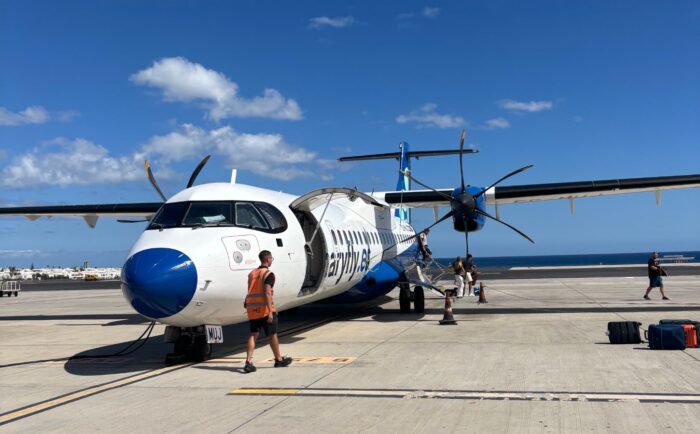
  • The plane : if you want to save time, it’s a good solution. And also if, like me, you’re doing two islands that aren’t next to each other, the plane will be much cheaper. To give you an example, my flight from Tenerife to Lanzarote cost me three times less than if I had taken the ferry. I know it’s not very eco-friendly, but three times cheaper is no small thing… The airline that operates the most daily flights is Binter Canarias. But there’s also Canaryfly, with more limited schedules but more attractive fares. If you’re flexible on times, I recommend Canaryfly. Plus, flight times between the different islands are very short: between 30 and 50 minutes. However, these are small planes, so if it’s windy, you feel it quite a bit. But I expected worse — it’s totally manageable (so no worries!). And you’ll get to enjoy superb views of the ocean and volcanoes on takeoff and landing.

One more tip for the road: I suggest combining several islands, like Lanzarote and La Graciosa, or Tenerife and La Gomera. Each time, these islands are very close. So you might as well make the most of it!

traveling between the canary islands

Time difference

For your information, there’s a slight time difference between the Canary Islands and France, as well as with Belgium and Switzerland. It’s nothing insurmountable, since it’s only a one-hour difference. Plus, it’s one hour less over there — I find it easier to adapt in that direction.

For Quebecers, it will take a little more adjustment, with a five- to six-hour time difference depending on the time of year. But again, it’s vacation — you’ll get used to it quickly!

Best time to go

With the Canaries, good weather is guaranteed all year round. Indeed, no matter when you want to go, it’s pleasant and mild. It’s like spring all year long! That’s thanks in particular to its mild subtropical climate and its more than 300 days of sunshine per year. Even the water temperature is pleasant, except for the three “winter” months of the year. I’d say the best season to go to the Canary Islands depends only on your wishes:

  • In spring (March to June) : it’s a good time to go hiking, explore volcanoes, or even enjoy the beaches without too many people. In terms of temperatures, we’re between 22 and 26 °C — super pleasant. The little plus: after winter, there’s still greenery and even flowers in the middle of Lanzarote’s arid landscapes, for example.
  • In summer (July to September) : the sun is strong, but it still feels pleasant thanks to the trade winds and sea air. Temperatures range between 27 and 33 °C, which remains quite bearable. Of course, it’s still peak tourist season: there are therefore more people on Tenerife, Lanzarote, and Fuerteventura in particular. And you should expect accommodation, transport, and excursion prices to be much higher. Personally, I went in September, and the rates had already dropped compared to July–August.
  • In autumn (October to November) : this is hikers’ favorite season, because we still have mild temperatures (25 °C on average), and even the sea is still warm. If you prefer peace and quiet while enjoying better prices and milder weather, this period is perfect for your trip!
  • In winter (December to February) : okay, temperatures drop, but very rarely below 18 °C. So still no need to take out the coats; you can even swim on some of the southern islands (if you’re not too sensitive to the cold, of course). If you want to take a break during winter and enjoy a spring-like climate, the Canaries remain an excellent destination.

To sum up: it’s sunny, it’s warm (but not too much), and that’s true all year long. You can go to the Canary Islands anytime!

Vaccines

Good news: there are no mandatory vaccines to come to the Canary Islands. Since the archipelago is part of Spain, it’s simply recommended that you’re up to date with your vaccinations, like tetanus, whooping cough, etc. You can head off peacefully, without worrying about getting last-minute shots before you leave, as long as you’re up to date!

Travel expenses

Good news: the Canary Islands are among the more affordable destinations in Europe! Even the cost of living is lower than on mainland Spain. So you can go and make the most of it without blowing your budget.

To give you an idea, here are the average ranges for the main expenses of a stay in the Canary Islands:

Accommodation (per night)

  • Hostel / small hotel: €20–45
  • 3-star hotel or B&B: €60–100
  • 4- or 5-star hotel: from €130 to €200
  • Apartment / Airbnb: €50–120, depending on the island and season

A little info: Lanzarote and Fuerteventura are a bit more expensive than La Palma or La Gomera, especially in high season.

Meals

  • Snack / quick meal (bocadillo, tapas): €6–10
  • Dish in a local restaurant (guachinche, tavern): €12–18
  • Full menu (starter, main, dessert): €18–30
  • Cocktail or drink by the sea: €5–7

Transport

  • Local bus ticket: €1.50–3, depending on distance
  • Day bus pass: €5–10, depending on the island
  • Car rental: €25–40/day in low season, up to €60–80 in summer
  • Inter-island ferry (Fred. Olsen, Naviera Armas): €20–50 per trip (if the islands are close; otherwise, it can go much higher)
  • Inter-island flight (Binter Canarias, Canaryfly): €35–90, depending on distance and season

Activities

  • Museums and cultural sites: €3–20
  • Boat/dolphin excursion: €25–60
  • Guided hike (Teide, Timanfaya): €30–70
  • Diving or snorkeling: €40–80
  • Day cruise or excursion: €50–100

And on the practical side:

Tap water is considered drinkable on all the islands and meets European Union standards. But since it’s desalinated water, it has a particular, slightly salty taste. I preferred buying bottled water and, even at the hotel, there were water dispensers with large bottles. I therefore think locals prefer to buy water too, or filter it. For cooking or brushing your teeth, tap water remains perfectly suitable.

Average budget for traveling to the Canary Islands

Because the question of budget always comes up, here are some overall ranges depending on the length of your stay in the Canary Islands. Of course, these are only average ranges and there are differences between the islands.

  • 5 days in the Canary Islands: €450–1 000
  • 1 week in the Canary Islands: €650–1 800
  • 10 days in the Canary Islands: €1 000–2 400
  • 2 weeks in the Canary Islands: €1 300–3 200
teide national park, canary islands

Internet and phone service

Since the Canary Islands are part of Spain, and therefore the EU, you won’t have to worry about extra charges on your plan. You can call, send messages, and use your data without additional fees. As for coverage, it’s generally very good, even on more remote islands like La Graciosa and El Hierro. Rest assured, you’ll almost never be without a signal.

If you have a plan with little data or you’re coming from a non-EU country like Canada, you can always buy a SIM card at the airport or in a convenience store. At least you can enjoy your vacation with peace of mind, and it’s not very expensive: between €10 and €20.

Driving

If you plan to rent a car in the Canary Islands, this section should interest you! The roads are in very good condition, especially on islands like Tenerife, Gran Canaria, and Lanzarote. Honestly, it was a pleasure to drive there! Just a small note: in Lanzarote, the parking lots, even near must-see spots, aren’t paved and are made of stone. You just need to go slowly and watch out for sharp rocks to avoid a flat tire.

To reach the beaches in the Ajaches Natural Park in Lanzarote (Papagayo, Las Mujeres, El Pozo, Caleta del Congrio), the tracks are stone. They’re passable by car, but I recommend going slowly (it’s quite bumpy, haha).

If you’re going to La Palma, El Hierro, or La Gomera, the roads are much narrower and more mountainous. It’s not insurmountable, but it’s better to take your time and enjoy the panoramic views. As for driving, Canarians are very relaxed behind the wheel (it’s a change and a nice one!). In Tenerife, there are often traffic jams when switching from the northern to the southern highway. If you have activities at a specific time, leave well in advance.

Regarding parking, you’ll find both free and paid options. We always managed to park near must-see places, even if it was more complicated in Tenerife because there were more tourists.

Finally, if you plan to visit several islands, I recommend checking whether your rental company allows it before booking. As for me, I rented my car (or rather, my cars) via Discover Cars: it was convenient, with excellent value for money! However, I preferred renting two different cars and flying, because it was much more expensive to pick up a car in Tenerife and return it in Lanzarote. Maybe because they’re quite far apart. This remains to be checked for closer islands!

Safety

Honestly, you can head to the Canaries with peace of mind, it’s a very safe archipelago. You can easily travel there alone. As soon as you arrive, you’ll feel the relaxed, welcoming atmosphere. Of course, as everywhere, just watch your belongings in tourist areas, especially in big cities like Santa Cruz de Tenerife, where pickpockets take advantage of the crowds.

Also, in the parking lots of Teide National Park, there are signs advising you not to leave valuables visible in your car. There have already been a few incidents, but nothing very alarming if you take precautions.

In nature, since the islands are volcanic, some hikes are steep, with rocky paths. If you’re well-equipped and stay on marked trails, you can enjoy them easily and without worry. I also recommend checking the weather, especially in Tenerife, it’s very changeable.

In a word: nothing to report when it comes to safety in the Canary Islands. It’s truly an archipelago where you feel good; all you have to do is enjoy and disconnect.

visit lanzarote

Fauna/Flora

As I mentioned above, each island in the Canaries has very different, equally spectacular landscapes. To give you an idea, you can go from lava fields to golden or black sand beaches, or even to banana plantations. Note that Tenerife encompasses all these landscapes on one single island.

Starting with the flora, the Canary Islands have more than 2 000 plant species. Among them, there are many endemic species, such as the dragon tree of the Canaries. Along the way, you’ll often see cacti of various sizes, prickly pear trees, palm trees, and succulents, ideal for drought and wind. In Tenerife, there are also large forests of Canary Island pines. Honestly, I didn’t expect that, and they were impressive.

As for fauna, there’s rich marine biodiversity: dolphins, pilot whales, turtles, and manta rays live in Canary waters. I was lucky enough to see pilot whales and pantropical spotted dolphins during a whale-watching outing. It was just incredible! While diving, I saw starfish, trumpetfish, parrotfish, and many others. I had never seen so many species in such a short time.

On land, you won’t miss the Canary lizards, while spotting migratory birds. Even in desert landscapes, there are no snakes, and the lizards are harmless. Honestly, that’s reassuring!

Culinary specialties

In my opinion, this section should interest more than a few of you! Although the Canary Islands are part of Spain, I’m not going to list all the Spanish specialties you probably already know. Of course, nothing stops you from eating paella, tapas, or croquetas. Personally, in Tenerife, I ate the best tuna croquetas of my life (and I’m not exaggerating), while the best paella I tasted was in Lanzarote.

To mention a few typical Canarian dishes, here are some to try:

  • Papas arrugadas con mojo: this is the dish of the Canaries! These are small local potatoes cooked with their skin in salted water, served with the famous mojo rojo (spicy) or mojo verde (cilantro) sauces. It’s super simple, but so good. You’ll often get them as a side.
  • Fresh fish and seafood: in small ports like El Golfo (Lanzarote) or Los Abrigos (Tenerife), you eat freshly caught fish. To me, these are the two best villages to eat fresh fish. Believe me, I tried both!
  • Ropa vieja canaria: a chickpea stew with shredded beef and vegetables. Even though there are several variations, it’s a hearty dish that’s easy to find on each island.
  • Canarian cheeses: each island has its own cheese made from goat’s milk. It’s always good to try with a bit of honey or jam!
  • Gofio: a toasted wheat or barley flour typical of the Canaries. It’s used in several dishes and meals, from breakfast to desserts. Personally, I think it adds more flavor!

And for those with a sweet tooth:

  • Bienmesabe: a dessert made with almonds, honey, and eggs: simple but very good!
  • Frangollo: a flan made with corn, milk, lemon, and cinnamon. A simple treat that hits the spot.


And finally, you can’t miss Canary Island bananas! They’re small, sweet, and have a distinctive flavor. No excuses not to eat them — they’re literally everywhere.

A quick word about drinks:

Some islands, like Tenerife and Lanzarote, produce wine. Very often, you’ll be offered vineyard visits in the middle of volcanic landscapes, followed by a tasting. If that appeals, they’re very aromatic!

As you can see, typical Canary dishes are simple, but I can tell you they’re tasty. Between Spanish influences and fresh fish, you’re going to love it!

Religion

The main religion in the Canary Islands is Catholicism, as in all of Spain. Religion is very important to locals, it’s part of the local culture. You find it in traditions and festivals throughout the year. Each village has its religious festival, with processions, music, and shared meals. They’re open to everyone and are moments of sharing and conviviality.

The best known is the fiesta de la Virgen de Candelaria, in Tenerife, with residents parading on colorful floats decorated with flowers. Moreover, even if the majority of island residents are Catholic, there’s also a certain multiculturalism. The archipelago welcomes communities from Europe, Latin America, and Africa. That’s also what characterizes the Canaries: an open, welcoming, and warm atmosphere.