Canon's best all-purpose lenses
Last update: 06/16/2026
Our blog continues to grow thanks to you, our readers. This post may contain affiliate links, which means we can earn a small commission if you make a purchase through them, at no extra cost to you. This helps us to continue to bring you more and support our work!
I’m back today with a slightly different article than usual. I often focus on a specific type of photography, such as landscape, portrait, or macro. This time, however, I’ve prepared a shorter article in which I’ll give you my advice on Canon’s best all-round lenses (in my opinion). I’m going to focus on Canon RF mirrorless lenses, because even though the EF DSLR mount is still around, Canon’s current development is clearly centered on the RF system. In fact, you can see all the available Canon RF mount lenses right here. You’ll find lenses for both full-frame and APS-C (RF-S) bodies.
As I said, I’m not going to spend too much time on this, because the aim is really to help you find a versatile lens that can “do a bit of everything,” if I can put it that way, ahah. Of course, there are limits. It’s not for nothing that manufacturers offer lenses dedicated to different types of photography, with different focal lengths and wider or narrower apertures.
On this subject, I’d like to remind you that we’ve already written guides on:
- Best RF wide angle lenses (for landscapes)
- Best Canon RF macro lenses
- Best Canon lenses for sports (SLR and mirrorless cameras)
Canon's best all-round lenses
As I said, I’m only going to cover a few lenses in this article because the RF mount is still relatively young and the number of versatile lenses I can genuinely recommend remains fairly limited.
So let’s be honest: you won’t get the same image quality from a general-purpose lens as you would from lenses dedicated to specific types of photography. But you can still get great results and have fun, which is what matters most! Let me reassure you right away: I won’t be recommending only overpriced lenses in this article.
Multipurpose Canon lenses for full-frame cameras
For a Canon RF full-frame mirrorless camera, and without breaking the bank, here are a few versatile Canon lenses that I recommend. You can click on each lens to go directly to the detailed presentation:
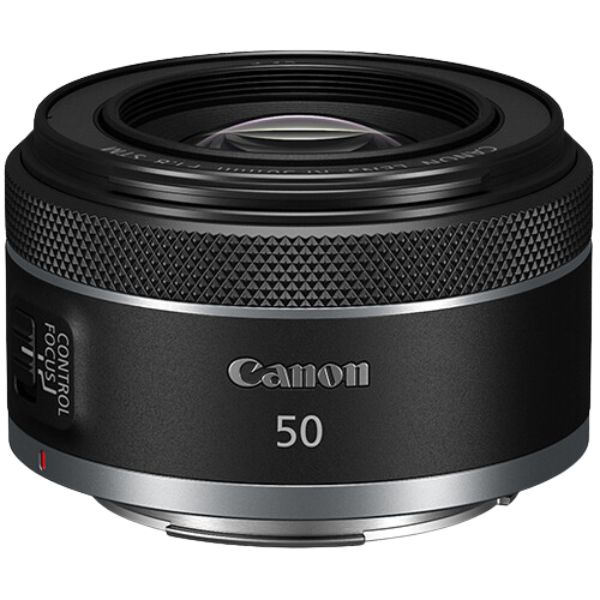
Canon RF 50mm f/1.8 STM
| Features | Visual |
|---|---|
|
|
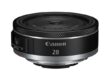
Released in 2020, the Canon RF 50mm f/1.8 STM is a versatile lens for street or portrait photography, although it certainly won’t stop you from shooting landscapes too (you just won’t get the wide-angle effect of a dedicated lens). In practice, its 50mm focal length gives a natural-looking perspective that is easy to use. Its compact size and light weight make it a good match for bodies such as the EOS R5 and R6.
This lens is neither weather-sealed nor stabilized, but its build is solid enough for everyday use. Optically, sharpness is already good in the center wide open and improves as you stop down, although the edges are less consistent.
As for imperfections, vignetting is visible at full aperture but can be easily corrected in-camera or in post-production. Chromatic aberrations and distortion are well controlled. Autofocus is also good, although not especially quiet, which is not ideal for video. Finally, the bright aperture helps produce more creative images with a pleasant background blur.
In conclusion, the Canon RF 50mm f/1.8 STM is versatile, lightweight, and affordable: it would be a shame to do without it. It is not a top-of-the-range lens, but it is an excellent first prime lens for Canon EOS R bodies. Of course, with a fixed focal length, you’ll have to move around to adjust your framing.
Canon RF 24-105mm f/4-7.1 IS STM
| Features | Visual |
|---|---|
|

|
Introduced in 2020, the Canon RF 24-105mm f/4-7.1 IS STM is a standard zoom lens, covering a useful range from wide angle at 24 mm to short telephoto at 105 mm. This is quite different from the fixed 50mm focal length of the previous lens. At 24 mm, you can already shoot landscapes with a fairly wide field of view, although not with the dramatic effect of an ultra-wide 11 or 12mm lens, of course. This lens also covers 50 mm, which means you can do a bit of portrait photography, although the smaller aperture means your subject will stand out less than with an f/1.8 lens (in practical terms, you’ll get less background blur).
Its reasonable size and weight make it a compact, light, and easy-to-carry lens. It is stabilized, which is a very good point, but it is not weather-sealed. So I’d advise you to be careful about the conditions in which you use it. Its variable aperture from f/4 to f/7.1 offers decent brightness at 24 mm, but remains limited in low light, especially as you zoom in. As a result, you may often have to increase the ISO to compensate, which is usually manageable with a full-frame camera.
Optical performance is perfectly acceptable for everyday use. Sharpness is good in the center, but weaker toward the edges. Flaws such as vignetting, chromatic aberration, and distortion are visible, but can be corrected in-camera or in post-production.
In conclusion, this lens is ideal for beginners or amateur photographers looking for a versatile and affordable lens. That’s why I decided to include it here. For the record, there is another, much better, constant-aperture lens, the Canon RF 24-105mm f/4L IS USM, which is also much more expensive.
Canon RF 24-240mm f/4-6.3 IS USM
| Features | Visual |
|---|---|
|

|
Available from September 2019, the Canon RF 24-240mm f/4-6.3 IS USM is a zoom lens compatible with Canon’s full-frame mirrorless cameras. It covers a very wide focal range, from 24 to 240 mm. I don’t usually recommend this type of zoom lens, because with such a broad range, overall image quality often involves compromises. However, it has to be said that this lens really stands out for its versatility. Compared with the previous lens, you get the same wide-angle starting point but a much longer telephoto reach. Roughly speaking, you can reach 240 mm, which means you can shoot wildlife or sports, although this remains limited by the relatively small aperture.
With a maximum aperture of f/4 to f/6.3, this lens is stabilized and uses fast, quiet Nano USM autofocus. Its build quality is good and the handling is pleasant. However, it is not weather-sealed, which may limit its use in harsh conditions.
As regards performance, this lens remains a superzoom, so compromises are inevitable. At 24 mm, distortion and vignetting are noticeable, although they can be corrected in-camera or in post-production. Chromatic aberrations can also appear. In terms of sharpness, performance is decent at shorter and mid-range focal lengths, but becomes less consistent at the long end, especially at maximum aperture. Of course, you can always stop down slightly to improve sharpness.
All in all, the Canon RF 24-240mm f/4-6.3 IS USM is a very versatile lens. You can shoot landscapes, portraits, street photography, wildlife, and sports. In other words, it is a real Swiss army knife. On the other hand, it is not the cheapest option. But if you want to do a bit of everything with one lens, this is definitely a lens to consider.
As usual, I’ve prepared a table comparing the main characteristics of the three lenses mentioned above. I find that after such detailed presentations, a visual summary is always a real plus!
| Lens | Focallength | Max.Aperture | Weight | Dim. (Ø x L) | Min. FocusDist. | Approx.price | Best price | |||
|---|---|---|---|---|---|---|---|---|---|---|
| + | Canon RF 24-105mm f/4-7.1 IS STM | 24-105mm | f/4-7.1 | 13.93 oz / 395g | 3.1 x 3.5" / 80 x 89 mm | 5.1" / 13 cm | $399 | Amazon B&H | More info + | |
|
||||||||||
| + | Canon RF 24-240mm f/4-6.3 IS | 24-240mm | f/4-6.3 | 1.7 lb / 751g | 3.2 x 4.8" / 80 x 123 mm | 1.6' / 50 cm | $899 | Amazon B&H | More info + | |
|
||||||||||
| + | Canon RF 50mm f/1.8 STM | 50mm | f/1.8 | 5.64 oz / 160g | 2.7 x 1.6" / 69 x 40 mm | 1' / 30 cm | $199 | Amazon B&H | More info + | |
|
||||||||||
Other versatile alternatives? It’s possible! Here are a few more options to consider:
- Canon RF 28-70mm f/2.8 IS STM: a really interesting lens that is well suited to several types of situations, with a constant f/2.8 maximum aperture and good image stabilization.
- Canon RF 70-200mm f/4L IS USM: I personally like this type of lens because it covers a wide range of situations: portraits, wildlife, and even sports. It is not the cheapest lens in the lineup, but it is more affordable than the f/2.8 version while still offering excellent performance.
- Canon RF 100-400mm f/5.6-8 IS USM: this lens is less versatile and more focused on sports, wildlife, and distant details. However, it can still be useful for portraits from a distance. It is also a good telephoto lens at a very reasonable price for this kind of reach. I’d definitely recommend it!
Here’s a new table summarizing the main technical features of these three versatile lenses. Without getting too far ahead of myself, I think it should help you!
| Lens | Focallength | Max.Aperture | Weight | Dim. (Ø x L) | Min. FocusDist. | Approx.price | Best price | |||
|---|---|---|---|---|---|---|---|---|---|---|
| + | Canon RF 28-70mm f/2.8 IS STM | 28-70mm | f/2.8 | 1.1 lb / 495g | 3 x 3.6" / 77 x 92 mm | 9.4" / 24 cm | $1 099 | Amazon B&H | More info + | |
|
||||||||||
| + | Canon RF 70-200mm f/4 L IS USM | 70-200mm | f/4 | 1.5 lb / 695g | 3.3 x 4.7" / 83 x 120 mm | 2' / 60 cm | $1 599 | Amazon B&H | More info + | |
|
||||||||||
| + | Canon RF 100-400mm f/5.6-8 IS USM | 100-400mm | f/5.6-8 | 1.4 lb / 635g | 3.1 x 6.5" / 80 x 165 mm | 2.9' / 88 cm | $649 | Amazon B&H | More info + | |
|
||||||||||
Versatile Canon lenses for APS-C cameras
Let me warn you right away: for the Canon RF-S mount, i.e. for Canon RF-S APS-C cameras, the choice is still fairly limited right now. However, I’d like to introduce the following two lenses:
Canon RF-S 18-150mm f/3.5-6.3 IS STM
| Features | Visual |
|---|---|
|

|
The Canon RF-S 18-150mm f/3.5-6.3 IS STM is a versatile zoom lens for Canon’s APS-C mirrorless cameras. It is equivalent to roughly a 29-240mm lens in full-frame terms. So it is quite similar in spirit to the lens shown above, the Canon RF 24-240mm f/4-6.3 IS USM. Despite its modest aperture, you’ll be able to shoot landscapes, portraits, sports, and wildlife.
The lens is compact and lightweight, with good image stabilization and quiet, efficient autofocus. On the other hand, the aperture becomes quite limited as you zoom in, which means higher ISO settings may be needed in low light.
In terms of optical performance, this lens offers good image quality with sharp details, especially considering its range and size. In terms of optical flaws, vignetting is present but can be corrected in post-production. Chromatic aberrations are visible but correctable. Finally, the bokeh is satisfactory for close-ups.
In conclusion, the Canon RF-S 18-150mm f/3.5-6.3 IS STM is an all-in-one option for photographers and travelers looking for a compact, versatile lens. Although it is not a premium lens, its optical performance is good considering its price and range. In my opinion, it is a very useful travel zoom!
Sigma 30mm f/1.4 DC DN Contemporary RF-S
| Features | Visual |
|---|---|
|

|
The Sigma 30mm f/1.4 DC DN Contemporary is an interesting lens for those looking for a bright, compact prime. With a maximum aperture of f/1.4, this lens is ideal for shooting in low light or creating strong background blur.
In terms of build quality, the lens feels solid and well made. Its light weight and compact dimensions make it easy to carry. Optical performance is very good overall, especially for a lens in this price range. Distortion and vignetting remain manageable.
Sharpness is already strong from f/1.4, although chromatic aberrations can be visible. However, the lens does a good job of controlling flare and ghosting, producing images with good contrast. Bokeh is smooth and pleasant, perfect for creative images.
In terms of use, this lens is ideal for street photography, portraits, and indoor scenes. Autofocus and the 30 cm minimum focusing distance make it possible to capture interesting close-ups. However, it is not weather-sealed, which limits its use outdoors in difficult conditions.
As you can see, I’ve decided to add the Sigma 30mm f/1.4 DC DN Contemporary to this list because it is very close to a full-frame 50mm equivalent on Canon APS-C. As already mentioned, it is a very interesting focal length for street and portrait photography, thanks to the large f/1.4 aperture. What’s more, I think the price is more than reasonable. I’d even go so far as to say that it is a good investment for shooting in a variety of situations, including low light.
Here’s a table showing the characteristics of these last two lenses. I hope it helps you make your choice!
| Lens | Focallength | Max.Aperture | Weight | Dim. (Ø x L) | Min. FocusDist. | Approx.price | Best price | |||
|---|---|---|---|---|---|---|---|---|---|---|
| + | Canon RF-S 18-150mm f/3.5-6.3 IS STM | 18-150mm | f/3.5-6.3 | 10.93 oz / 310g | 2.7 x 3.3" / 69 x 84 mm | 6.7" / 17 cm | $499 | Amazon B&H | More info + | |
|
||||||||||
| + | Sigma 30mm f/1.4 DC DN Contemporary RF-S | 30mm | f/1.4 | - | - | 1' / 30 cm | $369 | Amazon B&H | More info + | |
|
||||||||||
This article on Canon’s versatile lenses is coming to an end. I hope it helped you make your choice. Don’t hesitate to give me your opinion in the comments, and I’ll see you soon for a new article!
In the meantime, check out our article on the best Canon RF lenses currently available!
See you soon for new photography guides,

Written by Sylvain PONS
I've been passionate about photography since 2010, learning as I went along. Today, I dedicate myself to guiding others in their choice of camera gear and sharing a variety of tips to improve their photography skills.
Despite our care, a mistake may have slipped into this article. If you find any, please don't hesitate to let us know so we can correct it as soon as possible and keep our information up-to-date!