


Which camera lens should you choose, and how?
Last update: 06/21/2026
Our blog continues to grow thanks to you, our readers. This post may contain affiliate links, which means we can earn a small commission if you make a purchase through them, at no extra cost to you. This helps us to continue to bring you more and support our work!
If you have landed here, you may be new to photography, perhaps after receiving your first DSLR for your birthday and wanting to learn how to use it properly. I have already written about which lenses to choose when traveling. Today, this article focuses specifically on DSLR lenses. So, how do you choose a camera lens in general?
That is not a question you can answer properly in just a few lines. If you want to make a thoughtful choice, there are several criteria to understand before buying a lens. Whether you are looking at Canon, Nikon or third-party brands, each lens has its own characteristics, and knowing how to read them will help you make the right choice.
If you are a beginner, it is easy to feel lost among the huge range of lenses, product lines and technical options. In short, choosing is not simple, but I will try to make it clearer, even if you are only looking for one lens to start with. Whether you own a Nikon, Canon or Sony DSLR, choosing a lens can quickly become confusing. You will soon come across terms such as focal length, distortion, chromatic aberration, minimum focusing distance, wide angle, crop factor, shallow depth of field, white balance, and so on. You see what I mean? By the way, I have also written a full article explaining how distortion works in photography.
This article focuses mainly on digital SLR cameras (DSLRs), not mirrorless cameras.
As Amazon Associates, we earn from qualifying purchases. This means that the camera gear links in this post may redirect to Amazon stores.
Technical terms to know when choosing a camera lens
As with choosing a digital camera, it is worth understanding a few technical terms before you start. You do not need to be a professional photographer, but it will be difficult to choose the right lens if you do not understand the main criteria involved. That is what I will guide you through here.
I’ll try to keep things simple. Overall, there are four main elements to understand if you want to know how to choose a camera lens.



Focal length: which focal length should you choose?
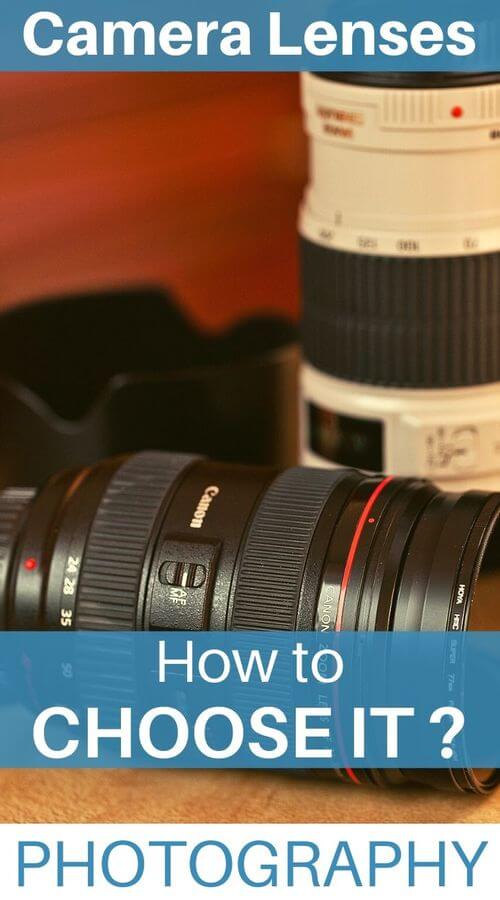
This is the first term to understand when choosing a camera lens. Focal length, expressed in millimeters, roughly corresponds to the “zoom level” or angle of view of the lens. There are fixed focal length lenses, also called prime lenses (for example 14mm, 24mm, 35mm, 50mm, 70mm, 100mm, 150mm, 600mm, etc.), and variable focal length lenses, also known as zoom lenses (for example 10-20mm, 24-70mm, 70-200mm, 100-400mm, etc.). In the photo at the beginning of the article, the focal length is 70-300mm. These lenses are often considered more versatile.
Simply put, the shorter the focal length, the wider your field of view will be. If you stand in the same place to take a photo, you will see that 10mm gives you a very wide view, 55mm narrows the frame, and 200mm brings the subject much closer.
Keep in mind that the focal length shown on a lens is always given in relation to a full-frame sensor. An 18mm lens is therefore an 18mm lens on a full-frame camera. On an APS-C sensor, it gives an angle of view closer to about 29mm. This is due to the crop factor between the two sensor sizes, which we will come back to another time.
The diagram below gives a good overview of the different angles of view at different focal lengths.

In terms of focal length, there are generally 3 categories:
- Wide-angle and ultra-wide-angle lenses: These generally refer to focal lengths below about 28mm (for example 17-40mm, 16-35mm, 14mm, etc.), depending of course on whether you are using a full-frame DSLR or an APS-C body. In short, you see wider than the human eye would naturally perceive. The field of view is very broad and perspective appears stronger. This type of focal length is mainly used for landscape, architecture and street photography. With a wide-angle zoom, the image can sometimes look a little “stretched” in the viewfinder. You also need to watch out for vignetting and distortion. There are also fisheye lenses, which deliberately create a very distorted view of reality.

- Standard lenses: This is usually the type of lens supplied with a camera, the classic example being an 18-55mm kit lens. It gives a field of view that is fairly close to what you naturally see, usually around 35 to 50mm depending on your DSLR sensor size. This type of focal length is useful for “everyday photos”: simple portraits, street scenes, travel snapshots and even some landscapes. It is often the first lens you use to learn photography. In other words, it is perfectly enough to get started. There is no need to spend thousands on an expensive lens when you are just beginning.
- Telephoto lenses: Lenses above roughly 100mm generally fall into this category (for example 100mm, 70-200mm, 400mm, etc.). These focal lengths are used to bring distant subjects closer, isolate details or magnify a scene. The most obvious example is wildlife photography. A teleconverter can also help you go even further. Depending on what and where you shoot, this is the kind of accessory that may never leave your camera bag.
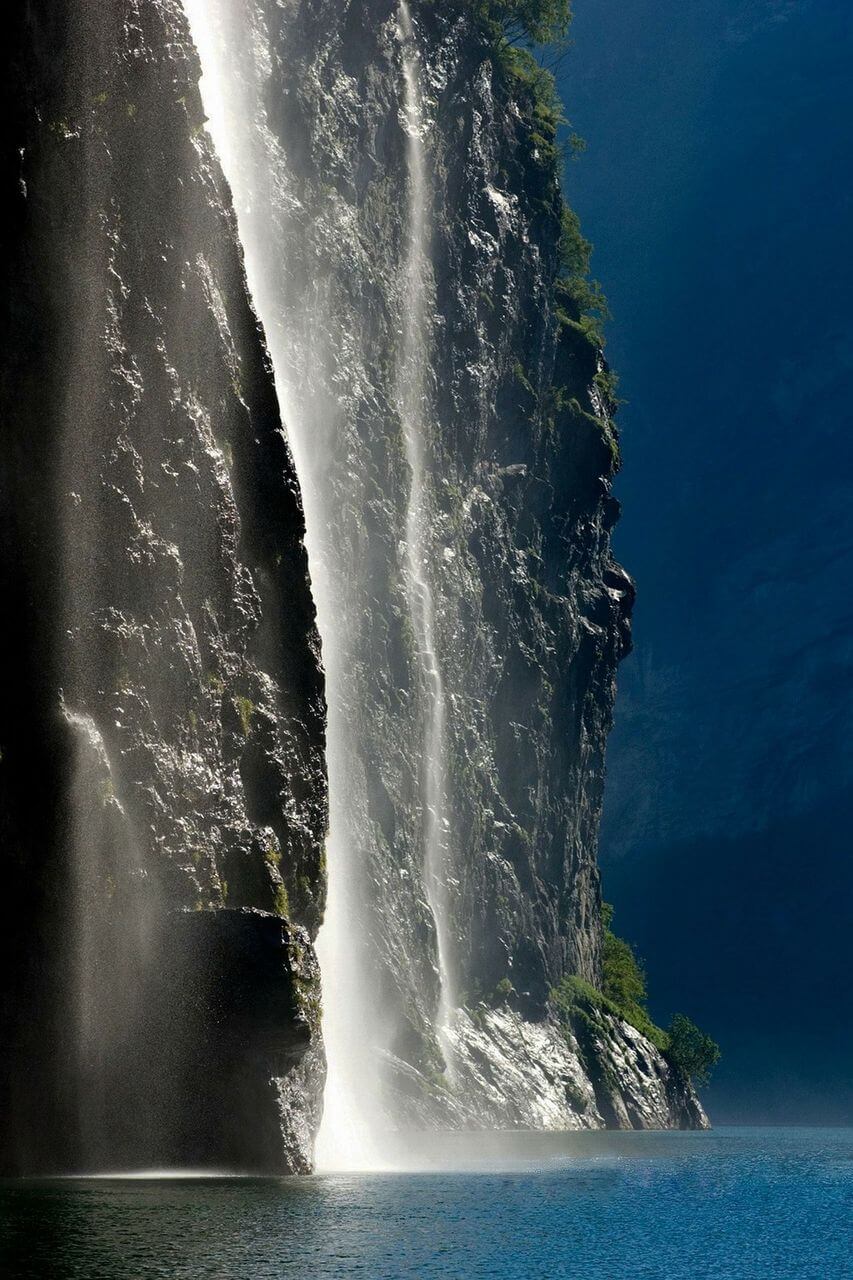


Even with a telephoto lens, you can take beautiful wildlife or landscape photos!
These “millimeter numbers” need to be interpreted differently depending on whether you use an APS-C or full-frame camera. I will explain the differences, advantages and disadvantages of each format in a future article.
This is one of those endless debates among photographers. Everyone has their own opinion on the strengths and weaknesses of each type of lens. Here are the main advantages of both categories, based on what I have learned and experienced:
- Advantages of zoom lenses
- You don’t need to move to be able to photograph your subject,
- Depending on the zoom focal length range, you can take many types of photos with a zoom (landscape, portrait, wildlife, etc.),
- You can get good to very good image quality across the entire focal range,
- They offer greater versatility for everyday use,
- Advantages of prime lenses:
- Prime lenses generally remain superior to zooms in terms of precision and sharpness,
- They are quite often much lighter than a zoom,
- They are also often cheaper (simpler construction) -> see the excellent Canon 50mm f/1.8 camera lens,
- For the same focal length as a zoom, the maximum aperture of a prime lens will be larger,
- As a general rule, the size is relatively smaller than a zoom,
- They force you to move around and think more carefully about your position, which is very useful for improving framing and composition.
Focal length is therefore the first thing to understand when choosing a camera lens. It will strongly influence the type of photos you can take, as we will see below.
Once you understand focal length, many other questions naturally follow: which zoom should you choose? Which telephoto zoom? Which wide-angle lens? I will answer those questions in separate articles.
The maximum aperture of a camera lens
Once you understand focal length, the second element to consider is the lens’s maximum aperture. Put simply, this is the lens’s ability to let light in by opening its diaphragm. It is the number written after “f/”. The smaller the number (for example f/1.4), the larger the aperture. In practical terms, a larger aperture lets in more light and allows three things:
- Photograph your subjects with a faster shutter speed,
- Take photos in low light without raising the ISO too much or risking motion blur,
- Blur the background and make your subject stand out. This is often referred to as “bokeh” and is directly linked to depth of field, meaning the area of the photo that appears sharp.
Lenses with wide maximum apertures are often called “bright” or “fast” lenses.


As a general rule, it is important to know that the larger the maximum aperture, the more expensive and heavier the lens tends to be. These lenses are also often part of higher-quality ranges.
A lens aperture can be constant (for example f/1.4) or variable (for example f/4 to f/5.6)
- On a prime lens (for example 50mm f/1.4), the maximum aperture is always constant,
- On a zoom, two cases arise:
- A constant maximum aperture: this means you keep the same maximum aperture whatever focal length you use (for example 70-200mm f/2.8). Constant-aperture zooms are generally better built, more expensive and more creative to use.
- A variable aperture: this is the case, for example, with my Canon 70-300mm f/4-5.6. I have a maximum aperture of f/4 at 70mm and f/5.6 at 300mm.
So, if you want to know how to choose a camera lens, maximum aperture is the second key element to understand.
Image stabilization of a lens
This is another factor worth understanding when choosing a camera lens. Some lenses include built-in image stabilization.
Put simply, stabilization helps reduce the risk of motion blur in two situations:
- Shooting in low light (night photography, for example),
- Using a long focal length, where you may need a faster shutter speed to avoid blur.
Of course, you can always use a tripod in low light to improve your chances of getting a sharp photo.
A stabilized lens generally costs more than a non-stabilized one. In return, stabilization often gives you a gain of at least 2 to 3 stops, allowing you to shoot at slower shutter speeds with less risk of blur.

Brand-specific technical terms
Each brand uses its own technical terms for several lens features:
- Stabilization: Canon (IS), Nikon (VR), Tamron (VC), Sigma (OS),
- Compatibility with full-frame cameras: EF at Canon and FX at Nikon, for example (Nikon DX is for APS-C),
- Product range: professional or not, such as L at Canon or G at Sony,
- Autofocus motor type: Canon (USM / STM), Nikon (AF-S), Sigma (HSM).
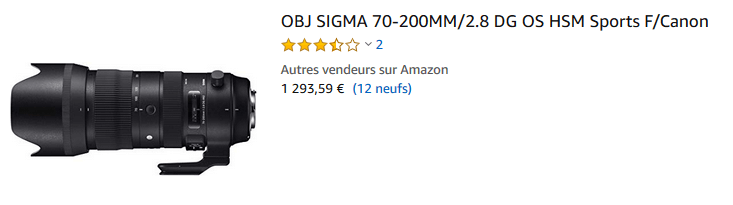
In this example, it is an EF-S macro lens, designed for APS-C cameras, with a fixed focal length of 60mm and a constant aperture of f/2.8. Interested in macro lenses?
It is therefore important to check these acronyms carefully before buying a lens.
I think we have now covered the main technical elements you need to understand when choosing a camera lens.

2 - Which camera do you use?
Another important point to consider: depending on the camera you already own or plan to buy, some lenses will not be compatible.
If you are a beginner, you will often start with an APS-C DSLR because it is cheaper. So it is worth asking whether the lens you are about to buy would still be compatible if you moved to a full-frame camera one day.
For example, at Canon, EF-S lenses are designed for APS-C cameras. At Nikon, DX lenses are designed for APS-C, while FX refers to full-frame compatibility.
3 - What type of photos do you want to take?
Along with budget, this is usually the main question when choosing a camera lens. Once you understand the technical terms mentioned above, you need to ask yourself one simple question: what do I actually want to photograph?
This will largely determine which lens makes sense for you.

- Would you like to take portrait photos?
- Do you want to specialize in landscape photography?
- Would you rather focus on macro photography? Wildlife photography? Close-ups? Sporting images?
- Do you want to know how to photograph a waterfall in long exposure?
- Do you simply want to take beautiful everyday photos or travel memories?
You can narrow your search further by thinking about the conditions in which you will use your lens: at night, in the forest, in daylight, indoors, and so on.
This is the key point, and probably the one that deserves the most thought. Knowing what you want to photograph will help you focus on the right lens.
4 - Which lens brand should you buy?
This point is slightly less important, but it is still worth clarifying.
There are excellent lenses from third-party brands such as Sigma, Tamron and Zeiss, just as there are weaker lenses from major brands such as Canon, Nikon, Sony or Pentax. Out of habit, I have often preferred to stay with the same brand as my camera, Canon. But when I could not find the right lens, or when the price was simply too high, I turned to a third-party brand. Native lenses from major camera brands are often more expensive than third-party alternatives, so think about how you want, or realistically can, equip yourself.

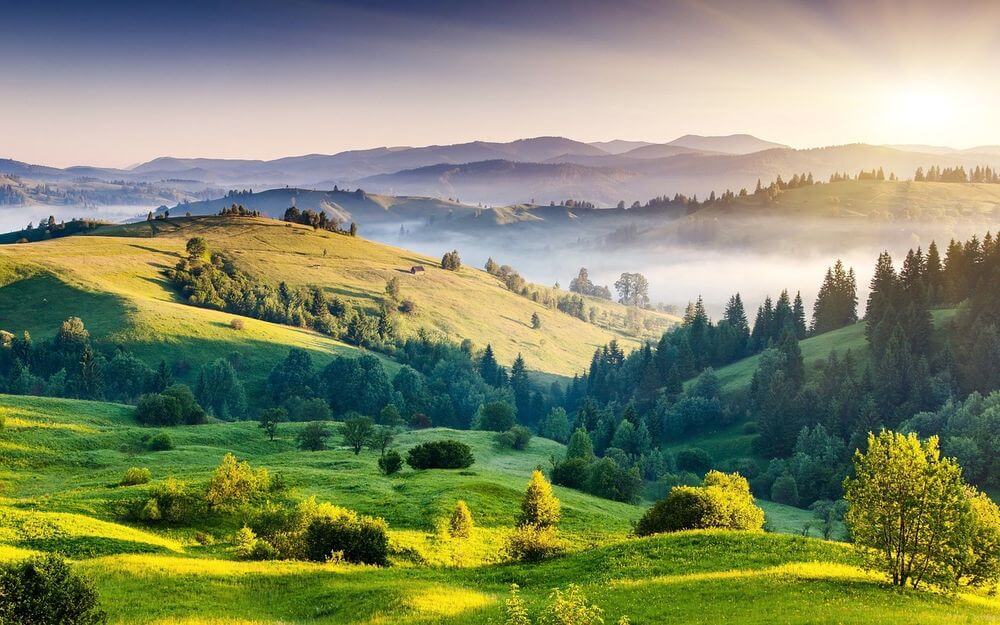
Interested in landscape photography?
Most third-party brands produce lenses in mounts for the major camera systems. If you buy a lens from a brand other than your camera brand, make sure the mount is actually compatible with your camera.
Finally, online tests can help you decide whether the price difference between a native lens and a third-party lens is justified. It is not always easy to be sure!
5 - Choose your camera lens based on several criteria
The goal of this article was not really to give you a ready-made list of lenses for every possible situation. Still, in this final section, I will try to guide you through the lens choices available according to two main criteria: needs and budget. Here, I am only talking about DSLR lenses. Mirrorless lenses are a separate topic and deserve their own dedicated article.
Choosing your camera lens according to your needs
When you start photography, you may not yet know what kind of photos you really want to take. It can take a while to find your direction. Some of you, however, may already have specific interests: night photography, low-light scenes, landscapes, portraits, and so on.
That is why I thought it would be useful to finish this article by guiding you through the choice of camera lenses. Choosing a lens is just as important as choosing a camera body, and both deserve real thought.
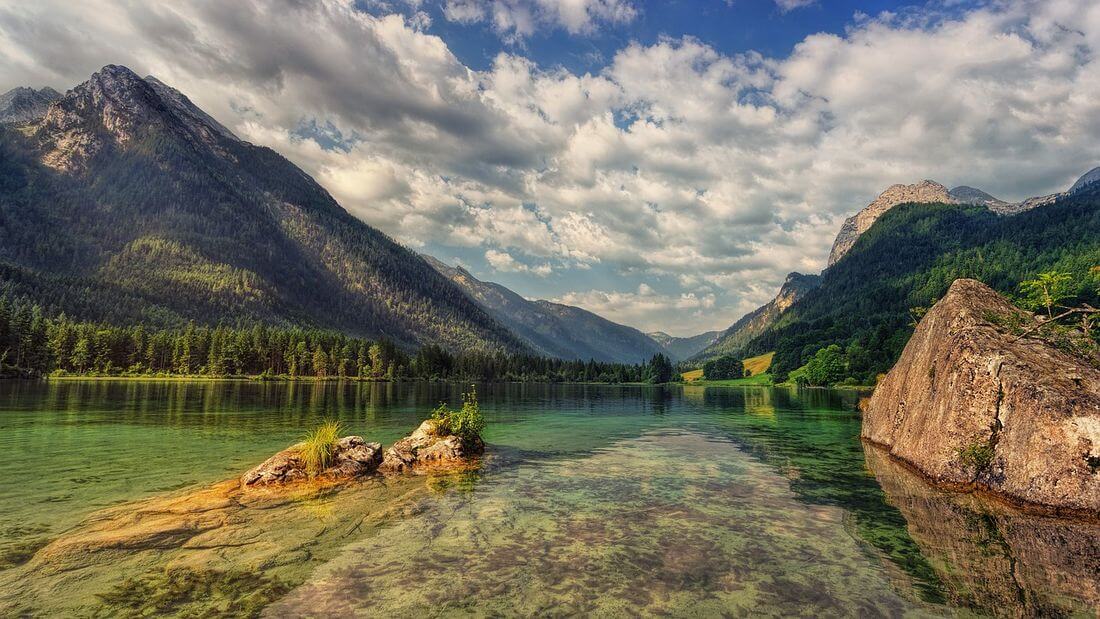

A camera lens for landscape photography
Let’s be honest: it is perfectly possible to take landscape photos with an entry-level kit lens, such as the classic 18-55mm. At 18mm, you already get a reasonably wide field of view, and you can zoom in when needed. The value for money is decent, even if the optical quality of a kit lens is usually fairly average.
For landscape photography, however, a wide-angle or ultra-wide-angle lens is often recommended. The goal is to open up the angle of view and give the scene a stronger sense of scale and space. Except in specific situations such as sunrise, sunset or night photography, there is often enough light to shoot handheld without a tripod. So if you only use your wide-angle lens in simple daylight conditions, a very bright aperture is not always essential. Here are three examples of excellent lenses for landscape photography.


From my point of view, if you have the budget, investing in a wide-angle lens makes a lot of sense for this type of photography. Just remember to consider your camera’s sensor size and mount, as some lenses are only compatible with certain cameras. Here are a few very good references in this category.
| Lens | Focallength | Max.Aperture | Weight | Dim. (Ø x L) | Min. FocusDist. | Approx.price | Best price | |||
|---|---|---|---|---|---|---|---|---|---|---|
| + | Fujifilm XF 10-24mm f/4 R OIS WR | 10-24mm | f/4 | 13.58 oz / 385g | 3.1 x 3.4" / 78 x 87 mm | 9.4" / 24 cm | $999 | Amazon B&H | More info + | |
|
||||||||||
| + | Canon RF 16mm f/2.8 STM | 16mm | f/2.8 | 5.82 oz / 165g | 1.6 x 2.7" / 40 x 69 mm | 5.1" / 13 cm | $279 | Amazon B&H | More info + | |
|
||||||||||
| + | Fujifilm XF 16mm f/1.4 R WR | 16mm | f/1.4 | 13.23 oz / 375g | 2.9 x 2.9" / 73 x 73 mm | 5.9" / 15 cm | $999 | Amazon B&H | More info + | |
|
||||||||||
| + | Sony 16-35mm f/2.8 GM | 16-35mm | f/2.8 | 1.5 lb / 680g | 3.5 x 4.8" / 89 x 122 mm | 11" / 28 cm | $1 899 | Amazon B&H | More info + | |
|
||||||||||
| + | Sony FE PZ 16-35 mm f/4 | 16-35mm | f/4 | 12.45 oz / 353g | 3.2 x 3.5" / 81 x 88 mm | 9.4" / 24 cm | $1 199 | Amazon B&H | More info + | |
|
||||||||||
| + | Nikon Z 17-28mm f/2.8 | 17-28mm | f/2.8 | 1 lb / 450g | 3 x 4" / 75 x 101 mm | 7.5" / 19 cm | $1 195 | Amazon B&H | More info + | |
|
||||||||||
Which lens should you choose for portrait photography?
I would not call myself a portrait specialist, but I have practised enough to share a few useful pointers. Generally speaking, portrait lenses often sit between short telephoto and telephoto focal lengths, roughly from 50mm to 200mm. The options are very broad and, once again, the right choice depends on your DSLR sensor size. On APS-C, lenses between about 50mm for wider portraits and 100mm for tighter portraits are often preferred. On full frame, 85mm or even 100mm is commonly used. You can choose either a prime lens or a zoom, depending on the situation and the level of versatility you need. It is entirely possible to find a good portrait lens without spending a fortune, often with a wide aperture. To name just two well-known examples:
- The Canon RF 50mm f/1.8 STM: perfect on APS-C for wider portraits, with a very large aperture at an unbeatable price,
- The excellent Sigma 85mm f/1.4 DG DN Art: a very nice lens with 14 lens elements in 12 groups for a splendid bokeh.
I have also written a full guide to help you choose your lenses for portrait photography.

I suggest taking a closer look at these well-known references from Canon, Nikon and Sigma. These lenses are renowned for their image quality, brightness and background blur. The Sigma f/1.4 in particular remains a superb lens capable of producing impressive bokeh.
| Lens | Focallength | Max.Aperture | Weight | Dim. (Ø x L) | Min. FocusDist. | Approx.price | Best price | |||
|---|---|---|---|---|---|---|---|---|---|---|
| + | Canon RF 35mm f/1.8 Macro IS STM | 35mm | f/1.8 | 10.76 oz / 305g | 2.9 x 2.5" / 74 x 63 mm | 6.7" / 17 cm | $449 | Amazon B&H | More info + | |
|
||||||||||
| + | Canon RF 50mm f/1.8 STM | 50mm | f/1.8 | 5.64 oz / 160g | 2.7 x 1.6" / 69 x 40 mm | 1' / 30 cm | $199 | Amazon B&H | More info + | |
|
||||||||||
| + | Canon RF 85mm f/2 Macro IS STM | 85mm | f/2 | 1.1 lb / 500g | 3.1 x 3.6" / 78 x 91 mm | 1.1' / 35 cm | $549 | Amazon B&H | More info + | |
|
||||||||||
| + | Nikon Z 85mm f/1.8 S | 85mm | f/1.8 | 1 lb / 470g | 3 x 3.9" / 75 x 99 mm | 2.6' / 80 cm | $795 | Amazon B&H | More info + | |
|
||||||||||
| + | Sigma 85mm f/1.4 DG DN Art | 85mm | f/1.4 | 1.4 lb / 625g | 3.3 x 3.8" / 83 x 96 mm | 2.8' / 85 cm | $1 000 | Amazon B&H | More info + | |
|
||||||||||
| + | Sigma 105mm f/2.8 DG DN MACRO Art | 105mm | f/2.8 | 1.6 lb / 710g | 2.9 x 5.3" / 74 x 136 mm | 11.4" / 29 cm | $709 | Amazon B&H | More info + | |
|
||||||||||
Camera lenses for wildlife and sports
I have deliberately grouped these two types of photography together, even though they are very different. They have one important thing in common: focal length. In these situations, you are often far from your subject, whether it is wildlife, a player running past, a bird in the sky or a car in the distance, and you need a long focal length to bring it closer. To isolate your subject, you will often also want a wide aperture. Image stabilization can be very useful with longer focal lengths. Finding the right lens is not always easy because there are so many options. Telephoto lenses exist at almost every price point, and prices rise quickly depending on the maximum aperture and focal range you want.
Below is a selection of lenses from Canon, Nikon, Sigma and Tamron. I have summarized the main characteristics to help guide your choice. Some are beginner-friendly models with variable apertures, while others belong to higher-end ranges. You will find a few additional explanations below the table too.
| Lens | Focallength | Max.Aperture | Weight | Dim. (Ø x L) | Min. FocusDist. | Approx.price | Best price | |||
|---|---|---|---|---|---|---|---|---|---|---|
| + | Tamron 70-180mm f/2.8 Di III VC VXD G2 | 70-180mm | f/2.8 | 1.9 lb / 855g | 3.3 x 6.2" / 83 x 157 mm | 1' / 30 cm | $1 299 | Amazon B&H | More info + | |
|
||||||||||
| + | Canon RF 70-200mm f/4 L IS USM | 70-200mm | f/4 | 1.5 lb / 695g | 3.3 x 4.7" / 83 x 120 mm | 2' / 60 cm | $1 599 | Amazon B&H | More info + | |
|
||||||||||
| + | Panasonic Lumix S PRO 70-200mm f/2.8 O.I.S. L | 70-200mm | f/2.8 | 3.5 lb / 1570g | 3.7 x 8.2" / 94 x 209 mm | 3.1' / 95 cm | $2 299 | Amazon B&H | More info + | |
|
||||||||||
| + | Nikon Z 70-200mm f/2.8 S VR | 70-200mm | f/2.8 | 3 lb / 1360g | 3.5 x 8.7" / 89 x 220 mm | 1.6' / 50 cm | $2 695 | Amazon B&H | More info + | |
|
||||||||||
| + | Fujifilm XF 70-300mm f/4-5.6 R LM OIS WR | 70-300mm | f/4-5.6 | 1.3 lb / 588g | 3 x 5.2" / 75 x 133 mm | 2.7' / 83 cm | $799 | Amazon B&H | More info + | |
|
||||||||||
| + | Nikon Z 100-400mm f/4.5-5.6 VR S | 100-400mm | f/4.5-5.6 | 3.2 lb / 1435g | 3.9 x 8.7" / 98 x 222 mm | 2.5' / 75 cm | $2 695 | Amazon B&H | More info + | |
|
||||||||||
| + | Tamron 150-500mm f/5-6.7 Di III VC VXD X | 150-500mm | f/5-6.7 | 3.8 lb / 1710g | 3.7 x 8.3" / 93 x 210 mm | 2' / 60 cm | $1 499 | Amazon B&H | More info + | |
|
||||||||||
| + | Nikon Z 180-600mm f/5.6-6.3 VR | 180-600mm | f/5.6-6.3 | 4.4 lb / 1995g | 4.3 x 12.4" / 110 x 316 mm | 4.3' / 130 cm | $1 899 | Amazon B&H | More info + | |
|
||||||||||
In general, entry-level telephoto lenses have relatively small, often variable apertures, such as 70-300mm f/4-5.6 or 55-250mm f/4-5.6. I started with the latter at Canon, and I must admit that it is more than enough at the beginning while you learn how to use this type of lens. With these focal lengths, you can already zoom in significantly, and it can completely change the way you see photography. When you feel the need to move upmarket, especially once you understand why a maximum aperture of f/5.6 at 200mm can be limiting in many situations, it may be time to look at higher-end lenses from major brands such as Canon or Nikon, or from third-party brands such as Sigma and Tamron. These third-party options are increasingly close in quality while often remaining less expensive. In most cases, higher-end telephoto lenses offer a constant aperture of f/2.8 or f/4, with or without stabilization. In the end, it mostly comes down to your budget.
Choosing a lens for low-light conditions
When I talk about low light, I mean any situation where you do not have enough available light. In those conditions, choosing the right lens becomes very important. The camera body also matters, especially for ISO performance and noise management, but the lens choice will depend mainly on the type of photos you want to take.
If you are interested in sunrise or sunset landscapes, for example, you can refer to the wide-angle references mentioned above. In difficult lighting conditions, you usually have two options to avoid camera shake: use a bright lens with the smallest possible “f/” number, or shoot with a tripod.
If you are interested in night photography or street photography, and you want to isolate subjects or play with background blur, I would usually recommend either:
- A bright standard zoom, such as the excellent Canon RF 24-70mm f/2.8L IS or the Canon RF 24-105mm f/4L IS USM,
- Bright lenses, whether classic telephoto lenses such as the Canon RF 70-200mm f/2.8 L IS USM, or prime lenses such as the Nikon Z 35mm f/1.8 S or the classic Nikon Z DX 24mm f/1.7.
In any case, unless you are using a tripod, having a bright lens is always valuable as soon as the light drops. It allows you to open the aperture, avoid pushing the ISO too high and preserve better image quality.


Choosing a camera lens according to your budget
This is the final point of the article, and probably the most important one for many people. How do you choose a camera lens? For many, the answer also depends on price.
Overall, most photographers agree that, in photography, you generally get what you pay for. That does not mean there are no affordable, high-quality lenses, but in general, the more you spend, the better the lens tends to be. Only you can decide whether a given price is reasonable for your needs.
That said, there are very good lenses available at lower prices. To name just two portrait options:
- The 50mm f/1.8 II, perfect for portraits on an APS-C camera. I owned one for several years, and it was excellent for photographing my little one with a beautiful blurred background. Compact and lightweight, it is a lens I really liked for its small size.
- The 85mm f/1.8, which is known for very good sharpness and beautiful rendering. It is perfect for full-frame users who want to start portrait photography without spending too much.
If you shoot Canon, I suggest taking a serious look at the two lenses below if you are looking for good-quality lenses with wide apertures at affordable prices.


Choosing your camera lens: my conclusion
To summarize how to choose a camera lens, here are 5 steps:
- Understand the technical terms first,
- Know which sensor type you use or plan to use (APS-C / full frame)
- Define what you will mainly use it for
- Determine your preferred focal length and whether you need a zoom or a prime lens
- Do you need a large aperture?
- Compare the available lenses, both native and third-party brands
- Evaluate the maximum budget for your lens
After these five steps, you should be able to narrow down your lens choices according to your needs, your current and future use, and your budget. The key is to buy photographic equipment that suits you and makes you feel comfortable when creating images.
Once you have narrowed down your choice, the next step is to read detailed reviews covering image quality, flaws, strengths and real-world use. For example, you can visit DxOMark, which offers detailed tests of cameras and lenses. Their Lens Review section gives useful details on many lenses.
There you go. I hope this article has given you useful information, despite its length, and helped you understand how to choose a camera lens. If you have any specific or technical questions, feel free to leave a comment at the bottom of the article. If you need help choosing a lens, I’ll be happy to help.
If you are interested in photography, you can also read my guides on how to choose your camera equipment for safari photography and how to choose your DSLR, including which model to choose.

Written by Sylvain PONS
I've been passionate about photography since 2010, learning as I went along. Today, I dedicate myself to guiding others in their choice of camera gear and sharing a variety of tips to improve their photography skills.
Despite our care, a mistake may have slipped into this article. If you find any, please don't hesitate to let us know so we can correct it as soon as possible and keep our information up-to-date!
If you liked this article, feel free to share it!
This article provides details about the which camera lens choose. I enjoyed reading this article and would suggest others it as well. Thank you for this article! This is really very informative for us and look forward to more such in the future for all of us.
Thanks Andrei
Sylvain