The best Fujifilm cameras - Our complete guide
Last update: 05/07/2026
Our blog continues to grow thanks to you, our readers. This post may contain affiliate links, which means we can earn a small commission if you make a purchase through them, at no extra cost to you. This helps us to continue to bring you more and support our work!
In this new article about photography (I know, it had been a little while since I wrote about the topic—don’t be mad at me, okay?), I’m going to introduce the best Fujifilm cameras. Of course, the goal isn’t to list all the brand’s cameras available on the market, since we already did that in our complete guide. In fact, if you’re hesitating between several, we created a photo tool so you can easily compare them. The advantage is that it takes 2 minutes and you immediately see the differences (weight, sensor, video, price, etc.).
To get back to our article, we decided to take the time to prepare it to help you choose the camera body that suits you best, depending on what you want, your budget, your photography level, etc.
In any case, as I’m writing this article, the best Fujifilm camera is still the X-T5 for most photographers. You have to admit it combines many strengths, like its stabilized 40 MP sensor with excellent dynamic range and versatility for both photo and video. But depending on your use—travel, sports, video, or a small budget—other models may be better suited to you. Here are the models we currently recommend the most at Fujifilm.
Feel free to also check out our guide to Fuji X lenses (APS-C mirrorless) and Fuji GFX (medium format). It might interest you!
Our selection of the best Fujifilm cameras
Today, the best Fujifilm camera mainly depends on how you’ll use it. To give you a few concrete examples:
- Best overall choice: Fujifilm X-T5
- Best photo/video all-rounder: Fujifilm X-S20
- Best for sports: Fujifilm X-H2S
- Best premium compact: Fujifilm X100VI
- Best value for money: Fujifilm X-M5
- Best lightweight compact mirrorless: Fujifilm X-E5
Affordable alternative: Fujifilm X-T30 III
As we told you above, the Fuji X-T5 remains the most versatile model, notably thanks to its stabilized 40 MP sensor and excellent image quality. But the X100VI is now the most sought-after body.
The best Fujifilm camera overall
The camera body I recommend the most
Fujifilm X-T5
Since its release (late 2022), the Fujifilm X-T5 has become one of the brand’s most popular bodies. The reason is simple: it’s one of the best compromises in the lineup—high-resolution (40 MP), stabilized, and still reasonably sized. Its sensitivity range goes from 125 to 12,800 ISO (expandable from 64 to 51,200 ISO). The body also includes effective in-body stabilization, a 3.69-million-dot electronic viewfinder, and a three-way tilting touchscreen, handy for shooting from different angles. If you like shooting from low angles or close to the ground (street, landscape), the three-way screen is really more pleasant than a fully articulating screen.
In terms of build, it stays true to the spirit of the X-T series: a solid, weather-sealed body that’s fairly compact for this category. It uses the Fujifilm X mount and has dual UHS-II compatible SD card slots. Performance-wise, it can reach up to 15 fps with the mechanical shutter and around 13 fps electronically, with a 20 fps mode via a crop. For video, it also offers advanced features with recording up to 6.2K at 30 fps in 4:2:2 10-bit, in addition to 4K and Full HD.

Thanks to its very high-resolution sensor, built-in stabilization, and subject-detection autofocus, the X-T5 adapts to many uses such as landscape photography, architecture, reportage, and travel photography. Its retro design with dedicated dials for ISO, shutter speed, and exposure compensation lets you adjust the camera quickly without going through menus. Compact, powerful, and well-rounded for both photo and video, these are all the reasons why this Fujifilm body is the one I recommend most for those looking for a camera that’s both versatile and high-performing.
The best Fujifilm camera for beginners
Discover the Fujifilm body we recommend to help you take your first steps in photography.
Fujifilm X-M5
The Fujifilm X-M5, announced in October 2024, is a particularly compact entry-level mirrorless camera in Fujifilm’s X lineup. At only 355 g including the battery and memory card, it focuses above all on light weight and simplicity. It includes a 26 MP X-Trans 4 sensor paired with the X-Processor 5 image processor. However, to keep a very compact form factor, note the absence of an electronic viewfinder and in-body mechanical sensor stabilization.
On the photo side, the latest-generation processor delivers very polished JPEGs straight out of camera, notably thanks to the brand’s film simulations like Velvia, Astia, Classic Chrome, Eterna, or Reala Ace. A dedicated dial lets you access them quickly, with the option to use custom profiles. The camera also remains responsive for its category, with bursts up to 8 frames per second with the mechanical shutter and faster crop modes. A joystick is also included to make navigation and autofocus point selection easier.

To wrap up, the X-M5 is made for beginners and content creators who want a light, simple Fujifilm that produces great JPEGs without spending hours editing. It works particularly well for street photography or travel, especially if you like discreet bodies you can keep on you all day. The lack of in-body stabilization does, however, encourage you to prioritize stabilized lenses for handheld shooting, especially in low light. Finally, it also includes advanced video features, including recording up to 6.2K and tools suited to vlogging.
If the X-M5 doesn’t fully convince you, here are two other interesting Fujifilm bodies to get started with.
- Fujifilm X-T30 III : a compact, affordable body with a 26 MP APS-C sensor and excellent image quality, ideal if you can find it at a good price.
- Fujifilm X-T50 : a more modern, more upgradeable version, with a 40 MP sensor, a recent processor, and IBIS, offering more performance but at a much higher price.
The best Fujifilm camera for travel
Fujifilm X100VI
Released in February 2024, the Fujifilm X100VI stands out as a premium compact with a retro style. It is equipped with a fixed focal length equivalent to 35 mm f/2 (23 mm) and a 40.2 MP APS-C (x1.5) sensor. It’s fairly compact, and it’s the first in the series to include in-body mechanical sensor stabilization. You also get a hybrid viewfinder and a 7.62 cm tilting touchscreen.
As for performance, this Fuji uses high-end electronics with the X-Trans Sensor 5 and the X-Processor 5 (like on the X-T5). Sensitivity ranges from 64 to 51,200 ISO, very handy for creating great looks without editing. In terms of responsiveness, power-on and the first AF shutter release happen in under a second, with effective autofocus and tracking for both photo and video. In burst shooting, it can go up to 13 fps with the electronic shutter at full resolution, and up to 20 fps with a 1.5x crop.
| Features | Visual |
|---|---|
|

In practice, the X100VI is mainly made for photographers who want a simple-to-use body that delivers excellent image quality with detail and beautiful colors. It’s particularly well suited to street photography, portraits, travel, everyday life scenes, and even reportage. For video, it can shoot up to 6.2K, but that’s not its specialty: for front-facing vlogging, the screen is a bit limiting. But for short clips—like travel memories—it does the job easily.
In the end, the X100VI is above all a very enjoyable camera to use day to day. If the 35 mm focal length works for you, it’s probably one of the most comfortable compacts on the market today, as long as you accept a few limits (fixed lens, a viewfinder that’s starting to feel dated, and slightly reduced battery life). In any case, it’s an excellent tool for photographers, beginners or experts, who want an effective camera with a great design.
If the X100VI seems like a good fit but you want a bit more versatility, here are two interesting alternatives:
- Fujifilm X-E5 : a compact interchangeable-lens mirrorless camera that keeps the discreet, minimalist feel of the X100VI, with the advantage of being able to change lenses for more versatility.
- Fujifilm X-T5 : a versatile expert body with a 40MP sensor and stabilization, more complete and powerful for travel, but also bulkier than the X100VI.
For travel, the X100VI is often the simplest: one body, one focal length, and you’re off.
The best Fujifilm for video
Fujifilm X-S20
Announced in May 2023, the Fujifilm X-S20 follows in the footsteps of the X-S10. It’s a compact APS-C mirrorless camera, but with more modern electronics. It keeps a similar size and moves to 491 g, notably thanks to the NP-W235 battery. Result: improved battery life, with around 750 photos, and up to 80 minutes of 4K recording (or 4K/6.2K), even if heat can limit continuous video to around 2 hours in 6.2K. For viewing, you get a 2.36M-dot electronic viewfinder and a sharper fully articulating touchscreen at 1.84M dots.
Technically, the X-S20 combines a 26.1 MP APS-C CMOS X-Trans 4 sensor with the X-Processor 5. The sensor is stabilized, and Fujifilm claims up to a 7-stop gain. The body can recognize and track several types of subjects (humans, animals, birds, cars, bicycles, motorcycles, airplanes). In burst shooting, it reaches 20 fps with the electronic shutter (and 8 fps mechanical), with a 30 fps mode but with a 1.25× crop.

In use, the X-S20 is a versatile body that’s easy to handle, with more modern ergonomics than dial-based Fujifilms. It’s perfectly suited to everyday photography, travel, or portraits, with the bonus of effective in-body stabilization. For video, it’s quite capable for its size: up to 6.2K at 30 fps in 4:2:2 10-bit (360 Mb/s internally), 4K DCI up to 60 fps, or 4K UHD. Slow motion goes up to 240 fps, but in Full HD.
The X-S20 is therefore an excellent choice if you’re looking for a compact APS-C camera for photo and video without paying the price of the most premium models. Its only real downside is that it has become very in demand, so it’s not always easy to find at a good price depending on the time of year.
If you want something more powerful for video, these two models are worth a look:
- Fujifilm X-H2 : a body more geared toward video production and high resolution, capable of shooting 8K with advanced profiles and a 40MP sensor, ideal if you want to go further than the X-S20.
- Fujifilm X-H2S : simply the fastest version in the lineup, with a stacked sensor, very high burst rates, and advanced video performance (up to 6.2K and 4K 120p), designed for action and dynamic scenes.
The best Fujifilm camera for sports and action
Fujifilm X-H2S
The Fujifilm X-H2S, available since August 2022, stands out as a high-end APS-C mirrorless camera built for speed. The body is fairly large and weighs around 660 g. It’s weather-sealed, with in-body mechanical sensor stabilization, a very high-resolution OLED electronic viewfinder (5.76M dots, 0.8× magnification), and a fully articulating touchscreen LCD (3:2 format).
In terms of performance, the X-H2S includes the 26.16 MP stacked X-Trans CMOS 5 HS sensor, paired with the X-Processor 5. This combination mainly aims to reduce rolling shutter and optimize performance. Its native sensitivity ranges from 160 to 12,800 ISO (expandable from 80 to 51,200 ISO). In burst shooting, it reaches 12 fps mechanical and, above all, 40 fps with the electronic shutter. Autofocus is responsive and offers solid subject tracking. We still recommend keeping an eye on the buffer: you can fill it quickly at 40 fps, and it becomes truly practical with a high-end memory card, ideally CFexpress.
In the field, it’s a body made for action: sports, wildlife, dynamic reportage, and more broadly anything that requires solid autofocus and high burst rates. Key strengths include tracking moving subjects and responsive focusing. For video, it’s very complete: it can record up to 6.2K, in 4K UHD/DCI, Full HD, and 2K DCI, and up to 60 fps (with slow motion up to 240 fps in FHD). Rolling shutter is handled quite well for this level of performance, and the camera can film for a long time in 4K (up to around 4 hours in 4K 60 fps under normal conditions).
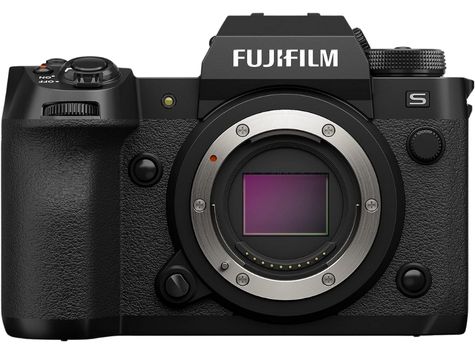
In the end, the X-H2S is one of the most versatile and high-performing APS-C cameras of its generation. It’s excellent for action photography and very strong for video. But it’s a fairly expensive body: it’s a real investment. Finally, it still has a few limitations in terms of menus, AF areas, and exposure latitude.
As always, here are some interesting alternatives to the Fujifilm X-H2S:
- Fujifilm X-H2 : a more high-resolution-oriented option with its 40MP sensor and 8K video, ideal for detailed photography and hybrid production rather than the X-H2S’s fast action focus.
- Fujifilm X-T5 : a more compact, versatile expert body, also using the 40MP sensor, but designed for all-around photography and travel rather than the X-H2S’s sports/video specialization.
As you’ve probably gathered, it’s the X-H2S’s stacked sensor that makes the difference for burst shooting and autofocus.
The best Fujifilm camera for pure photography (landscape, portrait)
Fujifilm X-T5
The Fujifilm X-T5 stands out as one of the best Fujifilm bodies for photographers who prioritize image quality above all. It features a 40.2-megapixel APS-C X-Trans CMOS 5 HR sensor paired with the X-Processor 5. It’s the perfect combo for creating and producing highly detailed images with excellent color handling. This high resolution lets you crop your photos easily while maintaining a high level of precision, which is particularly interesting for landscape or portrait photography.
The body also features five-axis in-body stabilization, very useful for handheld shooting in different lighting conditions. Its 3.69-million-dot electronic viewfinder and three-way tilting screen make precise framing easier, especially for landscape compositions or tripod shots. Finally, subject-detection and tracking autofocus also works effectively for portraits, helping keep focus on the subject’s eyes.
To sum up, thanks to its very high-resolution sensor and excellent image rendering, the X-T5 is an excellent choice for pure photography. It’s particularly well suited to landscape, architecture, or portrait photography for those looking for a compact body that produces very sharp images that are easy to work with in post-production or for large-format printing.
Here are two interesting alternatives to consider as well:
- Fujifilm X-H2 : an alternative even more focused on very high resolution, with its 40 MP APS-C sensor, the ability to create images up to 160 MP in Pixel Shift, and advanced hybrid features for both photo and video.
- Fujifilm X100VI : a premium fixed-lens compact with a 23 mm f/2 lens and a 40 MP sensor, made for street photography, reportage, and documentary work, with a discreet body.
The best budget Fujifilm camera
Fujifilm X-M5
Today, the Fujifilm X-M5 is among the most affordable mirrorless cameras in the X lineup. Launched in 2024, it offers a compact format and a more affordable price than the brand’s expert models. At 355 g, it’s even one of the lightest bodies in the series, making it an easy camera to carry day to day or while traveling.
Despite its budget positioning, it keeps the essentials of Fujifilm DNA. You get a 26.1 MP APS-C X-Trans CMOS 4 sensor paired with the X-Processor 5. This is precisely the combo that makes it possible to create detailed images and beautiful colors directly in JPEG thanks to the brand’s film simulations. The camera also remains responsive with bursts up to 8 frames per second and offers modern features like subject-detection autofocus or video up to 6.2K.
To keep the price lower and the design minimalist, the Fujifilm X-M5 still has a few limitations: it has no electronic viewfinder and no in-body mechanical sensor stabilization. In return, it offers a simple, light, and effective body, ideal for getting started in photography or for content creators looking for a versatile Fujifilm camera without breaking the bank.
Here are two interesting alternatives to the X-M5 while staying within a fairly similar budget:
- Fujifilm X-T30 III : a compact, affordable mirrorless camera with a 26 MP APS-C sensor, offering excellent image quality and classic photo controls, ideal as a budget alternative to the X-M5.
- Fujifilm X-S10 : a more versatile body thanks to built-in stabilization (IBIS) and a modern grip. Plus, you can still find it at a good price, which is where it becomes a better deal than the X-M5.
APS-C or Medium Format?
To explain the brand context, there are two very distinct worlds at Fujifilm: the X lineup in APS-C on one side and the GFX lineup in medium format on the other.
APS-C is now the heart of the brand. The bodies are compact, powerful, fast, and above all very versatile. Most photographers favor this type of body for travel, portraits, sports, street, and video.
GFX medium format offers maximum image quality: higher dynamic range, more pronounced depth of field, and very detailed rendering. In return, the bodies are much larger, more specialized, much more expensive, and more demanding.
There’s also another important element to consider: the ecosystem. The X mount (APS-C) offers more lenses across a wide range of prices. The GFX system is more limited and more expensive. We agree you shouldn’t base your decision only on the ecosystem, but you should still keep it in mind if you want to grow your gear over time.
In short, in 90% of cases, APS-C is the most interesting option. But if you have one or more very specific needs, GFX will be a better fit.
Compact or mirrorless?
First of all, we recommend asking yourself the following question: do you want a simple camera that’s ready to use, or a more upgradeable system? For example, a premium compact like the X100VI includes a fixed lens. So you don’t have to think about lenses, since it’s designed around a specific focal length that’s light and well balanced. It’s just perfect for travel or street photography.
On the other hand, you have interchangeable-lens mirrorless cameras (X-T5, X-S20, X-H2S…) that let you adapt the camera to each use: wide angle, telephoto, fast glass for portraits… Basically, you gain versatility, but you’re entering a system mindset.
As you’ve understood, the difference isn’t only technical—you also need to base it on how you want to do photography. To sum up, fixed-lens bodies are simple and intuitive, while interchangeable-lens mirrorless cameras give you more freedom and room to grow in your photography practice. It’s up to you to see which approach fits you best.
What budget should you plan for?
It’s not the most fun part, but we still have to think about it. To give you an idea: in APS-C, entry level starts around €900, and expert models can go up to €1,700–€2,500. Of course, medium format starts at much higher prices.
But in reality, the key is to consider the total budget. A mirrorless system generally implies at least one additional lens. Even if you start with a kit, you’ll often want to expand what you can do in photography.
That’s why it’s better to think in terms of an overall budget rather than the price of a body alone. It will help you avoid unpleasant surprises once you have your body and, above all, let you plan ahead.
To guide you better, if your budget is tight, we recommend going with a light, versatile APS-C. On the other hand, if your priority is quality and you have the budget, you can consider GFX.
Quick comparison of the best Fujifilm camera bodies
To easily compare the cameras presented in this article, we put together a good summary table below. It’s a helpful visual tool to support your final choice if you’re hesitating between several models.
| The best Fujifilm cameras | Definition | Stab. | Weight | Dim. | Burst(electr.) | Video | Battery Life(Viewfinder) | Battery | Approx.price | Best price |
|---|---|---|---|---|---|---|---|---|---|---|
| Fujifilm X-T5 | 40.2 Mp | YES | 1.2 lb / 557g | 130 x 91 x 64 mm | 13 fps | 6.2K 30 fps | 580 images | NP-W235 | $1 700 | Amazon B&H |
| Fujifilm X-S20 | 26.1 Mp | YES | 1.1 lb / 491g | 128 x 85 x 65 mm | 20 fps | 6.2K 30 fps | 750 images | NP-W235 | $1 499 | Amazon B&H |
| Fujifilm X100VI | 40.2 Mp | YES | 1.1 lb / 521g | 128 x 75 x 55 mm | 13 fps | 6.2K 30 fps | 310 images | NP-W126S | $1 600 | Amazon B&H |
| Fujifilm X-H2S | 26.1 Mp | YES | 1.5 lb / 660g | 136 x 93 x 85 mm | 40 fps | 6.2K 30 fps | 580 images | NP-W235 | $2 899 | Amazon B&H |
| Fujifilm X-M5 | 26.1 Mp | NO | 0.8 lb / 355g | 112 x 67 x 38 mm | 20 fps | 6.2K 30 fps | - | NP-W126S | $799 | Amazon B&H |
| Fujifilm X-T30 III | - | - | - | - | - | - | - | - | $1 149 | B&H |
1. Is Fujifilm better than Sony or Canon in APS-C?
Fujifilm stands out from other brands with its 100% APS-C-focused approach, whereas Sony and Canon often see this format as a gateway to full frame. As a result, Fujifilm offers dedicated lenses, refined ergonomics, unique film simulations, and above all an overall system coherence.
Of course, in terms of pure autofocus and extreme sports, Sony is still (?) the market reference. But on the following points—image quality, color science, and shooting enjoyment—Fujifilm is now one of the most accomplished APS-C systems out there.
2. Why doesn't Fujifilm offer full-frame?
As we told you above, Fujifilm’s strategy is based on two very clear worlds:
- APS-C for compactness and versatility,
- GFX medium format if you want very high quality.
In fact, the brand believes that full frame would compete with its medium format without real added value. Besides, Fujifilm APS-C already rivals entry/mid-range full frame in image quality.
3. Are Fujifilm cameras good in low light?
Yes, especially the recent 26 MP and 40 MP models. X-Trans sensors offer very good noise control and solid dynamic range. However, like any APS-C, they don’t fully match the best full-frame cameras in extreme conditions. But in 90% of cases (weddings, portraits, indoor, night street), we find the performance is more than sufficient.
4. Are Fujifilm cameras suitable for professionals?
Yes, especially the X-T5, X-H2, and X-H2S. These bodies are used for reportage, sports, weddings, advertising, and even advanced video production.
The GFX lineup, in medium format, is made for demanding professional use, such as studio photography, high-end portraits, commercial landscape, or fashion. Clearly, Fujifilm is no longer just a retro, nostalgic brand—it now stands out as a complete, high-performing system in a pro environment.
5. What is the lifespan of a Fujifilm camera?
To give you an idea, a modern Fujifilm mirrorless camera can last several years without any problem, as long as you take care of it and use it normally. Expert and professional models offer weather-sealed construction and a shutter rated for hundreds of thousands of actuations. In other words, you have plenty of headroom.
But once again, like any electronic device, lifespan mainly depends on maintenance and frequency of use. But honestly, the reliability of the X mount has proven itself for more than 10 years.
6. Is the Fujifilm X100VI a good choice as your only camera?
Yes, if your photography matches its fixed 23 mm focal length (35 mm equivalent). This body offers image quality equivalent to recent APS-C mirrorless cameras in an ultra-compact format. On the other hand, if you need zoom, sports, wildlife, or versatility, an interchangeable-lens mirrorless camera will be better suited to you. In short, the X100VI is an interesting camera, but not a universal one.
7. Should you invest now or wait for the next models?
The current Fujifilm lineup is already very advanced technologically. X-Trans 5 sensors and recent processors already offer AI autofocus, 6.2K, 8K, and an advanced stabilization system.
You can wait in hopes of small improvements, but you shouldn’t expect major changes. In my view, if a model already matches your use, there’s no strategic reason to wait longer. You can go for it without hesitation if it checks all your boxes.

Written by Sylvain PONS
I've been passionate about photography since 2010, learning as I went along. Today, I dedicate myself to guiding others in their choice of camera gear and sharing a variety of tips to improve their photography skills.
Despite our care, a mistake may have slipped into this article. If you find any, please don't hesitate to let us know so we can correct it as soon as possible and keep our information up-to-date!