Best L-Mount mirrorless cameras from Panasonic, Sigma and Leica
Last update: 06/14/2026
Our blog continues to grow thanks to you, our readers. This post may contain affiliate links, which means we can earn a small commission if you make a purchase through them, at no extra cost to you. This helps us to continue to bring you more and support our work!
In 2018, Panasonic announced plans to develop cameras with full-frame sensors. Until then, the brand had focused exclusively on Micro Four Thirds models. For more background on this topic, have a look at our complete guide to camera sensor sizes. As a long-standing Leica partner, Panasonic also announced that its full-frame mirrorless cameras would be developed in collaboration with the legendary German brand, alongside Sigma.
This three-way alliance offers several advantages for all three brands. Panasonic and Sigma gain access to the L-Mount developed by Leica, while Leica benefits from greater visibility in the mainstream market — although, between us, that has not made its prices any lower. All three companies also benefit from the lenses already produced by Leica and those subsequently released by Panasonic and Sigma. I have listed all current L-Mount lenses in a separate article.
Panasonic had already worked with Olympus to build a complete Micro Four Thirds lens range, covering virtually everything available for the format. At the time, the company did not need to become immediately competitive because mirrorless cameras still attracted relatively limited interest. The full-frame market was a very different matter: Sony was already firmly established, while Nikon and Canon entered the segment at roughly the same time as Panasonic.
Since Panasonic and Sigma do not offer APS-C cameras, while Leica’s APS-C models are extremely expensive and rarely seen in stores, this article focuses mainly on full-frame cameras.
- 06/25/2025 : Leica SL3-S
- 06/12/2025 : Panasonic S1 II E
- 06/11/2025 : Panasonic S1 II
- 06/04/2025 : Leica SL2
- 06/04/2025 : Leica SL3
Since first publishing this page, I have also added a dedicated guide listing all current L-Mount cine lenses.
If you want to compare the cameras on this page with other brands in detail, we've created our own free comparison tool, so don't hesitate to try it out!
Panasonic full-frame cameras
Panasonic S1 II E
The Panasonic Lumix S1 II E is a significant addition to Panasonic’s full-frame lineup. Positioned between the S5 II and S1 II, it builds on the strengths that made the S5 II successful while introducing several worthwhile improvements. At its core is a 24.2 MP full-frame sensor powered by the Venus Engine, producing detailed stills and high-quality 6K video. The camera brings much of Panasonic’s latest technology to a more accessible price point — hence the “E” in its name — without compromising build quality or the overall user experience.
Its philosophy is what sets it apart from the higher-end S1 II. While the S1 II prioritizes outright speed with its partially stacked sensor and 70 fps bursts, the S1 II E takes a more balanced and versatile approach. You still get fast 30 fps bursts, intelligent hybrid autofocus, and a pre-burst mode. For video, it offers 6K Open Gate recording, future ARRI LogC3 compatibility, and an uncropped 2.4:1 CinemaScope format. It is a strong option for creators who want a capable all-around camera without necessarily needing the maximum performance of the S1 II.
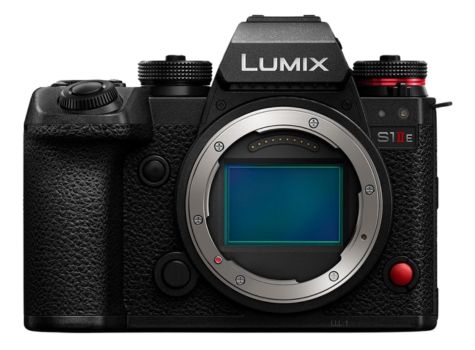
In use, the S1 II E stands out for its handling. Panasonic has adopted the more compact body of the S5 II, yet build quality remains excellent, with a magnesium-alloy chassis, extensive weather sealing, and freeze resistance down to –10 °C. It also features a 5.76-million-dot OLED viewfinder and a fully articulating rear screen, making creative framing and vlogging easier. Dual card slots (UHS-II SD and CFexpress), comprehensive connectivity (USB-C, full-size HDMI, 5 GHz Wi-Fi, and Bluetooth 5.0), and 8-stop in-body image stabilization make it a highly capable camera in a wide range of situations.
Overall, the Panasonic Lumix S1 II E combines the core performance expected from a modern camera with a more approachable price than the S1 II. It cannot match the outright speed of the higher-end model, but compensates with excellent versatility and a very similar shooting experience. For photographers and videographers looking for a robust, reliable, and well-rounded tool without moving into flagship territory, the S1 II E is a sensible choice. It balances creative potential and accessibility particularly well.
Panasonic S1 II
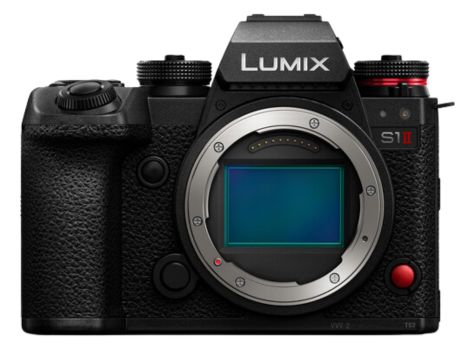
Six years after the original S1, Panasonic has brought the line back into the spotlight with the Lumix S1 II, a 24.1 MP full-frame body built around a new partially stacked sensor. The redesign provides much faster readout, significantly reduces rolling-shutter artifacts, and enables 70 fps electronic bursts for 2.6 seconds, or approximately 185 RAW/HEIF frames. Maximum shutter speed rises to 1/16,000 sec electronically, while the mechanical shutter still reaches 1/8,000 sec and 10 fps. Despite these improvements, the camera is lighter at 717 g with the new DMW-BLK22 battery, which offers slightly better endurance at approximately 310 CIPA-rated shots through the EVF and well over 1,000 in Eco mode. The magnesium-alloy chassis remains weather-sealed against dust, rain, and temperatures down to –10 °C.
The viewing experience remains familiar, with a blackout-free 5.76-million-dot OLED EVF running at 120 Hz and a 3-inch, 1.84-million-dot rear screen that now tilts and rotates freely. The controls gain a PASM dial on the top plate, a stills/video/S&Q lever, and an automatic shutter-curtain closure when the camera powers down. Dual card slots combine CFexpress Type B for high-speed recording with SD UHS-II for flexibility, while charging is handled through USB-C and an external charger is included. The sensor offers dual native ISO 800/8000, a claimed 15 stops of dynamic range in boost mode, and 5-axis IBIS rated for up to eight stops of compensation.
Action photographers benefit from a 1.5-second pre-burst, a handheld 96 MP pixel-shift mode, and a nearly silent electronic shutter, which can also be useful on set. The hybrid contrast- and phase-detection autofocus system uses 779 points across the frame, with subject detection for people, animals, vehicles, and a dedicated “urban sports” mode. Combined with the partially stacked sensor, rolling shutter is greatly reduced with fast-moving subjects, and the buffer clears to CFexpress within seconds.
The video specifications are even more extensive: full-sensor 6K 30p Open Gate in 3:2 or 5.1K 60p, both recorded internally in 10-bit. The S1 II can record 5.8K 30p Apple ProRes RAW internally at 1.9 Gb/s without an external monitor, as well as 4K 120p with a 1.24x crop and 2.4:1 CinemaScope at up to 60p. Additional features include 32-bit float audio, Bluetooth timecode, direct USB-C SSD recording, and professional tools such as false color and waveform monitoring. LUTs and Log profiles — V-Log/V-Gamut or ARRI LogC3 through a paid update — can be loaded through the Lumix Lab app, while crop-free Active stabilization makes handheld shooting easier. The performance is excellent, but the launch price places it firmly in the premium segment.
Panasonic S1R II
Launched in March 2025, the Panasonic Lumix S1R II arrived six years after its predecessor with a major redesign. It remains true to the spirit of full-frame L-Mount cameras while combining a robust build with more modern technology. The weather-sealed body features 5-axis stabilization rated for up to eight stops of compensation, along with dual card slots for SD UHS-II and CFexpress Type B. Its 5.76-million-dot OLED viewfinder provides clear, precise framing in a wide range of situations.
Panasonic uses a 44.3 MP BSI CMOS sensor. Although this is a lower resolution than the previous model, it should make noise easier to manage and streamline the overall workflow. Sensitivity ranges from ISO 80 to 51,200 and can be expanded to ISO 102,400, offering greater flexibility in low light. The new L² processor also improves data processing and noise reduction.
| Features | Visual |
|---|---|
|
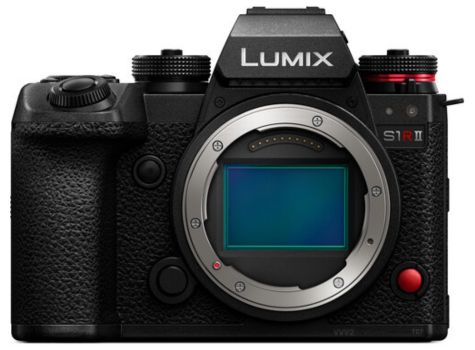
The S1R II also places far greater emphasis on speed than its predecessor. Its Phase Hybrid AF system uses advanced subject-recognition technology for people, animals, vehicles, and fast-moving urban sports, while continuous shooting reaches up to 40 fps with the electronic shutter and autofocus tracking. A handheld high-resolution mode can produce files of approximately 177 MP, making the camera particularly attractive for landscapes, architecture, studio work, and other situations where maximum detail matters.
Video capabilities are equally ambitious. The S1R II is the first Lumix camera to offer 8K recording, alongside 5.9K 60p and C4K/4K at up to 120p. It also supports internal ProRes RAW HQ recording, Open Gate formats, and V-Log/V-Gamut workflows. Combined with its high-resolution sensor, strong stabilization, hybrid autofocus, and faster burst performance, this makes the S1R II a genuinely versatile hybrid camera rather than a model intended only for high-resolution still photography.
Panasonic S5D
Available since October 2024, the Panasonic Lumix S5D is positioned as an affordable full-frame mirrorless camera. Put simply, it retains the main strengths of the well-known Lumix S5. It uses a stabilized 24.2 MP full-frame sensor, a Venus Engine processor, and a 2.36-million-dot OLED viewfinder. Autofocus still relies on Panasonic’s DFD system and offers broad frame coverage. Continuous shooting reaches 5 fps with AF tracking, which is modest by current standards.
For video, it records 4K at 60 fps with an APS-C crop or uncropped 4K at 30 fps, with V-Log/V-Gamut available. When connected to an external recorder, it can also output 5.9K at 30 fps. Panasonic rates battery life at approximately 450 shots using the rear screen and 430 through the EVF. The body is also weather-sealed, making it suitable for use in a range of conditions.
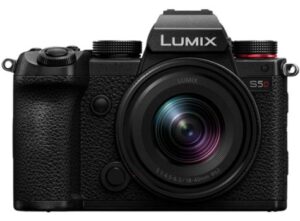
The camera is often sold as a kit with the 18-40 mm f/4.5-6.3 lens. It is aimed at content creators and videographers looking for a capable mirrorless camera at a relatively low price. Its compact, lightweight body still offers advanced features for both still photography and video.
As you may have noticed, the S5D competes directly with the Lumix S5 II, which is available at roughly the same price but offers more advanced autofocus. In my opinion, the S5D’s main strength is its value for money. It is a good option for enthusiasts and videographers looking for an affordable yet capable alternative.
Panasonic S9
Released in May 2024, the Panasonic Lumix S9 is a compact, lightweight full-frame mirrorless camera. It features a stabilized 24.2 MP sensor, a 779-point autofocus system, and 6K 30p video recording. A fully articulating touchscreen replaces the electronic viewfinder. Stabilization is rated for up to 6.5 stops, and the camera can shoot bursts at up to 30 fps.
The controls are intentionally minimalist. There is no substantial grip, which can make the camera less comfortable to hold with larger lenses. Video features include 10-bit 4:2:2 recording and digital zoom up to 3.1x. Recording times are limited, however, to 10 minutes in 6K and 15 minutes in 4K.
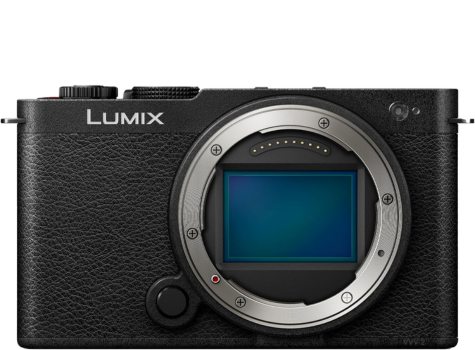
The camera is designed to be intuitive and easy for content creators to use. Its Lumix Lab app is a real advantage, allowing LUTs to be applied and transferred directly to the camera. Its compact size is particularly useful for travel, street photography, and vlogging.
Overall, the Panasonic S9 can be seen as a direct competitor to the Sony A7C II, while remaining more compact than the Lumix S5 II. If you want an easy-to-carry mirrorless camera with strong connectivity, the S9 may suit you well. It is, of course, less fully featured than the S5 II and comes with several limitations.
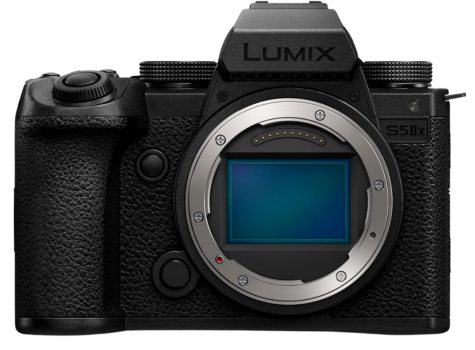
Panasonic S5 II and S5 II X
Finally! At the beginning of 2023, Panasonic announced the S5 II and S5 II X, finally introducing the technology Panasonic users had been waiting years for: phase-detection autofocus. Since launching its first Micro Four Thirds mirrorless cameras in 2008, Panasonic had relied exclusively on contrast-detection AF performed directly on the sensor. The system could be accurate and reasonably fast, and Panasonic pushed it further than most manufacturers. Even so, it remained prone to focus pulsing and was less reliable in low light, where contrast is harder to detect. Other mirrorless brands had already been combining phase and contrast detection for several years. DSLR cameras had used phase detection since 1985, partly because an optical viewfinder prevents the imaging sensor from continuously evaluating contrast while the mirror is down.
The S5 II shares many features with its predecessor, but phase-detection autofocus is by far the most important upgrade. Its electronic shutter now reaches 30 fps, placing it behind the Canon R6 II at 40 fps but ahead of most competitors in the same price range. Keep in mind, however, that cameras without a stacked sensor can suffer from distortion, banding, and rolling shutter when the electronic shutter is used. The EVF resolution increases to 3.68 million dots, matching similarly priced cameras, while 0.78x magnification is comparable to the Sony A7 IV and Nikon Z6 II. Canon offers slightly lower 0.76x magnification, though the practical difference is minimal. The rear screen also gains resolution. The camera retains the S5’s 24 MP sensor, which is standard for this category, while the A7 IV is one of the few comparable models to offer more at 33 MP. Native sensitivity ranges from ISO 100 to 51,200, again typical for a modern full-frame camera of this type.
The stabilized sensor performs very well, which is no surprise given Panasonic’s reputation in this area. Mechanical burst speed reaches 9 fps in AF-S mode and drops to 7 fps in AF-C. Autofocus is the most meaningful improvement over the original S5, with more advanced subject detection and a far more comfortable shooting experience. It still does not quite match the current leaders from Sony and Canon, but it comes close and performs somewhat better than Nikon’s older Z6 and Z7 autofocus systems.
Details of the Panasonic S5 II
Details of the Panasonic S5 II X
When it comes to video, Panasonic rarely disappoints, having a strong know-how in this field. We can therefore count on all the exclusive video functions of Panasonic, such as waveform or LUTs preview, and many other options to simplify filming. The S5 II offers up to 6K, 4K 50/60p is still cropped at 1.5x like the Z6 II and A7 IV. Only the R6 in this range are not affected by this crop but it prevents overheating, facilitates corrections and offers a more powerful digital stabilization, although it remains regrettable.
The standard autonomy is not fantastic. It is still far from Sony on this point, but Panasonic offers on most of its slightly high-end cameras very effective power saving options that multiply it, and the S5 II is one of them. Finally, on memory slots, Panasonic chose to stick to SD cards while some competitors are moving to at least one slot for faster CFExpress, especially for high definition and high frame rate video recording. The 6K recording on the S5 II is done by external recorder.
As for the S5 II X, which comes out about 6 months later for 2600€, it is identical on most points. It is especially dedicated to those wishing to be able to film in ProRes or RAW and to stream live, so it is intended for specific users. This is the great strength, in my opinion, of the S5 II, by not including some video options that few people use (or that direct them to more specialized cameras) Panasonic was able to offer it at a very interesting price. We’ll have to see if producing two separate cameras instead of one will be a winning strategy in the long run.
Leica L-Mount full-frame cameras
Leica’s current L-Mount full-frame range is built around the SL3 and SL3-S. These cameras should not be confused with Leica’s M-Mount models, such as the Leica M10 and M11. The SL series uses autofocus lenses, electronic viewfinders, in-body stabilization, and advanced video features, making it far more conventional and versatile than the manual-focus M system.
Leica SL3
Introduced in March 2024, the Leica SL3 is the high-resolution model in Leica’s current SL range. It uses a 60.3 MP full-frame BSI CMOS sensor with Triple Resolution Technology, allowing DNG and JPEG files to be recorded at 60, 36, or 18 MP while using the full sensor area. The Maestro IV processor supports the large files, while 5-axis in-body stabilization helps make the most of the sensor’s resolution.
The SL3 uses hybrid phase- and contrast-detection autofocus and includes subject recognition for people and animals. Its 5.76-million-dot OLED viewfinder provides a detailed shooting experience, while dual card slots support both CFexpress Type B and SD UHS-II media. The magnesium-and-aluminum body is weather-sealed to IP54 and remains substantial, although it is slightly smaller and lighter than the previous SL2.
Video is also a major part of the SL3’s specification. The camera can record internally at resolutions up to 8K, alongside 4K and Full HD options, with 10-bit recording and support for professional formats and Log workflows. This makes it a genuine hybrid camera, although its strongest appeal remains high-resolution photography, studio work, landscapes, portraits, and other situations where maximum detail matters.
The Leica SL3 is therefore aimed at photographers who want the highest resolution in the current SL system while retaining strong video capabilities. Its build quality, viewfinder, stabilization, and access to L-Mount lenses are all impressive, but the price places it firmly in the premium segment.
Leica SL3-S
Announced in January 2025, the Leica SL3-S takes a different approach from the SL3. Instead of prioritizing resolution, it uses a 24 MP full-frame BSI CMOS sensor designed for speed, low-light performance, and hybrid shooting. Its sensitivity range extends from ISO 50 to 200,000, while 48 and 96 MP multishot modes provide higher-resolution files when needed.
The camera uses a 779-point phase-detection autofocus system and can shoot at up to 30 fps in 12-bit mode with continuous autofocus. This makes it far better suited to action, events, reportage, and fast-moving subjects than the higher-resolution SL3. Like the SL3, it includes in-body stabilization, a 5.76-million-dot electronic viewfinder, weather sealing, and dual CFexpress Type B and SD UHS-II card slots.
The SL3-S is also the more video-focused of the two current models. It supports Open Gate recording, 6K at 30 fps, 4K at 60 fps, Full HD at 120 fps, 5.8K ProRes 422 HQ recording, external 5.9K RAW output through HDMI, and direct recording to an external SSD. These specifications make it much more suitable for demanding hybrid workflows and professional video production.
In practice, the choice between the two is relatively clear. The SL3 is the better fit for photographers who prioritize maximum detail, while the SL3-S is more appropriate for speed, low light, action, and video. Both remain expensive, but they represent a substantial technical step forward from the previous SL2 generation.
Older Leica SL2 and SL2-S
The SL2 and SL2-S are the previous generation of Leica’s L-Mount full-frame cameras. They share physically similar bodies with the same dimensions and weight, along with identical autofocus systems, 5.76-million-dot electronic viewfinders, and a rated battery life of approximately 370 shots. Their burst speeds are also relatively close.

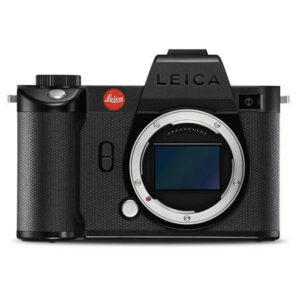
The main difference is the sensor. The SL2-S uses a 24 MP sensor with sensitivity up to ISO 100,000, while the earlier SL2 offers 46.7 MP and reaches ISO 50,000. Both sensors are stabilized. Each camera records 4K at 60p, while the SL2 can also reach 5K at 30p and Full HD at 180p. The higher-resolution SL2 is primarily aimed at still photography, while the SL2-S offers a more video-oriented and low-light-focused approach.
The other major difference is price. The SL2-S originally launched at around €4,600, already expensive even for a full-frame camera, while the SL2 exceeded €6,000. Leica may be legendary, but its prices are equally famous. On the used market, however, both can now represent more accessible alternatives to the SL3 generation.
Sigma full-frame cameras
Sigma Bf
In March 2025, Sigma drew considerable attention with the Sigma BF, a full-frame mirrorless camera that departs sharply from conventional designs. Machined from a single block of aluminum, this 24.6 MP camera has a very slim, minimalist body that combines low weight — 446 g with the BP-81 battery — with a robust build. Some have compared its carefully considered aesthetics to Apple’s design approach. One of its most unusual features is the absence of a memory card slot, replaced by 230 GB of internal storage.
The Sigma BF’s interface is extremely simple. Three buttons, a dial, and the shutter release control the main settings — shutter speed, aperture, ISO, exposure compensation, and 13 color modes — all displayed on a fixed 2.1-million-dot touchscreen measuring 8 cm diagonally. Inspired by mobile apps, this minimalist approach creates a fast, intuitive experience, while the built-in color modes broaden the creative options and make shooting more straightforward.

At the heart of the camera is a 24.6 megapixel full-frame sensor that, combined with a hybrid phase and contrast-detection autofocus system, ensures excellent recognition of faces, animals and moving objects. When it comes to video, the Sigma BF does not disappoint: it offers 6K recording at 30 fps with L-log support, highlighting the sensor’s wide dynamic range, even if stabilisation remains purely electronic. The (admittedly disappointing) 8 fps burst and 350 RAW file buffer are a compromise between compactness and performance.
By doing away with superfluous connections – a single USB-C port for both connection and charging – the Sigma BF positions itself as a favorite camera for photographers looking for a discreet, light and elegant device. This choice, coupled with the absence of a viewfinder and reduced ergonomics, confirms Sigma’s bold move to shake things up. This camera will particularly appeal to photographers looking for a beautiful, lightweight body that is perfect for travelling, for example, all in a more than elegant style!
SIGMA fp and fp L
After joining the L-Mount Alliance, Sigma introduced its own mirrorless cameras for the system, benefiting from Leica’s expertise and access to Leica and Panasonic lenses. The company chose an original, video-oriented design that could claim to be among the lightest and most compact full-frame bodies available. The two cameras are physically identical and weigh the same, but several important differences separate them.
The most obvious difference is the sensor. The Sigma fp uses a 24.6 MP sensor without a low-pass filter, while the fp L has a 60 MP sensor with a low-pass filter, which is a surprising choice. The fp relies solely on contrast-detection autofocus and reaches 18 fps, while the fp L uses hybrid phase- and contrast-detection autofocus but drops to 10 fps. That is also somewhat unexpected, since the faster burst rate would seem more useful alongside the more capable hybrid autofocus system.
Details of the Sigma FP

Details of the Sigma FP L
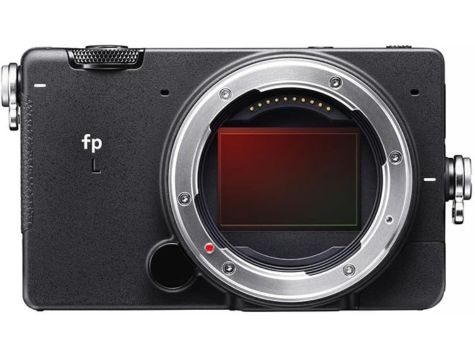
Although both cameras appear to be video-oriented, neither records 4K at 60p. They also lack a built-in electronic viewfinder, so the EVF-11 must be purchased separately for around €650, although it is sometimes bundled with the body for approximately €500.
Both cameras cost around €2,000. That may seem reasonable for the brand, but competition at this price is extremely strong and generally offers more complete feature sets.
Old Panasonic full frame cameras
PANASONIC S5
The Panasonic S5 was one of the brand’s most interesting full-frame cameras, competing directly with the Sony A7 III/A7C, Nikon Z6, and Canon R6. Like the Sony and Nikon models, it uses a stabilized 24 MP sensor, but without a low-pass filter, which can preserve slightly more detail. Leica is one of the few other brands to have made the same choice with a sensor of this size and resolution. Its 7 fps burst rate is slower than Sony’s 10 fps or Canon’s 20 fps, but should not be particularly limiting outside action photography. The autofocus system uses 225 points but relies entirely on contrast detection, making it less suitable for sports. Sensitivity runs from ISO 100 to 51,200, with dual native ISO providing an additional performance boost at ISO 640 and 4,000.
| Features | Visual |
|---|---|
|
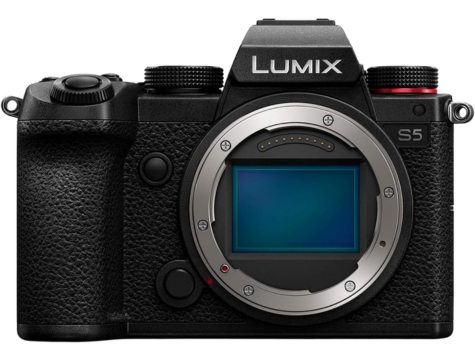
Compared to the previously released S1s, Panasonic has been listening to the critics and reworked its design to offer a more compact and lighter body, similar to what the competition is offering in this category. It also has all the current connectivity features, Wi-Fi and Bluetooth, and allows filming in 4K 60p with 1.5x cropping and Full HD 180p. It also offers a high definition photography mode, allowing you to output 96MP shots under ideal conditions (tripod and fixed subject, mainly). The electronic viewfinder starts to be below the competition with its 2.36MP, but remains of good level. The 470-frame battery life is decent compared to Nikon and Canon, but not as good as Sony’s.
Its price under 2000€, with regularly attractive discounts, allows it to be, in my opinion, among the best current cameras.
PANASONIC S1 and S1R
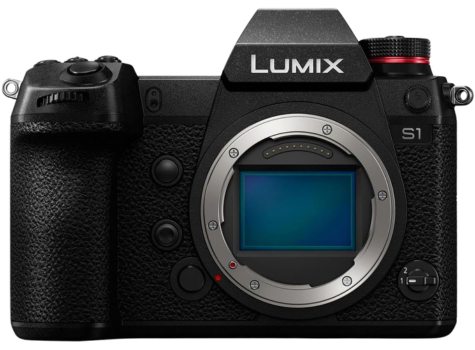
I have grouped the S1 and S1R together because their specifications are very similar, even though their prices differ considerably. In my opinion, their size and weight are significant disadvantages compared with the competition. Both use the same autofocus system as the S5 and share a 5.76-million-dot electronic viewfinder, a 9 fps burst rate, a rated battery life of 360 shots, 4K 60p video, and in-body stabilization.
The main differences are sensor resolution, video crop, and price. The S1 produces 24 MP images, or 96 MP in high-resolution mode, with a native ISO range of 100 to 51,200. The S1R delivers 47 MP files, or 187 MP in high-resolution mode, with a native range of ISO 100 to 25,600. The S1 records 4K 60p without a crop, while the S1R applies a 1.5x crop. The S1R also costs approximately 50% more than the S1.
Details of the Panasonic S1
| Features | Visual |
|---|---|
|
Details of the Panasonic S1R
| Features | Visual |
|---|---|
|
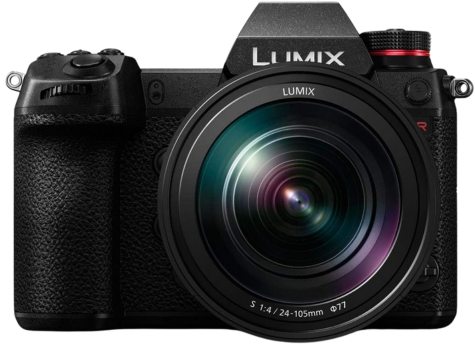
The S1 may appear attractive at around €2,400, but its large body and slower contrast-detection autofocus, which struggles more readily in low light, make it less appealing than several competitors. The S1R shares the same disadvantages while costing approximately €3,600. In this case, alternatives such as the Sony A7R IIIa, A7R IVa, or Nikon Z7 II seem more compelling to me.
PANASONIC S1H
The specifications of the S1H could justify grouping it with the S1 and S1R, but its stronger video focus and several distinctive features deserve a separate section. Although it offers the same resolution and native ISO range as the S1, it does not use exactly the same sensor because Panasonic added a low-pass filter. In still photography, this slightly reduces fine detail, but in video it helps minimize moiré caused by repeating patterns.
| Features | Visual |
|---|---|
|
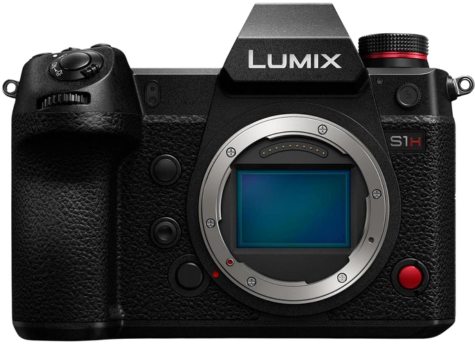
As a video specialist, it obviously offers 4K 60p but also slightly higher definitions (6K 24p), an impressive number of video rates and formats, and obviously a sensor stabilization. If you accept the extra weight and millimeters in addition to the already imposing S1 and S1R for professional video use, the S1H can be an excellent choice.
There is again the same AF, burst and 5.76-million-dot viewfinder as the other S1s, as well as the same €3600 price tag of the S1R.
Comparison table
Here are the main specifications to know about the cameras discussed above.
| Camera | Definition | Stab. | Weight | Dim. | Burst(electr.) | Video | Battery Life(Viewfinder) | Battery | Approx.price | Best price |
|---|---|---|---|---|---|---|---|---|---|---|
| Panasonic S5 | 24.2 Mp | YES | 1.6 lb / 714g | 133 x 97 x 82 mm | 7 fps | 4K UHD 60 fps | 470 images | DMW-BLK22 | $1 797 | Amazon B&H |
| Panasonic S5 II | 24 Mp | YES | 1.6 lb / 740g | 134 x 102 x 90 mm | 30 fps | 6K 30 fps | 370 images | DMW-BLK22 | $1 997 | Amazon B&H |
| Panasonic S1 | 24.2 Mp | YES | 2.3 lb / 1021g | 149 x 110 x 97 mm | 9 fps | 4K UHD 60 fps | 380 images | DMW-BLJ31 | $3 197 | Amazon B&H |
| Panasonic S1R | 47.3 Mp | YES | 2.2 lb / 1016g | 149 x 110 x 97 mm | 9 fps | 4K UHD 60 fps | 340 images | DMW-BLJ31 | $3 700 | Amazon B&H |
| Panasonic S1H | 24.2 Mp | YES | 2.6 lb / 1164g | 151 x 114 x 110 mm | 9 fps | 6K 24 fps | 380 images | DMW-BLJ31 | $3 913 | Amazon |
| Panasonic S5 II X | 24.2 Mp | YES | 1.6 lb / 740g | 134 x 102 x 90 mm | 30 fps | 6K 30 fps | 370 images | DMW-BLK22 | $2 099 | Amazon B&H |
| Panasonic S9 | 24.2 Mp | YES | 1.1 lb / 486g | 126 x 74 x 47 mm | 30 fps | 6K 30 fps | - | DMW-BLK22 | $1 500 | Amazon B&H |
| Sigma FP | 24.6 Mp | NO | 0.9 lb / 422g | 113 x 70 x 45 mm | 18 fps | 4K UHD 30 fps | - | BP-51 | $1 700 | Amazon B&H |
| Sigma FP L | 61 Mp | NO | 0.9 lb / 427g | 113 x 70 x 45 mm | 10 fps | 4K UHD 30 fps | - | BP-51 | $2 499 | Amazon B&H |
| Panasonic S5D | 24.2 Mp | YES | 1.6 lb / 714g | 133 x 97 x 82 mm | 7 fps | 4K DCI 60 fps | 430 images | DMW-BLK22 | $2 282 | |
| Panasonic S1R II | 44.3 Mp | YES | 1.8 lb / 795g | 134 x 102 x 92 mm | 40 fps | 8K UHD 30 fps | 280 images | DMW-BLK22 | $3 299 | Amazon B&H |
| Sigma Bf | 24.6 Mp | NO | 1 lb / 446g | 130 x 73 x 37 mm | 8 fps | 6K 30 fps | - | BP-81 | $2 199 | Amazon B&H |
| Leica SL2 | - | - | - | - | - | - | - | - | $3 000 | Amazon B&H |
| Leica SL3 | - | - | - | - | - | - | - | - | $7 485 | B&H |
| Panasonic S1 II | 24.1 Mp | YES | 1.6 lb / 717g | 134 x 102 x 92 mm | 70 fps | 6K 30 fps | 370 images | DMW-BLK22 | $3 199 | Amazon B&H |
| Panasonic S1 II E | 24.1 Mp | YES | 1.6 lb / 712g | 134 x 102 x 92 mm | 30 fps | 6K 30 fps | 340 images | DMW-BLK22 | $2 497 | Amazon B&H |
| Leica SL3-S | - | - | - | - | - | - | - | - | $6 495 | B&H |
Which L-Mount mirrorless camera should you choose?
As mentioned earlier, three major brands offer L-Mount cameras: Leica, Sigma, and Panasonic. Known for their build quality and design, Leica cameras are generally aimed at well-funded enthusiasts who appreciate beautifully made equipment. The SL3 is the current high-resolution option, while the SL3-S is better suited to speed, low light, and video. If you want to enter the L-Mount system without spending a fortune, however, Leica is clearly not the first brand I would recommend.
If you are a beginner or working with a limited budget, models such as the S5D are worth considering. Based on the original S5 but released more recently, it carries forward many of that camera’s strengths. The S9 costs a little more but remains an interesting option if you want a compact, lightweight camera with a strong feature set. The Sigma fp is another possibility, although its performance and specifications are beginning to feel dated beside newer cameras.
For a more balanced and versatile option, the Panasonic S5 II offers excellent value for money, particularly thanks to its solid construction and overall versatility. It performs very well for both stills and video and represents a substantial improvement over the original model, whose contrast-based autofocus was one of its main weaknesses.
For dedicated video shooters, Panasonic’s S1 II and S1H are the most obvious choices. The S1 II retains the original S1’s rugged magnesium body but modernizes almost everything inside, with a more responsive 24 MP full-frame sensor, hybrid phase-detection autofocus inherited from the S5 II, active cooling, and internal recording up to 6K 60p or 4K 120p. It offers a strong balance of price and performance for hybrid creators while being far more versatile than the original S1.
In March 2025, Panasonic launched the S1R II, which now sits near the top of the range. Its extensive feature set and high-resolution capabilities make it well suited to professionals who prioritize image quality.
Finally, the Sigma BF is also an excellent option if you are looking for a camera with a sleek, lightweight and compact design and great features. However, the lack of a viewfinder and integrated image stabilisation system (IBIS) means that it may not be for everyone.
To find out what other brands have to offer, I invite you to read the articles on Sony’s E-mount cameras, Nikon’s Z-mount cameras and Canon’s RF-mount cameras.
See you soon,

Written by Sylvain PONS
I've been passionate about photography since 2010, learning as I went along. Today, I dedicate myself to guiding others in their choice of camera gear and sharing a variety of tips to improve their photography skills.
Despite our care, a mistake may have slipped into this article. If you find any, please don't hesitate to let us know so we can correct it as soon as possible and keep our information up-to-date!