Bajos del Toro area
Last update: 04/16/2026
Our blog continues to grow thanks to you, our readers. This post may contain affiliate links, which means we can earn a small commission if you make a purchase through them, at no extra cost to you. This helps us to continue to bring you more and support our work!
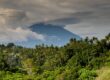
In a recent article I told you about our entire month-long itinerary in Costa Rica, a tropical paradise with a lot of wild animal species (sloths, howler monkeys, frogs, snakes, hummingbirds, toucans, quetzals and iguanas). I’m going to pick up my pencil again and write about the whole of the Bajos del Toro. This was the first area we visited during our stay in Costa Rica, a central american country. It was also one of the areas we enjoyed the most. Even though the weather wasn’t the best when we were there, the mountainous and very green landscapes of the region are really interesting to explore.
On the agenda for this article: the discovery of waterfalls with water as blue as a lagoon, the exploration of the interior with Louis and, above all, the magnificent Poas volcano.
I didn’t want to divide the region into several articles. All the places are quite close to each other. If you’re in the Bajos del Toro region, I think it’s well worth taking a look at the different areas.
So let’s get on with a short travelog from the region. In the meantime, if you’re looking for another great spot, don’t hesitate to visit the Tenorio Volcano National Park.
A walk to the Blue Falls of Costa Rica
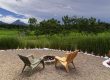
We arrived in Costa Rica the same day we landed in this beautiful mountainous and volcanic region. We had booked our first Airbnb for the first three nights of our trip and we weren’t disappointed at all. We got a cute little apartment, just big enough for the four of us, with a lovely garden and a river running through it. The place is quiet and peaceful and, frankly, it sets us up for our discovery of Costa Rica. Even though the weather looks threatening, with lots of mist and rain, we’re happy to be here.
We study the map to see what there is to do in the area, the waterfalls, the hikes, the most important things in the region. We decided to go to the “Blue Falls of Costa Rica”, a place that seems to be famous for its series of beautiful turquoise coloured waterfalls. Many will smile, but the 8am start in this high altitude region is rather chilly.
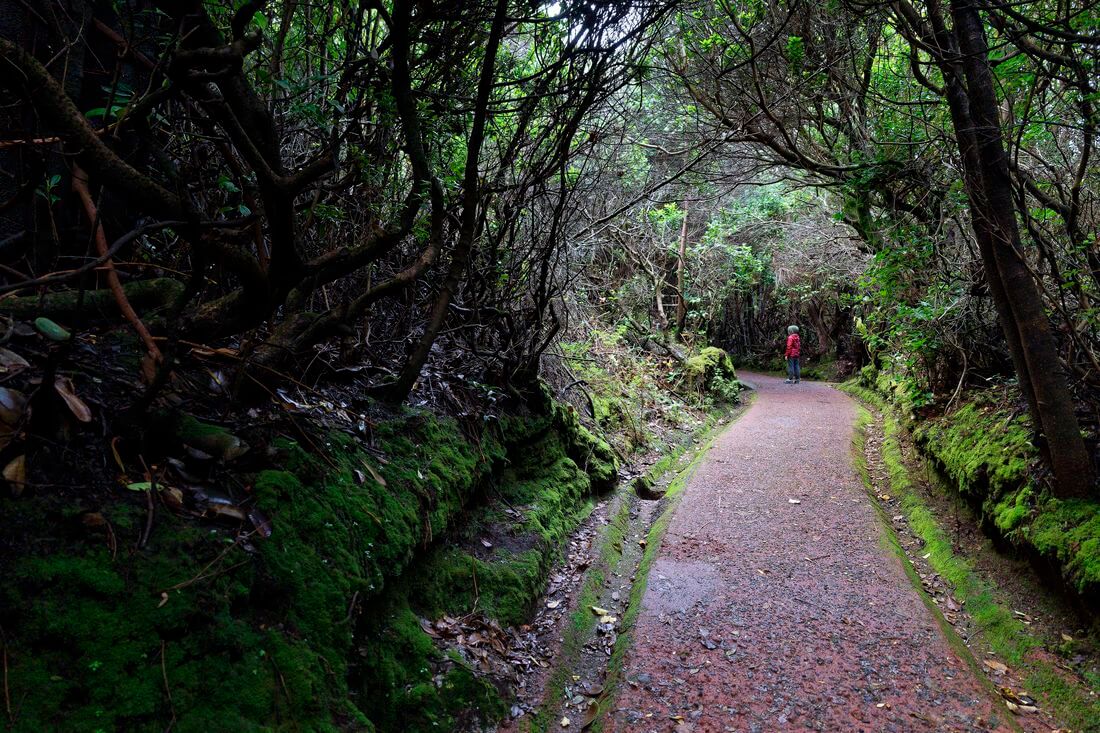
We set off in a little rain, which is no laughing matter given the humidity here. After paying the entrance fee of $15 per adult and $7.50 for children, we head for the entrance to the site, which is a little further down. We were there when it opened and only met a large group of tourists. We let them through to have a bit more peace and quiet. The start of the walk plunged us straight into the atmosphere. It’s very foggy, very damp, full of moss and lichen. It’s very lunar at first. We walked along a well-maintained 4×4 trail and, as luck would have it, the sun and blue sky gradually appeared as we made our way towards the famous waterfalls.

The children are happy to be here, to discover a new country, a new place, a new language – in short, happy to be traveling during the vacations. After a long half-hour walk, we reach a plateau where a guide seems to be waiting for us under a small hut. He explains to us: “This is where I will be for the rest of the trip. At least that’s what we understood, because let’s be honest, our Spanish is more than rusty… So we set off with him to discover the first waterfalls. A short descent to the bottom of the valley was our introduction to the area. Even though the sun isn’t out yet, we can still see the beauty of the turquoise water. It’s quite nice to discover such a color, which contrasts perfectly with the turquoise vegetation around it. We crossed the river on an iron bridge. Directly in front of us was a magnificent waterfall with a beautiful pool at its foot. We spent an hour exploring some of the waterfalls in the area. I enjoyed getting out my tripod and taking some long exposures of the surroundings. The area is very photogenic and it’s really enjoyable.
We won’t be going to the more remote waterfalls with the kids, who are starting to get tired towards the end of the morning. That would mean a lot more walking and possibly having to carry Teo on my back. I already have my camera bag, which must weigh almost 10kg, so I didn’t really want to add another 15kg to my shoulders, haha. Anyway, we saw the essentials!
We spent the afternoon driving around the small roads of the region to discover the viewpoints, but unfortunately the weather wasn’t very good that day.

Tesoro Escondido Waterfall
The next day-trip Louis and I decided to explore the famous Tesoro Escondido waterfall. Like the day before, the weather was really bad and the risk of a downpour deep in the rainforest was not out of question (fingers crossed!). We finally found the car park with access to the waterfall after driving past it several times.
Unfortunately, as I found out throughout our trip to Costa Rica, you have to pay to use the car park. I won’t go into a full blown rant in this article as that’s not the point, but it’s something that was really a disappointment to me during our stay here. You have to pay for every little thing you want to do: park in a car park, go and see a waterfall, go and explore some place or other, and so on. To put it bluntly: You’ll be pulling out your credit card every 10 metres. I much prefer the way things are done in countries like the United States or Canada. You just pay the entrance fee to a national park, for example, when you’re on your way. Sure, it’s more expensive, but then you can spend the week hiking and exploring the park without having to worry about anything. For me, that makes a big difference to the way I approach the trip… Anyway.
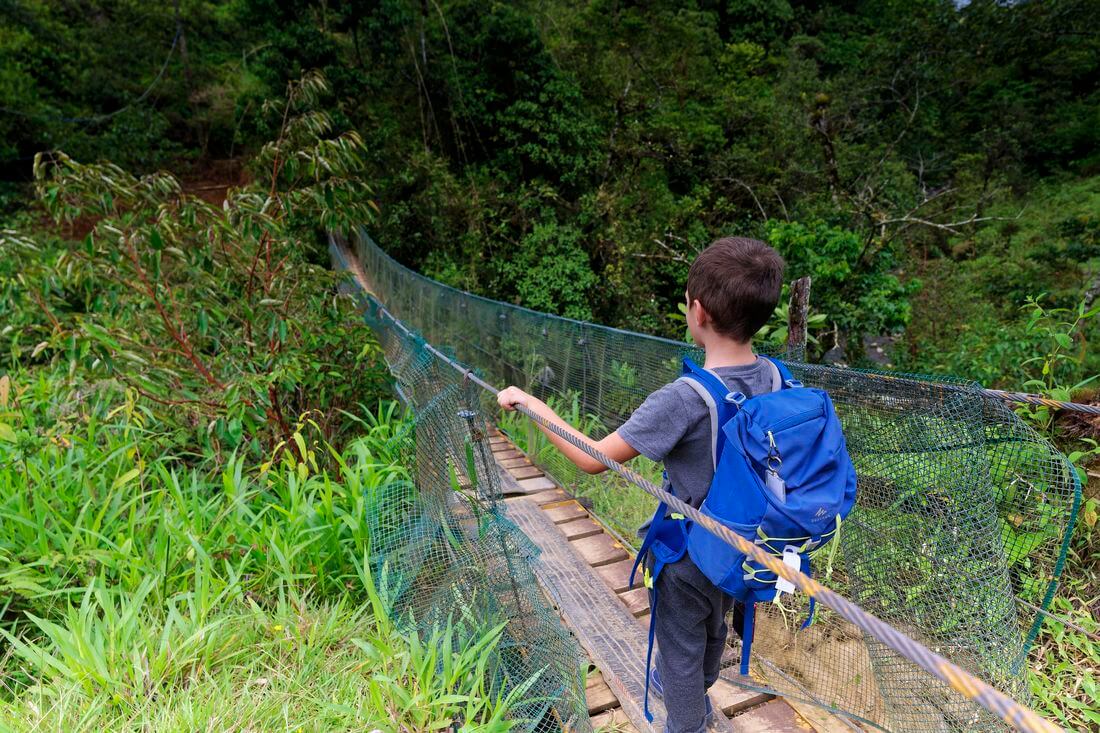
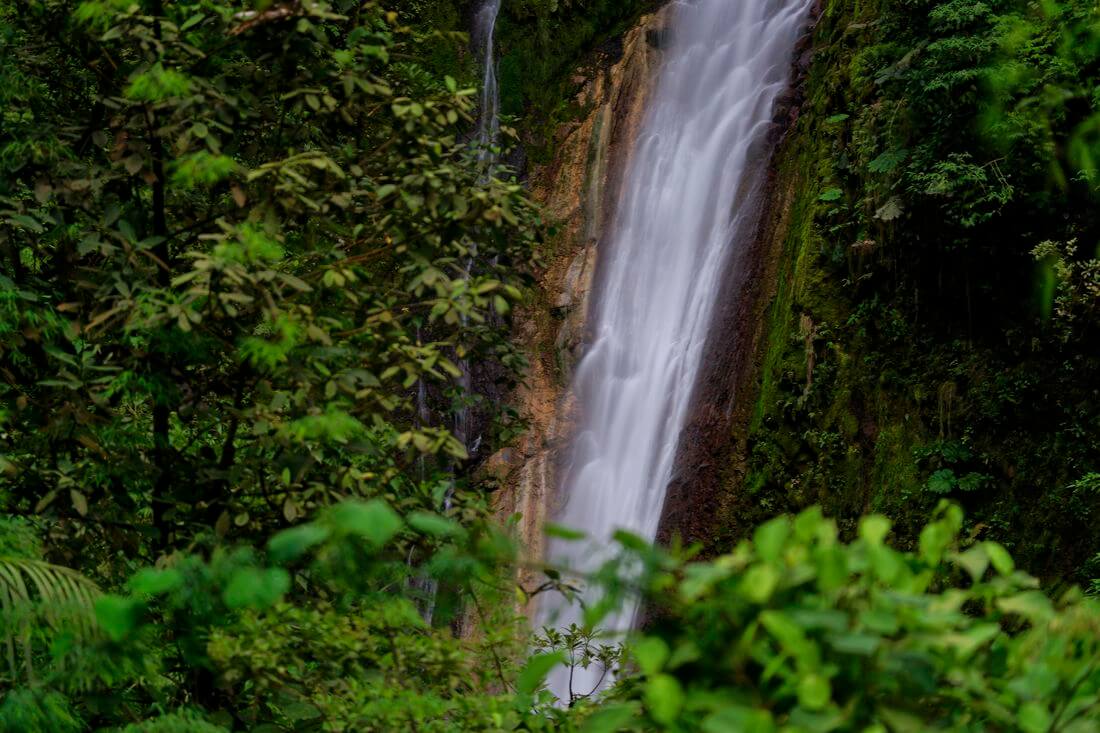
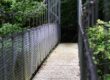
In any case, I take advantage of the time I have alone with Louis to go and explore this valley. The hike gets off to a great start as we have to cross an old wooden bridge that hangs over the void, haha. Louis is over the moon. We continue along the trail, which leads deep into the rainforest. There are some very nice passages carved out of the rock. We walked for about half an hour until we came to a fairly well developed green plateau, before we turned off the trail and walked down into the valley towards the waterfall. The sound of the waterfall can be heard in the distance. It is one of the largest and most important in the region. After a good hour’s walk from the start, we finally reached the edge of the river, crossing a wooden bridge that hangs over it. For a moment we could see the majestic river in the distance.
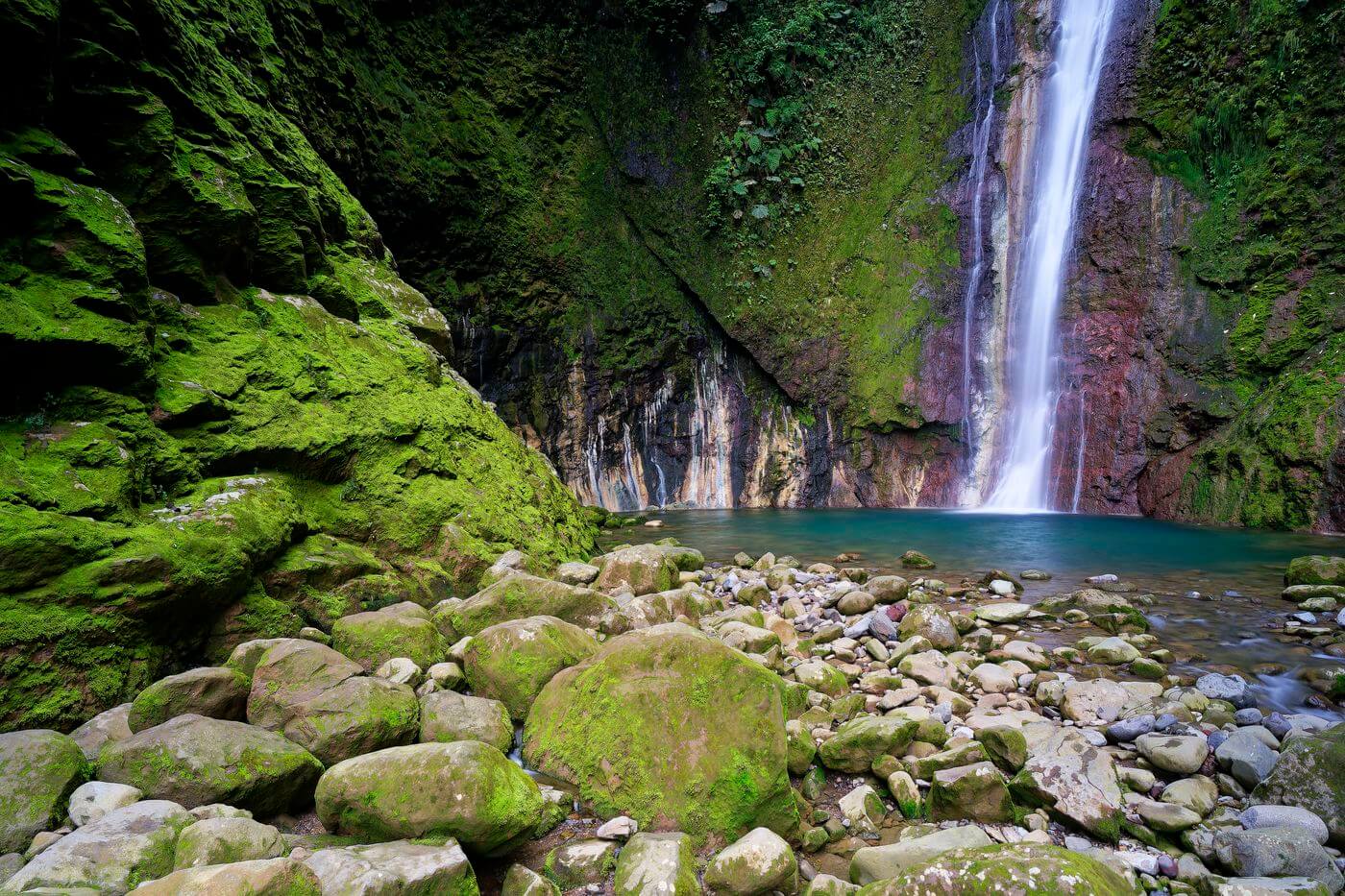
We continued walking for another ten minutes or so. We wanted to get as close as possible to the foot of the waterfall and its magnificent pool. It’s hard to describe, but it’s a really impressive waterfall, both in terms of the sound and the spectacular surroundings. The waterfall is at the bottom of a valley and a large rock face covered in turquoise green moss. The setting is magnificent. Louis and I stop for a moment to take a few long poses and enjoy the magnificent surroundings. There are no crowds here and even though the weather could be better, we’re in heaven.
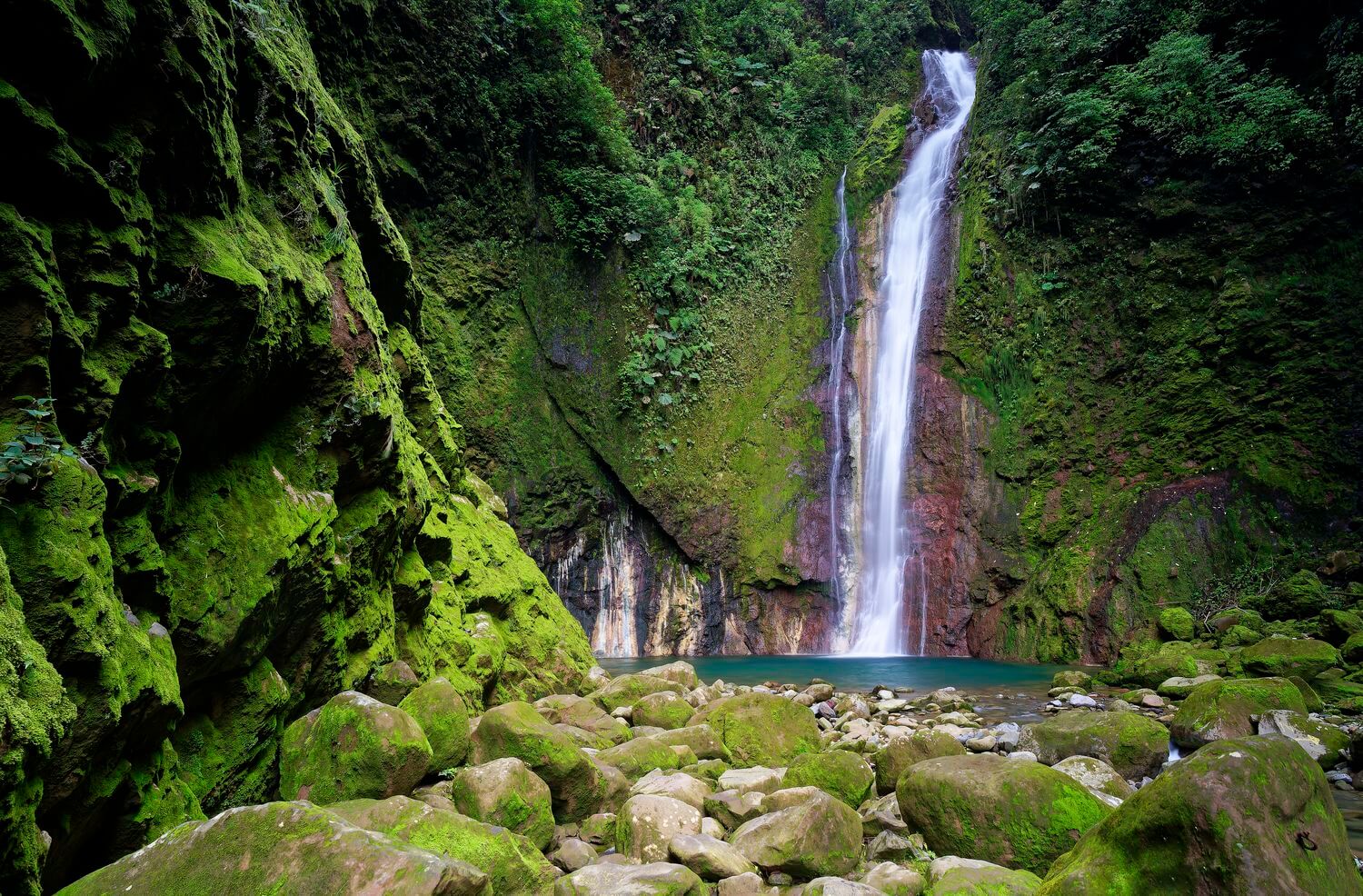
We quietly returned with him to Melanie, who had stayed at the Airbnb with Téo to rest. We also had a whole day of rain and fog during our time in the region, which prevented us from really discovering other places. It’s a shame, but that’s the way it is.
Poas Volcano
The day before we left, we decided to book an entry to the Poas Volcano National Park. It’s about a 2 hours drive from our Airbnb, a bit further east. (We drive like snails, eh!). This volcano is very well known in the area. It’s one of the most active stratovolcanoes in the area, having erupted several times over the last century. We’d seen a few photos of the site, including the famous turquoise lake at its center, and it made us want to go.
We left our Airbnb in Bajos del Toro in the early hours of the morning, at 5am. The kids are still half asleep, which is just as well. We head inland on a winding road that climbs up the sides of the volcano. We arrive at 7.30am, before the park officially opens at 8am. Like the children, we were excited as fleas at the prospect of seeing this magnificent crater. Unfortunately, as has been the case for the last few mornings, the weather was not on our side. We were treated to a light drizzle. After passing through the entry controls, we parked the car and set off along the prepared path to the crater. Without too much doubt we arrived at the famous viewpoint and couldn’t see 10 meters, haha.
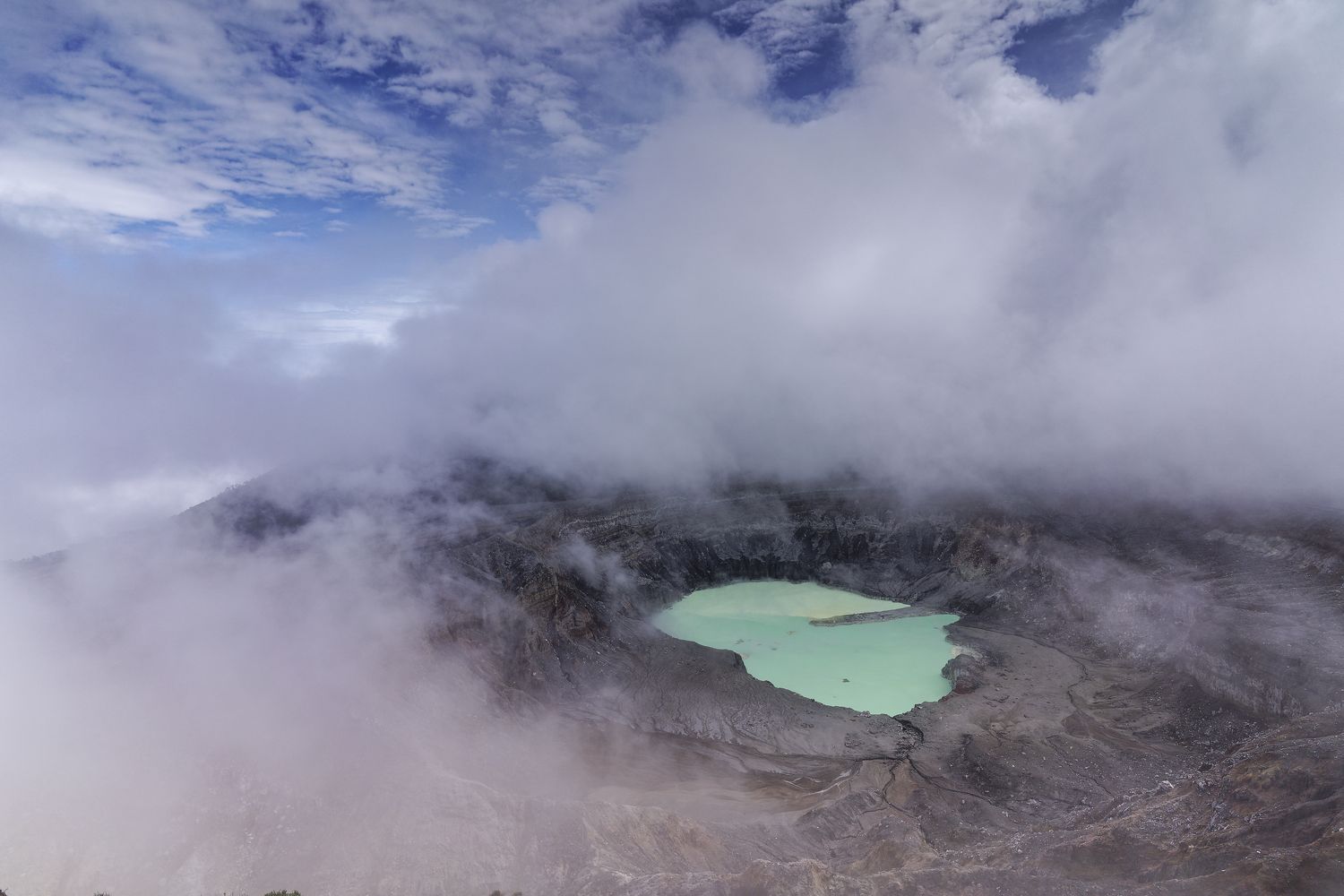
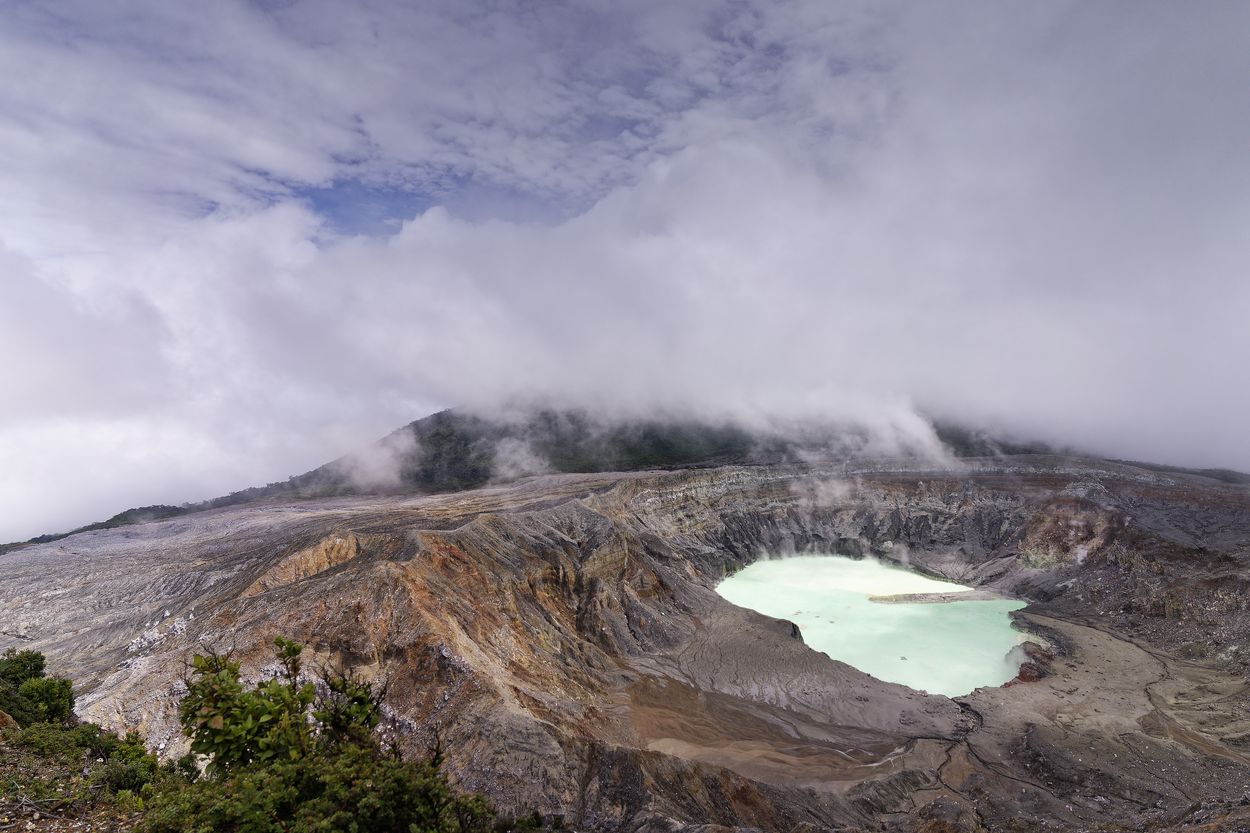
But deep down, I don’t know why, I had a feeling that things were going to change. We could see that the clouds were getting thinner and thinner, and talking to some of the local people we were told that at this altitude it could clear up very quickly. Just over an hour after arriving, we’re still waiting for the cloud curtain to open. The clouds became fewer and fewer, and every now and then we caught a glimpse of blue sky. We knew we might be lucky enough to see this famous crater lake in good weather. And then it happened, the long-awaited moment when the clouds decided to give us a glimpse of the crater. I’m like a child in front of a packet of sweets, both nervous and excited about what we’re going to see. The clouds are moving at breakneck speed and it’s obviously not easy to take pictures, but sometimes the crater reveals itself in all its immensity. It’s so beautiful, it’s been a long time since I’ve felt this sense of wonder when traveling in front of such a landscape, like a curtain opening in a theater to reveal the performers…
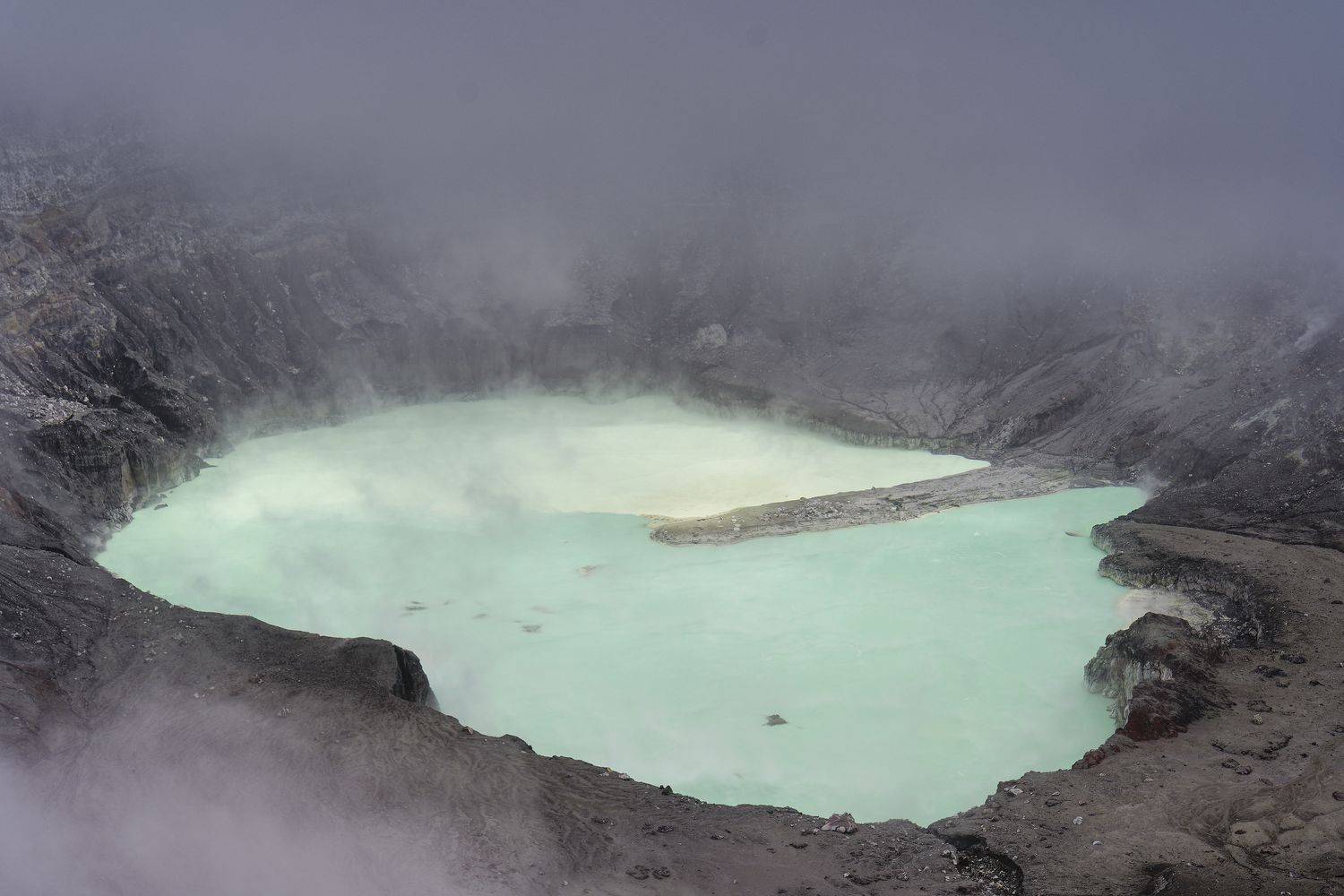
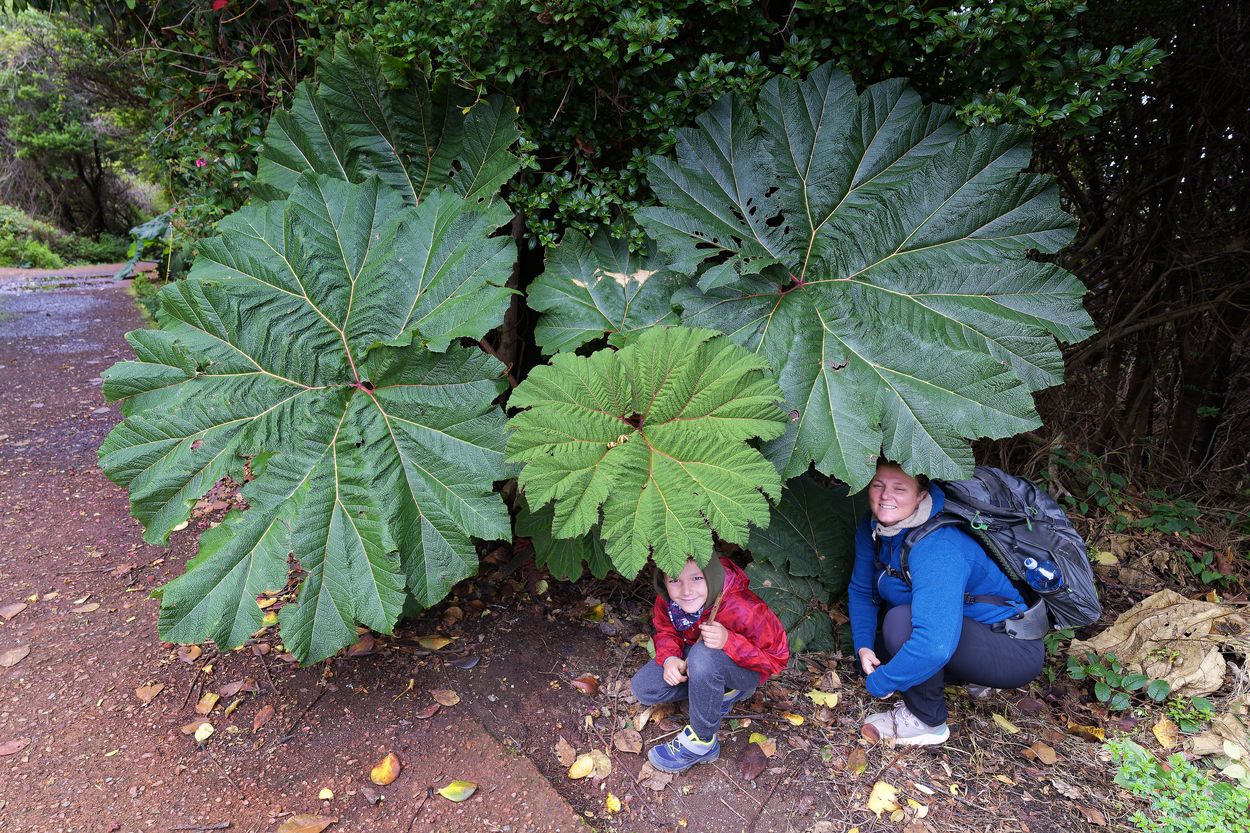
We spent about 30 minutes enjoying this completely lunar and panoramic landscape. The milky green crater is impressive to look at, and sometimes we’re even lucky enough to see the much whiter western part of the crater, which is easy to see on satellite photos. We moved over a bit to get some nice photos with the huge leaves in the foreground, which looked really good. It was a great moment, even though we were half frozen by the cold wind at this altitude (2500 m).
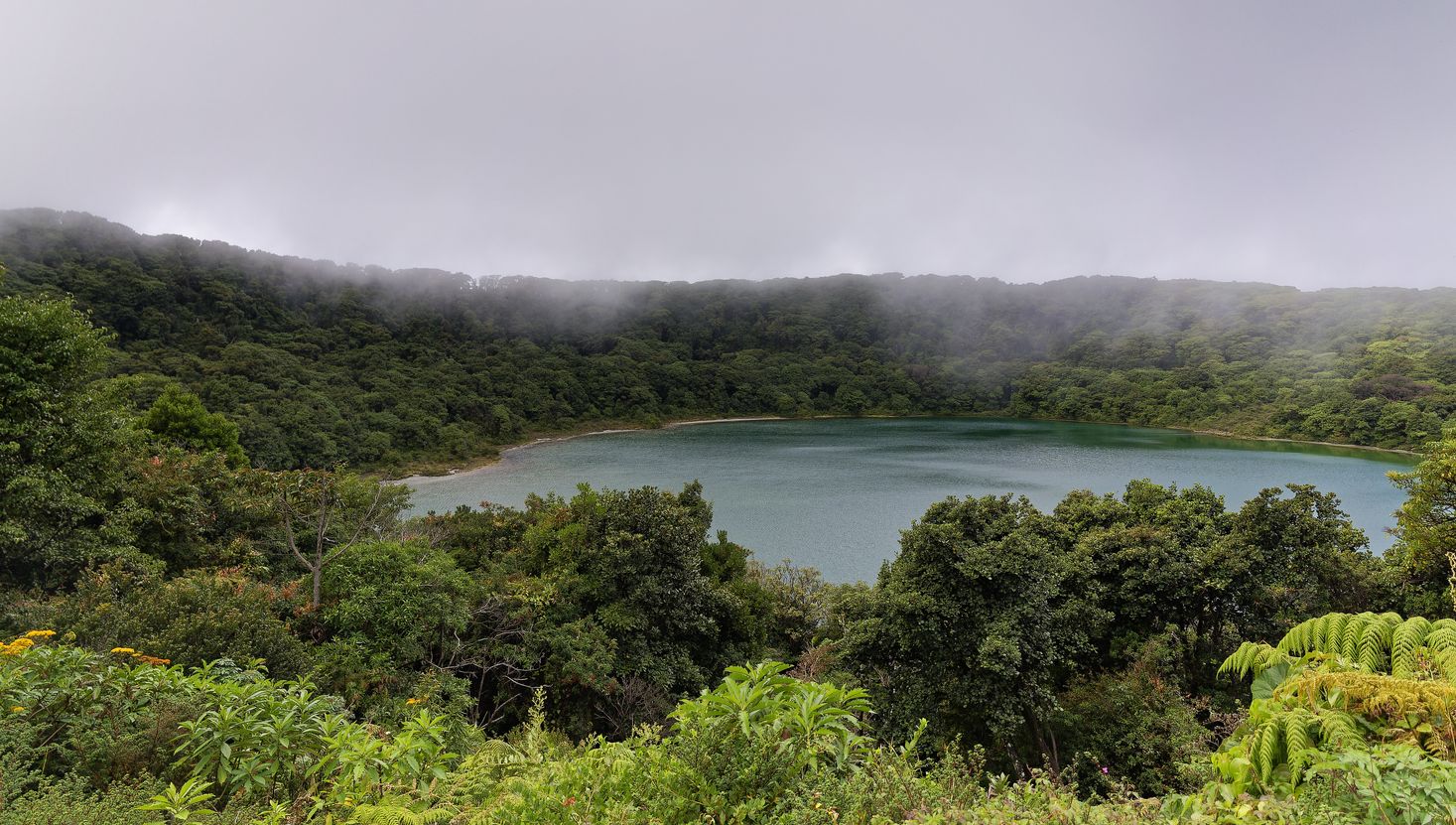
We then hiked down a narrow path to Laguna Botos, another crater lake right next door. It doesn’t have the same charm, but the walk through the undergrowth in a magical atmosphere is well worth the detour.

What can I say about those few days in the Bajos del Toro region?
I’ll end this article with a few personal words. We really enjoyed the region, which deserves to be explored much more than we did. The area is full of hiking trails and waterfalls to explore and, frankly, for nature lovers, it’s a little paradise. If you’re ever in the area, don’t hesitate to stop off for a few days and take in its wonders.
The Bajos del Toro region - Practical information
As usual, here’s some practical information about the area, although it’s not as easy as usual because it’s quite a big region.
How to get to Bajos del Toro?
I’m going to keep this short because it depends on where you’re coming from. From France, the cheapest flights are from Paris to the capital, San José. As always, prices vary greatly depending on the season and how many stopovers you want to make.
Once you’re there, as is often the case, the easiest way to get around is to hire a car or a camper van. I highly recommend the DiscoverCars website for finding a rental car. We found our car for the month, a 4×4, for around €1,800, which is still quite reasonable compared to other destinations.
Once in San José, it took us about 3 hours to get to Bajos del Toro. Google Map says 2 hours and 80 km, but it’s better to take your time. The road is winding, you don’t drive too fast and you’ll probably take your time to admire the breathtaking scenery!
Where to stay in the region?
There are plenty of places to stay in the area to suit all budgets. Here are some ideas for accommodation in the area.


For low budget (<€50)
- Hotel La Paz: Located 10 km from the Poas Volcano in Poasito, this place offers an excellent location, ideal proximity for visiting the Poas Volcano, comfortable rooms with appreciated facilities. The area is quiet and the restaurant has a very good reputation.
- Poas Volcano Rooms: Located in Poasito, the location is ideal, close to the Poas Volcano and only 15 minutes away from the Gardens of the Waterfalls of La Paz. The rooms are very well kept and very comfortable.
- Mangifera Hostel: This hostel has a friendly and welcoming atmosphere and is located in the heart of Grecia, right across from Parque Central. You can enjoy simple yet clean and comfortable rooms on site. Some rooms even have a patio overlooking the garden. This is one of the best value establishments around!
For medium budgets (€50-100)
- Hotel Mango Valley: Located in Grecia, this accommodation offers an exceptional experience with a warm welcome, idyllic and breathtaking views, a swimming pool and a very good quality breakfast. The rooms are equipped with kitchenettes. They offer comfort, tranquillity and magnificent views of the vegetation. It is also a sustainable establishment, with environmentally friendly practices.
- Cabaña Trojas Valverde Vega: Located in Trojas, this charming, well-equipped cabaña combines rustic and modern. The rooms are clean and comfortable, and although it’s a little difficult to get to, it’s an ideal place to relax with beautiful views of the mountains.
- Hotel San Vicente Hideaway: An exceptional setting with uninterrupted views of nature, this hotel is located in Quesada. The rooms, divided between the hotel, chalets and bubbles, offer a variety of accommodation experiences. You’ll love the peace and quiet, the walks to the waterfalls, the delicious meals, especially breakfast, and the secluded atmosphere!
Larger budgets (>€100)
- El Silencio Lodge & Spa Costa Rica: Located in Toro Amarillo, this tranquil retreat is situated at 1500m and offers elegant rooms overlooking the river and rainforest. There is an excellent restaurant, a very good spa, activities such as hiking and yoga, and tasteful decor.
- Hotel Finca 360: Located in Marsella, it offers an exclusive experience in the heart of the rainforest, with 360-degree panoramic views and delicious local cuisine. You’ll love the magical atmosphere, the spectacular and beautiful views and the gourmet quality of the food!
- Peace Lodge: Situated in Vara Blanca, this place will win you over with its swimming pool overlooking the valley, its excellent breakfast and the ease with which you can observe wildlife (Costa rican fauna and flora). The quality of the rooms is first class and the feedback has been excellent!
If you prefer to take a guide on this excursion around the crater and into the region, there are several such excursions available.
I’ll stop here for this article, in the hope that I’ve inspired you to look around. We continued our exploration and discovery of the country with a visit to the Mistico Arenal Hanging Bridges Park, one of the best Costa rican places.
We hope to see you soon.