Exploring Tenorio National Park
Last update: 06/12/2026
Our blog continues to grow thanks to you, our readers. This post may contain affiliate links, which means we can earn a small commission if you make a purchase through them, at no extra cost to you. This helps us to continue to bring you more and support our work!
As mentioned in our first article summarizing our month in Costa Rica, we were lucky enough to explore the country in July 2023. We began our trip in the Bajos del Toro region, home to the magnificent Poás Volcano, which I consider one of the highlights of our stay.
The second stop on our itinerary was the La Fortuna region, at the foot of the famous Arenal Volcano. Unfortunately, the kids weren’t feeling their best at that point, and neither were we. We nevertheless continued northwest toward Tenorio National Park. The park is famous for its unspoiled landscapes, lush vegetation, and striking turquoise waterfalls and rivers, especially the Río Celeste.
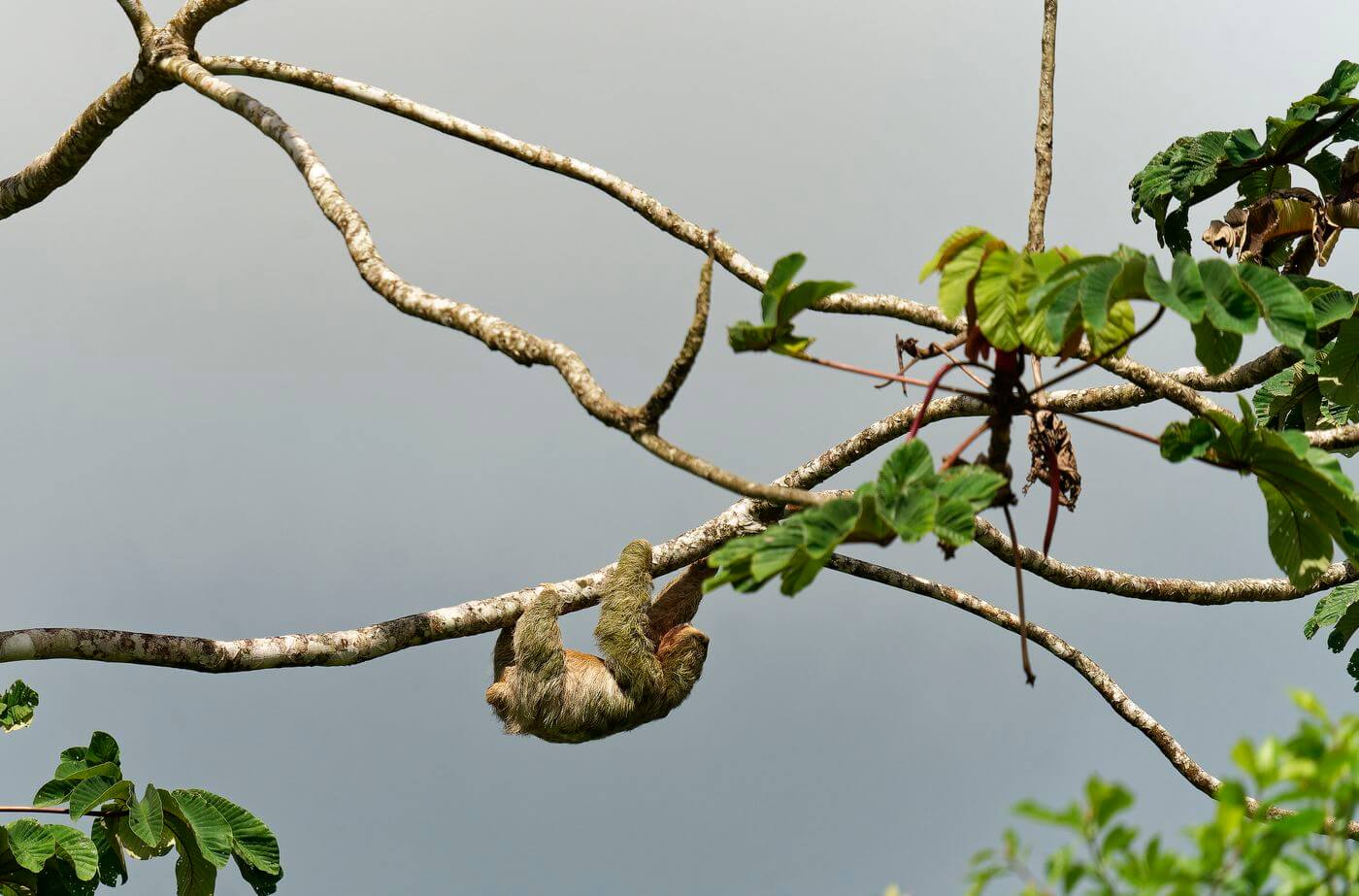
A lovely little anecdote: just before arriving in the area, we spotted two sloths in the trees. They were relatively close, and we were able to enjoy the moment in complete peace. It made us regret paying to see sloths from a distance at the well-known reserve in La Fortuna.
In this article, I hope to inspire you to visit by sharing our experience and a few photos of the area.
Discovering Tenorio National Park
We set off early in the morning from La Fortuna. It took us around two hours to reach our Airbnb, which was not far from Tenorio National Park. As I mentioned, Téo was really unwell. We even used the drive to arrange a remote consultation with a doctor, who prescribed antibiotics. While Louis and I headed off to explore Tenorio National Park, Mélanie decided to stay with him for the day so he could rest.
After settling into our two rooms—yes, we weren’t sharing this time, haha—we drove 15 minutes to the park entrance. Let’s be honest: seeing so many people arriving in the parking lot wasn’t exactly reassuring. At the same time, we already knew this was a very popular tourist destination. The funny thing is that there is almost nothing else around. The area is mainly known for its extraordinary turquoise waters.
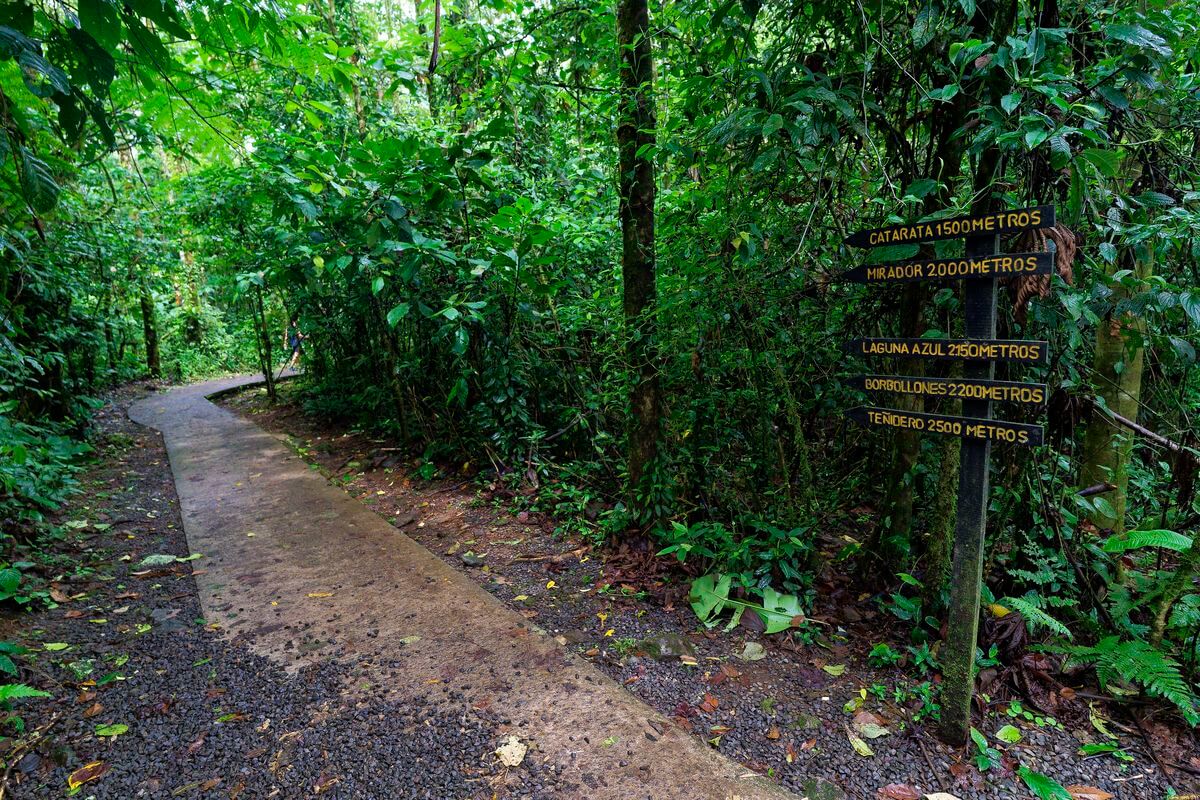

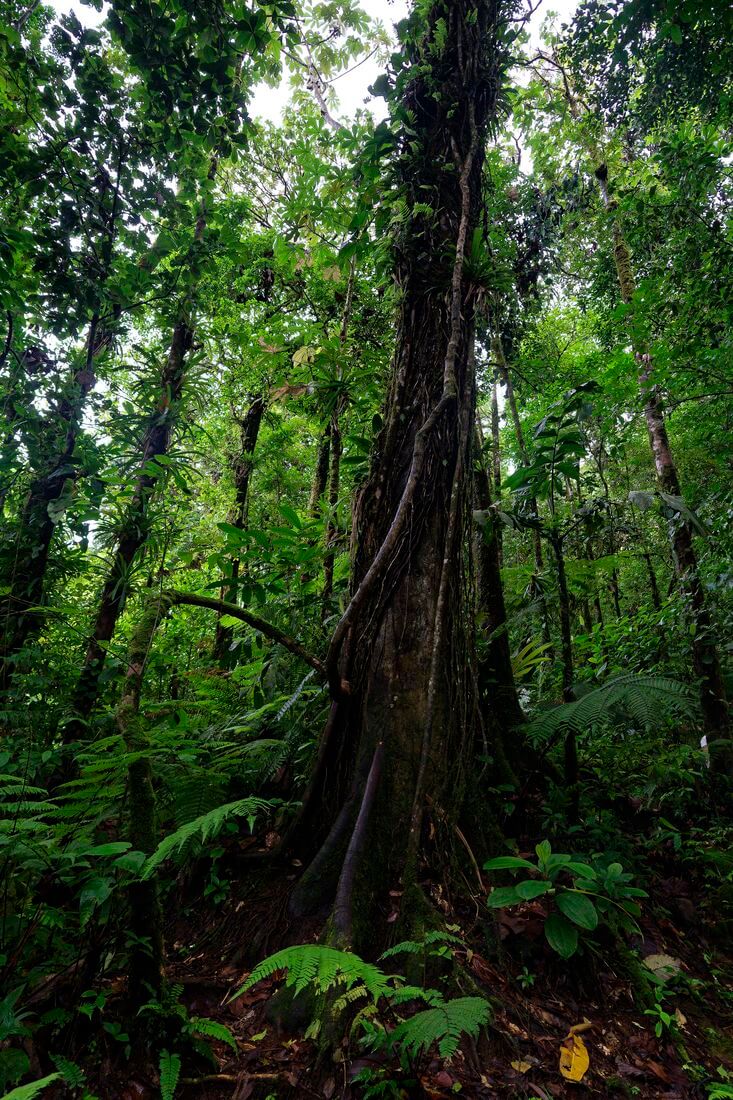
The first thing that struck us when we arrived was the heat and humidity. You could really feel both. If you manage to ignore the tourists around you, it is still a beautiful place. Everything was damp, soaked by the humidity and probably by the occasional rain shower. It was a shame, however, to have large groups of 15 or 20 people passing us while shouting. It spoiled the atmosphere a little, and I have to admit that exploring the area alone with Louis would have been wonderful. Then again, you can’t exactly privatize a national park, can you? Haha.
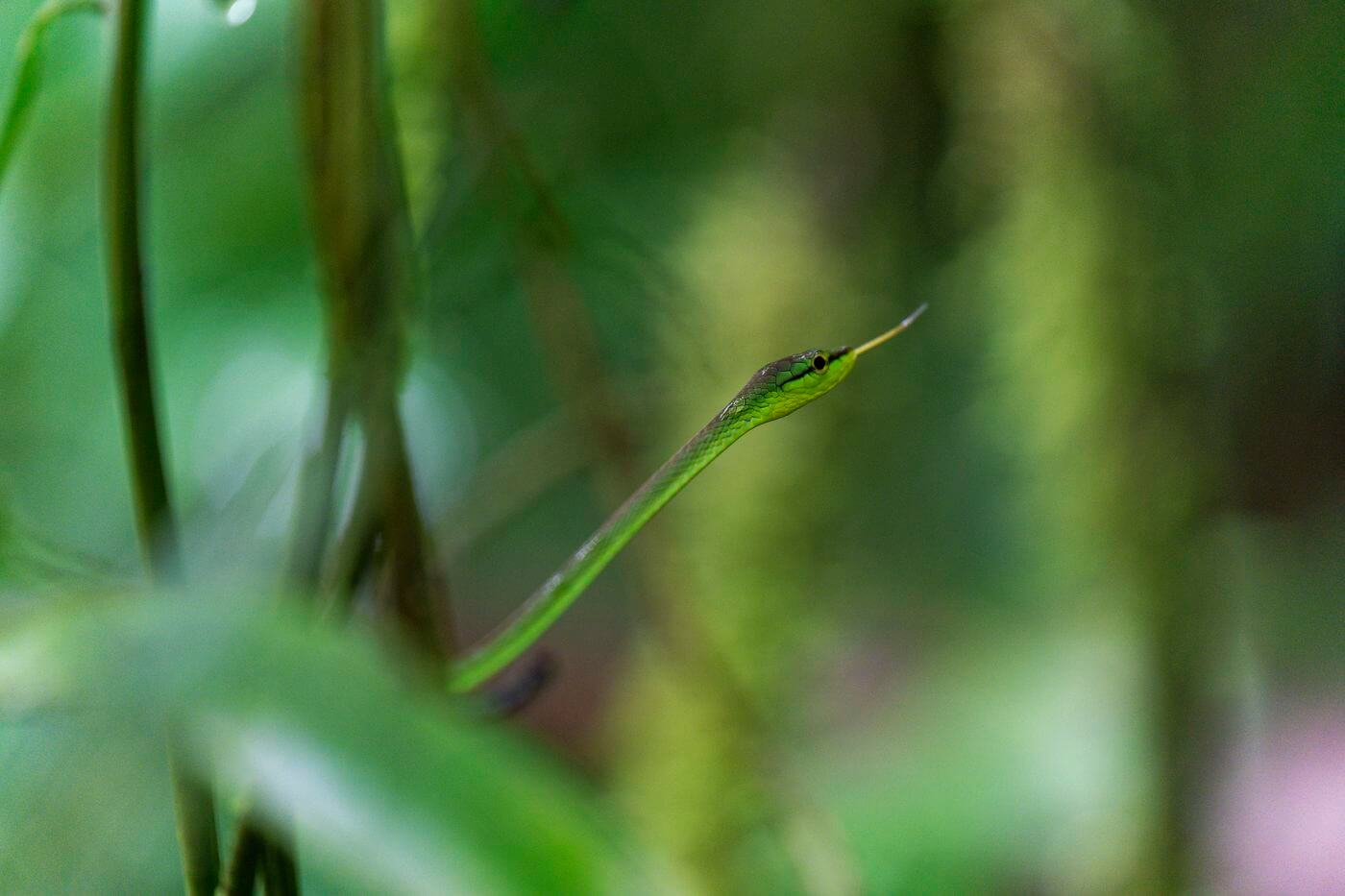
We slowly made our way through the tropical rainforest. We could hear all kinds of sounds around us, from insects to howler monkeys in the distance. After about 15 minutes, we stopped at a spot where a group of tourists had gathered around a guide. We immediately guessed there was something interesting to see. The guide pointed out a turquoise-green snake slithering through the bushes in front of us. Louis was beside himself with excitement, and I have to say it was the first time I had seen such a striking snake up close. We let the large group move on and took a quiet moment to watch the snake disappear into the forest.
After a 1.5 km walk, according to the sign, we reached the famous “Catarata,” the park’s waterfall. This is where the trail splits and where many visitors stop. The more determined hikers, like us, continue onward, plunging back into the dense rainforest. The heat was stifling, and there wasn’t a breath of air beneath the vegetation. Although we are used to living in the tropics, I have rarely experienced anywhere quite so humid.
From there, the path climbed fairly steeply through vegetation that remained as dense as ever, and I could tell that Louis was starting to tire. To be fair, I probably was too! We decided to continue toward the famous viewpoint, signposted 500 meters farther along, and above all toward Laguna Azul, the Blue Lagoon, one of the park’s best-known spots.
Louis was beginning to grumble. To be honest, he needed a little encouragement to keep going. We eventually reached the viewpoint, which unfortunately did not offer the spectacular panorama we had hoped for because the weather was poor.

From the Mirador—fortunately, if I can put it that way—the trail descended steeply toward the bottom of the valley. I enjoyed going down, but just thinking about having to climb all the way back up already made my legs ache. There were lots of uneven steps that were particularly hard on the legs. It reminded me of some of the hikes I did when I was younger, deep in the Norwegian countryside!
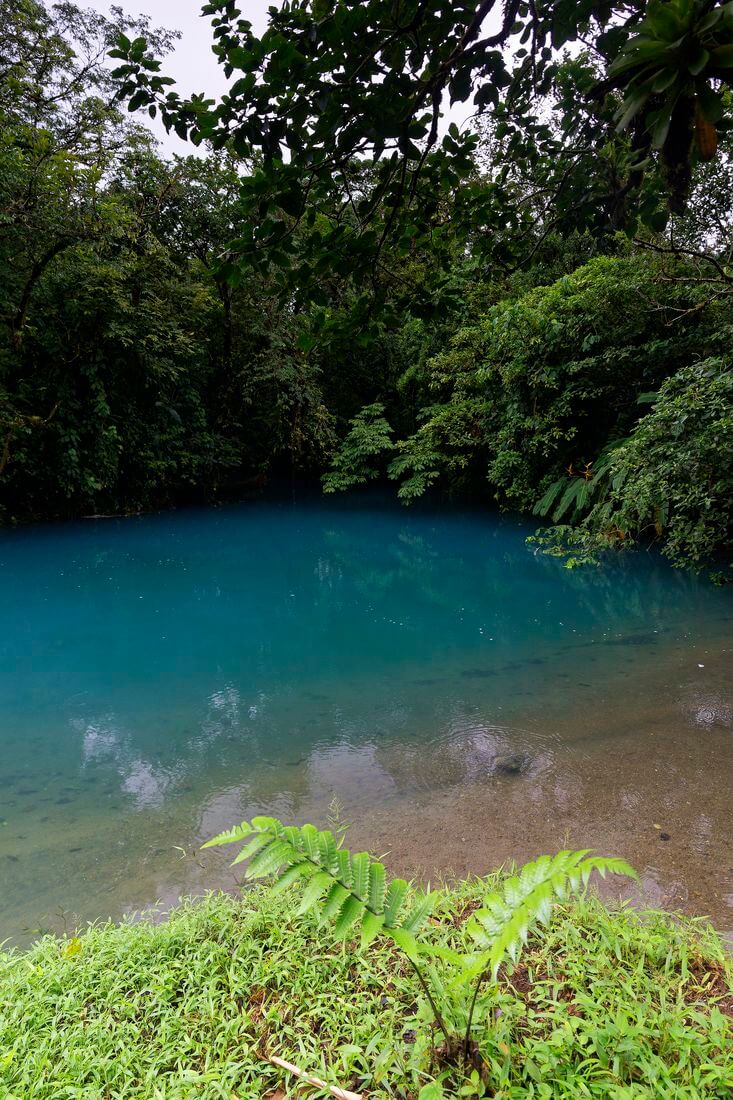
At the bottom of the steps, the trail continued, and we soon reached the famous Laguna Azul. It was understandably a little crowded, since it is one of the main highlights of the hike, but it was still a beautiful place to explore. A small viewing platform stands beside the lagoon, whose turquoise water reminded us of the colors of a Polynesian lagoon. It was just a shame that the sky was gray, as the turquoise shade would undoubtedly have looked even more intense in the sunshine.
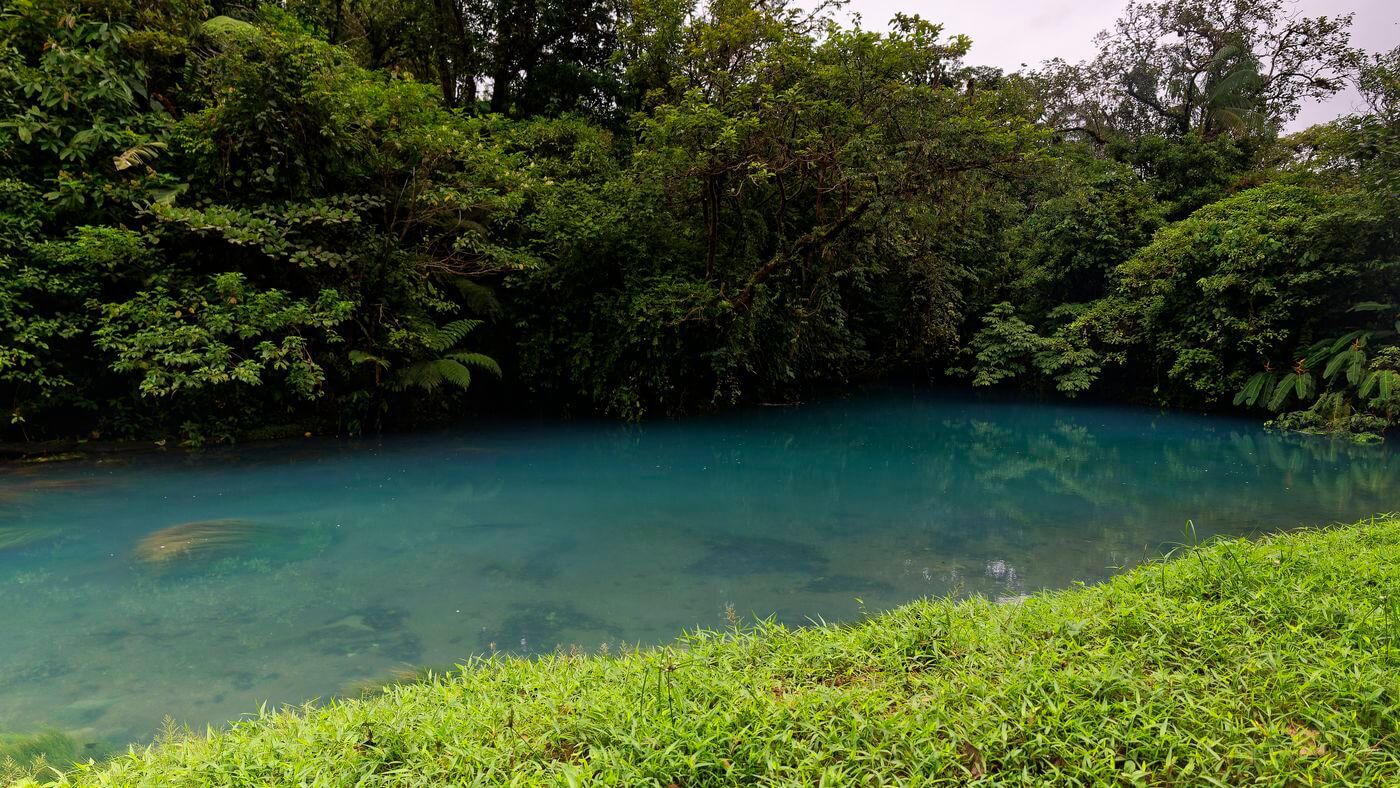
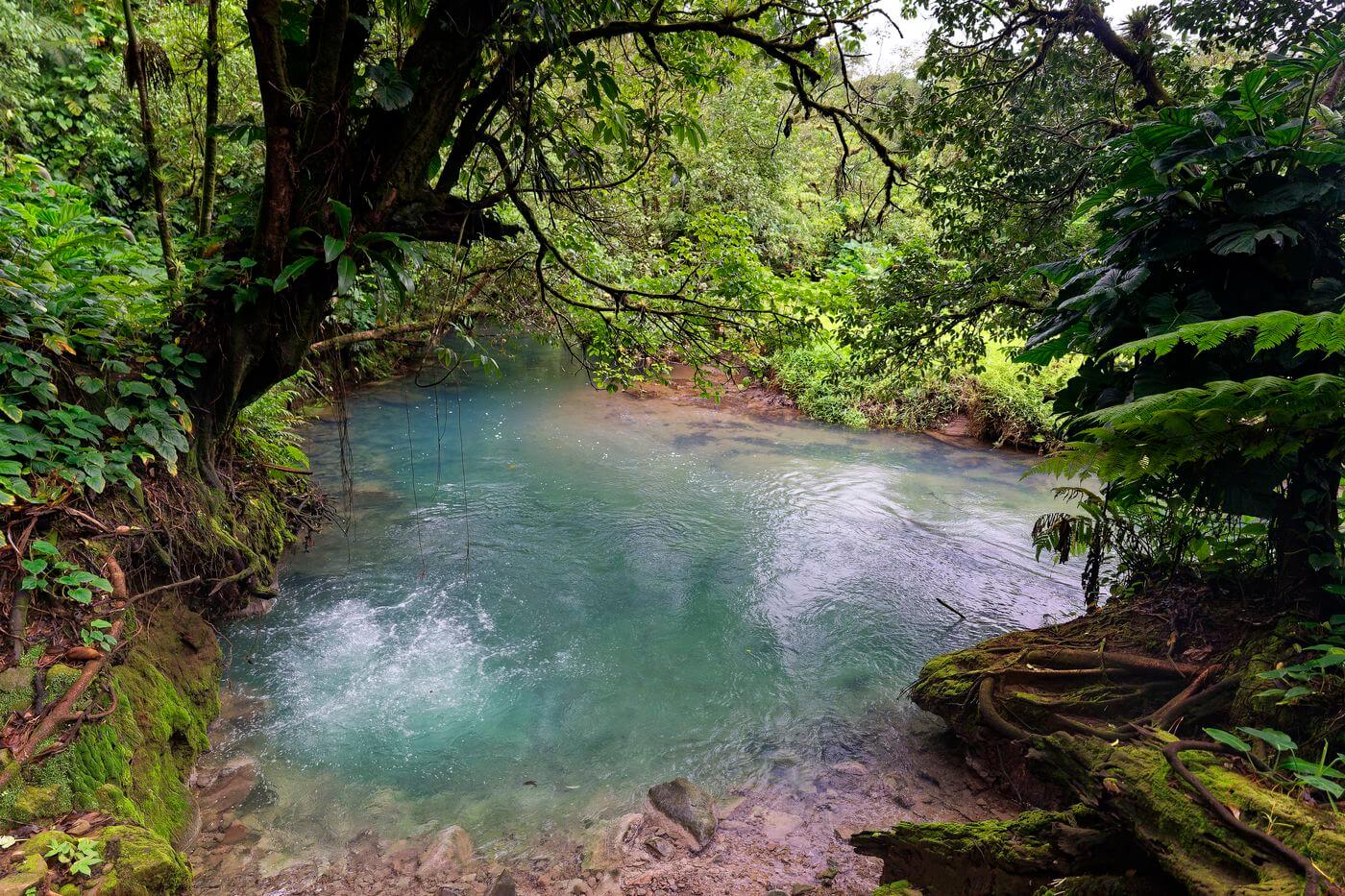
Louis and I continued to the famous “Borbollones” site. This is where boiling water bubbles directly into the river. You can see it bubbling like water in a saucepan, which is pretty impressive. Apparently, it emerges at around 95°C, so swimming is obviously out of the question, haha. For reference, this area lies close to the point where the two rivers combine to form the Río Celeste. The Quebrada Agria and Río Buena Vista meet nearby.
We didn’t continue any farther, although the trail carries on toward Los Teñideros on the Río Celeste. Looking back, I think that was a mistake, as the path continues deeper into the valley and includes a small wooden bridge over the stream and its beautiful turquoise water. The area looks stunning. You can apparently watch the turquoise water flowing beneath you, which would have made a fantastic photograph. Still, it wasn’t the end of the world.
Louis and I slowly made our way back, taking our time because we were both tired. With Téo being ill and none of us sleeping properly, I have to admit that I was feeling pretty exhausted too.
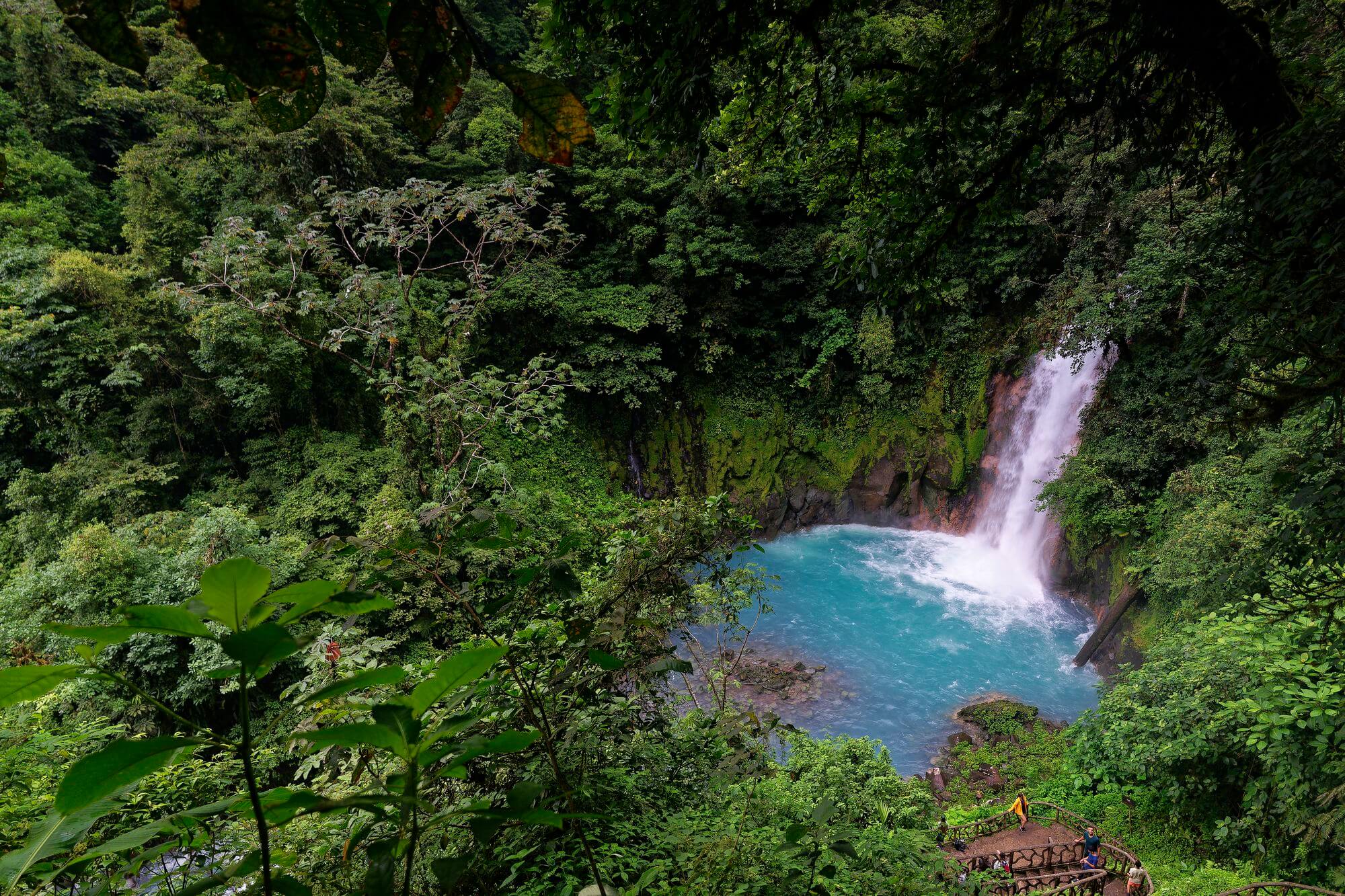
On the way back, we stopped at the famous waterfall we had passed earlier. A long flight of steps leads down toward the base of the falls, although the view from above is arguably even better. From there, you can watch the turquoise water plunge almost 30 meters into a beautiful blue-green pool below. Unfortunately, I have to admit that the atmosphere felt a little like Disneyland, with everyone taking selfies and posing for photos. We didn’t stay for long. Instead, we headed back to meet Téo and Mélanie, who were waiting for us.
Overall, it was a beautiful and fascinating hike. The scenery was impressive, and the vegetation was wonderfully lush. We were also lucky enough to see monkeys up close on the way back. If you are visiting the area, Tenorio National Park is definitely worth exploring.
Tenorio National Park: Practical Information
As usual, here is everything you need to know before visiting Tenorio National Park.
How to Get There
Of course, the first part of your journey depends on where you are flying from. As I often recommend, you can compare flights to Costa Rica on Skyscanner, which allows you to check fares from several departure cities. From France, the cheapest options are generally flights from Paris to San José.
Once you arrive, renting a car is by far the most practical option. We used the DiscoverCars website, which allows you to compare a wide range of rental companies and find a vehicle suited to your trip. For reference, we managed to rent a 4×4 for one month for just under €2,000.
From there, the journey depends on your itinerary. If you are traveling from La Fortuna, Tenorio National Park is around a two-hour drive away. Here is the route. From San José, allow at least four hours.
Admission, Opening Hours, and Prices
When we visited in July 2023, the park was open from 8 a.m. to 2 p.m., so bear in mind that it closes relatively early. The entrance fee was US$10 per person. A large paid parking lot is available on-site and cost 2,000 colones when we visited.
It is also worth noting that there are a few small snack bars and restaurants beside the parking lot. You can also buy fruit and other takeaway items from the small roadside vendors, which is quite convenient.
According to the information I found, the national park limits admission to 1,000 visitors per day, with no more than 500 people allowed inside at the same time.
When Is the Best Time to Visit?
To see the turquoise water at its most vibrant, I would naturally recommend visiting on a sunny day, which unfortunately was not the case for us. Even so, we enjoyed the park and still found the color of the water beautiful. Local travel specialists often recommend visiting between February and April.
Where to Stay
There are plenty of places to stay near the park, with options to suit different tastes and budgets. Here are a few quick recommendations if you are looking for accommodation in the area.
You can easily browse the accommodation available around Tenorio National Park by following this link.
Budget accommodation (< €50)
- Cabinas Cascada Rio Celeste: Located in Bijagua, this property is ideally situated just 800 meters from the entrance to Tenorio Volcano National Park. It offers spacious rooms with balconies and beautiful mountain views.
- Posada Rural Río Celeste: This property offers rooms for two to five guests, each with a patio and beautiful tropical surroundings. You will be surrounded by nature, peace, and quiet—the perfect setting for a relaxing stay.
- Cabinas Río Celeste La Amistad: This property also has an excellent reputation and is located very close to the park. The cabins are comfortable, the staff are particularly welcoming, and the food receives excellent reviews. A very good place to stay.
Mid-range accommodation (€50–100)
- Rincon Verde: Here, you will find comfortable cabins surrounded by nature. The food is said to be delicious, and the swimming pool is a welcome bonus if you feel like cooling off. A good choice for nature lovers.
Higher-end accommodation (> €100)
- Hideaway Rio Celeste Hotel: If you are looking for a luxurious experience in the heart of the rainforest, this is probably one of the best places to stay. It offers upscale bungalows and a beautiful swimming pool, all set deep within an exceptional forest environment.
- Finca Amistad Cacao Lodge: This property offers an interesting and authentic experience, with eco-friendly wooden bungalows in a beautiful setting. You will also have the opportunity to take part in a wide range of activities on-site.
Learn More About Tenorio National Park
Before ending this article, I wanted to share a few additional facts about the park that you may find interesting.
- As we have seen, the park is a genuine natural treasure. It offers visitors the chance to explore lush landscapes, follow a network of hiking trails, and discover the characteristic flora and fauna of the region.
- The turquoise water of the Río Celeste is the result of a natural volcanic phenomenon linked to the geological composition of the area. In 2013, researchers from the University of Costa Rica found that the striking color is caused by a unique combination of volcanic minerals, including silicon, oxygen, and aluminum. These minerals are present in the waters of the Quebrada Agria and Río Buena Vista, both of which originate near Tenorio Volcano. When the two rivers meet at Los Teñideros, a distinctive site in the park that we did not visit, changes in the mineral particles cause sunlight to scatter in a way that gives the Río Celeste its famous turquoise hue.
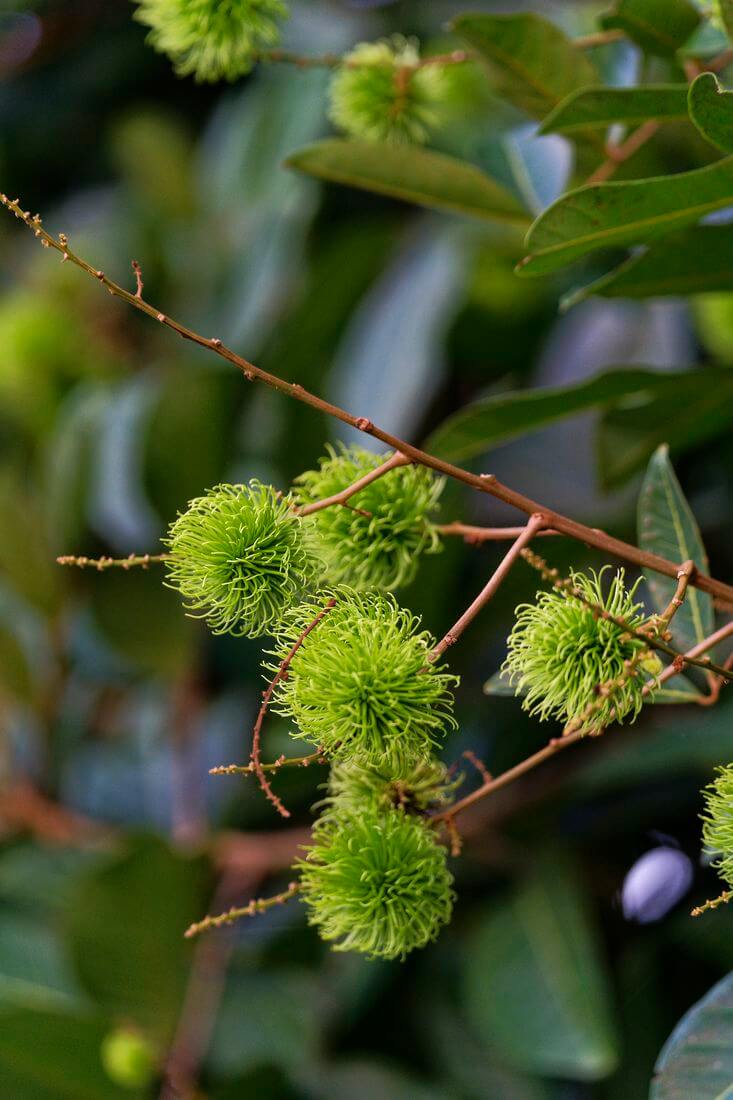
- The area is characterized by lush vegetation, mainly premontane rainforest and cloud forest. The altitude along the park’s trails ranges from around 600 to 800 meters. The vegetation includes palms, heliconias, giant ferns similar to those found in New Zealand, orchids, and numerous bromeliads, which are also common here in Guadeloupe.
- In terms of wildlife, the park gives visitors plenty of opportunities to observe animals. Although access is regulated to minimize human impact, I still found the park fairly crowded during our visit. According to my research, the area is home to numerous species of fish, amphibians, reptiles, and mammals. Visitors may spot many kinds of birds, as well as tapirs, jaguars, and even pumas. Other emblematic animals include margays, agoutis, ocelots, and white-faced capuchins. The park is also home to an impressive variety of snakes. Frankly, I would have liked to see more of them, but with all the noise from visitors, I imagine they do not reveal themselves quite as easily as you might hope.
That brings me to the end of this article about exploring Tenorio National Park. I hope it has inspired you to visit.
If you would like to discover another stop from our Costa Rica trip, take a look at our hike through Mistico Arenal Hanging Bridges Park, near the town of La Fortuna and at the foot of Arenal Volcano.
See you soon for more articles about Costa Rica.