Exploring the Bajos del Toro Region
Last update: 06/12/2026
Our blog continues to grow thanks to you, our readers. This post may contain affiliate links, which means we can earn a small commission if you make a purchase through them, at no extra cost to you. This helps us to continue to bring you more and support our work!
In a recent article, I shared our complete month-long itinerary through Costa Rica, a tropical paradise teeming with wildlife, including sloths, howler monkeys, frogs, snakes, hummingbirds, toucans, quetzals, and iguanas. I’m now picking up my pen again to tell you about the Bajos del Toro region. It was the first area we explored during our trip to Costa Rica, a Central American country, and also one of the places we enjoyed the most. Although the weather wasn’t particularly kind to us, the region’s mountainous landscapes and lush vegetation made it a fascinating area to explore.
In this article, I’ll take you to waterfalls with water as blue as a tropical lagoon, share one of my hikes with Louis, and, above all, introduce you to the magnificent Poás Volcano.
I didn’t want to divide the region into several separate articles, as all these places are relatively close to one another. If you are visiting Bajos del Toro, I think it is well worth exploring several different sites in the area.
So, let’s begin this short travelogue through the region. In the meantime, if you are looking for another remarkable place to explore, take a look at our visit to Tenorio Volcano National Park.
Hiking to the Blue Falls of Costa Rica
We reached this beautiful mountainous and volcanic region on the same day we landed in Costa Rica. We had booked our first Airbnb for the first three nights of the trip, and we weren’t disappointed. It was a charming little apartment, just large enough for the four of us, with a lovely garden and a river running through the property. The setting was peaceful and quiet, and it was the perfect introduction to Costa Rica. Even though the sky looked threatening, with plenty of mist and rain, we were simply happy to be there.
We studied the map to see what there was to do in the area: waterfalls, hiking trails, and the main attractions in the region. We decided to visit the “Blue Falls of Costa Rica,” a place known for its succession of beautiful turquoise waterfalls. Some of you may smile, but an 8 a.m. start in this high-altitude region felt surprisingly chilly.
We set off in light rain, which was hardly surprising given the humidity in the area. After paying the entrance fee of US$15 per adult and US$7.50 per child, we headed toward the start of the trail, located a little farther down. We arrived when the site opened and only encountered one large group of tourists. We let them go ahead so we could enjoy a little more peace and quiet. The beginning of the hike immediately immersed us in the atmosphere of the region. It was foggy, damp, and covered in moss and lichen, creating an almost otherworldly landscape. We followed a well-maintained 4×4 track, and, as luck would have it, the clouds gradually lifted to reveal blue sky and sunshine as we approached the famous waterfalls.

The children were delighted to be there, discovering a new country, a new place, and a new language—in short, they were simply happy to be traveling during the school holidays. After a good half-hour walk, we reached a plateau where a guide appeared to be waiting beneath a small shelter. As far as we understood, he explained that he would accompany us for the rest of the visit. Let’s be honest: our Spanish was more than a little rusty!
We set off with him to discover the first waterfalls. A short descent into the bottom of the valley gave us our first proper glimpse of the area. Although the sun had not yet fully appeared, the turquoise water was already striking. It was wonderful to see such an intense color contrasting with the lush green vegetation around it. We crossed the river on a metal bridge, and directly ahead of us stood a magnificent waterfall plunging into a beautiful pool.
We spent around an hour exploring several waterfalls in the area. I enjoyed setting up my tripod and taking long-exposure photographs of the scenery. The entire site was extremely photogenic, and it was a real pleasure to photograph.
We decided not to continue toward the more remote waterfalls because the children were starting to tire by late morning. Reaching them would have required considerably more walking and possibly carrying Téo on my back. My camera bag already weighed almost 10 kg, so I wasn’t particularly eager to add another 15 kg to my shoulders, haha. In any case, we had already seen the main highlights.
We spent the afternoon driving along the small roads in the region in search of viewpoints, but unfortunately, the weather remained fairly poor that day.

Hiking to Tesoro Escondido Waterfall
The following day, Louis and I decided to explore the famous Tesoro Escondido Waterfall. As on the previous day, the weather was far from ideal, and the possibility of a heavy downpour deep in the rainforest was very real—fingers crossed! After driving past the entrance several times, we eventually found the parking lot providing access to the waterfall.
Unfortunately, as I discovered throughout our trip to Costa Rica, you often have to pay to park. I won’t launch into a full-blown rant here, as that isn’t the purpose of this article, but it was one of the things that genuinely disappointed me during our stay. You seem to have to pay for every little activity: parking, visiting a waterfall, exploring a particular site, and so on. Put simply, you feel as though you are pulling out your credit card every few miles.
Personally, I prefer the system used in countries such as the United States or Canada. You pay an entrance fee to a national park, for example, and can then spend several days hiking and exploring without having to think about additional charges every step of the way. The initial price may be higher, but for me, it makes a real difference to the overall travel experience. Anyway, rant over!
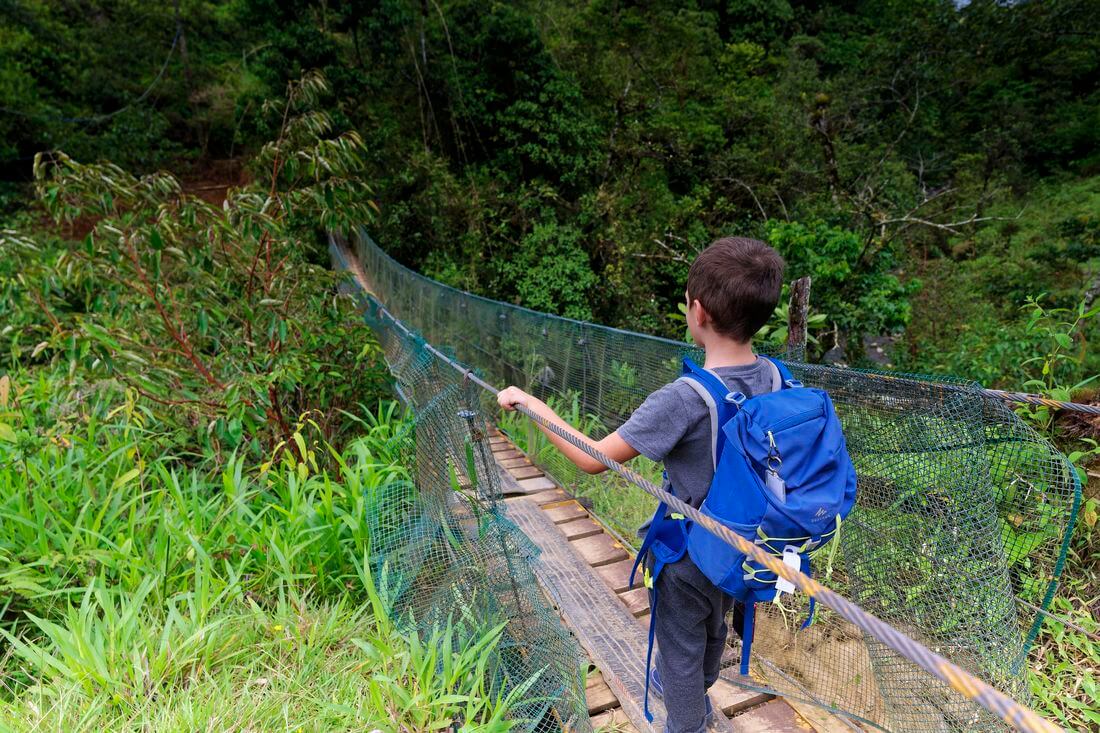
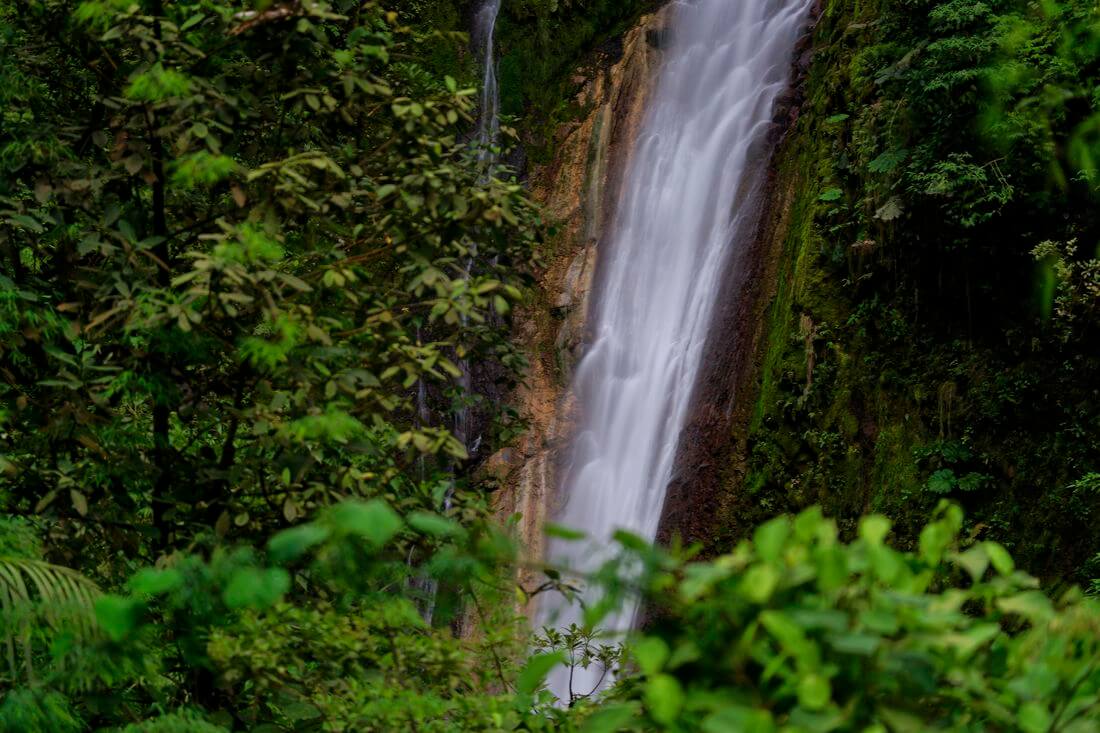
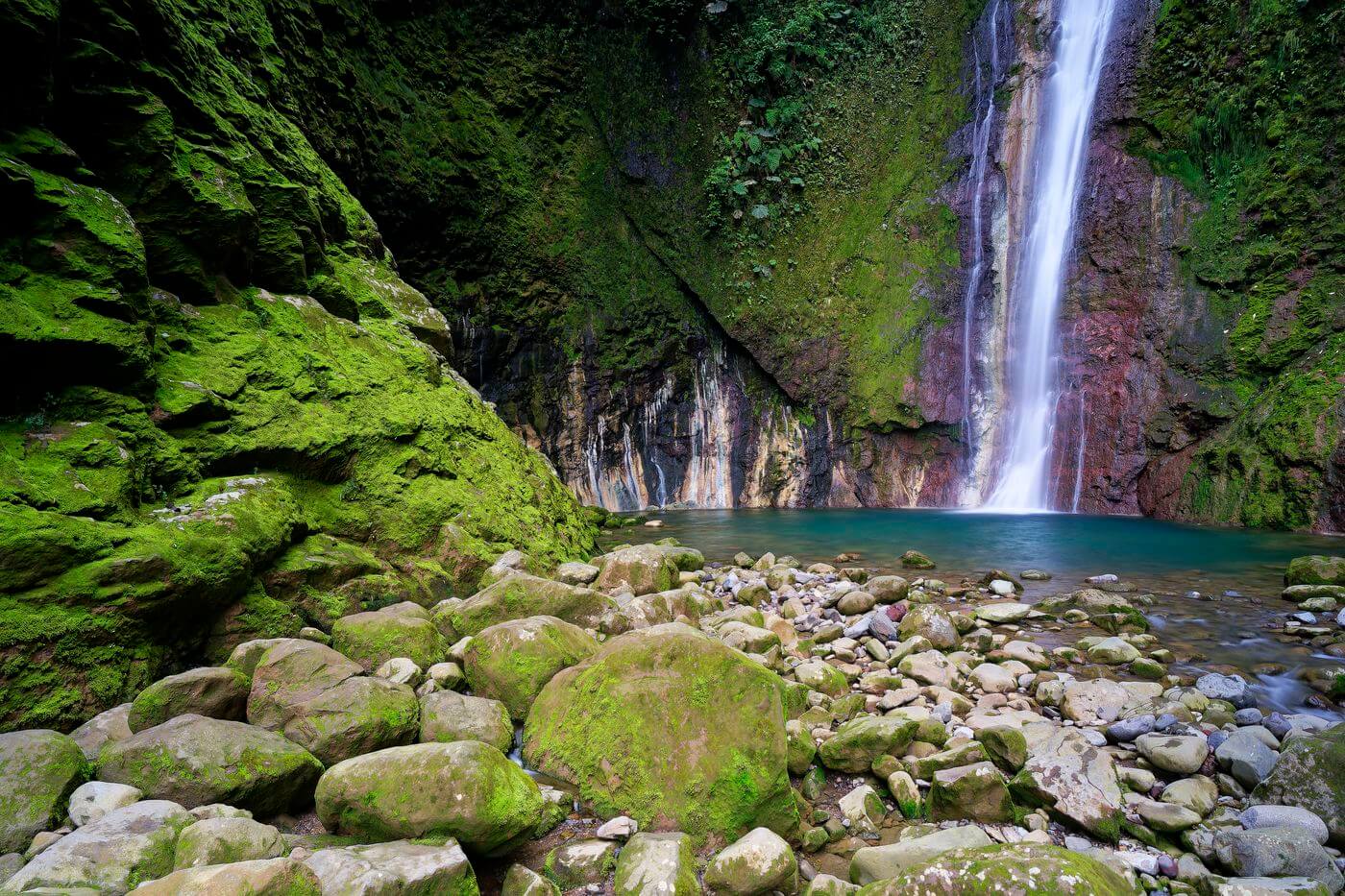
In any case, I took advantage of this time alone with Louis to explore the valley. The hike began in style, as we first had to cross an old wooden bridge suspended above the void, haha. Louis was thrilled. We continued along the trail, which led deep into the rainforest. Some sections passed through impressive passages carved directly into the rock.
We walked for around half an hour before reaching a fairly open grassy plateau. From there, we left the main trail and descended into the valley toward the waterfall. We could already hear it roaring in the distance. It is one of the largest and most impressive waterfalls in the region. After around an hour of walking from the trailhead, we finally reached the riverbank and crossed another wooden bridge suspended above the water. For a brief moment, we caught sight of the majestic waterfall in the distance.
We continued for another 10 minutes or so, hoping to get as close as possible to the foot of the waterfall and its magnificent pool. It is difficult to describe just how impressive it was, both because of the deafening sound and the spectacular setting. The waterfall lies at the bottom of a valley, surrounded by a vast rock face covered in vivid green moss. The scenery was magnificent.
Louis and I stopped for a while to take a few long-exposure photographs and simply enjoy the surroundings. There were no crowds, and although the weather could have been better, we felt completely alone in paradise.
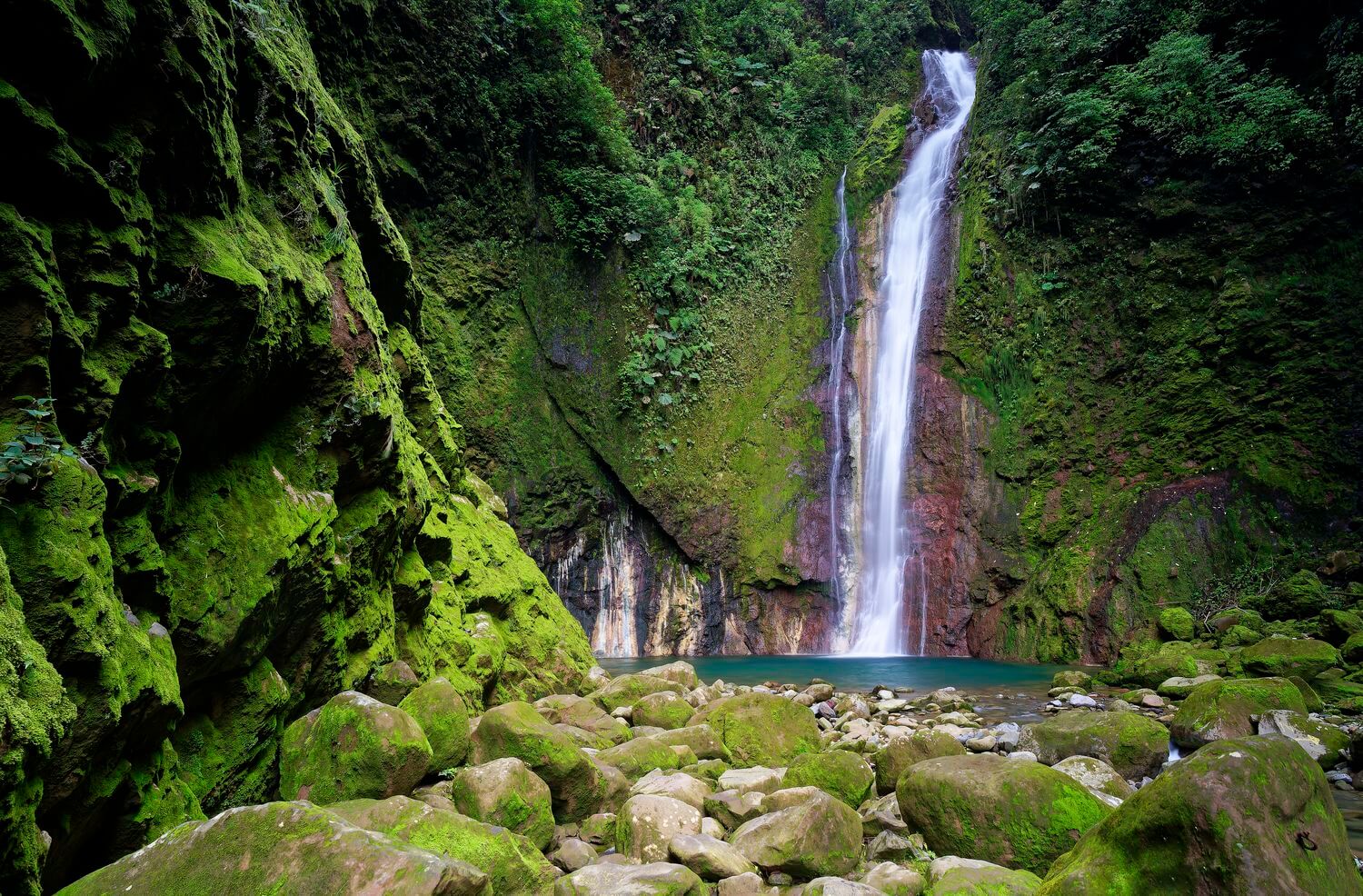
We slowly made our way back to Mélanie, who had stayed at the Airbnb with Téo so he could rest. We also experienced an entire day of rain and fog during our stay in the region, which prevented us from exploring several other places. It was a shame, but that is simply part of traveling.
Visiting Poás Volcano
The day before we left the region, we booked entry to Poás Volcano National Park. It was around a two-hour drive east of our Airbnb—we tend to drive rather slowly, as you may have noticed! This volcano is one of the best-known in Costa Rica. It is also one of the country’s most active stratovolcanoes and has erupted several times over the past century. We had seen photographs of the site, including its famous turquoise crater lake, and we were eager to experience it for ourselves.
We left our Airbnb in Bajos del Toro at 5 a.m. The children were still half asleep, which was probably for the best. We headed inland along a winding road that climbed steadily up the slopes of the volcano. We arrived at 7:30 a.m., half an hour before the park officially opened at 8 a.m. Like the children, we were incredibly excited about seeing the magnificent crater.
Unfortunately, as had been the case on several previous mornings, the weather was not on our side. A light drizzle greeted us when we arrived. After passing through the entrance controls, we parked the car and followed the paved path toward the crater. Unsurprisingly, when we reached the famous viewpoint, we could barely see 10 meters ahead of us, haha.
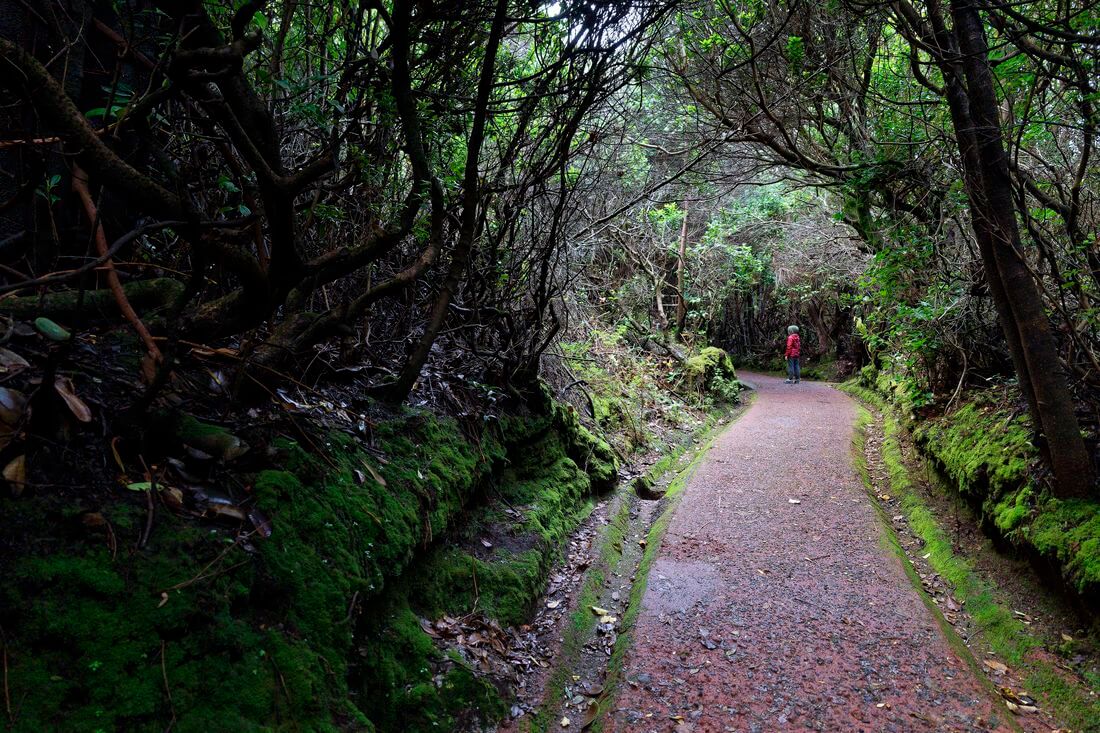
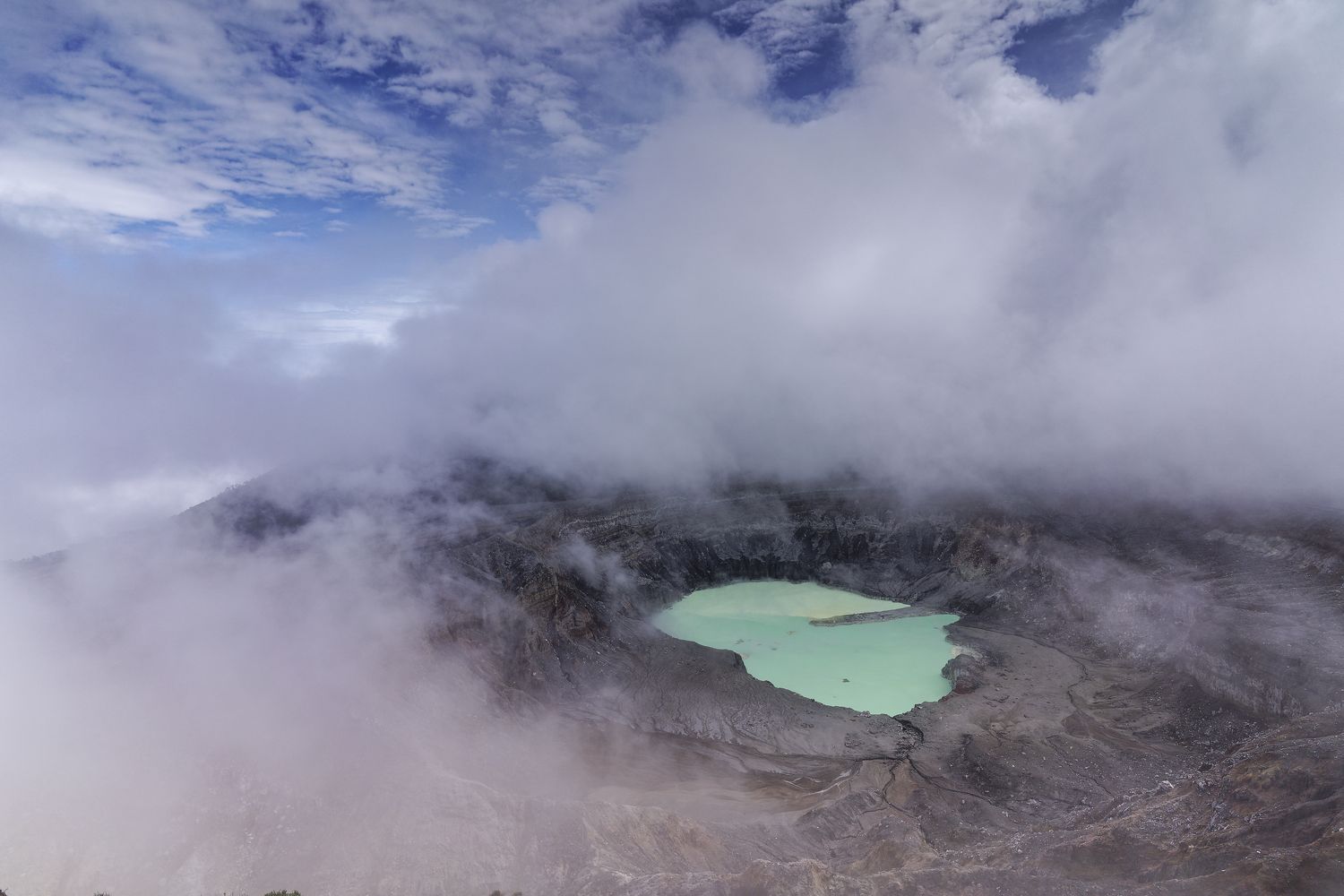
Still, deep down, I had a feeling that the conditions might improve. We could see the clouds gradually thinning, and some of the local visitors told us that the weather could change extremely quickly at this altitude.
More than an hour after arriving, we were still waiting for the curtain of cloud to open. The fog slowly became less dense, and every now and then, a patch of blue sky appeared above us. We began to believe that we might actually be lucky enough to see the famous crater lake in clear conditions.
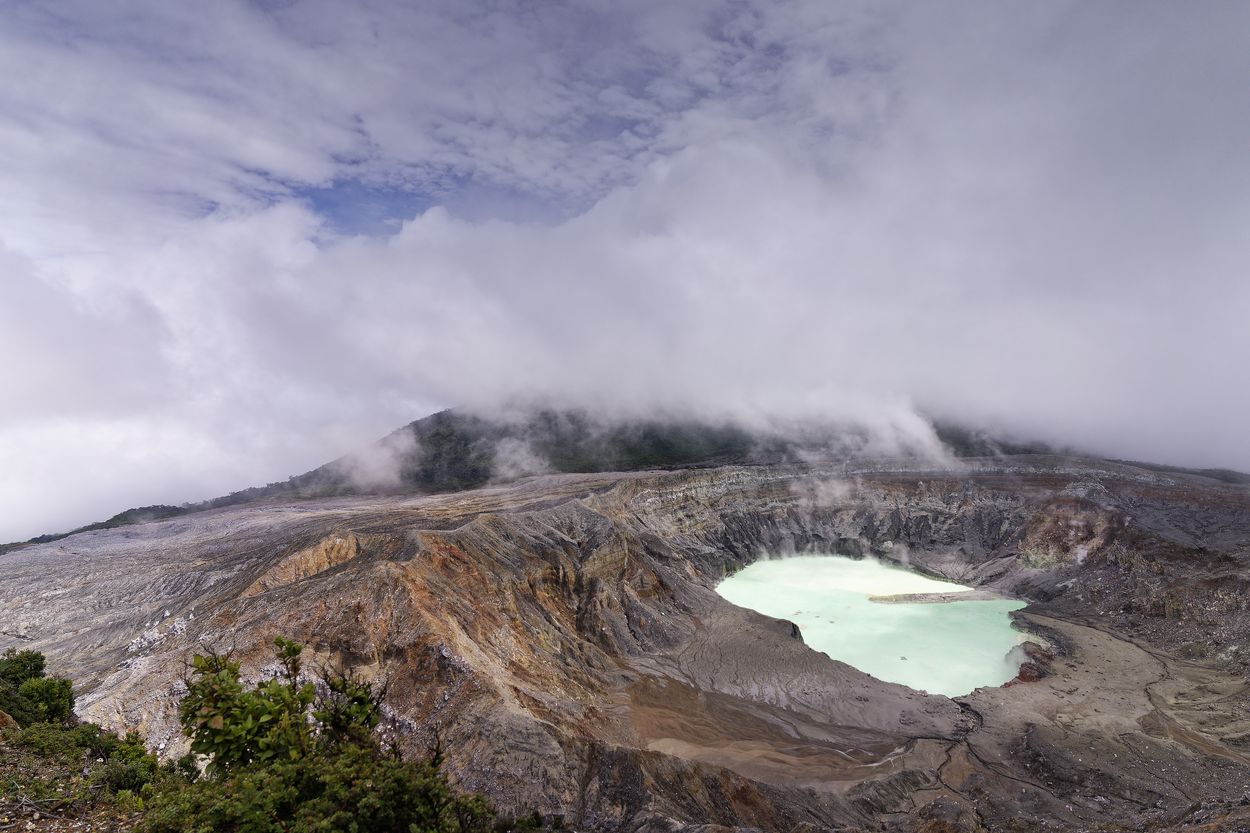
Then, at last, it happened. The clouds briefly parted and gave us our first glimpse of the crater. I felt like a child staring at a bag of candy, nervous and excited about what was about to appear. The clouds were moving at incredible speed, making photography rather challenging, but every so often, the crater revealed itself in all its immensity.
It was breathtaking. It had been a long time since I had felt such a powerful sense of wonder while traveling. Watching the landscape appear through the clouds was like seeing a theater curtain slowly rise to reveal the performers on stage.
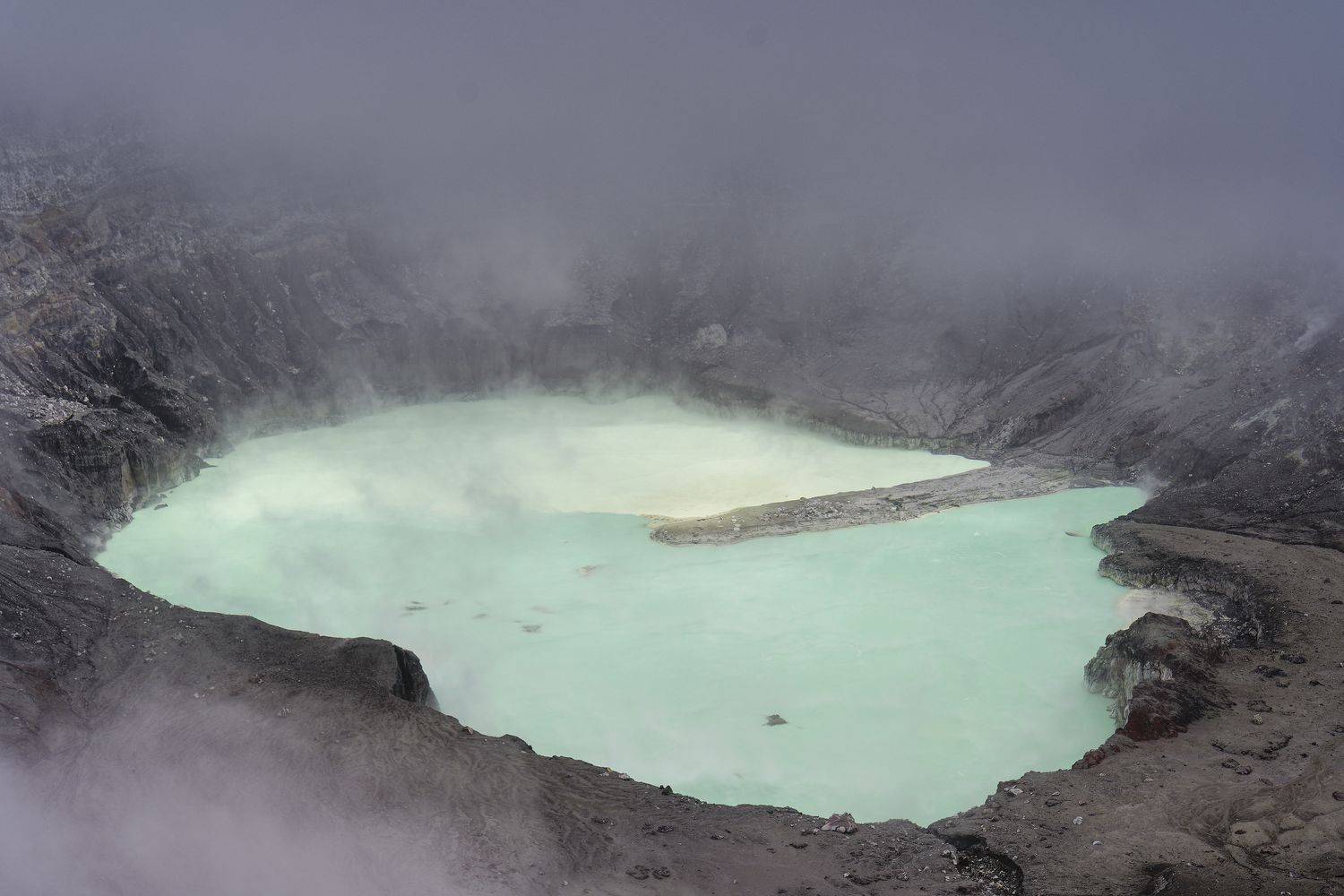
We spent around 30 minutes admiring this lunar, panoramic landscape. The crater’s milky green lake was impressive, and every so often, we were also lucky enough to glimpse the much paler western section of the crater, which is clearly visible in satellite images.
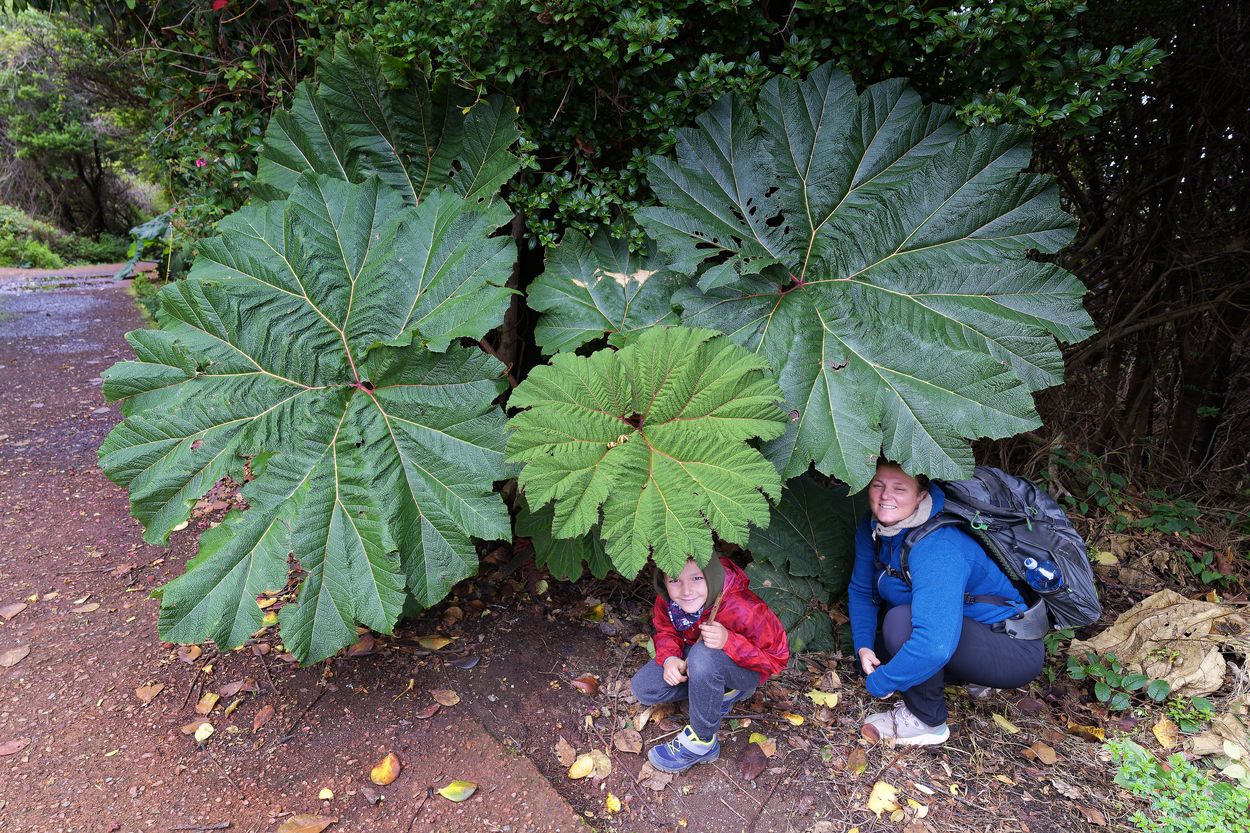
We moved slightly to one side to take photographs with the enormous leaves in the foreground, which created a beautiful composition. It was an unforgettable moment, even though we were almost frozen by the cold wind at this altitude of around 2,500 meters.
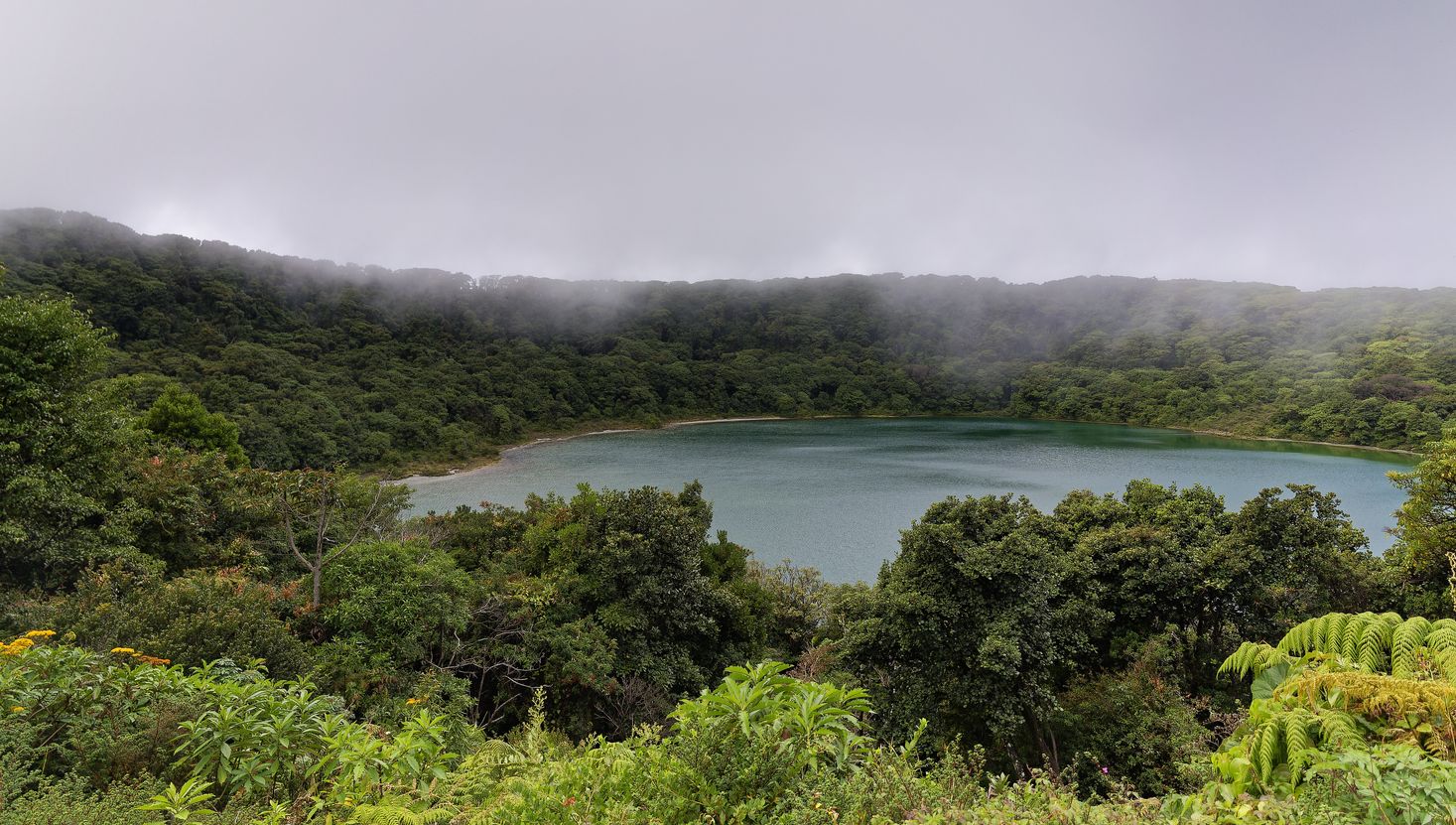
We then followed a narrow trail down toward Laguna Botos, another crater lake located nearby. It does not have quite the same dramatic appeal, but the walk through the misty forest has a wonderfully atmospheric feel and is well worth the detour.

Our Thoughts on the Bajos del Toro Region
I’ll end this article with a few personal thoughts. We genuinely loved the region, and it deserves to be explored far more thoroughly than we were able to manage. The area is filled with hiking trails and waterfalls, and for nature lovers, it is a small paradise. If you are traveling nearby, don’t hesitate to spend a few days here and take the time to discover its many natural wonders.
Bajos del Toro: Practical Information
As usual, here is some practical information to help you plan your visit. This section is slightly more general than usual because Bajos del Toro covers a relatively large area.
How to Get to Bajos del Toro
I’ll keep this section fairly brief, as the best route will depend on where you are traveling from. From France, the cheapest options are generally flights from Paris to San José. As always, prices vary considerably depending on the season and the number of stopovers involved.
Once you arrive, the easiest way to explore the region is generally by rental car or camper van. I highly recommend using DiscoverCars to compare rental vehicles. We found a 4×4 for our entire month-long trip for around €1,800, which was relatively reasonable compared with many other destinations.
From San José, it took us around three hours to reach Bajos del Toro. Google Maps estimates approximately two hours for the 80 km journey, but it is better not to rush. The road is winding, driving speeds are relatively slow, and you will probably want to stop occasionally to admire the spectacular scenery.
Where to Stay in the Region
There are plenty of accommodation options in the area, with something available for almost every budget. Here are a few suggestions for places to stay in and around Bajos del Toro.


Budget Accommodation: Under €50 per Night
- Hotel La Paz: Located in Poasito, around 10 km from Poás Volcano, this hotel enjoys an excellent location for exploring the national park. The rooms are comfortable and well equipped, the surroundings are peaceful, and the on-site restaurant has a very good reputation.
- Poas Volcano Rooms: Also located in Poasito, this property is ideally situated near Poás Volcano and only around 15 minutes from La Paz Waterfall Gardens. The rooms are very well maintained, comfortable, and particularly convenient for exploring the surrounding area.
- Mangifera Hostel: This hostel offers a friendly and welcoming atmosphere in the heart of Grecia, directly opposite Parque Central. The rooms are simple but clean and comfortable, and some even have a patio overlooking the garden. It is one of the best-value accommodation options in the area.
Mid-Range Accommodation: €50–100 per Night
- Hotel Mango Valley: Located in Grecia, this property offers a warm welcome, beautiful views, a swimming pool, and a high-quality breakfast. The rooms are equipped with kitchenettes and provide plenty of comfort, peace, and lovely views of the surrounding vegetation. The hotel also follows environmentally responsible practices.
- Cabaña Trojas Valverde Vega: Located in Trojas, this charming and well-equipped cabin combines rustic character with modern comfort. The rooms are clean and comfortable, and although the property can be slightly difficult to reach, it is an ideal place to relax while enjoying beautiful mountain views.
- Hotel San Vicente Hideaway: Located in Quesada, this hotel enjoys an exceptional natural setting with uninterrupted views of the surrounding landscapes. Accommodation is spread across the main hotel, chalets, and bubble-style rooms, offering several different experiences. Guests particularly appreciate the peaceful atmosphere, nearby waterfall walks, delicious meals—especially breakfast—and the feeling of being completely secluded.
Higher-End Accommodation: Over €100 per Night
- El Silencio Lodge & Spa Costa Rica: Located in Toro Amarillo at an altitude of around 1,500 meters, this peaceful retreat offers elegant rooms overlooking the river and rainforest. The property features an excellent restaurant, a high-quality spa, and activities including hiking and yoga, all in a beautifully designed setting.
- Hotel Finca 360: Located in Marsella, this property offers an exclusive experience in the heart of the rainforest, with spectacular 360-degree views and delicious local cuisine. Guests particularly appreciate the magical atmosphere, breathtaking scenery, and gourmet quality of the food.
- Peace Lodge: Located in Vara Blanca, this property stands out for its swimming pool overlooking the valley, excellent breakfast, and opportunities to observe Costa Rica’s wildlife and vegetation. The rooms are exceptionally comfortable, and guest reviews are consistently excellent.
If you would rather explore the crater and surrounding region with a guide, several guided excursions are available.
That brings me to the end of this article. I hope it has inspired you to discover the region for yourself. We continued our journey through Costa Rica with a visit to Mistico Arenal Hanging Bridges Park, another beautiful place to explore in the country.
See you soon for another article about Costa Rica.