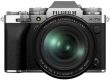
The best Fujifilm X portrait lenses
Last update: 06/16/2026
Our blog continues to grow thanks to you, our readers. This post may contain affiliate links, which means we can earn a small commission if you make a purchase through them, at no extra cost to you. This helps us to continue to bring you more and support our work!
I know choosing a lens is never easy, so we’ve recently added several features to the blog to help you make the right choice. I have to admit it’s been a huge task, but it was well worth it! That’s also why I’m slowly getting back to writing about photography gear, starting with this guide to the best Fujifilm X lenses for portrait photography.
By the way, I recently published a guide to telephoto lenses for the X-mount, which is more focused on wildlife and sports photography. Back to this article: portraits are something we often shoot in everyday life, whether with friends, family, or even out on the street. When it comes to gear, there are so many options from Fuji and third-party manufacturers that it’s easy to get lost.
In this article, I’ll introduce a range of portrait lenses while taking your preferences and budget into account. The goal is to make your search easier and help you understand which lens, or lenses, might suit you best. I’ve had to make a selection, focusing on the lenses I think are the most relevant. I’ll also suggest quality alternatives that are worth considering, often at more affordable prices.
Guide to X-mount lenses for portraits
How do I choose my Fuji portrait lens?
If you’re just starting out, or if you’re not familiar with all the options available, choosing a lens can quickly become complicated. There are countless choices, criteria, and acronyms that may not mean much at first. Without getting too general, some focal lengths are better suited to portraits than others. We can roughly divide portraits into three types: environmental, standard, and tight. On an APS-C sensor, here are the focal lengths I would recommend:
- For environmental portraits (with context around the subject): from 23 to 33mm.
- For standard portraits: 33 to 55mm.
- For tight portraits: beyond 50mm, or even 75mm or 90mm (equivalent to 85–135mm on full frame).
In terms of price, you can find affordable autofocus lenses between around €200 and €300, as well as more premium options closer to €1,000. Those price differences usually come down to optical quality, construction, materials, sharpness, maximum aperture, and so on. Put simply, the wider the aperture, the easier it is to isolate your subject from the background—and the higher the price often gets. You’ll also need to decide whether optical stabilization matters for the way you shoot.
Finally, there’s another major dilemma: choosing between a prime and a zoom lens. You can read our dedicated article to learn more. Broadly speaking, a prime lens will very often offer a wider maximum aperture, often f/1.8, f/1.4, or even f/1.2. With a zoom lens, it is much harder to get that kind of brightness. Very few zooms go beyond f/2.8. We’ve also put together a full article on the best Fuji zoom lenses!
Prime X lenses suitable for portraits
To start, I’ve listed the lenses I selected by focal length, from shortest to longest. I’ve also included a summary table with the key specifications to help you choose, including minimum focusing distance, weight, maximum aperture, and more. This should make it easier to compare the options and decide which one suits you best.
As mentioned above, this article does not cover every lens available. Still, with this selection and the other guides on the blog, you should have plenty of options to find the right one for you!
I’ve also written a full article on wide-angle lenses for the X-mount, including Fuji and third-party options, if you’re looking for a lens for landscapes or architecture.
| X-mount prime lenses for portrait photography | Focallength | Max.Aperture | Weight | Dim. (Ø x L) | Min. FocusDist. | Approx.price | Best price | |||
|---|---|---|---|---|---|---|---|---|---|---|
| + | Fujifilm XF 23mm f/1.4 R LM WR | 23mm | f/1.4 | 13.23 oz / 375g | 2.6 x 3.1" / 67 x 78 mm | 7.5" / 19 cm | $899 | Amazon B&H | More info + | |
|
||||||||||
| + | Sigma 30mm f/1.4 DC DN Contemporary X | 30mm | f/1.4 | 9.7 oz / 275g | 2.6 x 2.9" / 65 x 74 mm | 1' / 30 cm | $319 | Amazon B&H | More info + | |
|
||||||||||
| + | Fujifilm XF 33mm f/1.4 R LM WR | 33mm | f/1.4 | 12.7 oz / 360g | 2.6 x 2.9" / 67 x 74 mm | 1' / 30 cm | $799 | Amazon B&H | More info + | |
|
||||||||||
| + | Fujifilm XF 35mm f/2 R WR | 35mm | f/2 | 6 oz / 170g | 2.4 x 1.8" / 60 x 46 mm | 1.1' / 35 cm | $399 | Amazon B&H | More info + | |
|
||||||||||
| + | Fujifilm XF 50mm f/2 R WR | 50mm | f/2 | 7.05 oz / 200g | 2.4 x 2.3" / 60 x 59 mm | 1.3' / 39 cm | $449 | Amazon B&H | More info + | |
|
||||||||||
| + | Fujifilm XF 56mm f/1.2 R WR | 56mm | f/1.2 | 1 lb / 445g | 3.1 x 3" / 79 x 76 mm | 1.6' / 50 cm | $999 | Amazon B&H | More info + | |
|
||||||||||
| + | Viltrox 75mm f/1.2 AF X | 75mm | f/1.2 | 1.5 lb / 670g | 3.4 x 4" / 87 x 101 mm | 2.9' / 88 cm | $499 | Amazon B&H | More info + | |
|
||||||||||
| + | Samyang AF 75mm f/1.8 X | 75mm | f/1.8 | 9.07 oz / 257g | 2.8 x 2.7" / 70 x 69 mm | 2.3' / 69 cm | $449 | Amazon B&H | More info + | |
|
||||||||||
| + | Fujifilm XF 90mm f/2 R LM WR | 90mm | f/2 | 1.2 lb / 540g | 3 x 4.1" / 75 x 105 mm | 2' / 60 cm | $949 | Amazon B&H | More info + | |
|
||||||||||
Here are the lenses in detail. Click below to jump directly to each lens:
Fujinon XF 23mm f/1.4 R LM WR
| Features | Visual |
|---|---|
|

|
The Fujinon XF 23mm f/1.4 R LM WR has become one of Fuji’s strongest X-mount lenses. With a focal length equivalent to 35mm on full frame, it’s perfect for environmental portraits, wider scenes, or indoor shots when you don’t have much room. It’s also compact and lightweight enough to carry easily.
Build quality is excellent, with weather-sealing for more demanding conditions. Optically, the lens uses 15 elements in 10 groups, including 2 aspherical elements and 3 ED elements, which helps minimize chromatic aberrations. With a maximum aperture of f/1.4 and a minimum focusing distance of 19cm, it is also very useful for close-ups. Its fast, quiet autofocus works well for video too, although the lens does not include optical stabilization. Image quality is excellent. Sharpness is already strong at wide apertures and becomes very even from the center to the edges around f/2.8. Bokeh is soft and pleasant, which is a real plus for portraits. As for optical flaws, chromatic aberrations are well controlled, while vignetting and distortion remain subtle and easy to correct in post-processing.
In short, the XF 23mm f/1.4 R LM WR combines excellent construction with very strong optical performance. It’s a great way to get into environmental portrait photography without going for a longer, more specialized portrait lens.
Interesting alternatives at this focal length:
- Sigma 23mm f/1.4 DC DN Contemporary X: renowned for its quality, this lens offers excellent performance at a more affordable price than the Fujinon.
- Viltrox 23mm f/1.4 Mk II STM XF X: a high-performance, even more affordable alternative with very good optical quality.
- Fujifilm XF 23mm f/2 R: although the aperture is smaller, this lens is still of high quality and is lighter and more compact.
You can find all the detailed specifications of these three alternatives in the summary table below.
| Lens | Focallength | Max.Aperture | Weight | Dim. (Ø x L) | Min. FocusDist. | Approx.price | Best price | |||
|---|---|---|---|---|---|---|---|---|---|---|
| + | Sigma 23mm f/1.4 DC DN Contemporary X | 23mm | f/1.4 | 11.99 oz / 340g | 2.6 x 3" / 66 x 77 mm | 9.8" / 25 cm | $549 | Amazon B&H | More info + | |
|
||||||||||
| + | Fujifilm XF 23mm f/2 R | 23mm | f/2 | 6.35 oz / 180g | 2.4 x 2" / 60 x 52 mm | 8.7" / 22 cm | $449 | Amazon B&H | More info + | |
|
||||||||||
| + | Viltrox 23mm f/1.4 Mk II STM XF X | 23mm | f/1.4 | 9.17 oz / 260g | 2.6 x 2.8" / 65 x 72 mm | 1' / 30 cm | $259 | Amazon B&H | More info + | |
|
||||||||||
Sigma 30mm f/1.4 DC DN Contemporary X
| Features | Visual |
|---|---|
|

|
The Sigma 30mm f/1.4 DC DN Contemporary X offers a 45mm equivalent field of view on full frame. Compact and lightweight at 265g, it is easy to handle and carry. It’s a safe bet in Sigma’s Contemporary range thanks to its excellent value for money.
The build quality is solid and carefully finished, with a mix of metal and plastic that gives it a comfortable feel in hand. Its optical formula includes 9 elements in 7 groups, including 2 aspherical elements. With a maximum aperture of f/1.4, it can produce attractive background blur. On the downside, it is not weather-sealed and has no optical stabilization, which may limit its use in some conditions. Optically, the Sigma 30mm f/1.4 offers good sharpness, especially between f/2.8 and f/5.6. Vignetting is noticeable at full aperture, but it already decreases at f/2. Distortion is low and easy to correct in post-processing.
Overall, this lens is an excellent choice for amateur photographers looking for a bright, capable lens at an affordable price. Its main strengths are its wide aperture, solid optical performance, and well-made construction.
Interesting alternatives at this focal length:
- Viltrox 27 mm f/1.2 X: a highly acclaimed wide aperture autofocus lens.
- TTArtisan AF 27 mm f/2.8 X: a very affordable lens, ideal for portraits thanks to its quality and optical performance.
You’ll find the main specifications of these two alternatives in the table below:
| Lens | Focallength | Max.Aperture | Weight | Dim. (Ø x L) | Min. FocusDist. | Approx.price | Best price | |||
|---|---|---|---|---|---|---|---|---|---|---|
| + | Viltrox 27mm f/1.2 X | 27mm | f/1.2 | 1.2 lb / 560g | 3.2 x 3.6" / 82 x 92 mm | 11" / 28 cm | $499 | Amazon B&H | More info + | |
|
||||||||||
| + | TTArtisan AF 27mm f/2.8 X | 27mm | f/2.8 | 3.32 oz / 94g | 2.4 x 1.1" / 61 x 29 mm | 1.1' / 35 cm | $149 | Amazon B&H | More info + | |
|
||||||||||
Fujinon XF 33mm f/1.4 R LM WR
| Features | Visual |
|---|---|
|

|
Available since 2021, the Fujinon XF 33mm f/1.4 R LM WR marked a real step forward in Fujifilm’s prime lens lineup. It can be seen as the modern successor to the XF 35mm f/1.4 R, with a focal length equivalent to 50mm on full frame. This lens combines high-end construction with excellent optical performance.
Its construction combines metal and polycarbonate. It has a click-stop aperture ring with a lock button, which makes handling more secure. The linear motor autofocus is fast, quiet, and well suited to video. Optically, it uses 15 elements in 10 groups, including 2 aspherical elements and 3 ED elements. The combination of a wide maximum aperture and a 9-blade diaphragm produces soft, creamy bokeh. The lens is weather-sealed, but it has no optical stabilization, which may matter in some situations, although the aperture helps in low light. Sharpness is excellent from the center to the edges. Optical flaws such as vignetting, distortion, and chromatic aberration are limited and easy to correct in post-processing.
In the end, the Fujinon XF 33mm f/1.4 R LM WR is a much more modern alternative to the XF 35mm f/1.4 R, with excellent image quality, solid construction, and smooth autofocus. It is more expensive than its predecessor, but the price is justified by its clearly stronger optical performance. Quite simply, it’s one of the best portrait lenses in the X-mount system.
Here’s an alternative I’d recommend:
- Viltrox 33mm f/1.4 STM FX X: a quality option with rugged, durable construction at a more affordable price.
Fujifilm XF 35mm f/2 R WR
| Features | Visual |
|---|---|
|

|
Available since 2015, the Fujinon XF 35mm f/2 R WR is a slightly more affordable alternative to the famous XF 35mm f/1.4. With a focal length equivalent to 50mm on full frame, it works very well for portrait photography. Its light weight of 170g and compact size make it easy to take anywhere.
Its construction is robust, with a metal body and weather-sealing. The click-stop aperture ring, with an automatic position, offers excellent ergonomics. Optically, the lens uses Super EBC coating to improve image quality. Autofocus is fast, quiet, and efficient, making it easier to capture moving subjects despite the lack of optical stabilization. In terms of performance, center sharpness is very good from f/2, while the slightly weaker edges improve from f/5.6. Optical flaws such as vignetting and distortion are present, but they can be easily corrected in post-processing. Finally, the bokeh is smooth, although slightly less attractive at smaller apertures.
In conclusion, the Fujinon XF 35mm f/2 R WR combines quality construction with strong optical performance at a reasonable price. It’s a versatile and affordable lens that works well for both amateurs and more experienced photographers specializing in portraits.
Another possible alternative:
- Fujifilm XC 35mm f/2: a lighter version at half the price of the XF 35mm f/2 R WR, while offering very satisfactory optical quality.
Fujifilm XF 50mm f/2 R WR
| Features | Visual |
|---|---|
|

|
Introduced in 2017, the Fujinon XF 50mm f/2 WR is part of Fujifilm’s well-known range of compact f/2 lenses. With a full-frame equivalent focal length of 76mm, it is very well suited to portrait photography. Its compact size and light weight make it easy to handle and carry.
Build quality is excellent: the metal body is rugged and weather-sealed. The lens uses 9 elements in 7 groups, including 1 aspherical ED element, which helps control aberrations. The fast, quiet autofocus system works well for both dynamic subjects and video. Optical performance is excellent, with optimum sharpness from f/4. The soft, creamy bokeh is a real asset for portraits. At full aperture, there is some vignetting, but it decreases from f/4 onward. Distortion is almost nonexistent and easy to correct in post-processing, while chromatic aberrations remain well controlled.
In conclusion, the Fujinon XF 50mm f/2 WR is an ideal choice if you’re looking for a lightweight, reliable, high-performing lens at a reasonable price. It is one of the most compact short telephoto lenses in the Fujifilm range and a must-have for prime lens enthusiasts.
Find an excellent alternative:
- Fujifilm XF 50mm f/1 R WR: this is the high-end version with a huge aperture. On the other hand, it requires a much higher budget (the most expensive lens in this focal length range).
Fujinon XF 56mm f/1.2 R WR
| Features | Visual |
|---|---|
|

|
The Fujinon XF 56mm f/1.2 R WR is a high-end lens with a focal length equivalent to 85mm in full frame. For a lens with such a large aperture, its size and weight remain reasonable, making it easy to carry and use.
Its build quality is excellent, with an all-metal weather-sealed body. Its optical formula consists of 13 elements in 8 groups, including two aspherical lenses and one ED lens. These elements help to minimize chromatic aberration and distortion. Autofocus is fast and accurate, perfect for capturing moving subjects. However, the lack of optical stabilization can be a problem in certain conditions, especially in low light (although the very wide aperture helps). In terms of optical performance, the lens offers satisfactory uniformity from the center to the edges. Closing the aperture slightly improves edge sharpness. Vignetting and distortion are practically non-existent, while the creamy bokeh is one of the strengths of this lens.
In conclusion, the Fujinon XF 56mm f/1.2 R WR is a very high-quality lens that will meet the expectations of both amateur and professional photographers. It is still a significant investment, but its performance helps justify the price.
Three interesting alternatives at this focal length:
- Sigma 56mm f/1.4 DC DN: an interesting option with a wide aperture and solid performance.
- Viltrox 56mm f/1.4 AF X: a good quality lens that I use in E-mount (APS-C), with excellent construction.
- TTArtisan 56mm f/1.8 X / Viltrox AF 56mm f/1.7 XF: two recent third-party lenses, perfect for small budgets (< €200), offering a good aperture at a very attractive price.
In the table below, you’ll find all the main features of these alternatives to help you make your choice:
| Lens | Focallength | Max.Aperture | Weight | Dim. (Ø x L) | Min. FocusDist. | Approx.price | Best price | |||
|---|---|---|---|---|---|---|---|---|---|---|
| + | Sigma 56mm f/1.4 DC DN Contemporary X | 56mm | f/1.4 | 9.88 oz / 280g | 2.6 x 2.4" / 67 x 60 mm | 1.6' / 50 cm | $479 | Amazon B&H | More info + | |
|
||||||||||
| + | Viltrox 56mm f/1.4 STM FX X | 56mm | f/1.4 | 10.23 oz / 290g | 2.6 x 2.8" / 65 x 72 mm | 2' / 60 cm | $259 | Amazon B&H | More info + | |
|
||||||||||
| + | Viltrox AF 56mm f/1.7 XF | 56mm | f/1.7 | 6.03 oz / 171g | 2.6 x 2.2" / 65 x 55 mm | 1.8' / 55 cm | $153 | Amazon B&H | More info + | |
|
||||||||||
| + | TTArtisan 56mm f/1.8 X | 56mm | f/1.8 | 8.64 oz / 245g | - | 1.6' / 50 cm | $129 | Amazon B&H | More info + | |
|
||||||||||
We’re now moving on to longer focal lengths that work well on an APS-C sensor for portrait photography. These are roughly equivalent to 110–135mm on full frame, so they are better suited to tight outdoor portraits.
Viltrox 75mm f/1.2 AF X
| Features | Visual |
|---|---|
|

|
The Viltrox AF 75mm f/1.2 STM is positioned as a premium lens. It offers a full-frame equivalent focal length of about 110mm. It is also one of the brightest lenses available for the X-mount, making it especially interesting for portraits. Its dimensions remain reasonable, although the weight is fairly substantial at 670g.
In terms of construction, the quality is remarkable and reflects the evolution of the Viltrox brand in recent years. It is weather-sealed and made of solid materials. Optically, the sharpness is exceptional from f/1.2 and improves slightly when the aperture is closed. Bokeh is creamy and well defined thanks to the rounded aperture. Distortion is virtually absent, while vignetting, which is visible at full aperture, is easy to correct in post-production. Flare and chromatic aberration control are also excellent, adding to the overall quality of the lens.
In conclusion, the Viltrox AF 75mm f/1.2 STM combines high optical performance, robust construction, and a very attractive price for this level of brightness. It is an excellent alternative to Fujifilm’s own lenses and shows just how strong the Viltrox Pro series has become.
Samyang AF 75mm f/1.8 X
| Features | Visual |
|---|---|
|

|
Launched in March 2023, the Samyang AF 75mm f/1.8 X is an excellent alternative to the Viltrox 75mm f/1.2, as it is much cheaper and lighter than the Viltrox. However, its aperture is more limited. Thanks to its featherweight of 257g and compact length of 69mm, the lens is easy to carry. With a full-frame equivalent focal length of 112.5mm, this bright, affordable lens is aimed at both amateur and professional portrait photographers looking for a modern, high-performance lens.
The build quality is remarkable, with a matte coating that feels good in hand. Optically, the lens uses 10 elements in 9 groups, including 2 HR and 3 ED elements to minimize chromatic aberration and flare. Although it lacks stabilization, the autofocus is fast, accurate and silent thanks to the STM motor. In terms of optical performance, sharpness is excellent from f/1.8, with good uniformity from the center to the edges. Chromatic aberrations, visible at full aperture, are reduced by closing the aperture. Subtle vignetting fades as you stop down. Finally, distortion is virtually non-existent.
In conclusion, the Samyang AF 75mm f/1.8 X offers excellent value for money, with robust construction and solid optical performance. It positions itself as a serious alternative to Viltrox and Fujifilm portrait lenses at a very reasonable price.
Fujinon XF 90mm f/2 R LM WR
| Features | Visual |
|---|---|
|

|
Introduced in 2015, the Fujinon XF 90mm f/2 R LM WR quickly became a Fuji benchmark for portrait photography. It offers a bright prime focal length equivalent to 135mm on full frame. Its size and weight make it a good compromise between sturdiness and portability.
As for its construction, it is weather-sealed and made entirely of metal. The lens has 11 elements in 8 groups, including 3 low dispersion elements. It has a filter diameter of 62mm and a minimum focusing distance of 60cm. In terms of performance, its sharpness is excellent from full aperture. It offers good uniformity from the center to the edges. Optical defects such as vignetting, distortion and chromatic aberration are virtually non-existent. On the other hand, this lens remains slightly prone to flare, which remains a factor to be taken into account. Bokeh is smooth and natural (with a nice transition between sharp and blurred areas).
All in all, the Fujinon XF 90mm f/2 R LM WR is a must-have lens for amateurs and professionals alike. Its price is justified by its robust construction, high optical performance and reliability. Despite the lack of image stabilization, it remains a safe bet for discerning photographers who want impeccably sharp images.
So which X-mount prime lens should I choose for portraits?
As you can see, there are many X-mount prime lenses to choose from, which can make the decision difficult. That’s why it’s important to prioritize the options that match your expectations and, most importantly, your budget. Here are my recommendations:
- For environmental portraits: It all depends on your budget. For a high-end option, I recommend the Fujifilm XF 23mm f/1.4 R LM WR. If you’re looking for a more affordable alternative, the Sigma 23mm f/1.4 DC DN Contemporary X is an excellent choice,
- For standard portraits, with a full-frame equivalent around 50mm: If you have an unlimited budget, I recommend the Fujifilm XF 33mm f/1.4 R LM WR. For a more affordable but equally high quality option, the Fujifilm XC 35mm f/2 is a very good alternative,
- For an 85mm equivalent, I recommend the Fujifilm XF 50mm f/2 R WR, which combines quality with portability. If you’re on a tighter budget, the Viltrox 56mm f/1.4 AF X, which I use on a Sony E-mount camera, is an excellent alternative.
- For long lenses: this may come as a surprise to some, but I recommend the Viltrox 75mm f/1.2 AF X, which has received very positive feedback.
X-mount zooms for portraits
If you’re looking for a versatile lens that is not only dedicated to portraits, a standard zoom can be an excellent option. This type of lens works well in many situations, including landscape and street photography, thanks to its shorter focal lengths.
I’ve put together a selection of X-mount zooms that are suitable for portrait photography. There are more affordable options, of course, but they often have smaller apertures. That makes them less interesting for portraits, because it becomes harder to highlight and isolate your subject.
To begin with, here is a summary table of the main characteristics of the zooms we have selected. The goal is to make them easier to compare so you can choose the one that best suits your needs and budget!
| X-mount zooms for portraits | Focallength | Max.Aperture | Weight | Dim. (Ø x L) | Min. FocusDist. | Approx.price | Best price | |||
|---|---|---|---|---|---|---|---|---|---|---|
| + | Fujifilm XF 16-55mm f/2.8 R LM WR II | 16-55mm | f/2.8 | 0.9 lb / 410g | 3.1 x 3.7" / 78 x 95 mm | 1' / 30 cm | $1 199 | B&H | More info + | |
|
||||||||||
| + | Fujifilm XF 16-80mm f/4 R OIS WR | 16-80mm | f/4 | 1 lb / 440g | 3.1 x 3.5" / 78 x 89 mm | 1.1' / 35 cm | $799 | Amazon B&H | More info + | |
|
||||||||||
| + | Tamron 17-70mm f/2.8 Di III-A VC RXD X | 17-70mm | f/2.8 | 1.2 lb / 525g | 2.9 x 4.7" / 75 x 119 mm | 7.5" / 19 cm | $699 | Amazon B&H | More info + | |
|
||||||||||
| + | Sigma 18-50mm f/2.8 DC DN Contemporary X | 18-50mm | f/2.8 | 10.05 oz / 285g | 2.4 x 3" / 62 x 77 mm | 4.7" / 12 cm | $529 | Amazon B&H | More info + | |
|
||||||||||
| + | Fujifilm XF 18-55mm f/2.8-4 R LM OIS | 18-55mm | f/2.8-4 | 10.93 oz / 310g | 2.6 x 2.8" / 65 x 70 mm | 1' / 30 cm | $439 | Amazon | More info + | |
|
||||||||||
| + | Fujifilm XF 50-140mm f/2.8 R LM OIS WR X | 50-140mm | f/2.8 | 2.2 lb / 995g | 3.3 x 6.9" / 83 x 176 mm | 3.3' / 100 cm | $1 599 | Amazon B&H | More info + | |
|
||||||||||
Here are the lenses in detail. You can jump to each section below:
Fujifilm XF 16-55mm f/2.8 R LM WR II
| Features | Visual |
|---|---|
|

|
The Fujifilm XF 16-55mm f/2.8 R LM WR II is a popular standard zoom lens for the X-mount. Its focal range, equivalent to 24–70mm on full frame, makes it suitable for a wide variety of situations, including portrait photography. Its dimensions and weight are now more reasonable than the previous version, which makes the lens easier to handle.
There’s nothing to complain about in terms of construction: it’s meticulous, robust and weather-sealed, which guarantees good reliability. The lens features a 9-blade circular element, as well as aspherical and reduced dispersion elements to minimize chromatic aberrations. With a 72mm filter diameter, fast and silent autofocus and built-in image stabilization, this lens is equally at home in both still and video capture. In terms of optical performance, the XF 16-55mm f/2.8 II offers exceptional sharpness throughout its focal length. At full aperture it produces a soft, creamy bokeh that is ideal for portraiture. Optical flaws such as vignetting and distortion are well under control.
In conclusion, the Fujifilm XF 16-55mm f/2.8 R LM WR II is a high-quality, versatile lens that suits many situations, including portraits. With major improvements over the first version, it is one of the key standard zooms in the range.
I’ve included a table with both versions so you can compare them if needed.
| Lens | Focallength | Max.Aperture | Weight | Dim. (Ø x L) | Min. FocusDist. | Approx.price | Best price | |||
|---|---|---|---|---|---|---|---|---|---|---|
| + | Fujifilm XF 16-55mm f/2.8 R LM WR | 16-55mm | f/2.8 | 1.4 lb / 655g | 3.3 x 4.2" / 83 x 106 mm | 1' / 30 cm | $1 199 | Amazon B&H | More info + | |
|
||||||||||
| + | Fujifilm XF 16-55mm f/2.8 R LM WR II | 16-55mm | f/2.8 | 0.9 lb / 410g | 3.1 x 3.7" / 78 x 95 mm | 1' / 30 cm | $1 199 | B&H | More info + | |
|
||||||||||
Here is the main alternative:
Fujifilm XF 16-55mm f/2.8 R LM WR: I recommend looking at the first version of this lens, which remains an excellent reference. It is now available at a more attractive price.
Fujinon XF 16-80mm f/4 R OIS WR
| Features | Visual |
|---|---|
|
|
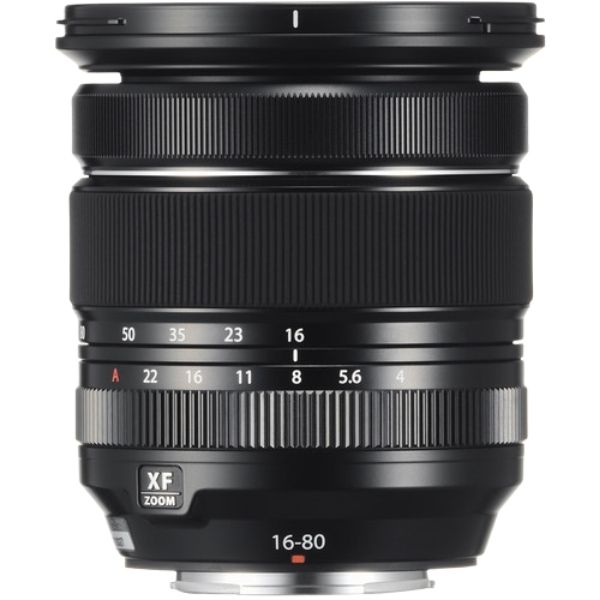
Announced in July 2019, the Fujinon XF 16-80mm f/4 R OIS WR is positioned as a versatile lens for Fujifilm X-mount mirrorless cameras. With a focal range equivalent to 24–122mm on full frame, it works well for portraits, street photography, and even video. Its weight and dimensions place it between the XF 18-55mm f/2.8-4 R LM OIS and the XF 16-55mm f/2.8 R LM WR.
The build quality of this lens is beyond reproach. It is made entirely from polycarbonate. On the optical side, there are 16 elements in 12 groups, including 3 aspherical lenses and 1 aspherical ED lens. The 9-blade circular aperture produces a nice bokeh effect, although the maximum aperture of f/4 limits what you can do in low light. The optical image stabilization (OIS) is very effective, while the fast, quiet autofocus ensures smooth operation, even when shooting video. In terms of optical performance, the XF 16-80mm f/4 R OIS WR offers decent sharpness in the center over the entire focal length. At the edges it is more limited between 16mm and 80mm, but homogeneity improves between 22mm and 50mm. Vignetting is visible at 16mm, while chromatic aberrations are well under control. Bokeh, on the other hand, is smooth but limited by the ‘small’ f/4 aperture.
In conclusion, this lens offers a good compromise between performance, versatility and portability. It is aimed at photographers looking for a versatile lens for travel, street photography and portraits. Compared to the Fujifilm XF 16-55mm f/2.8 R LM WR II, it offers a wider focal range but a smaller aperture.
Fujinon XF 18-55mm f/2.8-4 R LM OIS
| Features | Visual |
|---|---|
|

|
Introduced in 2012, the Fujinon XF 18-55mm f/2.8-4 R LM OIS is an excellent standard zoom lens. Its focal range is equivalent to 27–82.5mm on full frame. Weighing just 310g and measuring about 70mm long, this lightweight, compact lens has often been sold as a kit with Fujifilm APS-C bodies. Its f/2.8 aperture at the wide end is also unusual for a kit lens.
Its construction reflects its positioning as a high-end alternative to conventional kit lenses. It is made from metal and polycarbonate. Its optical formula comprises 14 elements divided into 10 groups, including aspherical and ED elements. It’s worth noting that the lens has effective stabilization and a fast, accurate autofocus (although it’s not up to the latest standards).
In conclusion, although the Fujinon XF 18-55mm f/2.8-4 R LM OIS is no longer new, it remains an excellent choice if you’re looking for a compact, versatile, and affordable zoom lens. It has its limits compared with more modern lenses, but it still offers good image quality and excellent value for money.
Fujinon XF 50-140mm f/2.8 R LM OIS WR
| Features | Visual |
|---|---|
|

|
Released in 2014, the Fujinon XF 50-140mm f/2.8 OIS WR is the only long telephoto zoom I recommend here for portrait photography. With a focal length equivalent to 76-213mm on a full-frame body, it is more suited to close-up portraits. One of its strengths is its constant aperture of f/2.8, which allows the subject to be well isolated from the background for high-quality renderings.
The construction of this lens is top notch, with a weather-sealed metal body and meticulous finishes. Optically, there are 23 elements in 16 groups, including 5 ED elements and 1 Super ED element (designed to minimize chromatic aberration). Autofocus is fast, accurate and silent, while built-in optical stabilization offers a 5-stop boost. In terms of performance, the sharpness of this lens is very good at full aperture, with even sharpness from the center to the edges. Bokeh is soft and creamy, even at f/2.8, which is perfect for portraits. Chromatic aberrations and vignetting are well controlled, although there is a slight darkening at 140mm at f/2.8. Finally, distortion is minimal and the lens coating guarantees good flare management.
In conclusion, the Fujinon XF 50-140mm f/2.8 OIS WR offers impeccable image quality. Although it’s not cheap (around €1,400), it stands out for its optical performance and effective stabilization. Whether you are shooting portraits or moving subjects, this lens will meet the expectations of the most demanding photographers.
Tamron 17-70mm f/2.8 Di III-A VC RXD X
| Features | Visual |
|---|---|
|

|
The Tamron 17-70mm F2.8 Di III-A VC RXD is an attractive alternative to the Fujinon XF 16-80mm f/4. It became available for Sony E-mount in 2021 and for Fuji X-mount in 2023. With a larger maximum aperture and a more affordable price, this lens stands out from the crowd. It offers a focal length equivalent to 25.5-105mm in full frame. Its reasonable weight and dimensions make it suitable for everyday use.
The construction of the lens is both functional and modern. It is made of satin-finished plastic with a seal to ensure it is weather-sealed. It contains 16 elements in 12 groups, including 5 aspherical lenses with low dispersion and BBAR coating (a good point for reducing glare). One of its strengths compared to Fuji lenses is its built-in stabilization and fast, accurate autofocus. However, the lens does not have an aperture ring. In terms of optical performance, the Tamron 17-70mm f/2.8 offers excellent sharpness in the center from f/2.8. At the edges, it is better to close the aperture down to f/5.6 to improve sharpness. As for optical flaws, vignetting and chromatic aberrations are present, but can be corrected in post-production. Finally, the overall bokeh is pleasant and smooth.
In short, for its price, the Tamron 17-70mm F2.8 Di III-A VC RXD is an excellent alternative to Fuji’s zooms. Whether you’re shooting portraits or landscapes, this lens delivers very good quality results.
Sigma 18-50mm f/2.8 DC DN Contemporary X
| Features | Visual |
|---|---|
|

|
The Sigma 18-50mm f/2.8 DC DN X, launched in October 2021 for Sony E-mount, became available for Fujifilm X-mount in December 2022. This bright zoom lens offers a full-frame equivalent focal length of 27-75mm and a constant aperture of f/2.8. This makes it ideal for street, portrait and travel photography. Its weight and dimensions make it a particularly interesting lens for the X-T50 or X-M5, for example.
The Sigma 18-50mm is made of polycarbonate. The lens consists of 13 elements in 10 groups, including 3 aspherical elements and one SLD element. It is weather-sealed and has no aperture ring or external buttons. The lens has a standard filter diameter of 55mm and is not stabilized. Optically, this Sigma lens offers excellent consistency and strong sharpness, although edge sharpness drops noticeably at 18mm. Bokeh is pleasant and the lens performs well overall. As for flaws, the camera corrects distortion and vignetting, while flare and chromatic aberration are effectively controlled.
In conclusion, despite some limitations, the Sigma 18-50mm f/2.8 DC DN Contemporary X is a very interesting and more affordable alternative to the 16-55 V1. It’s a high-quality lens that offers excellent value for money on Fujifilm X bodies.
In fact, we’ve written a full article on all the Sigma lenses for the X-mount.
So which standard X-mount zoom should I choose for portraits?
I know I’m repeating myself, but once again, choosing a lens is never easy. To help you out, here are the lenses I particularly recommend:
Of course, the Fujifilm XF 16-55mm f/2.8 R LM WR II remains the reference, even if it is a real investment. The price is justified by the fact that it is a recent lens with very strong performance. For a quality alternative, I recommend the Sigma 18-50mm f/2.8 DC DN Contemporary X, which offers excellent value for money.
If you’re looking for a longer focal length and a more versatile lens, the Fujinon XF 50-140mm f/2.8 R LM OIS WR will meet your expectations!
Manual Portrait Alternatives
The goal of this article was not to list every lens available for X-mount portrait photography. I focused on autofocus lenses, since that is generally what most people are looking for.
However, there are many manual focus lenses that work very well for portrait photography. I can’t list them all here, but I invite you to check out our dedicated page listing all X-mount lenses. I’m sure you’ll find the lens you need there!
To find out more, I recommend reading our full guide to the best pancake lenses for X-mount.
See you soon for another photography article,

Written by Sylvain PONS
I've been passionate about photography since 2010, learning as I went along. Today, I dedicate myself to guiding others in their choice of camera gear and sharing a variety of tips to improve their photography skills.
Despite our care, a mistake may have slipped into this article. If you find any, please don't hesitate to let us know so we can correct it as soon as possible and keep our information up-to-date!