Our Polynesia travel guide - Everything you need to know!
Last update: 05/19/2026
Our blog continues to grow thanks to you, our readers. This post may contain affiliate links, which means we can earn a small commission if you make a purchase through them, at no extra cost to you. This helps us to continue to bring you more and support our work!
At the time I’m writing these lines, in March 2024, it has been nearly 6 months since we released our very own travel guide to French Polynesia. It is a huge source of pride to have managed to produce such a complete, high-quality guide that reflects our 6 years of living in French Polynesia. We did indeed spend 6 years discovering the beauty of the Pacific Ocean, Polynesian culture, lagoons each more beautiful than the last, and enjoying the 5 archipelagos (Tuamotu, Marquesas, Austral, Gambier, Society) on several occasions.
By the way, here are all our articles about Polynesia!
To be completely honest, we wanted and felt a deep need to tell you more about our guide. The time and energy invested were immense on our side, and it required a major commitment from both of us… So we took a little time to write our own article about our Polynesia travel guide. Yes, you will find a nice sales page on our website that explains the essentials at a high level, but here we wanted to write you a more personal article—to tell you, in a way, the behind-the-scenes story of this travel guide, what led us to create it, the difficulties we faced, and so on—the “Behind the scenes,” so to speak.
So let’s be honest: we’re writing this from the bottom of our hearts, and we hope you’ll enjoy it and learn quite a few things from reading these lines! If you’ve had the motivation to read the article all the way to the end, we’ll be waiting for you in the comments. In the end, we’re getting back to the essentials of a blog: telling the stories we want, the way we want, right? This was written from the gut, almost in one go—it’s our gift to you!
Are you planning your trip to French Polynesia?
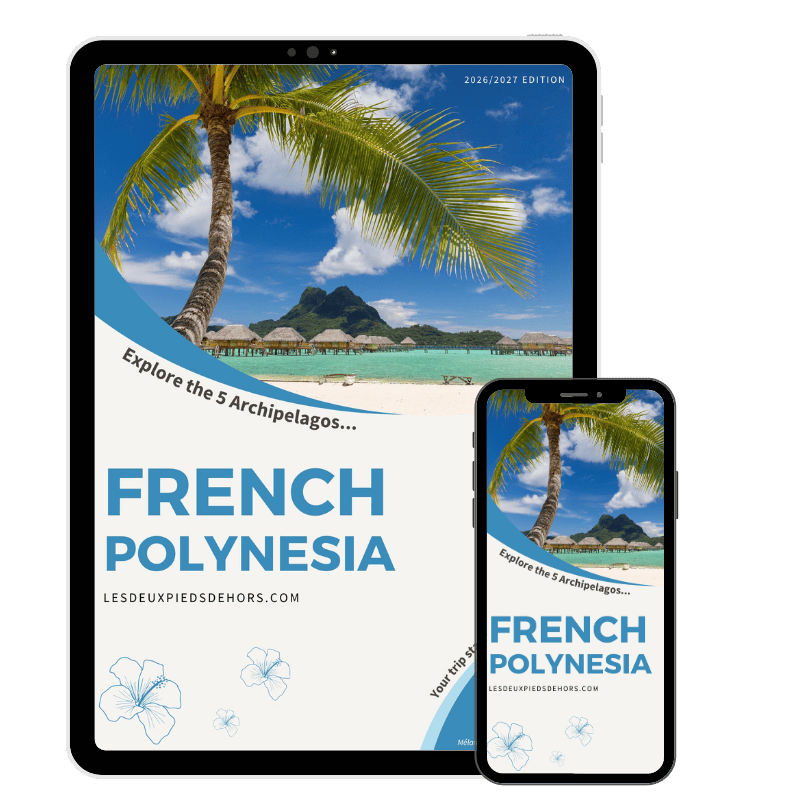
We decided to make your life easier by creating our own travel guide, where everything is organized, categorized, and summarized. Save research time and start traveling already!
Yes, I'm interested!
General questions about our travel guide
I decided to group together here all the questions we thought of, except for the technical questions that will be covered further below.
Why a travel guide to French Polynesia?
It may seem like a silly question, but in the end it’s the first one that comes to mind and the one we were asked a lot. As you may know, we spent six years in French Polynesia, built our family there, had two wonderful children, and truly loved our life there.
In fact, the blog was born in Polynesia, after a stay of about ten days on the island of Maupiti. Over six years, we wrote about everything possible and everything we experienced firsthand. Of course, there are still things missing, and we haven’t visited all the islands of Polynesia, but the essentials are there to prepare for a stay in French Polynesia. That’s certain. So yes, one could ask: why create a travel guide to Polynesia?
We have to admit that the idea had already been in our minds since we left Polynesia at the end of 2021. The idea of no longer writing about it and no longer talking about it was simply not an option for us. We wanted to keep writing about French Polynesia, and the idea of developing our own book—at least a digital one—naturally became obvious after the fact. I must admit, it took an enormous amount of motivation to make it happen. It was in this titanic undertaking that we wrote what we consider to be the most complete guide that exists on French Polynesia. But above and beyond all the information we were able to summarize and write in our guide, what you will feel most strongly is our personal experience during those six years. And that makes all the difference.
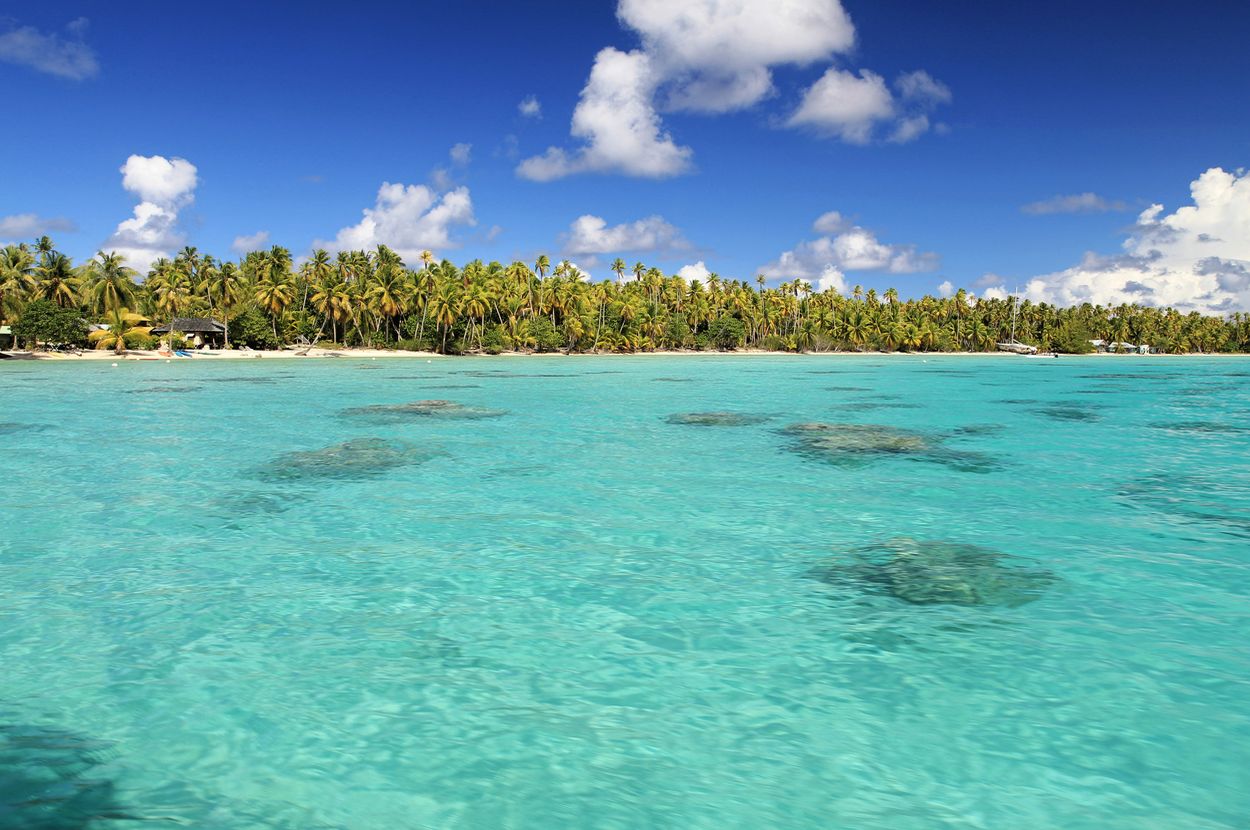
I’m not here to say that other guides aren’t worth it, but under no circumstances do the author or authors have the experience of having lived in French Polynesia for all that time. And I think, based on the feedback we’ve received since launching our guide, that our experience and our personal touch can truly be felt throughout it.
There’s another point worth mentioning as well. We were very often told that yes, we had written a lot about French Polynesia—more than 60 articles on the blog—but you need time and motivation to read everything in order to get what you’re looking for. And the guide goes far beyond simply reusing what is already in the blog articles. It’s a true travel guide in which you’ll find all the practical information you need to organize your vacation in French Polynesia: names of providers and accommodations, with our associated reviews, as well as prices, phone numbers, email contacts, and more. In short, all the classic information you’d expect from Lonely Planet or Guide du Routard—and we still go much further. We’ll tell you more about that next.
In the end, you’ll find all the information summarized, organized, and structured to help you prepare your trip to French Polynesia. We’ve always wanted to keep helping people prepare their travels, and I clearly think the guide is perfect for that. As I told you at the beginning, the point here is not to convince you to buy this guide and, in any case, the decision to buy a guide or not will be made pretty quickly on your end. These few lines probably won’t change that. The goal of this article was simply to write a bit more and tell you everything that goes on behind it.
What will you find in this Polynesia travel guide?
We divided our travel guide into several distinct parts:
- Why consider a trip to Tahiti / French Polynesia: we briefly remind you why you should choose these Polynesian islands (even though you probably already know, right!). On the agenda for your stay: lagoon cruises, sharks galore, outrigger canoe rides, snorkeling in turquoise waters, excursions in the Tuamotu lagoons, overwater bungalows, white sand, coconut palms, archaeological sites, diver’s paradise, pearl farms, and much more! Everything is in place for an amazing trip!
- Discovering French Polynesia: we discuss in detail everything we felt was important to know in order to go to Tahiti and truly understand local life. We cover the environment, the territory’s history, the specific features of present-day Polynesia, daily life, and more. Want to learn about raw fish in coconut milk? The coral reef? Nuclear testing? High islands and atolls? Monoï oil? We talk about all of it!
- Organizing your stay in Polynesia: here is the practical section—everything you need, 100%, to organize your stay in Polynesia, with no doubts or unanswered questions left hanging!
- The archipelagos and their islands: this is the heart of the guide, because it’s where you’ll find everything to do on the islands, what to see, the must-sees, where to stay, where to eat, which excursions to choose, which providers to use, and so on. You’ll find details on the most beautiful waterfalls, coral gardens, guesthouses we recommend, dive spots, what local crafts to bring back, where to swim in the best spots, the best roulottes, and more.
What’s the difference between our guide and the blog?
I’ll briefly go over what I wrote earlier, but you’ll get the idea. While we were living there, we did not initially plan to write a precise guide to French Polynesia. That means that in our articles today, you won’t find the exact details of everything you need—especially email addresses and phone numbers, our opinions on all the accommodations on each island, and so on.
In the end, our articles contain the essentials and, above all, our personal and immediate impressions from our experiences on the islands we visited. The guide follows a fairly different logic, even though it also includes our personal experiences. We obviously go much further in the details, and we also cover other islands we didn’t have the chance to set foot on during our 6 years there, but which, between us, are still very rarely visited by regular tourists anyway.
But beyond the much greater level of detail you’ll find in the guide, we structured everything and wanted to make trip planning as simple as possible by providing the maximum amount of information. I’ll talk about it a bit more in detail, but the guide also goes further by offering four bonuses that you won’t find anywhere else in other guides: online maps of all the islands including everything covered in the guide, offline points to help you get your bearings when you don’t have internet, GPS tracks for all the hikes mentioned in the guide, and above all, special promotions we were able to negotiate with certain partners if you come through us.
Our strengths compared with other guides
I’m not here to praise our guide and tell you that Lonely Planet or Guide du Routard aren’t interesting. I’ll leave that judgment up to you. But, as I said earlier, where we go much further than traditional guides is truly thanks to the four bonuses we decided to offer in addition to the guide. I’ll briefly explain them here.
Online maps
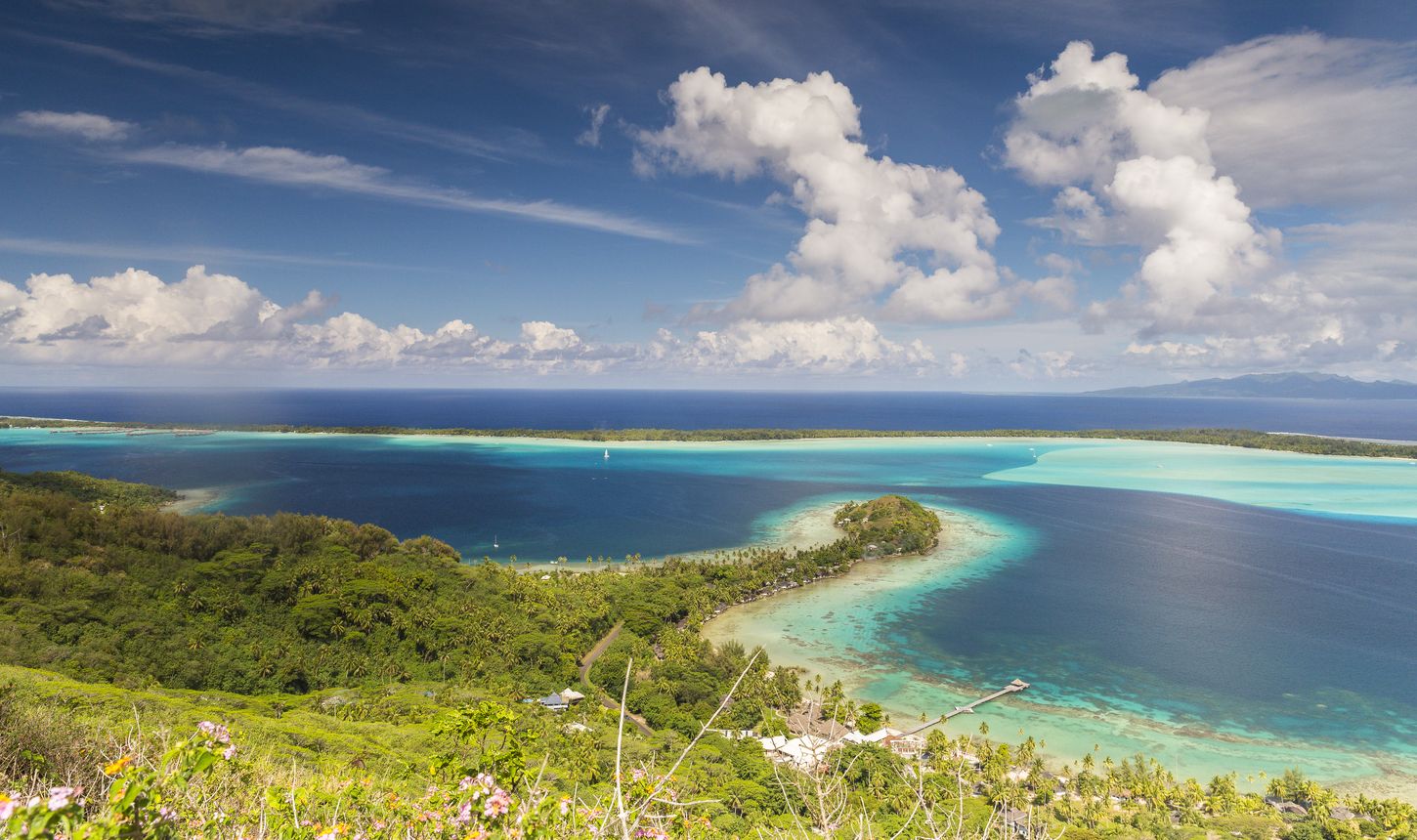
While we were in the middle of writing our French Polynesia travel guide, we had the idea of standing out from traditional guides by offering an online map for each island for which we provide detailed information. It really felt like an excellent idea. In fact, inside the guide, you’ll find an online map for every island mentioned and described. This online map includes everything discussed in its chapter. The idea was simply to locate on a map everything we talk about: accommodations, activities, things to see and do, shops to buy souvenirs, and the various practical elements such as boat departures or airports, passes, and places to eat. We also added the GPS tracks of the hikes we mention in the guide to these maps.
Maybe it’s ultimately a professional reflex, since I’m a trained geographer, but I found it really valuable to be able to better visualize where we’re going, where our hotel is located, the points of interest in relation to where we’ll be staying for a few days, or where the hikes begin. This will allow you to better contextualize your trip and surely help you make decisions when choosing your accommodation or other important elements.
You’ll also find it on our guide’s sales page, but I’m sharing here again the map we show for free for the island of Moorea to demonstrate the work that was done.
Another very interesting thing we wanted to create, and which turned out to be quite a headache to organize, was the ability to click directly from the map to book your accommodation or activity. Whenever online booking was available on a website, we added the link so you can directly go and read more details. This is something that has been mentioned to us several times since we started selling our guide, and people love this feature. It clearly saves time compared with having to search on Google.
In the end, it’s not just a simple online map but truly a way to save time, save money, and make the right decisions. Another advantage is that you’ll be able to use this map both before your trip and while you’re traveling. I know some people have used it, for example, to choose which hike they wanted to do or to see where a restaurant was located in relation to where they were staying.

Offline points
Here is another bonus that seemed extremely valuable to us, perhaps even more important than the online maps. As we explain in the guide, you won’t necessarily have access to the internet when you’re in French Polynesia. In fact, most French phone plans do not provide 4G access there and, unless you buy a SIM card with a data plan, you won’t have access to the web once you are away from your accommodation, for example.
So we thought it would be incredibly useful to offer readers who trusted us by buying our guide a set of offline points that could be viewed in an app such as Maps.me. So we rolled up our sleeves and located all the elements mentioned in the guide, one by one, in a set of offline points. Everything is clearly explained in the guide: you simply need to download the Maps.me app to take advantage of these points.

The advantage is that you’ll be able to find your way around just like with the online map, except that this time you won’t need internet access. The app works offline, and you just need to download the offline maps before leaving, while you’re at your accommodation and have internet access. This allows you, for example, to locate a restaurant when you’re in Vaitape on Bora Bora and don’t really know where to eat. Of course, the guide is accessible online and you could still open it on your phone while you’re in town, but it’s still much more convenient to simply have the app, which also locates you live and displays more than 1,000 points across all of Polynesia. With that, getting lost is impossible, and you’ll save time—that’s for sure.
GPS tracks
We know full well that this third bonus may not interest everyone, because most people who come to French Polynesia don’t necessarily come for hiking. It must be said that the territory is mostly sea-oriented, and the majority of tourists—this is not a criticism—will focus on lagoon outings, scuba diving, paddleboarding, kayaking, and that kind of thing. Even so, more than anything, I truly recommend considering several walks/hikes depending on your level on the islands where you’ll be staying. You’ll often find very beautiful viewpoints as soon as you gain a little elevation—the views from above are simply stunning.
So, inside the guide, you’ll find details of all the most classic hikes on all the islands that are covered. We’ve provided the GPS tracks for every hike mentioned in the guide. You can, for example, display them in the Maps.me app, the same one mentioned above for the offline points, but above all you can load them into your own hiking GPS or your watch if you have one. You can also locate the hike on Google Earth before leaving.
This will save you quite a bit of hassle and research time when figuring out exactly where hikes begin and which trails you can consider during your vacation in French Polynesia. Once again, it’s a precious time-saver.
Special promotions
I’ll finish with the fourth bonus we wanted to offer our readers: special promotions. Even though we would have liked to offer more, you have access to a number of special promotions, whether for accommodations, activities, car rentals, or scooter rentals, if you come through us. You’ll simply find a promo code inside the guide that you can give to the provider to save money.
Some providers really played along, and there are some very nice discounts if you come through us, so we think that’s a pretty nice perk.
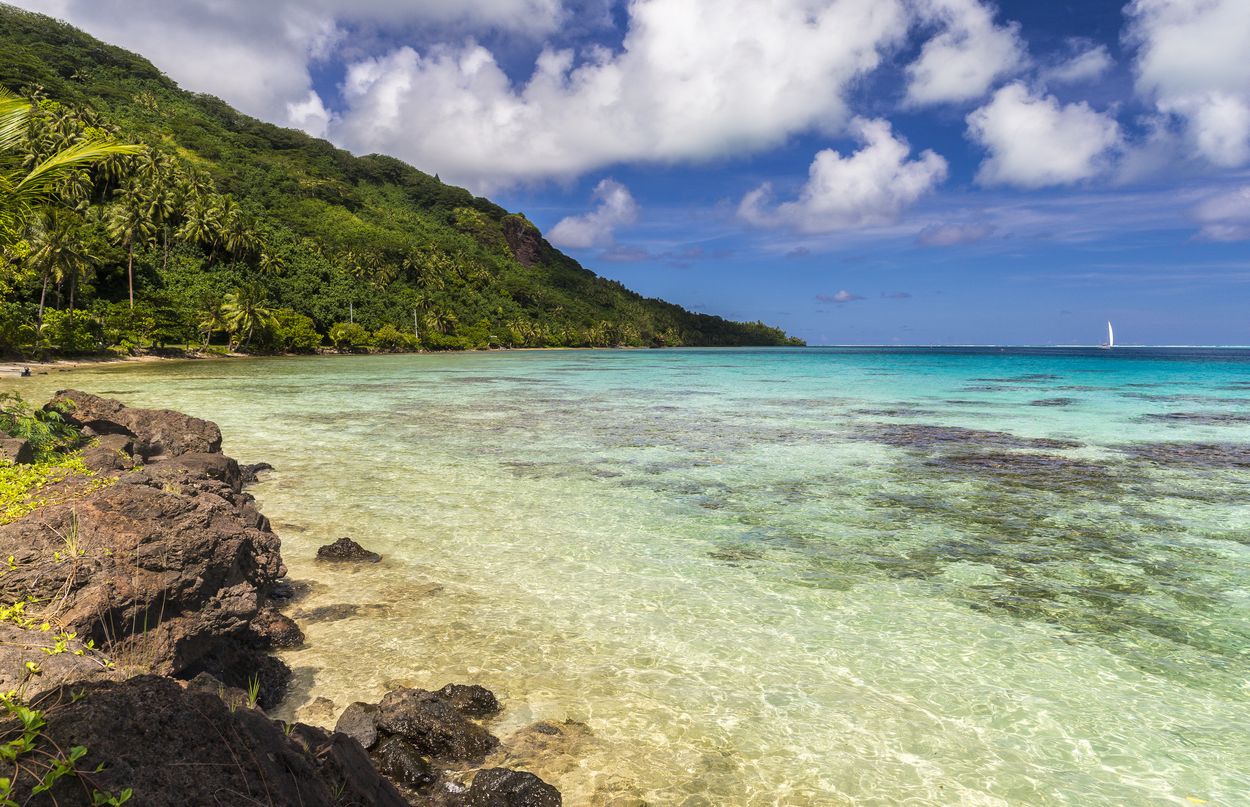
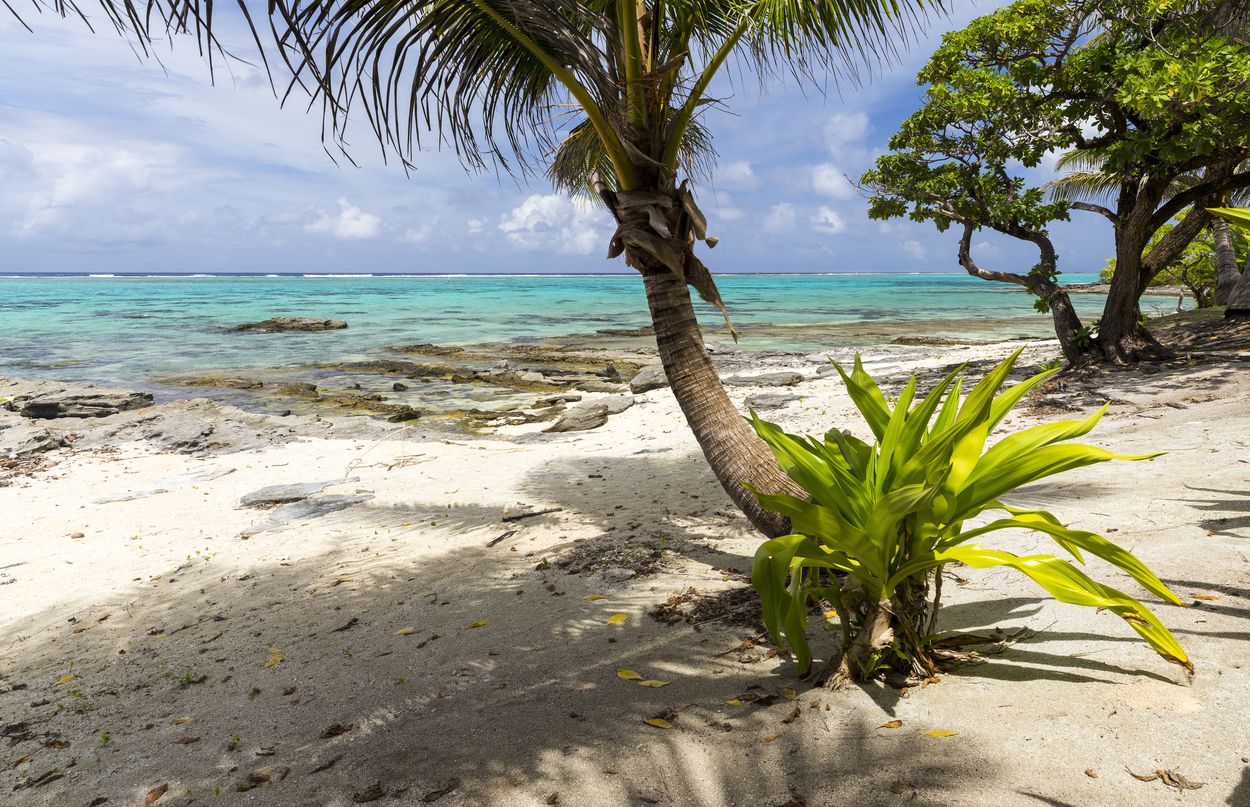
Another interesting point I wanted to mention is the visual aspect of our guide. Indeed, if you buy the Lonely Planet or Petit Futé for a destination, you’ll realize that the number of photos is extremely limited. It’s always frustrating not to have any idea what places actually look like, and we really wanted to highlight our photos and integrate them as much as possible into the guide. Not all the photos are ours, but I’d say more than 90% are. That way, before your trip, you’ll already have a good idea of what the places look like.

Why keep writing about French Polynesia when we’re in Guadeloupe?
As we were saying, even though we’ve been living in Guadeloupe since the end of 2021 and as I write these few lines, we didn’t feel ready to stop writing about French Polynesia. We would almost feel like we were abandoning our readers who relied on us all those years and who continue, every day by the thousands, to read our words about this territory in Polynesia. It was unthinkable to stop abruptly.
So in the end, writing a guide about French Polynesia came as the logical next step to keep writing, and we still have articles in reserve that we want to publish soon. We’re going to go into more detail on certain areas or certain accommodations. We hope this will help you.
Writing and research time
As I mentioned above, I admit it took me a really long time to fully commit to writing this guide. Even if you don’t realize it at first glance, it’s the hardest thing I’ve had to do since I started blogging. Writing a guide of nearly 1,000 pages that summarizes a territory as large as Europe is no easy task.
At the beginning, when we started writing, we had no idea what we were getting ourselves into. Even though we had a solid foundation with about sixty articles on the blog, it was nowhere near enough to write a guide of this size. To tell you a bit about the process, we had to face the fact that we needed much more precise information to complete everything we already had. So this is how we worked:
- We worked on an outline so that we could cover everything we wanted to include in the guide and everything that seemed necessary to organize a trip to French Polynesia. That alone was already full days of research, comparison, choices to make—in short, a headache.
- Once we knew what we needed, we divided the guide by archipelago and then by island, for a total of 28 islands.
- For each of these islands, Mélanie took on the task of compiling all the information we already had and everything else that I would need to add. Of course, as you can imagine, we weren’t able to test every activity and every accommodation on every island in the guide. Still, it was absolutely essential that the reader—you—could choose those activities or accommodations independently. So we had to look for precise information, compare reviews, talk with our friends who are still there, all in order to produce all the data needed to organize a trip on each island. Basically, Mélanie did a huge amount of groundwork. You could say she prepared the ground for the person who came after to write it all up—that is, me, haha.
- Once Mélanie had finished her research, I came in behind her and rewrote all the information she had gathered. I admit it was a bit laborious at first because writing a travel guide is not the same as writing a blog. But little by little, things started to fall into place and I found a pretty good rhythm for writing each island. Some were obviously much longer than others.
- Once the writing of the 28 islands was finalized, we tackled the practical section of the travel guide—the part needed to understand how life works there and, above all, to gather all the information someone would need to organize their trip completely independently. That was also a serious section to write.
- At the same time, we then worked on the layout of the travel guide. Let’s be honest—once again, it was a real headache. We had to find suitable software that would allow us to do what we wanted to do, and even though it isn’t perfect, we’re still very happy with the result.
- Once the layout was completed, I personally started working on the online mapping, the offline points, and preparing all the bonuses, and that still required several weeks of work.
- We finished our work by preparing the sales page that summarizes our guide and, as I’ll tell you afterward, I really struggled quite a bit in the end to find something that satisfied me.
Otherwise, from the moment we started until the moment we launched our guide, in early September 2023, we worked almost non-stop for 9 months, more or less putting the blog on hold, which I’ll tell you about below.
Putting the blog on hold
It must be said that this was one of the main reasons it took me so long to devote myself heavily to the guide. I started working on it several times, but I eventually gave up in the face of the enormous task looming ahead of us. It was only from the beginning of 2023 that I decided to go all in. In fact, if I had decided to keep writing and doing everything I normally did on the blog with Mélanie, it simply would have been impossible to complete this work.
So I made up my mind to put the blog on hold, in a way—especially the writing of new articles—for the time it took to write this guide. It was still mentally difficult to take such a long break, but I already had quite a lot of articles ready to go on French Polynesia, photography, and other topics, so that still saved me quite a bit.
The difficulties we encountered while writing
I wanted to add this paragraph because it felt important to share with you. Writing nearly 1,000 pages naturally brought its share of difficulties over several months. What was ultimately the hardest and most time-consuming part was gathering all the practical information such as phone numbers, addresses, and email addresses.
Unfortunately, we were not able to verify 100% of all the phone numbers and email addresses, but I think the vast majority are still quite accurate. We contacted all the providers included in this guide to inform them and have them verify the information. That was a key point for us in trying to make the guide as up to date as possible.
The impact on family and couple life
This might make you smile, because now we’re entering a very different kind of topic, haha. I have to admit with certainty that when I throw myself into something, I think about nothing else, day and night, or almost. And I must admit that Mélanie really went through a lot during those 9 months when this was all I had in my head. I know I shouldn’t get so deeply invested sometimes, but unfortunately that’s part of who I am and my personality. Writing this guide definitely shook up our relationship quite a bit, especially during the times when we weren’t on the same wavelength: I was always at 100%, while Mélanie was sometimes a little less motivated. We had to find a balance and do our best during those few months, and we came out of it unscathed. Phew!
So let me tell you, I’m definitely going to think twice and try to analyze the mistakes I made while writing this French Polynesia travel guide before I start writing the one for Guadeloupe. That is obviously part of our plans now that we live here, but we still need a bit more time to digest the French Polynesia one. Mélanie clearly overdosed on the guide—and on me as well, haha.
The final stretch
Although we had planned to release it when we got back from Costa Rica at the end of August, it turned out to be impossible given the last missing pieces. I have to admit the final month was really tough. Even while we were on vacation in Costa Rica, I worked every evening for several hours to make as much progress as possible on the last texts to finish, the corrections, the maps, and the various bonuses. The goal, of course, was to come back from Costa Rica with only the final details left to take care of—or almost. We were a little late because, unfortunately, I couldn’t do more during the trip. To share a funny little anecdote with you, during long drives of several hours, I worked in the car with a 4G connection and my laptop on my knees. When I tell you I’m not always well-adjusted, haha.
The launch and release of the travel guide
And then, finally, the fateful moment arrived: first, the announcement of our guide during a live on Facebook and Instagram, which created quite a buzz and gave us the motivation and determination to release this beautiful digital work. A few weeks before the guide came out, we had given a preview to everyone who was interested, and we clearly saw the excitement of all the people who were following us and planning a trip to French Polynesia. We gave out at least 500 previews in 10 days, which was already pretty good.
We also organized a giveaway for 2 weeks to celebrate the release of our guide in partnership with a set of providers featured in the guide. The giveaway worked very well, and a large number of people really took part. It was nice to see.
I have to admit I was almost completely stressed out when our guide launched, because we had been working on it for nearly a year and, honestly, we really didn’t want to mess it up. But it’s always difficult to know whether people will like the guide or not. Then, finally, the day came when we took the plunge, officially put the sales page online, and announced the launch of our guide on social media, by email, and among people around us. It created quite a bit of buzz—at least on our scale—and we had already sold around fifty guides that day. We were already happy with that first result.
Let’s talk about sales and money!
I have to admit, as I mentioned in my last report, that I’m sometimes tired of not being able to talk about money in France. In all the other European countries, and even more so in the United States or Canada, people can talk about money without any issue and without any taboo. Unfortunately, in France, it’s still very different: this kind of topic quickly leads to jealousy. Anyway, since I’m in a phase where I want to get back to my early blogging days and, once again, write whatever I want, I’m going to talk to you about sales and the money this guide has brought us.
As mentioned above, we made around fifty sales in one day, at a price of €29. In the first week, we were at around 150 sales, or roughly €4,500, which was already honestly very good, I think. Based on the feedback we’ve had around us from other people who sell digital guides, these are rather excellent figures for an ebook sold at a low price.
At the time I’m writing these few lines, in March 2024, we are exactly at 426 sales, for a total of around €11,000 in revenue, all within 6 months. We’re happy with the results, even though I’ll always tend to think we could do better, haha. I’ll come back to that right after.
The costs of creating this travel guide?
I also wanted to mention this specific point, because one might think that creating a travel guide like the one we just made doesn’t cost much. In reality, I’m not going to lie and tell you it requires a huge financial investment, because that’s not true. A huge personal investment in time, yes—that’s certain.
To create this guide, we had to buy a few paid software programs, each costing around one hundred euros per year, so it’s not the end of the world. We also had to pay several people to proofread the guide and buy a few photos here and there.
Among the additional expenses, we also have fees charged by credit card payment systems and by PayPal. Of course, we also have 8.5% VAT on the sale of this guide. Don’t think that we actually make €29 every time we sell a guide…
Overall, if you ask me, I’d say it’s still fairly profitable to create a travel guide like the one we decided to make, even though you need to face the obvious fact that you’re not going to get rich from it, haha. But at the same time, that wasn’t the goal.
The obsession with the sales page
I’m not going to spend hours talking about my daily obsessions, but it ties in with what I was telling you above. In the past, thanks to training courses, I learned how to create optimized sales pages to summarize things well and make products sell in the best possible way. Still, I have to admit that I’ve changed the sales page at least 5 or 6 times since the launch 6 months ago, and I remain eternally dissatisfied with how effective it is.
I really struggle to settle on a version that feels like me and that I truly like. I’m always questioning things again, wondering if I write too much, if I’m getting the right message across, if I should explain more, and so on.
So I’m calling on your goodwill. If you had the motivation to read this article this far and you’re coming across these few lines, don’t hesitate to tell me what you think of our sales page and how we could improve it. I’ll gladly take all constructive advice!
The difficulty of setting “the right price”
Here is another tricky subject that we’re still thinking about, even six months later. It must be said that Mélanie and I don’t always agree, depending on the moment we’re thinking about it, and we really spent a lot of time reflecting on this before the guide was released.
From the very beginning, we decided to launch our guide at €29 instead of €35 when it came out, and that worked very well for the launch. Then, some time later, after thinking it over several times, we ultimately felt that €35 for a digital guide was probably too high, and we opted for a permanent reduction to €29, our launch price.
Here is another tricky subject that we’re still thinking about, even six months later. It must be said that Mélanie and I don’t always agree, depending on the moment we’re thinking about it, and we really spent a lot of time reflecting on this before the guide was released.
From the very beginning, we decided to launch our guide at €29 instead of €35 when it came out, and that worked very well for the launch. Then, some time later, after thinking it over several times, we ultimately felt that €35 for a digital guide was probably too high, and we opted for a permanent reduction to €29, our launch price.
What feedback have we received about the guide?
Anyway, enough about money—let’s now talk about the feedback we’ve received. Once again, I invite you to go to the bottom of the sales page in the testimonials section to look at the different reviews we’ve received. Of course, not everyone who bought the guide wanted to leave a testimonial, but we’ve received almost nothing but positive comments since the launch.
We had a few people tell us that the guide was really very complete—perhaps even too complete with its 1,000 pages. And in our defense, it was still very complicated to summarize a territory as vast as French Polynesia, and we already limited ourselves to the most touristy islands. If we had included other, much more remote islands or islands mainly visited only by locals, the guide would have been even bigger!
The real difficulty of getting the travel guide known
Here is a very interesting point to discuss and share with you. Even if we can be considered the reference blog on Polynesian territory, the bloggers who have written by far the most articles, it remains delicate to make ourselves known. Today, if you’re preparing a trip to French Polynesia, there is almost no chance that you won’t come across our articles. Even so, not everyone is necessarily interested in buying a travel guide, and some will prefer to organize their trip on their own.
Ultimately, the hardest part is getting our guide known compared with the other big classics like Lonely Planet or Petit Futé. Even though we are convinced that we’ve done an extremely good job, after several months of selling it, we feel that things are moving slowly and that it is actually quite difficult to sell our guide day to day. Articles alone are not enough, in my humble opinion.
Are we planning to translate it into other languages?
Considering that our entire blog is translated into English (we recently caught up on the backlog, at the time I’m writing to you), it might seem almost obvious to decide to fully translate our guide into that language. Even so, once again, the amount of work is titanic. Even though we have a good level of English, we would still have to have the entire text proofread and corrected, which would already cost us quite a bit of money, to be honest.
But on top of that, we would then have to redo the entire layout of every page, and that would once again require an enormous amount of time. The bonuses would also have to be redone in English…
In short, for now, that is not one of our priorities, especially since a majority of the English speakers who come to Polynesia are Americans, and they often go through an agency and favor high-end trips. I’m not really sure that’s the right target audience for people who buy travel guides in that case. So we’ll see, but for now we’ve set that idea aside.
Is it for you if you travel with an agency, or not at all?
Here is a question that has come up quite often by email and might make you smile. We’re often asked whether a travel guide could still be useful even if you’re going with a travel agency that organizes everything. Our answer is usually the same: for us, the two things don’t really have much to do with each other. You can absolutely decide to go through a travel agency that will guide you through your itinerary and accommodation choices, and then buy a travel guide so you don’t miss the absolutely essential things to do once you’re there.
In fact, more and more of you have bought the guide and emailed us to get the contact details of the agency we recommend locally. That’s a common case and, even if you decide to buy the guide, going through an agency to finalize the booking is in another sense a good idea. By the way, on that topic, we wrote a complete guide that can help you figure out whether you should go through an agency or not.
Technical questions
Here are a few technical questions that come up quite often and that we wanted to address.
Is it really accessible offline?
Even though it is clearly stated on the sales page, of course, you do not need an internet connection to read our travel guide. Think of our guide a bit like a book that is simply accessible offline. That’s actually the whole point of this kind of book: you’ll be able to read it before your trip, at home, on the plane, on public transportation, and so on.
Why did we decide to make an ebook instead of a paper version?
This is also a topic that came up several times in our discussions, and a few people mentioned it to us. We understand that traditional guides have a paper version, but to speak frankly, with our vision and our illustrated travel guide, it was simply impossible to imagine printing a guide like ours. We wrote nearly 1,000 pages in A4 format. Just imagine the size of that book, considering that we would have been forced to reduce it to A5 format, remove almost all of the photos, like in other guides, and in the end we simply wouldn’t have liked it…
Not to mention that, financially speaking, printing such a huge guide would have been extremely expensive, and we probably would have had to sell it at too high a price for people to really be interested. In the end, we really like the digital format: it’s accessible everywhere and at any time. Yes, it’s true, several people asked us about it, but unfortunately, it won’t happen.
Did we think about releasing it in other formats?
This is a big topic and a really complex one. When I talk about other formats, I simply mean formats compatible with e-readers like Kobo or Amazon Kindle. There’s one thing you should know: our guide is available in PDF format and therefore cannot be read on an e-reader as it stands. If we wanted to sell it, for example, on Fnac or Amazon, it would be necessary to convert this PDF into the format required by those platforms (epub, mobi). We tried the experience, even ordering a service from a provider to help us do the conversion, but the result was simply unusable. The rendering was impossible to sell.
So we canceled it and, for now, we still haven’t found a provider capable of converting our 1,000-page guide into those formats. There is an enormous amount of work to do and many changes to make for the guide to be compatible with those formats.
And even though Mélanie and I don’t completely agree, I sincerely think that, considering the time spent, the cost that would represent, and above all the commission taken by Fnac or Amazon on each sale, it really isn’t worth dwelling on. We might as well sell the guide as it is on our website. That is, at least, the position I’m trying to maintain for the moment.
Are we going to update it regularly?
Here is a question that comes up extremely often. When you think about it, it may seem strange, because any guide—paper or digital—that you buy does not offer regular updates. Paper guides simply have different versions over the years, which, between us, are 99% the same, but that’s not the point. The fact remains that if you want a travel guide for a specific destination, you’ll have to buy the latest version.
We decided to do things differently and offer free updates to our guide whenever necessary. So no, we can’t do tiny updates here and there whenever people ask us to—that would be impossible and far too time-consuming. However, we are going to update the guide every year, free of charge!
How can you help us spread the word?
I’ll end this very long and somewhat unusual article with a few final words. I’ve already mentioned it throughout, but if you’d like to help us spread the word about our travel guide to Polynesia, please don’t hesitate to share this page around you and talk about it—that would help us a lot.
And please, if you took the time and had the motivation to read the entire article and made it all the way here, don’t hesitate to leave us a little comment. It will warm our hearts, I promise you 100%.
If you have any questions or topics you’d like us to cover here in this article, just let us know and we’ll add them. There may be points you’d like to see addressed here, so feel free to leave us a comment!
Thanks again for reading us, and see you soon.
Sylvain

Written by Sylvain PONS
From 2015 to 2021, French Polynesia was our home, with Mélanie and our children. I'm happy to share my experience and advice to help you organize an unforgettable stay in French Polynesia, based on my in-depth knowledge of the territory.
Despite our care, a mistake may have slipped into this article. If you find any, please don't hesitate to let us know so we can correct it as soon as possible and keep our information up-to-date!