La Réserve Cousteau - Our complete guide
Last update: 04/30/2026
Our blog continues to grow thanks to you, our readers. This post may contain affiliate links, which means we can earn a small commission if you make a purchase through them, at no extra cost to you. This helps us to continue to bring you more and support our work!
Hello everyone! I’m back with another article about Guadeloupe, this time focusing on the Réserve Cousteau. If you’re planning to visit the archipelago of Guadeloupe and its islands, chances are you’ll come across this famous reserve named after Commandant Cousteau. In fact, if you’re planning your trip, I invite you to read our detailed guide to budgeting for a trip to Guadeloupe.
Among the must-sees on Guadeloupe’s Basse-Terre island, the Réserve Cousteau remains one of the most visited spots, as evidenced by the number of tourists on the famous Malendure beach. I think every visitor to Guadeloupe stops here and there are many ways to discover and visit the Réserve Cousteau.
We’ve finally had the chance to try them all, and that’s the aim of this article, to give you all the options and our honest opinion. Come on, let’s go and discover the Cousteau Reserve!
So, for the Cousteau Reserve, how do I choose?
As I know that people are less and less interested in reading full articles, I’m increasingly keen to summarize the main points at the beginning of the article by giving you our opinion. So here are the pros and cons of the various activities to discover the Cousteau Reserve, as I see it. Don’t hesitate to let me know in the comments what you think and what you liked best!
| Activities | Pros | Disadvantages |
|---|---|---|
| Kayak |
|
|
| Aquatic hiking |
|
|
| Swimming and Snorkeling |
|
|
| Scuba Diving |
|
|
| Glass bottom boat |
|
|
How to explore the Cousteau Reserve ? Activities and advice
For those who want to know more about this reserve, its history, how it works and how it’s protected, I’ll tell you more at the end of the article. In the meantime, I’ll get straight to the point and focus on the different ways you can get to know the Réserve Cousteau through various activities. There’s something to suit every taste and budget, so you just have to choose!
Diving in the Réserve Cousteau: Discover the underwater world
If you’ve been following us for a while, you may have come across our article on this subject. In partnership with the diving club Les Heures Saines and the great activity booking site we’ve been recommending for years, Manawa, we had the opportunity to dive at the Réserve Cousteau on the famous îlets Pigeon.
In my opinion, this is the first activity to consider if you want to put your head under water or even try it for the first time. It’s a really nice spot, easy to dive, and for a first-time diver it’s a real kick. After that, of course, it all depends on whether you have experience of other dive sites around the world.
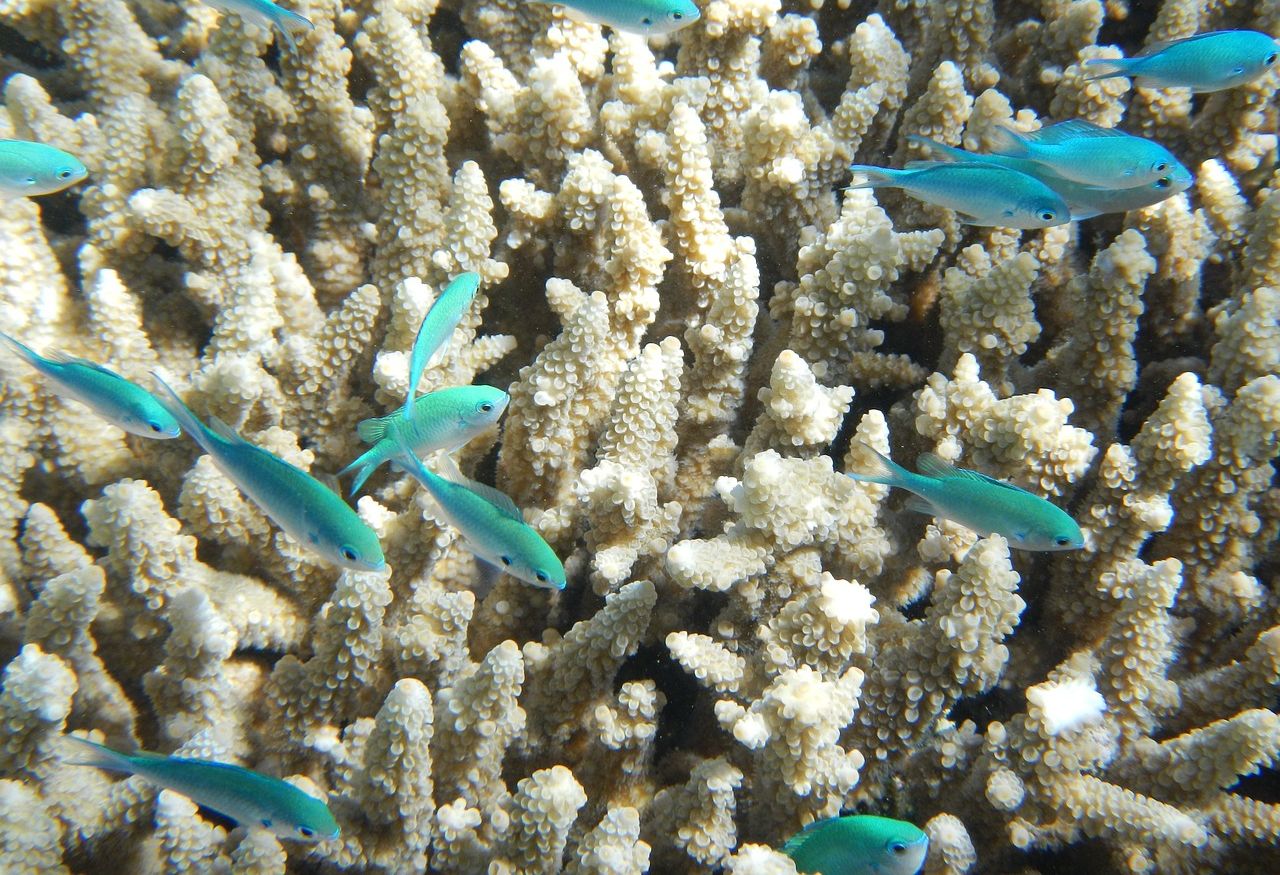
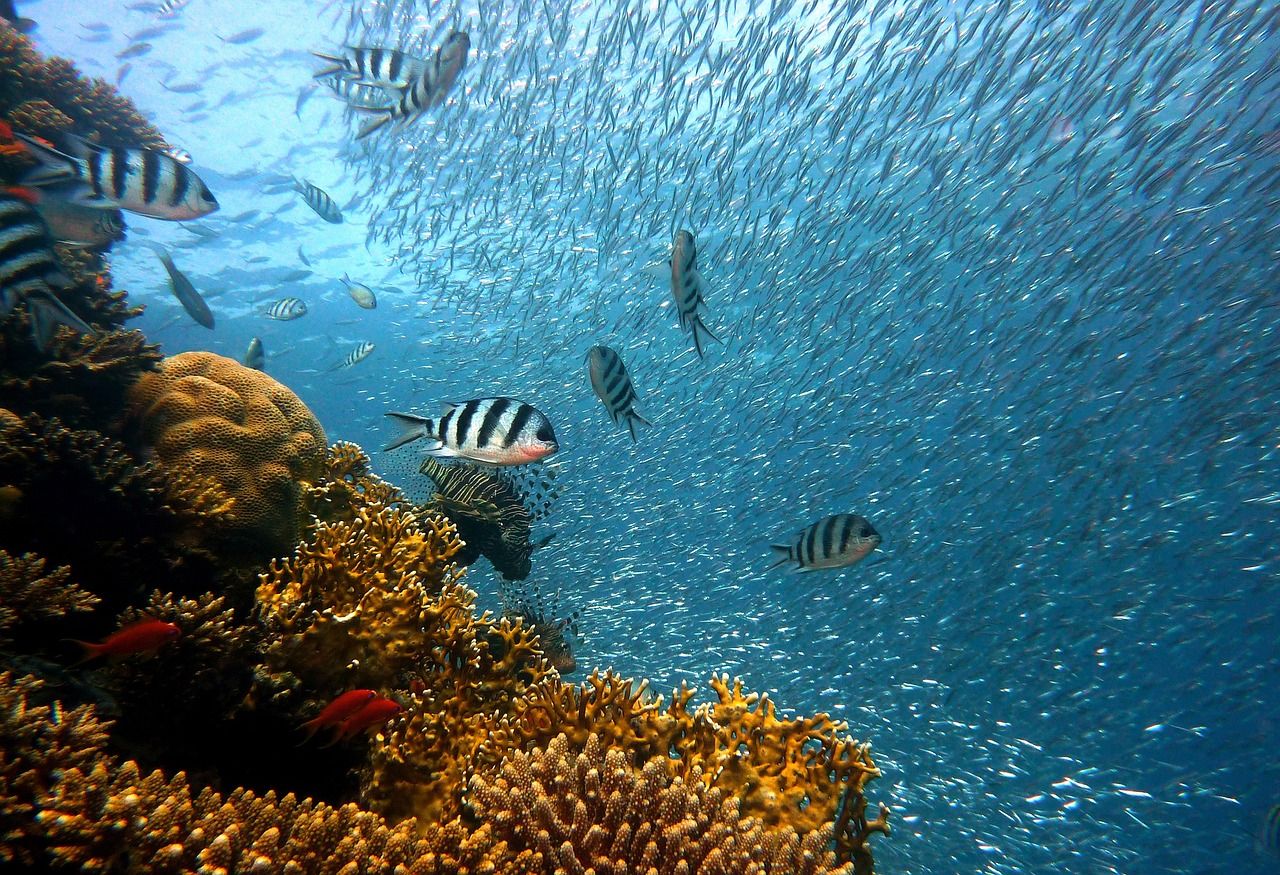
But I’ll leave you to read our full article on the subject for our full opinion of this dive experience. Even though it’s very busy and you can see that it’s a very touristy site, it’s still a very pleasant dive to discover the area. Of course, as you can imagine, you won’t be able to discover the îlets Pigeon in this way from land, which is perhaps a shame.
If you want to book your dive directly with the Réserve Cousteau, we recommend the club we were with, Les Heures Saines. They have a very good reputation and, frankly, we weren’t disappointed. Book my dive trip!
Kayaking in the Cousteau Reserve: Paddle in a beautiful coin!
Here’s another great way to discover the Cousteau Reserve: kayaking from Malendure beach. We’ve done this several times with Mélanie, both as a couple and as a family, and it’s always so much fun. To put your mind at rest, there’s nothing really complicated about it, apart from a 30-minute paddle from the beach to the îlets Pigeon. Of course, it all depends on the sea and the weather, because if there’s a current it can take longer and be a bit more complicated, especially if you’re not used to sea kayaking.
However, the advantage of this solution is that you can be completely autonomous on the islands, and that’s priceless. In my opinion, it’s the nicest, cheapest and most environmentally friendly way to discover the beauty of this nature reserve. Once you’re there, you can enjoy the beautiful white sandy beaches at your leisure and even explore the interior of the islands, which can be explored along small footpaths. The views from the islands are truly magnificent and well worth a day out.
In the end, I’d advise you to take a picnic lunch prepared the day before, put it all in a waterproof container that you’ll be given in the kayak, and probably leave for the day. If you can, try to get there as early as possible to avoid the crowds of tourists that may arrive later.
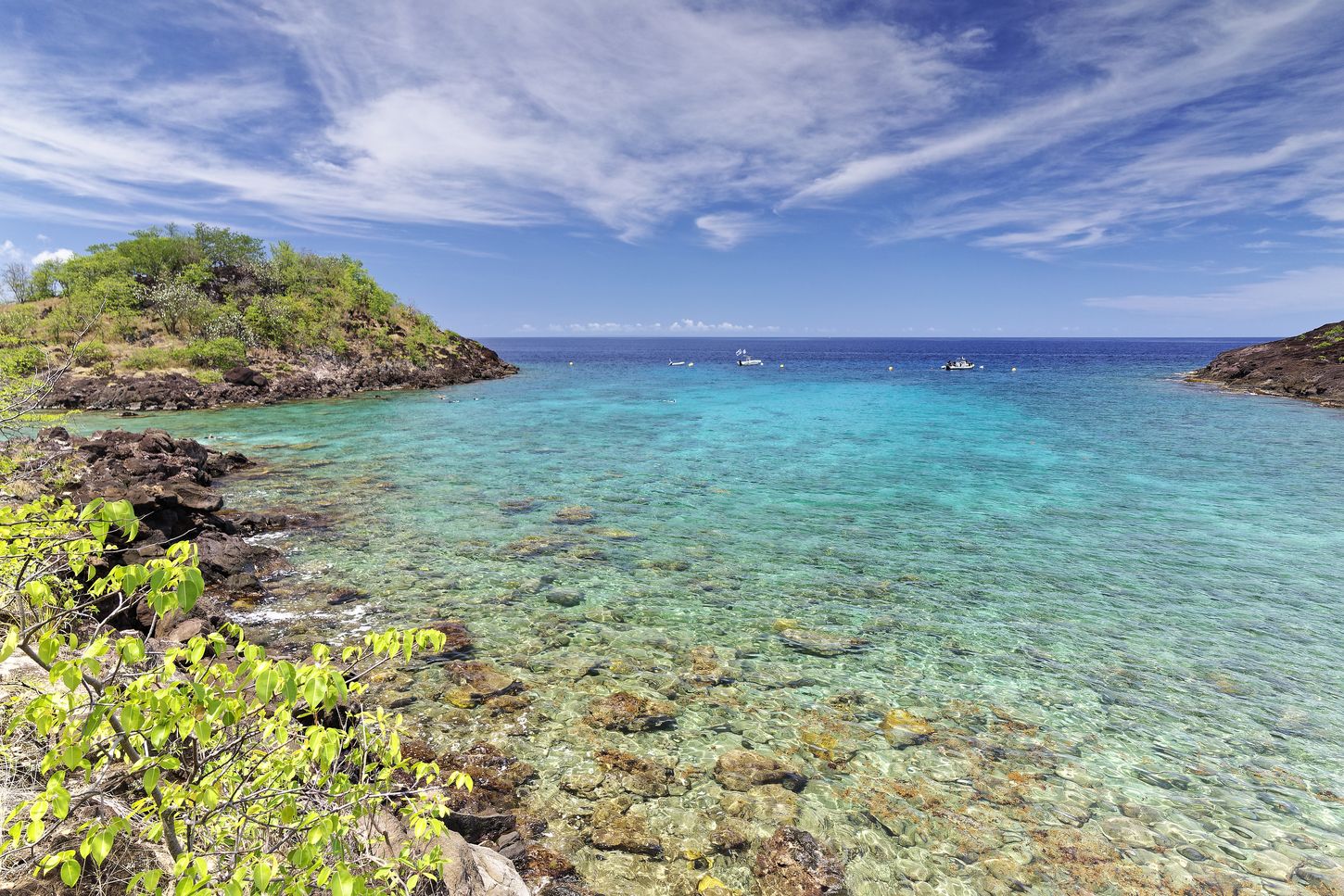
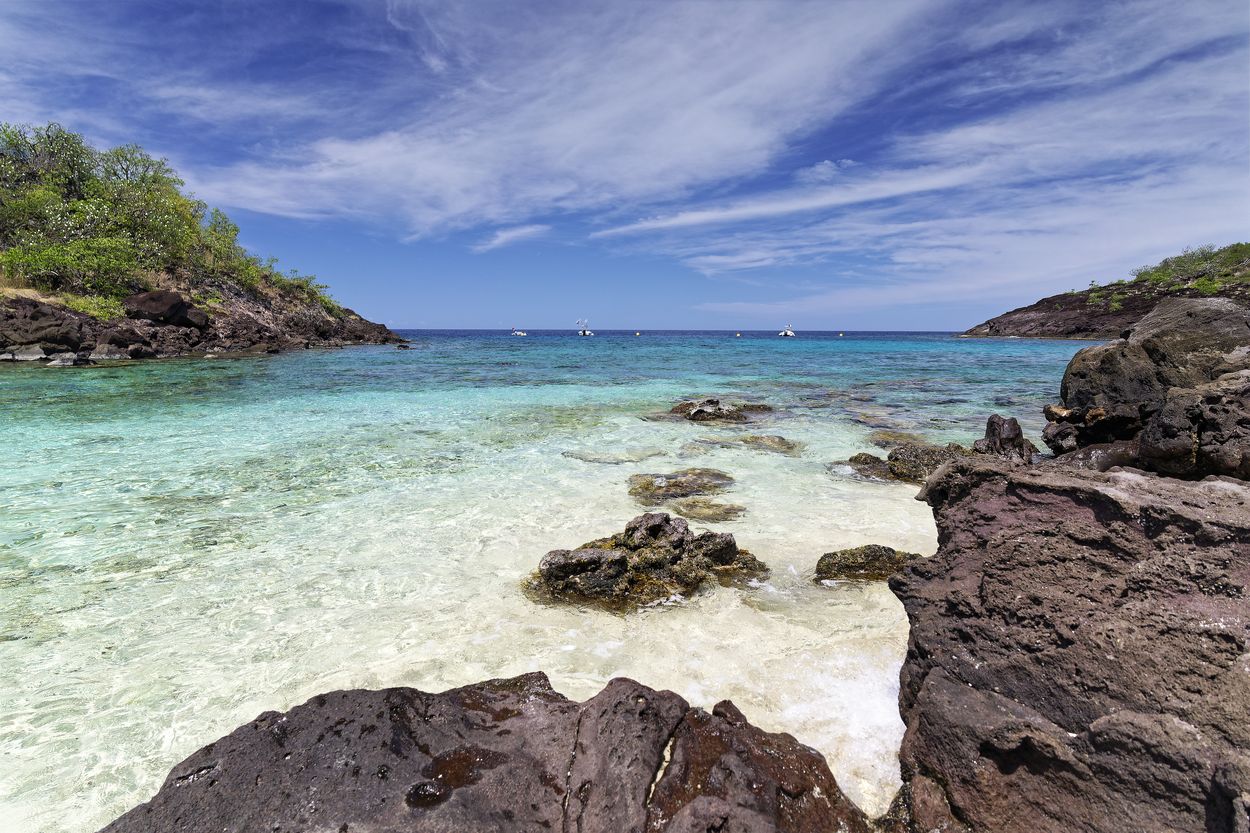
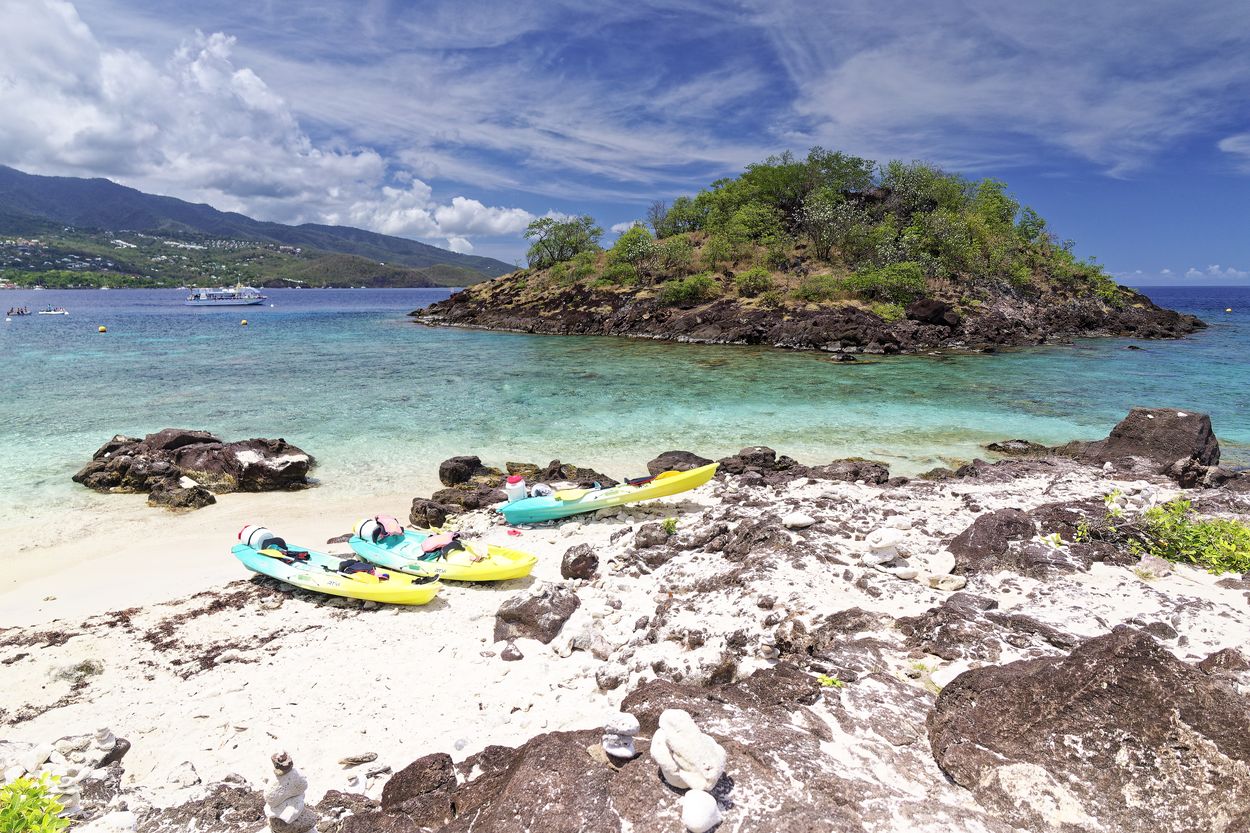
As far as service providers go, we’ve used several, but we’d recommend Kristal Kayak, who are really nice and have a very good reputation. Prices are pretty similar, more or less everywhere, and you can expect to pay between €23 and €30 depending on how long you stay. But if you take into account the time it takes to get there and back, plus time for meals and a bit of snorkeling or even just lazing around, then spending a day there isn’t a bad idea.
Glass Bottom Boat Trip to the Cousteau Reserve
Well, let’s be honest, this is the activity I would least recommend and the one I enjoyed the least to discover the Cousteau Reserve. Afterwards, I can completely understand that it suits certain people, that’s obvious.
We went with Mélanie’s father on his last holiday and with the children. The boat leaves every hour from the pontoon on Malendure beach. We all piled into the famous glass-bottomed boat that took us to the îlets Pigeon. The view of the bay and surrounding area at the end of the afternoon was truly magnificent. In fact, as always, I’d recommend going either early in the morning or late in the afternoon to make the most of the beautiful light.
Once there, the captain took us down into the hold of the boat and sat us on little wooden benches to watch the underwater life through the boat’s famous glass bottom windows. Honestly, I’d say it’s fun for kids and people who don’t fancy kayaking, swimming from the beach or diving. You’ll see a few fish and some coral, but in my opinion it’s not a transcendent experience. What’s more, the person giving the explanations over the microphone doesn’t really add much, apart from mentioning a few of the fish you’ll come across… It could be much better.
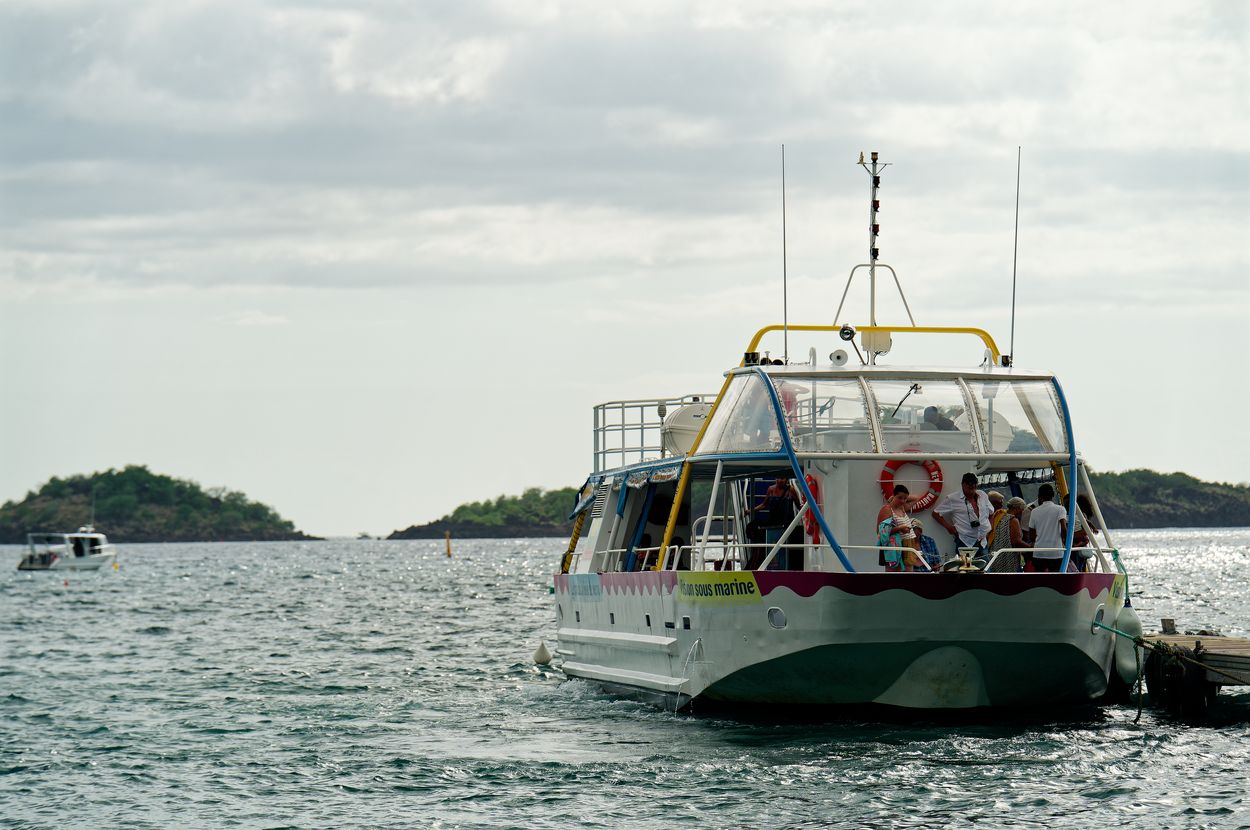
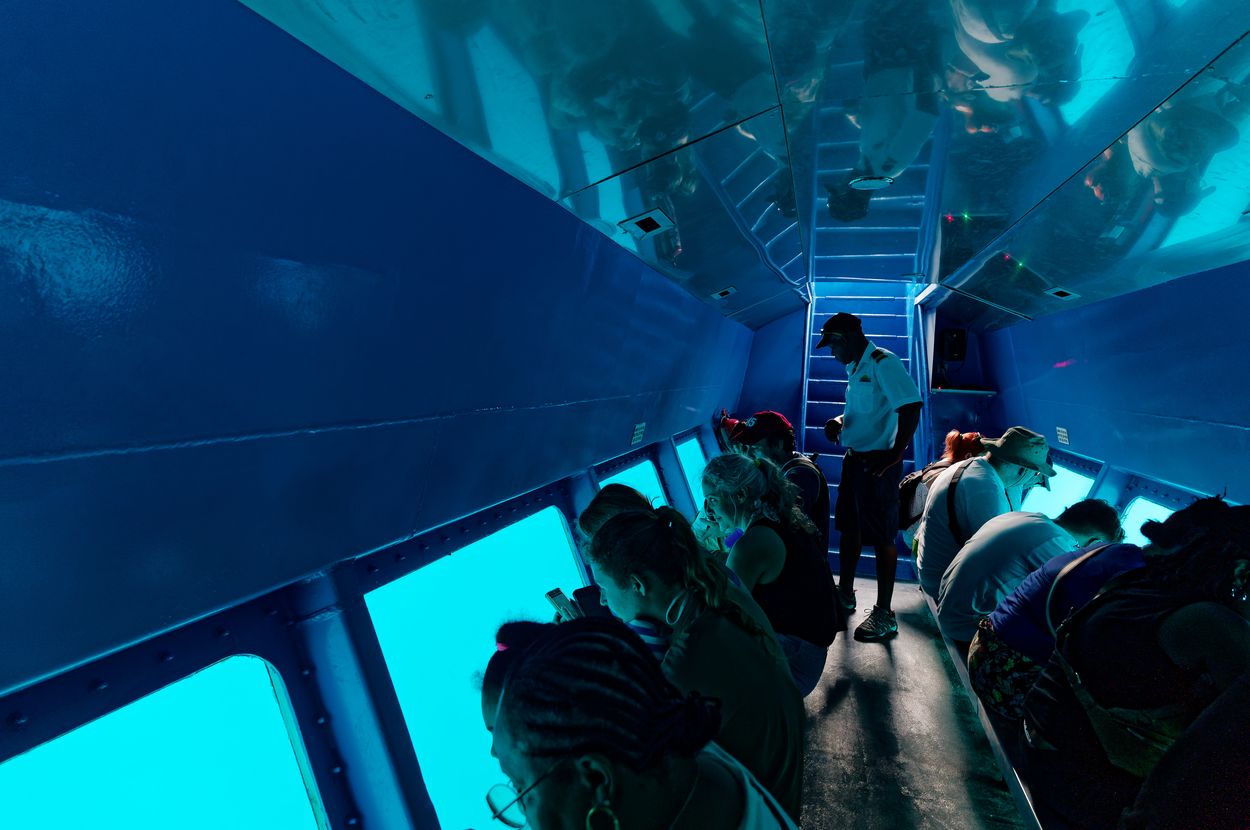
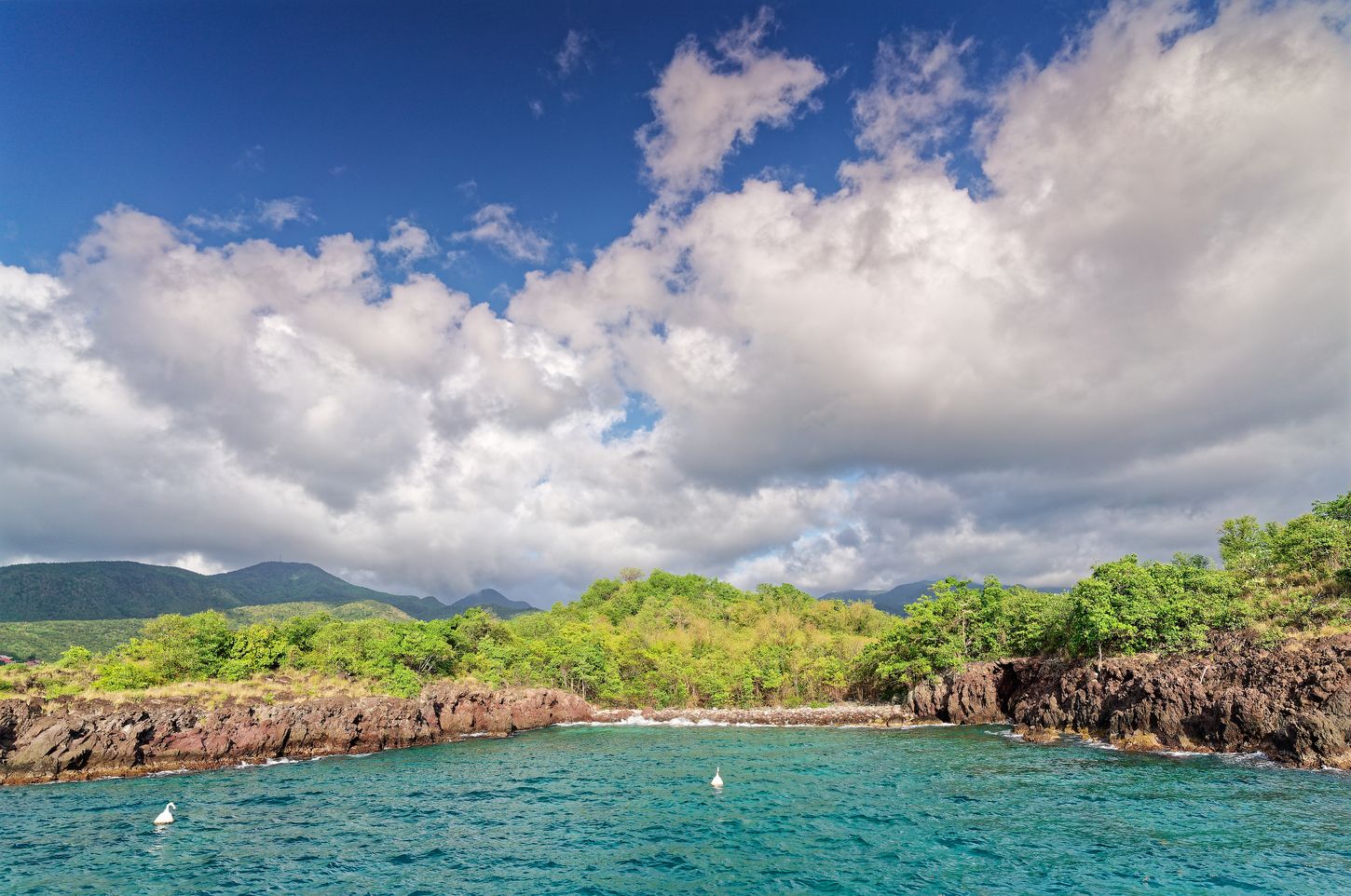
Although you know that there are banks on both sides of the boat, you can only really look at the seabed for 10 to 15 minutes, because as soon as the boat turns around, all you can see is blue…
Once the crossing is over, the boat comes to rest for a few moments behind the main islet, in the direction of the aquarium spot. This is perhaps the most enjoyable part of the trip. The children are offered juice and the adults a small planter. If you fancy a swim, you can do so in this beautiful spot. Funnily enough, there’s a slide on the boat that children, and even older children, can enjoy. We spend half an hour there, and the views of the coast from here are magnificent.
Again, it’s not my cup of tea personally, but I think it’s perfect for some people, and if you’re with children or older people, why not give it a try?
To book, click here.
Snorkelling Réserve Cousteau: Exploration and adventure
We haven’t necessarily done this activity as such, but several diving clubs, including Les Heures Saines, offer these famous snorkeling trips. Basically, you leave on the same boat as the divers, except that you go snorkeling directly from the boat. So yes, you’re going to tell me that it’s perfectly possible to snorkel from the shore to explore the area, and you’re right.
However, you won’t be able to swim from Malendure beach to the islands – it’s just too far. So it’s a nice, economical way for people who don’t want to go diving. Basically, it’s like having someone drop you off at the îlets Pigeon and you go snorkeling there, except you’re accompanied by someone who can explain what you’re going to see.
Swimming and snorkeling in the Cousteau Reserve
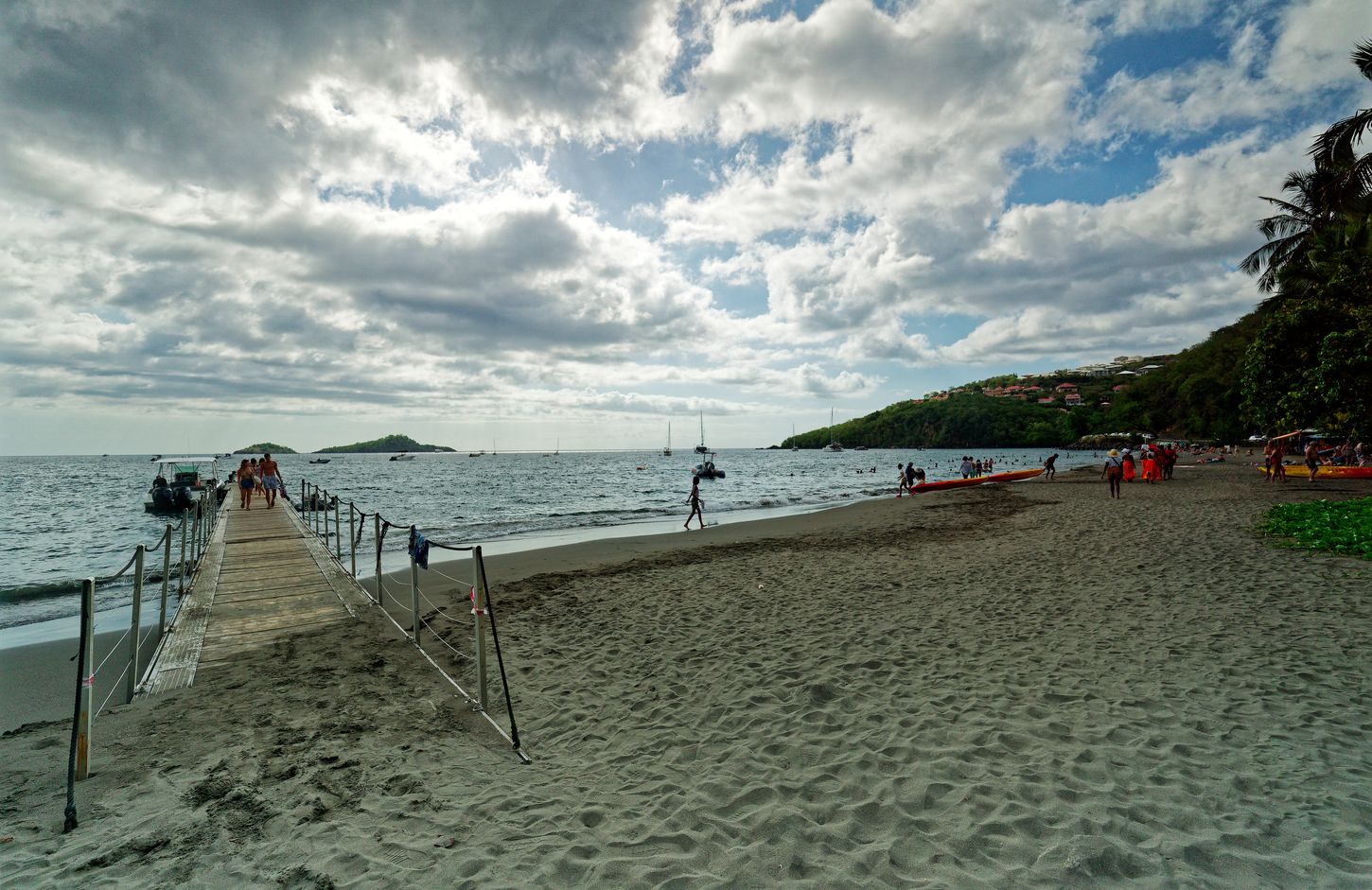
The final way to discover the Réserve Cousteau is simply to swim and snorkel from the beach. You don’t have to go kayaking, scuba diving or even take a glass-bottom boat trip. I don’t have exact statistics, but I think a lot of tourists just enjoy the beach at Malendure and head off with fins, mask and snorkel in search of the turtles in the area. In fact, the beach is very well known for this and if you look hard enough you can have some very nice encounters. We had no problems at all.
On the other hand, I would put a big caveat on Malendure beach, as it can literally be packed at the height of the season, and frankly, it’s not the stuff of dreams. My advice would be to get to the beach very early. Here in Guadeloupe, and in the tropics in general, we make the most of the mornings, and if you can get to the beach by 7 or 8am, that’s the best time, in my opinion. As soon as the bulk of the tourists arrive, from 9 or 10 am, you can go and discover other spots in Guadeloupe!
If you want to have a better chance of seeing the turtles and be a little quieter, don’t hesitate to move to the right side of the beach, where there is another beach that is a little quieter and less crowded. It’s tiny though, so don’t hesitate to arrive early.
Preparing for your visit to the Cousteau Reserve Practical advice
As always, here are some practical tips to help you discover and prepare for your visit to the Cousteau Reserve.
Preparing for your visit to the Cousteau Reserve Practical advice
I won’t go on for hours. First of all, I invite you to read our article which summarizes everything you need to know about getting to Guadeloupe, including flights, fares, airlines, etc.
Once you’re here, you’ll need to hire a car to ensure you’re completely independent and have a carefree stay. We recommend the DiscoverCars car hire comparison service. We’re used to using it to compare prices on our various travels and sometimes we find a few bargains.
Getting to the Cousteau Reserve depends on where you’re starting from. From Pointe-à-Pitre, the ferry takes about 45 minutes. The same applies to the town of Basse-Terre.
For your information, the Cousteau Reserve is located on the island of Basse-Terre, in the commune of Bouillante.
Accommodation around the Réserve Cousteau: Where to stay?
As you’d expect, there’s a huge range of places to stay around the Réserve Cousteau to suit all tastes and budgets. We can’t list them all, as that would be pointless. Here are some of the places we’ve heard about and had good feedback from.
- Le Nid Tropical: a beautiful spot on the heights of the reserve, with breathtaking views of the îlets Pigeon and a lovely swimming pool to boot. 3 nights minimum.
- Le Jardin des Ilets: a different style from the first, but just as beautiful, with a magnificent view, a small garden and a magnificent terrace!
- Gîte Pirates des Caraïbes: a perfect little place for the budget traveler, with an excellent reputation!
- LES GÎTES DU DOMAINE DE PETITE-ANSE: another well known and respected address for couples on a budget, on the beautiful beach of Petite-Anse!
You can also view all the accommodation in the commune of Bouillante by clicking on the following link.
What to see and do around the Cousteau Reserve?
As you’d expect, there’s no shortage of things to do around the Réserve Cousteau, depending on your tastes and budget. Here are a few cool areas and activities to consider:
- Take the time to walk the trails along the Traverse route. There’s something to suit every taste and level of difficulty. I have to admit that we haven’t done all the walks yet. We recently walked the Mamelle de Pigeon, a lovely little walk for the whole family.
- A little further north you can discover the Maison du Cacao, a great place to learn about the culture and do a bit of shopping!
- For another fun walk, we recommend the Cascade Paradis, further south in Vieux-Habitants.
- You can also take advantage of being in the area to go swimming at the beautiful beaches of Petite Anse (Bouillante or Pointe-Noire, there are two not too far away), Plage de Leroux, Grande Anse or the famous Plage de la Perle, further north in Deshaies.
- Along the way, you’ll also find the Guadeloupe Zoo (great for kids), a tree-climbing park and the famous Maison de la Forêt for an effortless walk in the green!
What you need to know before visiting the Cousteau Reserve
Rather than fill you with pages and pages of text, I’ve decided to summarize the most important aspects of the Cousteau Society:
History and origins
- The Cousteau Reserve takes its name from the famous explorer Jacques-Yves Cousteau, whose film The Silent World was partly filmed in this area.
In the 1950s and 1960s, Cousteau recommended that the area be protected because of its rich seabed, which led to the creation of the reserve in the 1970s.
Since 2009, the Parc National de la Guadeloupe has been responsible for managing the reserve in order to preserve its natural heritage.
Geography and access
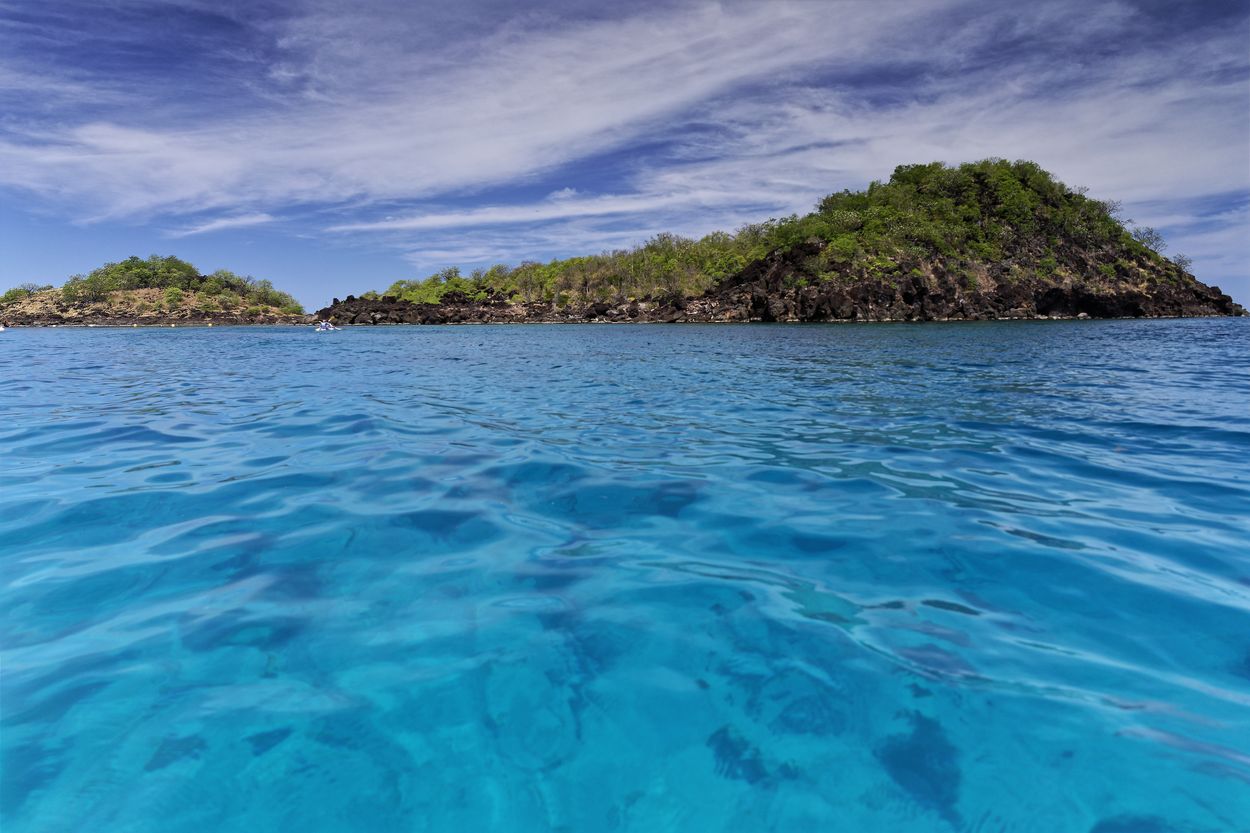
- Located on the leeward coast of the island of Basse-Terre, the Cousteau Reserve covers an area of about 400 hectares around the îlets Pigeon, renowned for their marine biodiversity.
- As mentioned in this article, the îlets Pigeon, which form the heart of the reserve, are accessible by kayak or boat from Malendure beach, making the site easily accessible to visitors.
Activities and attractions
- The Réserve Cousteau is a great place for scuba diving and snorkeling thanks to its turquoise waters, pleasant temperatures and diverse marine life.
- Local diving clubs offer tours for all levels, allowing beginners and experienced divers alike to discover the underwater wonders of the reserve.
- Wrecks such as the Franjack and the Gustavia have been deliberately sunk and now provide a real underwater world!
Marine flora and fauna
- The coral reefs of the Cousteau Reserve are home to a wide variety of tropical fish, sponges, gorgonians and sea turtles, making for a really cool underwater spectacle (see our story about diving there).
- Green and hawksbill turtles are easy to spot in the reserve (and even from the beach).
A tribute to Jacques-Yves Cousteau
- A bronze bust of Jacques-Yves Cousteau can be found at a depth of 12 meters on the Coral Garden site, in recognition of his role in protecting the area. Unfortunately we missed it on our dive, haha.
- The reserve was officially named after him in the 1980s to celebrate the explorer’s legacy and contribution to marine conservation.
That’s it for this article on visiting the Cousteau Reserve. If you’re visiting Guadeloupe and Basse-Terre, it’s a must!
See you soon for a new discovery!
See you soon!

Written by Sylvain PONS
Since 2021, I've been living in the Guadeloupe archipelago with Mélanie and our two children. We are exploring these beautiful islands and discovering the treasures that we are happy to share with you!
Despite our care, a mistake may have slipped into this article. If you find any, please don't hesitate to let us know so we can correct it as soon as possible and keep our information up-to-date!