What to do on La Graciosa: beaches, hikes, and ferry travel
Last update: 06/19/2026
Our blog continues to grow thanks to you, our readers. This post may contain affiliate links, which means we can earn a small commission if you make a purchase through them, at no extra cost to you. This helps us to continue to bring you more and support our work!
Before planning my trip to Lanzarote, I’ll admit that I knew almost nothing about La Graciosa. As I researched the island and put together my itinerary, I realized how much travelers loved it and how worthwhile the trip seemed. So I decided to add it to my list of things to do in Lanzarote (it lies just off Lanzarote’s northern coast). I wasn’t quite sure what to expect, as I had deliberately avoided looking at photos so I could keep the element of surprise. All I knew was that we couldn’t take our own car on the ferry and would need to explore either by bike or on foot. I thought it might be fun to walk around the island in a single day—but once I arrived, I quickly changed my mind, haha.
When we stepped off the ferry, we found ourselves in Caleta de Sebo, the island’s port and main village. As we wandered through the village, I considered renting bikes so we could reach the island’s main sights, since seeing everything on foot would probably take too long. In the end, after looking at the tracks and speaking with someone at a local bike rental shop, I decided to go on a safari tour. The same rental shop offered the excursion: a local driver takes you around the north in an off-road vehicle, with the option of adding the south for an extra charge. And with that, we set off to explore this remarkably unspoiled island.
From the moment I arrived, I was eager to see more—and I certainly wasn’t disappointed. I won’t keep you in suspense: in my opinion, anyone visiting Lanzarote should make time for a tour of the island of La Graciosa. It truly feels like a one-of-a-kind desert paradise!
What to do on La Graciosa: the must-see places
Before getting into La Graciosa’s must-see places, here’s a little context to help you picture this beautiful strip of land. La Graciosa lies just north of Lanzarote, across the narrow stretch of sea known as El Río. From either island, you can clearly see the opposite coastline. A little historical background: in the past, food on La Graciosa was scarce apart from fish. Residents had to row across to Lanzarote, climb the cliffs, sell their catch, collect water, and buy other supplies. Daily life was anything but easy.
I’ll share a few more historical details along the way, as they help bring the island to life. For now, though, here are the places you shouldn’t miss on La Graciosa.
Playa de las Conchas
I had been told that Playa de las Conchas was the most beautiful beach on La Graciosa, and I have to say that it lived up to the hype. A long stretch of golden sand unfolds in a completely wild, undeveloped setting. And from the beach, you get a superb view of the neighboring islets, Montaña Clara and Alegranza. Back in the day, these two islets were inhabited by six families who came to La Graciosa in the 80s.
The beach’s fine sand and untamed surroundings are the kind of scenery you can admire for a long time. In my opinion, it is not only the most beautiful beach on La Graciosa, but one of the most beautiful in the Canary Islands. Needless to say, it should be high on your list when visiting the island.
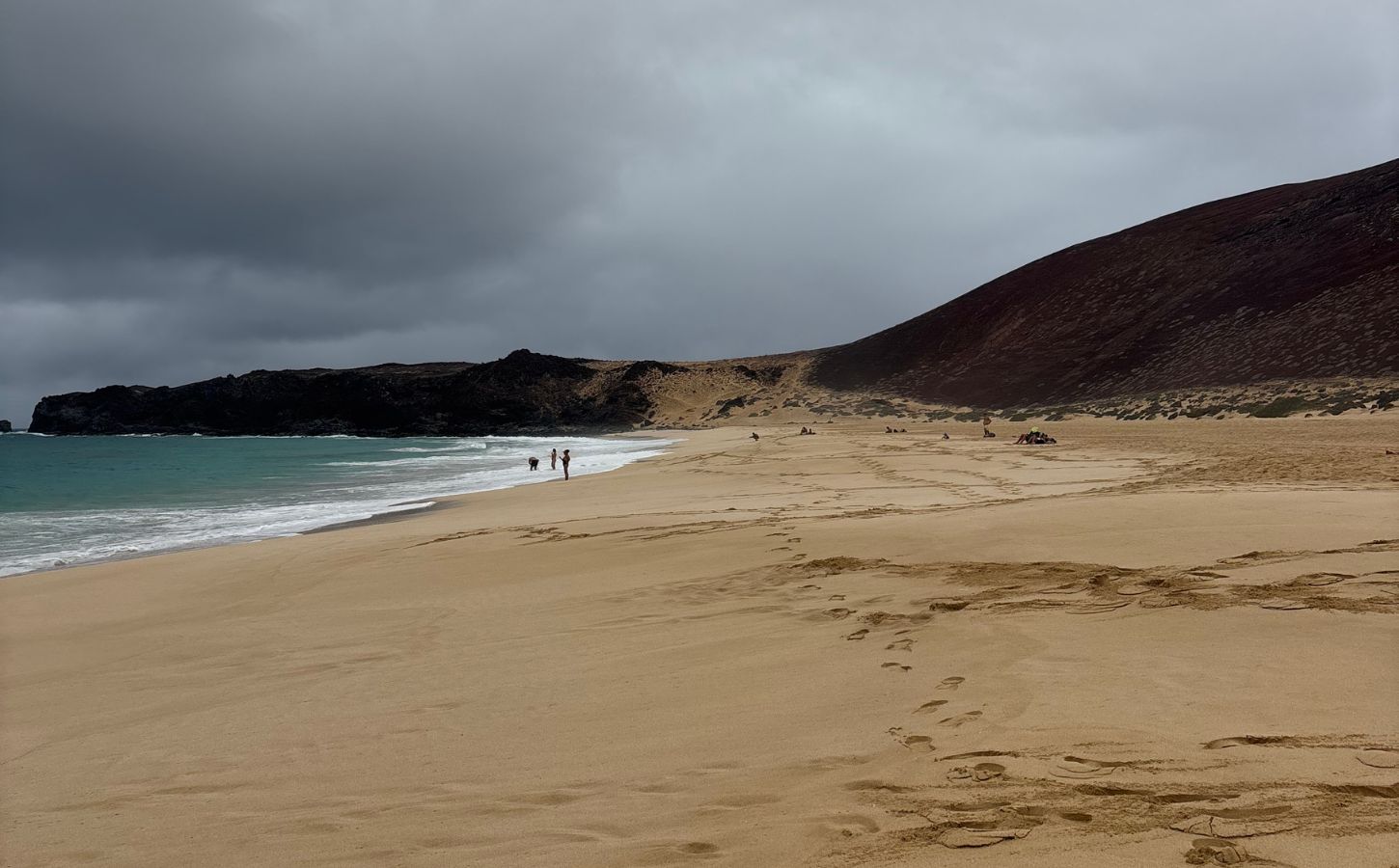
However tempting the water may look, swimming is strongly discouraged here because of the powerful currents and waves. Conditions can be dangerous, and a red flag is often displayed. The size and force of the surf are impressive in their own right. Also, there are no bars, sunbeds or tourists here, just the sound of the waves and an unspoiled setting. That’s what makes the charm and beauty of Playa de las Conchas. If you love photography, you’ll be thrilled—the contrast between the blue water, golden sand and red volcanoes is unique!
To reach this wild setting, allow around two hours on foot or roughly 45 minutes by bike from Caleta de Sebo. The road is very rocky and there’s not a single bit of shade, so if you’re doing it on foot or by bike, be sure to bring water and a cap. It’s really essential—even if 45 minutes or 2 hours sounds short, out there it quickly feels long. We ran into some people who’d left with nothing, and we stopped with our guide to give them water. By the way, if, like me, you choose the 4×4 tour, Playa de las Conchas is of course part of the route!
I completely fell for this beach. It was a beautiful place to experience, and I highly recommend including it in your La Graciosa itinerary.
Playa La Francesa & La Cocina / Montaña Amarilla
After exploring Playa de las Conchas in the north, head south to discover another side of the island. The landscapes are still wild and desert-like, but they feel quite different from those in the north.
The first beach worth stopping at for photos—and perhaps a swim (when I went, the water was calm because it’s protected by a natural bay and you can stand for quite a while): Playa La Francesa. I did the south on foot, and this beach was a 35-minute walk from Caleta de Sebo. So it’s perfectly accessible, even if you have to walk in sand and rocks and there’s still no shade. When I visited, it was cloudy and windy, which made the walk more comfortable than it would have been in full sun. That still didn’t stop me from getting sunburned, though, haha. The sand is fine, the water was pleasantly warm at around 77°F/25°C, and the bay felt wonderfully calm.
It is also one of the more sheltered beaches on La Graciosa, making it a good place to stop for a swim when conditions allow. Take the opportunity to cool off, relax for a while, and then continue on your way. The water is transparent, you’ll see little fish under your feet, since it takes a while before you’re fully immersed. To give you even more details about the scenery, in the background you’ll see a few small boats and especially the coasts of Lanzarote.
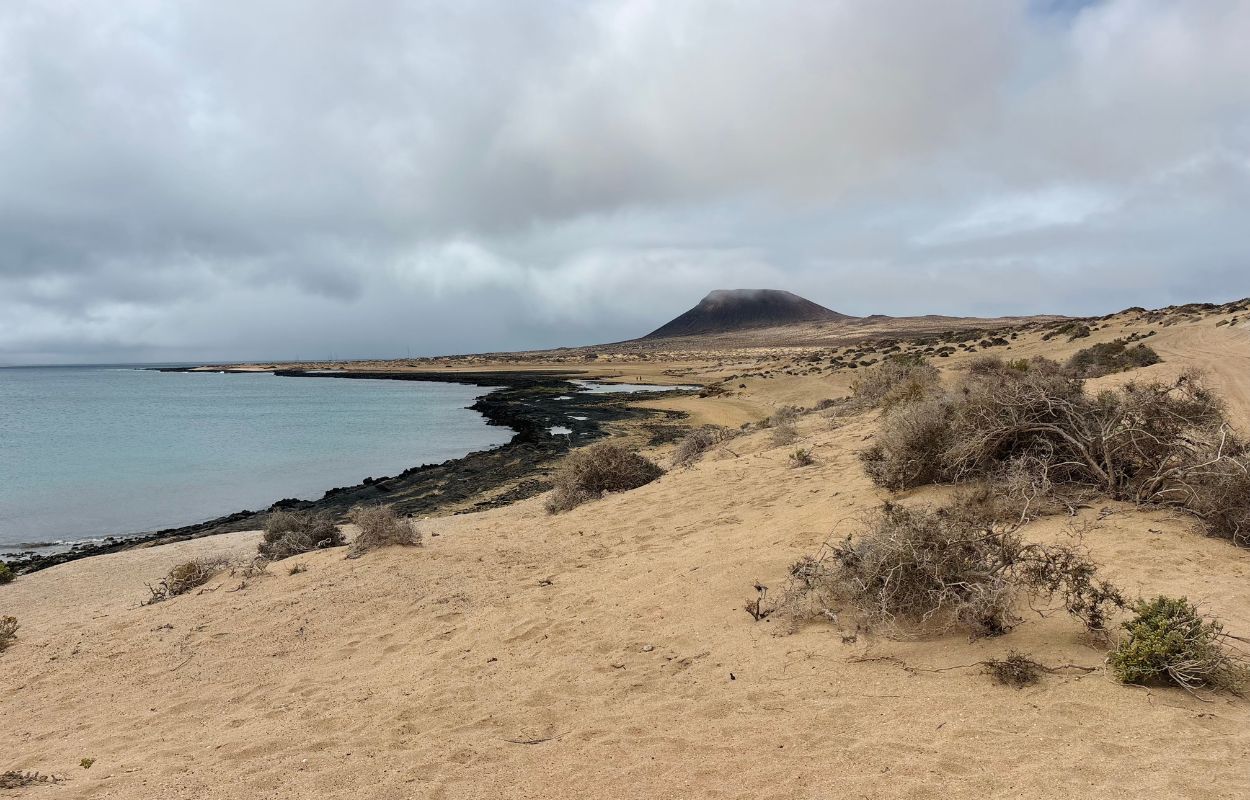
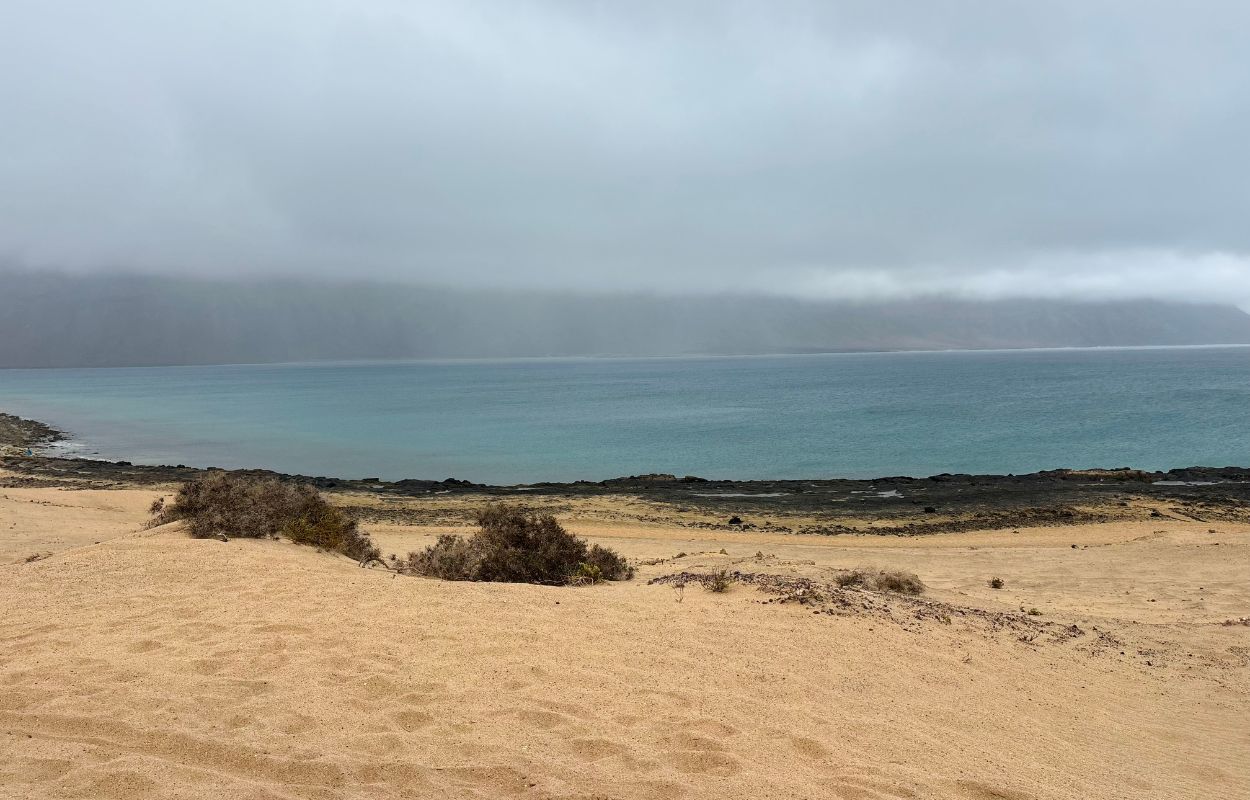
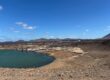
If you continue further south, you’ll come across Playa La Cocina, at the foot of Montaña Amarilla (Yellow Mountain). Here, what stands out is the contrast between the ochre rock, the light sand and the turquoise water. If you want the best view, you can climb part of Montaña Amarilla—you’ll get several beautiful viewpoints.
In short, if you want to swim on La Graciosa while enjoying the island’s natural beauty, head to Playa La Francesa and Playa La Cocina. Plus, it’s the most accessible part of the island, because it’s close to Caleta de Sebo (remember, the island’s main village—if not the only one).
Caleta de Sebo
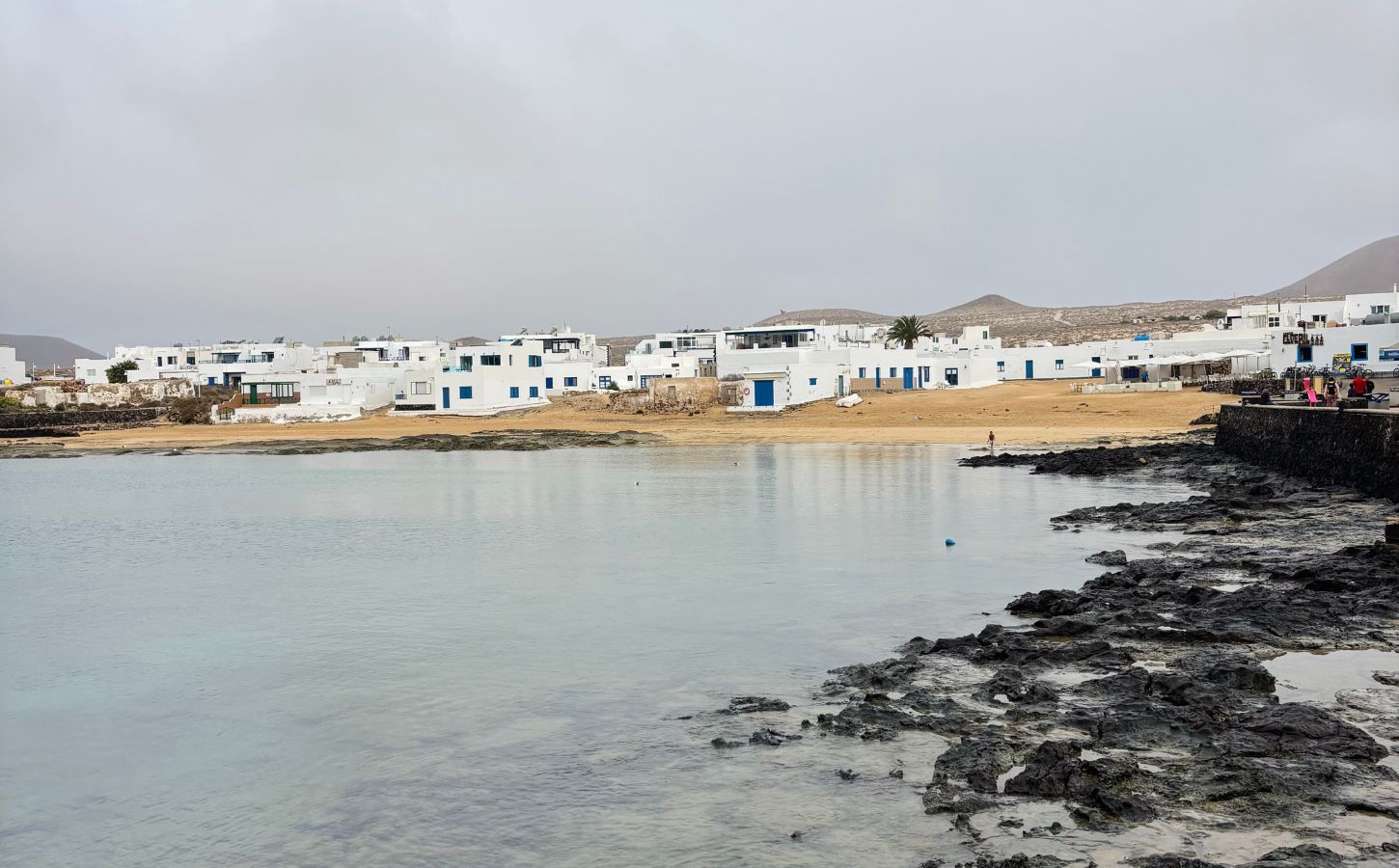
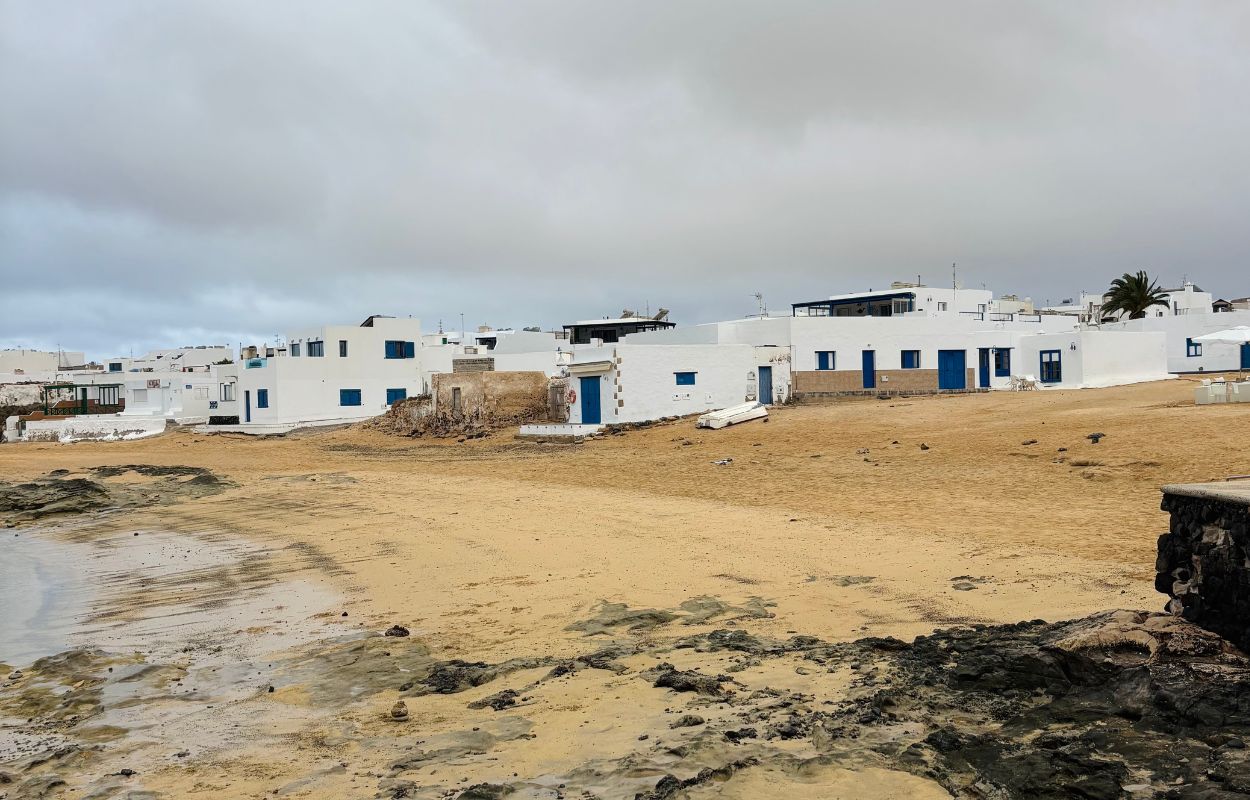
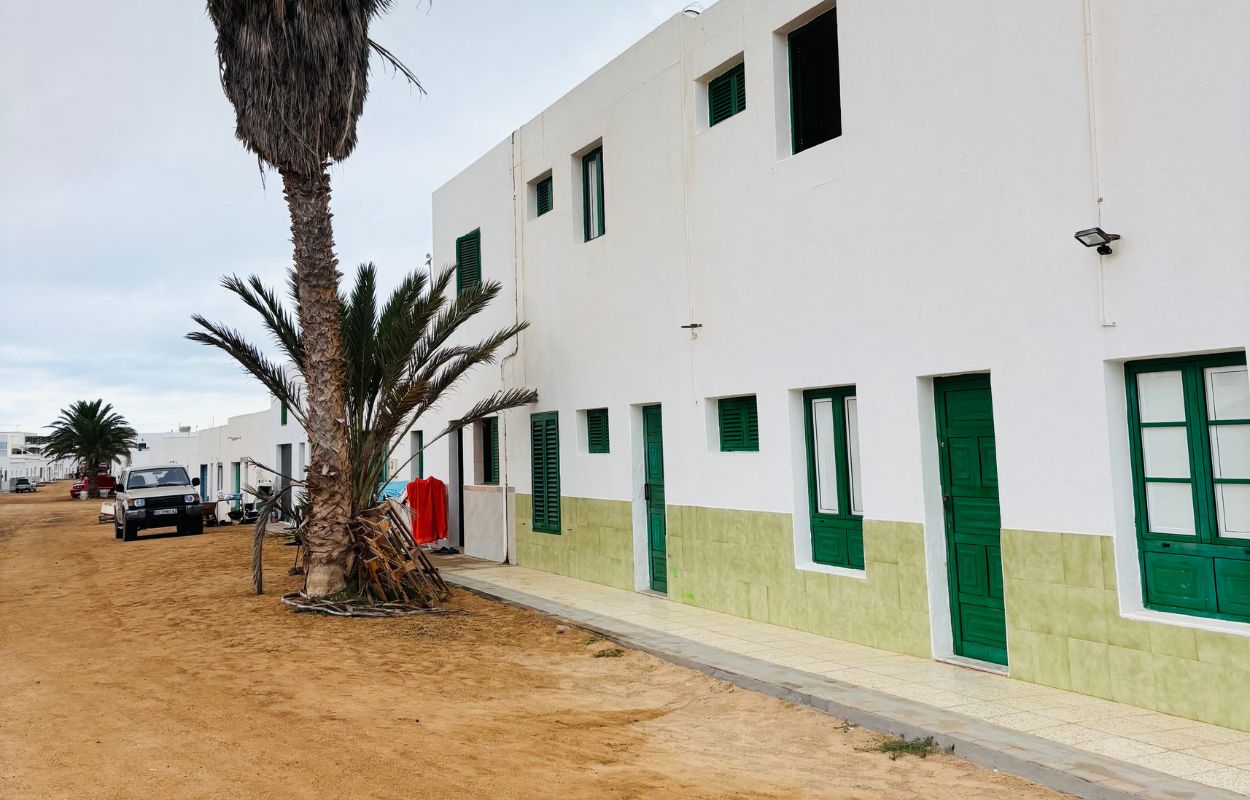
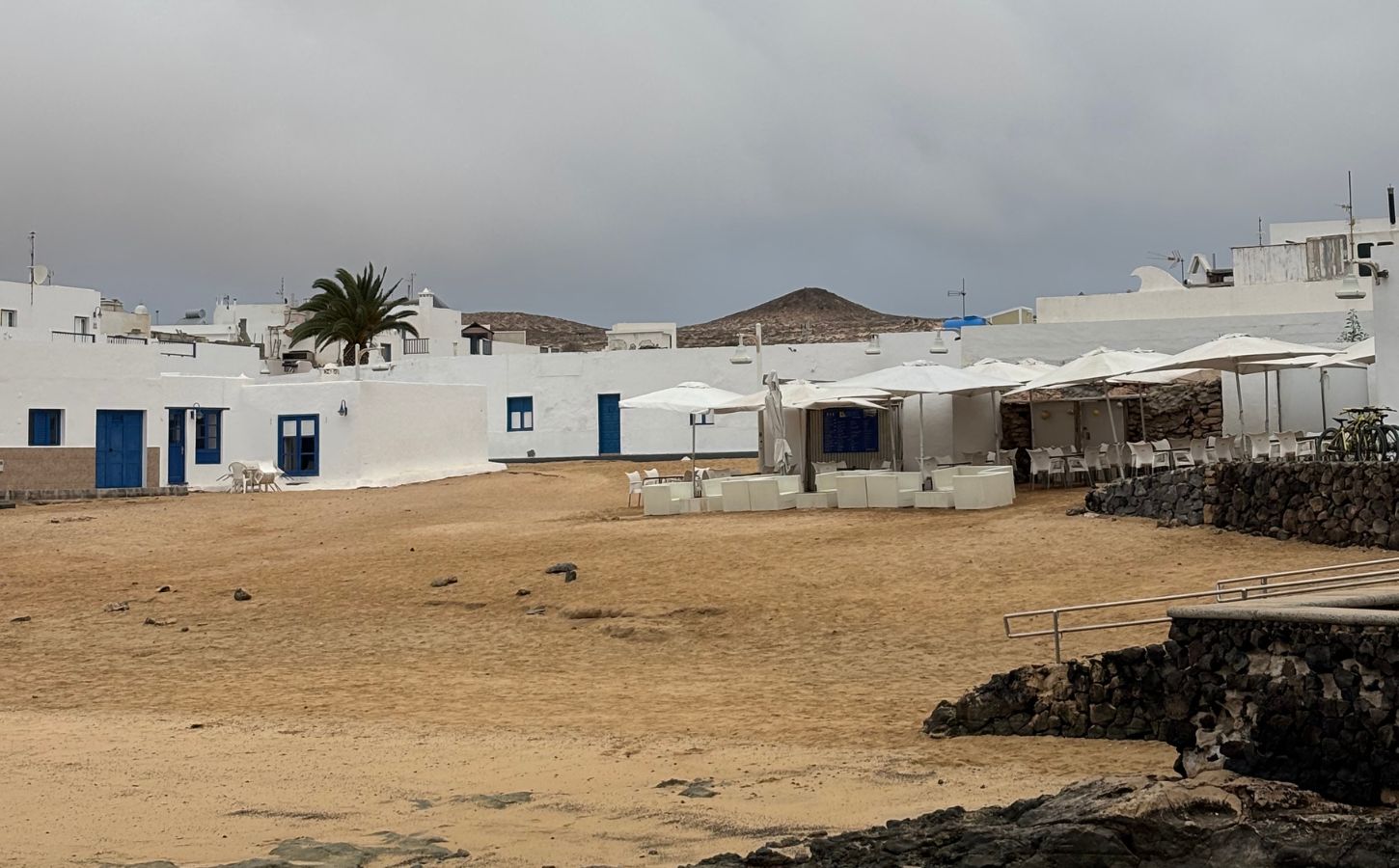
As I mentioned earlier, Caleta de Sebo is where your La Graciosa adventure begins and where the ferry drops you off. The moment you arrive, it feels as though you have stepped back in time. You arrive in a small village with sandy streets, white houses with blue or green shutters, and a few small boats at the port. You immediately sense that this is a place to slow down and switch off from everyday life. The atmosphere is simple and very local. Here, life moves to the rhythm of the wind and the ocean. We’re far from classic seaside resorts.
From a practical standpoint, Caleta de Sebo is the island’s hub, and almost everything revolves around it. There’s the port, which is linked to Lanzarote. That’s what makes it the starting point for your visit to the island: bike rentals and outdoor activities, 4×4 taxis called safaris (that’s what I took), small supermarkets, terraces, local restaurants, etc. Of course, you can see it all quickly, but it’s very pleasant to stroll around. And this is also where I completely reorganized my day to set off to fully discover the island.
If you haven’t packed a picnic, you can easily grab a meal at one of the village’s small restaurants. It is a great opportunity to eat fresh fish, often at lower prices than on Lanzarote. However, restaurants on the port are slightly more expensive than those inside the village. Personally, I tried Casa Enriqueta: I recommend it. It was good and very generous—enough to give me strength to hike in the south!
A few tips to enjoy Caleta de Sebo: I suggest taking a bit of time to stroll along the water and the port. Also, just below the port, there’s a small beach, Salado. Generally, the water is calm—you can take a dip before catching the ferry or if you’ve got time to spare.
In short, Caleta de Sebo is where there’s the most life on La Graciosa. You immediately feel the island’s vibe!
If you’re interested, you can also go diving from this little village!
4 easy hiking routes
For experienced hikers and anyone who simply enjoys walking, I’ve put together four accessible routes for exploring La Graciosa on foot. They let you walk at your own pace, away from the crowds and without feeling rushed. As I mentioned, doing the entire island on foot takes several hours and more than a day, so it won’t be possible unless you sleep there. Since travelers generally spend a day trip there, I’m giving you alternatives. The trails are flat with very little elevation gain.
The biggest challenge is the heat, wind and lack of shade. But if you bring what you need and prepare a bit, the routes I’m suggesting are doable. Another small challenge: rocks and sand. Even though I only did the south on foot, my calves were burning by the end! I won’t keep you waiting—here are 4 accessible hikes on La Graciosa:
- From Caleta de Sebo to Playa de La Francesa then La Cocina / Montaña Amarilla:
This is the one I did and it’s without a doubt the most well-known and most popular. From the port, following the entire south coast, count about 35 minutes to Playa La Francesa. It sounds quick like that, but walking in sand and depending on the weather, it’s more physical than you think. On this beach, you’ll be rewarded by calm, turquoise water to relax and even swim. Continuing a bit further, there’s Playa La Cocina, at the foot of the famous Montaña Amarilla I mentioned above. It was a beautiful hike and a lovely end note to my day. And what struck me was the calm, and all along there was nothing but scenery and very few tourists en route…
- From Caleta de Sebo to Pedro Barba:
This is an even less-traveled hike to Pedro Barba, the island’s second village. It’s often the first step when doing a loop of several spots in the north. Quite a few travelers set off without water or snacks, thinking they’ll find a supermarket or grocery in Pedro Barba. But I’d rather warn you: Pedro Barba is even smaller than Caleta de Sebo.
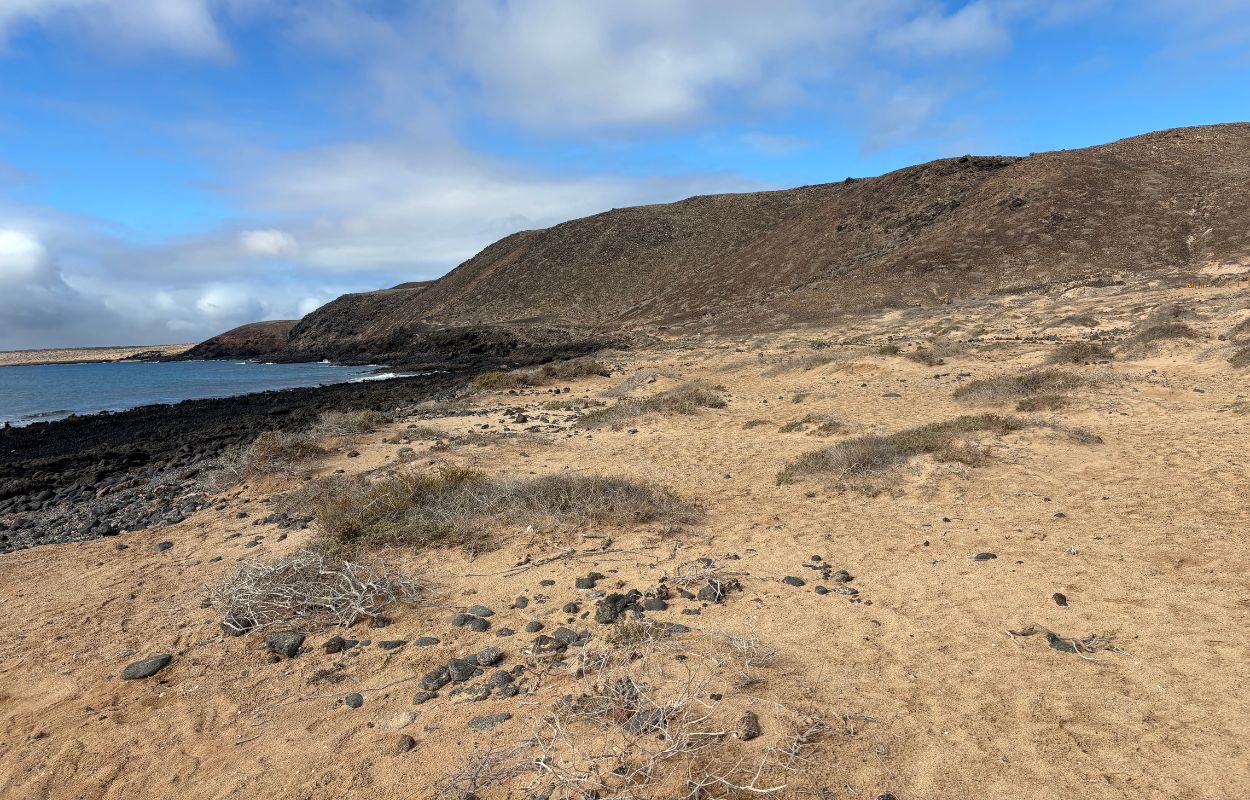
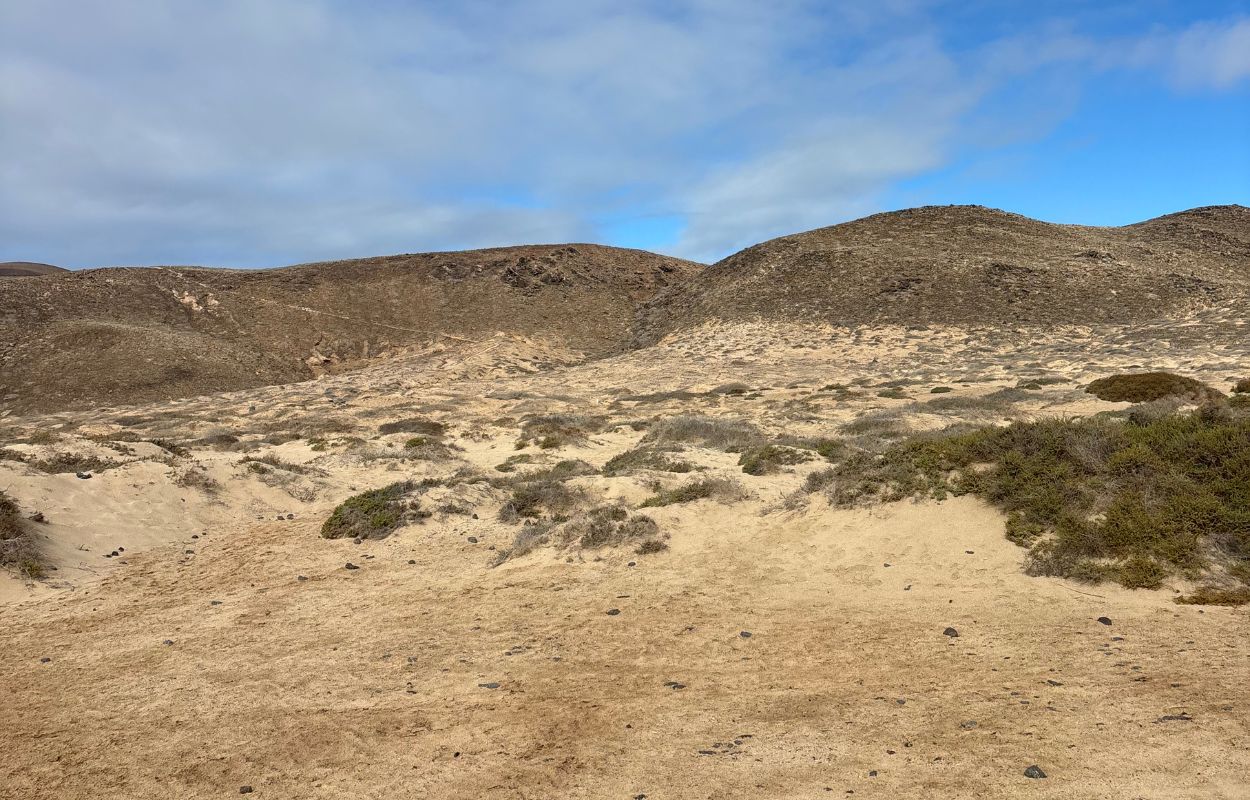
There are only white houses facing the ocean, that’s it! There are also several tracks through the desert dunes. On site, there’s little life—I think we crossed paths with six tourists max. But the houses are very well maintained. Practically speaking, you still need to count 1h30 to 2h to reach Pedro Barba. In any case, it’s a pretty spot with a peaceful, pleasant atmosphere.
- From Caleta de Sebo to Playa de las Conchas:
If you absolutely want to see Playa de las Conchas, from Caleta de Sebo, expect 1h30 to 2h of walking depending on your pace. If you’re spending the day on the island and going up north on foot, you might only have time to see Playa de las Conchas. Honestly, it’s a magnificent spot. If you want to see the island’s wild side, go for this hike!
- More complete southern loop: Caleta de Sebo → Montaña Amarilla → Punta del Pobre → El Salado:
This hike is a bit longer than the first one I suggested in the south. Basically, if you want to extend your discovery of the south, just after Montaña Amarilla you can continue to Punta del Pobre. This turns it into a more complete hike with a wider variety of scenery, including fine sand, cliffs, clear water, volcanoes, and mountains.
Pedro Barba
Although I have already mentioned it briefly, Pedro Barba is La Graciosa’s second village. It is charming, peaceful, and easy to fall for. This village was the first stop on my 4×4 tour and the name alone intrigued me. Honestly, I wasn’t disappointed: the setting is natural, preserved, with small, nicely designed houses.
On the way, for about 1h30 to 2h, you’ll follow the coast with different viewpoints over the ocean and even the cliffs of Lanzarote. Otherwise, you can also go through the interior of the island to feel like you’re in a desert in the middle of sandy tracks. Whichever path you choose, the scenery is beautiful whichever route you choose. And nothing stops you from taking one path there and the other on the way back.


When I arrived in Pedro Barba, it felt like stepping into a place untouched by time. It’s rare to find an inhabited village so well preserved without a 5-star hotel. For a bit of history, our local guide told us that in the 80s there was a project to build a resort nearby, but residents opposed it. That’s what kept the place intact and authentic. What also struck me is that on one side you have the more or less rough ocean, and on the other, the tranquility of the village.
Once again, even if I’m repeating myself a little, bring something to drink and eat, because you won’t find anything there. In any case, if you’re wondering whether Pedro Barba is worth it—the answer is yes! It’s a superb stop on your discovery of La Graciosa!
Visiting La Graciosa: practical information
As usual, here is all the practical information you need to plan a visit to La Graciosa.
How to get to La Graciosa?
As you might expect, there are only a few ways to reach La Graciosa. You first need to be on Lanzarote and head to the north of the island, to the small port of Órzola. This is where ferries depart for Caleta de Sebo on La Graciosa. The crossing takes around 25 minutes (however, the day I went, it rocked quite a bit—watch out if you get seasick!).
Ferries operate every day throughout the year. Two companies serve the route: Biosfera Express and Líneas Romero. Between them, they offer several departures in each direction throughout the day, although exact schedules vary by date and season. In practice, you just need to go to the website of the company of your choice to book your times in advance. You can also buy your ticket directly at the port ticket office. Personally, since I didn’t know how busy it would be, I preferred to book in advance with Biosfera Express.
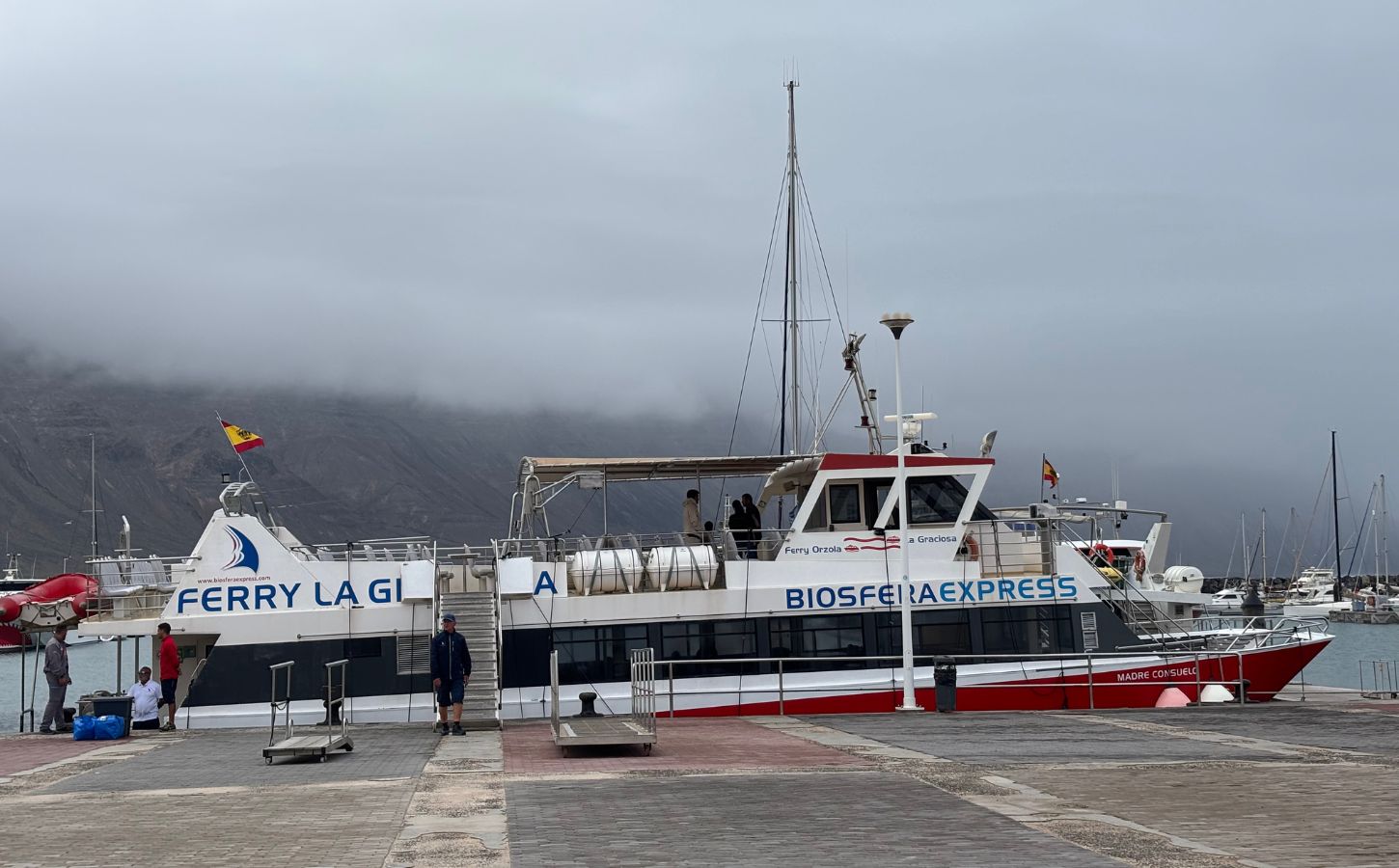
A little tip: take the ferry as early as possible. For me, it was almost empty—and so was the island—when I arrived. Also plan to arrive a little before departure time, because boarding starts 15 minutes before. You’ll be able to park easily and, above all, for free near the port. But I think it’s more complicated in high season. It’s also possible to get combo bus (pick-up) + ferry to the island of La Graciosa.
You can also join an organized day trip by boat, which is another appealing way to discover the island. These two excursions stood out to me and receive very positive reviews:
- Sailing excursion around La Graciosa: Full-day catamaran trip from Lanzarote to discover La Graciosa, including swimming, snorkeling, kayaking and lunch on board in a preserved natural setting.
- Island cruise with lunch and water activities: Catamaran cruise around La Graciosa with swimming, snorkeling, kayaking and lunch on board, in a festive and friendly atmosphere departing from Lanzarote.
How to get around La Graciosa?
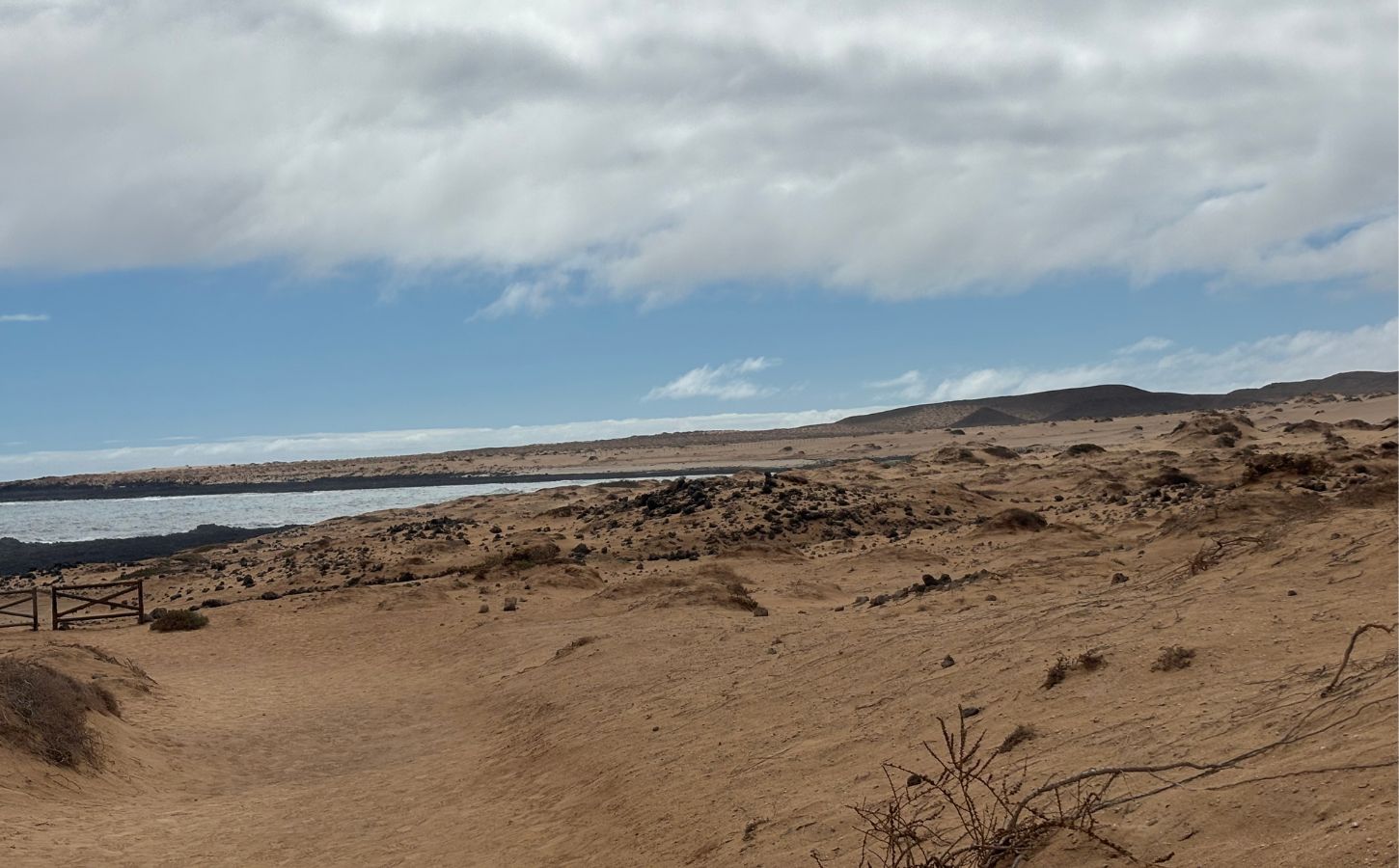
As you might expect, transportation options on La Graciosa are limited. Visitors cannot bring a car over on the ferry, and the island has no paved roads. They’re both sandy and rocky. Only authorized local vehicles, including 4×4 taxis, can travel on the island’s tracks. Here are the options available to you:
- On foot: nothing simpler—you leave from Caleta de Sebo and choose your itinerary with the spots you absolutely want to see. Don’t forget the accessible itinerary ideas I gave you above! In practice, the trails are flat, but walking on rocks and sand is different from walking on pavement. It takes a bit more effort! At least with this option, you can go at your own pace, without rushing, and really enjoy the island’s wild atmosphere. Even just walking there is an experience. There’s nothing around but breathtaking scenery (and that feels good!).
- By bike: there are several types of bikes offered by rental shops: manual MTBs or with electric assist, fat bikes. Depending on your level and how you feel that day, you can choose what suits you best. But I’d rather warn you: I saw tourists take manual bikes because they were cheaper and then take longer than expected, missing some spots. That’s a shame. But it’s up to you! And by bike, you can also enjoy the island’s very special atmosphere. As a rough guide, a standard bike and helmet often cost around €10 for the day, while electric mountain bikes and fat bikes are considerably more expensive, commonly around €30 to €40 depending on the rental company and equipment included. And in case of a flat, rental shops usually offer assistance—they won’t leave you alone in the middle of the island’s desert, haha.
- By 4×4 taxi (safaris): if you really want to tour the island, this is the fastest solution. For my part, I didn’t want to miss anything and that would have been impossible without a 4×4 taxi! Plus, it’s slightly cheaper than a bike with electric assist, about €30 per person. It also let me connect with a local guide who told me all sorts of anecdotes. It was really nice. Also included in the tour was the Arcos de los Caletones spot—just magnificent! A nice bonus of this type of tour is that at each stop you get free time to enjoy the place—you won’t be rushed. Since we arrived early, there were only two of us in the 4×4. It was just us and our guide—awesome.
Where to eat in La Graciosa?
Given the island’s size, you might assume there are hardly any restaurants, but Caleta de Sebo actually offers a decent selection. Well, I’m not saying there’s one on every corner either. But in Caleta de Sebo, there are a few. They’re all local and worthy of a good break after a hike or a day at the beach. However, we’re far from the big menus of tourist restaurants: think smaller menus with simple, local dishes made from fresh products. Earlier I gave you the name of a spot: Casa Enriqueta. I ate fresh fish and loved it. A useful tip: eat early, around noon, if you would rather avoid the busiest lunch period.
And to give you some ideas of specialties to try: grilled fish from local fishermen, pulpo a la plancha (grilled octopus), papas arrugadas with red and green mojo sauces (so good!), and Canary Islands goat cheese. See? Plenty to taste! If you prefer to picnic, there’s a grocery store and a bakery for sandwiches, empanadas or sweet snacks.
Where to stay in La Graciosa?
La Graciosa has no large hotels or resort complexes. Remember, locals opposed them to preserve the island’s authenticity. However, most accommodations are offered by locals: white houses or apartments in Caleta de Sebo or Pedro Barba. I think that’s what makes the experience even more immersive! If you want to disconnect, this is the time. For my part, even in just one day, I felt truly refreshed in a natural, exceptional setting.
Here are a few options to consider based on your budget:
High budget
- Flor de Cactus, La Graciosa: a spacious vacation home opening onto the ocean with only one sound: the waves. Makes you want to escape there for a few days, doesn’t it? Plus, it’s well equipped with a terrace (which is rare on La Graciosa, so make the most of it).
- Villa Relax, La Graciosa: Also in Caleta de Sebo, very close to the beach and the center, this villa (as its name suggests) invites relaxation and unwinding. With 4 bedrooms, a patio and a full kitchen, it’s ideal for a unique stay with family or friends.
Mid-range budget
- Apartamento Los Remos de la Graciosa: At the very end of the village of Caleta de Sebo, discover Los Remos, which brings a peaceful vibe to your vacation. With its terrace and breathtaking views of the sea and the mountains, it ticks a lot of boxes to fall under La Graciosa’s charm.
- Apartamentos El Marinero – Caletilla: In the center of Caleta de Sebo and right on the sand, the main strength of this apartment is its exceptional location facing the sea. Inside, the apartment is modern and bright—you’ll feel great!
Small budget
- Cruceta House: Located on a quiet street in Caleta de Sebo, here’s a large, bright apartment. Plus, it’s well equipped: terrace, kitchen with all the essentials. It’s a great value-for-money base—don’t miss it!
- Apartamentos Burgao: several well-equipped apartments, still in Caleta de Sebo, with panoramic views of the sea and mountains, very close to gorgeous coves and black rocks. I’ll let you imagine the sunrises and sunsets you can admire. A way to enjoy the island of La Graciosa without overspending!
Since you need to travel through Lanzarote to reach La Graciosa, I also suggest reading our article on where to stay in Lanzarote. It should make planning your trip a little easier!
That brings me to the end of this guide to the island of La Graciosa. I hope you enjoyed the discovery and that you’ll take the time to add this almost desert island (no lush vegetation, not even palm trees or banana trees here—unlike other Canary Islands like La Gomera) and preserved spot to your Lanzarote itinerary. As for me, I know I’ll come back one day. It’s an island that really left a mark on me even though I only spent a day there.
La Graciosa forms part of the Chinijo Archipelago Natural Park and lies within what is widely described as Europe’s largest marine reserve. There’s a real focus on protecting underwater biodiversity, even if fishing is allowed. It’s monitored and only practiced by locals, in an artisanal and traditional way.
On La Graciosa, you naturally slow down and take time to appreciate the island’s raw, largely undeveloped landscapes: just golden sand, beaches, white houses, unpaved roads, mountains and volcanoes. I could go on, but I’ll stop here. One last tip for the road: don’t hesitate to check out our article on the budget to plan for a trip to Lanzarote.

Written by Laura CALLES
Thanks to Mélanie and Sylvain, I had the chance to discover the Canary Islands, specifically Tenerife and Lanzarote, so that I could share these island paradises with you. Two real favorites of mine!
Despite our vigilance, an error may have crept into this article. If you spot one, please don't hesitate to let us know so that we can correct it immediately and keep our information up to date!