Best Sigma lenses for Sony E-mount
Last update: 06/25/2026
Our blog continues to grow thanks to you, our readers. This post may contain affiliate links, which means we can earn a small commission if you make a purchase through them, at no extra cost to you. This helps us to continue to bring you more and support our work!
Sigma is a well-known brand that keeps gaining attention in the photography world. In this article, I’ll introduce you to the best Sigma lenses for Sony cameras (APS-C and full frame), focusing on the ones I find most interesting. Of course, when we think about photography, we naturally think of long-established brands like Canon, Nikon, Leica, or Fujifilm. As an aside, we have also started listing all the lenses and their main characteristics for each brand. We’ll keep this page as up to date as possible so you can get a clear overview of the lenses available for the mount of your choice!
But let’s come back to Sigma. The brand has been around since 1961, so we are certainly not talking about a newcomer in the history of photography. Still, it is fair to say that Sigma took a major step forward with the arrival of its new CEO, Kazuto Yamaki, in 2012, followed by the launch of its three main lines: Art, Sports, and Contemporary.
The first of these new lenses, the 35mm f/1.4 Art for DSLR cameras, quickly became a major talking point. Until then, Sigma was often seen as a more budget-oriented brand, even though it already offered some interesting lenses such as the 24-70mm f/2.8 EX and the 105mm f/2.8 EX macro. Both had the advantage of very competitive prices, although their build and optical ambitions were more modest. From that point on, Sigma became a serious alternative to the high-end lenses from camera manufacturers, especially Nikon and Canon. The brand later expanded the range with several prime lenses and zooms, including more unusual options such as the 18-35mm and 50-100mm f/1.8 for APS-C, or the 24-35mm f/2 for full frame. Sigma has also developed its own cameras and joined the L-Mount Alliance alongside Panasonic and Leica.
A quick aside: I often recommend looking at what third-party brands have to offer. I recently wrote a full article dedicated to the best Samyang and Tamron lenses for Sony cameras. You might also find your favorite lens there, especially if you are looking for the best value for money!


Although Sigma started making Sony E-mount lenses back in 2013, it was not until 2018 that the brand really began producing lenses for full-frame Sony mirrorless cameras. At first, Sigma adapted some of its older DSLR lenses to the E-mount. Then it began releasing completely redesigned lenses dedicated to mirrorless systems, taking advantage of the shorter flange distance and the absence of a mirror. Since then, the lineup has grown quickly, and many of the Sigma lenses mentioned on this page are now among the best current Sony lenses.
Most of the full-frame DG DN lenses discussed here are available in Sony E-mount and L-mount, while Sigma has also expanded some APS-C DC DN lenses to other mirrorless mounts. Since this article is dedicated to Sony, I’ll focus on the versions designed for E-mount cameras. As a reminder, the acronym DC DN refers to Sigma lenses designed for APS-C cameras, while DG DN refers to Sigma lenses designed for full-frame sensors.
As usual, you’ll find a summary table with the main characteristics of each lens, along with a visual. Even though this article focuses on the Sony E-mount, if you own an L-mount camera (Sigma, Panasonic, or Leica), the recommendations also apply to L-mount. In the dropdown below, you’ll find links to buy the same lenses for the L mount.
If you’re interested, we also cover some of these lenses (and others) in our article on Sony’s versatile standard zooms!
Here are the shopping links for the best Sigma lenses from this article in L-mount:
For APS-C L-mount cameras:
- Sigma 16mm f/1.4 DC DN Contemporary L
- Sigma 30mm f/1.4 DC DN Contemporary L
- Sigma 56mm f/1.4 DC DN Contemporary L
- Sigma 18-50mm f/2.8 DC DN Contemporary L
For full-frame L-mount cameras:
Best Sigma lenses for Sony APS-C cameras
In Sony E-mount, Sigma has built a small but very strong APS-C lineup. The choice is still limited compared with full frame, but the lenses available are genuinely interesting. If you want to see what other brands offer, have a look at our page dedicated to Sony lenses for Sony APS-C cameras. You’ll find all Sony lenses there, as well as the third-party options that make good alternatives. Some of these lenses are also available for Micro Four Thirds.
Here are the lenses mentioned below:
- Sigma 10-18mm f/2.8 DC DN Contemporary
- Sigma 16mm f/1.4 DC DN Contemporary
- Sigma 30mm f/1.4 DC DN Contemporary
- Sigma 56mm f/1.4 DC DN Contemporary
- Sigma 18-50mm f/2.8 DC DN Contemporary
Sigma has also expanded its APS-C lineup with newer lenses such as the 12mm f/1.4 DC, the 23mm f/1.4 DC DN, and the 17-40mm f/1.8 DC Art. I’m mentioning them here because they are worth keeping in mind, but I’m keeping the main selection below focused on the lenses already integrated into the comparison table.
The table below summarizes the main points to remember about the lenses mentioned below:
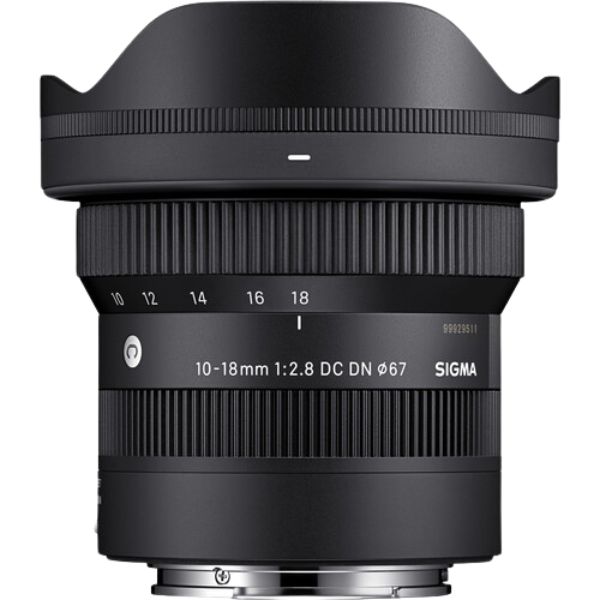
- Bright, ultra-wide angle
- Compact and light
- Excellent image quality
- Unbeatable price/performance ratio

- Bright wide-angle lens
- Very good construction
- Very good image quality
- Optical defects existing
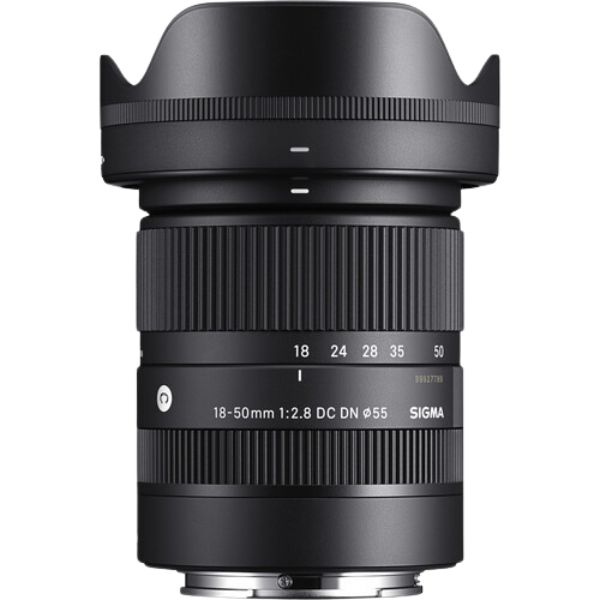
- Bright lens
- Fast and reliable AF
- Very good construction
- Better for photography
- Very bright standard lens
- All-weather construction
- Very good image quality
- Optical defects visible
Below, you’ll find a table listing the main features of these lenses.
Sigma 10-18mm f/2.8 DC DN Contemporary
| Features | Visual |
|---|---|
|
|
The Sigma 10-18mm f/2.8 DC DN Contemporary is a bright ultra-wide-angle zoom. Although it is not weather-sealed, it is a great fit for architecture, landscape, and interior photography. Its size and weight are both very reasonable, so it is easy to carry around.
In terms of performance, there is not much to complain about: sharpness is excellent from the center to the edges, with good consistency across the frame. Optical defects are limited (chromatic aberration and flare), and they can usually be corrected in post-production.
In short, the Sigma 10-18mm f/2.8 DC DN Contemporary offers almost unbeatable value for money. It competes with the Tamron 11-20mm f/2.8 Di III-A RXD and the Fujifilm XF 10-24mm f/4 R OIS WR, both of which are more expensive and bulkier. In my opinion, this Sigma really deserves your attention!
Sigma 16mm f/1.4 DC DN Contemporary
| Features | Visual |
|---|---|
|
|
Few brands offer wide-angle APS-C prime lenses, apart from Fujifilm. This Sigma is therefore a very interesting option. It is fairly large and heavy for an APS-C lens, but its very wide aperture helps it stand out from the competition.
Build quality is very good, and optical performance is already consistent at maximum aperture. Stopping down by one or two stops improves sharpness and delivers excellent results. Autofocus is fast and reliable. The main flaws are chromatic aberrations, which can still be corrected in-camera or with dedicated software, and flare, which is a little more annoying because it is harder to correct, although not surprising with such a short focal length.
Available at a relatively affordable price considering its performance and maximum aperture (less than 400€), this 16mm is a must-have for anyone using a Sony APS-C camera who wants a strong wide-angle lens, especially for landscape photography.
Sigma 30mm f/1.4 DC DN Contemporary
| Features | Visual |
|---|---|
|
|
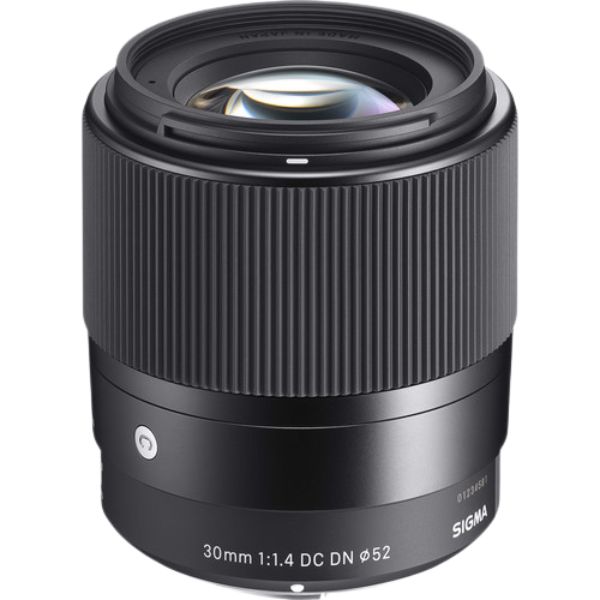
This 30mm prime on APS-C gives you an ideal angle of view for street photography. Sony does offer strong competition with its 35mm f/1.8 OSS, which has the advantage of stabilization and a similar price. That Sony lens will therefore be more interesting if you shoot a lot of video.
For photography, the Sigma delivers very high image quality wide open. Build quality is very good, just like on the 16mm, and autofocus is fast and reliable. Its weight and size remain reasonable, even if some lenses in the same category, such as Fujifilm’s 35mm f/1.4, are more compact. A few flaws can be seen at full aperture, including vignetting and chromatic aberrations, both correctable, as well as strong distortion. That distortion is easy to correct in photography but more annoying for video. On the positive side, flare is very well controlled, and the bokeh is very soft.
At around 350€, this is one of the best standard lenses for a Sony APS-C camera, even if it is a little less convincing for video, where its optical flaws are more noticeable.
Sigma 56mm f/1.4 DC DN Contemporary
| Features | Visual |
|---|---|
|
|
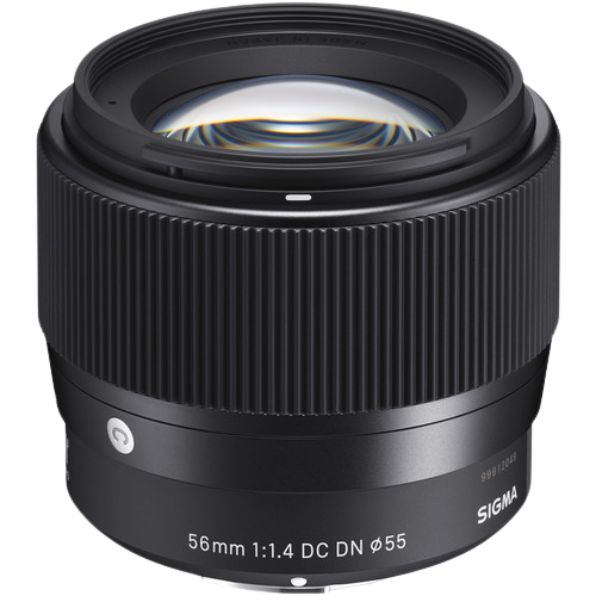
This 56mm is probably the most appreciated lens in Sigma’s APS-C range. Designed with portrait photography in mind, it lets you strongly reduce depth of field thanks to its large aperture and focal length, while producing a soft background blur.
Build quality is again very good, and unlike the 16mm and 30mm, this one is weather-sealed. Given its focal length and aperture, you might expect it to be much larger and heavier than the 16mm and 30mm, but that is not the case. Autofocus is once again fast and reliable. Optical quality is very good, and even excellent when you stop down by one or two stops. It does have some noticeable flaws, including visible distortion and strong vignetting, but both are easy to correct in photography. Chromatic aberrations are moderate, and flare is also well controlled.
Once again, Sony’s 50mm f/1.8 OSS will be more appealing for video if your camera body is not stabilized. If stabilization is not a priority, the Sigma takes the lead. With its price under 400€ and its characteristics, it is a perfect portrait lens for Sony APS-C cameras, with very soft bokeh.
Sigma 18-50mm f/2.8 DC DN Contemporary
| Features | Visual |
|---|---|
|
|
Sigma released this 18-50mm f/2.8 for Sony APS-C mirrorless cameras as its first constant f/2.8 standard zoom in this format, shortly after Tamron’s 17-70mm f/2.8.
It performs very well: image quality is strong from full aperture, and autofocus is fast and quiet. Build quality is also very good, better than the Tamron and close to the Sony 16-55mm. Distortion is significant, as it is on competing lenses, but it is easy to correct. Chromatic aberrations are limited, and flare is fairly well controlled, appearing occasionally but still less than with the Tamron and Sony.
At around 500€, it is more affordable than the Tamron (850€) and much cheaper than the Sony (1150€). If you can live with the shorter focal range, this Sigma gives you a relatively affordable lens with a large constant aperture, in the lightest and most compact package in its category.
The following table summarizes the key features of these lenses.
| Best Sigma E APS-C lenses for Sony | Focallength | Max.Aperture | Weight | Dim. (Ø x L) | Min. FocusDist. | Approx.price | Best price | |||
|---|---|---|---|---|---|---|---|---|---|---|
| + | Sigma 10-18mm f/2.8 DC CN Contemp. | 10-18mm | f/2.8 | 8.99 oz / 255g | 2.8 x 2.5" / 72 x 64 mm | 4.7" / 12 cm | $599 | Amazon B&H | More info + | |
|
||||||||||
| + | Sigma 16mm f/1.4 DC DN Contemp. | 16mm | f/1.4 | 0.9 lb / 405g | 2.8 x 3.6" / 72 x 92 mm | 9.8" / 25 cm | $439 | Amazon B&H | More info + | |
|
||||||||||
| + | Sigma 18-50mm f/2.8 DC DN Contemp. | 18-50mm | f/2.8 | 10.23 oz / 290g | 2.5 x 2.9" / 65 x 75 mm | 4.7" / 12 cm | $539 | Amazon B&H | More info + | |
|
||||||||||
| + | Sigma 30mm f/1.4 DC DN Contemp. | 30mm | f/1.4 | 9.35 oz / 265g | 2.6 x 2.9" / 65 x 73 mm | 1' / 30 cm | $319 | Amazon B&H | More info + | |
|
||||||||||
| + | Sigma 56mm f/1.4 DC DN Contemp. | 56mm | f/1.4 | 9.88 oz / 280g | 2.6 x 2.3" / 67 x 60 mm | 4.7" / 12 cm | $599 | Amazon B&H | More info + | |
|
||||||||||
Best Sigma lenses for Sony full frame cameras
I won’t list every Sigma lens currently available and will focus instead on the ones I find the most interesting, starting with zooms and then moving on to prime lenses.
As with APS-C lenses, you can have a look at the regularly updated list of all Sony FE lenses for full-frame cameras.
Here are the lenses mentioned below:
- Sigma 14-24mm f/2.8 DG DN Art
- Sigma 16-28mm f/2.8 DG DN
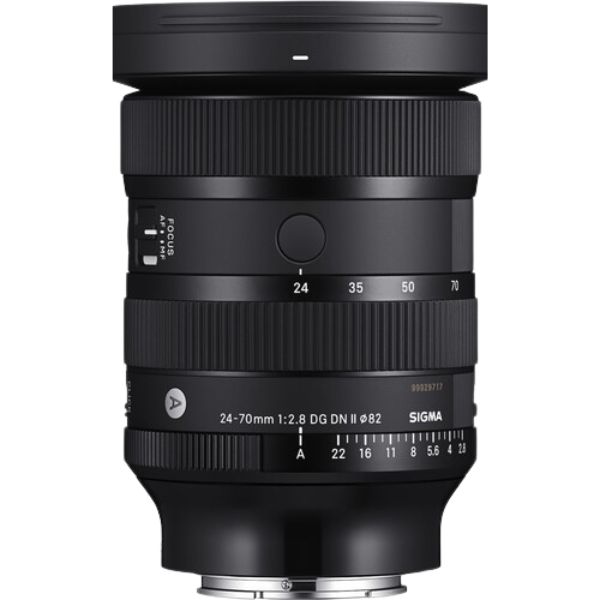
- Sigma 24-70mm f/2.8 DG DN II Art
- Sigma 150-600mm f/5-6.3 DG DN OS Sports
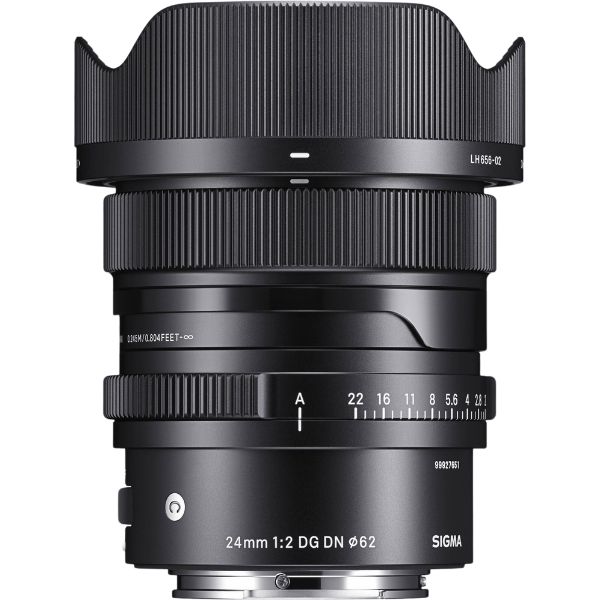
- Sigma 24mm f/2 DG DN Contemporary I Series
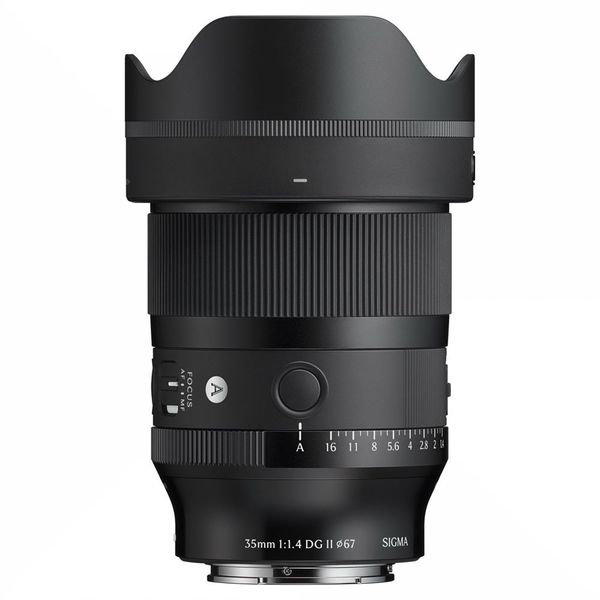
- Sigma 35mm f/1.4 DG II Art
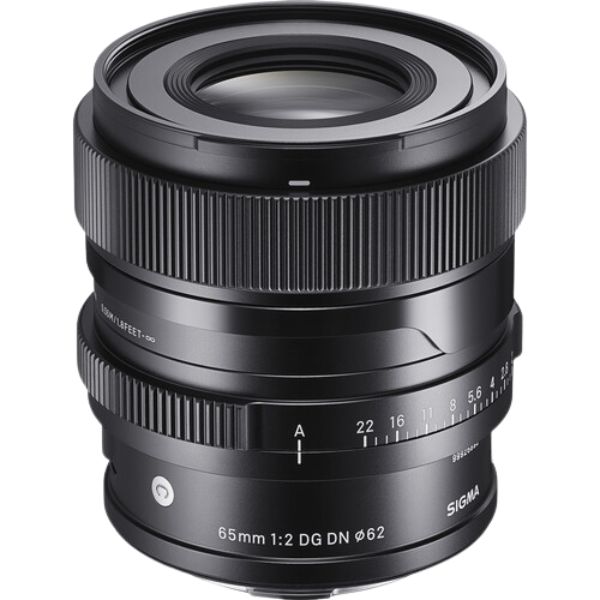
- Sigma 65mm f/2 DG DN Contemporary I Series
- Sigma 85mm f/1.4 DG DN Art
- Sigma 105mm f/2.8 DG DN Macro Art
- Sigma 70-200mm f/2.8 DG DN OS Sports
Sigma’s full-frame lineup has grown a lot since the first version of this article, especially with recent lenses such as the 28-45mm f/1.8 DG DN Art, the 28-105mm f/2.8 DG DN Art, the 50mm f/1.2 DG DN Art, and the 135mm f/1.4 DG Art. I mention them further down in the article, but I’m keeping the main selection focused on the models already integrated into your comparison table.
The table below summarizes the main characteristics to remember for the lenses mentioned below.
- Bright ultra wide-angle lens
- Superb build quality
- Very good image quality (<
- Sony)
- Close up at f/5.6-8 for homogeneity
- Curved front element
- Interesting price
- Compact wide-angle lens
- constant f/2.8 aperture
- fast, quiet autofocus
- excellent center sharpness
- noticeable distortion at 16mm
- pronounced vignetting at full aperture
- Bright standard zoom
- Fast HLA autofocus
- Remarkable sharpness (recessed edges)
- Improved tropicalization
- Disengageable aperture ring
- Visible vignetting and distortion at 24mm

- Top quality construction
- Numerous comfort features
- Excellent image quality
- Interesting long focal length
- Ideal for wildlife photography
- Interesting price
- Excellent construction
- Top image quality
- Aperture ring
- All-weather construction
- Good AF / AF-MF switch
- Very interesting price
- Compact and refined design
- Dual HLA autofocus
- Excellent sharpness
- Improved optical performance
- Aperture ring and AFL buttons
- Strong alternative to the Sony GM
- Great construction (metal)
- Outstanding image quality
- Fast/reliable AF
- Average price/competition
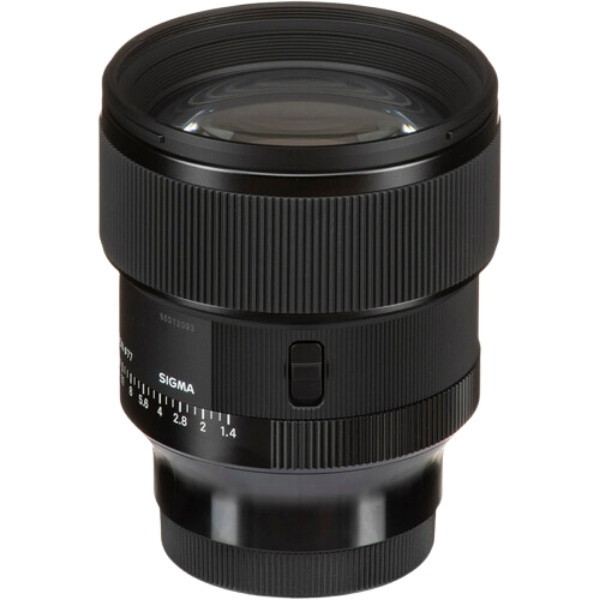
- Simply the best 85mm
- Excellent build construction
- Outstanding image quality
- High distortion
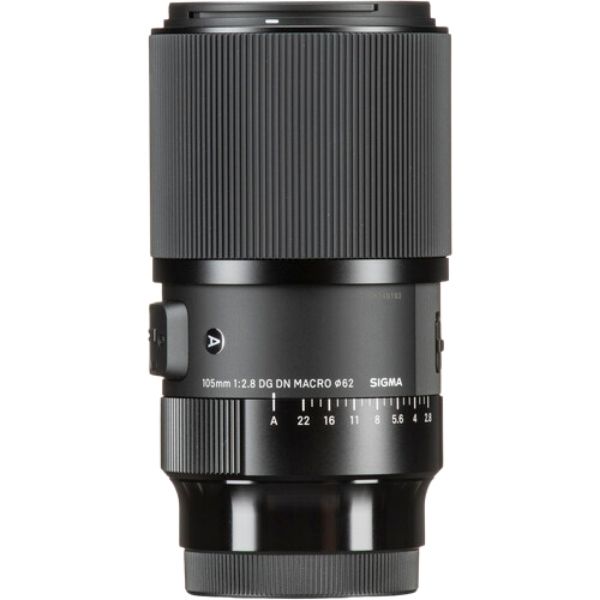
- The reference in Sony macro
- Superb image quality
- Top of the line construction
- Macro/portrait versatility
Below, I’ve prepared a table summarizing the essential features of the lenses presented.
Sigma DG DN Art 14-24mm f/2.8
| Features | Visual |
|---|---|
|
|
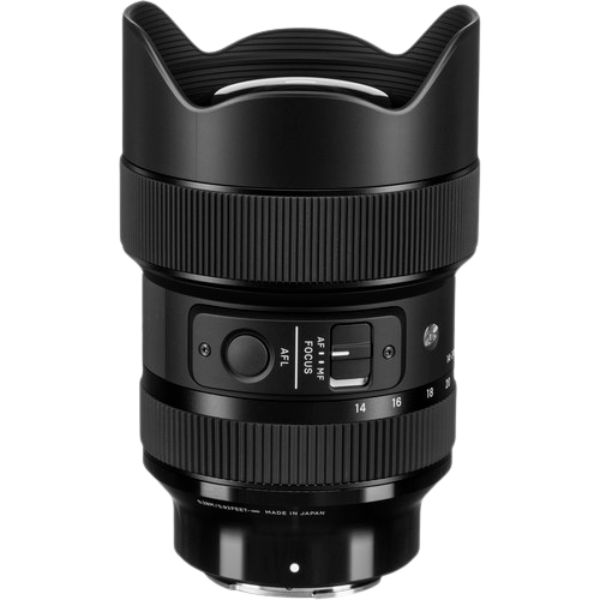
Sigma’s 14-24mm is one of the best options if you are looking for a high-quality ultra-wide-angle zoom lens (114° angle of view) with solid construction, but cannot afford Sony’s 12-24mm f/2.8 GM, which costs around €3300. This is the classic ultra-wide-angle zoom range, ideal for landscapes and architecture.
The Sigma is around €2000 cheaper, while still offering excellent construction and good image quality, although not quite at the same level as the Sony, especially at the longer focal lengths. The edges lag behind the center, and you’ll need to stop down to f/5.6, or even f/8, to get good consistency across the frame. Autofocus remains fast and precise, and most optical flaws appear at 14mm, with good flare resistance overall.
It is a more convincing choice than Sony’s 12-24mm f/4 considering the price. The bulbous front element prevents the use of screw-in filters, but Sigma has left the option of using rear filters. It is also a very good choice for astrophotography, with decent coma correction, and of course for low-light photography thanks to its f/2.8 aperture and 11-blade diaphragm, which helps produce soft, rounded bokeh.
Sigma 16-28mm f/2.8 DG DN
| Features | Visual |
|---|---|
|
|
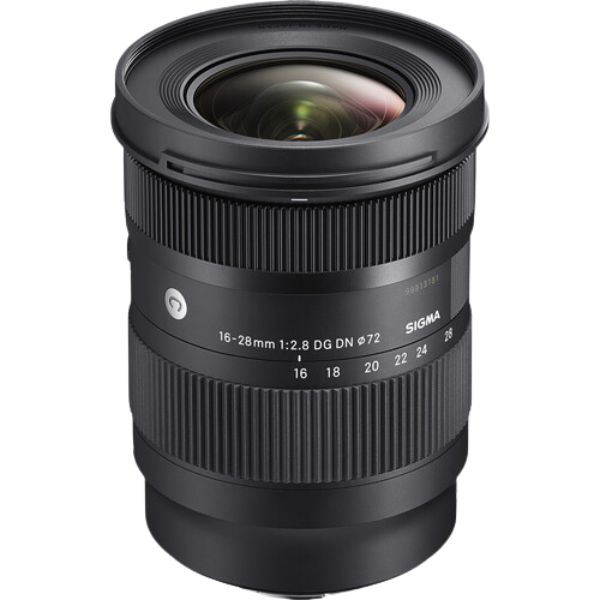
Available since January 2022, the Sigma 16-28mm f/2.8 DG DN is positioned as a compact wide-angle zoom. It offers a constant f/2.8 maximum aperture, with good brightness throughout the zoom range. Its optical formula is based on 16 elements in 11 groups, including special lens elements. Its size and weight are reasonable for this type of lens. Autofocus is fast, smooth, and quiet, which is useful for both photography and video.
The lens is well designed. It has a smooth zoom ring, a responsive electronic focus ring, and an AF/MF switch. On the other hand, weather sealing is limited to the barrel. It competes with the Tamron 17-28mm f/2.8 RXD, which offers a slightly wider focal range and a broader field of view. In terms of performance, center sharpness is excellent from f/2.8, with good contrast. Chromatic aberrations are well handled, while distortion is noticeable at 16mm and vignetting is pronounced at full aperture.
In conclusion, the Sigma 16-28mm f/2.8 DG DN is aimed mainly at travel, architecture, and landscape photography. It combines strong performance with compactness, making it a very good option for long photo sessions.
Sigma 24-70mm f/2.8 DG DN II Art
| Features | Visual |
|---|---|
|
|
The Sigma 24-70mm f/2.8 DG DN II Art is a major update to Sigma’s flagship standard zoom. It keeps the same basic optical construction as its predecessor, with 19 elements in 15 groups, while improving several important points. These include HLA autofocus, which is much faster, and a shorter minimum focusing distance (17cm at 24mm and 34cm at 70mm). The lens is also lighter and more compact.
In terms of ergonomics, Sigma added several useful features, including a click-stop aperture ring and a customizable function button. Weather sealing has also been improved. In terms of performance, this new version delivers remarkable sharpness, even if the corners remain a little softer. Optical defects are well controlled, especially chromatic aberrations. Vignetting and distortion are still visible at 24mm, but they can be corrected in post-production.
As you can see, this Sigma is a strong alternative to the Sony 24-70mm f/2.8 GM II, which performs better but costs more. It can also compete with the Tamron 28-75mm f/2.8 G2, which is cheaper but offers fewer features. In my opinion, the Sigma is definitely a strong compromise, ideal for portrait, reportage, and everyday photography.
Sigma DG DN OS Sports 150-600mm f/5-6.3
| Features | Visual |
|---|---|
|
|
Sigma finally offers a long 150-600mm telephoto zoom designed to compete with Sony’s 200-600mm and Tamron’s 150-500mm. Sigma also has a 100-400mm, but that lens belongs to the less ambitious Contemporary range.
This 150-600mm offers excellent build quality, on par with Sony’s 200-600mm, along with many comfort features and customizable buttons. As a result, it is more pleasant to use than Tamron’s 150-500mm, and at a lower price. Autofocus is not quite as good as Sony’s, but it remains fast and reliable in most situations, roughly on the same level as the Tamron. In terms of optical quality, the three lenses are difficult to separate, although the Sony seems slightly better at the long end on high-resolution sensors.
The Sigma offers a very balanced compromise: it gives you the shorter end of the Tamron and the longer reach of the Sony. It is larger and heavier than the Tamron but a little less imposing than the Sony when folded, with Sony-like comfort features and a lower price than both. It is ideal for wildlife photography.
Sigma 24mm f/2 DG DN Contemporary I Series
| Features | Visual |
|---|---|
|
|
Sigma released this 24mm f/2 after the smaller 24mm f/3.5 in the same I Series. While we might have expected Sigma to redesign its 24mm f/1.4 Art in a mirrorless version, as it did with the 35mm and 85mm, the brand instead chose a more compact f/2 approach.
Image quality is better than on the f/3.5 version. Results are already very good wide open, with strong consistency across the frame, and become excellent after stopping down by one stop. Build quality is excellent, as with all I Series lenses, with an aperture ring (not clickless), an AF/MF switch, and weather sealing. Autofocus is very fast, and optical defects are limited, except for flare, which can be annoying. Using the lens hood is therefore recommended.
At €620 when it was released, it was well positioned, only slightly more expensive than the Samyang 24mm f/1.8, but with a more premium build. It also remains much cheaper than Sony’s 24mm f/1.4, which costs around €1350 for very similar image quality.
Sigma 35mm f/1.4 DG II Art
| Features | Visual |
|---|---|
|
|
Sigma has now renewed its 35mm f/1.4 mirrorless lens with the 35mm f/1.4 DG II Art. This new version keeps the spirit of the original DG DN model, but improves the formula with a more refined, more compact design and faster autofocus. It remains an ideal focal length for street photography, everyday photography, environmental portraits, and reportage.
Build quality is excellent, with the kind of comfort features usually found on high-end lenses: an AF/MF switch, a clickable aperture ring, and customizable AFL buttons on the barrel. Autofocus is driven by Sigma’s Dual HLA system, making it fast, precise, and quiet. Optical quality is very strong from full aperture and becomes excellent when stopped down, while bokeh remains smooth and pleasant. Optical flaws are well controlled overall, and the 67mm filter thread also makes it easier to use than the older, larger f/1.2 version.
In terms of image quality, this Sigma 35mm f/1.4 DG II Art is now one of the most attractive 35mm options for Sony E-mount. It is more affordable than the Sony 35mm f/1.4 GM, while offering a very high level of performance. If you want a brighter option, Sigma now also offers the 35mm f/1.2 DG II Art, which is more specialized and more expensive. For many photographers, however, this f/1.4 version is probably the best balance.
Sigma 65mm f/2 DG DN Contemporary I Series
| Features | Visual |
|---|---|
|
|
Sigma initially presented the Contemporary line as a more reasonable, lightweight, and affordable alternative to the Art and Sports ranges. With the I Series, however, Sigma took a different approach by offering compact, beautifully built lenses with a more moderate maximum aperture.
Among the I Series lenses, this 65mm f/2 is probably the one with the most impressive image quality, but also one of the most unusual focal length/aperture combinations. Detail is very high from full aperture, with strong consistency across the frame, all inside a beautifully made body where even the lens hood is metal. Autofocus is fast and quite reliable. Distortion and vignetting are significant but easy to correct, while chromatic aberrations are moderate and flare is well controlled. The only regret is that Sigma did not make the aperture ring clickless for video, as it does on the Art prime lenses.
In short, this is a high-level lens that is relatively expensive (around 700€). I think the price is justified by the optical quality and all-metal construction, but many photographers will probably look instead at Samyang’s 85mm f/1.4 for image quality, or its 75mm f/1.8 for compactness and lightness, both at much more affordable prices.
Sigma DG DN Art 85mm f/1.4
| Features | Visual |
|---|---|
|
|
A reference among 85mm lenses for Sony E-mount, this Sigma 85mm f/1.4 DG DN Art even received a TIPA award. It has many strengths, and few lenses offer such a strong balance of image quality, price, features, and handling.
Build quality is excellent, optical quality is outstanding, and ergonomics are very complete, with a clickable aperture ring, an AF/MF switch, and a customizable AF button. It is better, lighter, and more compact than the old DSLR version, and also more appealing than the much more expensive original Sony GM in many ways. Even autofocus is better. Its only real flaws are significant distortion, which is easy to correct in photography but more annoying in video, and flare resistance that is only good rather than excellent. But honestly, who is going to shoot directly into the sun with an 85mm at f/1.4?
For just over €1000, this remains one of the best 85mm lenses for Sony full frame. The Sony GM is more expensive and not as strong in several areas, which makes it hard to justify unless you already own it. The Samyang is half the price, but still slightly behind in optical quality and construction.
Sigma DG DN Art 105mm f/2.8 macro
| Features | Visual |
|---|---|
|
|
Another TIPA award-winning reference from Sigma, the 105mm f/2.8 Art macro is one of the best macro lens choices for Sony full-frame cameras.
Build quality and autofocus are both very good, and optical quality is almost flawless. That said, you quickly notice the small conveniences normally found on this kind of lens that are missing here. For example, the focus ring has no hard stop, and there is no focusing distance or magnification scale on the barrel. Although Sony full-frame bodies have sensor stabilization, macro lenses can still benefit from optical stabilization. Otherwise, as with other Art lenses, you get a clickable aperture ring and a customizable AF button, as well as a distance limiter to reduce autofocus travel.
At around €750, Sigma offers outstanding macro image quality with this 105mm. However, photographers who do a lot of serious macro work may prefer the manual focus comfort and stabilization of Sony’s 90mm GM, which costs more. The Sigma is more versatile, however, especially if you also want to use it for portraits.
Sigma 70-200mm f/2.8 DG DN OS Sports
| Features | Visual |
|---|---|
|
|
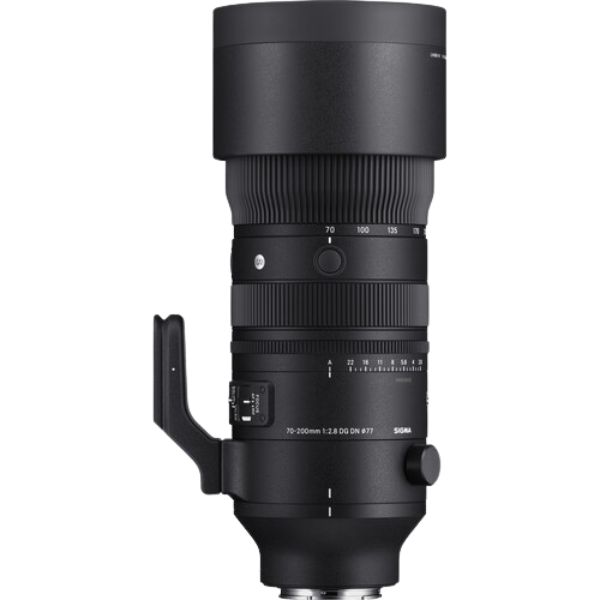
Introduced in November 2023, the Sigma 70-200mm f/2.8 DG DN OS Sports is a bright telephoto zoom that has already proven itself. Build quality is solid, and its weather-sealed construction is worth highlighting. Inside, it uses 20 elements in 15 groups, including 11 special elements. Its constant f/2.8 aperture makes it useful in low light, and it combines very fast autofocus with an optical stabilization system offering up to 7.5 stops of compensation.
In terms of ergonomics, it has a click-stop aperture ring, an Arca-compatible tripod foot, and a focus limiter. The main downside is its weight, which makes it one of the heaviest lenses in its category. In use, it is well suited to sports, action, portraits, and event photography. Sharpness is very good throughout the focal range, while chromatic aberrations and distortion are handled effectively.
In conclusion, compared with the Sony 70-200mm f/2.8 GM II, it is much cheaper and still performs very well. If you are looking for a powerful, versatile telephoto zoom and do not mind the weight, I’m almost certain this Sigma will suit you. Let me know what you think!
As mentioned above, the following table summarizes the main features of the lenses listed.
| Best Sigma FE lenses for Sony full frame | Focallength | Max.Aperture | Weight | Dim. (Ø x L) | Min. FocusDist. | Approx.price | Best price | |||
|---|---|---|---|---|---|---|---|---|---|---|
| + | Sigma 14-24mm f/2.8 DG DN Art | 14-24mm | f/2.8 | 1.8 lb / 795g | 3.3 x 5.2" / 85 x 131 mm | 11" / 28 cm | $1 230 | Amazon B&H | More info + | |
|
||||||||||
| + | Sigma 16-28mm f/2.8 DG DN Contemp. | 16-28mm | f/2.8 | 1 lb / 450g | 3 x 4" / 77 x 103 mm | 9.8" / 25 cm | $869 | Amazon B&H | More info + | |
|
||||||||||
| + | Sigma 24mm f/2 DG DN I C | 24mm | f/2 | 12.88 oz / 365g | 2.8 x 2.8" / 70 x 72 mm | 9.4" / 24 cm | $639 | Amazon B&H | More info + | |
|
||||||||||
| + | Sigma 24-70mm f/2.8 DG DN II Art | 24-70mm | f/2.8 | 1.6 lb / 735g | 3.5 x 4.8" / 88 x 122 mm | 6.7" / 17 cm | $1 179 | Amazon B&H | More info + | |
|
||||||||||
| + | Sigma 35mm f/1.4 DG II Art | 35mm | f/1.4 | 1.2 lb / 525g | 2.9 x 3.8" / 73 x 96 mm | 11" / 28 cm | $1 059 | Amazon B&H | More info + | |
|
||||||||||
| + | Sigma 65mm f/2 DG DN | C | 65mm | f/2 | 0.9 lb / 405g | 2.8 x 3" / 72 x 76 mm | 1.8' / 55 cm | $699 | Amazon B&H | More info + | |
|
||||||||||
| + | Sigma 70-200mm f/2.8 DG DN OS Sports | 70-200mm | f/2.8 | 2.9 lb / 1335g | 3.6 x 4.2" / 91 x 107 mm | 2.1' / 65 cm | $1 469 | Amazon B&H | More info + | |
|
||||||||||
| + | Sigma 85mm f/1.4 DG DN Art | 85mm | f/1.4 | 1.4 lb / 625g | 3.3 x 3.8" / 83 x 96 mm | 2.8' / 85 cm | $1 000 | Amazon B&H | More info + | |
|
||||||||||
| + | Sigma 105mm f/2.8 DG DN MACRO Art | 105mm | f/2.8 | 1.6 lb / 710g | 2.9 x 5.3" / 74 x 136 mm | 11.4" / 29 cm | $709 | Amazon B&H | More info + | |
|
||||||||||
| + | Sigma 150-600mm f/5-6.3 DG DN OS Sport | 150-600mm | f/5-6.3 | 4 lb / 1830g | 4.1 x 10.2" / 105 x 260 mm | 9.2' / 280 cm | $1 299 | Amazon B&H | More info + | |
|
||||||||||
Other Sigma lenses worth considering
Sigma offers other E-mount lenses for full-frame sensors:
- The 28-70mm f/2.8 Contemporary is better suited to travel because it is lighter and offers better quality at short focal lengths than the 24-70mm, all at a lower price. It is also better in most ways than Tamron’s 28-75mm f/2.8 for only slightly more money.
- The Sigma 28-45mm f/1.8 DG DN Art is a very interesting recent option. It is not as versatile as a classic 24-70mm, but its constant f/1.8 aperture makes it unique for full frame, especially for portraits, low light, and video.
- The Sigma 28-105mm f/2.8 DG DN Art is another recent lens worth mentioning. It keeps a constant f/2.8 aperture while offering a longer range than a classic 24-70mm, which makes it very attractive for reportage, events, and travel.
- The Sigma 50mm f/1.2 DG DN Art is a direct alternative to Sony’s 50mm f/1.2 GM. It is still a specialist lens, but it is worth considering if you want a very bright standard prime with strong optical performance.
- The Sigma 135mm f/1.4 DG Art is a very specialized portrait lens, but it deserves a mention because it pushes the 135mm focal length further than usual with an f/1.4 aperture.
- The Sigma 200mm f/2 DG OS Sports and the 500mm f/5.6 DG DN OS Sports are more niche, but they show how seriously Sigma is now investing in long telephoto lenses for mirrorless cameras.
- The 100-400mm f/5-6.3 Contemporary stands out for being much cheaper than the Sony GM, although compromises had to be made on maximum aperture, build quality, and optical quality. It is also notable for its weight and more reasonable dimensions for a long focal length.
- The 24mm f/3.5 Contemporary I Series does not have many arguments against the competition in my opinion. Its price and weight are higher than the recent 24mm from Samyang, which opens at f/1.8. If you want a small-aperture 24mm that is light and compact, I would rather recommend Sony’s 24mm f/2.8 G, since it does not cost much more.
- The 35mm f/1.2 Art, mentioned above alongside the f/1.4, has now been renewed as the 35mm f/1.2 DG II Art. The new version is still more specialized than the f/1.4, but it is lighter and more compact than the first version while keeping its very bright aperture and beautiful bokeh.
- The 35mm f/2 Contemporary I Series, also mentioned with the f/1.4, offers excellent metal construction, but it is consequently heavier than some competing 35mm f/1.8 lenses. It is also more expensive than most of them.
- The 45mm f/2.8 Contemporary I Series, like the 24mm and 35mm in the same line, faces many competitors that may be more interesting in several ways, such as the Samyang 45mm f/1.8. It is very suitable for street photography thanks to its robust construction and compact size. But, as with the 24mm, Sony has since released a 40mm f/2.5 G that is a little more expensive but more attractive overall.
- The 90mm f/2.8 Contemporary I Series is a portrait lens characterized by its very small size and weight, combined with high build quality and excellent image quality. However, at around €620, it may seem expensive compared with the 85mm f/1.4 Art, and especially compared with Samyang’s 85mm f/1.4 and 75/85mm f/1.8 lenses.


Conclusion
Sigma has already developed some excellent lenses for Sony E-mount, especially for full frame, and the brand clearly has no intention of slowing down. Since the first version of this article, several gaps have been filled, including a 70-200mm f/2.8, a 24-70mm f/2.8 DG DN II, two updated 35mm Art lenses, and several more specialized lenses such as the 28-45mm f/1.8, 135mm f/1.4, and 200mm f/2.
Some of these lenses can compete with Sony’s high-end options without any problem, often at much more attractive prices. Even though many Sigma lenses are still expensive, they remain very reasonable for high-end full-frame glass. If you are looking for longer focal lengths, I invite you to check out our article dedicated to the best telephoto lenses for a Sony camera.
I hope this article will help you make your choice and maybe give you more confidence in Sigma, especially if you were disappointed by some older DSLR versions that were less successful.
Finally, if you want to go further, I invite you to have a look at all our articles dedicated to Sony mirrorless cameras. You’ll find several articles summarizing our best tips for choosing your lens.
See you soon for the rest,

Written by Sylvain PONS
I've been passionate about photography since 2010, learning as I went along. Today, I dedicate myself to guiding others in their choice of camera gear and sharing a variety of tips to improve their photography skills.
Despite our care, a mistake may have slipped into this article. If you find any, please don't hesitate to let us know so we can correct it as soon as possible and keep our information up-to-date!