Visit to the Guadeloupe Zoo
Last update: 05/01/2026
Our blog continues to grow thanks to you, our readers. This post may contain affiliate links, which means we can earn a small commission if you make a purchase through them, at no extra cost to you. This helps us to continue to bring you more and support our work!
To be honest with you, you should know that we’ve actually been to the Guadeloupe Zoo several times over the four years we’ve lived here as a family. Mélanie had even already drafted the detailed outline of the article, but I admit that until now, I always found an excuse not to write it. But this time, I’m going for it. Due to a series of circumstances, I recently met Alix, who partly works for the Guadeloupe Zoo, and thanks to her, I had the chance to return here with my family. By the way, if you’re looking for another nice spot to discover, I recommend heading to the Valombreuse Botanical Garden.
Thanks to her, we were also able to meet the zoo director and chat with the veterinarian, who also takes care of injured animals through the SOS Faune Sauvage Antilles Guyane association (I’ll tell you more about that shortly). So this was a great opportunity for us to return here to this zoo and finally complete this article, which we hope will make you want to come visit the zoo.
Thanks to her, we were also able to meet the zoo director and chat with the veterinarian, who also takes care of injured animals through the SOS Faune Sauvage Antilles Guyane association (I’ll tell you more about that shortly). So this was a great opportunity for us to return here to this zoo and finally complete this article, which we hope will make you want to come visit the zoo.
So, these days, you might be wondering, “why visit a zoo”? I must say that we’re clearly not fans of this type of place by nature and that we prefer to observe animals in their natural environment whenever possible. But what really makes a big difference with this Guadeloupe Zoo is that it has managed to keep its natural and authentic feel. The few zoos I remember visiting in France as a kid looked nothing like this one. Those were huge zoos, with roads inside and a succession of animals in cages.
Without spoiling the walk and the discovery of the zoo that we’re going to show you in pictures, we still think it’s a very interesting spot to visit if you’re spending some time on vacation in Guadeloupe. The place blends really well with nature, with a very small trail, and they’ve clearly not spoiled the site. Plus, you’ll only find animals from the region—either the Antilles, South America, Central America, or the neo-tropics. No elephants, zebras, or antelopes here, haha. And that’s a good thing, let’s leave them where they are.
Alright, let’s go, I’ll take you to discover this zoo.
Discovering the Guadeloupe Zoo - Parc des Mamelles
Alright, let’s head off to discover this famous zoo in pictures.
The beginnings
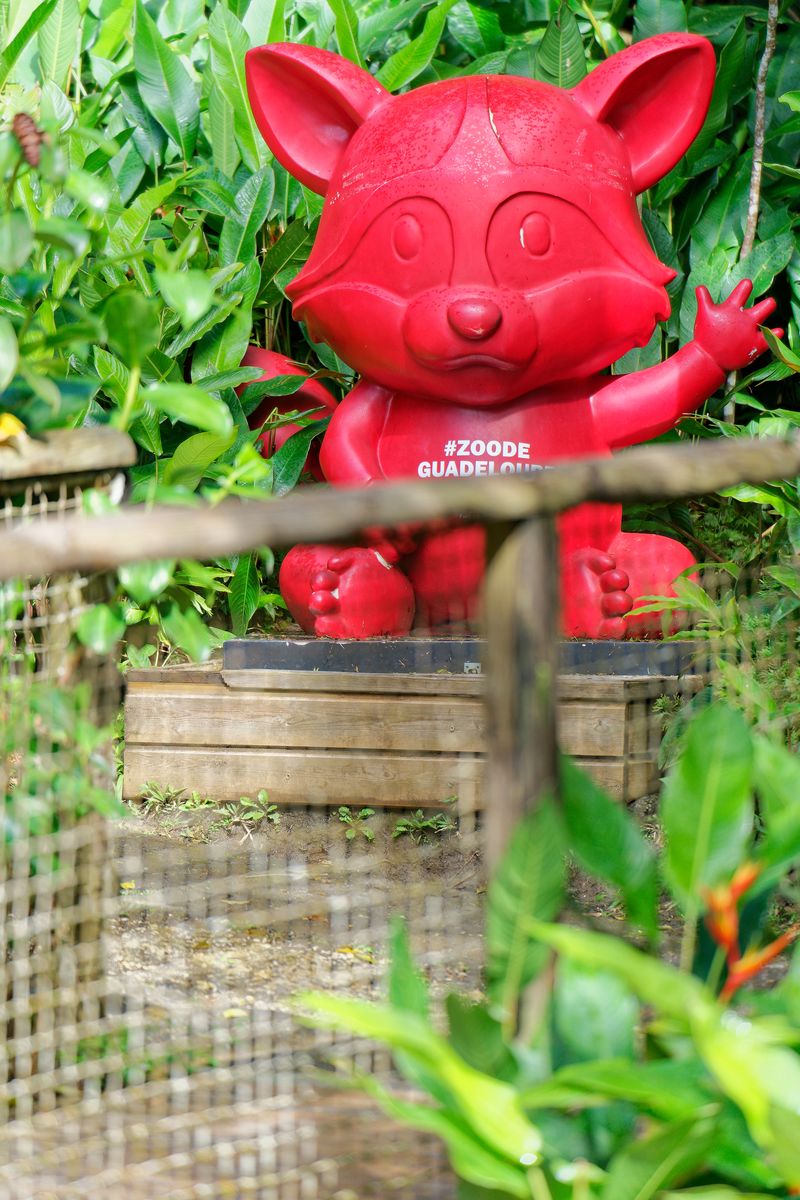
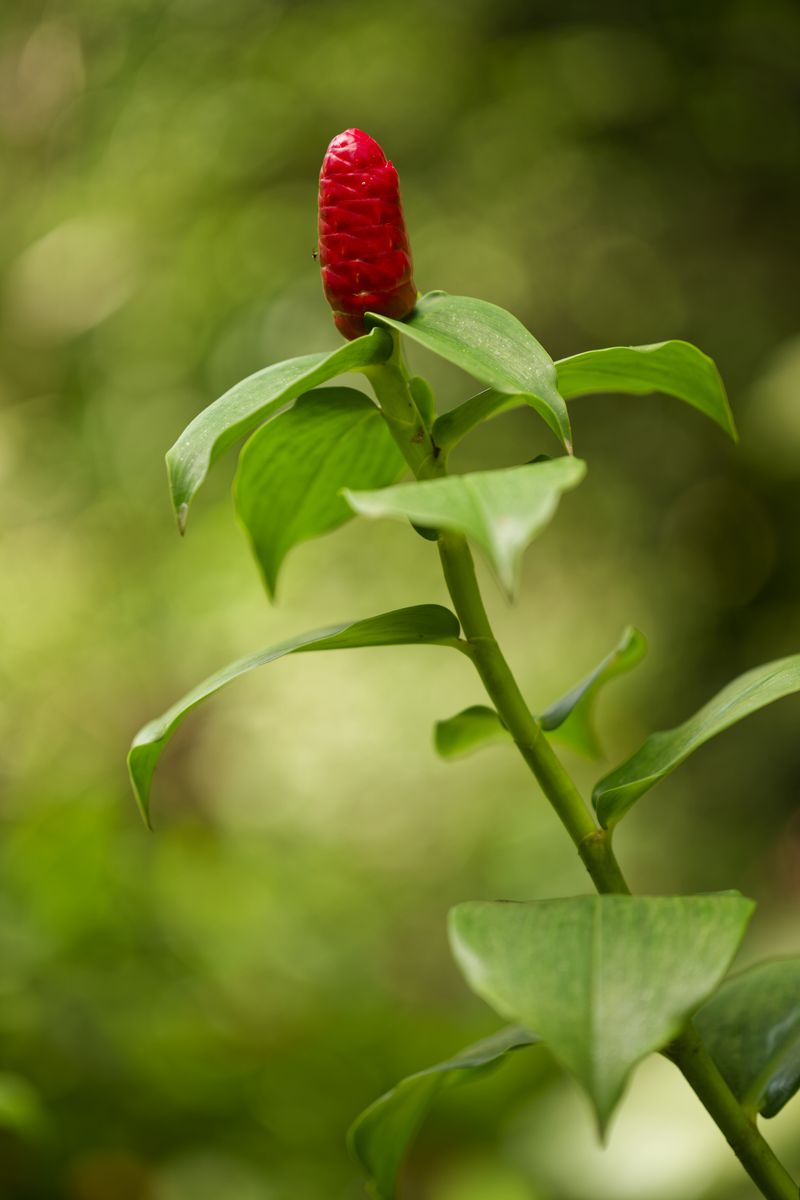
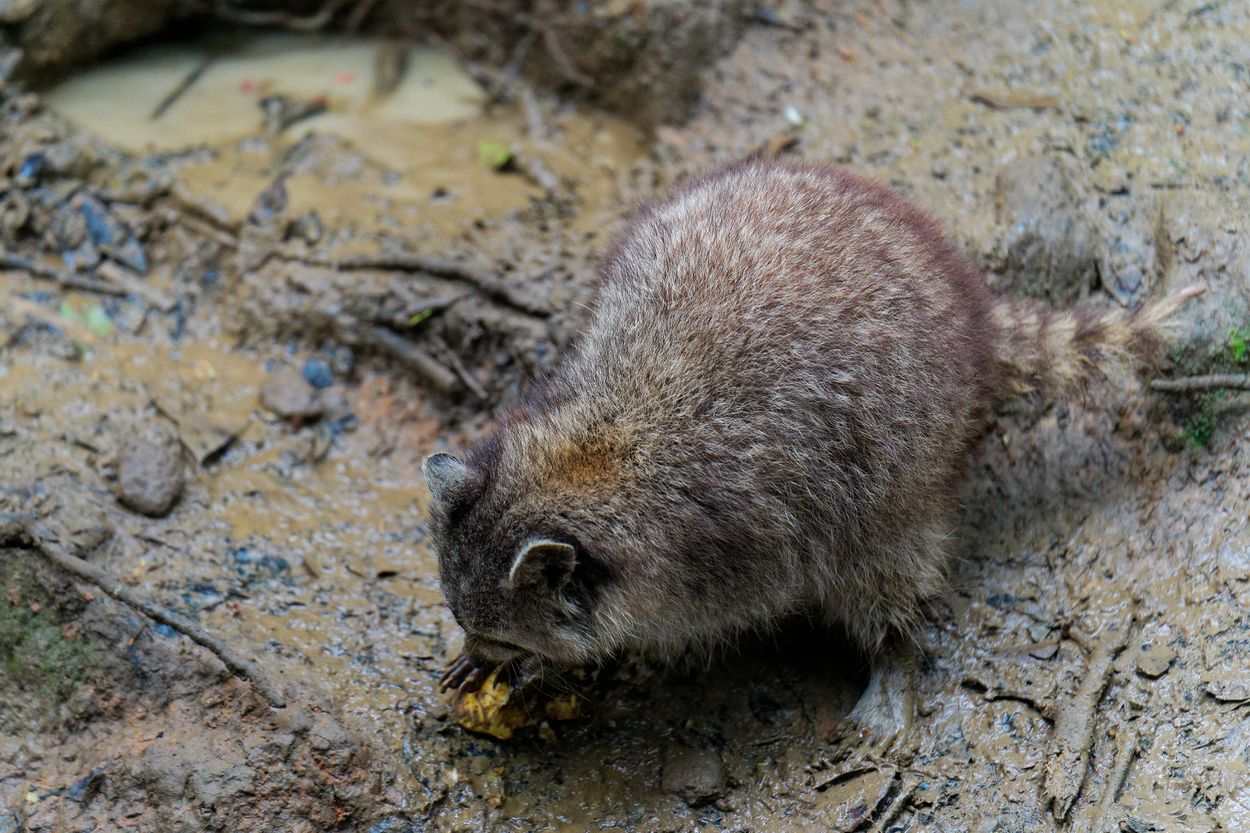
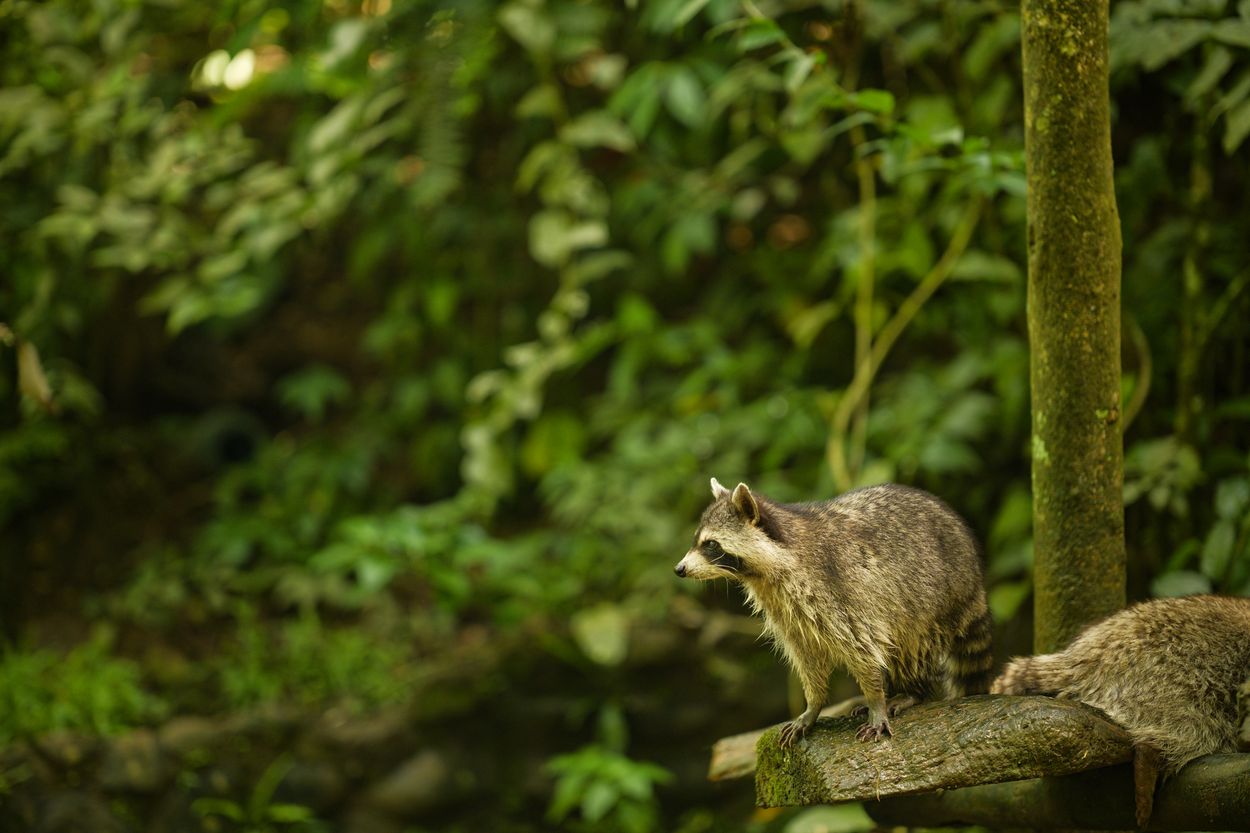
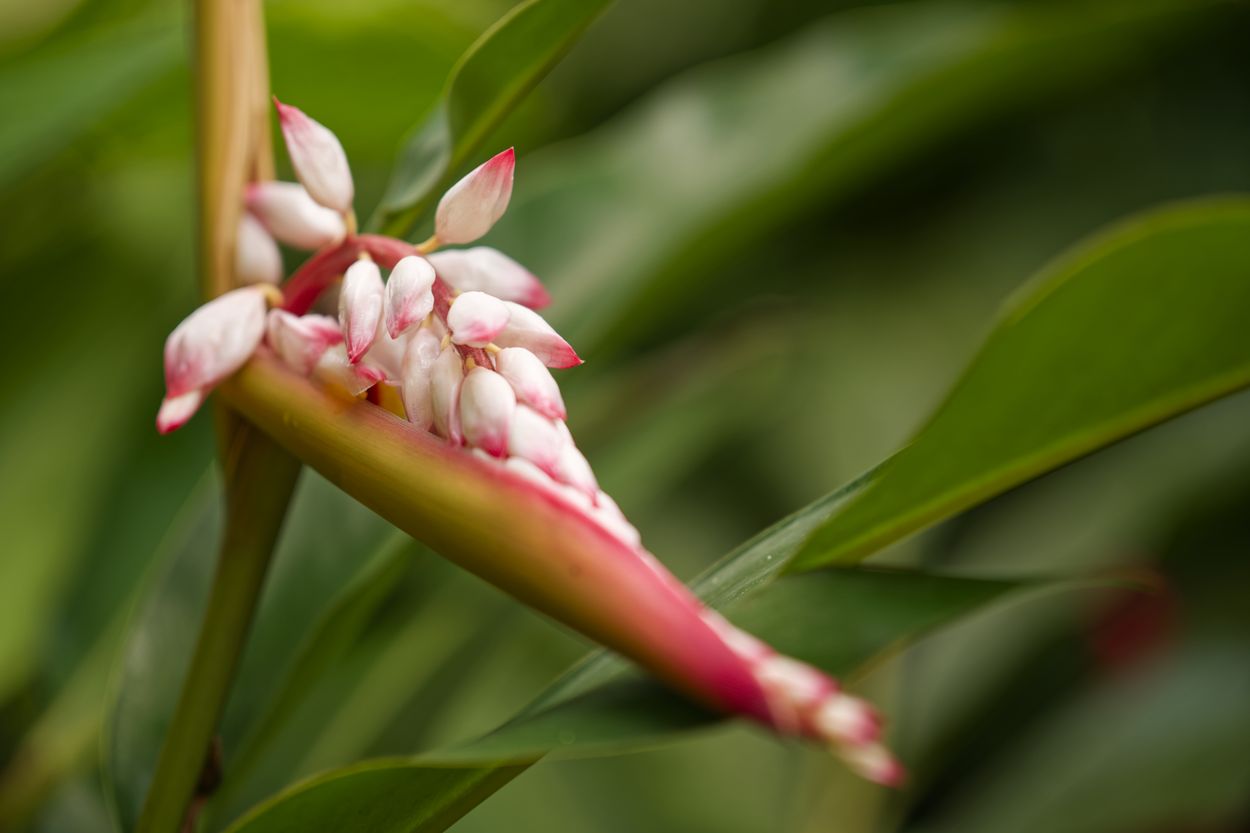
After parking, we meet up with Alix and then the zoo director. We start the walk in the direction of the trail. Right from the beginning, you’ll notice that the setting is really nice, because in addition to the animals you’ll be able to observe, the trail passes through a beautiful humid forest, dark but blooming. You’ll find all the classic plants of Guadeloupe there (Alpinia, Heliconia, Ixora, Frangipani, Torch ginger, etc.). Once we set off, we reach the famous raccoon area, those cute little rodents we often see in the garden and that, unfortunately, come eat our fruit, haha. If you haven’t had the chance to see them during your stay in Guadeloupe, this is your chance. There are quite a few, including a baby during our visit.

Here we meet Julie, the new veterinarian, really nice, with whom we chat for about fifteen minutes. She explains a lot about how the zoo works but also about SOS Faune Sauvage Antilles Guyane.
Learn more
I wanted to summarize the essentials, but here’s what we got from our discussion with the veterinarian:
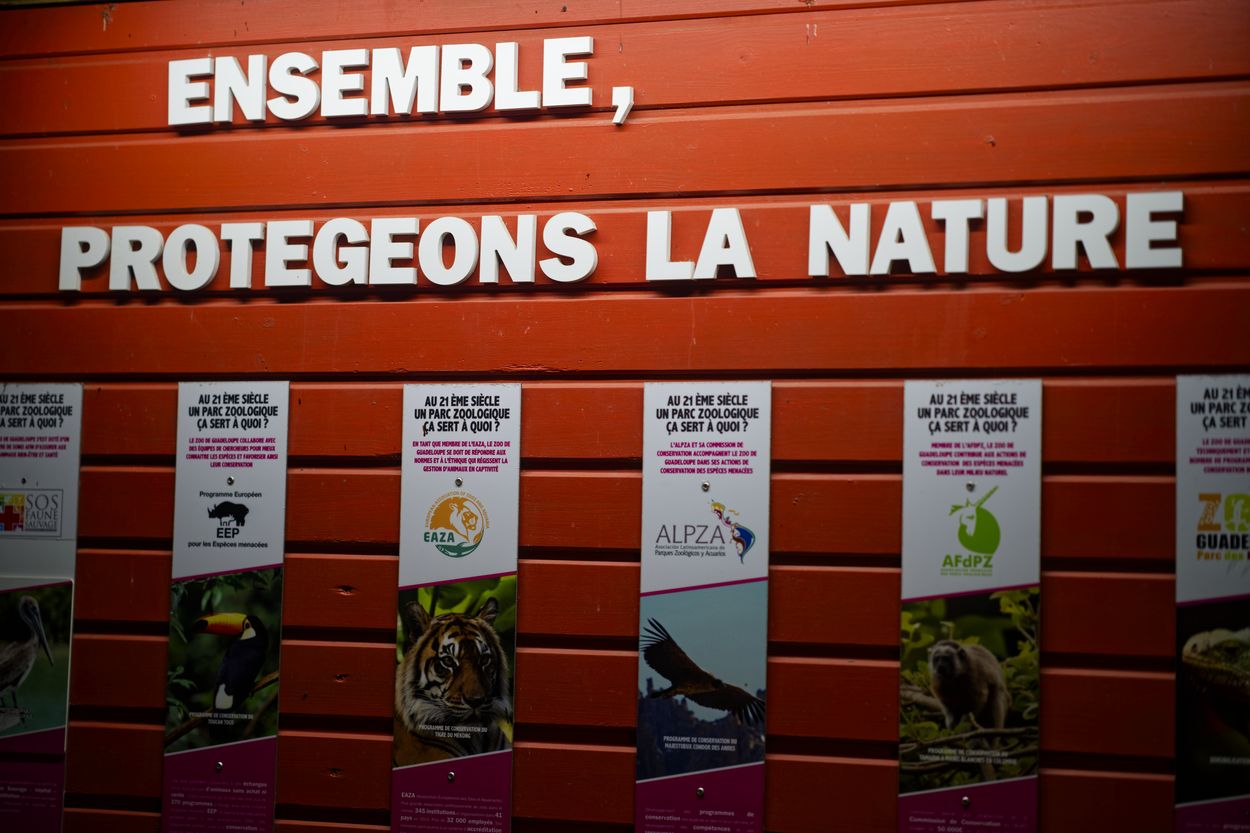
We talked about breeding in zoos, which can be aimed at keeping certain species alive, through collaboration with other zoos. In Europe, there’s a conservation program with a coordinator for each species. This person is responsible for the species in Europe and has access to all zoo databases. So, for example, they know that a certain individual is in a specific zoo and that it would be good to have “x” births of that species each year.
In agreement with the zoos and their on-site capabilities, it can be decided that certain species reproduce within a zoo to maintain that species and, if possible, reintroduce it into the wild. Except things aren’t that simple, because it’s absolutely necessary to address poaching and habitat loss before reintroducing them into the wild.
All zoos are part of the AFdPZ (French Association of Zoological Parks), which participates in conservation programs. We also learned that in Europe, almost all species were already born in zoos and that no animals are taken from the wild anymore. They’ve never known life outside and wouldn’t even be able to survive in the wild.
Zoos obviously take care of feeding them, treating them, and offering enrichment to stimulate them, for example toys, certain special foods to vary things, etc. In the long term, if all conditions are met, the goal is to reintroduce them into their natural habitat.
The SOS Faune Sauvage Antilles Guyane association
The SOS Faune Sauvage Antilles Guyane association is like a care center for all the wild fauna of Guadeloupe. Created in 2001, it has a local branch located at the Guadeloupe Zoo – Parc des Mamelles, which provides its facilities free of charge and fully finances the operation of the center, whether it’s for treatment, food, or infrastructure.
If you live in Guadeloupe, you can contact the association to report or bring in an injured, sick, or distressed wild animal. A veterinarian can be reached directly via WhatsApp at 06.90.31.10.41, and you need to send a message and photos to get initial advice and organize care. The animals taken in are (if possible) treated, then released back into their natural habitat as soon as their condition allows. When an animal has too serious aftereffects, loses its ability to survive, or is too “imprinted” by humans, SOS Faune Sauvage Antilles Guyane looks for approved specialized facilities able to offer it long-term housing.
French regulations, however, prohibit the center from taking in certain so-called invasive exotic species (EEE). This is the case for the raccoon, cane toad, mongoose, certain introduced doves, the red-eared slider, or the common iguana (Iguana iguana). The latter should not be confused with the Lesser Antillean iguana (Iguana delicatissima), an endemic and protected species, which the center cares for with special attention.

SOS Faune Sauvage Guadeloupe regularly receives technical and financial support, notably through the OFB’s TeMeUm program, which helps strengthen its facilities and improve care, particularly for wild birds. The association is also present in French Guiana, where it rescues much larger animals such as monkeys, sloths, macaws, or peccaries, while in Guadeloupe its work focuses more on birds, reptiles, and small mammals.
Continuing up to the canopy walkways
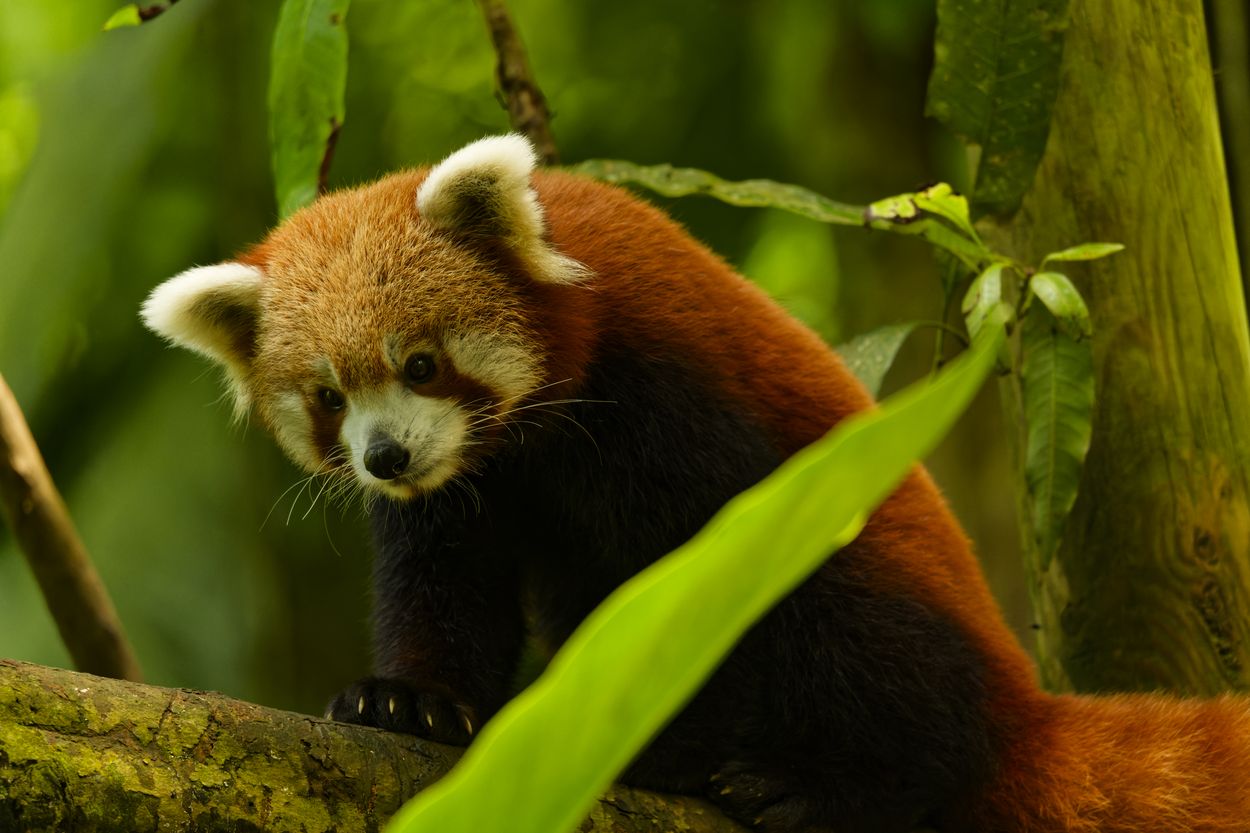
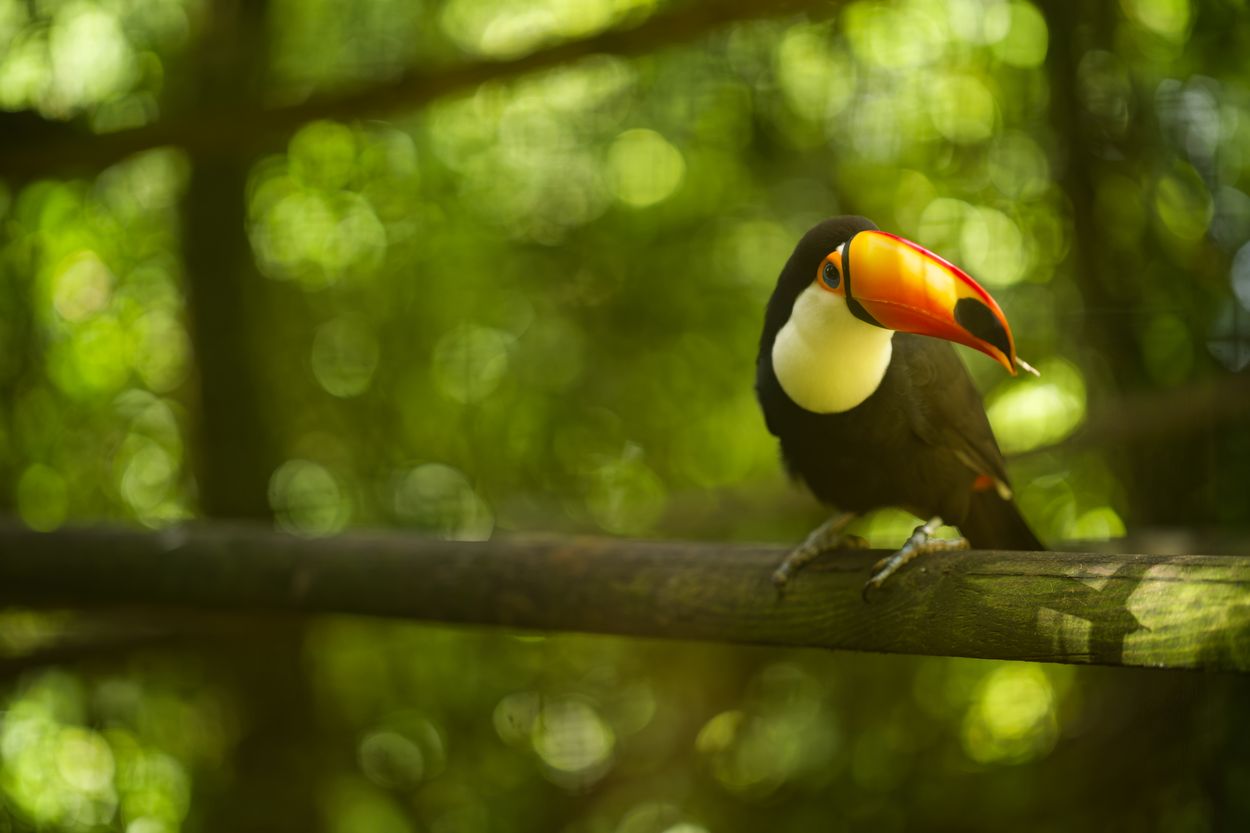
The weather is nice, we’re lucky, but know that if you come and it rains, you can at worst buy ponchos at the entrance. But between us, we’ve already visited the zoo in the rain and it’s also nice—it creates a great atmosphere in the forest. We walk past various animals, including the beautiful red pandas that are stunning, they look like stuffed toys. We also see several monkey species, kinkajous, and several toucans with gorgeous colors. At this point, you can even observe some beautiful snakes…
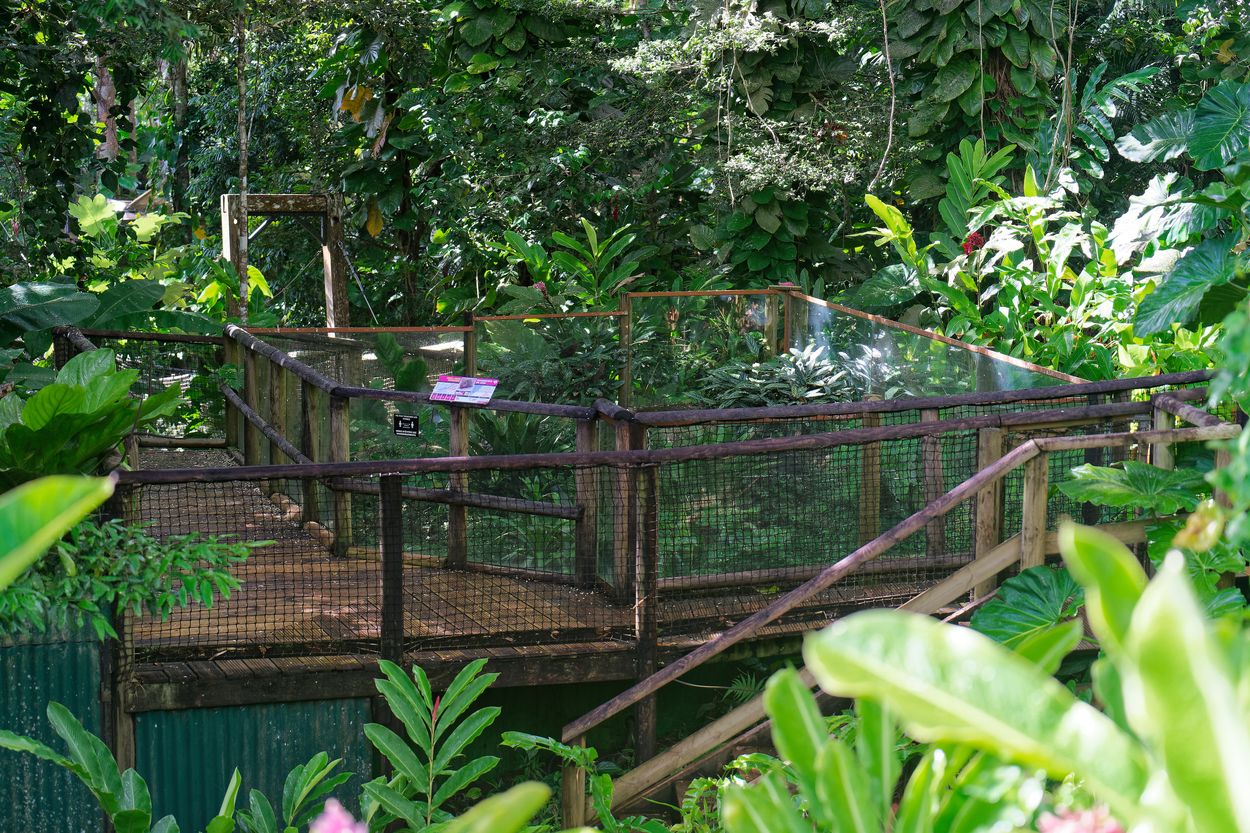
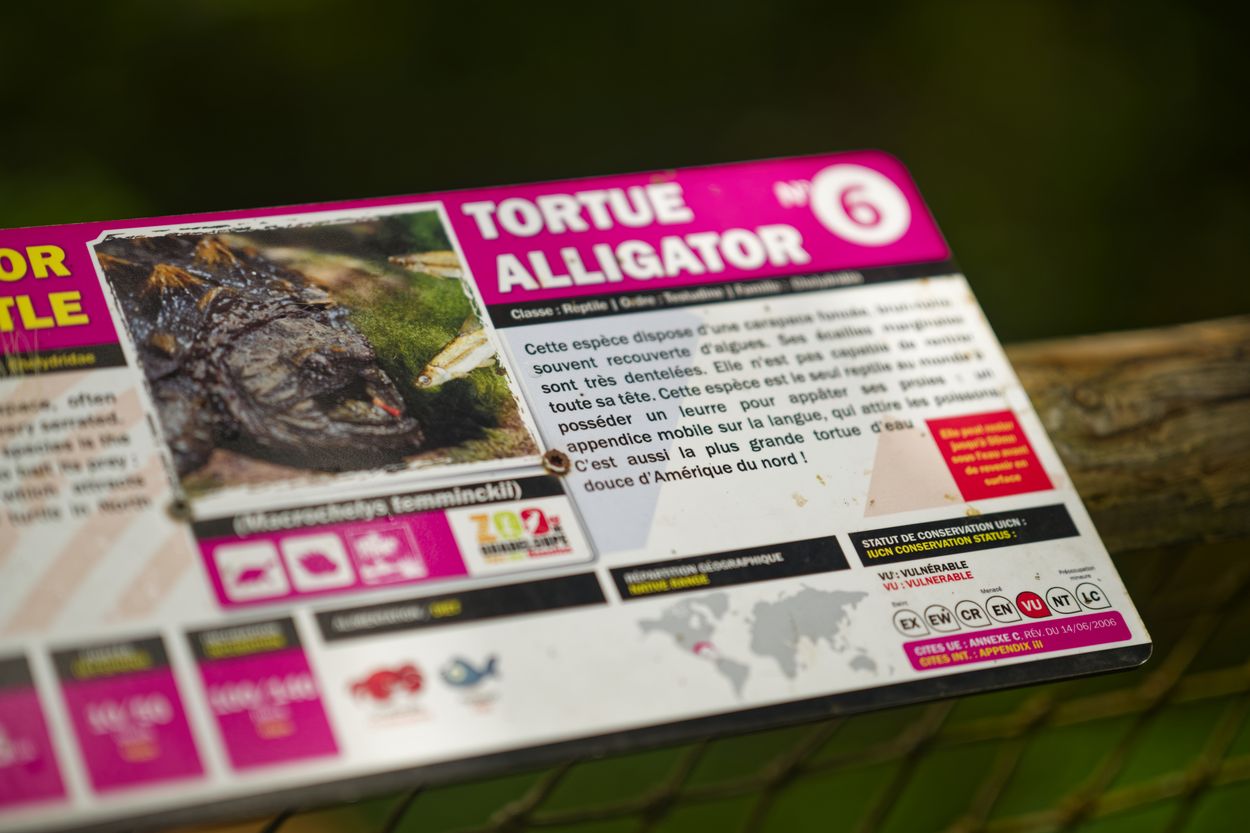
The path continues into the forest and climbs higher through colorful plants to reach an observation shelter near several iguanas you often see here. It’s also a good spot to stop if it starts raining heavily. The trail, very beautiful here, passes the alligator snapping turtle (creepy) and leads to a viewpoint on the heights. In good weather, it’s really nice.
Next, we enter a large insectarium that, I must say, is particularly well done. If you’re with curious children eager to observe and learn, you’ll probably spend a little while there like we did. Inside, there’s plenty to see and read. You’ll find lots of stick insects, snakes, crabs, other reptiles, spiders, but also a large central room to learn more about many species. There are many interesting information panels, but also a film that runs and will teach you more about the zoo too.
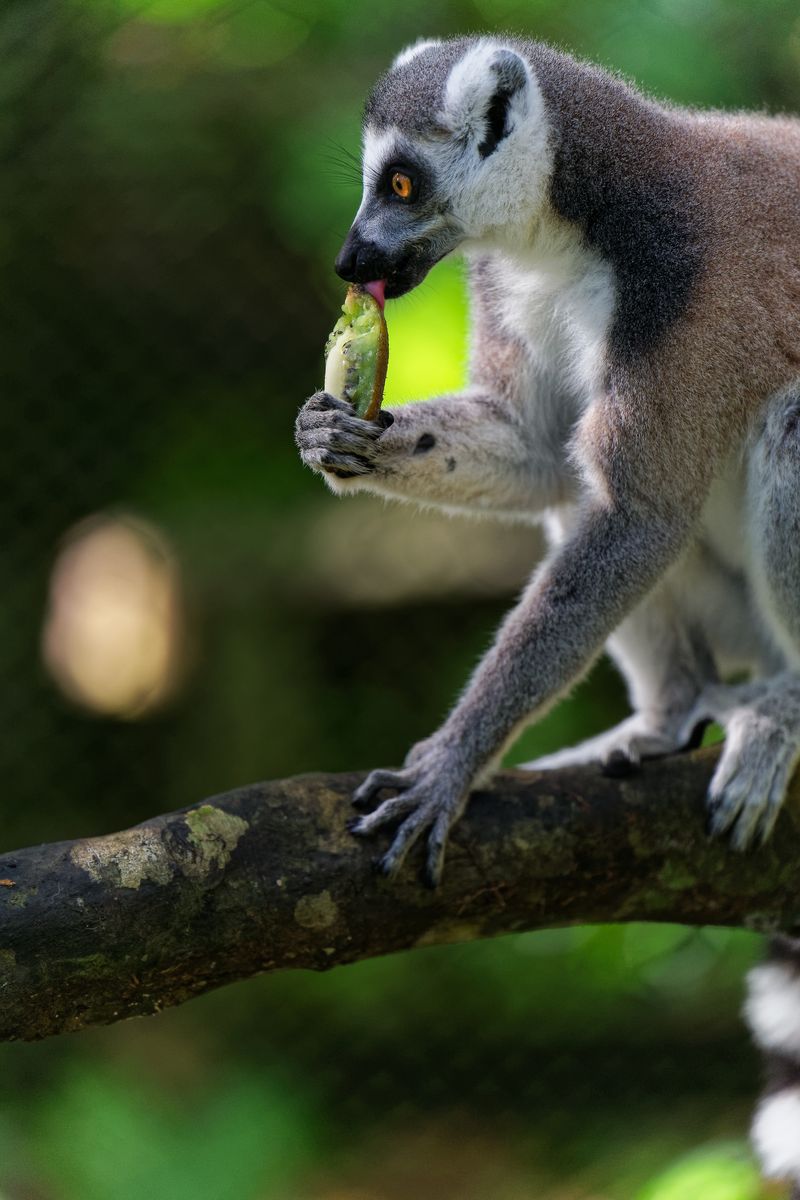
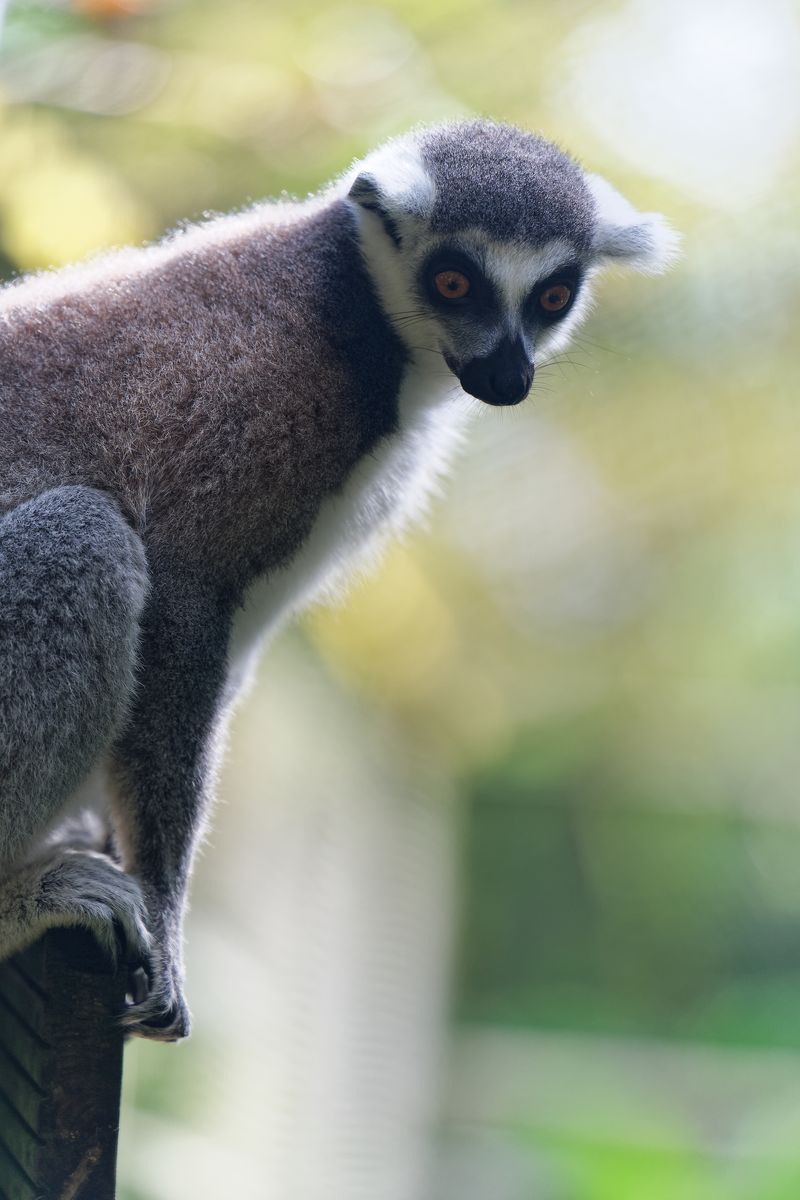
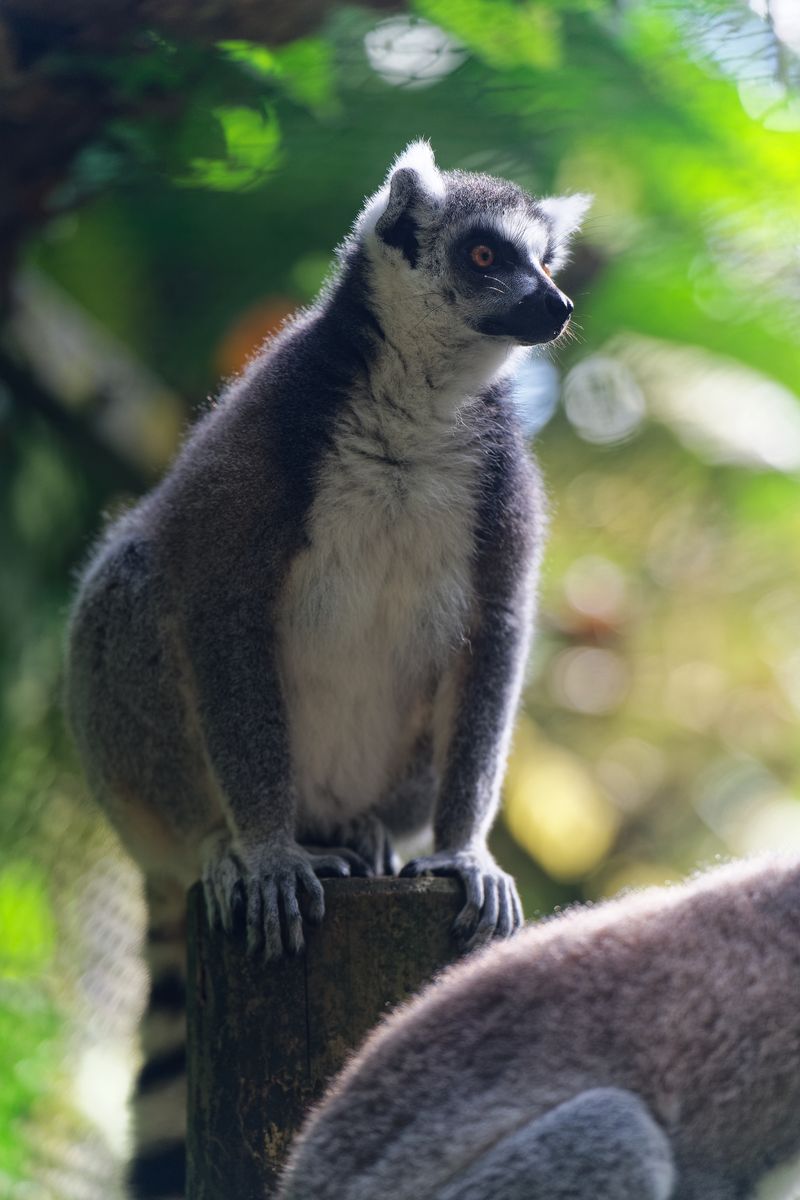
After this, we come back out onto the pretty flowered trail toward more monkeys, a sloth, several endemic birds, as well as African greys, macaws, and amazons. They’re all really beautiful. We then reach a spot that kids love—the lemur area, a type of maki (not quite the same as the ones we saw in Mayotte, though). To observe them, you have to pass through an airlock with a door system. The kids love this part because the animals are very curious and come really close to greet you. They’re honestly beautiful, it has to be said. Every day at 3:30 p.m., someone from the zoo is there to give explanations about them.
The trail continues to the famous canopy walk.
The canopy
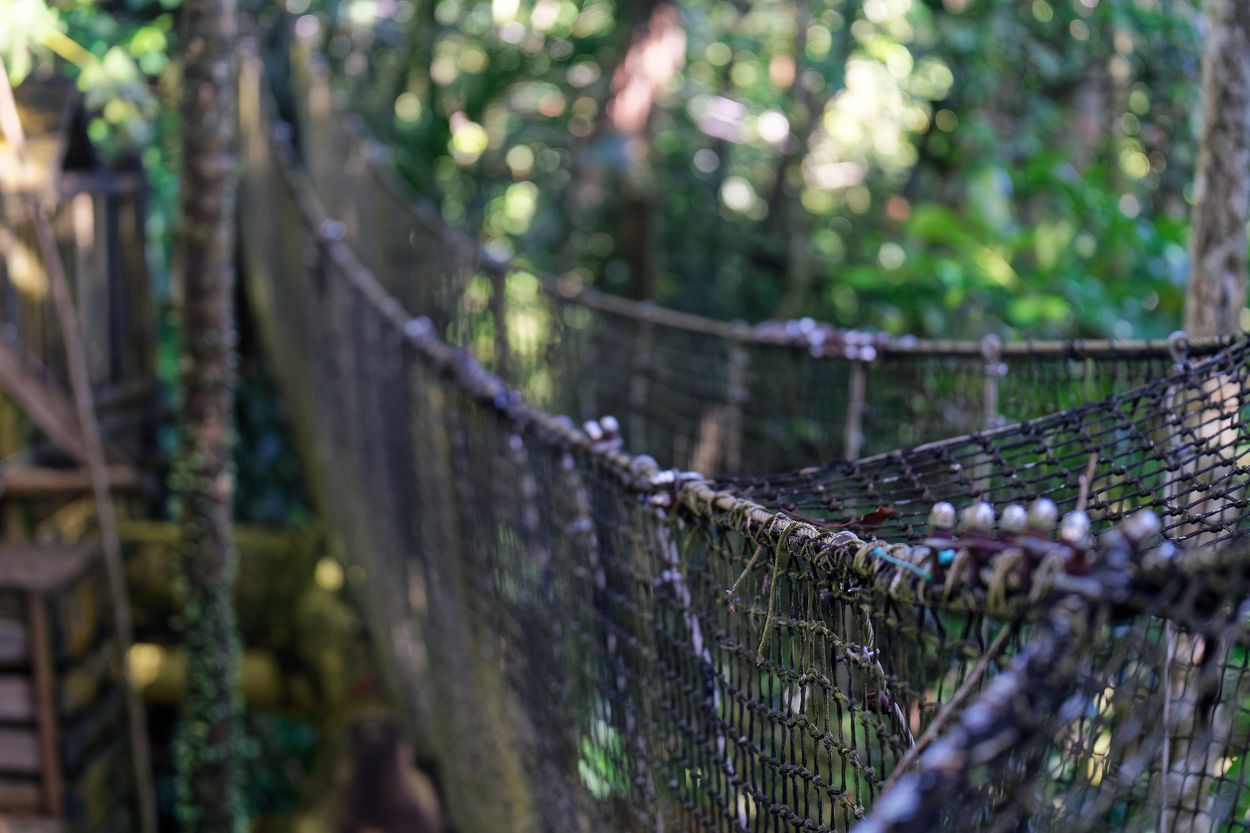
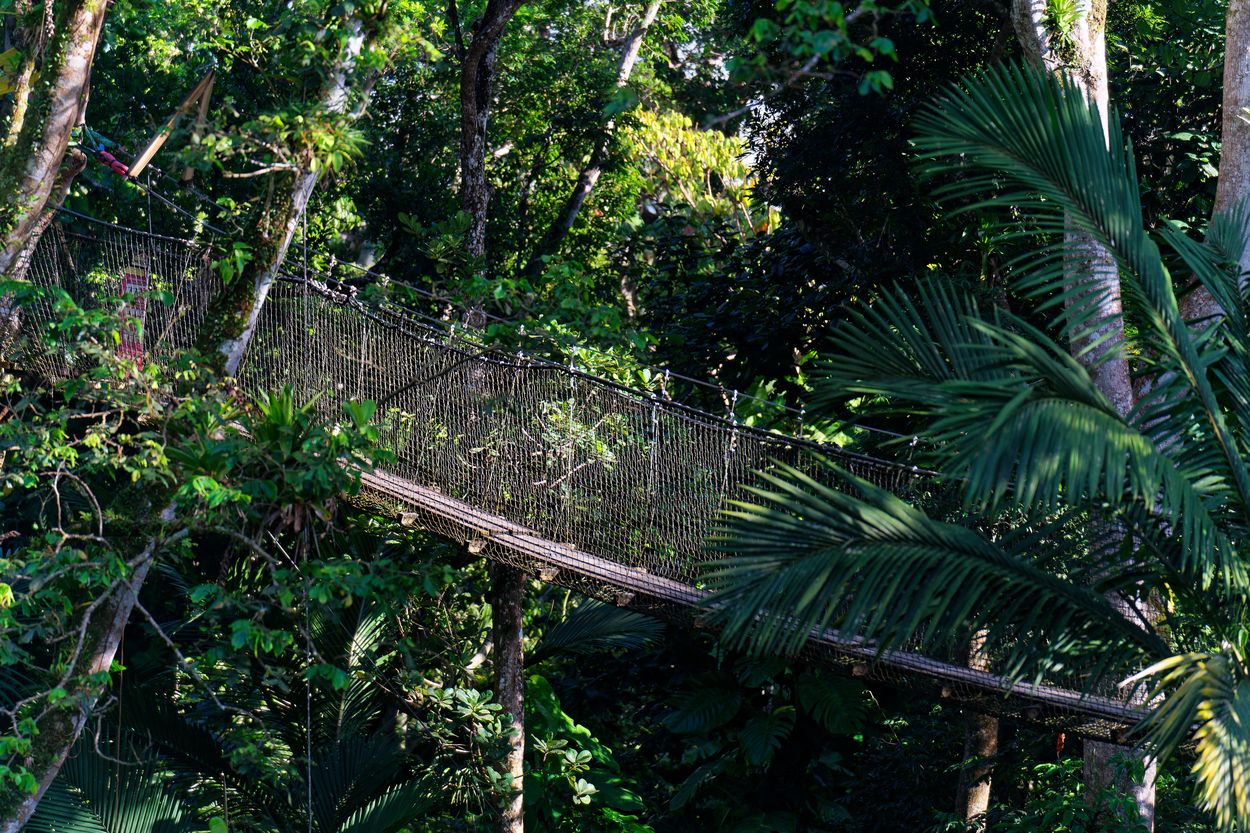
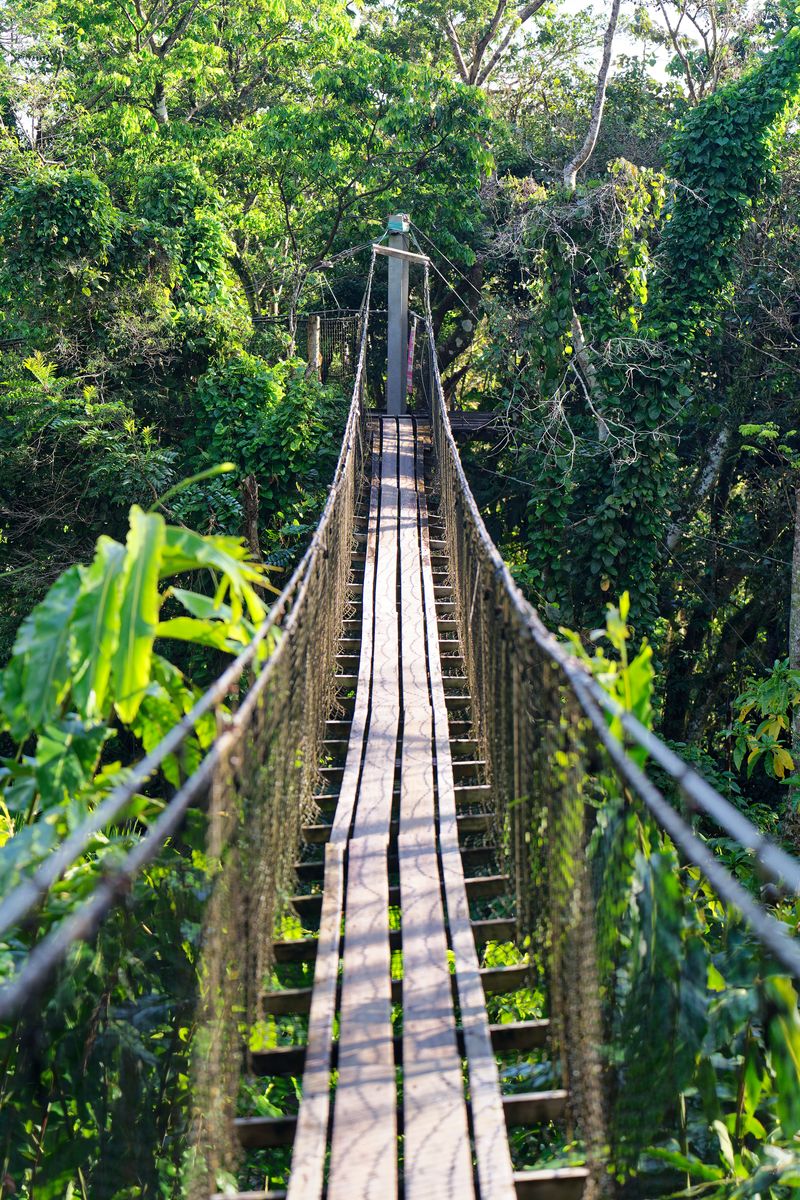
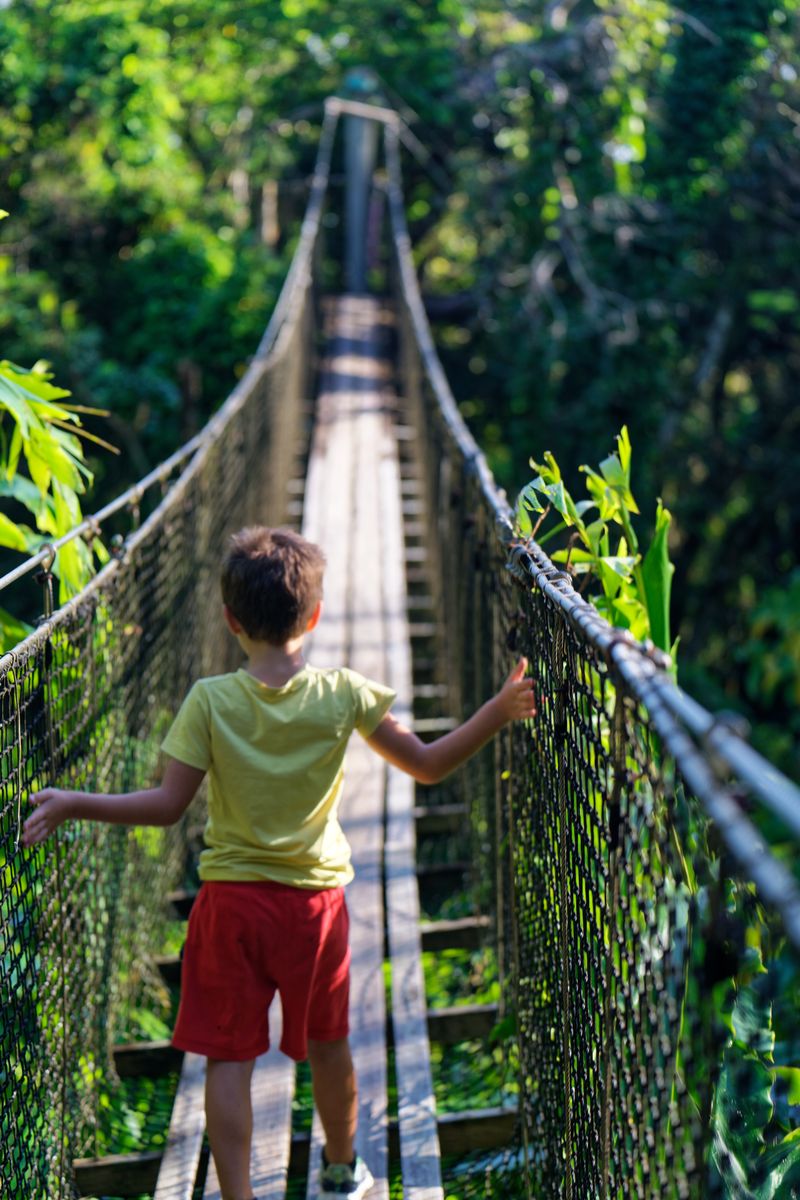
Having already been several times, I stay around (there’s a place to sit) while Mélanie and Louis go for a short walk 20 m up in the canopy on huge suspension bridges. Téo stays with Alix and me to try a little fun course designed for small children.
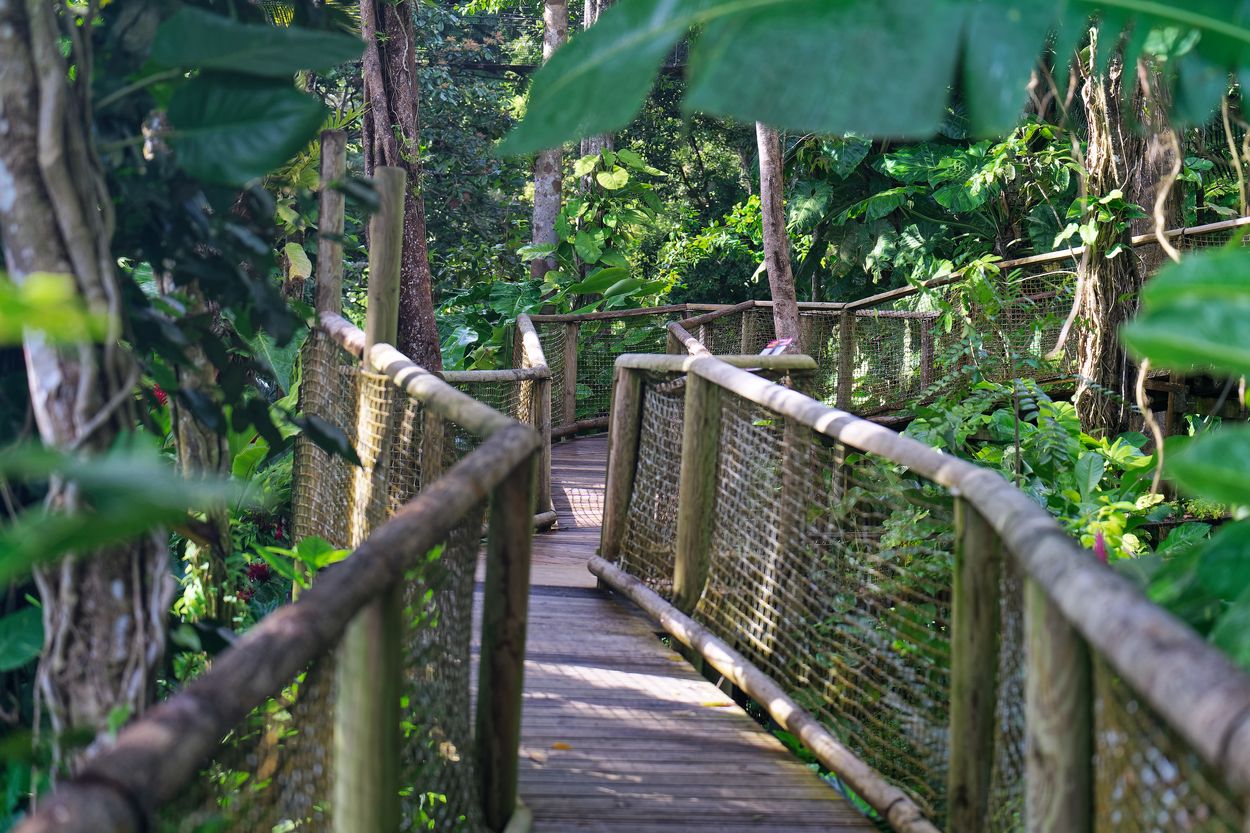
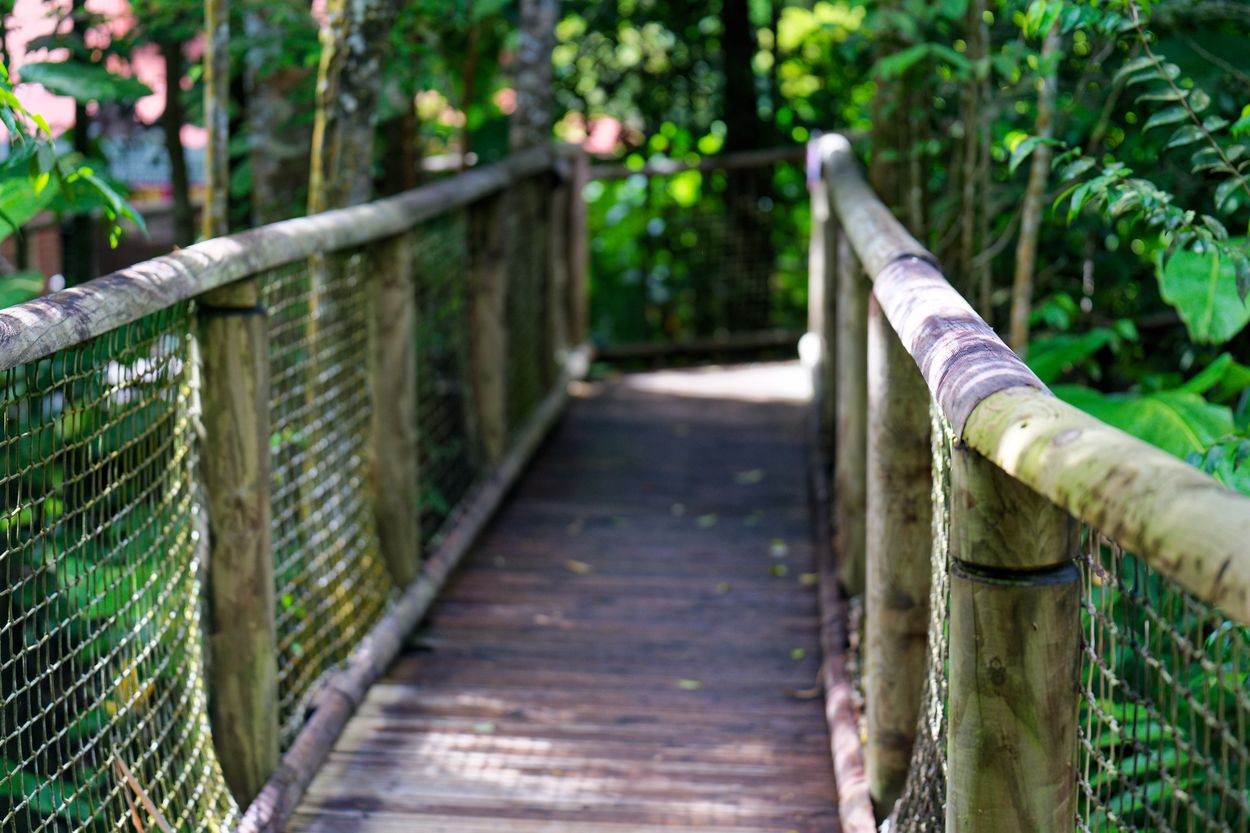
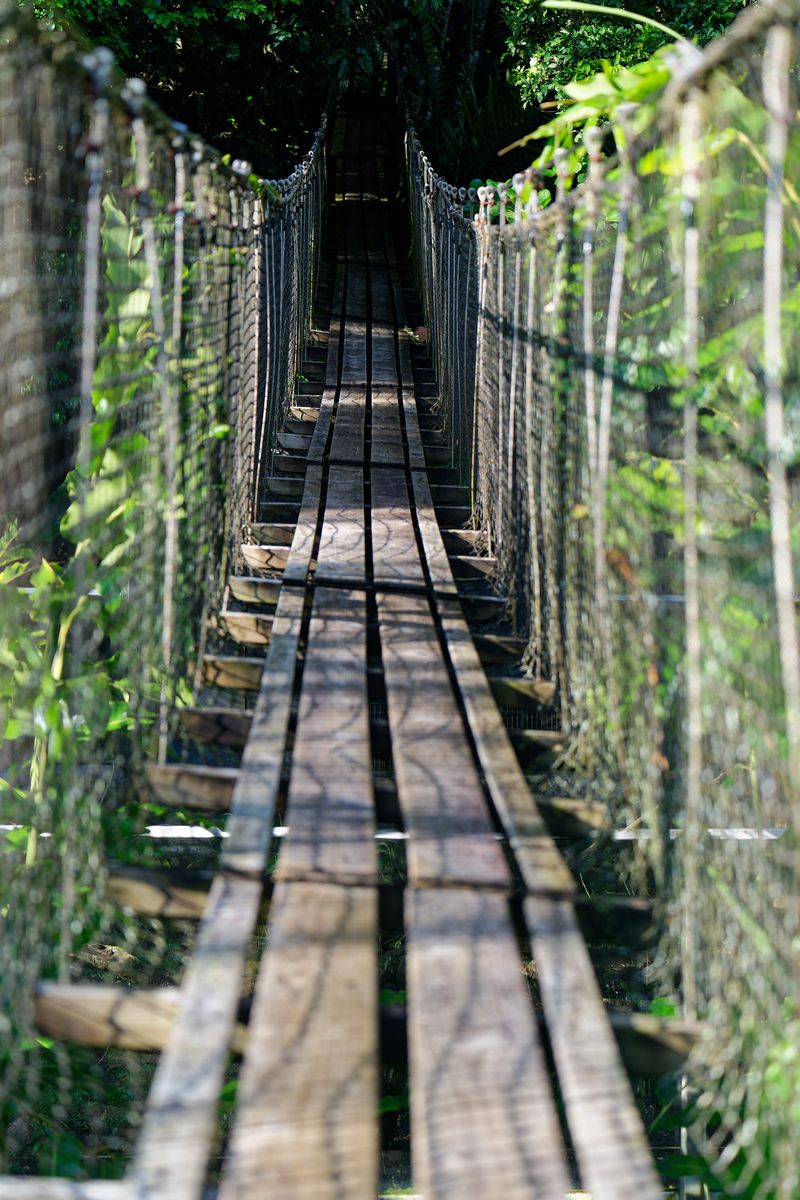
The canopy circuit is truly a must-see at the zoo. You walk on huge bridges 20 m high, and I strongly advise against it if you’re afraid of heights. If you’re scared of heights, you really shouldn’t go, because turning back is normally forbidden. For children, the minimum is 8 years old and 1.20 m tall. A child must always be accompanied by an adult. You’ll walk along 14 bridges at different heights, offering different views and allowing you to discover more vegetation. They also pass over some enclosures, which is cool. Expect about 20 minutes for 2 people. Be aware that in high season, if it’s busy, you may have to wait a bit along the route.
The children’s course (Kaz à Tarzan) is obviously for little ones, and Téo enjoys going around it several times. Adults are not allowed inside. There are also several walkways with nets on the sides for safety—impossible to fall or get hurt. There are even tunnels and slides to play on.
The end of the trail
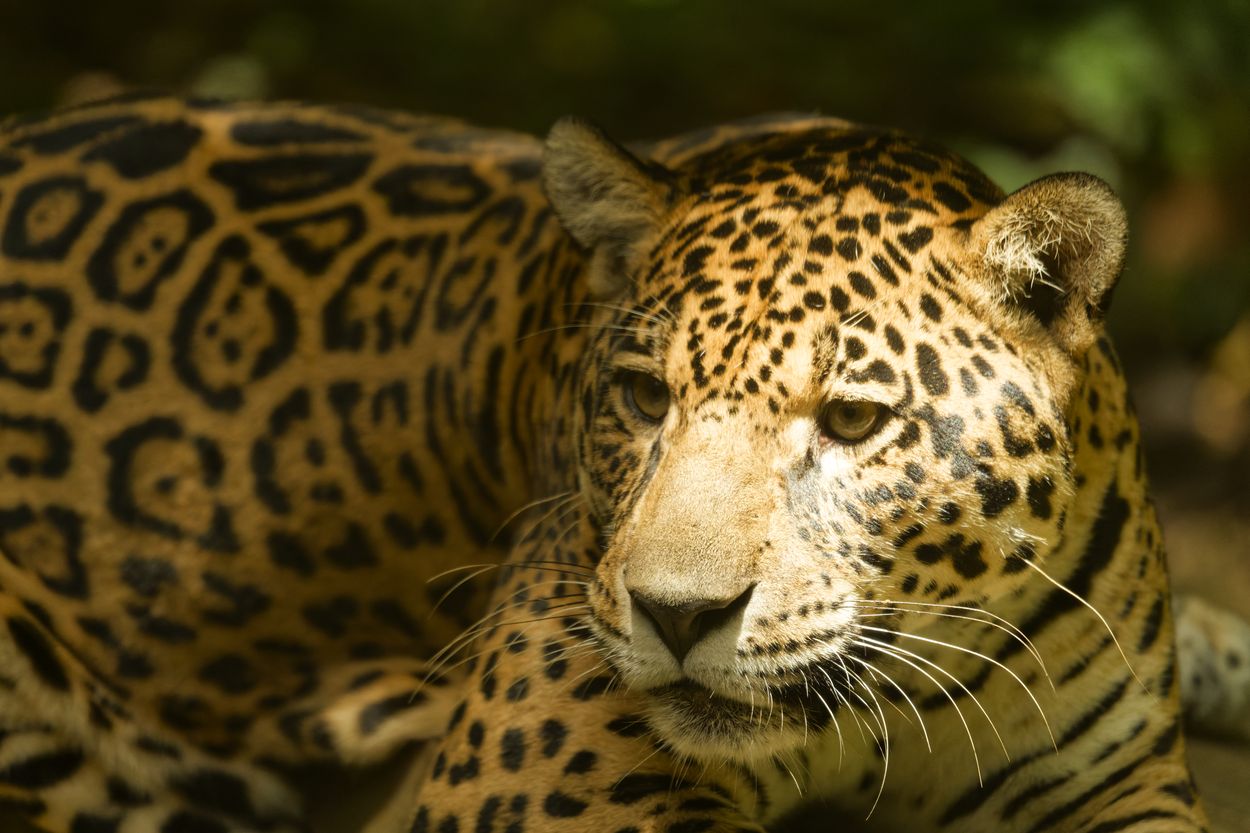
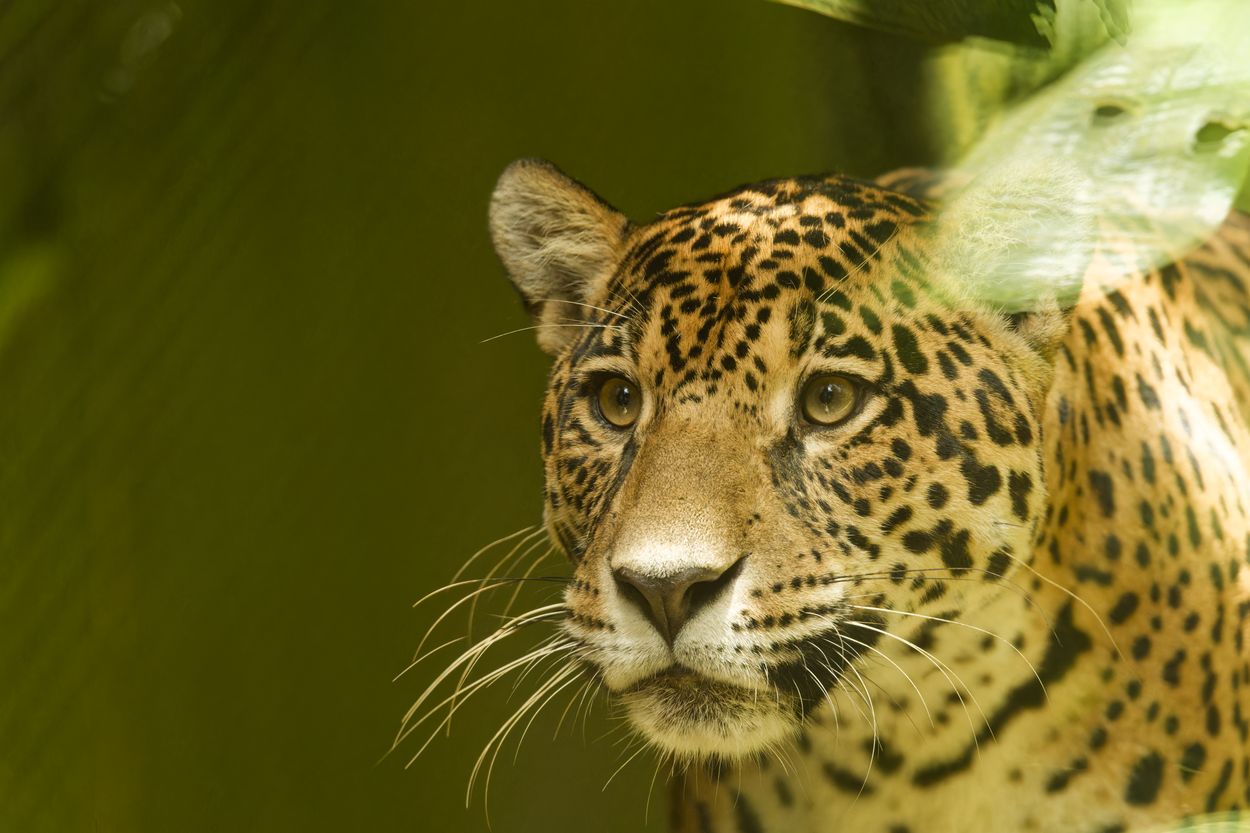
After this pleasant little break, the trail continues toward a sector many people enjoy—the feline area. Here, you can meet the 3 jaguars, including Tainos, the youngest. There’s also a beautiful ocelot and a puma. At noon every day, someone from the zoo gives a 10–15 minute talk about the jaguars. They explain the birth of the youngest, his recent development, and the fact that they had to separate the father into another enclosure nearby to prevent him from trying to kill the cub. It’s very interesting and during these moments, the big cats come really close to the glass windows, impressing visitors!
We continue our walk to see the bat area (in a dark room lit with blue light), and we pass the giant tortoises and the caiman. By the way, do you know the difference between an alligator and a caiman? No? It’s “caiman” the same! Alright, that’s my gift to you for the joke, which actually isn’t mine… (Thanks, Alix!) – Sadly, this joke won’t work in English !
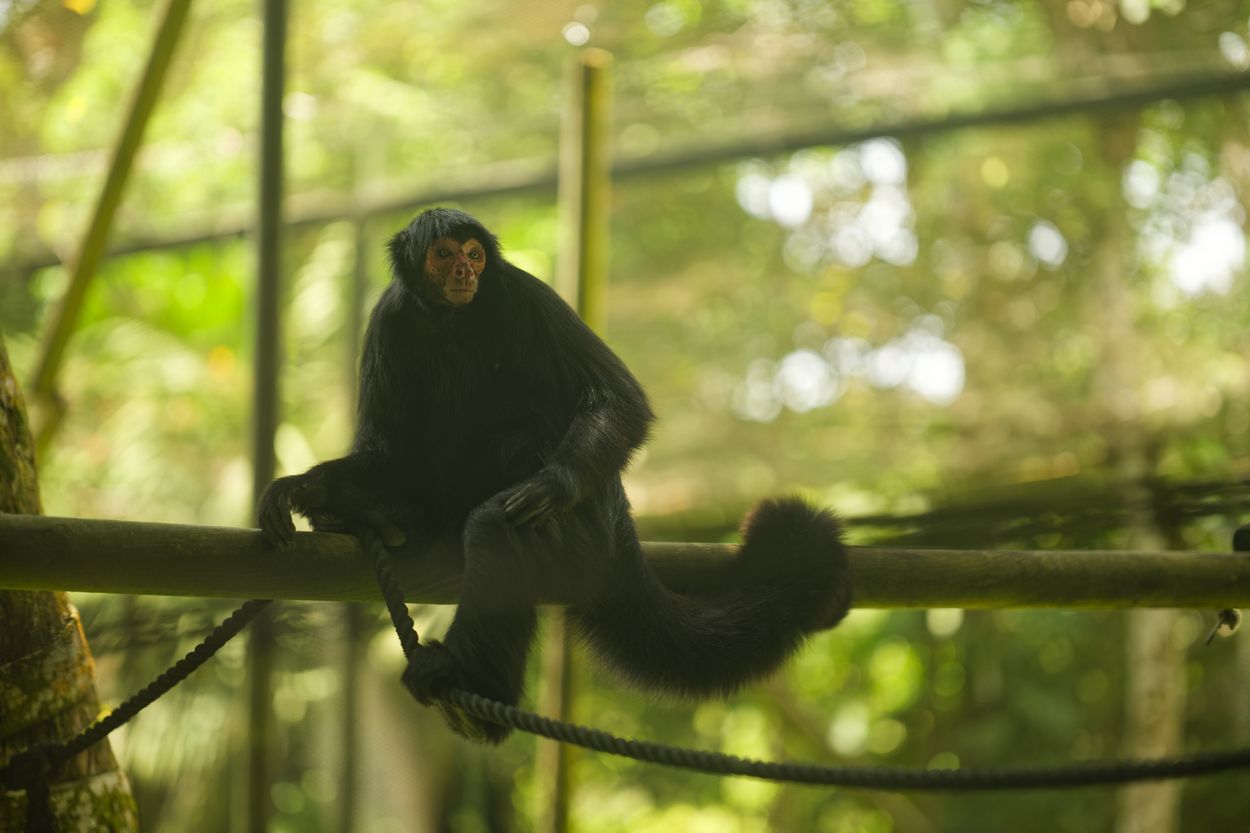
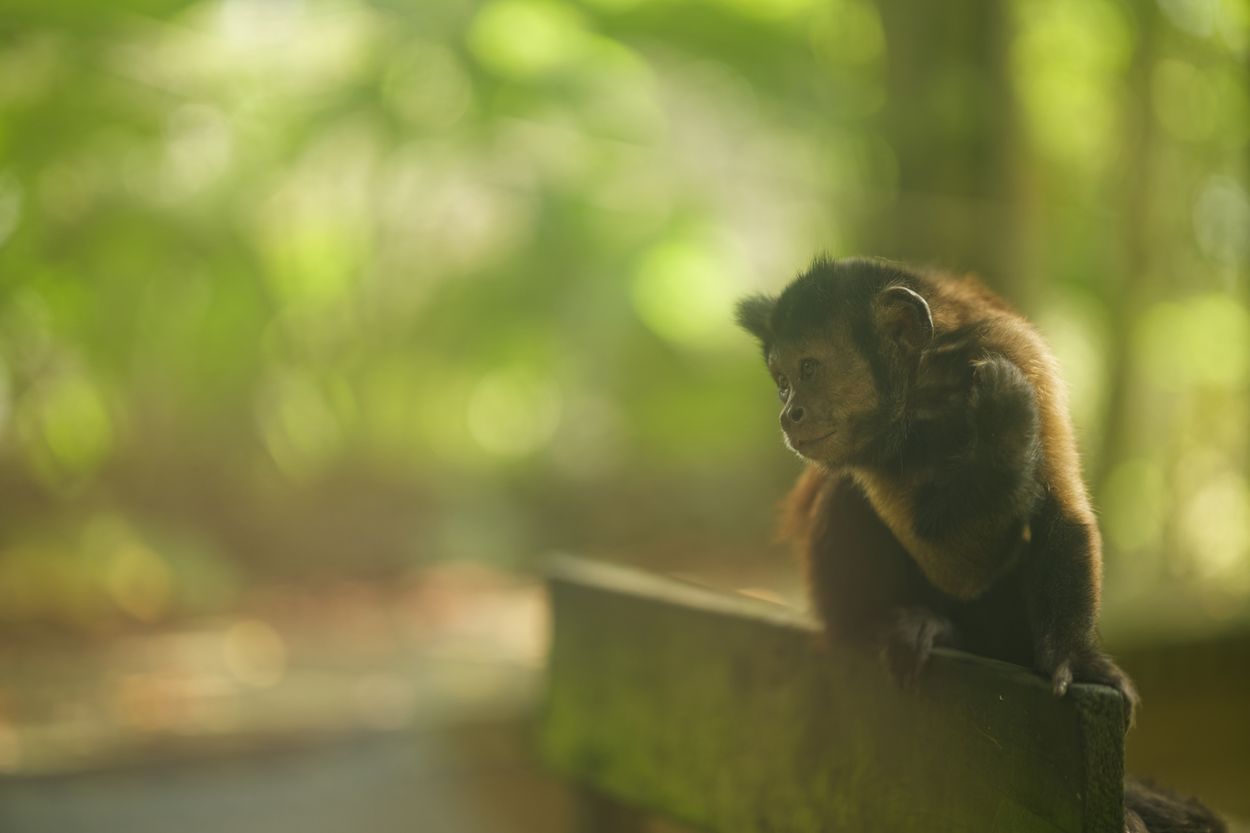
The final part is also interesting and takes you past several types of monkeys, each more agile than the next. It’s always impressive to see monkeys jump from branch to branch, rope to rope, with crazy agility. We see more lemurs here and some coatis.
And there you have it, almost 2 hours after starting, we reach the end of the trail. Of course, a classic stop at the souvenir shop, where we had to stop the kids from touching everything… The zoo director, as kind as ever, gave Téo a little gift as a souvenir—thank you again so much!
Our opinion of the Guadeloupe Zoo?
So, what’s our opinion of this zoo? You might say, “it’s a zoo,” and I know that, especially nowadays, visiting this type of place isn’t always popular. Of course, if you have the chance to see some of these animals in their natural habitat, like we did with sloths in Costa Rica, lemurs in Mayotte, or others, that’s better. But Mélanie and I think this is still a very beautiful zoo, well integrated into nature, and they didn’t do anything reckless by importing species that wouldn’t survive at all in a tropical environment. That’s a good point.
Other positives are that the zoo helps fund SOS Faune Sauvage, which is a way to save injured animals—we didn’t know that. Finally, learning more about breeding in zoos in general was really interesting and shows that thanks to some zoos, it’s easier to believe in the survival of certain species.
On top of that, the zoo is quite shaded, the trail is well paved and accessible, and you’ll find many interesting informational panels to read along the way.
The only improvement that would be nice would be to have picnic tables near the zoo. They don’t exist right now, so you’ll need to head along the Route de la Traversée to find a picnic spot (for example at Bras David or Corossol—marked along the road).
Guadeloupe Zoo - Practical information
As always, here’s the key information to remember.
Rates, hours and services
No need to go on for hours here, here’s the essential info:
- Rates: €17.50 – €12 (Adult / Child (3-12 years))
- There are annual memberships for locals: €32 – €22 (Adult / Child)
- You can also turn a day ticket into an annual membership for an extra €14.50 / €10 (Adult / Child), which is great if you weren’t sure beforehand—free for children under 3
- Hours: Monday to Sunday from 9 a.m. to 6 p.m., last entry at 4:30 p.m.
- There’s also a package that lets you visit both the Guadeloupe Zoo AND the Valombreuse Garden (another great spot we love) for €28.90 / €19.55 (Adult / Child)
- You can also reserve part of the zoo for a birthday, educational outing, or school trip.
I recommend checking out the zoo’s website to make sure nothing has changed since writing this article.
How to get to the Guadeloupe Zoo?
The zoo is located on the Route de la Traversée, about 10 minutes from the turnoff of the leeward coast. Obviously, it all depends on where you’re coming from. I won’t repeat everything you need to know to come to Guadeloupe, since I’ll let you read our dedicated article.
When you arrive, I strongly recommend renting a car so you’ll be fully independent during your stay. Public transportation is very limited and unreliable, not something to count on for your whole trip.

Once on-site, depending on where you’re starting from, the time will obviously vary. From Pointe-à-Pitre or southern Basse-Terre, count on about 1 hour by car.
Where to stay nearby?
For you, we recently tested two great spots we highly recommend, having stayed several nights:
- Le Jardin des Îlets: a beautiful spot with a stunning view of Bouillante Bay and especially quick access (less than 5 minutes) to Malendure Beach.
- TropicAngel: up in the hills of Pointe-Noire, we also loved staying in this little gem, tucked away in lush greenery. A secluded moment, perfect if you’re looking for peace and relaxation.
You can also check the map below to find other spots.
Book your accommodation near the Guadeloupe Zoo Use the interactive map below to find your future lodging!
What to do near the zoo?
You’re in a very central area here, and there are clearly plenty of things to do nearby. Here are a few ideas, though there are obviously more:
- Right across from the zoo, there’s a great treetop adventure park, Le Tapeur, perfect with kids or even as a couple. We’ll be writing an article soon, since we’ll be testing it again with Mélanie.
- Take a look at the Cascade aux Écrevisses: not the most beautiful or natural, but only 10 minutes from the zoo. Ideally, go early or late to avoid crowds.
- You can hike one of the trails along the Route de la Traversée. There are several along the road. The shortest are near the Maison de la Forêt. We also wrote about the Mamelle Pigeon.
- In the area, a visit to the Cousteau Reserve is obviously a MUST during your trip, even if you only have a week in Guadeloupe.
- In Pointe-Noire, you also have the Maison du Cacao, which is a fun visit.
If you’re looking for beautiful white sand beaches, head up toward Deshaies, at the north tip of Basse-Terre (La Perle Beach / Grande Anse Beach).
Alright, that brings me to the end of this article on the Guadeloupe Zoo. I hope this little story and the pictures made you want to discover the site!
Feel free to tell me what you think in the comments!
See you soon,

Written by Sylvain PONS
Since 2021, I've been living in the Guadeloupe archipelago with Mélanie and our two children. We are exploring these beautiful islands and discovering the treasures that we are happy to share with you!
Despite our care, a mistake may have slipped into this article. If you find any, please don't hesitate to let us know so we can correct it as soon as possible and keep our information up-to-date!