Sigma X-mount lenses for Fujifilm
Last update: 06/16/2026
Our blog continues to grow thanks to you, our readers. This post may contain affiliate links, which means we can earn a small commission if you make a purchase through them, at no extra cost to you. This helps us to continue to bring you more and support our work!
In this article, I’m going to take a closer look at Sigma lenses for Fujifilm X-mount. Since early 2022, Fujifilm has been opening up its mount to third-party manufacturers, including the highly respected Japanese brand Sigma.
I’m increasingly interested in writing more focused guides on specific brands, so this is a good opportunity to look at Sigma X-mount lenses in more detail. If you’re looking for photography gear, feel free to check out our page listing all Fujifilm X lenses, including both Fujifilm and third-party lenses currently available.
Choosing a Sigma lens for your Fujifilm body can be a very smart move, as the brand offers some excellent alternatives, sometimes at a much better price.
Sigma X lenses for the Fujifilm mount
As mentioned above, Sigma has now been producing lenses for this mount for Fujifilm APS-C cameras for several years. If you click the link above, you’ll find our page listing all current cameras from the brand.
As a reminder, the following Sigma acronyms will help you understand the lineup:
- DC DN: lens designed and optimized for APS-C mirrorless cameras
- DG DN: lens designed for full-frame cameras, but also usable on APS-C sensors
- OS: means the lens has internal stabilization
For this selection, the Sigma X-mount lens lineup remains relatively compact, but already very useful. It includes the classic bright f/1.4 prime lenses already available for several other mounts (Sony E, Nikon Z, L-mount, etc.): the Sigma 16mm, 23mm, 30mm and 56mm.
In addition to these four classic lenses, Sigma also offers an ultra-wide-angle zoom, the Sigma 10-18mm f/2.8 DC DN Contemporary, a standard zoom, the 18-50mm f/2.8 DC DN, and a telephoto zoom, the Sigma 100-400mm f/5-6.3 DG DN OS Contemporary.
To give you a clearer idea of the main characteristics of these lenses, I’ve summarized them in the table below.
| Lens | Focallength | Max.Aperture | Weight | Dim. (Ø x L) | Min. FocusDist. | Approx.price | Best price | |||
|---|---|---|---|---|---|---|---|---|---|---|
| + | Sigma 10-18mm f/2.8 DC DN Contemporary X | 10-18mm | f/2.8 | 8.82 oz / 250g | 2.8 x 2.5" / 72 x 64 mm | 4.7" / 12 cm | $599 | Amazon B&H | More info + | |
|
||||||||||
| + | Sigma 12mm f/1.4 DC Contemporary X | 12mm | f/1.4 | 8.29 oz / 235g | 2.7 x 2.8" / 68 x 70 mm | 6.7" / 17 cm | $629 | B&H | More info + | |
|
||||||||||
| + | Sigma 16mm f/1.4 DC DN Contemporary X | 16mm | f/1.4 | 0.9 lb / 405g | 2.8 x 3.6" / 72 x 93 mm | 9.8" / 25 cm | $439 | Amazon B&H | More info + | |
|
||||||||||
| + | Sigma 16-300mm f/3.5-6.7 DC OS Contemporary X | 16-300mm | f/3.5-6.7 | 1.4 lb / 615g | 2.9 x 4.8" / 74 x 123 mm | 6.7" / 17 cm | $699 | Amazon B&H | More info + | |
|
||||||||||
| + | Sigma 17-40mm f/1.8 DC Art X | 17-40mm | f/1.8 | 1.2 lb / 525g | 2.6 x 4.6" / 67 x 118 mm | 11" / 28 cm | $919 | Amazon B&H | More info + | |
|
||||||||||
| + | Sigma 18-50mm f/2.8 DC DN Contemporary X | 18-50mm | f/2.8 | 10.05 oz / 285g | 2.4 x 3" / 62 x 77 mm | 4.7" / 12 cm | $529 | Amazon B&H | More info + | |
|
||||||||||
| + | Sigma 23mm f/1.4 DC DN Contemporary X | 23mm | f/1.4 | 11.99 oz / 340g | 2.6 x 3" / 66 x 77 mm | 9.8" / 25 cm | $549 | Amazon B&H | More info + | |
|
||||||||||
| + | Sigma 30mm f/1.4 DC DN Contemporary X | 30mm | f/1.4 | 9.7 oz / 275g | 2.6 x 2.9" / 65 x 74 mm | 1' / 30 cm | $319 | Amazon B&H | More info + | |
|
||||||||||
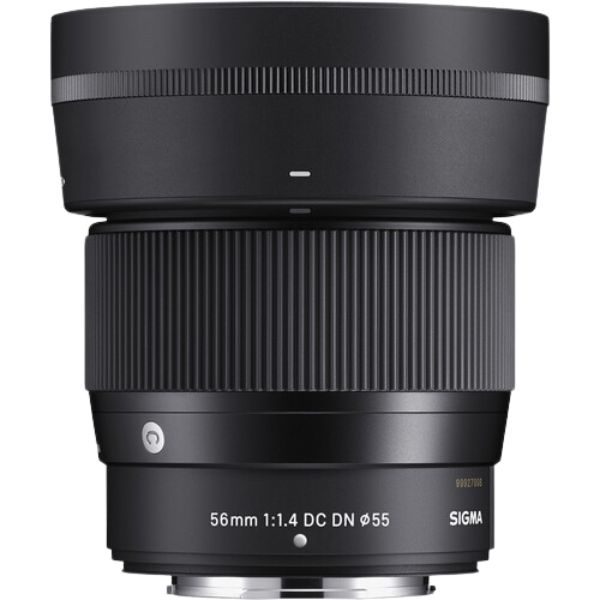
| + | Sigma 56mm f/1.4 DC DN Contemporary X | 56mm | f/1.4 | 9.88 oz / 280g | 2.6 x 2.4" / 67 x 60 mm | 1.6' / 50 cm | $479 | Amazon B&H | More info + | |
|
||||||||||
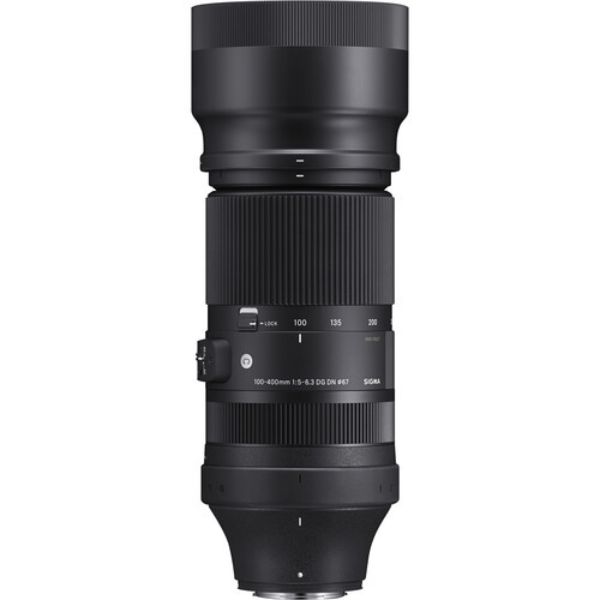
| + | Sigma 100-400mm f/5-6.3 DG DN OS Contemporary X | 100-400mm | f/5-6.3 | 2.5 lb / 1135g | 3.4 x 7.8" / 86 x 197 mm | 3.6' / 110 cm | $789 | Amazon B&H | More info + | |
|
||||||||||
Which Sigma lens should you choose for Fuji?
In this section, I wanted to make things easier for you when choosing a Sigma lens for your Fujifilm body.
First, you’ll find a table summarizing the strengths and weaknesses of each lens, followed by a more personal buying guide to help you choose according to your needs, budget and preferences.
Pros and cons of Sigma lenses for Fujifilm
I’ve summarized the most important points to remember about the different Sigma lenses for this mount. The prices shown are indicative and based on market prices, so they can of course change.

- Excellent sharpness
- Very good autofocus
- Very well built
- Few optical flaws
- Distortion/vignetting present
- Very well built
- Quality autofocus
- Excellent sharpness
- Good flare resistance
- Some optical flaws

- Compact and light
- Very versatile
- Very sharp image
- Affordable price
- Not stabilized
- ++ Build quality
- Good optical performance
- High quality autofocus
- Excellent value for money
- Limited options

- Very wide aperture
- Good image quality
- Lightweight and easy to handle
- Good value for money
- Vignetting and distortion
- Excellent bokeh
- Very good sharpness
- Well built
- Attractive price
- Some optical flaws
Buying guide for current Sigma Fuji lenses
I’ve decided to do things a little differently here. I’m not going to go through every technical detail of each lens because, let’s be honest, not everyone is interested in that. Instead, I’ll focus on what really matters: where each lens stands out, who it is best suited for, and how it compares with Fujifilm’s own alternatives in terms of quality and value for money.
I’ve listed the Sigma lenses from the shortest to the longest focal length. You can click the links below to jump directly to each lens.
Sigma 10-18mm f/2.8 DC DN Contemporary X
| Features | Visual |
|---|---|
|
|
Available for Fujifilm X-mount since October 2023, the Sigma 10-18mm f/2.8 DC DN Contemporary is a compact ultra-wide-angle zoom with a bright constant aperture. It is a very good choice for landscape, architecture, interiors, travel, video, and content creation. Its small size and light weight make it especially easy to carry, while image quality remains very strong overall. The main optical flaws are manageable and can usually be corrected in post-processing.
Its value for money is excellent, and it is one of the most compact options in its category. It competes directly with the Tamron 11-20mm f/2.8 Di III-A RXD and the Fujifilm XF 10-24mm f/4 R OIS WR, both of which are more expensive, heavier, and not necessarily more appealing depending on your needs.
If you’re interested in this type of focal length, I suggest you read our complete guide to Fujifilm wide-angle lenses, which goes into great detail about the different options available.
Sigma 16mm f/1.4 DC DN Contemporary X
| Features | Visual |
|---|---|
|
|
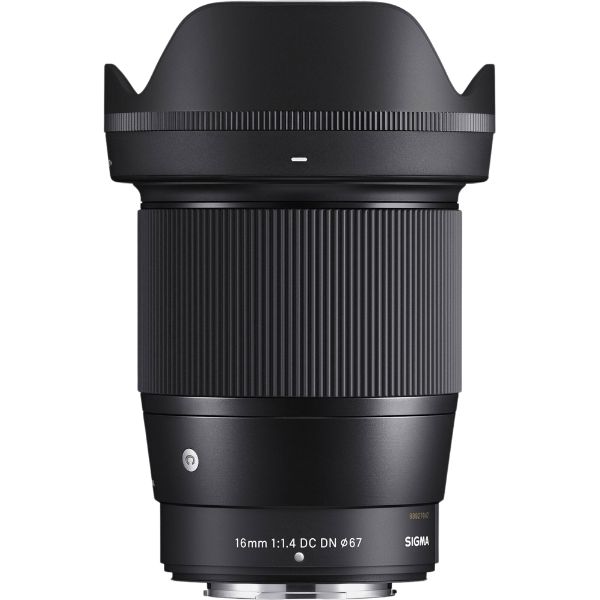
The Sigma 16mm is an excellent wide-angle prime for anyone looking for a bright, high-quality lens with a fairly wide 24mm equivalent field of view. It is less versatile than the 10-18mm because it is a prime lens, but it works very well for architecture, especially indoors thanks to its wide aperture, as well as for landscapes. Image quality is excellent in the center and improves slightly as you stop down. There are some flaws, but they remain manageable.
The lens is well built and weather-sealed at the mount. Once again, Sigma offers excellent value for money with a lens priced at around €450. There are two other lenses in this range: the Fujifilm XF 16mm f/2.8 R WR, which is much lighter and more compact but limited to f/2.8, and the Fujifilm XF 16mm f/1.4 R WR, which is stronger overall but costs more than twice as much as the Sigma.
Sigma 18-50mm f/2.8 DC DN Contemporary X
| Features | Visual |
|---|---|
|
|
Available in Fujifilm X-mount since December 2022, this is a classic standard zoom that should appeal to a lot of photographers. It is a real Swiss Army knife if you want a versatile lens for portraits, landscapes, architecture, street photography, or everyday use. Even though the construction is fairly simple, image quality remains very good. Any optical flaws are easy to correct in post-processing.
At under €500, the value for money is hard to beat. Fujifilm’s options are certainly better built, especially the excellent Fujifilm XF 16-55mm f/2.8 R LM WR, but they are much more expensive. The Tamron 17-70mm f/2.8 Di III-A VC RXD is the closest alternative, but it is also more expensive and heavier, although it does offer a wider focal range.
This type of focal length is very versatile. With that in mind, we’ve written a complete guide to the best Fujifilm X lenses for portrait photography, which includes this type of zoom lens.
Sigma 23mm f/1.4 DC DN Contemporary X
| Features | Visual |
|---|---|
|
|
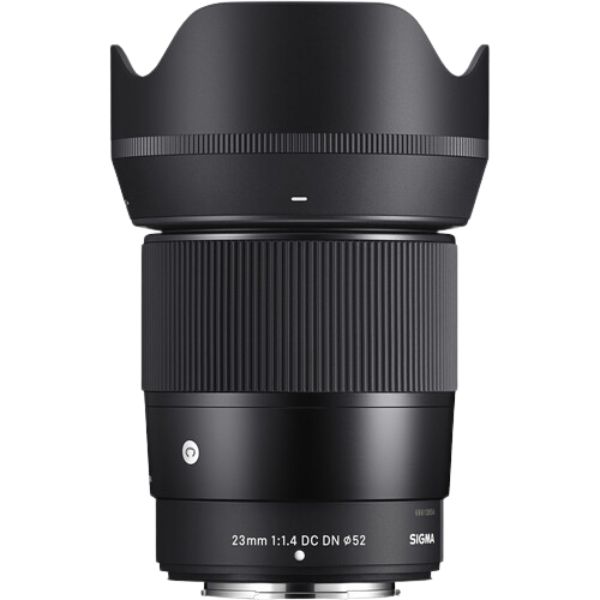
Since September 2023, Sigma has offered this 23mm lens, which brings a welcome, high-quality alternative to the more expensive Fujifilm options. It is ideal for street photography, everyday use, and environmental portraits. The build is solid, even if it is simpler than Fujifilm’s higher-end lenses. Optical performance is excellent, and the wide f/1.4 aperture makes it easy to create strong background blur.
The value for money is very good if you don’t want to invest in a Fujifilm lens. On the Fujifilm side, there is the Fujifilm XF 23mm f/2 R WR at a similar price, with a smaller f/2 aperture but a much lighter body and a very good reputation. Then there is the premium Fujifilm XF 23mm f/1.4 R LM WR, which is better overall, but of course much more expensive. In the end, it comes down to priorities.
Sigma 30mm f/1.4 DC DN Contemporary X
| Features | Visual |
|---|---|
|
|
This is one of Sigma’s most popular lenses for the Fuji X-mount. With a 45mm full-frame equivalent field of view, it is especially well suited to portraits, street photography, everyday scenes, and low-light photography thanks to its wide aperture. Extremely compact and well built, it delivers excellent image quality and very pleasant bokeh.
Its price is very attractive, and compared with the alternatives, it remains a great choice if you don’t want to spend nearly three times as much on the admittedly better Fujifilm XF 33mm f/1.4 R LM WR. The Viltrox AF 33mm f/1.4 XF is also worth mentioning at a similar price, although it does not have quite the same reputation.
Sigma 56mm f/1.4 DC DN Contemporary X
| Features | Visual |
|---|---|
|
|
Equivalent to the classic 85mm field of view on full frame, this is an excellent lens for portraits taken from a little farther away and, to a lesser extent, everyday photography. Its wide aperture makes it easy to separate your subject from the background. Once again, the lens is very well built and delivers excellent sharpness right from wide open. It is hard not to be impressed by the image quality.
Its positioning in the Fujifilm ecosystem is excellent, as there is no direct alternative at the same price level, apart from the Fujifilm XF 56mm f/1.2 R WR, which is clearly superior but also much heavier and more expensive. Another option is the Viltrox AF 56mm f/1.4 XF, which we own and use regularly. For the price, around €300, we are very happy with it, even if it has a few optical weaknesses.
Sigma 100-400mm f/5-6.3 DG DN OS Contemporary X
| Features | Visual |
|---|---|
|
|
This telephoto lens can be an interesting choice for nature, sports, and wildlife photography. Its zoom range and long reach let you cover a wide variety of subjects. Build quality is solid, although not quite on the same level as Fujifilm’s own higher-end alternatives. Image quality is generally considered very good, although some reviews note that performance can vary, especially at the long end.
This Sigma 100-400mm is often compared with the Fujifilm XF 100-400mm f/4.5-5.6 R LM OIS WR, which is more expensive and a bit heavier. The Fujifilm still has the edge in some respects, but the Sigma remains very appealing in terms of value for money. If you are on a tighter budget, the Fujifilm XF 70-300mm f/4-5.6 R LM OIS WR can also be a cheaper, lighter alternative with very positive feedback.
You can also find this lens in our Fujifilm X telephoto lens guide.
That brings us to the end of this guide to Sigma lenses for the Fujifilm X mount. As you can see, there are some very interesting options here, and above all, some excellent value for money. In my opinion, if you own a Fujifilm APS-C body, these lenses are definitely worth a look, even if the selection remains more limited than Fujifilm’s own lineup. If you’re interested in photographing the tiny details of the world, I invite you to read our guide to the best Fujifilm macro lenses.
I’ll keep working on this type of guide for the Fujifilm X mount and will be back soon.

Written by Sylvain PONS
I've been passionate about photography since 2010, learning as I went along. Today, I dedicate myself to guiding others in their choice of camera gear and sharing a variety of tips to improve their photography skills.
Despite our care, a mistake may have slipped into this article. If you find any, please don't hesitate to let us know so we can correct it as soon as possible and keep our information up-to-date!