The Most Beautiful Beaches in Tenerife
Last update: 06/21/2026
Our blog continues to grow thanks to you, our readers. This post may contain affiliate links, which means we can earn a small commission if you make a purchase through them, at no extra cost to you. This helps us to continue to bring you more and support our work!
I’m back with another article, this time about the best beaches in Tenerife! It’s a topic that should appeal to quite a few travelers. Beyond Teide National Park and its lunar landscapes, Tenerife has plenty of must-see attractions—and its beaches are definitely among them! What I especially loved on my two trips to the island was how dramatically the beaches change from one coast to another. On one side, you’ll find beautiful golden-sand beaches and turquoise water. On the other, black-sand beaches have a wilder feel and are often framed by cliffs. I have a slight preference for black-sand beaches because they feel more unusual and are not something we see as often. I also find the contrast with the water even more striking.
That said, you need to choose where you swim in Tenerife carefully. Some beaches have calm water, while others are exposed to powerful currents and heavy swell. My first piece of advice is to always check the flag color. That may sound obvious, of course. But in Tenerife, the orange flag already indicates some risks. There are beaches where the flag is orange almost every day. I got into the habit of treating an orange flag as a sign not to swim—or, at most, to go no deeper than waist height.
Another advantage of Tenerife’s variety is that there is a beach for almost every mood: relaxing, surfing, finding a quiet cove, or enjoying a beach with plenty of facilities. The aim of this article is to help you discover the best beaches in Tenerife, including the favorites I was lucky enough to explore myself.
Top 10 Most Beautiful Beaches in Tenerife
Las Teresitas
Let’s start with Tenerife’s most famous beach, and often a favorite among travelers. It really is beautiful! You arrive to find a wide sweep of golden sand, palm trees, and the Anaga Mountains in the background. By the way, the sand was imported from the Sahara. On paper, it has everything you need for a family day at the beach. Although it gets busy, its size keeps it from feeling cramped.
I went for a swim and then settled under the palm trees. With temperatures around 36 degrees, the shade was especially welcome. It was lovely to cool off and still have somewhere shady to sit. Plus, the beach is protected by rocks that break the swell. That makes it a relatively safe place for a relaxed swim.
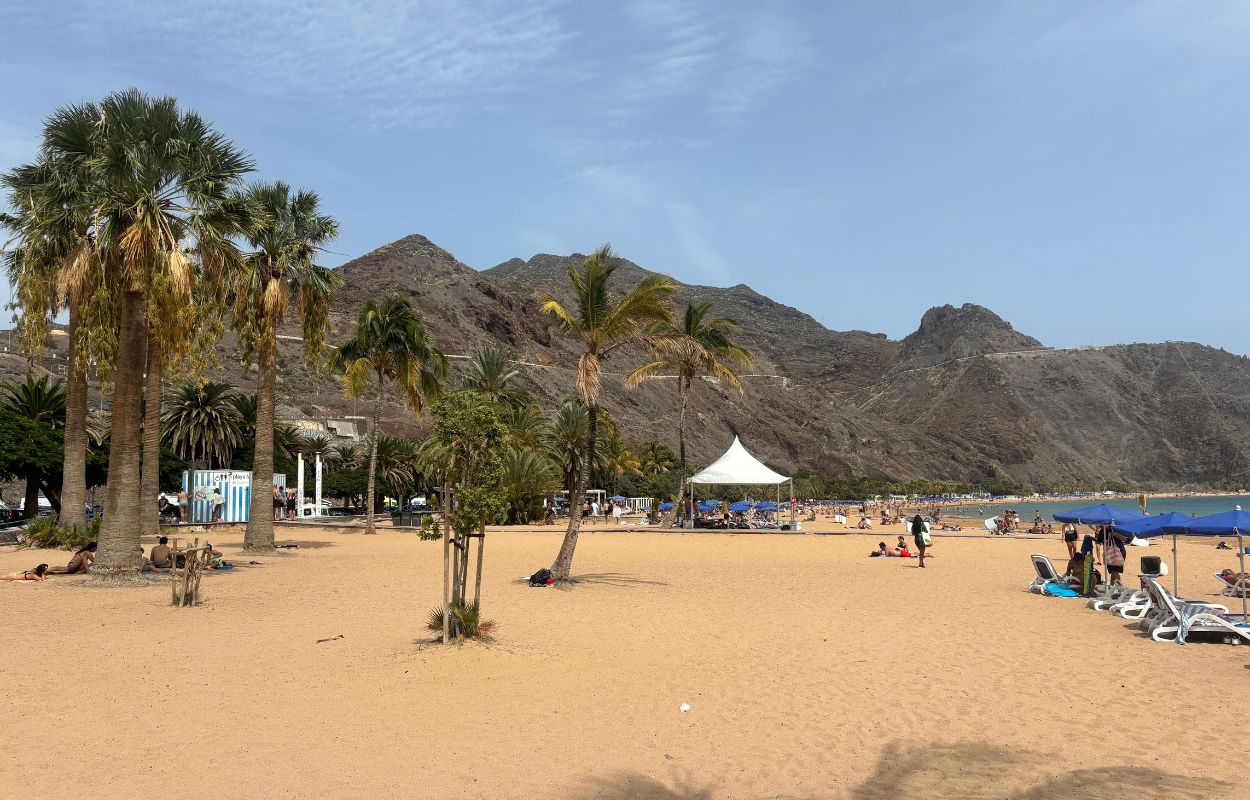
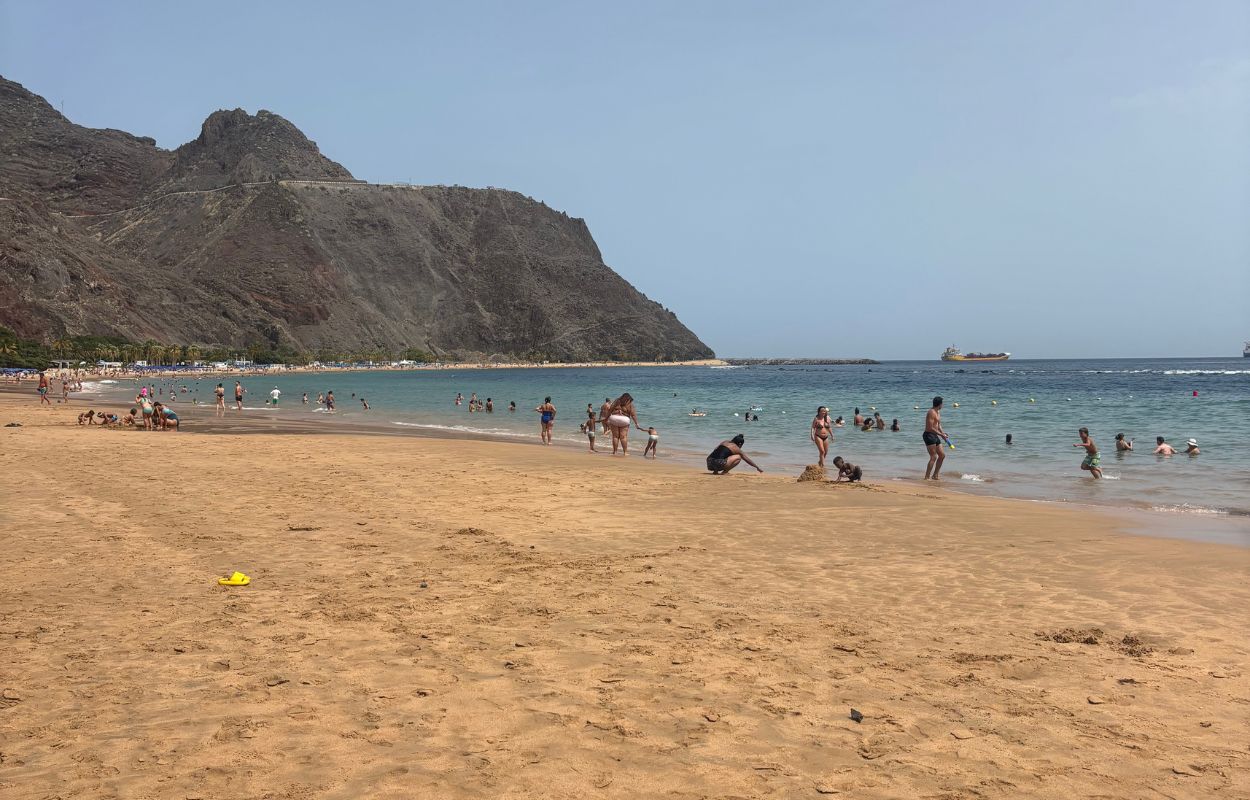
Practically speaking, there is a large free parking lot right beside the beach, so parking is usually straightforward. Plus, it’s close to Santa Cruz. From the city, simply follow the coast and you’ll reach it. The only minor downside is the approach along the coast, where you can see cargo ships and may notice a strong smell of diesel. It does not exactly set the scene. Once you arrive, though, it is well worth it!
Benijo
Benijo could hardly be more different from Las Teresitas. It’s wild and surrounded by cliffs, with strong waves. This is not really a beach for swimming; it is somewhere to take in the raw beauty of the landscape. Its exposed setting also means access is often restricted. To be honest, it was closed because of rockfall and landslide risks on both of my trips to Tenerife. Of course, I was a bit disappointed…
Maybe I’ll have better luck the next time I go back. Either way, I hope you have better luck than I did! I recommend checking the access a few days before going — and even the day before — to be sure you’ll be able to see it.
El Médano and La Tejita
Next, let’s head to southeastern Tenerife for two beaches just a few kilometers apart: El Médano and La Tejita.
El Médano lies in the village of the same name, while La Tejita is a little farther away, near Los Abrigos (a fishing village where I really recommend stopping to enjoy fresh fish in one of the small restaurants in the port — the food is excellent and reasonably priced).
As for the atmosphere, La Tejita completely won me over. It sits at the foot of Montaña Roja, one of the island’s emblematic volcanoes, which you can hike up to enjoy a beautiful view over the beach and beyond. The sand falls somewhere between black and gold, an unusual mix that adds to its beauty and brings out its wild side. I spent some time sitting on the beach and taking in the unspoiled scenery. The currents are strong and can be deceptive: I even saw whirlpools forming in some spots. Even though the flag was orange and there was a lifeguard station, I preferred to stay on the sand and enjoy the beach differently.
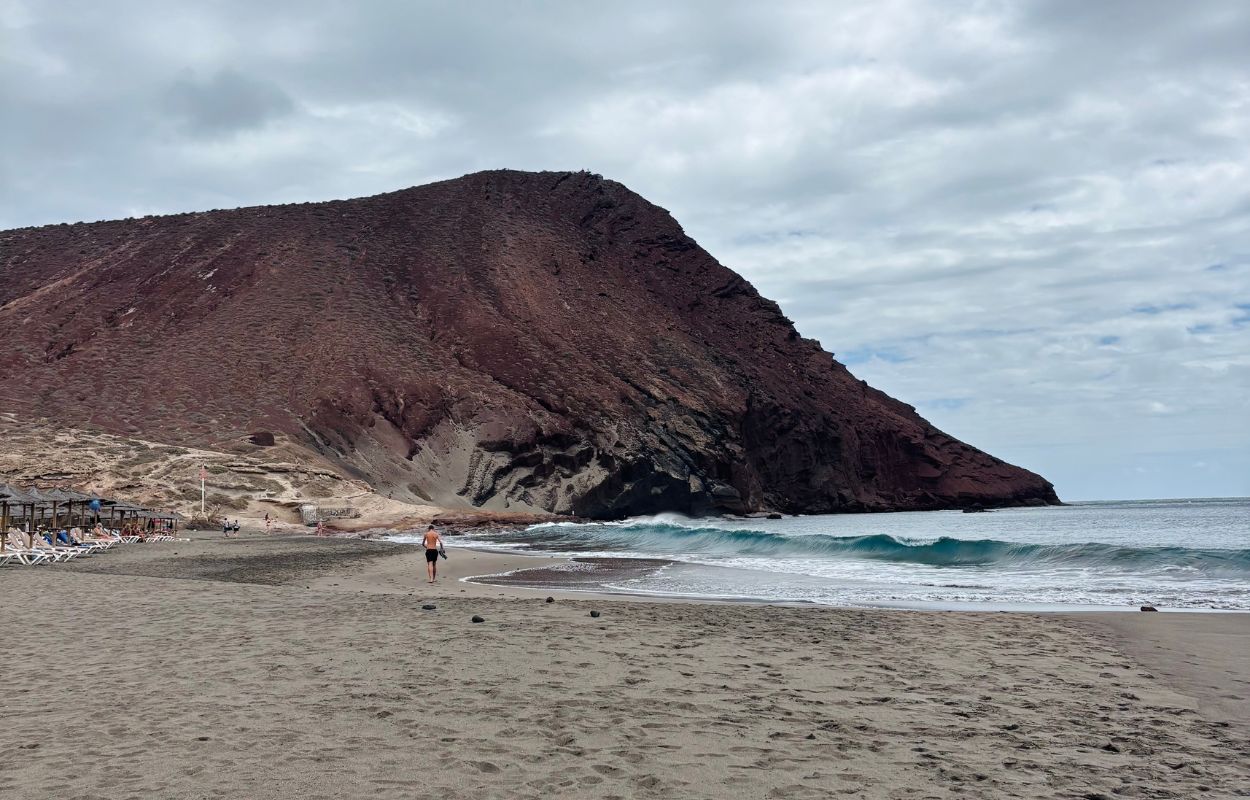
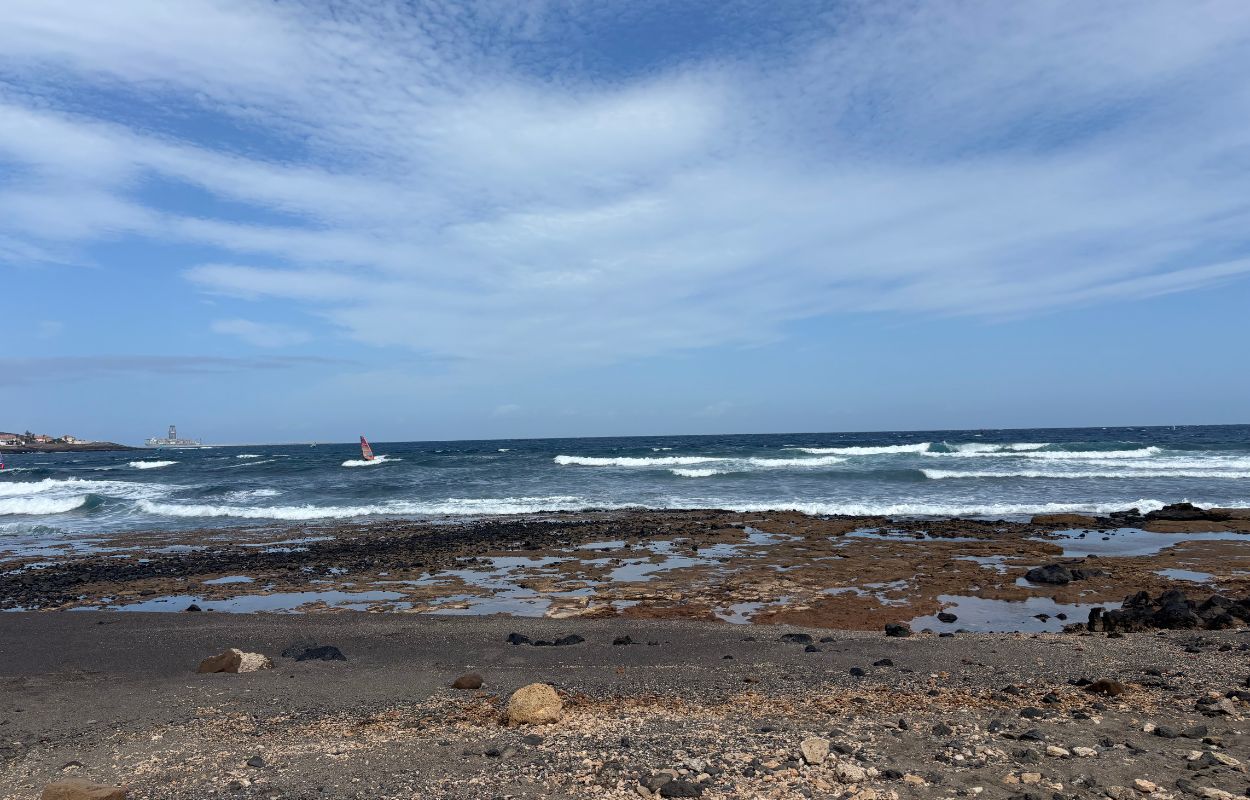
Right next door, El Médano has a completely different feel. It is livelier and, above all, much more sports-oriented. From the shore, I could see plenty of kitesurfers out on the water. The wind blows hard and steadily, which creates good waves for water sports. Unsurprisingly, it attracts fewer conventional beachgoers. The atmosphere is very laid-back, and I enjoyed strolling along the waterfront promenade.
To sum up:
- La Tejita is a wild, natural, and peaceful beach (swimming with caution). I really loved the scenery and the time I spent there!
- El Médano has a breezy, surf-focused vibe that is perfect for water sports enthusiasts.
Playa del Duque
The contrasts continue with another beach that feels completely different from the ones above. If you’re planning your trip to Tenerife, you’ve probably already heard of Costa Adeje. It is the island’s upscale seaside resort—something like Tenerife’s answer to Saint-Tropez. Playa del Duque is Costa Adeje’s beach. It fits the town perfectly. It’s very well maintained, with golden sand, palm trees, neatly arranged lounge chairs and a promenade lined with good restaurants. Even though it’s very developed and touristy, I still find the vibe quite calm.
I also really liked the waterfront promenade that runs the full length of the beach. It is a peaceful place to stroll at your own pace, stopping for a drink or a meal at an elegant restaurant overlooking the ocean (of course, it’s more expensive than elsewhere, but I expected worse). It is a lovely place to stop and treat yourself.
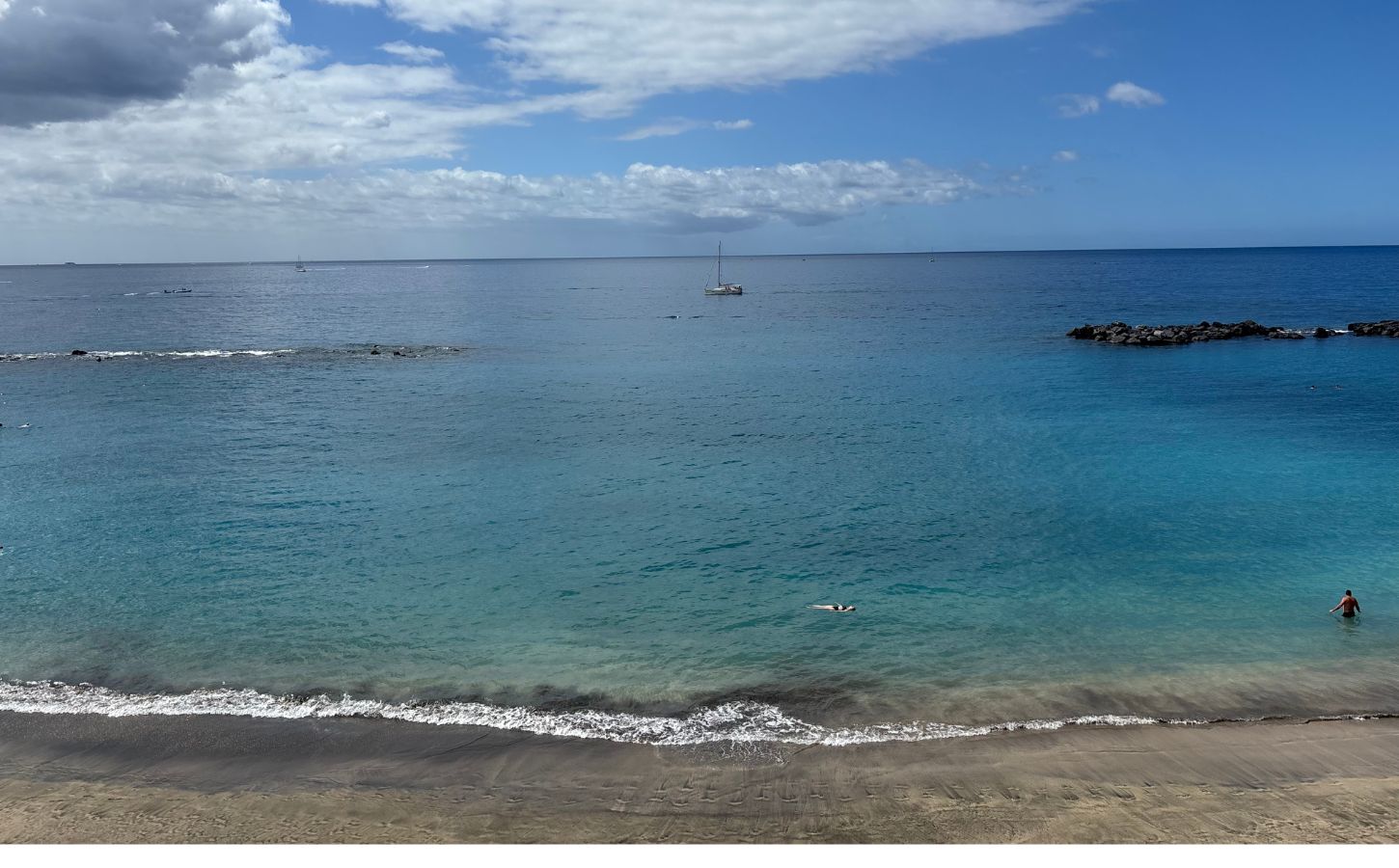
Back on the beach itself, the sea is calm thanks to the protective rock barriers. You can swim safely, even with kids. One thing that surprised me was Adeje’s microclimate — it’s hot and dry, which makes the heat bearable. Just before that, I had stopped a few kilometers away and it was humid and windy. That is the magic of Tenerife’s microclimates—you will notice the differences very quickly!
Speaking of Costa Adeje, even though staying there isn’t cheap, if you want to splurge, there are some very lovely hotels in Adeje.
Playa Jardín
In Puerto de la Cruz, Playa Jardín is one of my favorite beaches in Tenerife. It’s a black-sand beach surrounded by tropical gardens designed by the Canarian artist César Manrique. You reach the beach by walking through flower gardens, beneath palm trees, and along small paths. It sets the mood immediately! The beach is also divided into three sections, or coves: Playa del Castillo, Charcón (or Playa Chica) and Punta Brava.
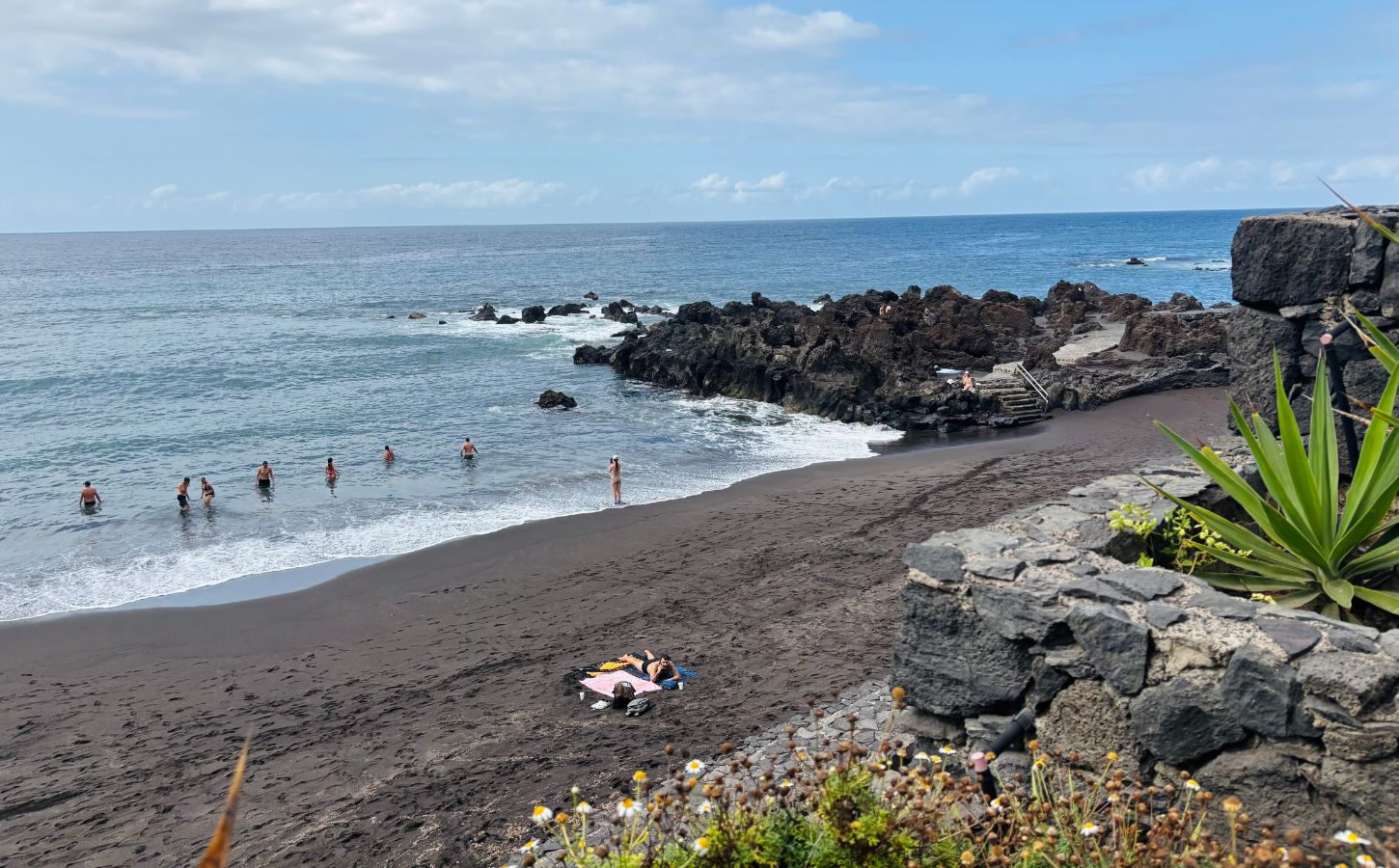
The three are connected, yet each has a slightly different atmosphere. For example, the first one has calmer water, while the third is more exposed to the wind, ideal for surfing. As for practical details, the beach is easy to reach, but there is no dedicated parking lot. We had to drive around a bit before finding a spot ten minutes’ walk from the beach, but Playa Jardín was really worth it. With a little patience, you should find a space! Since it’s in Puerto de la Cruz, I recommend starting your day at Loro Parque and ending it at Playa Jardín. For me, that makes a great combination!
Los Cristianos
Right beside Las Américas, Los Cristianos has a very different atmosphere. Even though it’s a touristy area in the south, it’s rather calm and family-friendly. The main beach is especially pleasant: the water is crystal clear and calm. You can swim and even go snorkeling. As always, you should check the flag color. Since the beach is large, I was surprised to see that in one spot it was green, while a bit further it was orange — it all depends on the exposure to the wind.
The beachfront promenade is lovely as well. It’s well developed, with cafés, restaurants and shops. In other words, it has everything you would expect from a seaside resort. But the atmosphere was much more relaxed than in Las Américas, where I’d just been. I would recommend Los Cristianos for a full day at the beach with every amenity close at hand.
Playa de la Arena
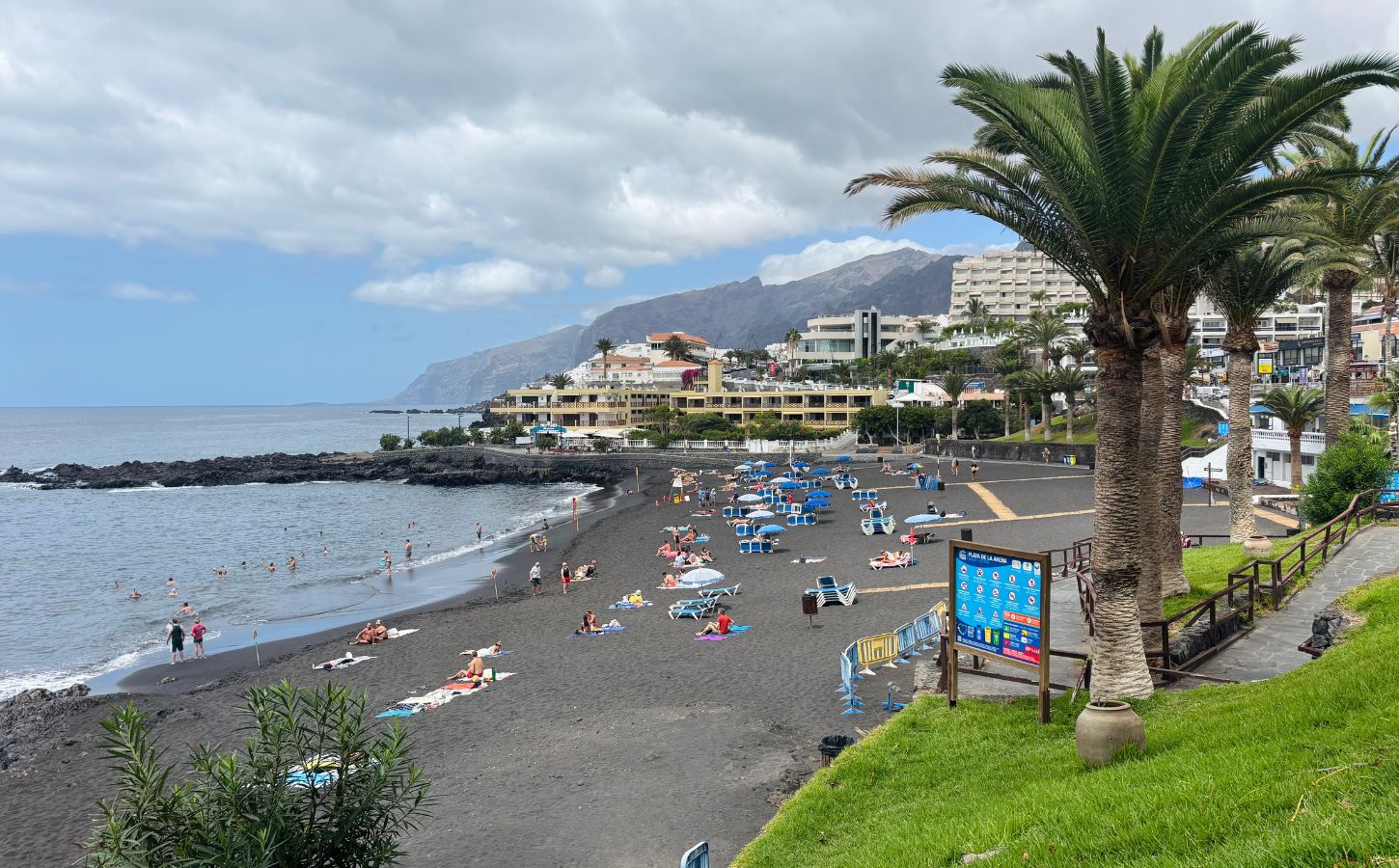
I’ll say it right away: Playa de la Arena is one of my favorite beaches in Tenerife. It’s just next to Santiago del Teide, and To me, it has that little extra something: a soothing vibe and a gorgeous setting, with black sand and the deep blue of the ocean. By the time I returned two years after my first visit, it had become even more charming. Gardens had been added just before the beach, with palm trees, flowers and little paths. It reminded me of a small oasis.
What I also liked was that it’s lively without being overcrowded. You are not alone, but you do not feel packed in with everyone else either. For swimming, you need to be careful: there are strong swells and rocks underwater. The beach is supervised, which is reassuring, but you still need to use your own judgment and stay cautious. All around, there’s everything you need: toilets, showers, cafés and small restaurants. You can easily spend the entire day there without much advance planning.
For anyone who likes to explore, there is also Playa de las Conchas, separated by rocks where black and red crabs hide. It is a pleasant little spot for a walk, but not really suitable for swimming: too many pebbles and rocks.
Bollulo
Next, we head back to northern Tenerife and Playa del Bollullo. It lies near La Orotava. It’s a spectacular black-sand beach, framed by volcanic cliffs and tropical vegetation, which gives it a raw and unspoiled feel. You will find very few tourists here, if any.
Reaching this view takes a little effort: the walk from the nearest parking lot to the beach takes about fifteen to twenty minutes. The path goes through banana plantations — it feels as though you have stepped into another world. However, I don’t recommend going in flip-flops; bring good shoes so you can walk down comfortably.
Once you reach the bottom, you are greeted by deep black sand, cliffs, and powerful waves breaking along the shore. As you might guess, this is a beach for relaxing rather than swimming. There are strong currents, and very often there are no lifeguards. Be careful, then, and simply enjoy your time there!
Playa Blanca: Diego Hernández
Playa Blanca, also known as Diego Hernández, is one of the most unspoiled beaches in the south of Tenerife. It feels like a small hidden paradise. Naturism is quite common here, although it is not required. Everyone is free to enjoy the beach in whatever way feels comfortable.
Here, the vibe and the scenery are totally different from the tourist areas. There are no sunbeds or facilities, just natural landscapes.
To give you a better sense of the setting, the beach is a mix of golden sand and rocks, with crystal-clear water. It is fairly small and feels more like a cove. To get there, you have to walk downhill for about twenty to thirty minutes. The path is a little rocky, but manageable with good shoes. If you enjoy hidden, authentic places, it is well worth visiting. It’s a nice change from the more popular southern beaches like Playa del Duque or Las Américas.
Los Guíos: Los Gigantes
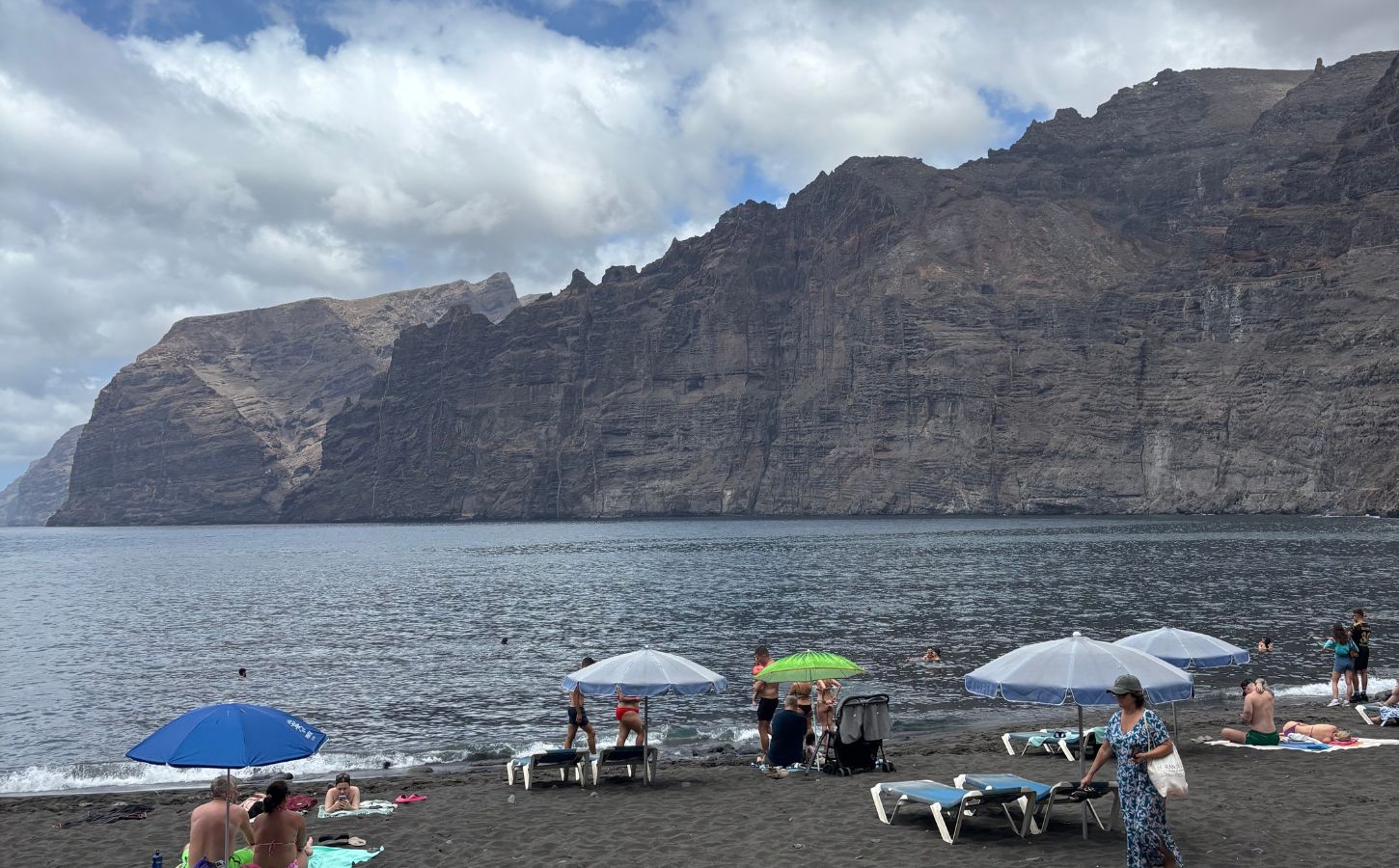
To round out this top 10, I chose Playa de Los Guíos. What makes it special is its location at the foot of the immense Los Gigantes cliffs. When I visited two years earlier, it was closed due to safety work because of the risk of rockfalls. So it was a nice surprise to see that it was open and that we could enjoy it. It is a small black-sand beach, made all the more impressive by the cliffs rising behind it. It still attracts quite a few people. That is a shame, as it would be lovely to enjoy it in greater peace—but that comes with visiting such a striking spot.
Since it’s right next to the port, it’s very easy to get to. Still, it’s well away from the boats, because it’s separated and protected by rocks. As a result, the water is generally calm and suitable for swimming. I stopped there right after my whale-watching excursion — it was wonderfully relaxing after all the excitement and emotion!
By this point, you have probably seen just how varied Tenerife’s beaches are. Each one has its own charm, even though some made a bigger impression on me than others. Ultimately, it comes down to personal taste, although the weather can play a role too.
Other Beaches in Tenerife
After sharing what I consider the best beaches in Tenerife, I also wanted to mention a few more around the island.
Abama
In southern Tenerife, Playa de Abama is wonderfully secluded. It is really more of a cove than a beach. It’s very small and protected by large volcanic cliffs. The sand is golden and the water is crystal clear — it’s a really beautiful setting. If you’re interested, it’s located near Guía de Isora. You have to walk down from the Ritz-Carlton parking lot for about ten to fifteen minutes along a path between palm trees. Once there, you can enjoy a peaceful swim away from the crowds—which always feels good!
Roque de las Bodegas and Almáciga
At the far northern end of the island, in the Anaga massif, you will find two rugged beaches: Roque de las Bodegas and Almáciga. What stands out most is the distinctly local, Canarian atmosphere. Here, it is simply you, the ocean, and the mountains. The two beaches are side by side, just separated by a few bends on the TF-134 road. The setting is remarkable, with cliffs, lush vegetation, black sand and powerful waves sculpting the rocks over time. It is a beautiful natural area worth seeing if you have the chance. I recommend going there right after a hike in the Anaga park. That makes for a wonderful full day at Tenerife’s northern tip.
Las Gaviotas
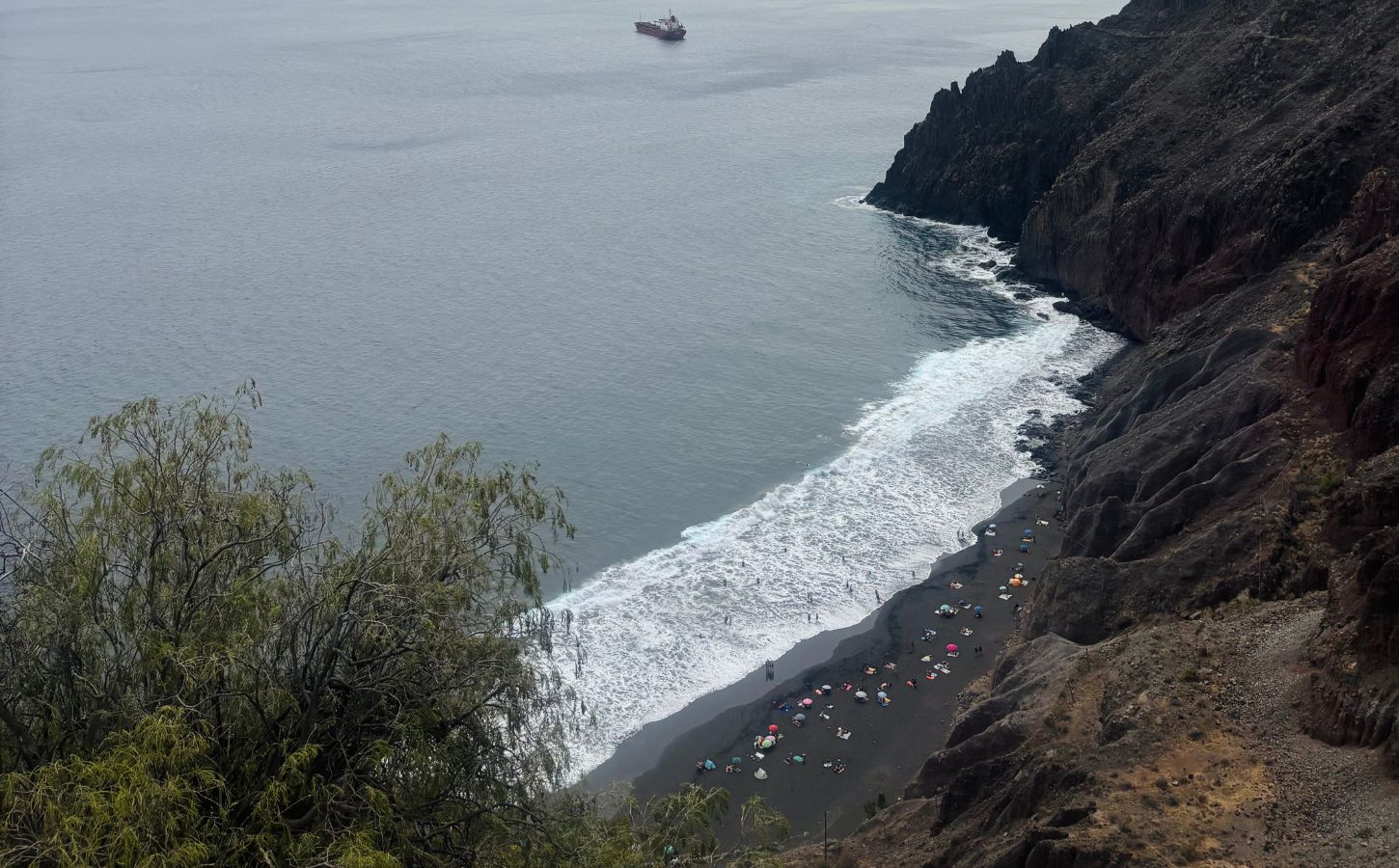
Just two kilometers from the famous Las Teresitas beach, Playa de Las Gaviotas shows a whole different side of Tenerife. There is no golden sand or neat row of palm trees here—just a black-sand cove framed by cliffs. The atmosphere is wild and unspoiled. To get there, the road is narrow, with drops on one side in some places. It’s quite impressive, even though the road is good and well paved. The beach is also naturist. I did not go down myself, but I admired it from the viewpoints above, and it was beautiful. If you’re comfortable with naturism, you can go down there; otherwise, you can still admire it from above.
Playa de San Juan
Located between Los Gigantes and Costa Adeje, Playa de San Juan is a beach with both golden and black sand, nestled in a small fishing village. Its greatest appeal is its calm, local atmosphere. I remember only six of us splashing around in the water—it felt like a dream! There are still some facilities like showers. In general, the water is calm because the bay is protected by a breakwater. That does not mean you should ignore an orange flag and venture into the water. Within only a few steps, the bottom drops away: it gave me a couple of little scares when the current was strong. So remember to stay cautious at all times.
Playa de las Américas
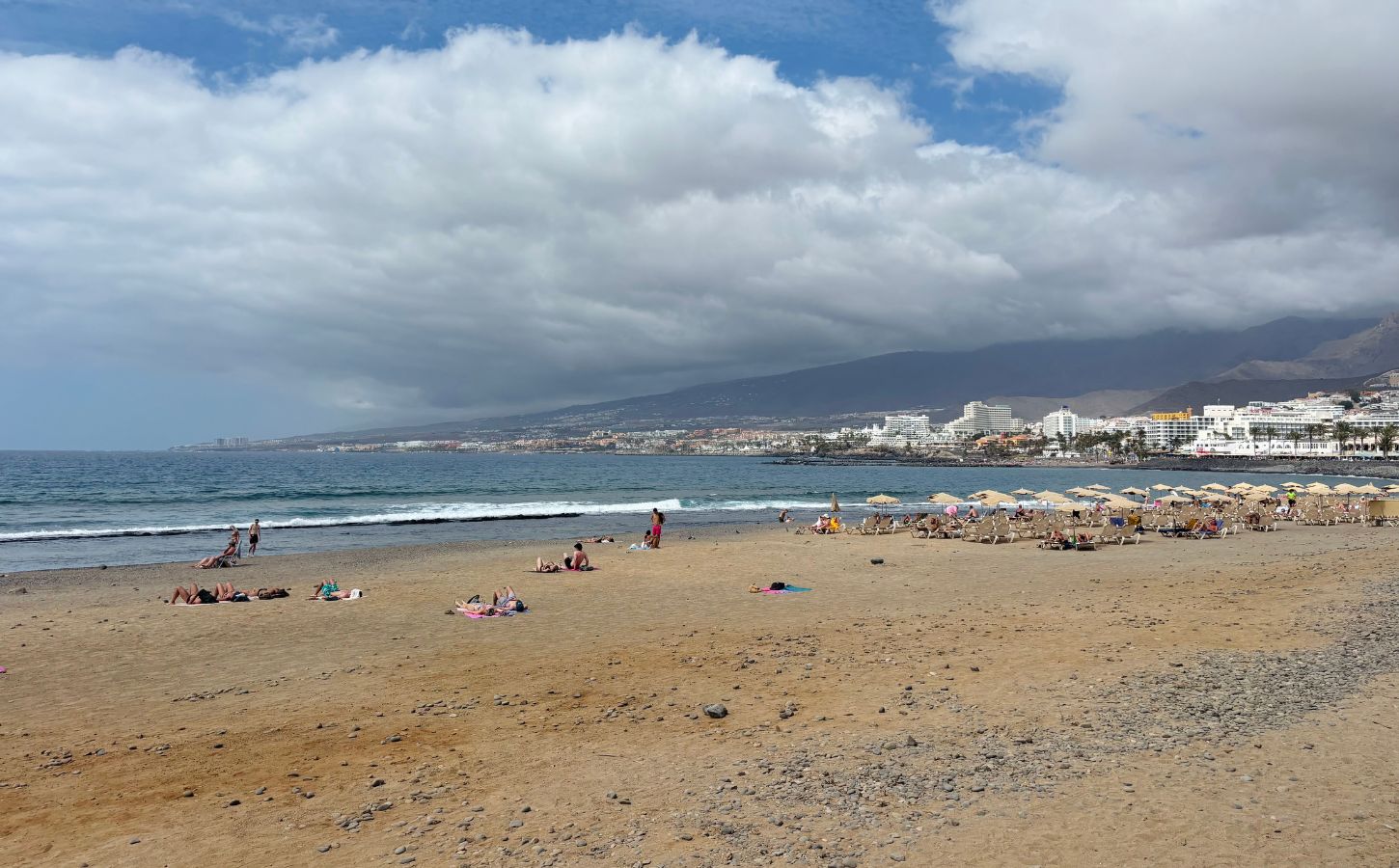
Although I have already mentioned it and it’s one of Tenerife’s most famous beaches, I didn’t include it in the top 10 for several reasons. First, it doesn’t feel authentic at all: it is very much geared toward tourists. It doesn’t have a peaceful or family-friendly atmosphere. It’s very lively; I do not personally find it very relaxing. If I have to pick a touristy beach, I much preferred Playa del Duque and Los Cristianos, which are nearby in the south. By now, you have probably gathered that I did not particularly enjoy this beach or its atmosphere. But considering how crowded it gets, I guess it’s a matter of taste. I still wanted to share my honest impression.
Most Beautiful Beaches in Tenerife: Practical Information
Although I have already touched on some of the points below, I wanted to include a practical section about Tenerife’s beaches.
Safety and Tides: Flags and Swell
In Tenerife, I quickly realized that, beautiful as the scenery may be, you should never forget that this is the Atlantic and that caution matters. The first thing to do is check the flag color. As I said, even with a yellow or orange flag, I’m careful and I stay on the beach. You are free to make your own decision, but these colors indicate currents or swell, so caution is essential. If the flag is red, you know swimming is forbidden, even if the water looks calm: there’s a reason the flag is there. You may also see a purple flag, which indicates a significant presence of jellyfish.
One final tip: even when the flag is green, take a moment to observe the ocean before entering the water. There can be several zones on the same beach with different conditions (I saw this myself).

Another thing to know: tides change very quickly in Tenerife. At high tide, some coves disappear completely; at low tide, rocks and other sharp surfaces may be exposed.
There is no need to worry—just keep a few sensible habits in mind so you can make the most of Tenerife’s beaches!
Visiting Without a Car and on a Budget (TITSA Buses and Parking)
In general, renting a car allows you to reach beaches all across Tenerife. For some, you will simply need to cover the final stretch on foot. I booked my rental car through Discover Cars and found some good deals, so it is an option I recommend.
Without a rental car, Tenerife’s bus network is a useful alternative. The main areas, from north to south, are almost all connected. It is an affordable and convenient way to get around. If you plan to travel around frequently, consider getting a ten+ card. You can load it with credit as needed, and it may work out cheaper than buying separate tickets for every journey. Buses serve tourist hubs such as Costa Adeje, Los Cristianos, Puerto de la Cruz, and Santa Cruz, as well as many nearby beaches. Overall, TITSA buses are a practical alternative for reaching the island’s main beaches.
Conclusion
That brings us to the end of this tour of Tenerife’s best beaches. As you have seen, the scenery changes completely from one part of the island to another. Whether you want a relaxing swim or a rugged stretch of coastline, you are sure to find your own favorites.
If you’re traveling to several Canary Islands, I recommend checking out our guide to the most beautiful beaches in Lanzarote. That island also has some real gems to discover and enjoy.
See you soon for more adventures in Tenerife!

Written by Laura CALLES
Thanks to Mélanie and Sylvain, I had the chance to discover the Canary Islands, specifically Tenerife and Lanzarote, so that I could share these island paradises with you. Two real favorites of mine!
Despite our vigilance, an error may have crept into this article. If you spot one, please don't hesitate to let us know so that we can correct it immediately and keep our information up to date!