


We tried a seaplane flight in Guadeloupe
Last update: 06/23/2026
Our blog continues to grow thanks to you, our readers. This post may contain affiliate links, which means we can earn a small commission if you make a purchase through them, at no extra cost to you. This helps us to continue to bring you more and support our work!
It had been a while since we last wrote about an activity, so here we are again with a seaplane flight in Guadeloupe. We took advantage of Mélanie’s dad’s visit and the extra time we had during the school vacation to spend a day in Le Gosier, on Grande-Terre, and try something a little more adventurous.
As I often say, it may sound funny, but Grande-Terre almost feels like a different island to us. Le Gosier is about an hour and a half from home, and I have to admit that we don’t go there very often. Still, we know that Grande-Terre is full of beautiful places that feel very different from Basse-Terre, especially when it comes to hiking.
We’re always eager to try new activities, so this was the perfect opportunity to experience something different in the air. We combined it with a visit to Îlet du Gosier, just offshore from the town, before taking a seaplane flight over the Petit Cul-de-Sac Marin on an extended route. Mélanie had visited Îlet du Gosier several times with her family, but it was a first for me. We’ll be writing a full article about the islet as well. Spoiler alert: seeing the lagoon from above is magical.
In a different vein, Alix also tried out a great paragliding experience in Le Moule for us!
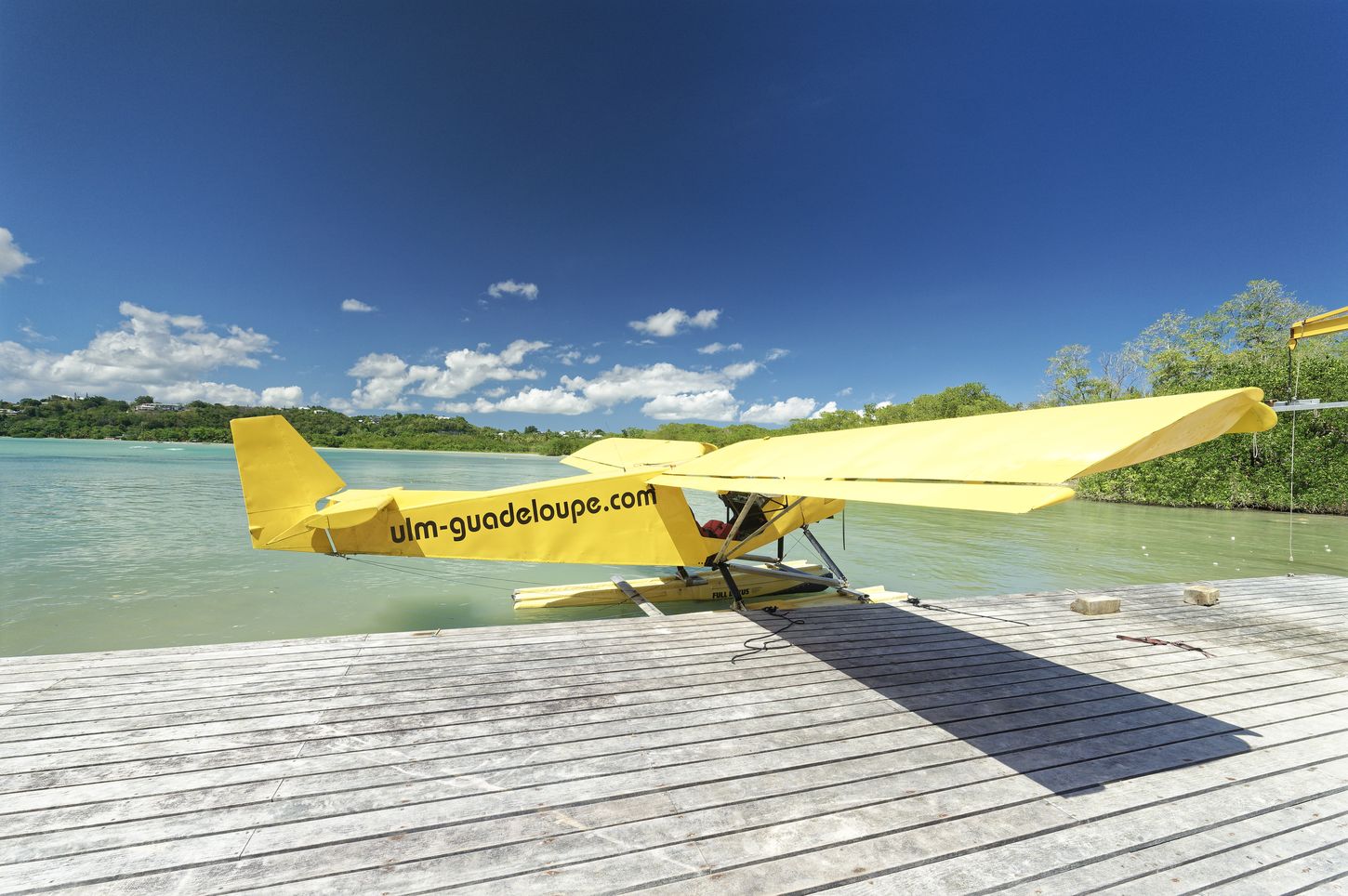
As a fun aside, Mélanie and I drew straws to decide who would get to try the experience. I won, which is why I’m the one writing about it. If you’ve followed us for a while, you may know that we spent six years in French Polynesia. During that time, I had the chance to fly over Bora Bora in a two-seat seaplane and experience the unique feeling these aircraft offer. Honestly, I had never seen anything so beautiful from the air.
Bora Bora is still one of the most beautiful lagoons in the world—the so-called Pearl of the Pacific—so I wasn’t expecting this flight to match what I had seen there. Even so, I knew that gaining altitude would bring out the colors and create a striking contrast with the mountains in the background.
As with every article about activities in Guadeloupe, I’ll start by telling you about this experience. At the end of the article, I’ll give you some practical tips.
This article was produced in collaboration with Manawa and Les Îles du Ciel. We increasingly use Manawa to book activities online while traveling and to discover new experiences. As always, I retained full control over everything written here, and the opinions are entirely my own. That said, you’d have to be fairly hard to please not to enjoy a seaplane flight.
I hope this article inspires you to try the experience for yourself. It was a wonderful activity and a memorable way to see Guadeloupe from a different perspective.
If you’re looking for something else to do during your vacation in Guadeloupe, we’ve also tried paddleboarding in the mangroves, microlighting over Pointe des Châteaux and La Désirade, and sailing in Les Saintes.
If you’re looking for more ideas, we’ve put together a guide to the best things to do in Guadeloupe!
Our seaplane experience
Come along for the 35-minute flight, and I’ll tell you exactly what it was like.
Arrival and introductions
After a change of plans, our first stop was Îlet du Gosier at 9 a.m. I’ll share more about the island in a dedicated article, since it isn’t the focus here. Still, if you’re vacationing in Guadeloupe, it’s an affordable way to spend time in the sun on beautiful white-sand beaches. It can get crowded, but even I, who generally avoid busy tourist spots, found it manageable. With scenery like that, it’s hard to complain.
Our seaplane appointment was at 2:30 p.m., which gave us plenty of time to enjoy Îlet du Gosier and have lunch there. Since I had kayaked to Îlet du Gosier that morning, I set off again at 1:30 p.m. toward Plage de la Datcha, where I had started at 9 a.m. Mélanie took the regular shuttle back to the beach, and we reached the seaplane base, five minutes away, at 2 p.m.
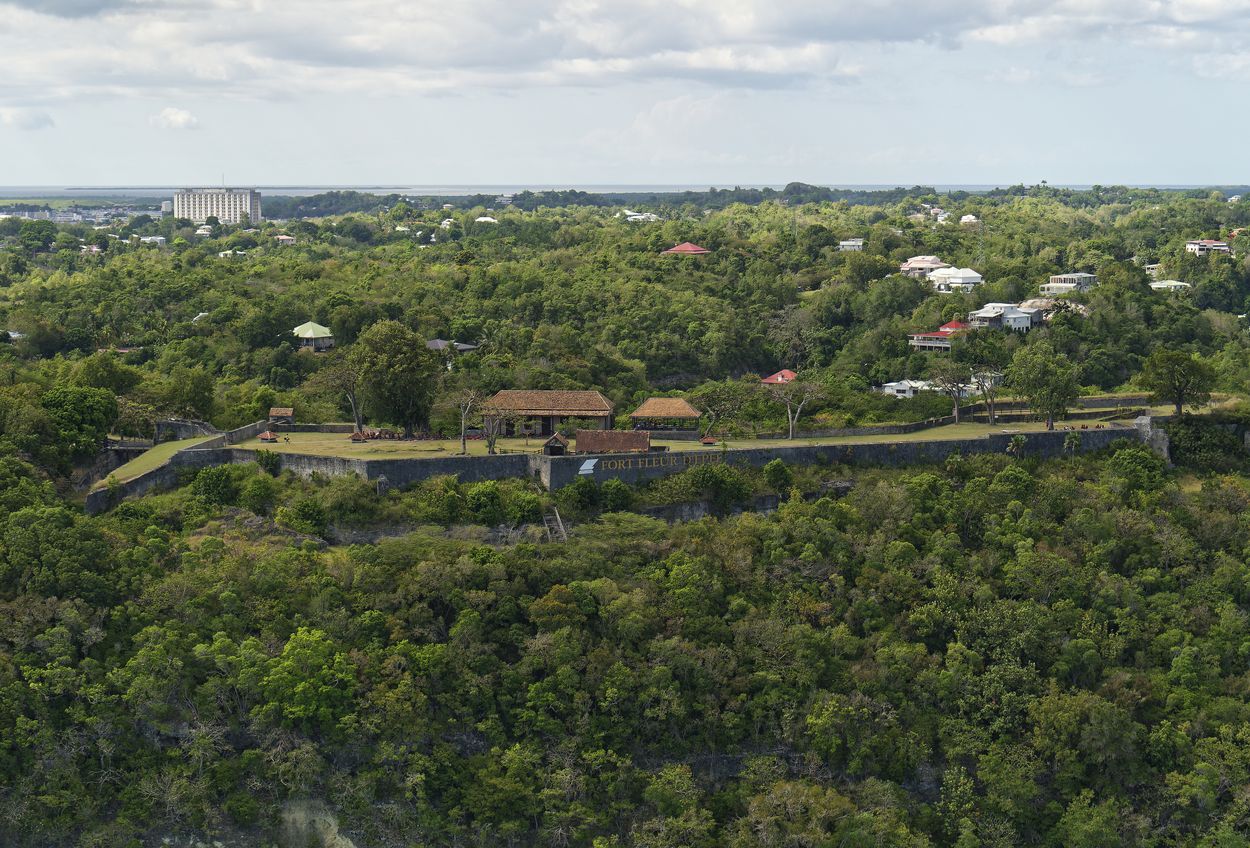
Philippe and Tania, the couple who had recently taken over the seaplane business, gave us a warm welcome. The base sits beside a beautiful lagoon, almost directly below Fort Fleur d’Épée, and the setting is lovely. I was soon introduced to the aircraft itself: a bright yellow seaplane waiting on the beach at the Canella Beach Hotel. I’ll share all the practical details later.
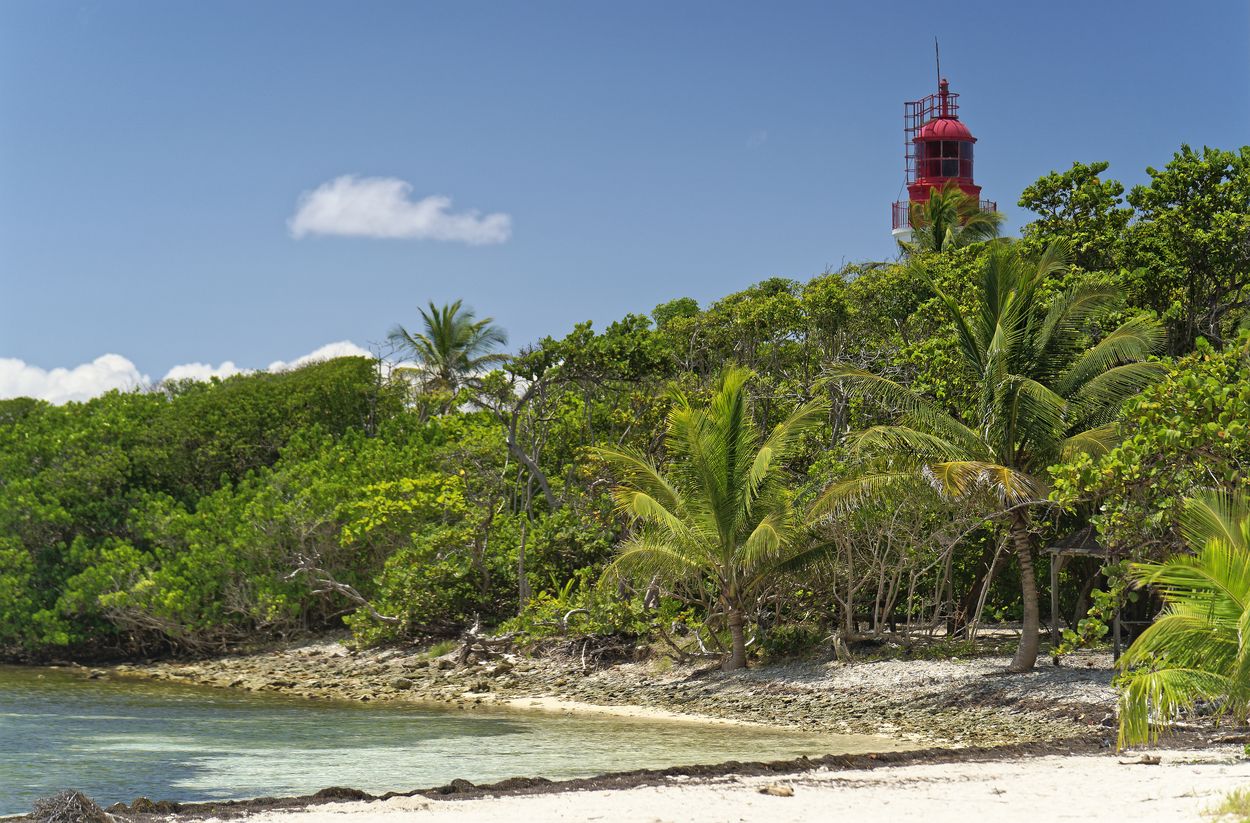

We’re offered a cup of coffee, which we happily accept. We meet Tania and Philippe, who have had some pretty crazy experiences. Tania is Comorian. We chat about our life in Mayotte and our adventures during our stay on the island of Grande Comores. We lived in Mayotte from 2011 to 2015. We had the opportunity to discover the Comoros and a small part of Africa. Philippe has lived and worked a lot in black Africa in the past. Even then, he flew over the African bush in a small plane. It was quite a change from a turquoise lagoon, haha. We immediately hit it off. They were involved in developing projects locally and in the Comoros as well.

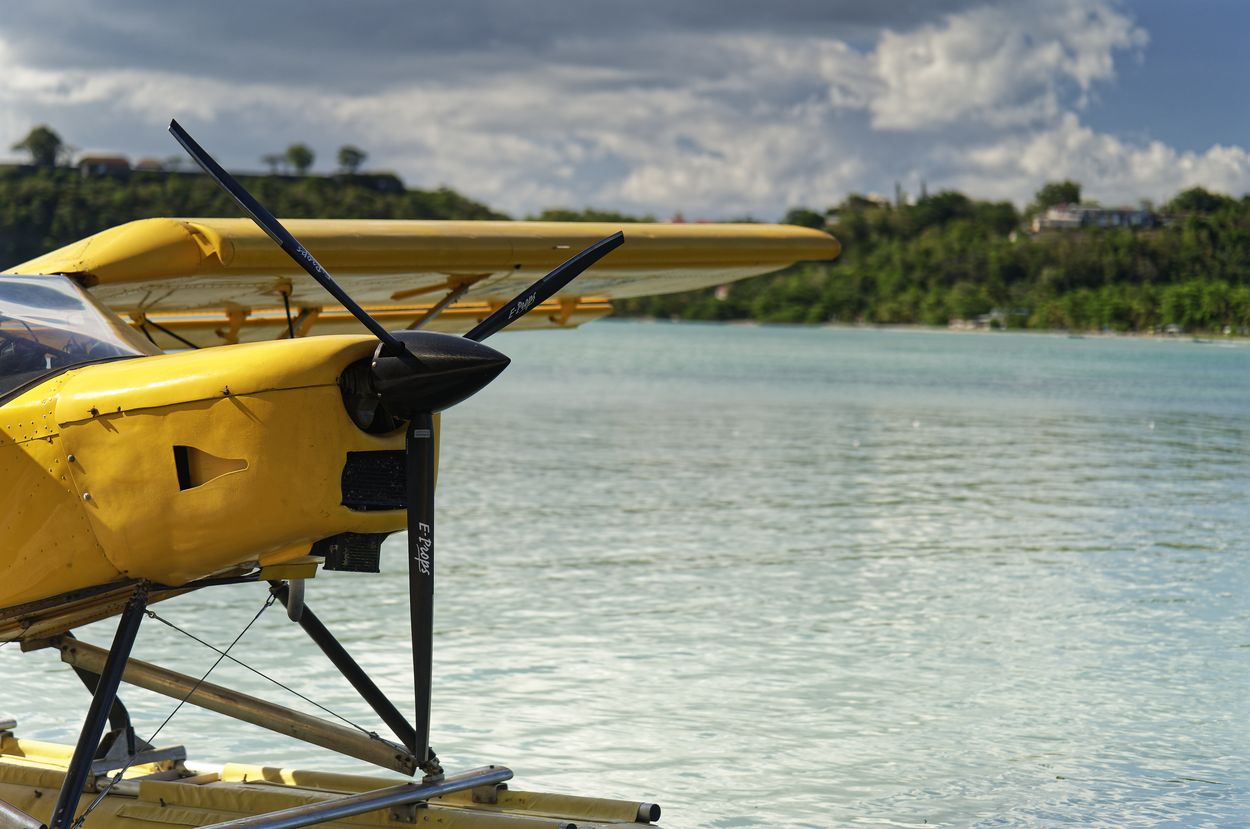
They recently took over the business in February, which had been closed for several years.
Getting ready for the seaplane flight
After chatting for a while, it was time to get ready. Using a map, Philippe explained how the flight would unfold and which places we would fly over. We were taking the Échappée Belle route, an extended circuit over the Petit Cul-de-Sac Marin. I’ll come back to it later, but longer flights are also available over La Désirade, Marie-Galante, and even Les Saintes.
Our 35-minute flight would take us west toward Îlet à Cochon and Îlet Boissard, then on to Petit-Bourg and Goyave. From there, we would follow the coast to Îlet Fortune, pass a well-known wreck just offshore, and finish by flying over Îlet du Gosier, where we had spent the morning as a family.
Although I don’t know the area at all, it all looks very nice. On a boat trip with Mélanie, we were able to discover part of the Grand Cul-de-Sac Marin. Click on the link above to read about our experiences.
Then it was time to leave. Philippe fitted me with a life jacket in case of an emergency water landing—not something anyone expects, of course. He went over the safety instructions, which were fairly simple. Most importantly, I wasn’t to touch any of the aircraft’s buttons or controls. That seemed obvious enough.
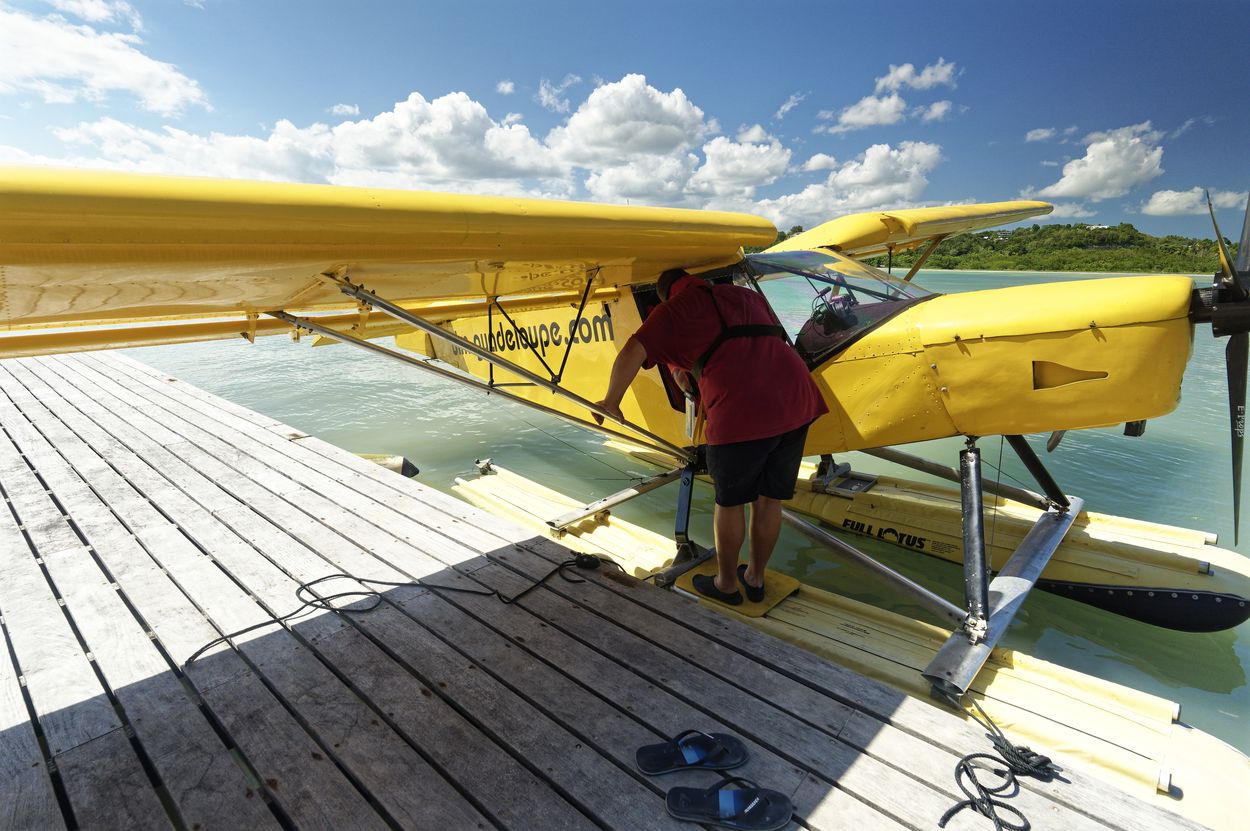
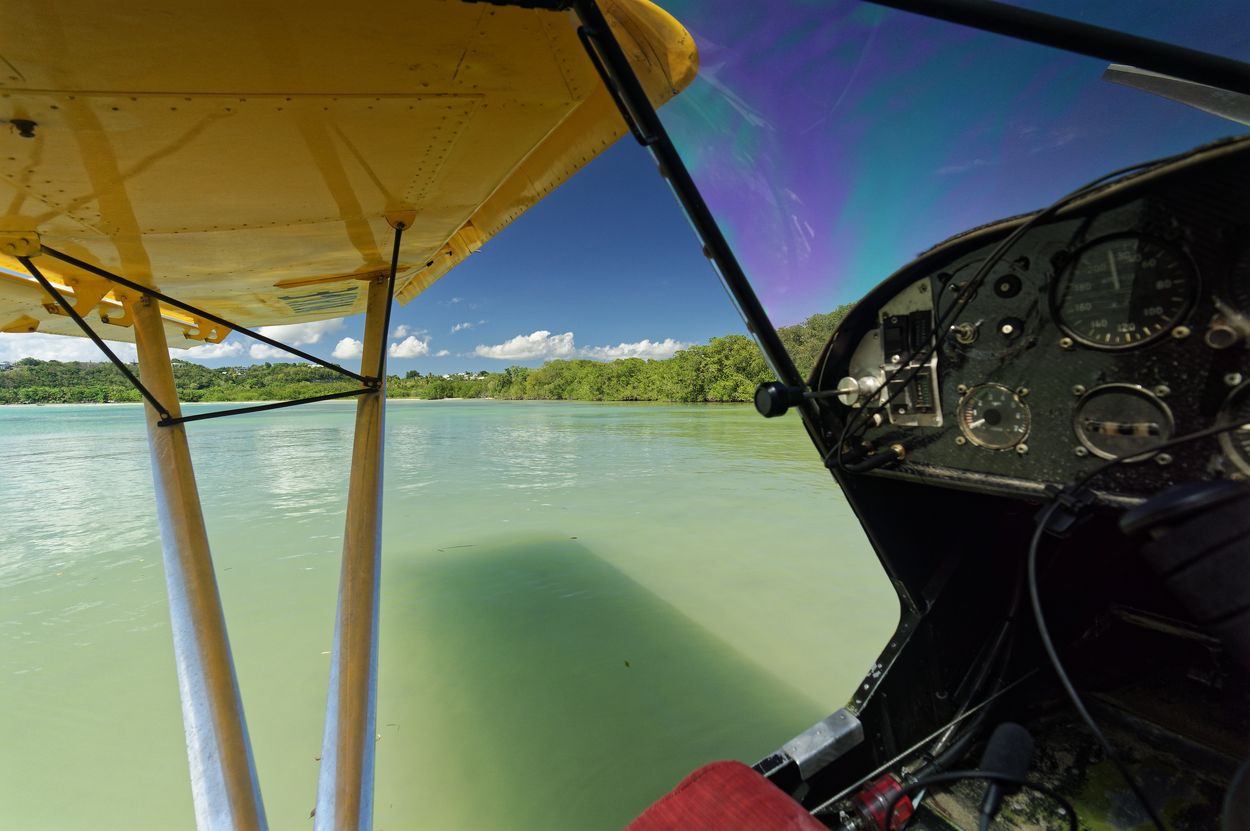

Being a keen photographer, I set off with our two hybrid cameras (Sony A6600 and A7III) and two lenses, knowing that I wanted to get some good pictures for this article. The idea was to be able to shoot wide angle (using my Sony E PZ 10-20mm f/4G) and zoom with my Tamron 70-180mm f/2.8. In addition, Mélanie wanted me to do some video shooting with her mobile phone. Suffice it to say that I’ll be loaded like a mule and will have to take turns with the three cameras… not to mention the fact that I’ll be wearing headphones for the noise, with a cable that will get a bit tangled with everything! Still, I knew I wanted to enjoy the experience rather than see the entire flight only through my cameras, which would have been a shame.
I took my seat on the right beside Philippe. The cockpit was compact but surprisingly comfortable, and I boarded barefoot, which felt quite pleasant. All the buttons and gauges were directly in front of us. I almost forgot the best part: the side was open, unlike during my flight in Polynesia, which was ideal for taking photos.
The seaplane flight: taking off
We were finally ready to go. Philippe started the seaplane, we untied from shore, and the wind gradually turned the aircraft into the right position. We glided gently out into Grande Baie before Philippe announced that we were ready for takeoff. He increased the power, and we lifted smoothly from the water. I hadn’t expected takeoff to feel so gentle. The entire process felt calm and reassuring, and the aircraft seemed much quieter and lighter than a helicopter.
The first aerial views of Grande Baie are superb, and we can already see the Bas du Fort area, with Fort Fleur d’Épée directly in front of us, the Hotel Fleur d’Épée a little further on, and finally the Bas du Fort marina on our right. The view from the air is always impressive and we realize just how much development has taken place in the area. It has to be said, though, that we’re right next to Pointe-à-Pitre, so it’s only to be expected…
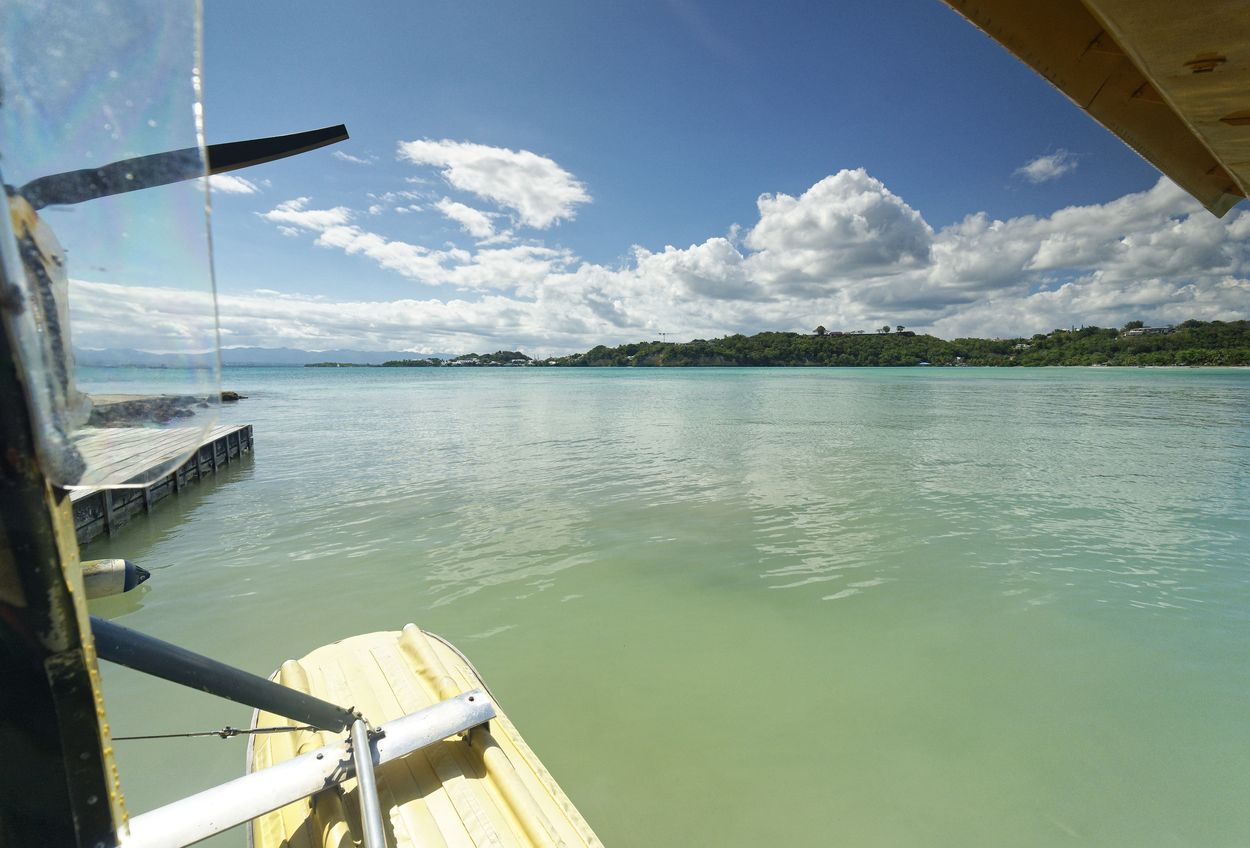
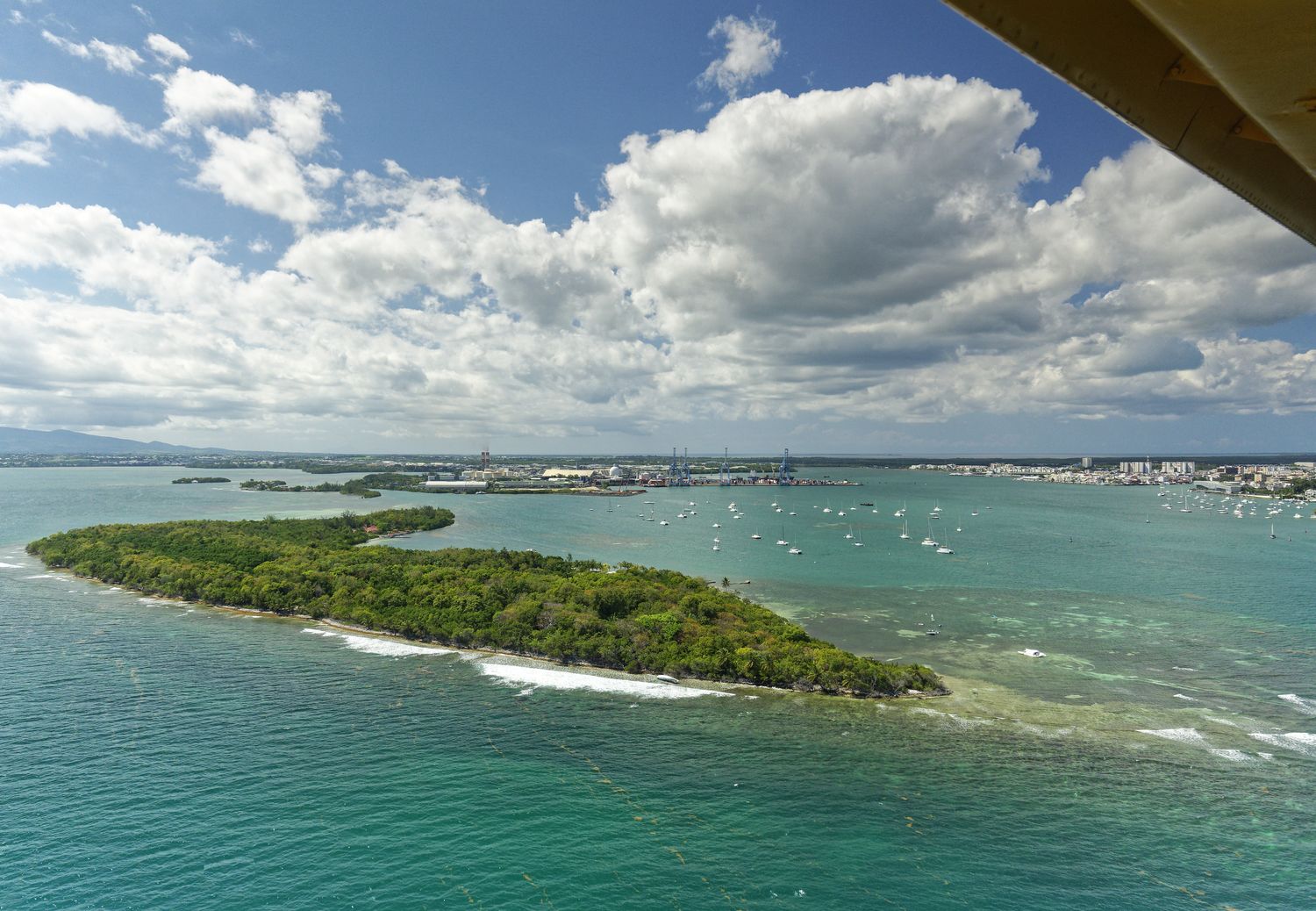
We then fly over the first islet, the locally famous îlet à Cochon. The island is virtually deserted, except for a large red-roofed house on the Pointe-à-Pitre side. Originally inhabited by Amerindians, the island was colonized and developed for agriculture and lime production in the 18th century. Despite its rich history, marked by military occupation and destruction by a cyclone in 1928, it is now best known for its white sandy beaches, which are shared by several owners. It’s really quite beautiful from the air, and you can really see the colors around the island and the beautiful coral reefs.
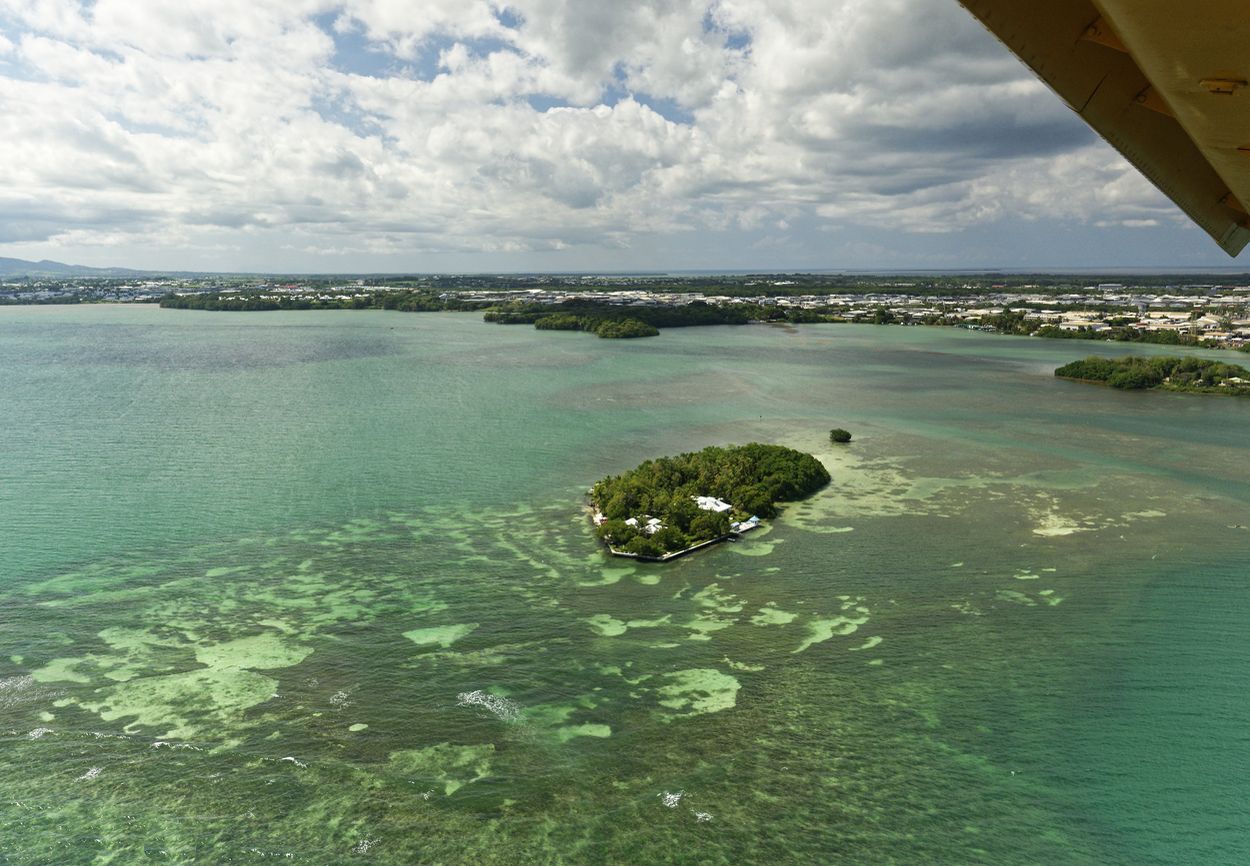
When we reach the Boissard and Chasse islands, we’re flying over a beautiful shallow area with magical colors on our right. The most memorable part of the flight, of course, is over Boissard Island, which is completely urbanized. I won’t go into the history of this island, but it’s fun to see from the air the beautiful houses, swimming pools and even a tennis court! In the background, it’s easy to see the industrial area of Jarry, which has been reclaimed from the sea over time. It’s not the most photogenic, but it’s always nice to see it from the air.
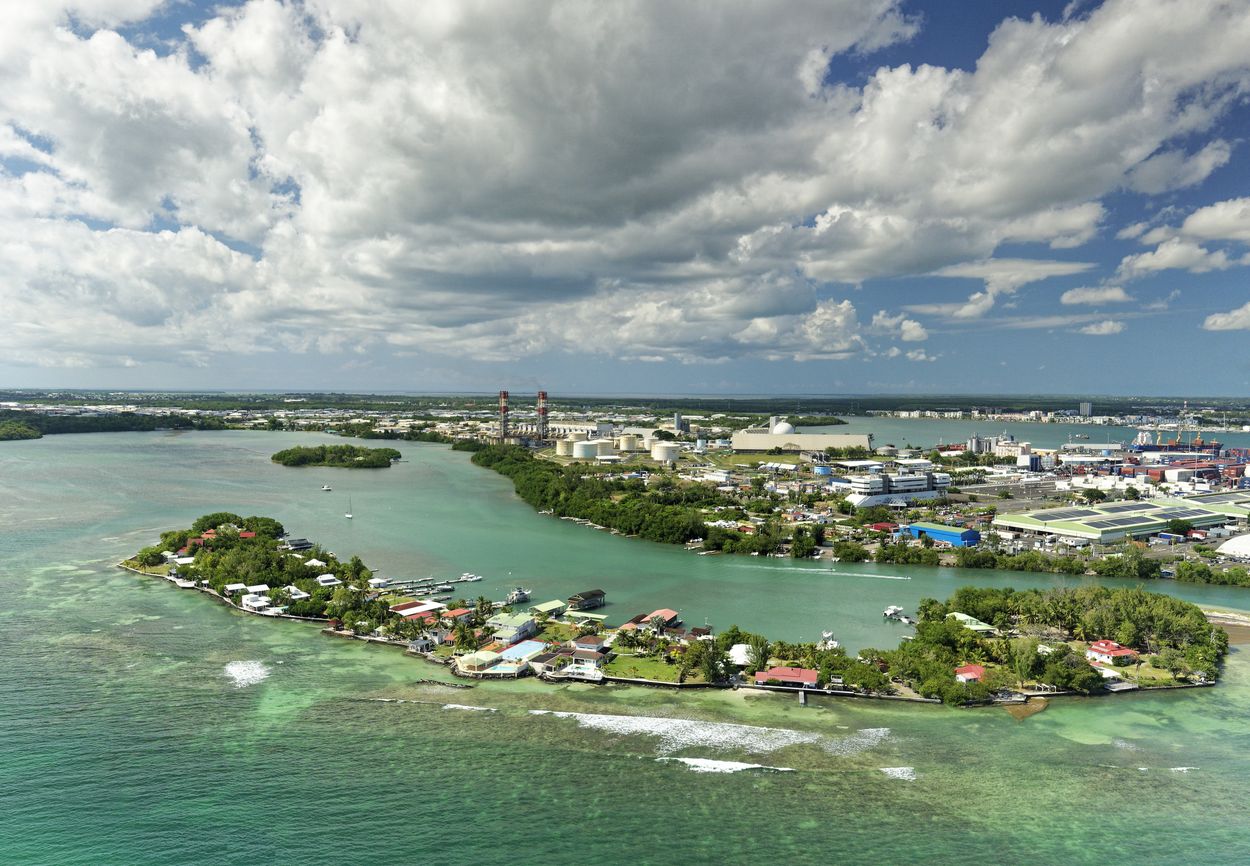
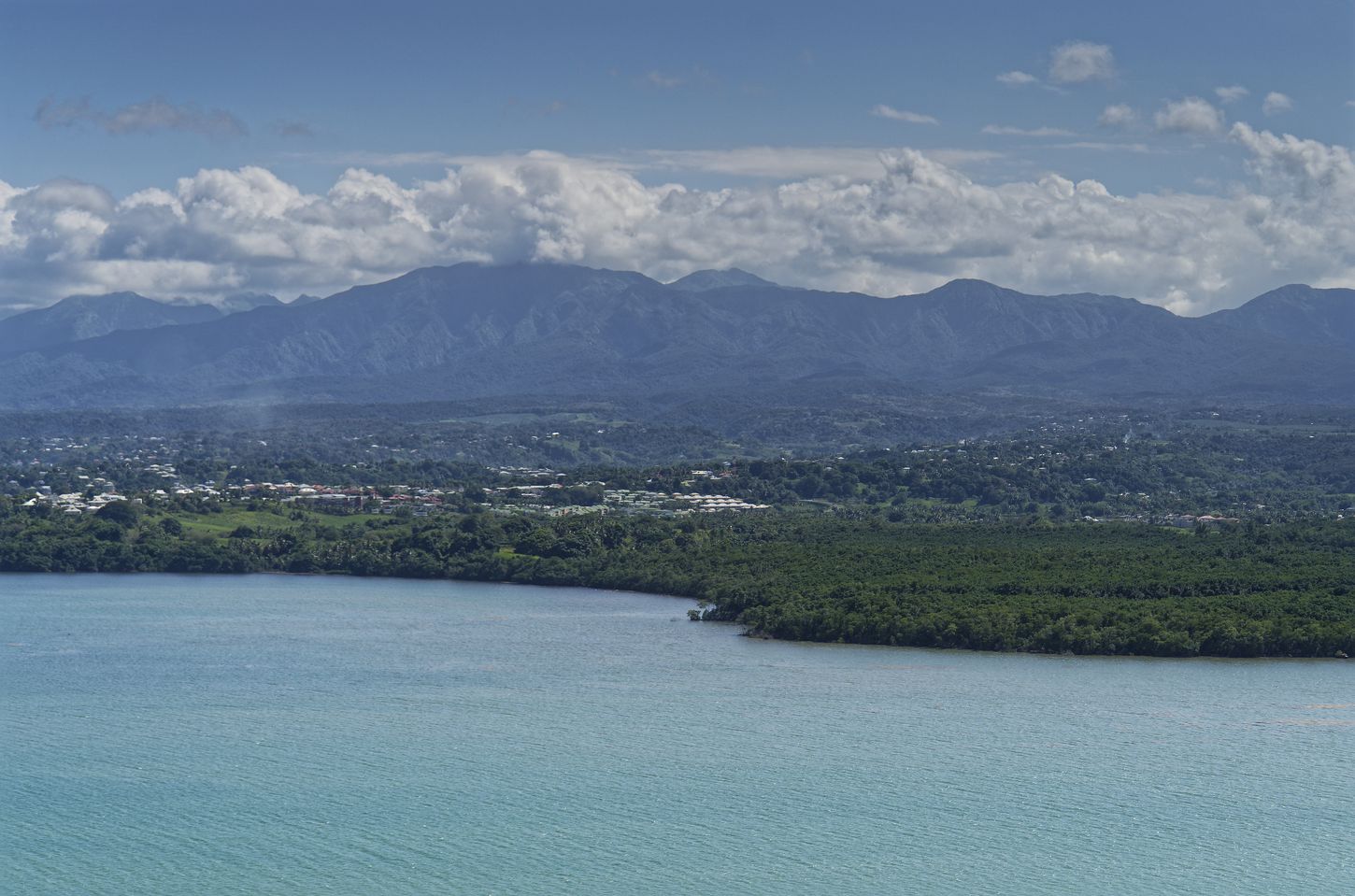
We were high enough to take in the wider landscape while still flying low enough to appreciate the details below. The peaks of Basse-Terre were clearly visible, and the mountain views were beautiful. As we continued toward Petit-Bourg, the many shallow banks and coral reefs stood out beneath us. We flew over two small islets opposite Pointe à Bacchus, Îlet à Nègre and Îlet à Cabrit, both covered entirely in mangroves. From the air, they looked especially striking and photogenic.


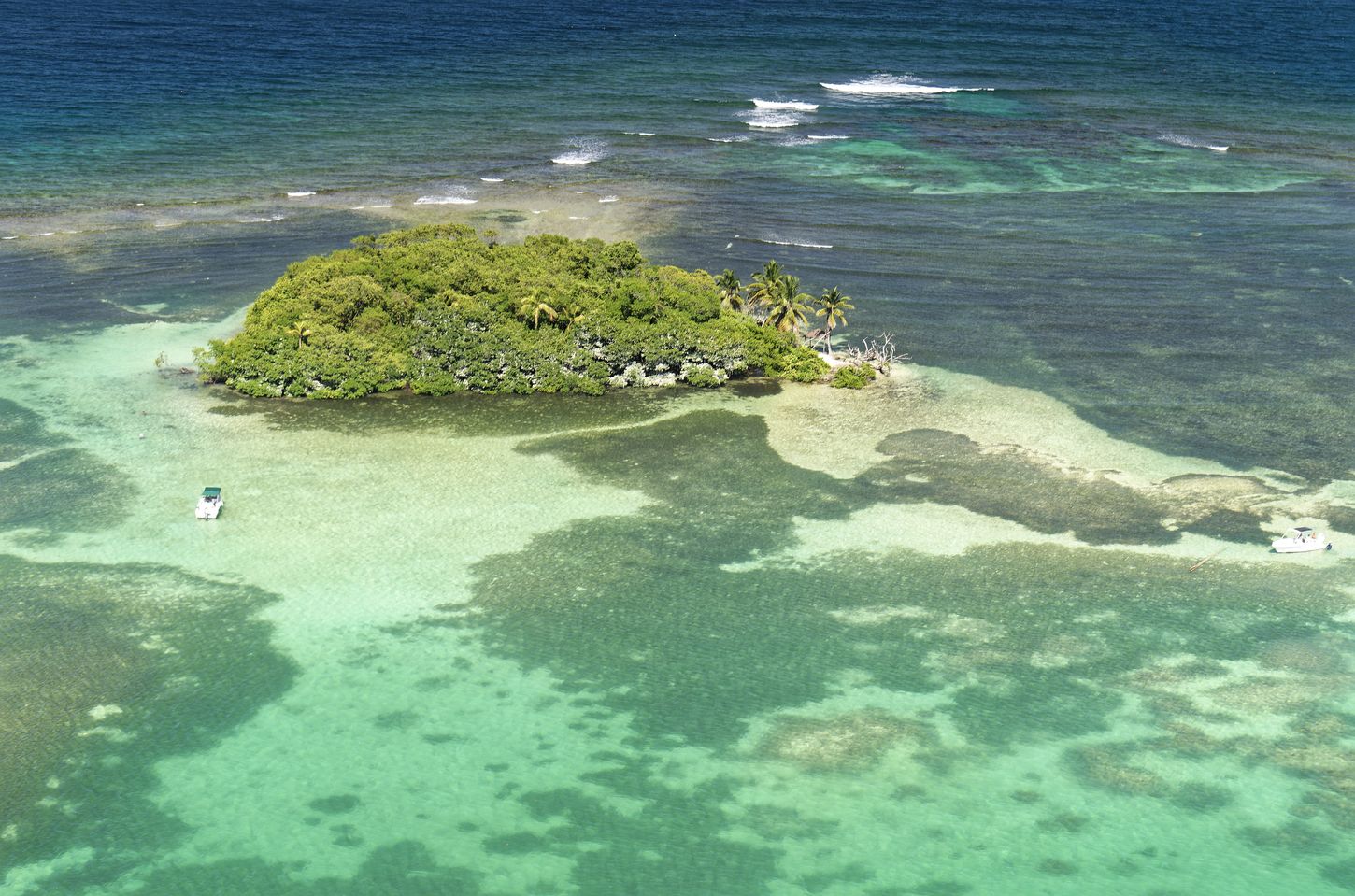
Continue towards the famous îlet Fortune, opposite the town of Goyave. On the way, we can still see the shoals that are so common in this area, and we can even make out the little white sandy islets that pop up left and right. When we arrive, Philippe tells me that îlet Fortune is actually a public island and that you can get there by boat (although you do need a boat, don’t you?). I’ve never heard of a service that takes you to this islet, but it’s possible that it exists. The island and its surroundings are truly magnificent and the arrival is a sight to behold. Philippe first circles the island and we are even treated to a slow water landing right next to the island, but it’s quite impressive to touch the water for ten seconds or so and then take off again as if nothing had happened in the sky. I hadn’t had the chance to touch the water on my first seaplane flight in Bora-Bora, and I have to say it’s a pretty cool feeling.
We then continued north-east to the famous wreck of the îlet Fortune. The wreck is clearly visible, rising out of the water on a high seabed. Once again the colors are breathtaking. We continue towards the îlet du Gosier and Philippe takes the opportunity to descend to just a few meters above the water. It’s a strange feeling and, as he says, it’s like being on a boat without the inconvenience of seasickness, haha. The crossing between the wreck and the îlet du Gosier takes only a few minutes and we soon discover the magnificent colors and coral reefs that surround the îlet du Gosier.


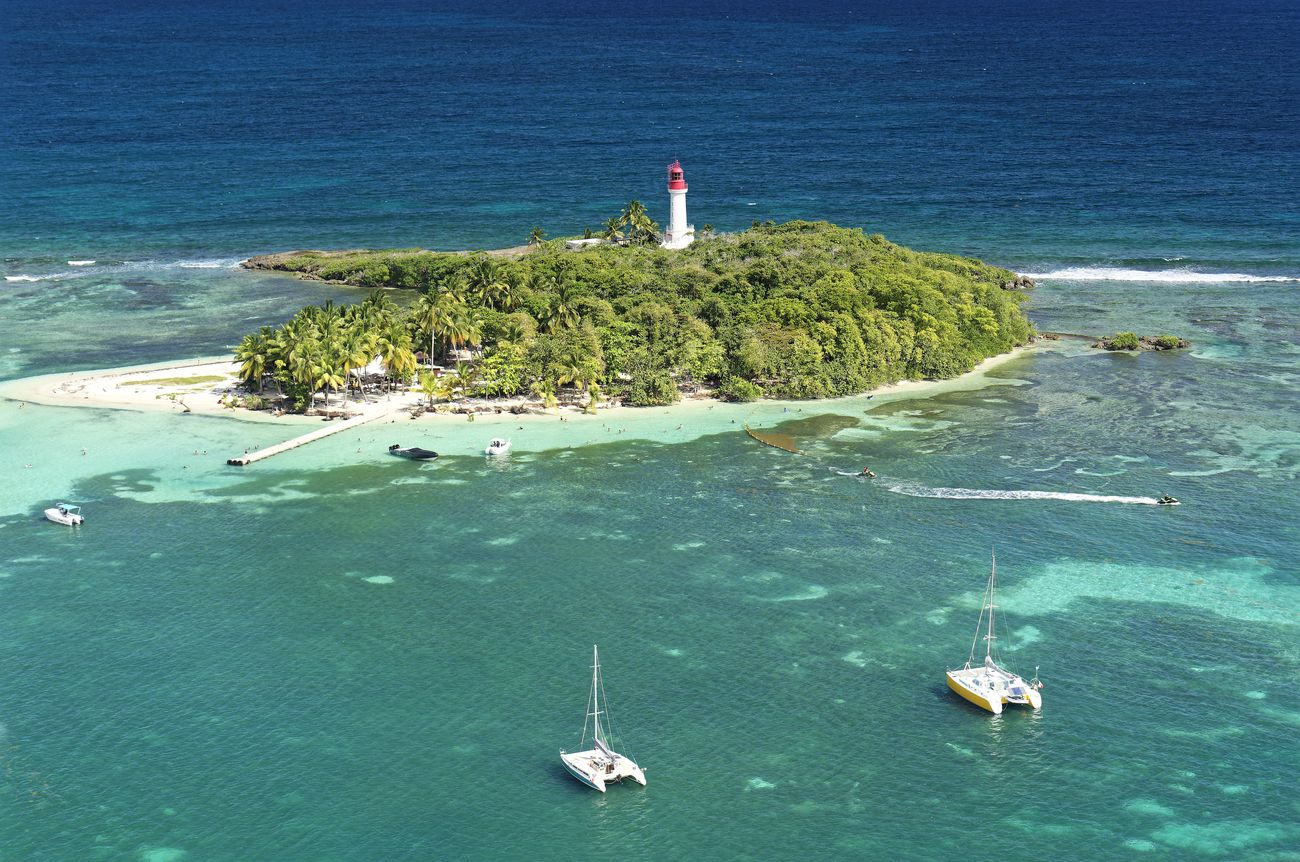
Although we’d walked around the island a few hours earlier, it’s always impressive to see it from the air. You get a sense of its size and features. You can clearly see the white sandy beaches to the north, on the town side, and the limestone cliffs to the south, where the lighthouse is clearly visible from the air. Clearly, it’s an absolute beauty when seen from above!
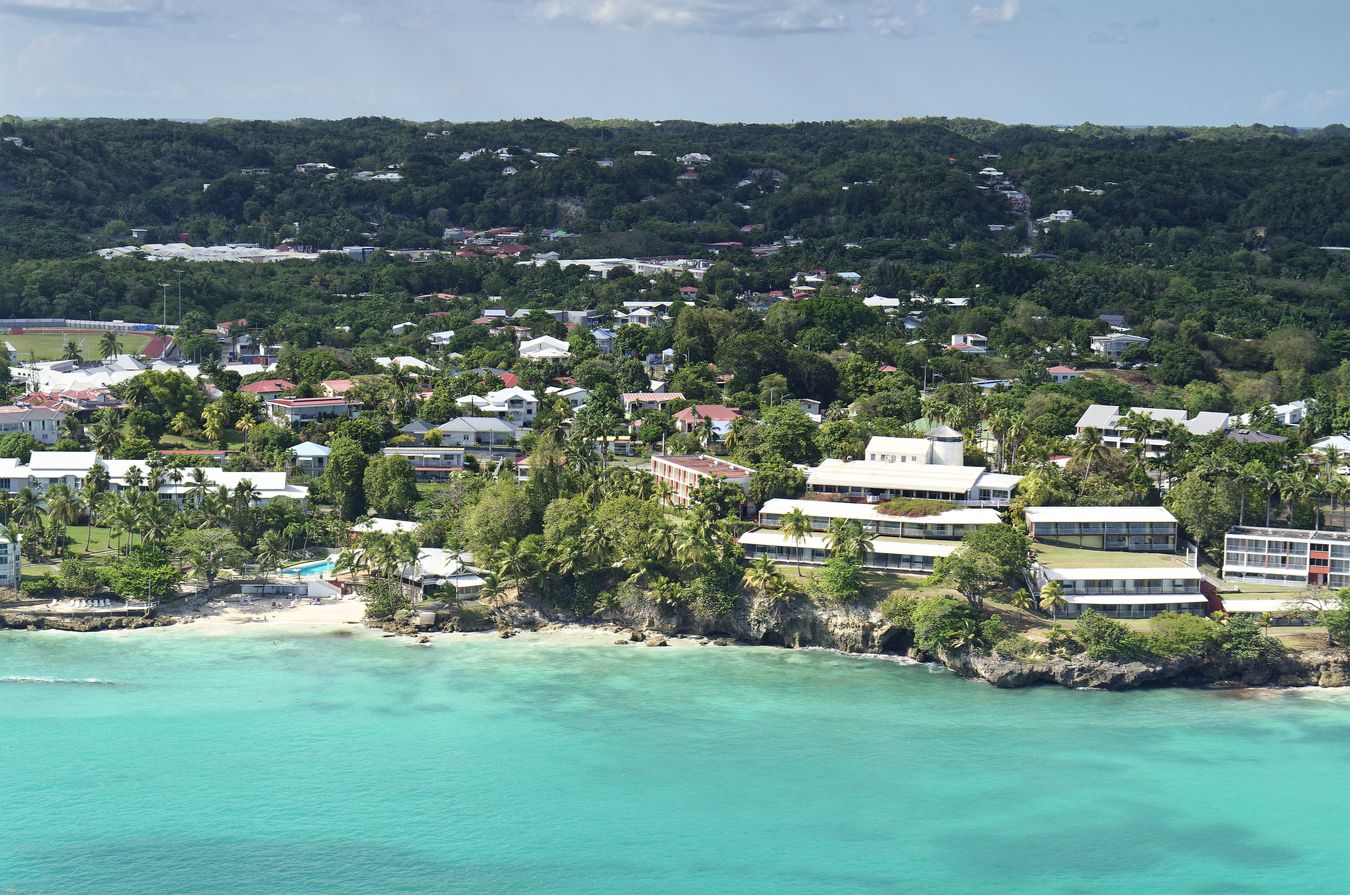
We finish with a few short circuits around the island of Gosier, to take a few more photos from other vantage points, and return to the hangar a few minutes later, skirting the coast. Once again, the landing went without a hitch! You really get a feel for the urban character of the area, and you can see all the big hotels in the area.

So, what did I think of the seaplane flight?
To put it simply, the 35-minute flight made me feel like a kid again. It didn’t impress me quite as much as flying over Bora Bora, but comparing the two would be unfair because they are completely different experiences. If you’ve never seen a lagoon from the air, this is a wonderful opportunity to do so.
It’s a really pleasant, light feeling, and being able to see these different places from the air really makes you appreciate the beauty of the place. I had the chance to do the Échappées Belles tour, but to be honest, I’d probably recommend going further and flying over the Grand Cul-de-Sac Marin or even the Saintes Archipelago, just opposite where we live. It must be breathtaking from the air! In any case, I came away from the flight more than satisfied and my eyes were truly filled. I’d recommend it 100%.
Other flights with Les Îles du Ciel
As I said above, the company has only recently been taken over, so things are likely to change from what was previously presented. But you should know that the following tours are available:
- Over the Saintes
- Flight over the Grand-Cul-de-Sac Marin
- Flight over Désirade
- Flight to Marie-Galante
- Flight over and around Grande-Terre
- Flights around Petit Cul-de-Sac Marin
In any case, there’s a huge range of flights available and I’m sure you’ll be able to find what you’re looking for, depending on what you want and your budget, of course.
Practical information for seaplane flights in Guadeloupe
As usual, I’ll end this article with a few quick practical tips.
How do you get to the seaplane base?
First of all, you have to get to the commune of Le Gosier, so it all depends on where you’re leaving from. From Pointe-à-Pitre it takes about 15 to 20 minutes and from Basse-Terre about 1 to 1.5 hours. Here, for example, is the itinerary from Pointe-à-Pitre, which you can modify according to your point of departure.
The company is located in the Grande Baie, on the beach of the Hotel Canella Beach. There’s a sign at the entrance so it’s easy to find.
Where to stay nearby?
You may be looking for a place to stay not far from where you did your seaplane flight. We don’t know the area inside out, but we’ve done our research and have some good recommendations. I’m deliberately not going to tell you about the hotels very close by, which we know are of average reputation, so here are three recommendations not far away:
- Résidence de la Vieille Tour: You’ll enjoy an exceptional setting combining modern comfort and charm, perfect if you want to immerse yourself in the beauty of Guadeloupe. Travelers love it for its warm welcome, stunning sea views and direct access to a heavenly beach.
- Studio cosy plage et piscine à Bas Du Fort: Set out for an intimate, comfortable experience with its cozy ambiance and meticulous decor, perfect for couples or solo travelers looking to escape. Prized for its ideal location and privacy, this haven of peace promises unforgettable moments and proximity to the sea!
- Le Roof Top: Here’s another great spot that offers a unique experience with its panoramic terrace that promises breathtaking views of the Caribbean Sea. A very good choice with a good reputation!
That brings me to the end of this article about seaplane flights in Guadeloupe, and I hope it has inspired you to try one.
Flying over a lagoon is a memorable experience. If your budget allows, it can be a wonderful addition to a trip to Guadeloupe.
I’ll see you soon for a new article, and in the meantime, if you want to discover the region, don’t hesitate to check out the island of Marie-Galante.
See you soon, and let me know what you think in the comments. Who would you bring along for the experience?
Written by Sylvain PONS
Since 2021, I've been living in the Guadeloupe archipelago with Mélanie and our two children. We are exploring these beautiful islands and discovering the treasures that we are happy to share with you!
Despite our care, a mistake may have slipped into this article. If you find any, please don't hesitate to let us know so we can correct it as soon as possible and keep our information up-to-date!