Parc archéologique des Roches gravées in Trois-Rivières
Last update: 04/23/2026
Our blog continues to grow thanks to you, our readers. This post may contain affiliate links, which means we can earn a small commission if you make a purchase through them, at no extra cost to you. This helps us to continue to bring you more and support our work!
As is often the case with our articles, especially since we’re a family, we had to return to the site twice to gather as much information as possible, but also to take photos without the children. Today, I’d like to tell you about a site that is right next to our house, or almost, less than 10 minutes away: the famous Parc archéologique des roches gravées in the commune of Trois-Rivières.
I’d like to clarify from the start that this article is written in partnership with the Conseil Départemental de la Guadeloupe. Why a partnership for a cultural site like this? Quite simply because the distribution of photos/videos is forbidden and you have to ask for permission to do so (as with other sites on the islands of Guadeloupe).
As I said at the beginning, it was the first time we came here with the kids and even though Louis loved the guided tour (and asked lots of questions…), it’s quite difficult to listen to everything, take photos and keep an eye on the kids to make sure they don’t climb anywhere, go over forbidden rocks, jump in the river or tear up the flowers in the garden. Because, yes, even though it is a cultural and archaeological site, people come to admire a beautiful tropical garden with flowers and trees typical of Guadeloupe, the Caribbean and tropical islands in general. In case you’re wondering, this park has nothing to do with the other two most famous gardens in the area: the Valombreuse garden and the Deshaies garden, which focus exclusively on ‘flora’.
Come on, I’m going to take you to discover this beautiful archaeological park, where history and flora lovers will love to stay. We certainly were, and I hope you enjoy this little stroll through text and photos! I’ll be alternating between our two visits to the site. The engravings on these rocks have been dated to the time of the Arawak Indians who populated Guadeloupe about 1700 years ago, between 300 and 600 AD. It’s quite impressive to think that the rocks we’re about to see, or at least the petroglyphs, are so old and yet so well preserved.
For your information, Guadeloupe is the archipelago with the most engravings, with 1,264. 830 are located in the Trois-Rivières commune and 224 in the archaeological park. Note that an engraving is not considered as a whole, but as a single face, square or body, for example. Given the number of engravings in Trois-Rivières (80% of the archipelago), it is possible that the Amerindians disembarked at Trois-Rivières in Guadeloupe. However, this remains a hypothesis.
Visit the Parc archéologique des Roches gravées
For this article, we decided to return with Mélanie without the children, and were even allowed to come on a day when the park was closed. We were accompanied by a guide who took us on the same tour as last time, taking his time to take photos. I’ll have more details at the end of this article in the Practical section, but the archaeological park is easily accessible from the centre of Trois-Rivières. There’s a small car park on the site, which I think is sufficient for parking. There are also toilets if you need them.
Once you’ve arrived at the site, you’ll need to go through the small Carbet at the Reception and wait for your guide to take you on a guided tour. I’ll explain all this below, but it’s not possible to visit the site on your own. In the meantime, you can take a look at a series of explanatory panels under a large carbet. These tell you about the origins of the site, the history of Guadeloupe and the rocks, and the geological history of the area. A lot of information to take in at once.
We wait for our guide at the carbet and are given a few explanations about the site. We are reminded that the entire site was declared a Historic Monument by the Ministry of Culture in 1974 and opened to the public for the first time in June 1975. The site is part of what is more commonly known as the “Trois-Rivières engraved rock sites”, which includes this archaeological park, as well as other sites such as the engraved rocks and polish holes of Anse des Galets, the engraved rocks of Vallée de l’Or, the engraved rocks and polish holes of Rivière du Petit Carbet and the bored rocks of Anse Duquery, the gateway to the Sentier de la Grande Pointe.
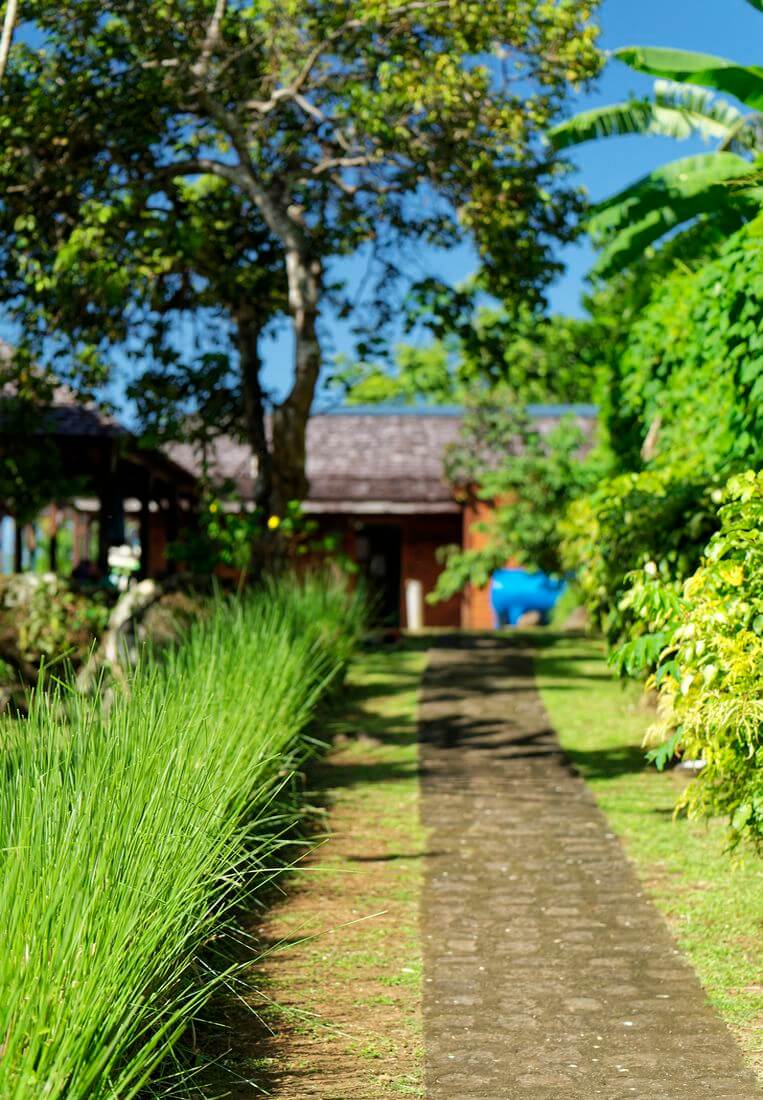
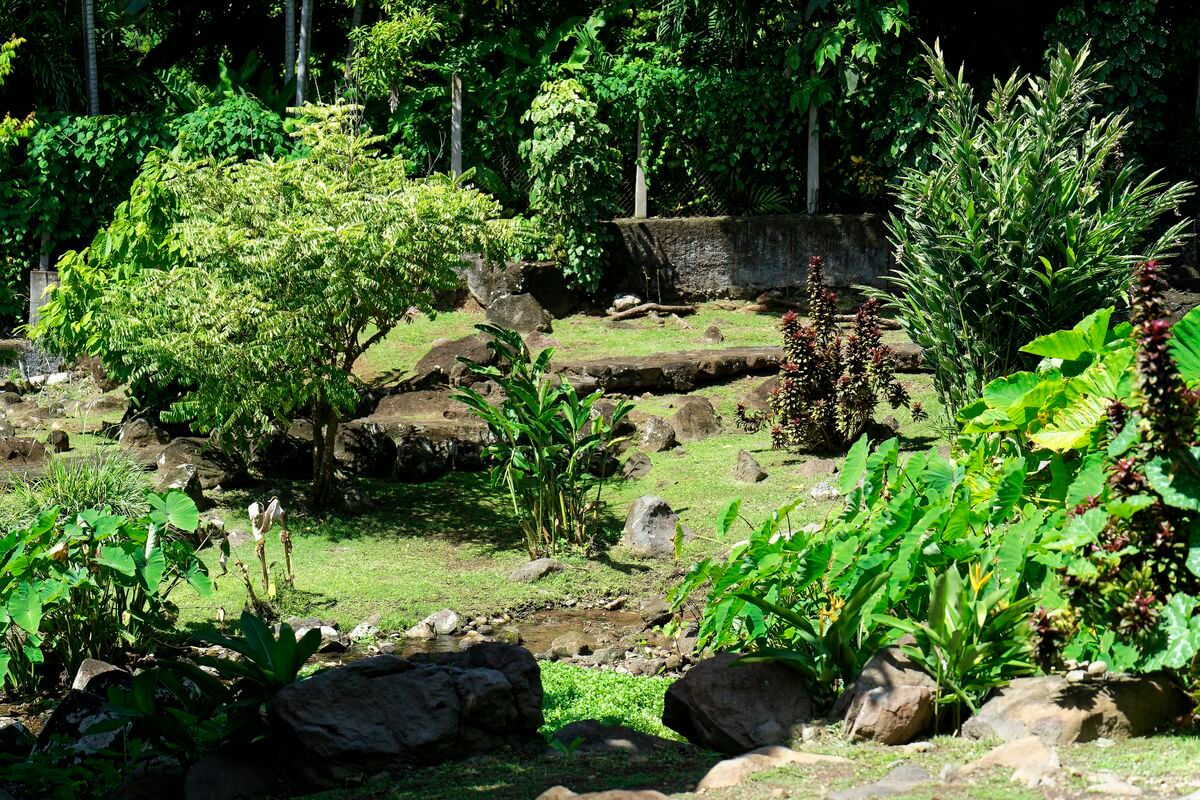
We start our walk in this beautiful 1.2 hectare garden by following a lovely avenue of vetiver trees at the beginning of the site. The Amerindians used it for perfume (the root) and the stems for basketry. At the end of this path you can already see the site, which is magnificent, even more so when the weather is fine. You won’t be able to see any of the engraved rocks from here, but the park is well maintained and full of flowers.
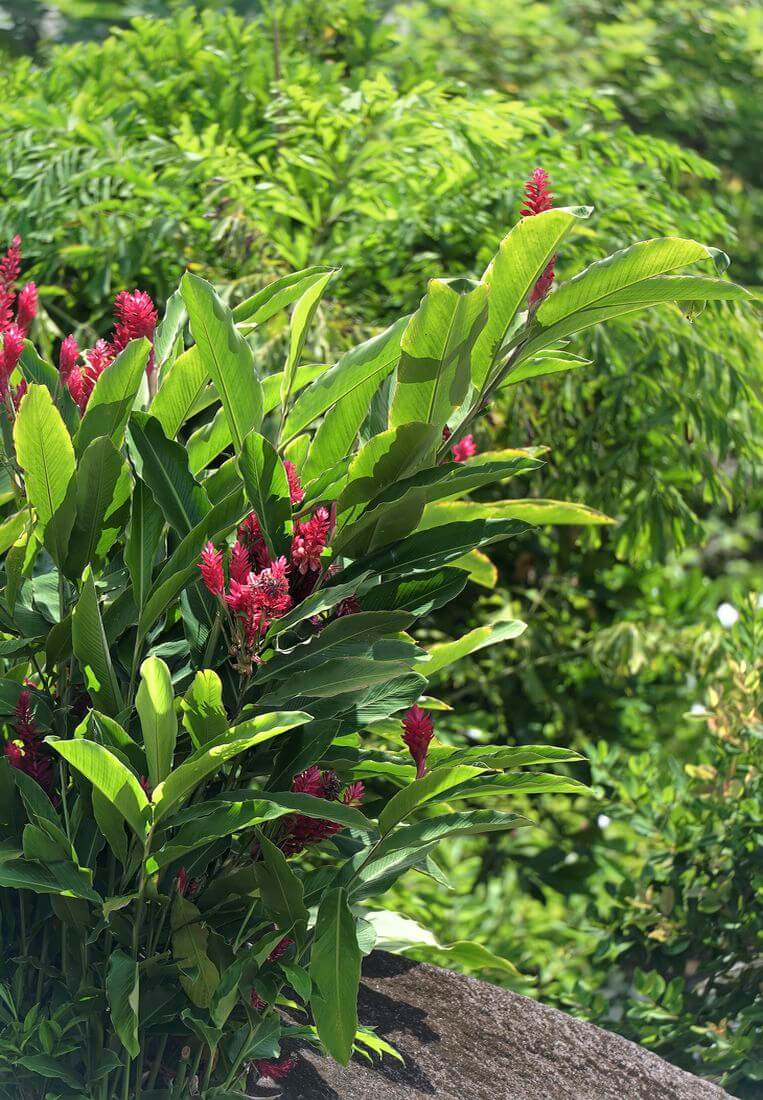
Just before the small iron bridge that crosses the river that runs through the archaeological park, our guide shows us a number of classic tropical plant species, including madera (a type of taro or songe, a tuber that is eaten) in the river water.

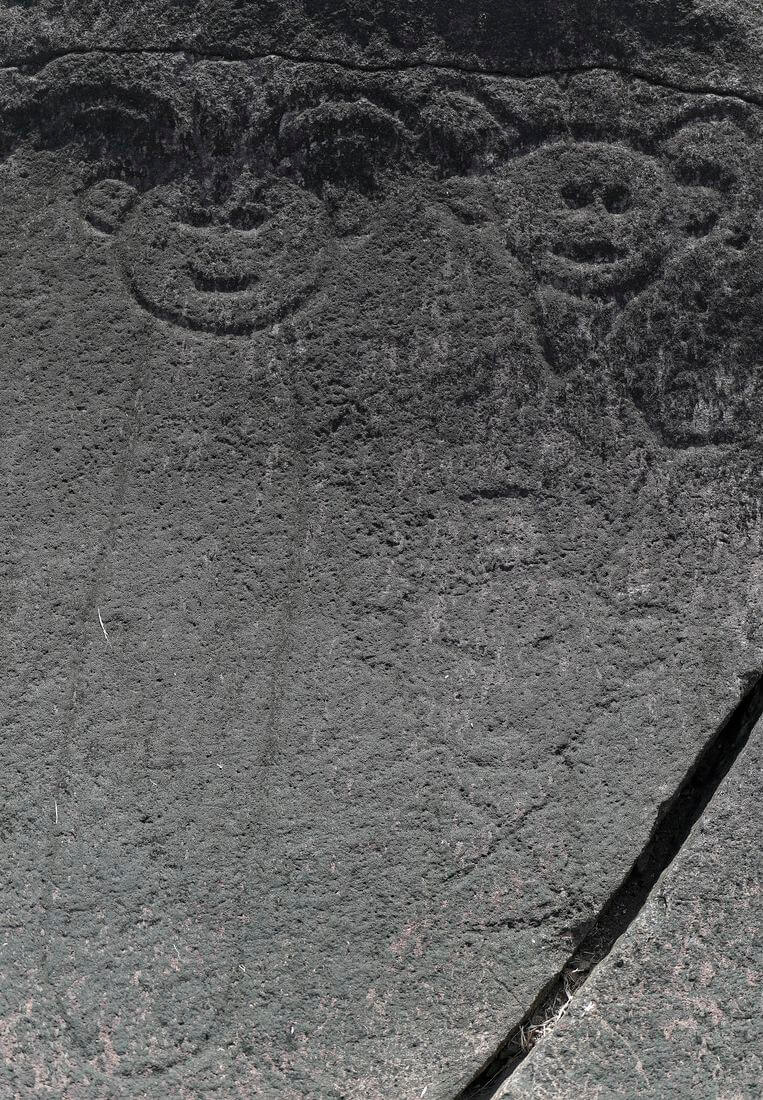
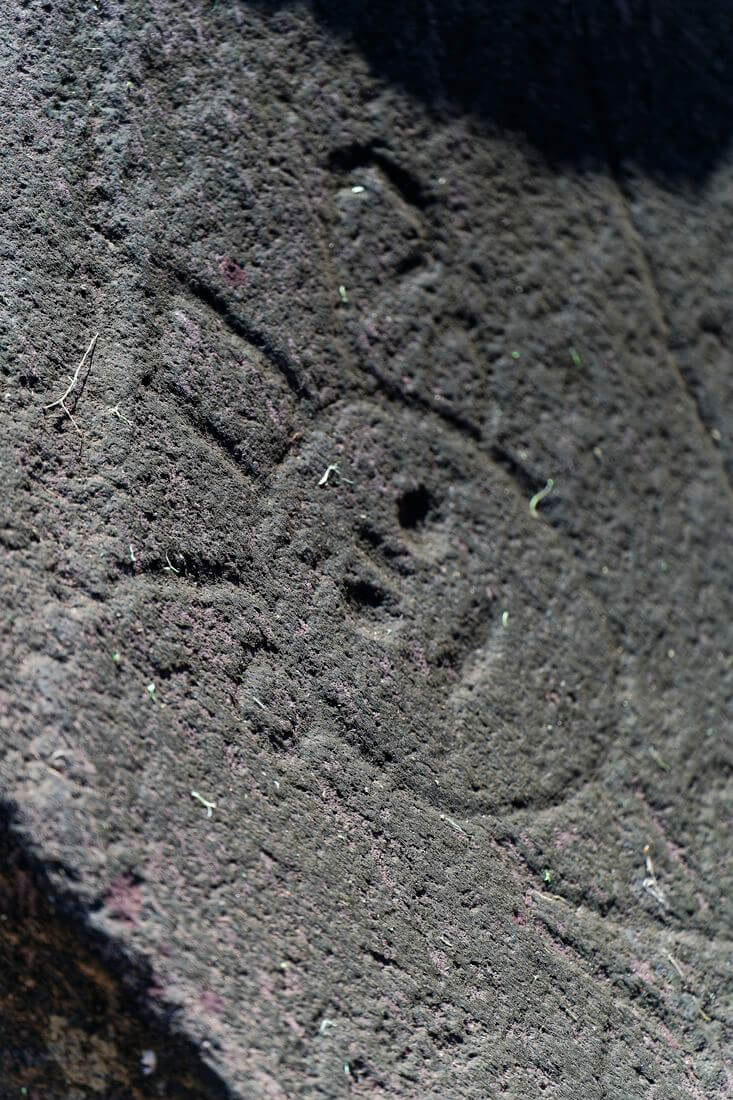
Once we have crossed the bridge, we will come to the first large engraved rock of the site on the right hand side. An imposing rock with many visible petroglyphs. On our first visit (at around 9.30am) the engravings were less visible, but they will be even more so when we return at around 11am, the recommended time to visit with the guide.
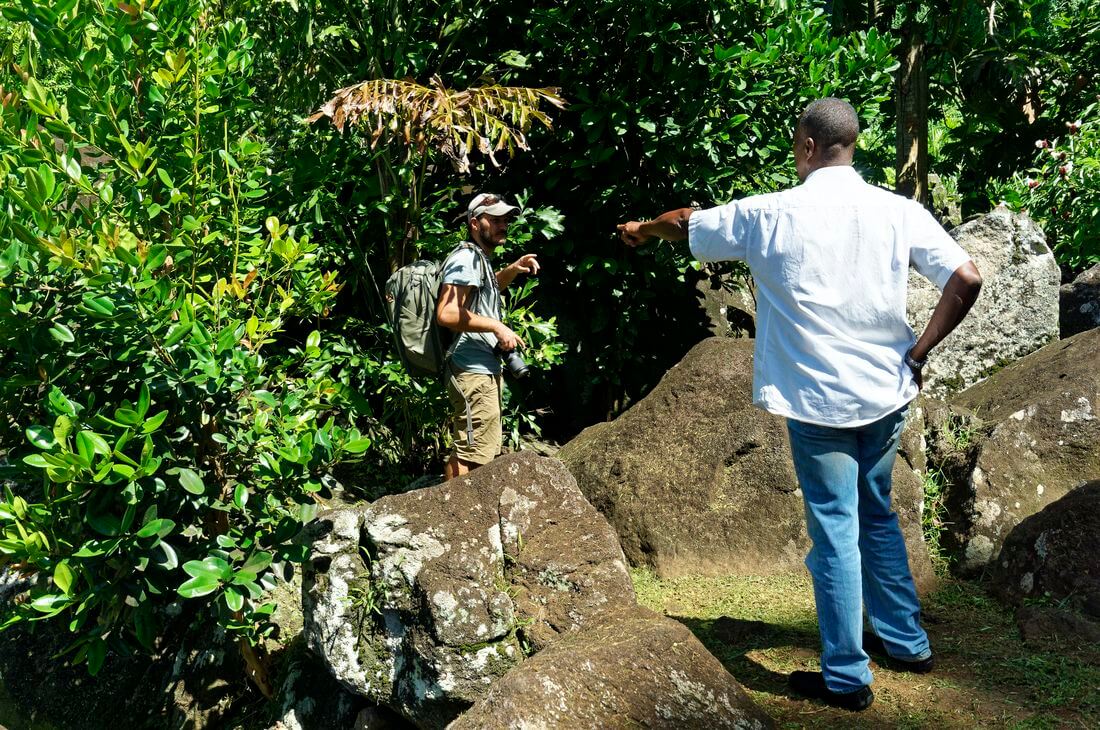
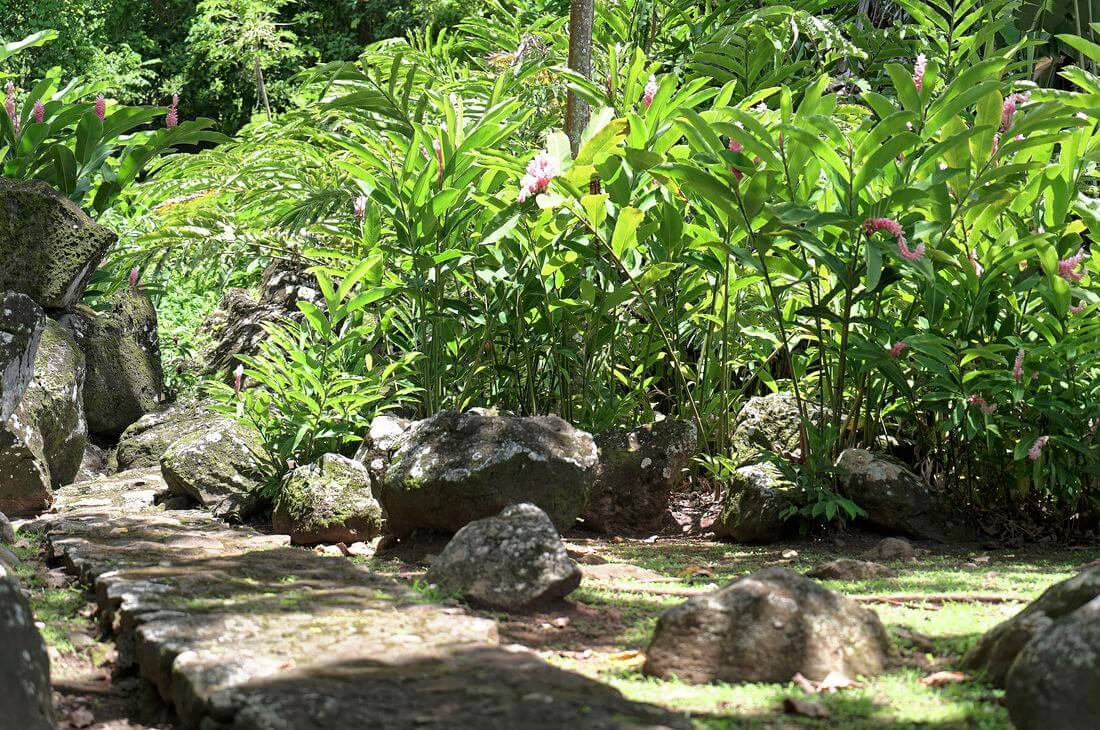
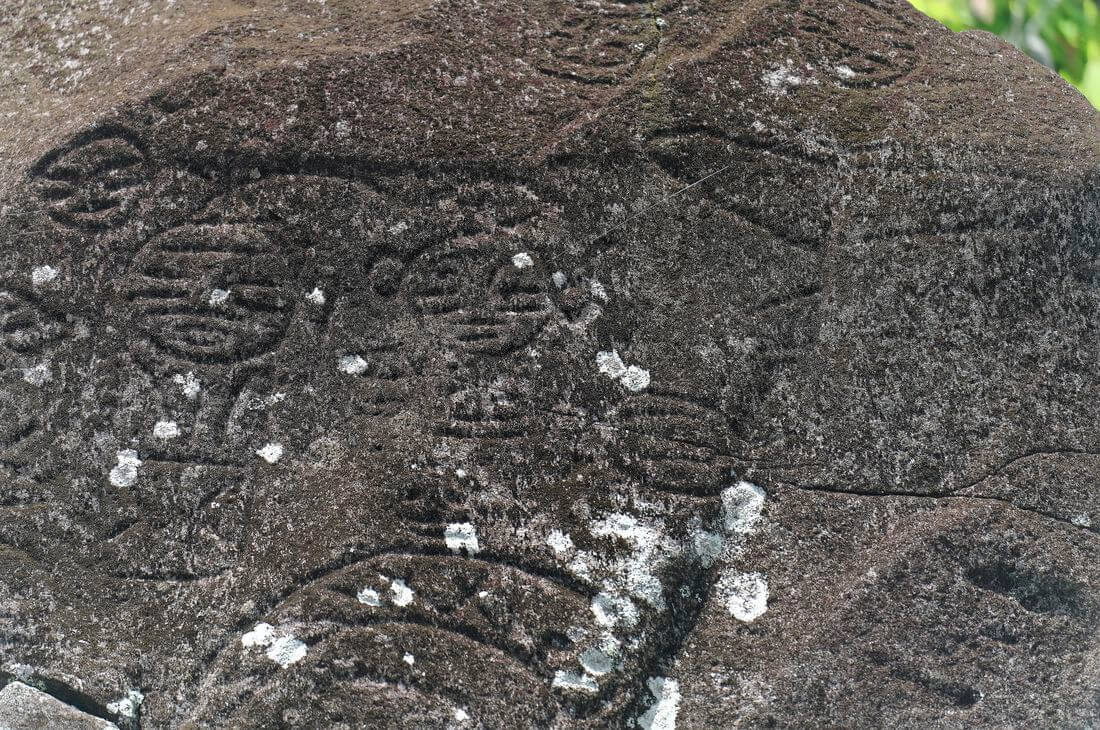
A little further on, in the middle of the park, if I may say so. We find another imposing rock on the ground with clearly visible engravings. Indeed, we learned that the ground had been dug up at this very spot to expose some of the engravings.
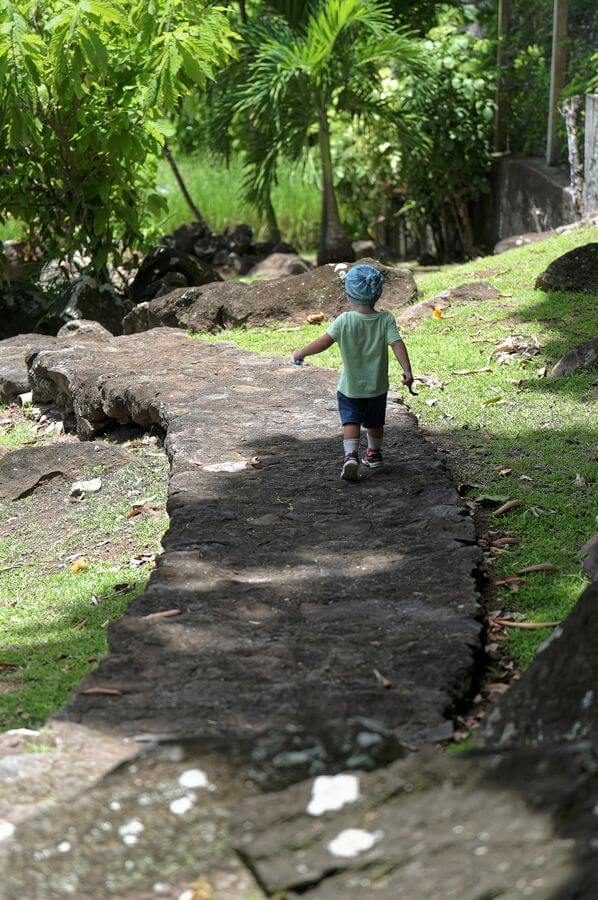
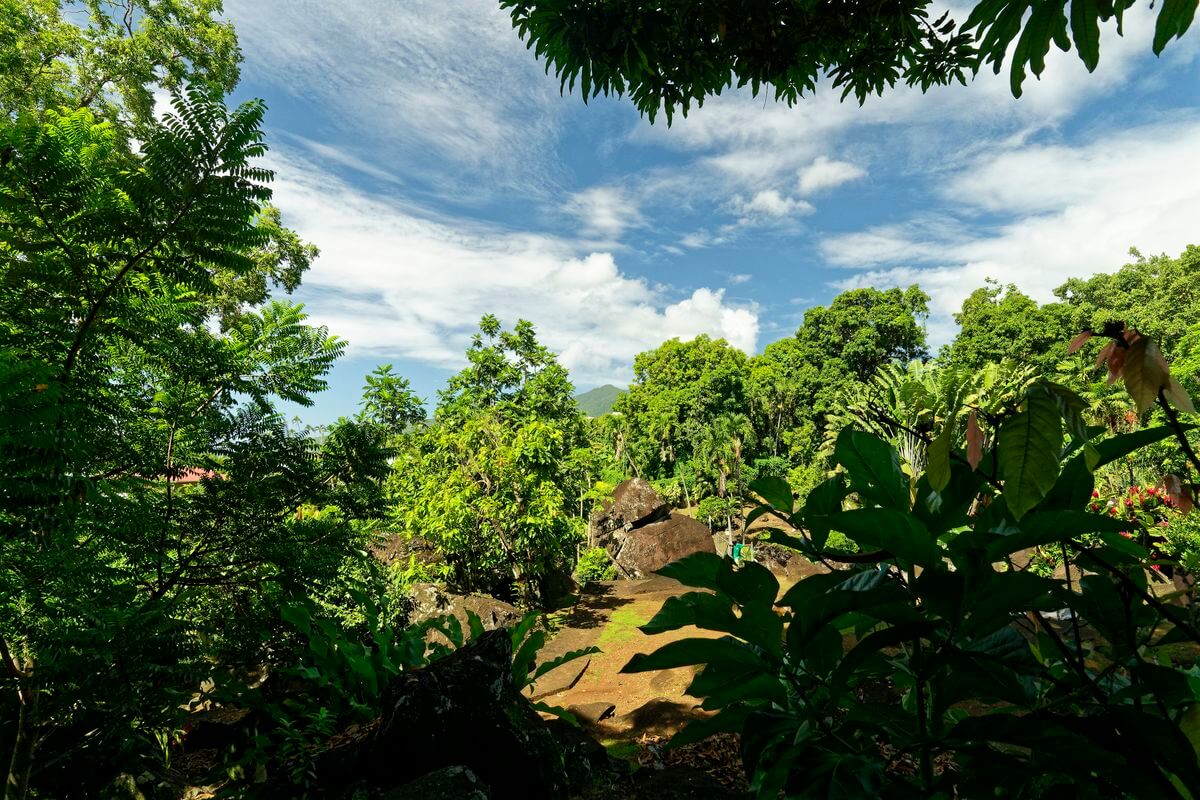
On our second visit, the weather was really fine and it was lovely to walk around this little garden. We continued along a series of small paths through the local vegetation and flora (papaya, breadfruit, various flowers etc). At the top of the path you can even get a good view of the whole park.
The trail continues to another group of engraved rocks, which are unusual in that they have an engraving of a headdress. This is the only rock in the area with such an impressive headdress. In certain civilisations, the headdress defines a hierarchical status. That’s why it’s called the “head of the village”.
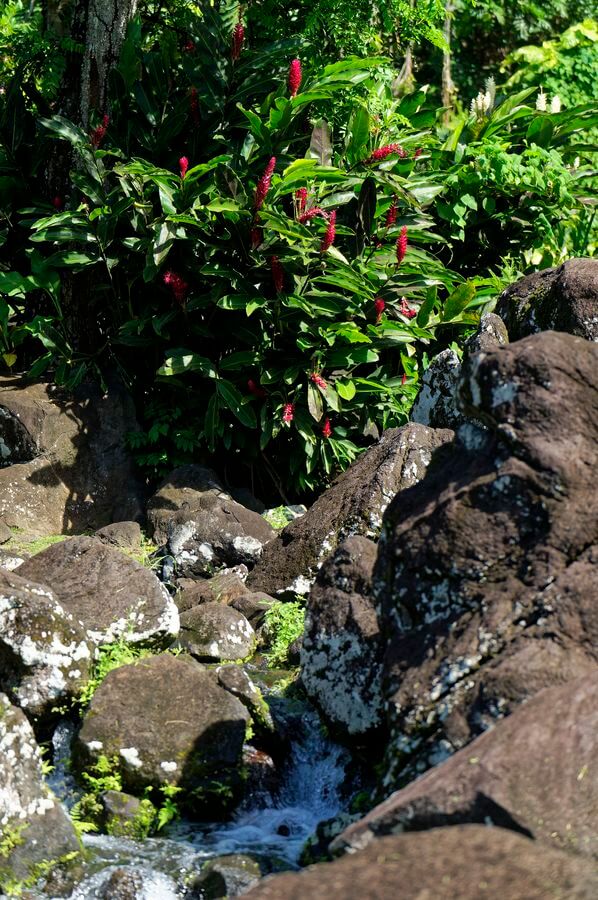
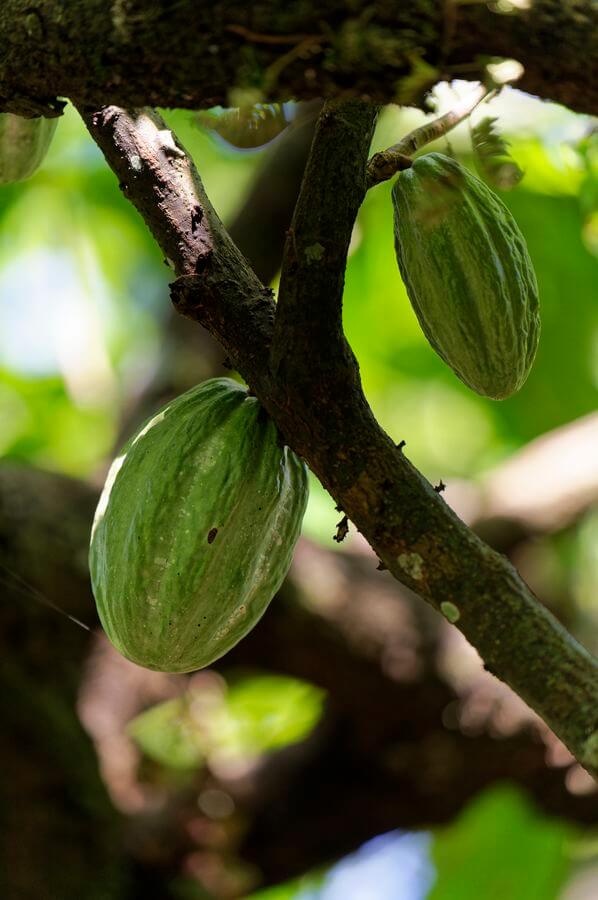
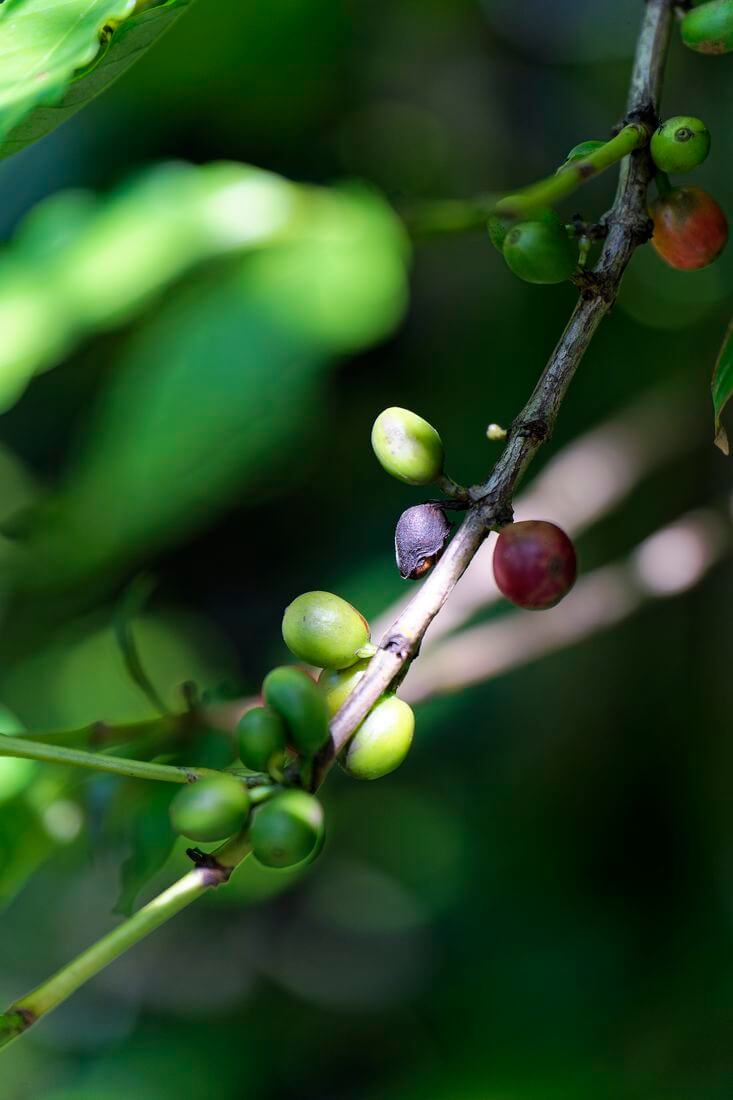
The area is well planted with trees, including chestnut, coffee and indian wood. India wood is known for its leafy scent, reminiscent of cloves. It is still used in preparations for muscle aches and to combat mosquitoes. The leaf can be rubbed directly onto the skin or macerated in rum, a preparation known as ‘bay rum’. The leaves and seeds are also used as a flavouring in sauces such as beef stew.

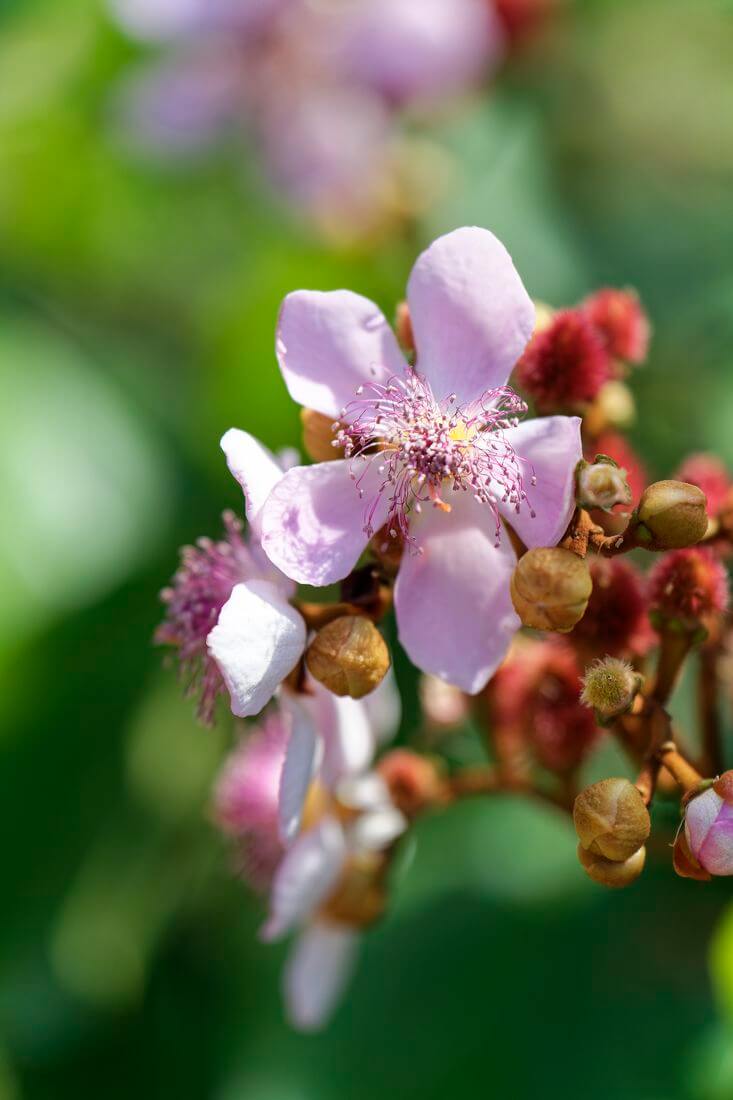
We continue to cross the small river that gives a melancholic atmosphere to the park. Behind us, you can still see the occasional sugar cane plant, and the ground is littered with giromontes and pumpkins. On the right you can see a locally known tree, the roucou tree, which produces the distinctive reddish roucou seeds. Indeed, the Amerindians made roucou oil from its seeds. It was the equivalent of suntan oil. The seed has a special property, the guide tells us. If you rub it against a black stone, it turns bright red, but if you boil it, it turns orange, even copper. Roucou oil, also known as red butter, is still used in fish stocks. It is also used in the cosmetics industry to tint the skin. Finally, something I didn’t know, it’s also used to firm up the rind of a cheese called Reblochon.
I’d also like to mention the calabashes, the fruit of the calabash tree, which can be found in several parts of the park and in many other parts of Guadeloupe. The tree and its fruit come in a wide variety of shapes and sizes. The Amerindians used them to make dishes or eating vessels called “kwi”. Of course, the first step was to cut the gourd in half, remove the white flesh and leave it to dry (the inside turns brown). Nowadays, calabashes are used for music (chacha) and handicrafts. Here’s a quick explanation of how to make a chacha: make a small hole in the head of the calabash, scrape out the inside (using glass and water), then add the seeds of the toloman.
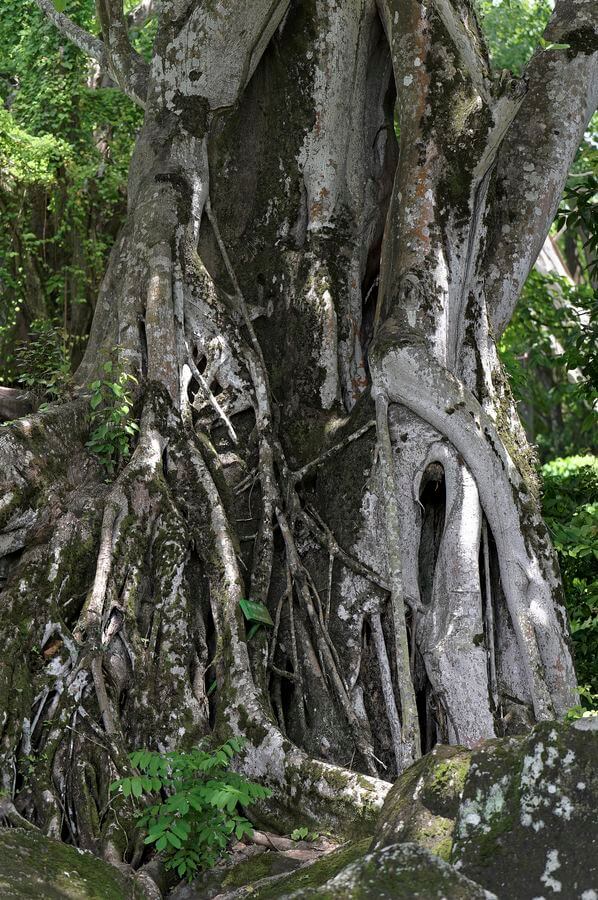
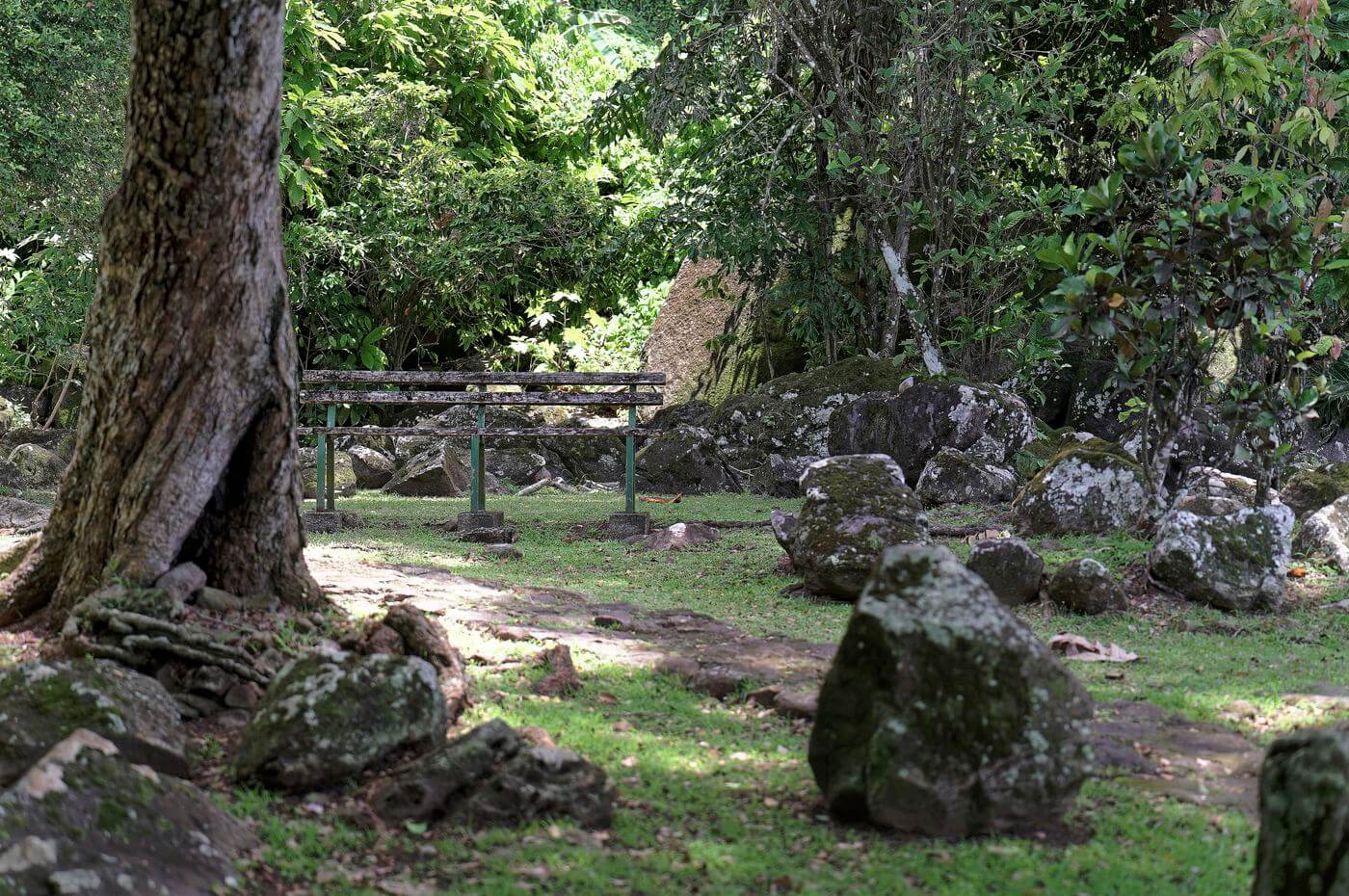
We come to an area where the continuity was closed due to landslides in 2004, after the earthquake in Les Saintes. There’s a small bench that invites you to lie down. The atmosphere, with the sound of the forest, is simply magnificent. Before arriving at a magnificent cursed fig tree, the name given to this huge tree that strangles everything around it, we took the opportunity to take a few photos of the surroundings. The place is beautiful again and I love these trees, which are quite common on hikes in Guadeloupe.

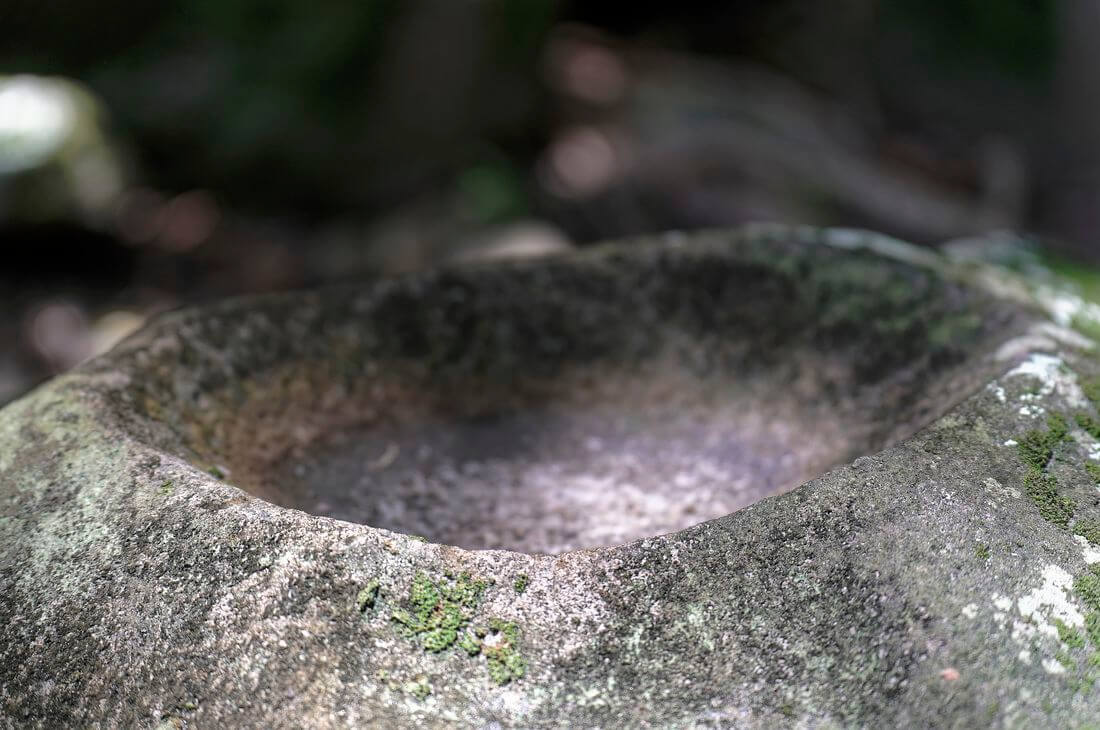
You can see polissoires (polishing stones) in the riverbed on the path that turns around at this point. In the case of this archaeological park, they are circular depressions carved into a block of hard rock. They are also found in other parts of Guadeloupe and elsewhere in the world in the form of longitudinal gorges. This block of rock was used to make and polish stone tools and weapons. In Guadeloupe, all you have to do to find a polissoire is walk along a river or gully (although it’s rarely easy). You can find large polissoires with 3 or 4 cavities inside. They can be found in several places in the park.
On the way back, on the left, you can again see some very visible rocks.
Finally, we returned to the right of the iron bridge we had crossed when we started walking. We went back to take some photos of the engraved rocks at the start, now much better lit, which looks even better.

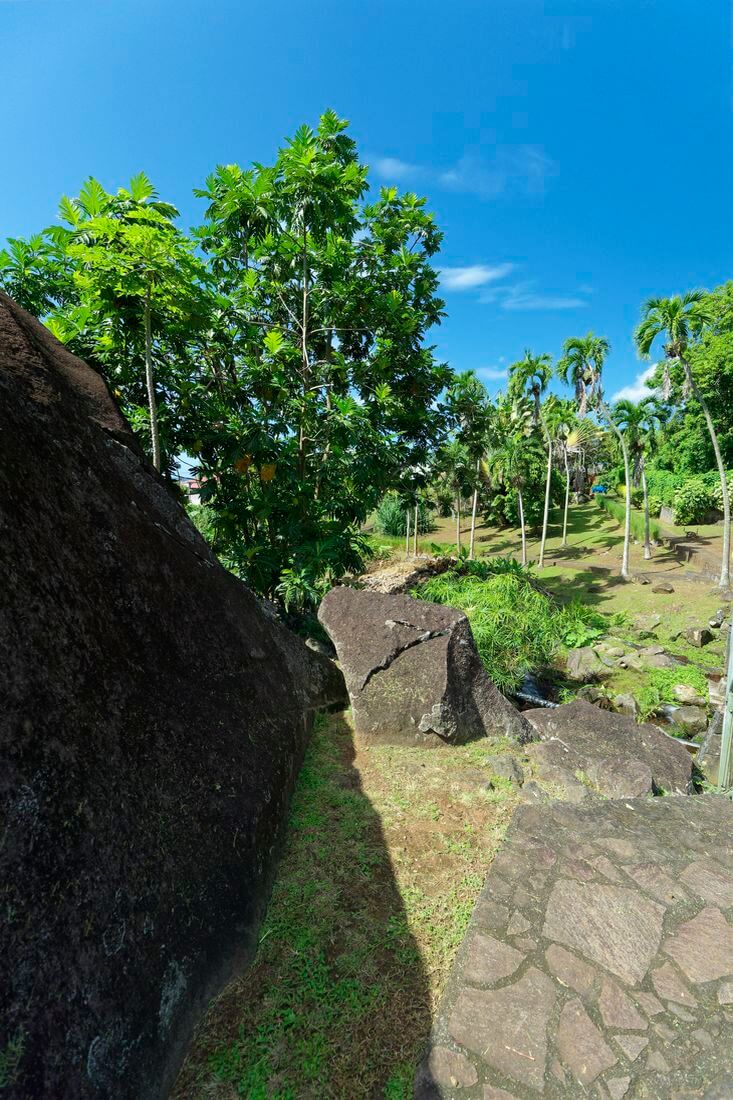
We cross to the other side of the bridge to finish our walk in this archaeological park of engraved rocks. The guide explains a great deal about the local flora, including the different varieties of manioc, a tuber that Mélanie and I have been eating on a regular basis since we moved to the islands. There is manioc and cassava, for the record. The difference is in the stem. Cassava has a red stem, whereas manioc has a green stem. Manioc contains cyanide. The cyanide is extracted by shredding and washing. K-manioc is edible immediately.
The tour ends with the observation of several pandanus trees, calabash trees, red mulberry trees and cotton trees. The latter is the source of the cotton from which the Indians made their first woven clothes.
The end of the visit is a return to the main carbet. We spent a good half hour chatting with the guide and other locals about Guadeloupe and life here. A really good time. Personally, we loved the place and think it’s well worth a visit if you’re in the area. We’d also like to mention the Musée du Moule, the Edgar-Clerc Museum of Amerindian Prehistory, which we haven’t had the chance to visit yet, but which we’ll be going to one of these days.
Allow about 1:30 hours for the visit.
Practical side : visit the parc archéologique des roches gravées
As usual, I’ll end this article with some practical tips for visiting the site. Here’s what you need to know in general:
- Entrance to the site has been free for years. In fact, since the Les Saintes earthquake (2004), part of the site has been affected by a landslide and has been closed to the public,
- Renovation work is planned for the site, but I don’t know much more about it at the moment,
- Visiting the site with a guide is compulsory and, between you and me, it’s really interesting. I visited the site twice with two different guides and we learnt a lot on both visits, each guide had his own way of explaining things,
- The park is currently open from Tuesday to Saturday, with visits at 9am, 10am, 11am, 2pm, 3pm and 4pm. Everyone has told us (and we agree) that the best time is 11am, when the sun is best positioned to see the petroglyphs.
- Bookings by phone on 0590 92.91.88
How to go there?
Nothing too complicated, you just have to get to the centre of Trois-Rivières, at the southernmost tip of the island of Basse-Terre. I’ll give you a itinerary from Saint-Claude to the Archaeological Park car park.
Where to stay near the park?
Obviously, as is often the case, there’s something to suit all tastes and budgets. Here are three recommendations that have a very good reputation:
- La Suite Sapotille: This spacious, well-equipped flat has a nice private terrace.
- Grand T2 Appartment: here’s a lovely flat with a pool overlooking the Saintes for a more than fair price!
- Le Jardin Malanga: We must try this accommodation as we’ve heard nothing but good things about it. An exceptional setting in the heart of nature, you’ll love it!
You can also have a look at all the accommodations in Trois-Rivières.
What to do around the Parc des roches gravées?
Finally, I’d like to end this article with a few lines on the must-do activities in the Park. Here are some ideas I can give you if you’re in the area:
- La maison de la banane in Trois-Rivières,
- Spend a day or more on the islands of Terre-de-Haut or Terre-de-Bas in Les Saintes (the islands are just across the water, less than 30 minutes away by boat),
- Swim at Grande-Anse beach: a beautiful black sand beach that we love with the kids,
- Walk the Sentier de la Grande Pointe to discover the coastline of the commune,
- Have a drink at sunset at the Vieux Fort lighthouse. We often go there as it’s right by the house!
- A little further inland you can take a walk to the Bassin Bleu to discover a beautiful waterfall in a magnificent setting,
- The Bain des Amours can also be a nice late afternoon stopover (although I’d recommend going early in the morning).
There are many other things to see and do, but here are a few ideas for the area. If you’re looking for a more impressive waterfall in the heart of the national park, the Galion waterfall at the base of the Soufrière volcano is a must.
See you soon.

Written by Sylvain PONS
Since 2021, I've been living in the Guadeloupe archipelago with Mélanie and our two children. We are exploring these beautiful islands and discovering the treasures that we are happy to share with you!
Despite our care, a mistake may have slipped into this article. If you find any, please don't hesitate to let us know so we can correct it as soon as possible and keep our information up-to-date!