Parc archéologique des Roches gravées in Trois-Rivières
Last update: 06/24/2026
Our blog continues to grow thanks to you, our readers. This post may contain affiliate links, which means we can earn a small commission if you make a purchase through them, at no extra cost to you. This helps us to continue to bring you more and support our work!
As is often the case with our articles—especially now that we travel as a family—we visited the site twice so that we could gather as much information as possible and take photos without the children. Today, I’d like to tell you about a place that is practically on our doorstep, less than 10 minutes from home: the famous Parc archéologique des Roches gravées in the commune of Trois-Rivières.
I’d like to make it clear from the outset that this article was written in partnership with the Conseil Départemental de la Guadeloupe. Why partner with a cultural site like this one? Quite simply because publishing photos and videos is prohibited without prior permission, as is the case at several other sites across the Guadeloupe islands.
As I mentioned, our first visit was with the children. Louis loved the guided tour and asked plenty of questions, but it was not easy to listen to everything, take photos, and keep an eye on the kids at the same time—making sure they did not climb where they should not, step onto restricted rocks, jump into the river, or pull flowers from the garden. Because although this is a cultural and archaeological site, it is also home to a beautiful tropical garden filled with flowers and trees typical of Guadeloupe, the Caribbean, and tropical islands more broadly. In case you are wondering, the park is quite different from the area’s two best-known gardens, the Valombreuse Garden and the Deshaies Botanical Garden, which are devoted entirely to plants.
Let me take you on a tour of this beautiful archaeological park, a place where history and plant lovers could easily spend some time. We certainly enjoyed it, and I hope you enjoy this short walk through the park in words and photos. I will be drawing on both of our visits throughout the article. The engravings on these rocks have been dated to the period when Arawak peoples lived in Guadeloupe, around 1,700 years ago, between AD 300 and 600. It is remarkable to think that the petroglyphs we are about to see are so old and yet remain so well preserved.
Guadeloupe has the largest number of engravings in the archipelago, with 1,264 recorded in total. Of these, 830 are in the commune of Trois-Rivières and 224 are within the archaeological park. An “engraving” does not refer to an entire rock or composition, but to an individual face, square, body, or other motif. Given the concentration of engravings in Trois-Rivières—around 80% of the archipelago’s total—it is possible that Amerindian peoples first landed there, although this remains only a hypothesis.
Visiting the Parc archéologique des Roches gravées
For this article, Mélanie and I returned without the children and were even given permission to visit on a day when the park was closed. A guide accompanied us along the same route as before, allowing plenty of time for photos. I will share more details at the end of the article in the practical section, but the archaeological park is easy to reach from the center of Trois-Rivières. There is a small parking lot on site, which seemed large enough during our visits, as well as restrooms.
When the park was open, visitors first passed through the small carbet at reception and waited for a guide, as independent visits were not permitted. While waiting, you could read a series of information panels beneath a larger carbet. They covered the origins of the site, the history of Guadeloupe and its engraved rocks, and the geology of the surrounding area. There was a great deal to take in all at once.
While we waited beneath the carbet, our guide introduced us to the site. We learned that the entire park was listed as a Historic Monument by the French Ministry of Culture in 1974 and first opened to the public in June 1975. It forms part of what is commonly known as the “Trois-Rivières engraved rock sites.” This group includes the archaeological park, the engraved rocks and polishing hollows at Anse des Galets, the engraved rocks of Vallée de l’Or, the engraved rocks and polishing hollows along the Rivière du Petit Carbet, and the perforated rocks of Anse Duquery, at the entrance to the Sentier de la Grande Pointe.
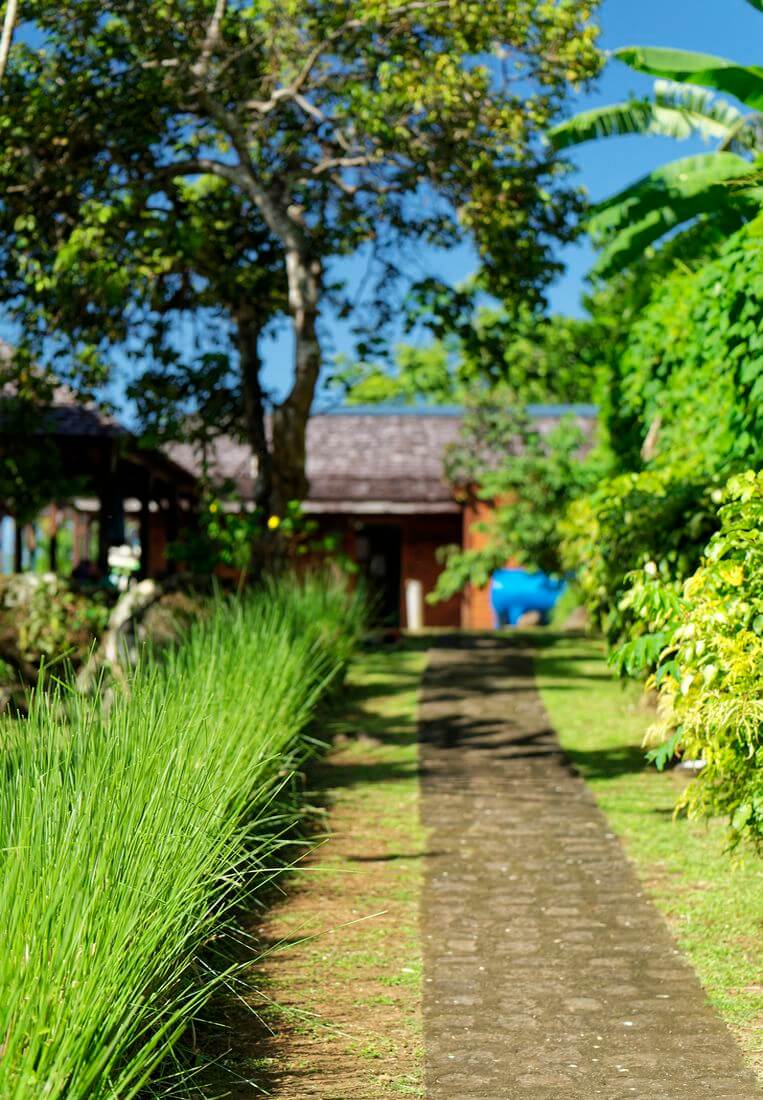
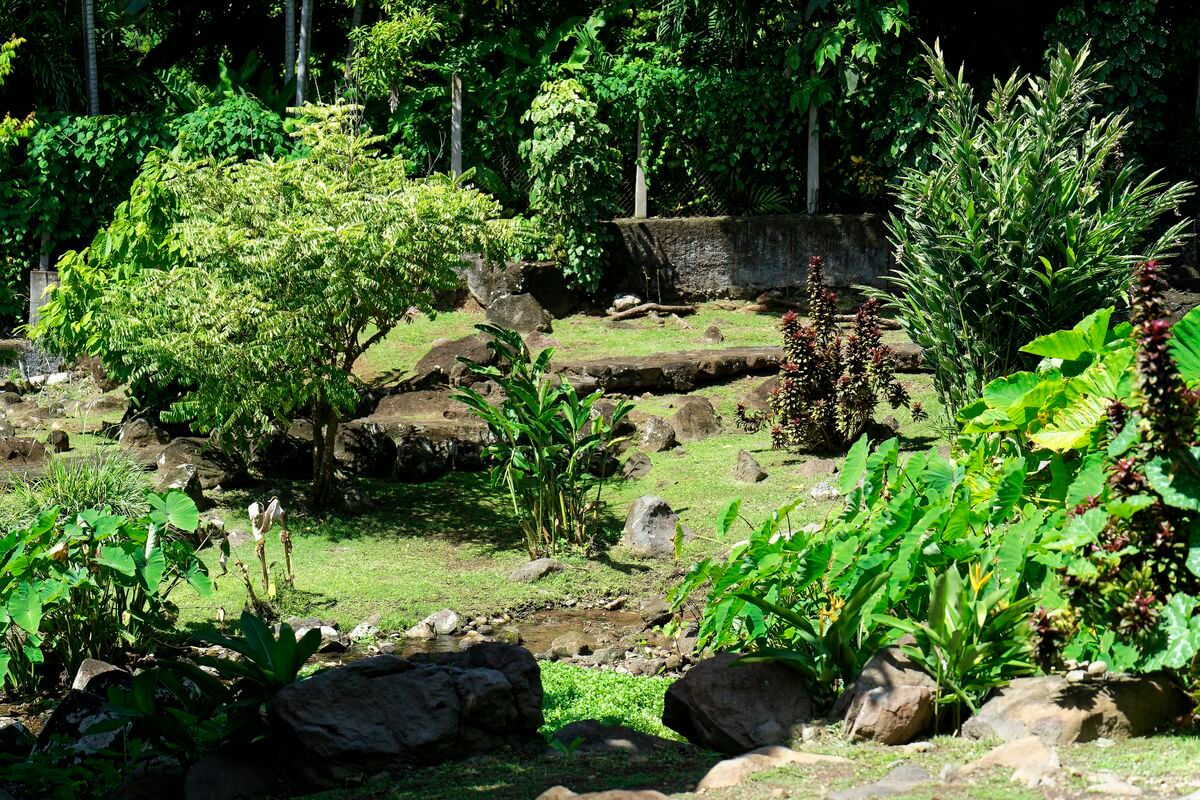
We began our walk through this beautiful 1.2-hectare garden along a lovely avenue of vetiver. Amerindian peoples used its roots for fragrance and its stems for basket weaving. By the end of the path, the beauty of the site was already apparent, especially in fine weather. None of the engraved rocks were visible from there, but the park itself was beautifully maintained and filled with flowers.
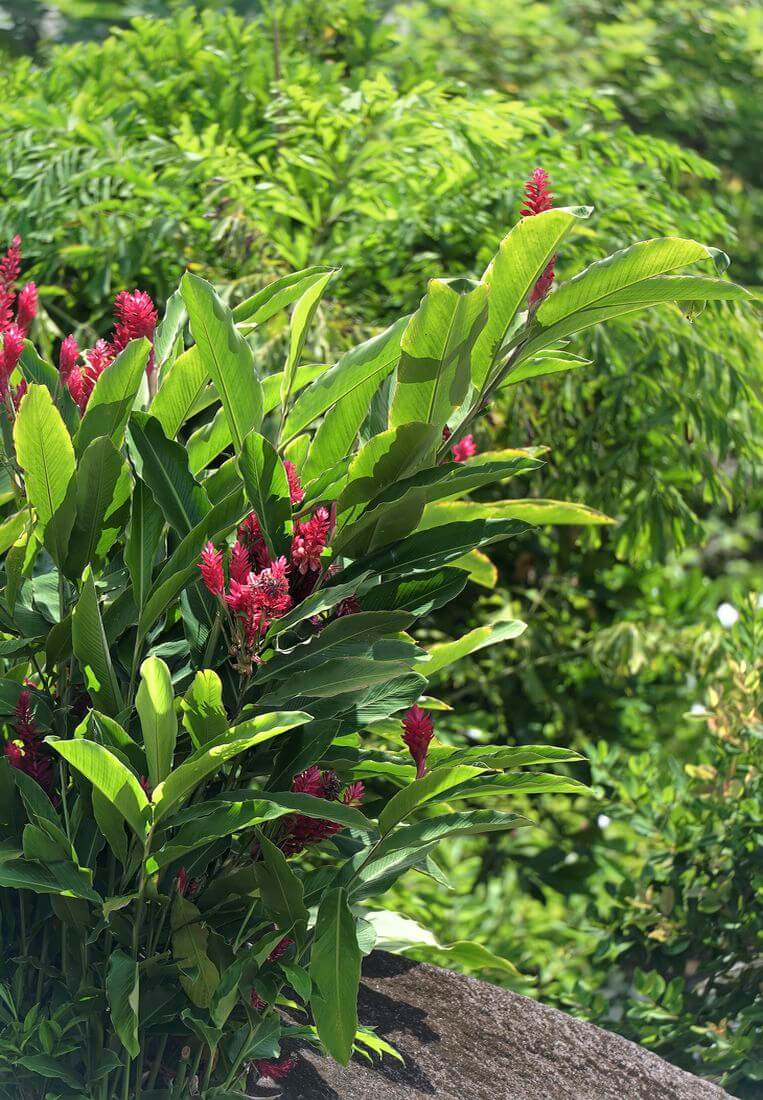
Just before the small iron bridge spanning the river that runs through the archaeological park, our guide pointed out several familiar tropical plants, including madera growing in the water—a type of edible taro, also known locally as songe.

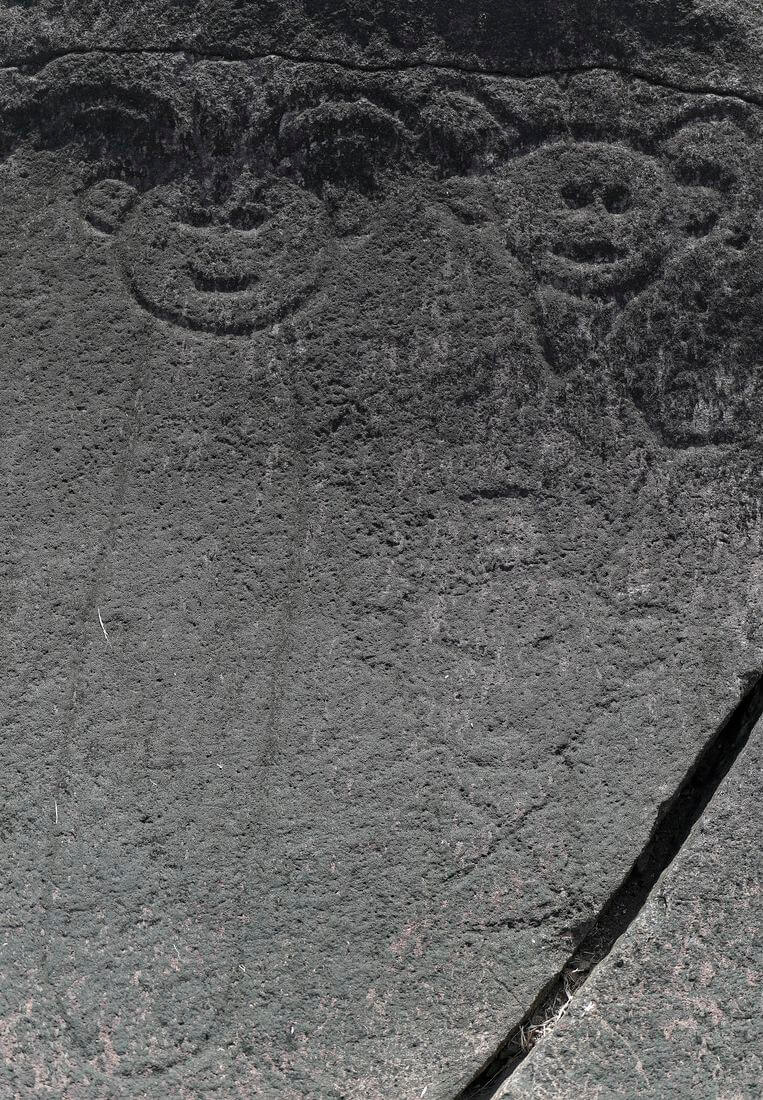
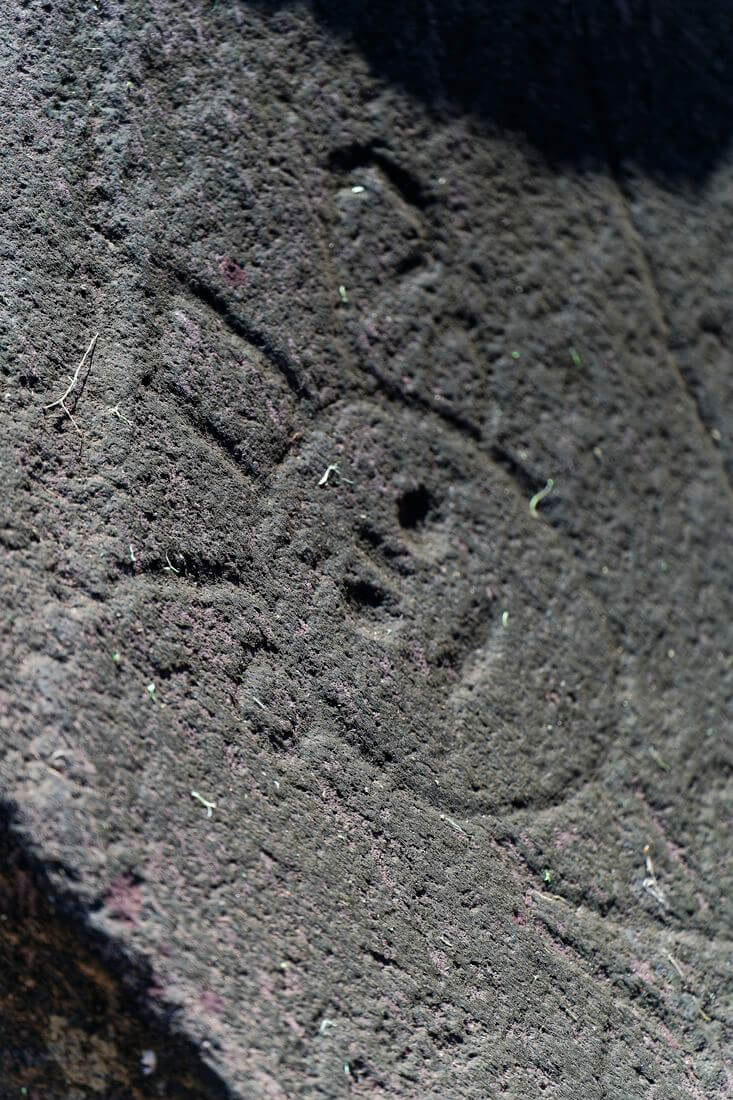
After crossing the bridge, we came to the park’s first large engraved rock on the right. It is an imposing boulder covered with clearly visible petroglyphs. During our first visit, at around 9:30 a.m., the engravings were harder to make out. When we returned at around 11 a.m., the time our guide had recommended for the light, they stood out much more clearly.
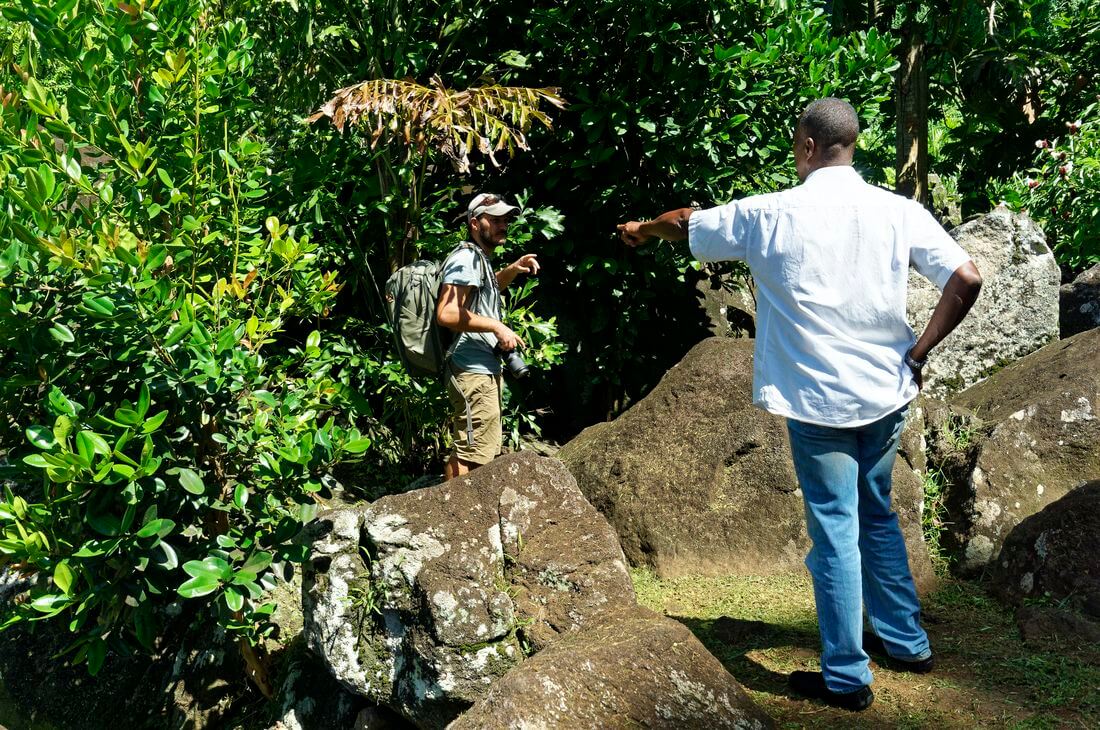
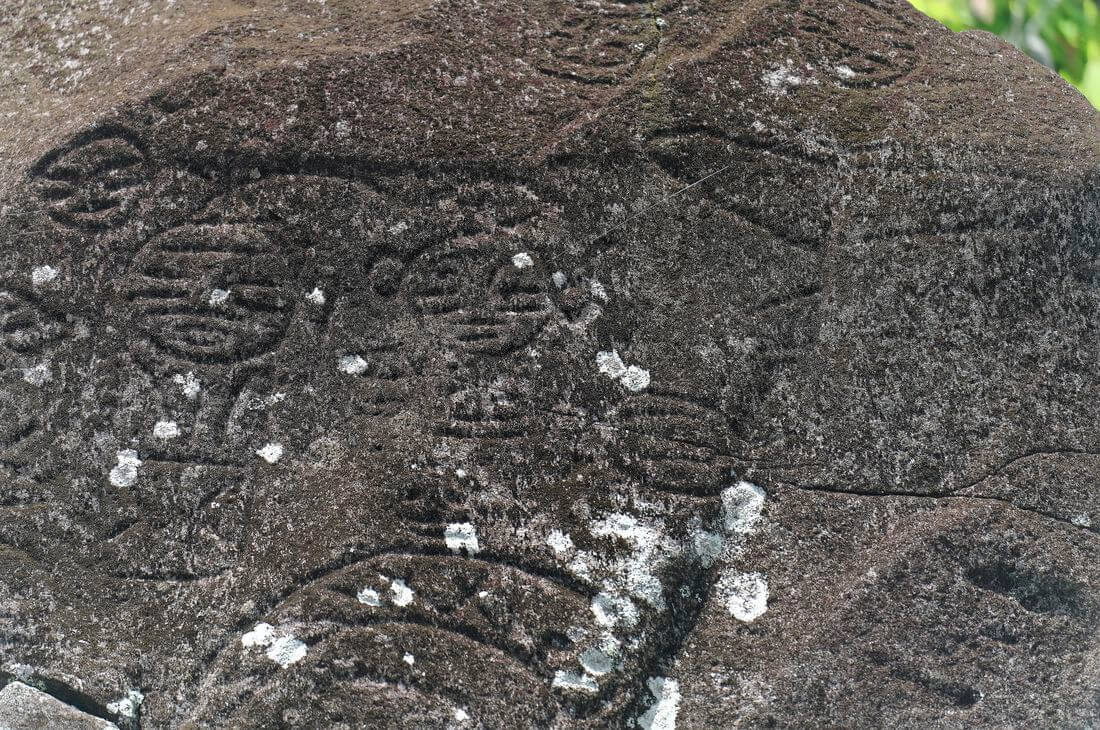
A little farther on, roughly in the middle of the park, we found another imposing rock lying low to the ground, its engravings clearly visible. We learned that the soil at this exact spot had been excavated to reveal some of the carvings.
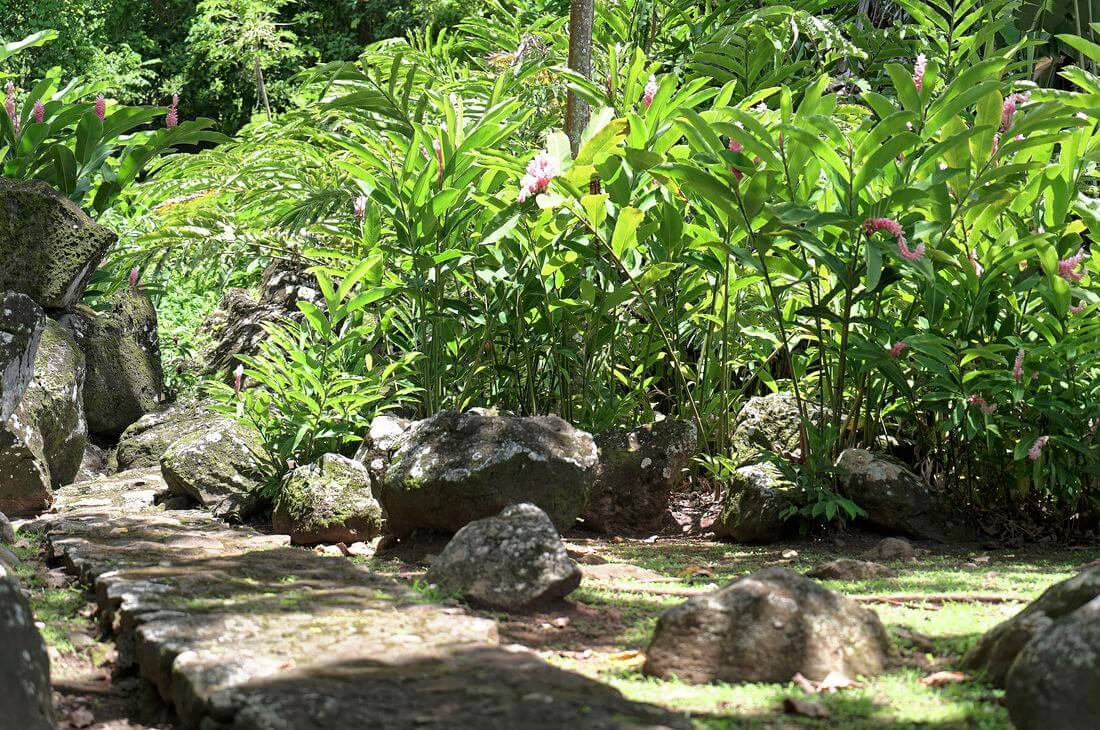
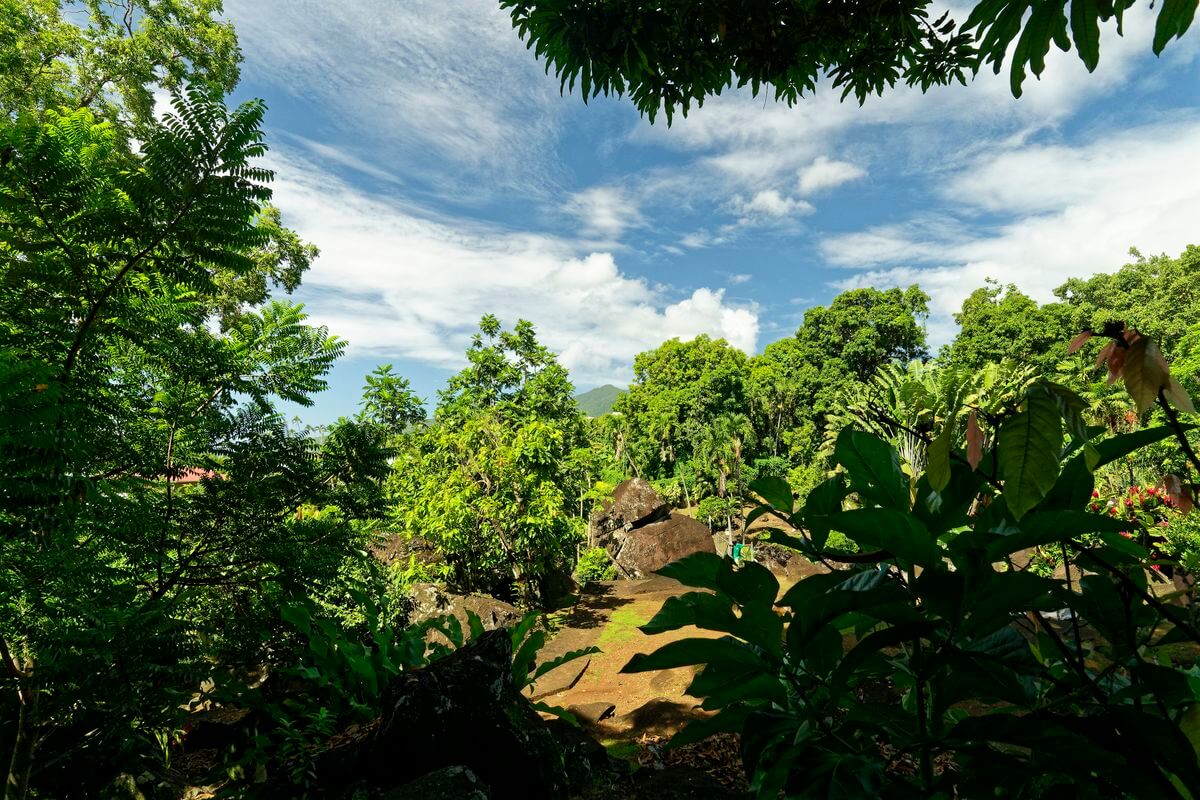
The weather was beautiful on our second visit, making the walk through this compact garden especially enjoyable. We followed a series of narrow paths through the local vegetation—papaya trees, breadfruit trees, and all kinds of flowers. From the top of the path, you can even look out over much of the park.
The trail then leads to another group of engraved rocks, one of which is unusual for its depiction of an elaborate headdress. It is the only rock in the area with such a prominent design. In some societies, a headdress indicated social rank, which is why this figure is known as the “village chief.”
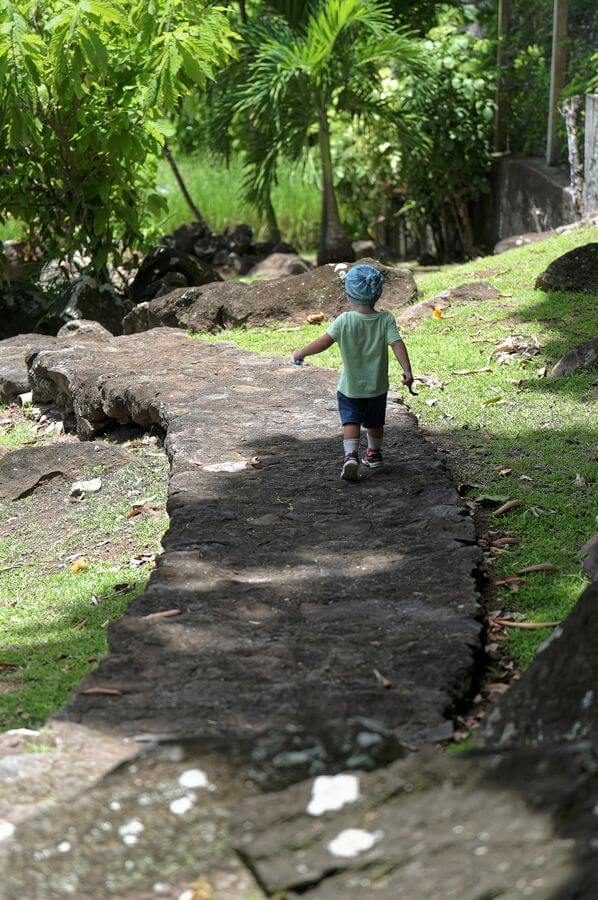
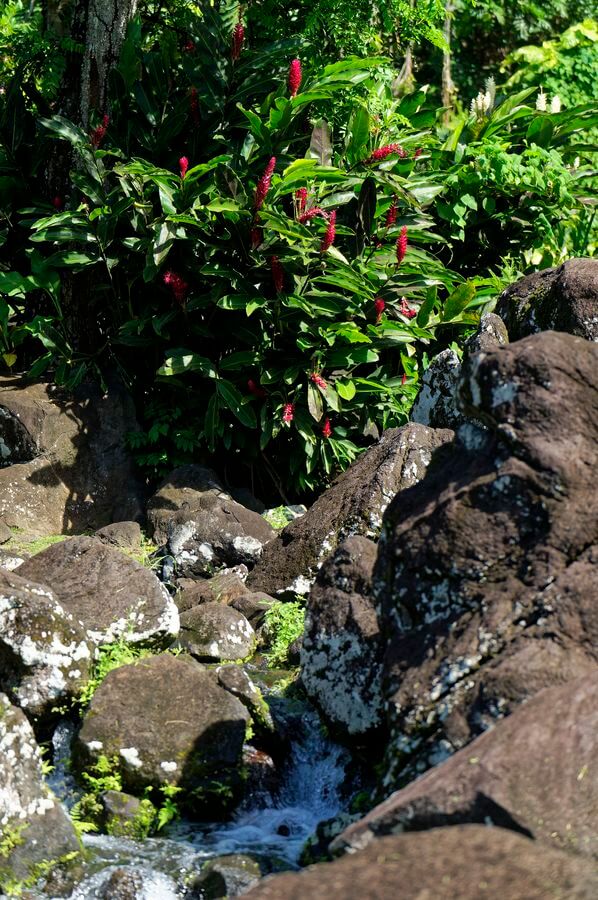
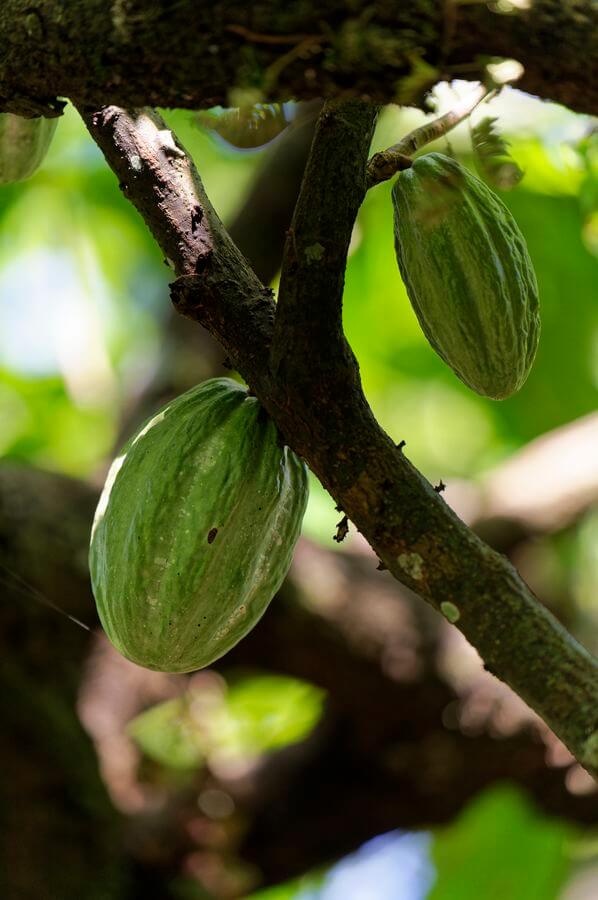
The area is densely planted with trees, including chestnut, coffee, and bay rum trees. Bay rum leaves have a distinctive scent reminiscent of cloves. They are still used in preparations intended to ease muscle aches and repel mosquitoes. The leaves can be rubbed directly onto the skin or steeped in rum to make a preparation known as “bay rum.” The leaves and berries are also used to flavor dishes such as beef stew.

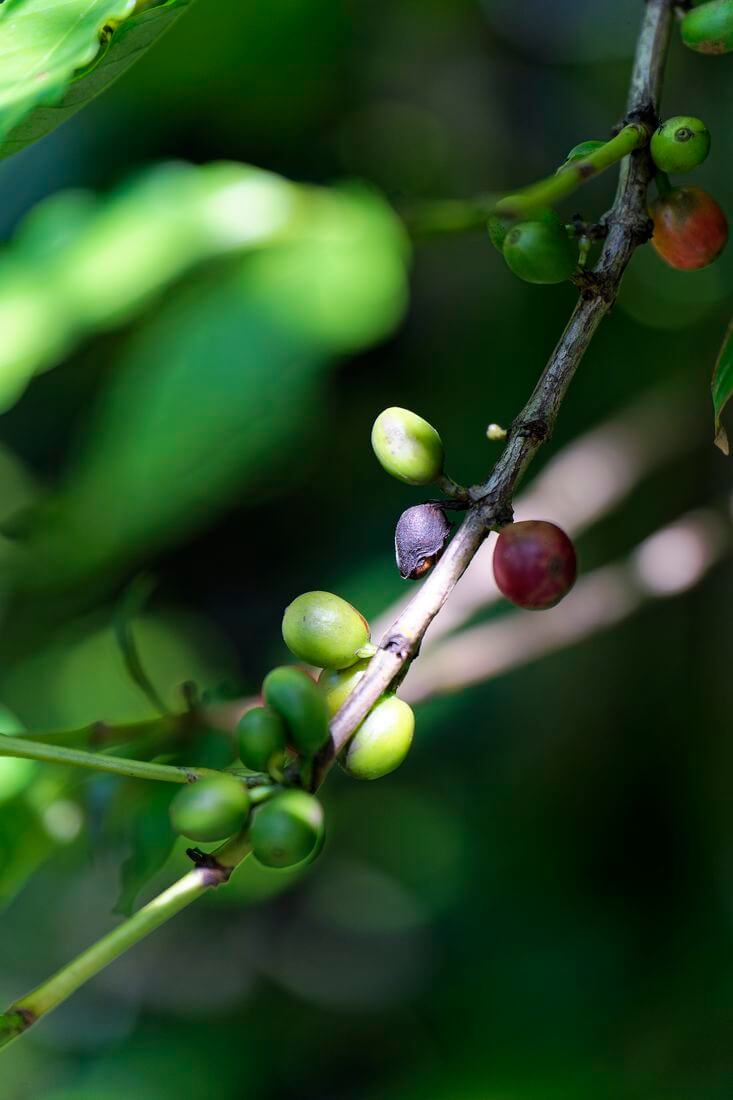
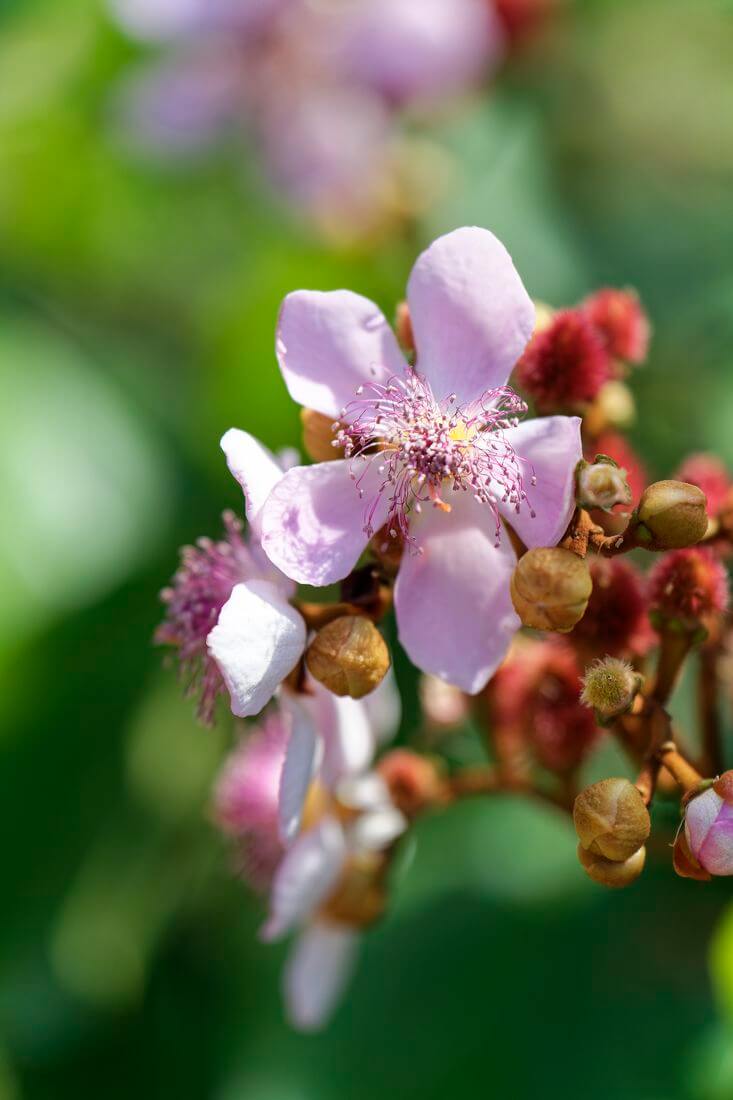
We continued across the small river, whose gentle flow gives the park a slightly wistful atmosphere. Behind us were a few sugarcane plants, while giromon squash and pumpkins lay across the ground. To the right stood a tree well known locally: the roucou, which produces distinctive reddish seeds. Amerindian peoples used these seeds to make roucou oil, which served much like a tanning oil. Our guide explained one of the seed’s unusual properties: rubbed against a black stone, it turns bright red, while boiling changes the color to orange or even copper. Roucou oil, also known as red butter, is still used in fish broths and in cosmetics to tint the skin. I also learned that it is used to help color the rind of Reblochon cheese.
Calabashes are also worth mentioning. These fruits of the calabash tree grow in several parts of the park and throughout Guadeloupe, in a wide range of shapes and sizes. Amerindian peoples used them to make bowls and other eating vessels known as “kwi.” The process began by cutting the fruit in half, removing the white flesh, and leaving the shell to dry until the inside turned brown. Today, calabashes are used in music—particularly for chacha rattles—and in local crafts. To make a chacha, a small hole is cut near the top of the calabash, the inside is scraped clean using glass and water, and toloman seeds are then added.
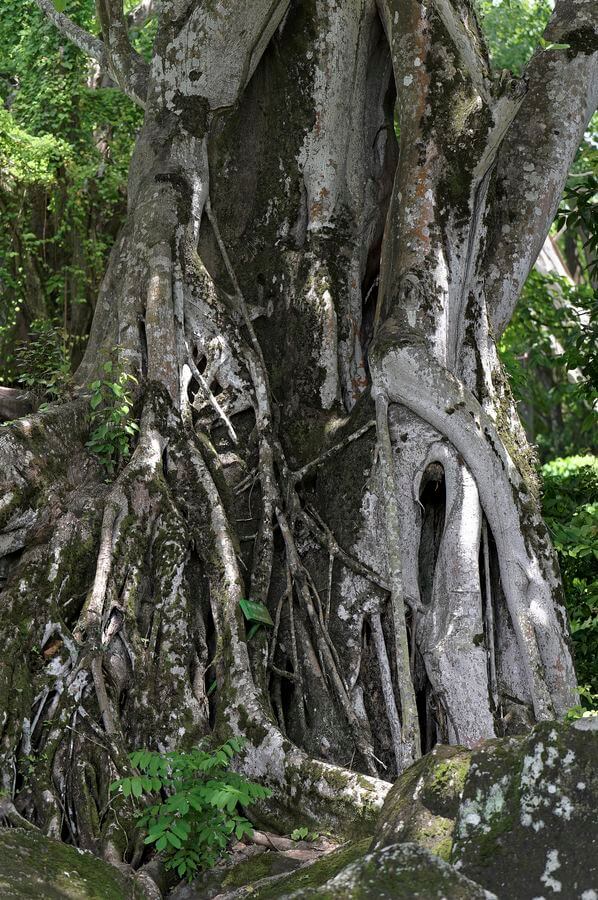
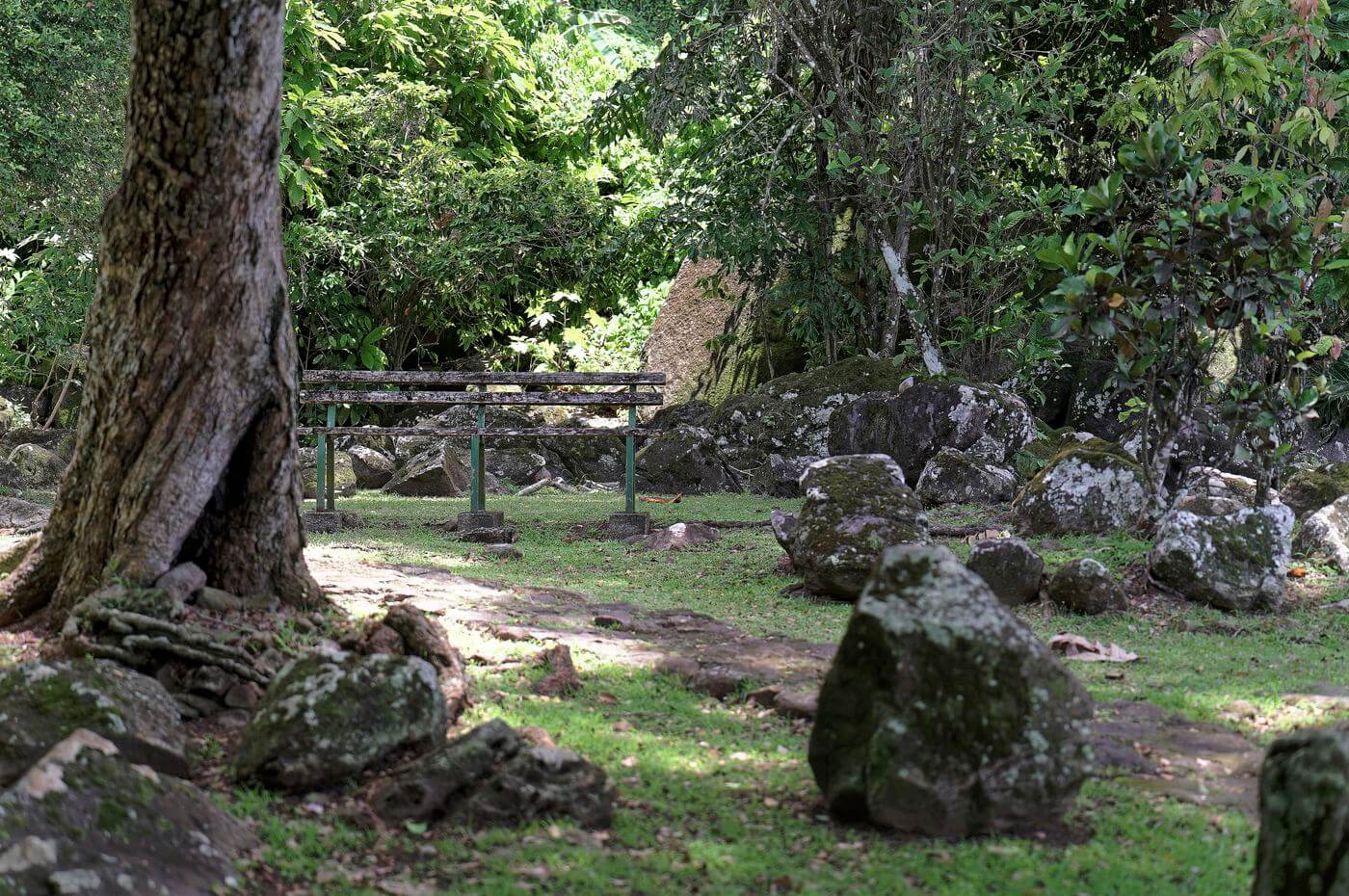
We then reached a section of the route that had been closed following landslides caused by the 2004 Les Saintes earthquake. A small bench there almost invites you to lie back and listen to the forest. The atmosphere was wonderful. Before reaching a magnificent strangler fig—a huge tree that gradually envelops everything around it—we stopped to take a few photos of the surroundings. The setting was beautiful, and I have always loved these trees, which you often come across while hiking in Guadeloupe.

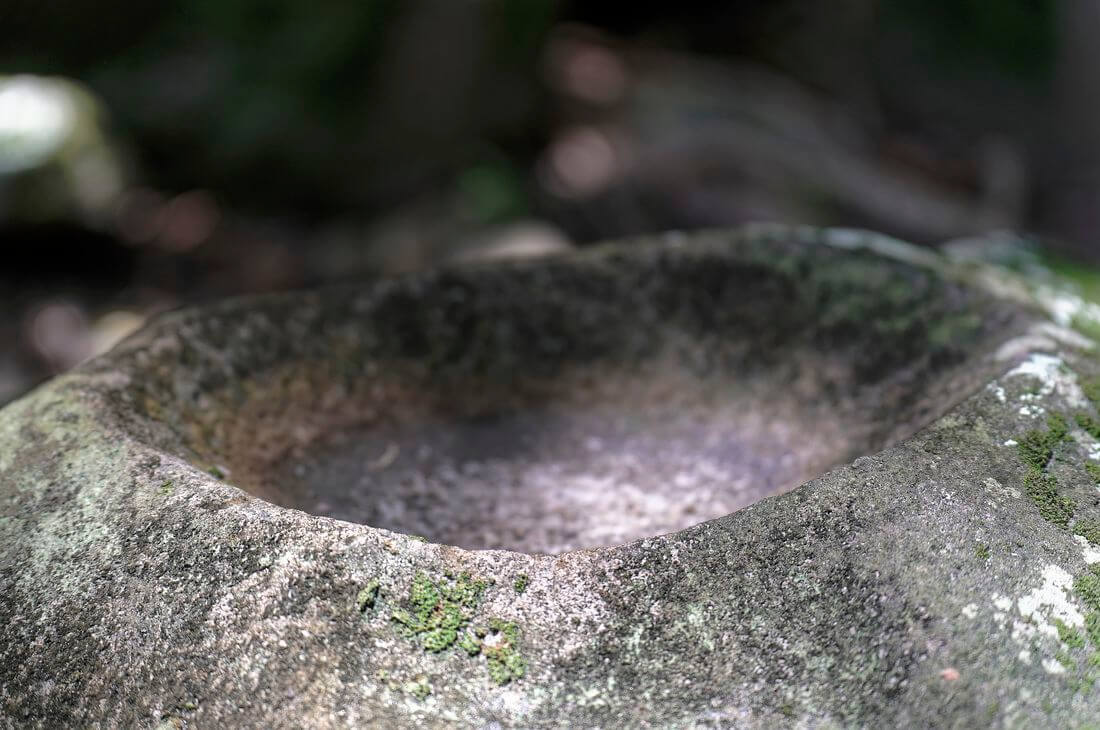
At the turnaround point, you can see polissoirs, or polishing stones, in the riverbed. In this park, they take the form of circular depressions worn into blocks of hard rock. Elsewhere in Guadeloupe and around the world, they can also appear as long grooves. These stones were used to shape and polish stone tools and weapons. In Guadeloupe, polissoirs are often found along rivers and gullies, although spotting them is rarely straightforward. Some large examples contain three or four cavities, and several can be seen throughout the park.
On the way back, several clearly engraved rocks appeared once again on the left.
We eventually returned to the right side of the iron bridge we had crossed at the start of the walk. By then, the light was much better, so we stopped to take more photos of the first engraved rocks, which looked even more striking.

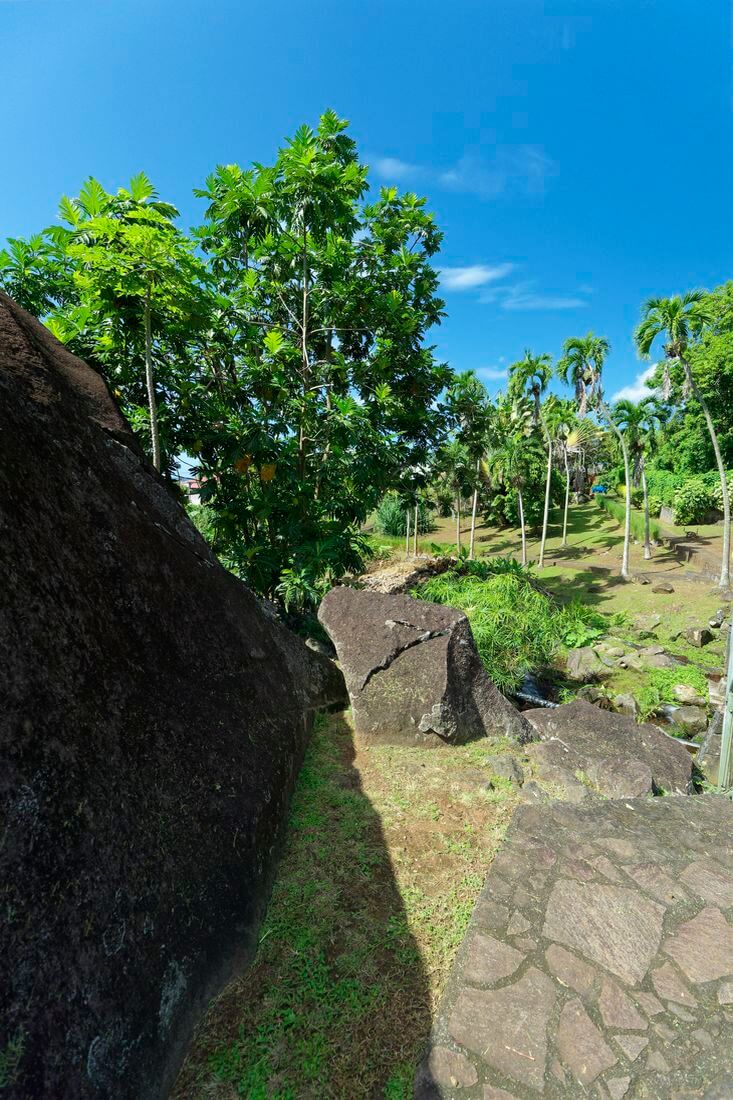
We crossed back over the bridge to complete our walk through the archaeological park. Along the way, the guide shared a great deal about the local plant life, including the different varieties of cassava, a tuber Mélanie and I have eaten regularly since moving to the islands. As our guide explained it, the varieties can be distinguished by their stems: one has a red stem, while the other has a green one. Bitter cassava contains naturally occurring cyanogenic compounds and must be grated and thoroughly washed before it can be eaten, whereas the variety known locally as K-manioc can be eaten after simpler preparation.
The tour ended among pandanus, calabash, red mulberry, and cotton trees. Cotton from the latter was used by Amerindian peoples to make woven clothing.
The visit ended back at the main carbet. We spent another half hour chatting with our guide and several local residents about Guadeloupe and everyday life on the island. It was a genuinely enjoyable moment. We loved the park and felt it was well worth visiting when it was open. Another related site is the Edgar Clerc Museum of Amerindian Prehistory in Le Moule, which we had not yet visited at the time but hoped to explore one day.
At the time of our visits, we spent about 1 hour and 30 minutes on site.
Practical information for the Parc archéologique des Roches gravées
As usual, I’ll end with the practical information currently available. Please note that the park is closed to the public for renovation work, so the details below replace the former visiting schedule:
- The park is currently closed to the public while renovation work is underway,
- The project is intended to improve access and visitor facilities, including accessibility for people with reduced mobility and new educational spaces,
- During our visits, access was by guided tour only, and the guides added a great deal to the experience. We visited twice with two different guides and learned something new each time,
- The former opening days and tour times are no longer applicable while the site remains closed,
- For current information, you can contact the park by phone at 0590 92 91 88 or check the Conseil Départemental de la Guadeloupe website before planning a visit.
How do you get there?
The park is in central Trois-Rivières, near the southern end of Basse-Terre. Here is an route from Saint-Claude to the archaeological park parking lot. Keep in mind that the park itself is currently closed to visitors.
When it comes to rental cars for your trip to Guadeloupe, we often recommend comparing prices on the DiscoverCars website. We recently booked our one-month trip to Costa Rica there and got great rates for the rental period.
Where to stay near the park?
As always, the best option depends on your preferences and budget. Here are three well-reviewed places to consider:
- La Suite Sapotille: This spacious, well-equipped apartment has a pleasant private terrace.
- Grand T2 Appartment: A pleasant apartment with a pool and views of Les Saintes, offered at what appears to be a reasonable price.
- Le Jardin Malanga: We would love to try this property, as we have heard consistently positive feedback about it. Its setting in the heart of nature looks especially inviting.
You can also browse accommodations in Trois-Rivières.
What can you do near the Parc des Roches gravées?
To finish, here are a few ideas for things to see and do around the park:
- Visit La Maison de la Banane in Trois-Rivières,
- Spend a day or more on Terre-de-Haut or Terre-de-Bas in Les Saintes. The islands lie just across the water and can be reached by boat in under 30 minutes,
- Swim at Grande-Anse Beach, a black-sand beach we love visiting with the children,
- Walk the Sentier de la Grande Pointe to discover the coastline of the commune,
- Have a drink at sunset near the Vieux-Fort lighthouse. We often go there because it is close to home,
- Head a little farther inland for the walk to Bassin Bleu and its waterfall,
- Bain des Amours can also make a pleasant stop later in the day, although I personally recommend going early in the morning.
There are plenty of other things to see and do nearby, but these suggestions should give you a good starting point. For a larger waterfall in the heart of the national park, consider the Galion waterfall at the foot of La Soufrière.
See you soon.

Written by Sylvain PONS
Since 2021, I've been living in the Guadeloupe archipelago with Mélanie and our two children. We are exploring these beautiful islands and discovering the treasures that we are happy to share with you!
Despite our care, a mistake may have slipped into this article. If you find any, please don't hesitate to let us know so we can correct it as soon as possible and keep our information up-to-date!