Charco Verde in Lanzarote
Last update: 06/19/2026
Our blog continues to grow thanks to you, our readers. This post may contain affiliate links, which means we can earn a small commission if you make a purchase through them, at no extra cost to you. This helps us to continue to bring you more and support our work!
I could not write about Lanzarote without dedicating an article to the famous Charco Verde, also known as Lago Verde or Charco de los Clicos. You have probably already seen videos on social media of its striking emerald-green, almost fluorescent water. I had seen several myself, but the experience is completely different in person. The lagoon lies in southwestern Lanzarote, just outside the village of El Golfo, in a setting that is both unexpected and impressive. It easily belongs among Lanzarote’s hidden gems and must-see sights.
Charco Verde is remarkable not only for its color but also for its surroundings. It sits inside an ancient volcanic crater, framed by a black-sand beach and the blue Atlantic Ocean. The contrasts all come together in a single view. Because I was staying in El Golfo, I wanted to visit Charco Verde on my first day on the island, and it was an excellent way to begin the trip. I arrived early in the morning, before the crowds, when the light made the colors stand out even more.
If Charco Verde is on your itinerary, this guide covers the essential practical information: how to get there, where to park, the best viewpoint, and what the visit is actually like. Ready to explore?
What Exactly Is Charco Verde?
As mentioned above, Charco Verde is a distinctive natural site found only in Lanzarote. It feels almost like stepping into another world, which is something I often find myself saying about this island. The green lagoon formed inside a partially collapsed volcanic crater. Its appeal comes not only from the color of the water but from the entire landscape and its unusual palette. The first view is genuinely striking.
The intense green lagoon sits beside black sand, red-and-black cliffs, and the deep blue ocean, creating a dramatic volcanic scene. The crater itself is linked to the major eruptions of the 18th century, which lasted for several years and reshaped large areas of Lanzarote. The lagoon’s unusual color comes mainly from microscopic algae, combined with the mineral-rich environment.
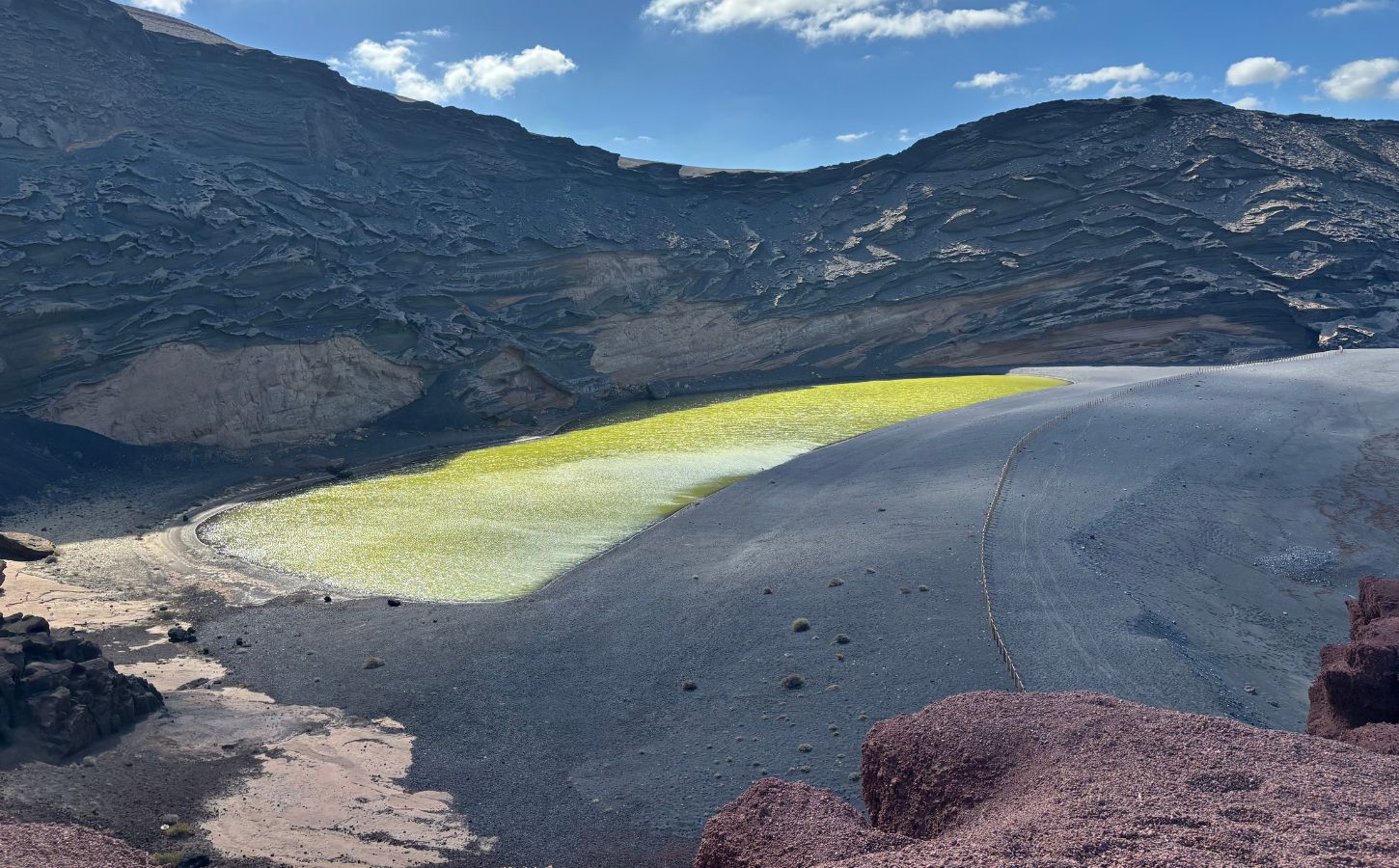
The color can shift with the light, ranging from a darker green to a much brighter, almost fluorescent shade. Some people recommend visiting around noon for the most vivid color, although that is also when the viewpoint is often busiest. I went early in the morning and still saw the lagoon glowing a bright green in the soft light.
The site is protected, so visitors can only admire it from the viewpoint above. Walking around the lagoon or swimming in it is not allowed. Fortunately, the view is more than enough to appreciate the setting. The name “Charco de los Clicos” is said to refer to a shellfish known locally as the clico, which once lived in Lanzarote’s waters but later disappeared.
In short, Lago Verde is well worth including in a day trip through southern Lanzarote. The stop itself is quick, but the landscape is memorable.
Our Experience at Charco Verde
As I mentioned, I was staying in the village of El Golfo. Although the village attracts visitors during the day, it still retains a strong local character. Most people came for lunch or a short visit while I was out exploring, so the tourism never felt overwhelming. By evening, the village became quiet again, making it pleasant to walk along the waterfront, eat at one of the fresh-fish restaurants, or return to Charco Verde.
My accommodation was about seven minutes from the viewpoint and only two minutes from the start of the dirt path. That may sound overly precise, but it gives you a good sense of how close I was. I visited on my first morning in Lanzarote, which turned out to be the right decision: the viewpoint was not too crowded and the light was excellent. On the following days, the mornings were grayer or the sun took longer to break through. September can also be windy, which sometimes makes it harder to get the clear, bright conditions that bring out the natural colors in photographs.

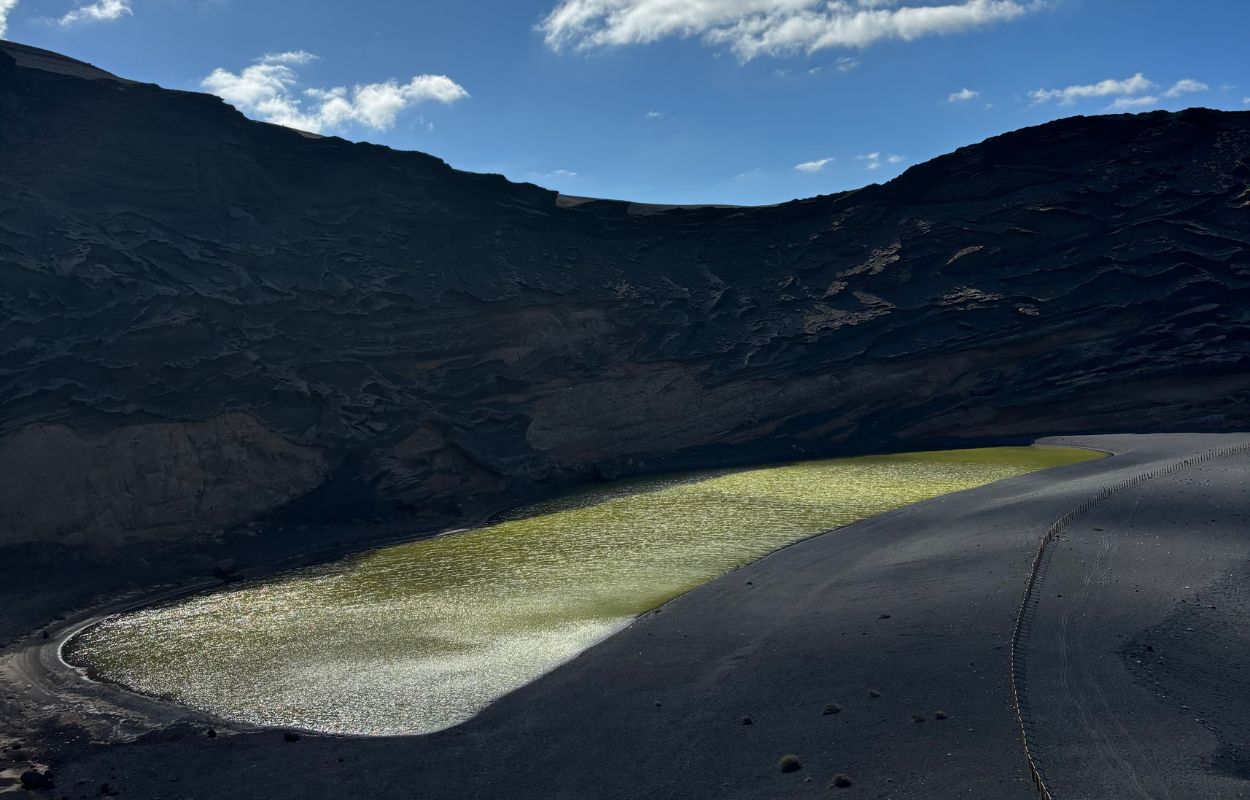
A fairly large parking area sits close to the start of the path. It is almost empty early in the morning and in the evening, but it fills quickly as the day goes on. The walk itself is easy, with no large rocks or need for hiking boots. It takes about five minutes, and ropes line the side where the path drops away. Even if you are uncomfortable with heights, the route is manageable because it is wide enough for people to pass. Then comes the best moment: reaching the end of the path and seeing the full panorama. The view was impressive, and because there were few people around, we had plenty of time to stand at the front and take it in.
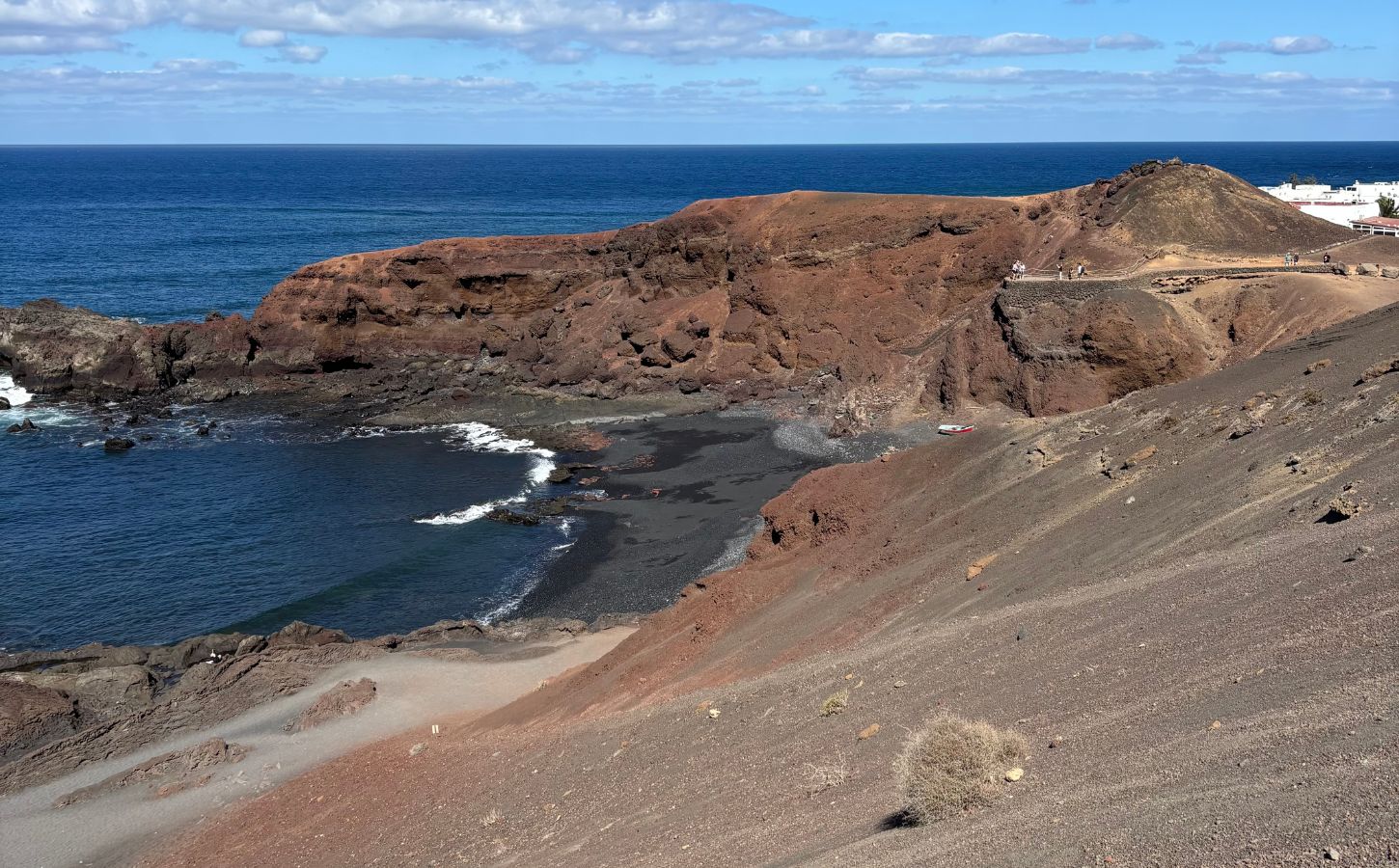
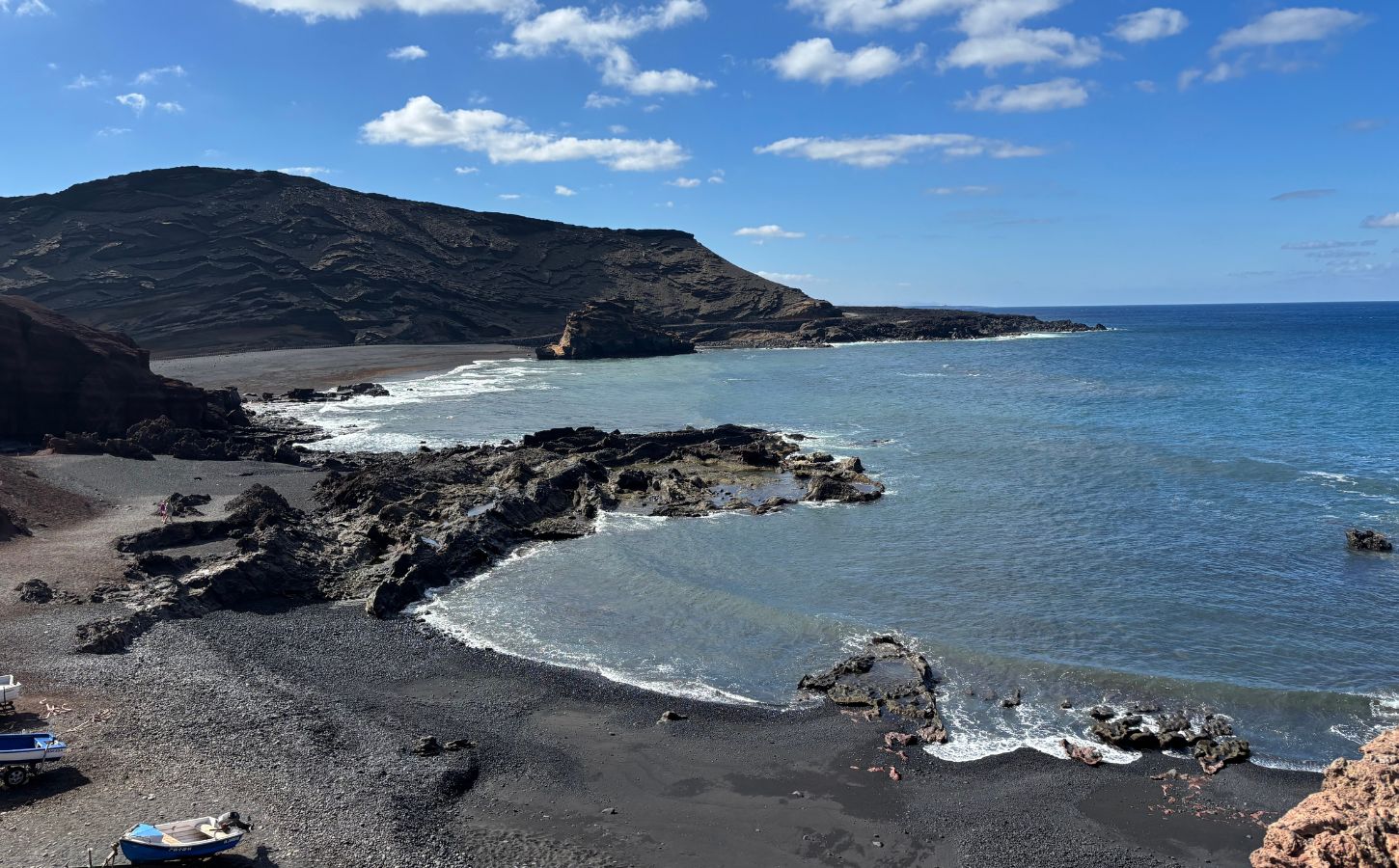
Another visitor even offered to take photos of us, which gave us a nice souvenir. Be sure to look beyond the lagoon as well. To the right of the viewpoint, the landscape opens onto a black-sand beach, cliffs in shades of red, purple, and black, and the Atlantic Ocean. The viewpoint offers an almost 180-degree panorama, so it is worth taking time to look in every direction.
I know I am repeating myself, but morning and early evening are especially pleasant. Golden-hour light brings out another range of colors in the cliffs and water.
Even if the lagoon looks darker and less fluorescent during your visit, the place is still worth seeing. The most important thing is having enough space and time to appreciate the landscape. A viewpoint this beautiful is far less enjoyable when you can only take a quick photo before moving aside. Staying in the north may mean an early start, but for one day of your trip, the effort is worthwhile.
Charco Verde in Lanzarote: Practical Information
You probably know the format by now: here is all the practical information you need before visiting Charco Verde. Since it is one of Lanzarote’s best-known natural sights, a few useful details can make the experience much smoother.
Where Is Charco Verde Located?
If you came straight to the practical section, here is the location in more detail. Charco Verde lies on Lanzarote’s west coast beside the small fishing village of El Golfo. It is roughly 20–25 minutes from Playa Blanca and around 35–40 minutes from Arrecife, depending on traffic and your starting point. The lagoon and crater form part of the Los Volcanes Natural Park, close to Timanfaya National Park and its Fire Mountains.
Lago Verde sits at the edge of El Golfo, depending on which direction you enter the village. A well-established parking area is nearby. From there, follow the clearly visible dirt path for about five minutes to reach the viewpoint. Then all that remains is to enjoy the view and photograph the lagoon, crater, and volcanic beach.
How to Get to Charco Verde
Charco Verde is easy to reach, particularly by rental car. I booked mine through Discover Cars, a comparison platform I have used several times and found convenient for checking rates.
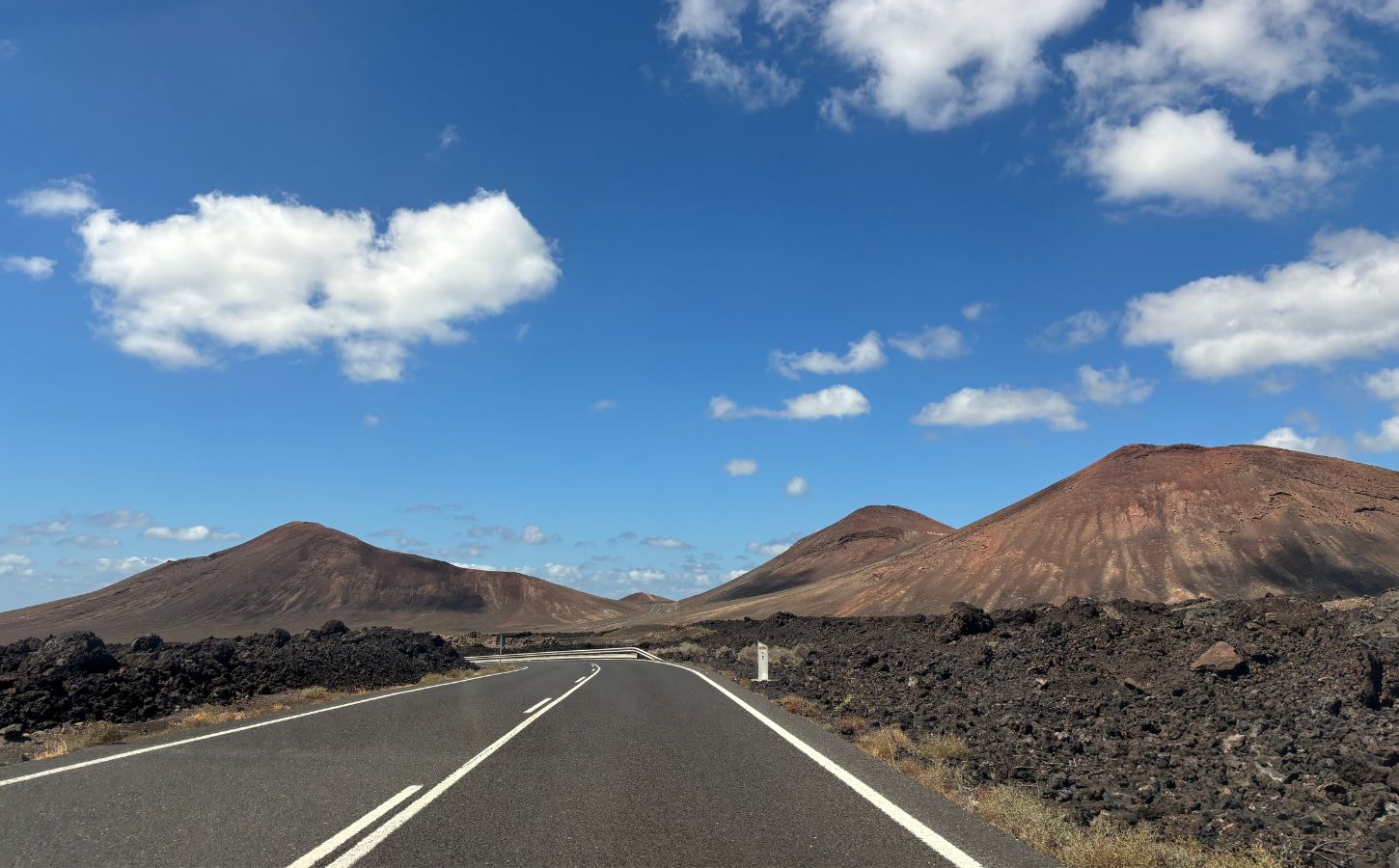
The roads leading to El Golfo are paved and generally well maintained. From Playa Blanca, follow the LZ-2 toward Yaiza, then take the LZ-704 to El Golfo; the journey usually takes around 20–25 minutes. The route is well signposted.
From Arrecife or the airport, allow roughly 35–40 minutes. The usual route also follows the LZ-2 toward Yaiza before continuing on the LZ-704 to El Golfo. The drive is straightforward and scenic, with lava fields along the way. Parking at the viewpoint is currently free.
Without a car, reaching Charco Verde takes more planning. Bus line 60 connects Arrecife and Playa Blanca with Yaiza, but it does not continue to El Golfo. From Yaiza, you will need to arrange a taxi, as walking the road to El Golfo is not recommended: there is no continuous pedestrian path, and the route is exposed to traffic. Check the current bus timetable before traveling, and confirm the taxi fare locally.
Taking a taxi directly from Playa Blanca or Arrecife is another option, particularly if several people can share the cost. Because fares can change, ask for an estimate before setting off.
You can also visit as part of a guided tour covering the southwest of Lanzarote. This makes it easy to discover several must-see sights alongside Charco Verde without worrying about transportation. I cover some of the best nearby stops below.
For more help planning your trip, take a look at our guide to getting around Lanzarote.
What Is the Best Time to Visit Charco Verde?
Although Charco Verde can be visited at any time of day, the morning and late afternoon generally offer the most pleasant conditions.
For me, morning is the best time. There are usually fewer visitors, and the softer light brings out the contrasts between the lagoon, crater walls, black sand, and ocean. The wind may also be lighter early in the day, which makes the viewpoint more comfortable and photography easier.
Late afternoon is another good option, particularly once day-trippers begin to leave. Between roughly 5 p.m. and 7 p.m., depending on the season, the light becomes warmer and the viewpoint can feel much quieter. Photographers will especially appreciate the softer golden tones.
Some visitors recommend noon because direct sunlight can make the green appear especially bright. However, the viewpoint is often busier then, and the light can be harsh for both photographs and your eyes. Conditions can also feel hot and windy, especially in summer.
One final photography tip: under gray or cloudy skies, the lagoon may appear more khaki or olive, while bright sun can make the green look almost fluorescent. Check the forecast if the color matters to you. Staying nearby also gives you the chance to return under different conditions.
For more seasonal advice, read our guide to the best time to visit Lanzarote.
What to See Around Charco Verde
As promised, here are several worthwhile places to visit near Charco Verde. One of the advantages of the lagoon is its location on Lanzarote’s dramatic west coast, an area rich in volcanic scenery and still relatively undeveloped. Because I stayed nearby, I had plenty of time to explore it.
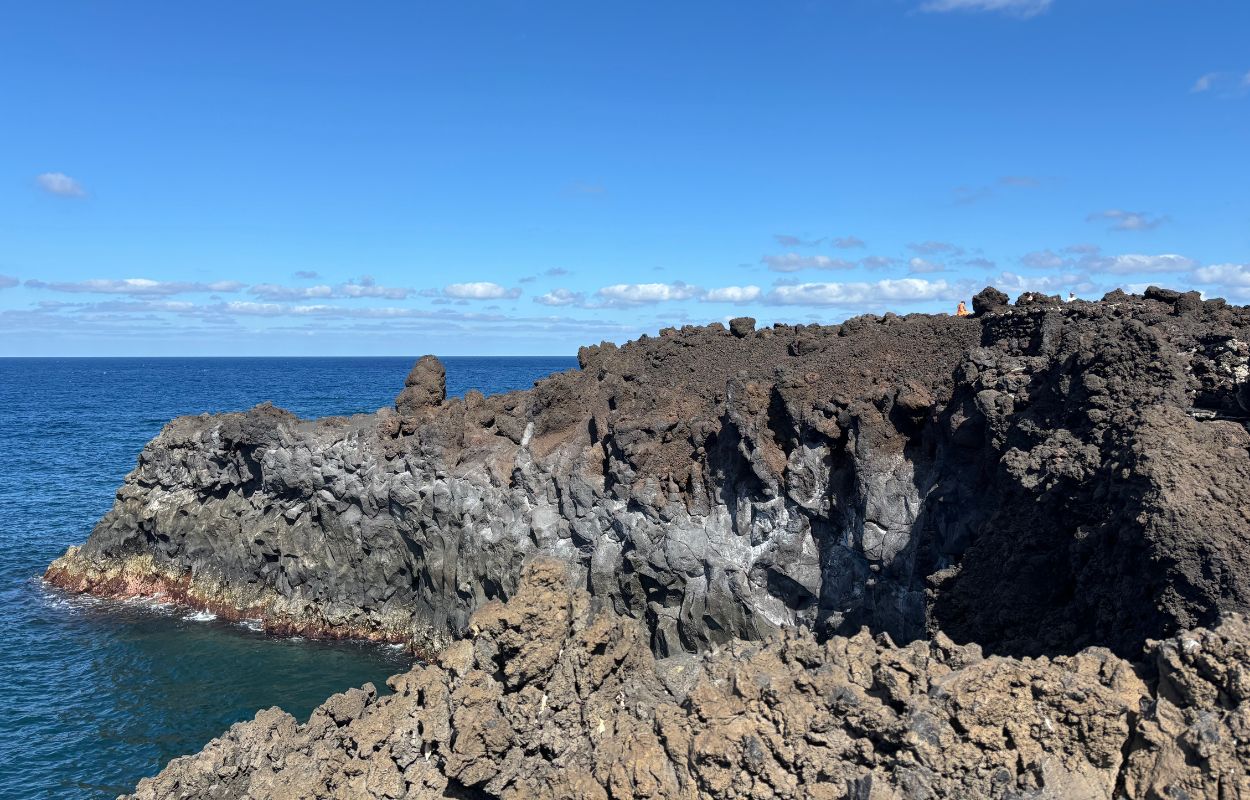
- Los Hervideros: this is the closest major stop to Charco Verde, only a few minutes away by car. Here, waves crash into black volcanic cliffs and sea caves formed by past eruptions. The scene is especially dramatic when the ocean is rough, with lava fields on one side and the Atlantic on the other.
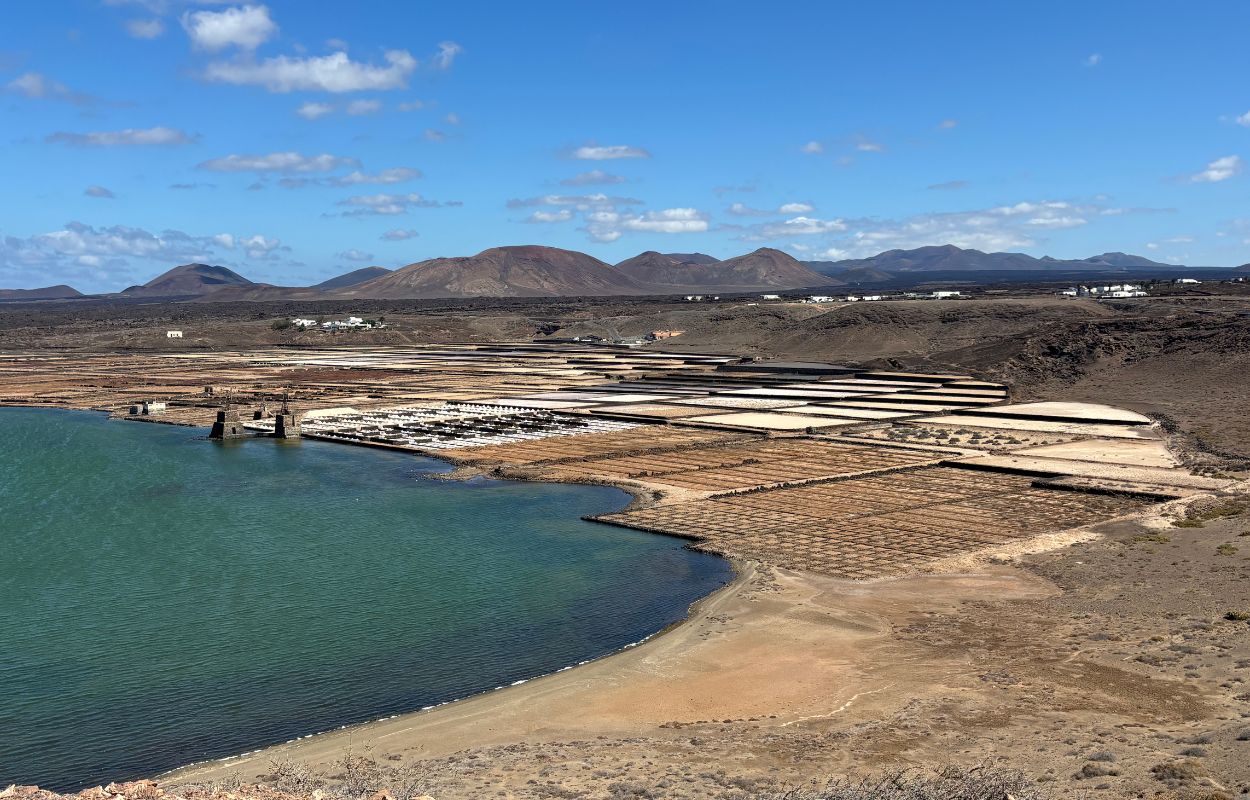
- Salinas de Janubio (Janubio Salt Pans): a little farther south, the salt pans form a patchwork of pink, white, beige, and ocher tones that change with the light.
- El Golfo: while visiting Charco Verde, take time to explore the fishing village itself. You can walk along the waterfront and eat on a terrace overlooking the ocean. Several restaurants specialize in fresh fish. I particularly enjoyed El Pescador, where I ate twice during my stay.
- Timanfaya National Park: for a full day of volcanic scenery, the park is only about 15 minutes away by car. It is one of Lanzarote’s essential natural attractions, with the Ruta de los Volcanes and geothermal demonstrations.
As you can see, southwestern Lanzarote has plenty to offer. One possible itinerary is: Salinas de Janubio → Los Hervideros → Charco Verde → lunch in El Golfo → Timanfaya National Park.
It makes for a full but well-balanced day, combining ocean views, volcanic landscapes, local food, and several of the island’s most distinctive sights.
How Long Do You Need at Charco Verde?
A visit to Charco Verde itself does not take long because the parking area is close to the viewpoint path. The walk takes about five minutes. After that, the length of your visit depends entirely on how long you want to admire the scenery and take photographs. Allow around 20–30 minutes when the viewpoint is not crowded, or longer if you prefer to wait for changing light and fewer people. Even a passing cloud can alter the colors and reflections.
Even on a short trip to Lanzarote, Charco Verde is easy to fit into your itinerary.
Can You Swim in Charco Verde?
The color of the lagoon may look inviting, but swimming is prohibited. Charco Verde lies within the protected Los Volcanes Natural Park.
Its ecosystem is fragile and must be respected. The algae responsible for the green color are sensitive to changes in water quality and environmental disturbance. For that reason, visitors must remain at the designated viewpoint and must not enter the lagoon.
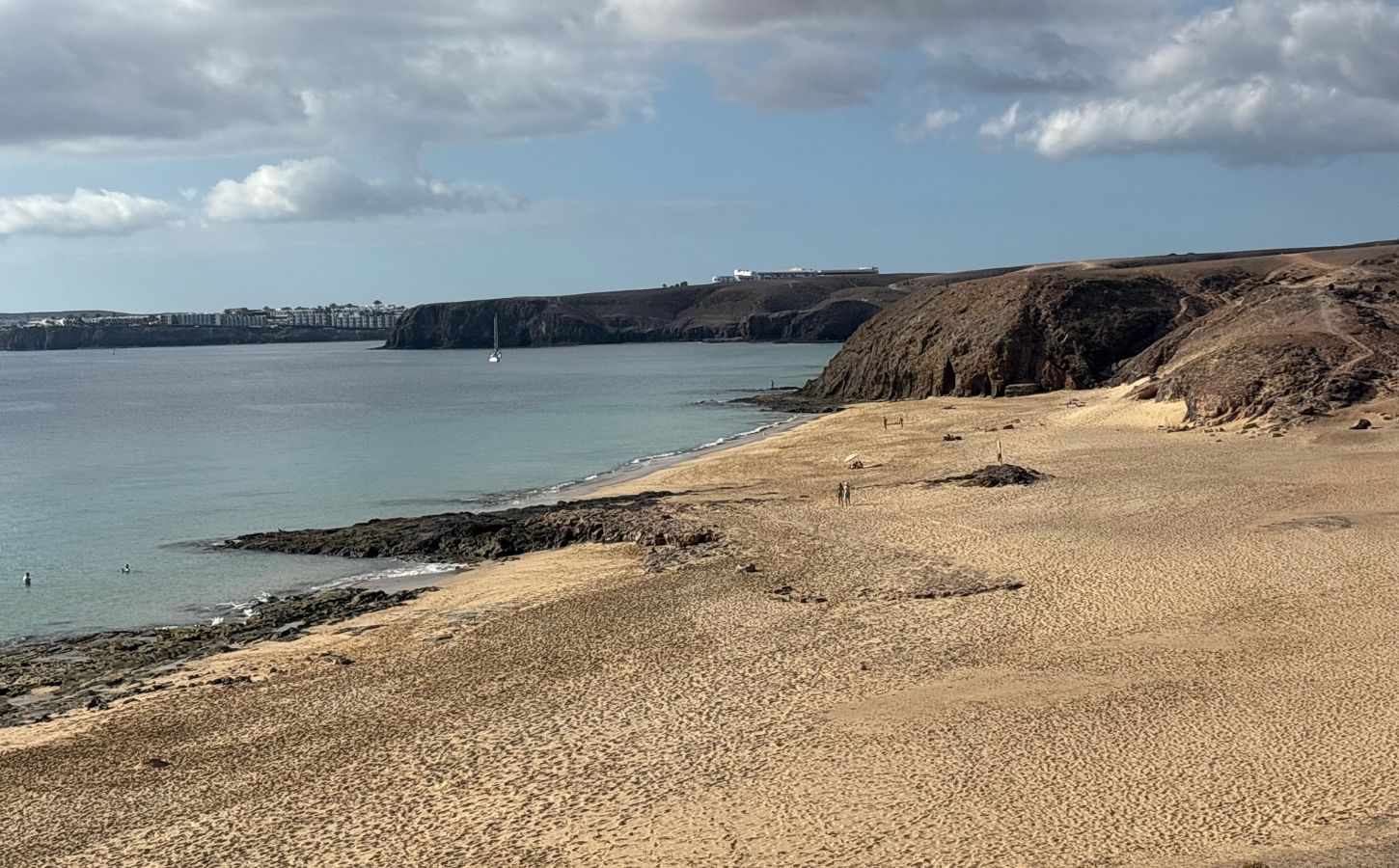
Access to the black-sand beach immediately below the lagoon is also restricted, with barriers in place. For a nearby coastal stop, Montaña Bermeja beach is about five minutes away by car, although strong waves and currents make it unsuitable for casual swimming. For calmer water, head to Los Ajaches Natural Park, where you will find Playa de Papagayo, Playa del Pozo, and Playa Mujeres.
To learn more about the best beaches in Lanzarote, take a look at our dedicated guide.
Where to Stay Near Charco Verde
As you may have guessed, the closest place to stay is the village of El Golfo. It is a calm, welcoming seaside village that still feels authentic. I fell in love with it during my stay and would happily return. Here are a few options for different budgets:
High budget Viviendas El Pescador – Ancla: a peaceful apartment for two in El Golfo, with a bright, modern interior and a private terrace overlooking the sea and mountains.
Mid-range budget El Hotelito Del Golfo: located in the heart of the village, this hotel offers views of the ocean and the volcanic landscape toward Timanfaya. It is a pleasant place to slow down and disconnect.
Affordable budget Sabbia Suite Casa Jalofa: a one-bedroom apartment near the sea, with a large terrace, equipped kitchen, and comfortable living area.
For a wider choice of accommodation while remaining close to El Golfo and Charco Verde, consider the village of Yaiza. For a more exclusive setting, Puerto Calero is farther away but makes a good base. To stay in the south of the island, Playa Blanca offers the widest range of services and accommodations.
Book your accommodation next to Charco Verde
Use the interactive map below to find your future accommodation!
Conclusion
You now have all the essential information for visiting Charco Verde in Lanzarote. Another nearby place worth seeing is Las Grietas, a series of volcanic fissures you can walk through. The setting is immersive and highly photogenic. To continue exploring the south, we have also written a complete guide to things to do in Playa Blanca.
For another day of wild volcanic scenery, consider visiting La Graciosa. It was one of my favorite days in the Canary Islands.
See you soon for more discoveries!

Written by Laura CALLES
Thanks to Mélanie and Sylvain, I had the chance to discover the Canary Islands, specifically Tenerife and Lanzarote, so that I could share these island paradises with you. Two real favorites of mine!
Despite our vigilance, an error may have crept into this article. If you spot one, please don't hesitate to let us know so that we can correct it immediately and keep our information up to date!