Visiting Las Grietas in Lanzarote
Last update: 06/19/2026
Our blog continues to grow thanks to you, our readers. This post may contain affiliate links, which means we can earn a small commission if you make a purchase through them, at no extra cost to you. This helps us to continue to bring you more and support our work!
You may already have come across videos of this place on social media. Even if you have not, Las Grietas in Lanzarote is well worth a visit. For me, it is one of the most beautiful places to see in Lanzarote. What I loved most was how immersive the experience felt. You can walk directly into the grietas, a series of volcanic fissures at the foot of Montaña Blanca.
What struck me most was being inside the cracks, surrounded by volcanic walls whose colors shift with the light. It feels almost like a movie set or one of the desert canyons of the American West. It is remarkable to think that volcanic activity created these formations. Despite the immersive setting, you do not need to be an experienced hiker to visit. The ground can be slippery inside the fissures, but the visit remains manageable with sturdy, closed-toe shoes.
There are several fissures of different lengths, so you can choose which ones to explore. Some may be almost empty. Even around noon, I didn’t feel crowded, even though it’s a popular, well-known spot. The bright sunshine also brought out the shadows, colors, and shapes of the rock, making the setting especially photogenic.
Another remarkable place to discover is Timanfaya National Park.
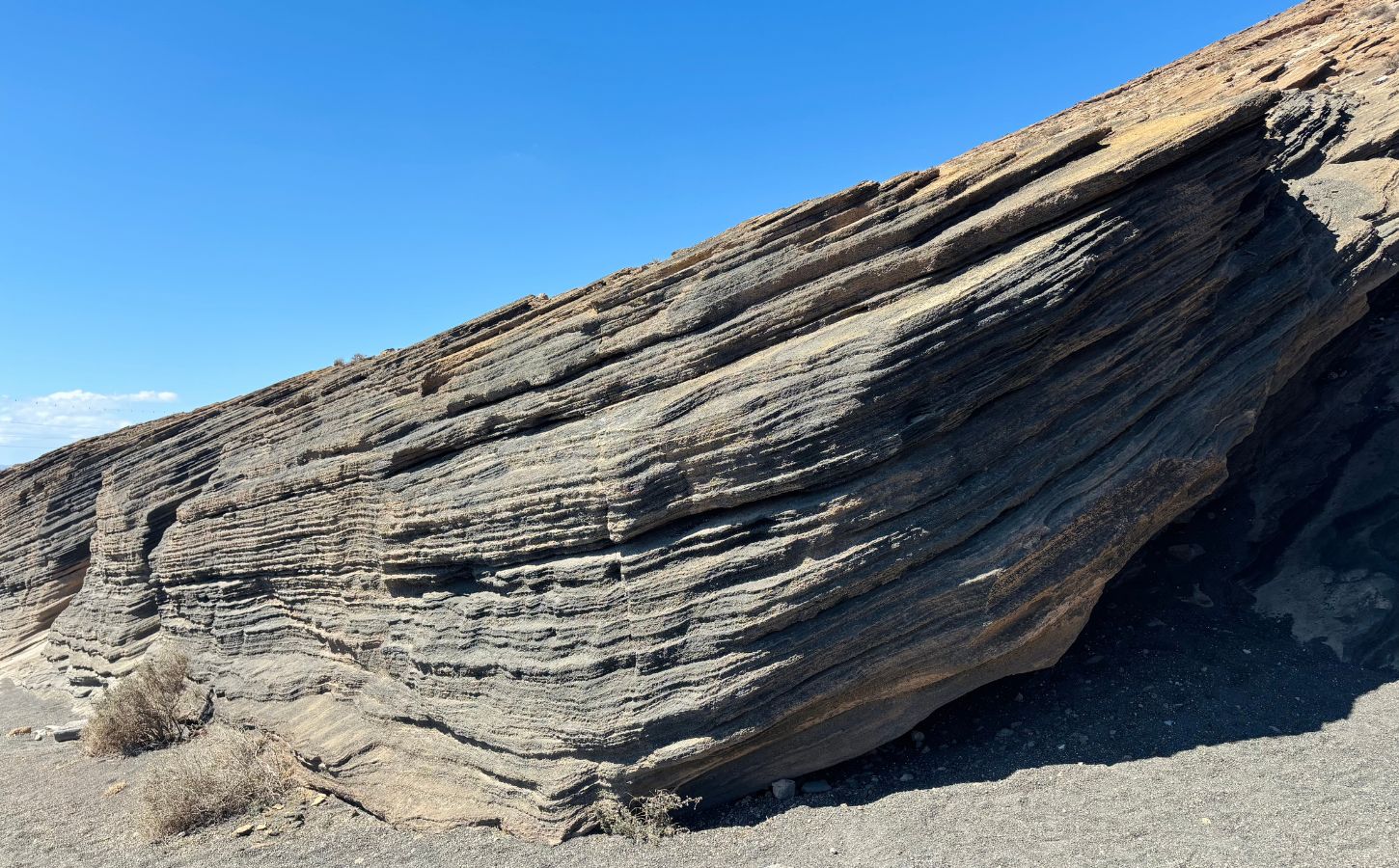
As you have probably gathered, I did not find Las Grietas overrated at all. It is worth setting aside some time for it during your trip. Personally, Las Grietas became one of my favorite places in Lanzarote. Here is everything you need to know to make the most of your visit.
Las Grietas in Lanzarote: What Exactly Is It?
As mentioned above, Las Grietas—Spanish for “the cracks”—is a distinctive natural site near the village of Tías. The fissures formed through ancient volcanic activity on Lanzarote thousands of years ago. As volcanic material cooled and solidified, it left deep channels and crevices along the slopes of Montaña Blanca. What makes them so striking is the continuity and precision of their shapes.
Their clean, sculptural forms can almost look man-made, but they are entirely the work of nature. Today, several almost adjoining fissures create a series of natural labyrinths. Depending on the light, you can admire the contrast between golden tones in the sun and gray in the shade, with the blue sky above. The effect is particularly beautiful on a clear day.
Our Experience at Las Grietas
Las Grietas was one of the stops on my first day in Lanzarote, and I was determined to visit while the sun was shining. Fortunately, the timing worked out perfectly: it was the sunniest day of my trip. Getting there was straightforward, as the surrounding roads are well paved. The current parking area is unpaved, rocky, and uneven, although it is still manageable if you drive carefully. There were only a few cars when I arrived, fewer than I had expected.
We were the first of the latest arrivals to set off in search of Las Grietas while other visitors were making their way back down. At first, we were unsure whether to climb or follow the lower part of the slope, especially since the people arriving behind us were likely to follow our lead. We did not want to send anyone in the wrong direction. As we did not know the site, we decided to climb a little.
You only need to climb a short distance. Do not continue too far uphill, as I saw several visitors mistakenly walking well above the fissures. We found the correct area more easily once we spotted people emerging from the cracks. We soon found the first fissure slightly below us on the left. We decided to climb down into it. Because the site is undeveloped and unmaintained, entering takes a little effort, so watch your footing. Once inside, however, the scale and atmosphere immediately become impressive. The slightly awkward entrance meant that we had the fissure to ourselves, which made the experience even more enjoyable. We could examine the walls in detail and take photographs without anyone else around.
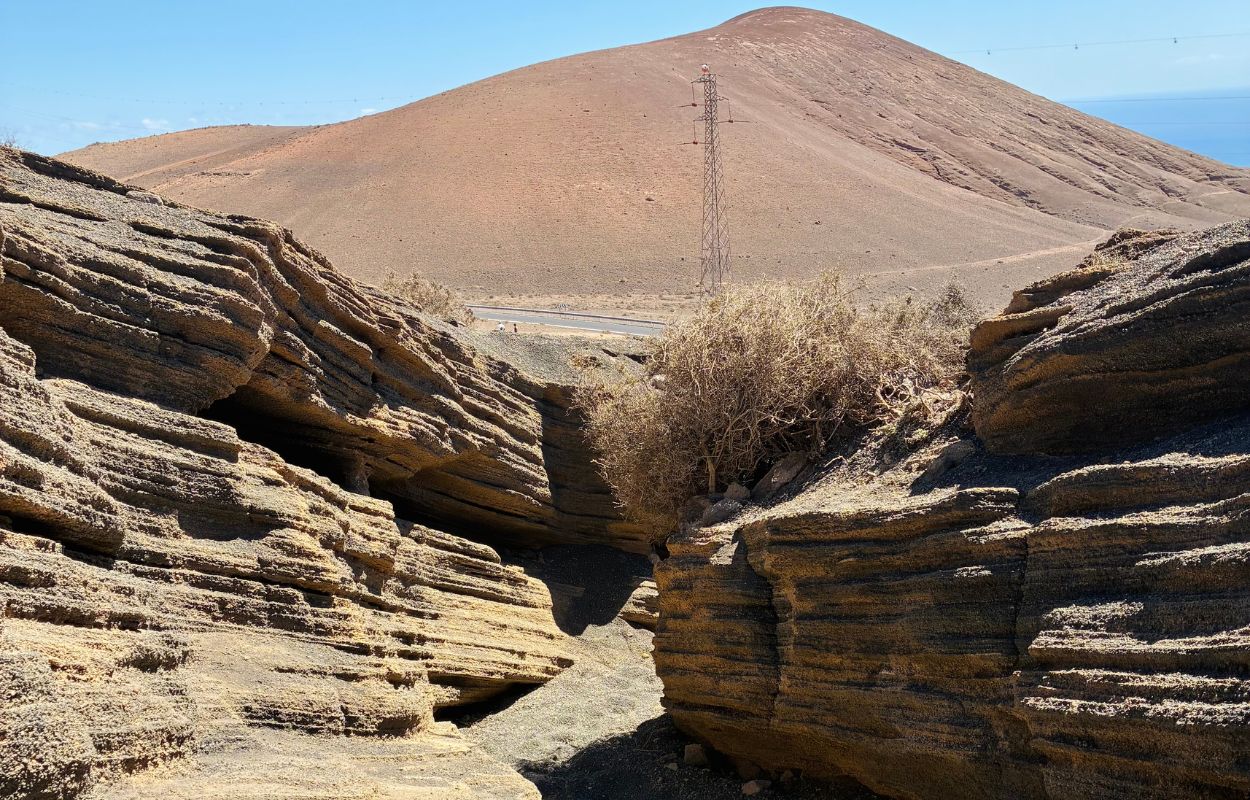
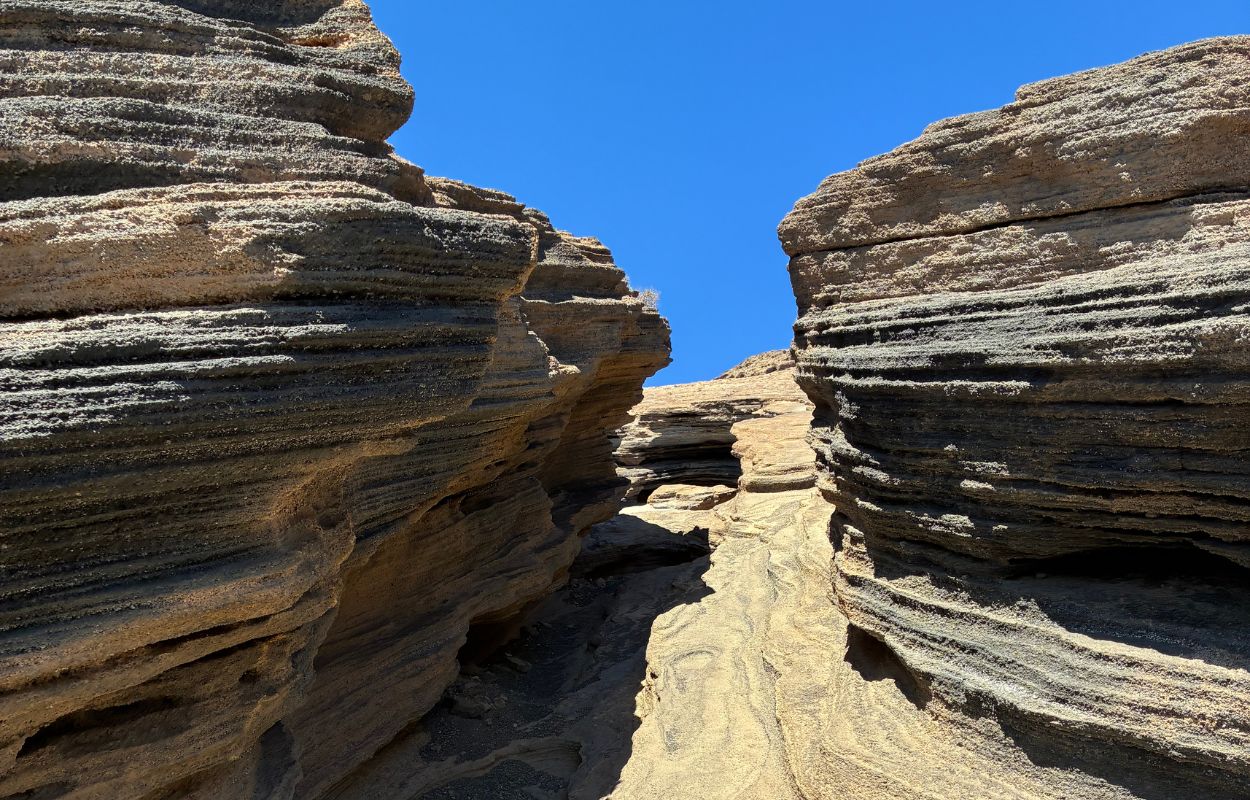
The first fissure was fairly short, so we climbed back out and followed the dirt paths toward the next ones. The fissures that followed were longer, taller, and even more impressive. Their entrances were easier to negotiate, although the ground remained slightly slippery. I found these sections even more striking. Sunlight fell across the walls in shades of gold, beige, light gray, and charcoal, creating a beautiful natural gradient.
Inside, the height of the walls makes you feel very small. Some walls are over 10 meters high! In places, the cracks are narrow and then open up wider. That sense of moving through a maze is part of the appeal, constantly drawing you toward the next turn. We also took time to study the different textures and layers of volcanic rock. Looking closely, you can make out layers created by successive volcanic flows.
What stood out most was the complete lack of development or signage: the landscape still feels raw and wild. There are no information boards, barriers, or shops. Just volcanic fissures at the foot of Montaña Blanca. You simply weave your way through the fissures and the surrounding volcanic landscape. I was also fortunate to experience it with very few other visitors around. That is probably less likely around midday during peak season. I was able to take in the silence, shifting shadows, and bright light at my own pace. The sun was strong at that time of day, however. I spent roughly an hour exploring several of the volcanic crevices.
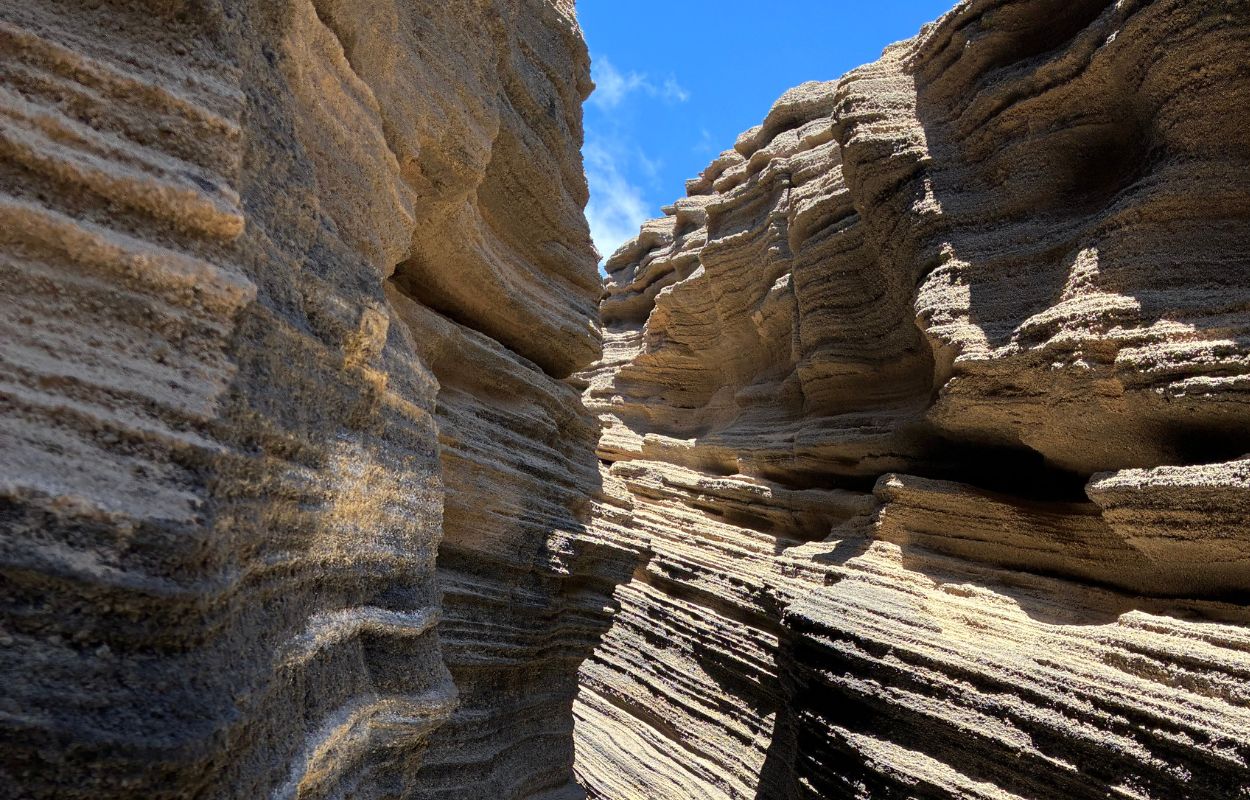
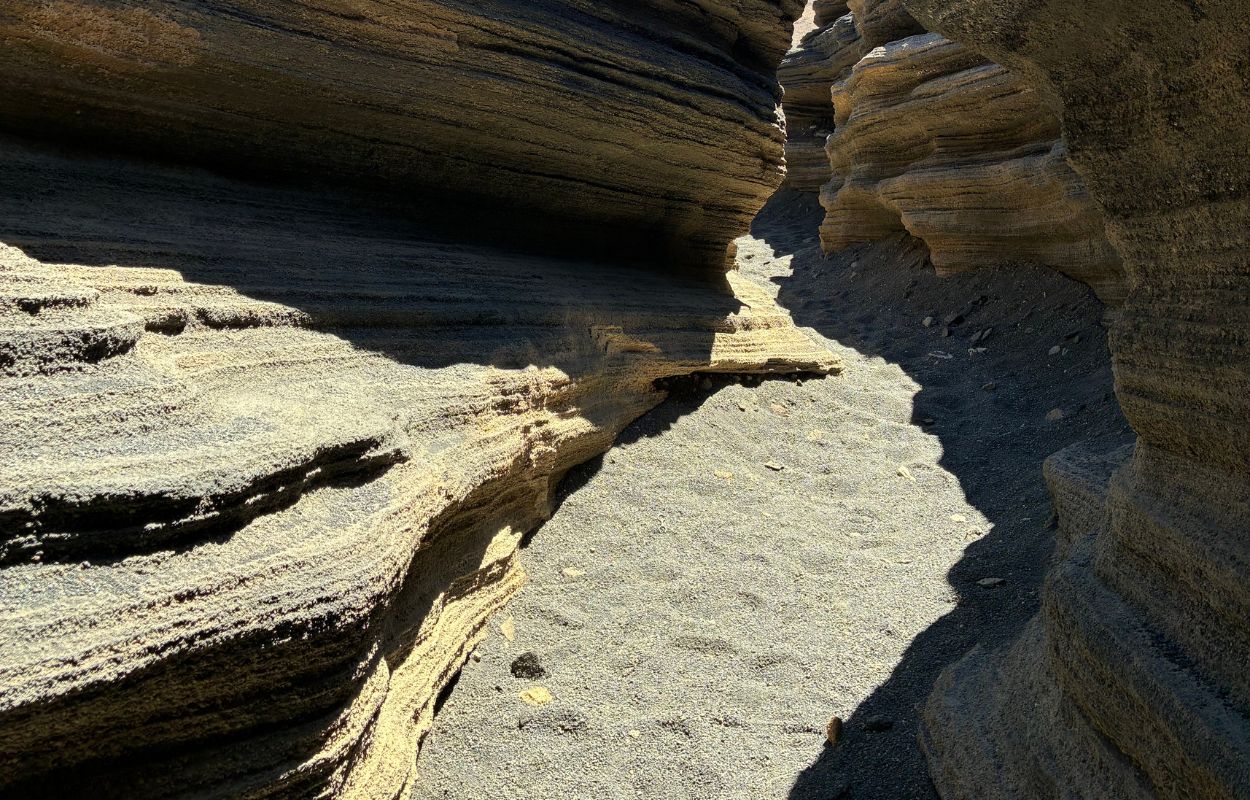
We climbed in and out of several fissures. I found it easier to follow the dirt path first and then descend into the crevices. Climbing upward through the fissures takes more effort in the heat, although the footing may feel slightly more secure. The best direction ultimately depends on your preference. And if, like me, you want to explore a few from the inside, you’ll end up going both ways. Whichever route you choose, take time to look around and photograph the details. The site is photogenic from almost every angle. Sunset must be especially beautiful, adding pink tones to the gold, beige, and gray rock.
By now, you can probably tell how much I liked this place. Without exaggerating, it became one of my favorite places on the island. I had seen photographs and videos beforehand, but the site felt even more distinctive in person. Lanzarote has many wild landscapes, but protected areas often limit how closely you can approach them or where you can walk. Although Las Grietas has become increasingly popular, it still feels removed from the island’s more conventional attractions. You don’t expect to find this kind of gem in Lanzarote, where you usually see more purple, red, and black rocks than sunlit golden ones.
Las Grietas in Lanzarote: Practical Information
Now that I have shared my experience, here are the practical details that will help you plan your own visit.
How to Get to Las Grietas
Las Grietas is relatively easy to reach. Here are the main transportation options:
- By car: this is the easiest and fastest option. I found my rental car through Discover Cars. The process was straightforward, and I found competitive rates. Las Grietas lies beside the LZ-35 between Tías and San Bartolomé, on the slopes of Montaña Blanca. Use the current unpaved parking area on the volcano side of the road and park carefully within the designated space. From there, follow the visible but unmarked dirt path toward the mountain. The first volcanic fissures are only a short walk away. As a rough guide, the site is about 10–15 minutes from Puerto del Carmen, around 20 minutes from Arrecife and the airport, and roughly 35–40 minutes from Playa Blanca.
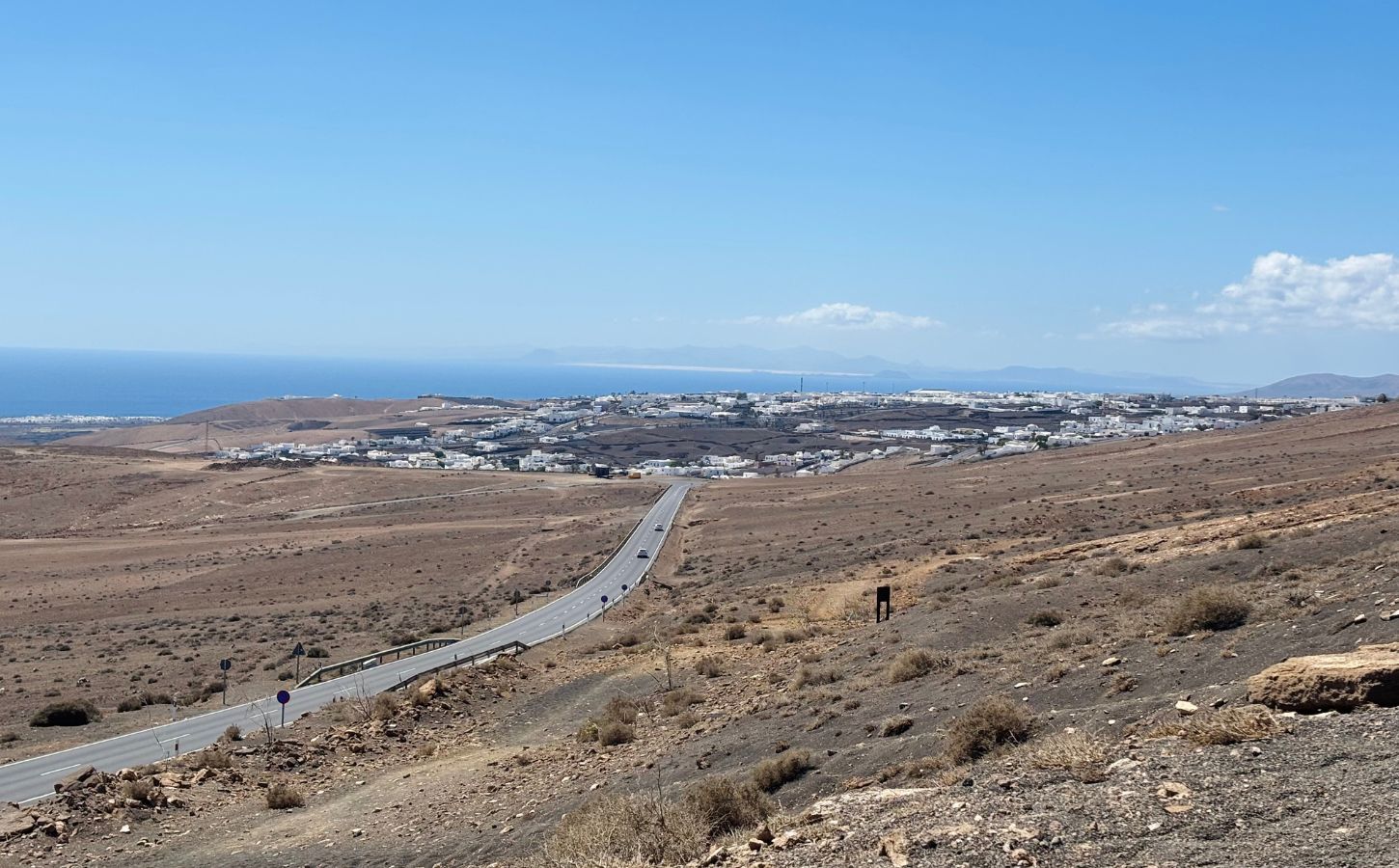
- By bus: if you have not rented a car, line 60 runs from Arrecife through Tías. Line 161 does not serve Tías; it connects the airport, Puerto del Carmen, and Playa Blanca. Check the current timetable before traveling, as journey times and frequency vary by day. From Tías, continue on foot or take a taxi. Walking from the village takes roughly 40 minutes, depending on your starting point. It is manageable, but the exposed route can feel demanding in strong sun. A taxi may be a more comfortable option; confirm the current fare locally before setting off.
- By taxi: for a more comfortable journey, take a taxi from your accommodation. When traveling as a group from Puerto del Carmen or Arrecife, sharing the fare can make this a practical choice. Ask to be dropped at the current Las Grietas access point beside Montaña Blanca. From there, the fissures are only a short walk away.
When to Visit Las Grietas
Las Grietas can be visited year-round because Lanzarote’s climate is generally mild and dry. July and August can be particularly hot and busy, so visiting outside the peak season may be more comfortable. September can also remain hot inside the sheltered crevices. The time of day, however, may matter more than the month.
Early morning and late afternoon are generally the best times to visit. In the morning, the light is softer, it’s cooler, and there are far fewer people. You will also have more room to move through the narrow fissures without waiting for other visitors to come out.
In the late afternoon, the changing light across the volcanic walls creates particularly attractive conditions for photography.
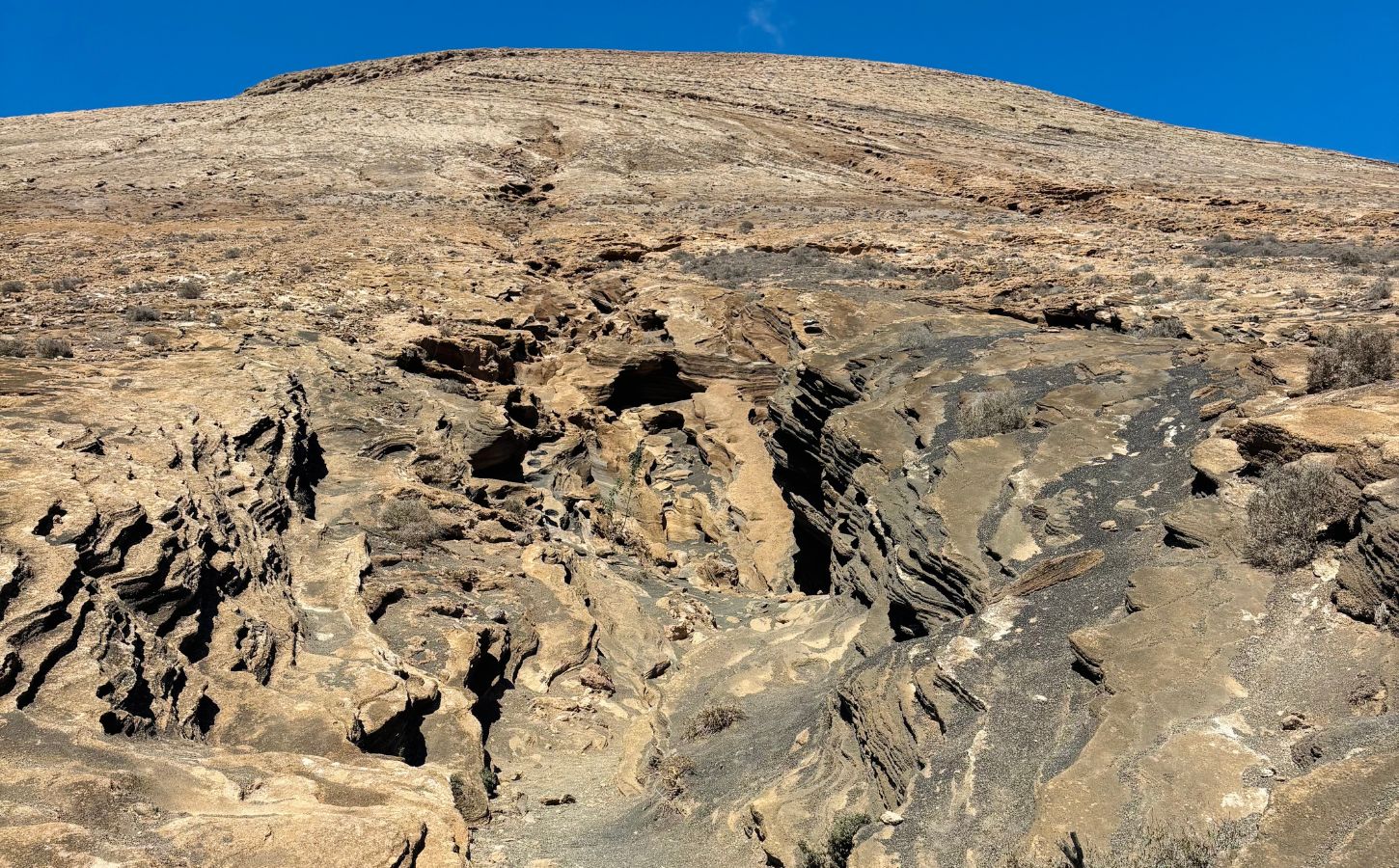
I visited around midday, which is not usually the most comfortable choice because heat builds up inside the fissures. Air circulation is limited, and there is very little shade. It was certainly warm during my late-September visit, although I was so absorbed in the experience that it did not bother me much. The sun was out, so I could really enjoy the golden and ocher tones of the rock.
Is Las Grietas Dangerous?
Las Grietas is not inherently dangerous, but it does require care. As at any undeveloped natural site without barriers or warning signs, visitors need to use common sense. That undeveloped character is also part of the site’s appeal. Some fissures are narrow and high, and loose fragments of rock may fall, particularly in windy conditions. The walls can also be sharp enough to cause scratches if you brush against them. Slippery ground increases the risk of losing your balance.
These risks should not prevent you from enjoying the site, provided you remain attentive. There was no wind during my visit, and carefully watching my footing was enough. Most importantly, wear sturdy shoes for better grip and comfort. I mention this because I saw several visitors wearing flip-flops. They are not suitable for slippery ground, sand, or small stones that can become hot in the sun.
Reports in 2024 mentioned rockfalls and a temporary safety closure. Current access conditions can change, so check local notices before visiting. This is a reminder that the landscape is continually evolving and should be treated with respect.
One final tip: consider postponing your visit if conditions are especially windy. Strong wind can blow dust and small stones through the narrow fissures.
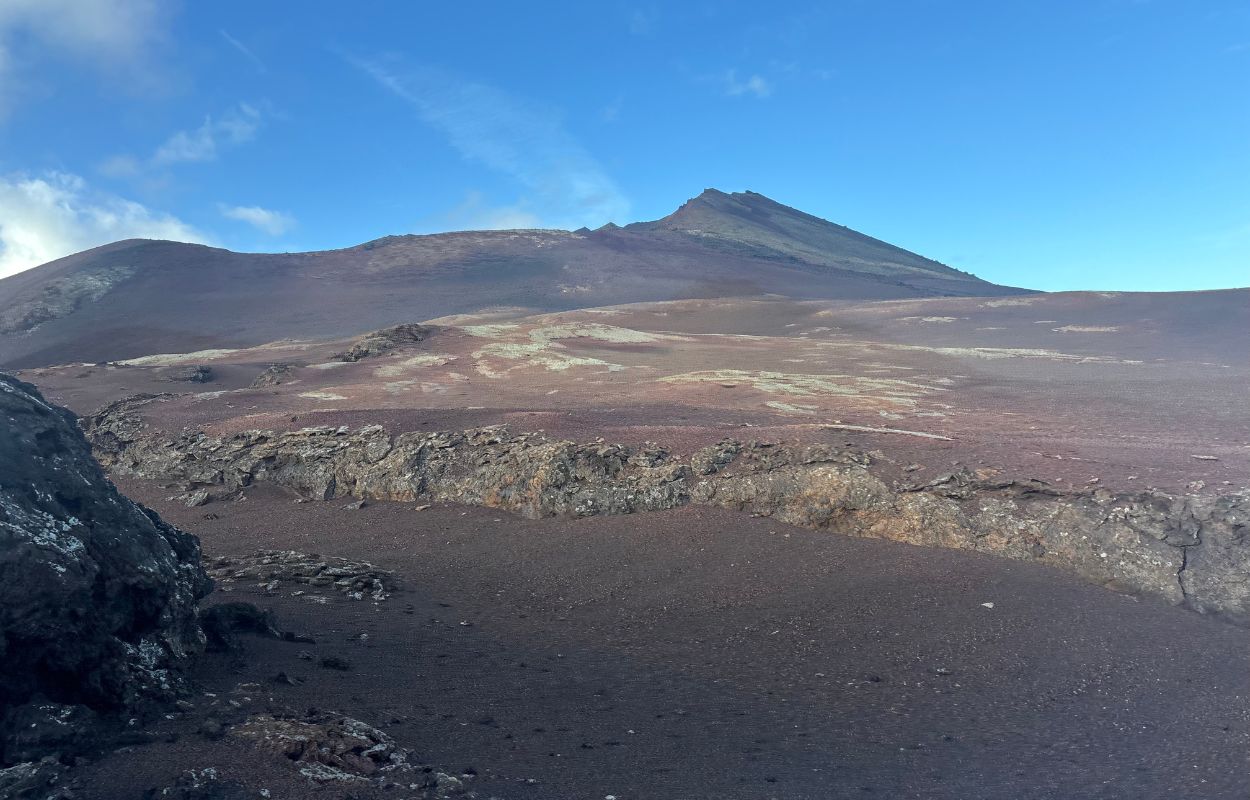
For natural sites with more established paths and visitor infrastructure, consider these alternatives in Lanzarote:
- Volcán del Cuervo: I visited it on a guided hike in Los Volcanes Park. The route is memorable because it takes you inside the volcanic crater, an unusual experience. I had not expected that before the visit. The crater combines cliffs, volcanic rock, and pockets of vegetation. The established path makes it easier to explore the crater safely.
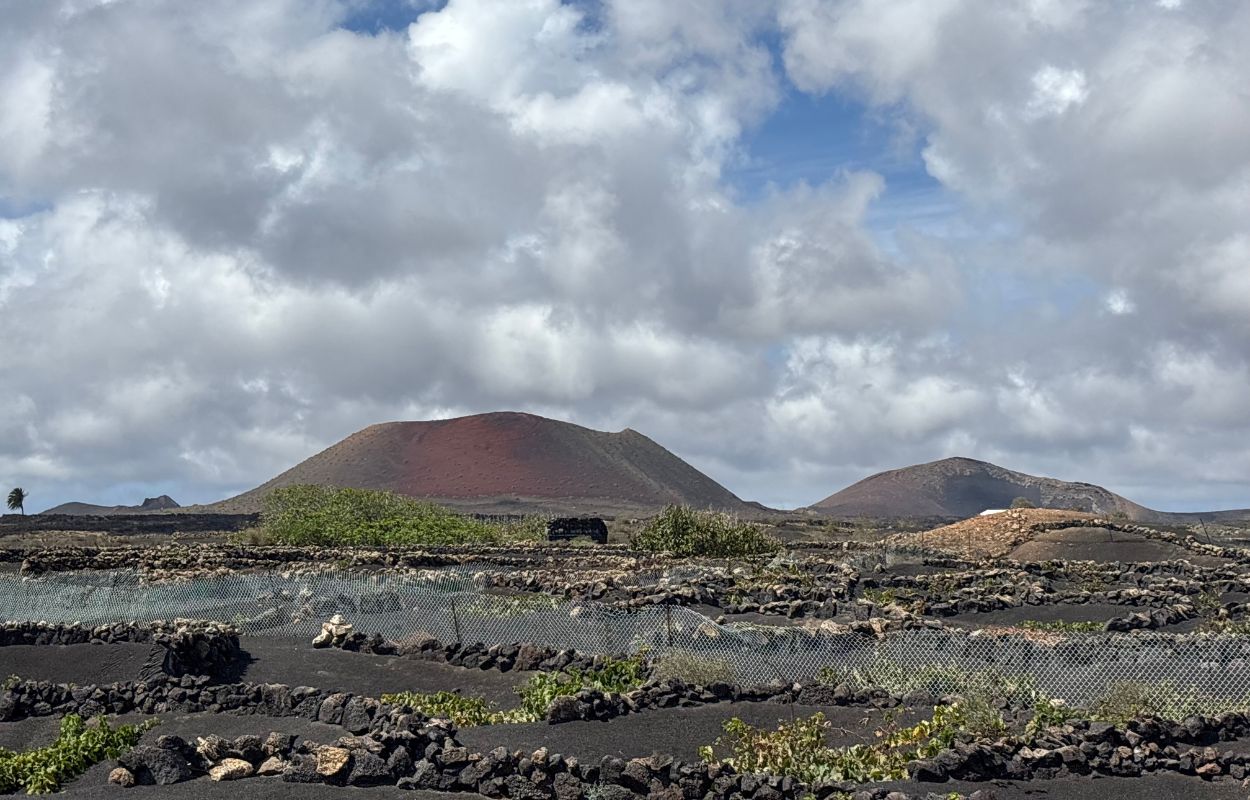
- La Geria: this is the famous wine-growing valley. The landscapes are covered with fields of black cones. Each cone forms a little crater with a vine and a stone wall to protect it. The resulting landscape is one of Lanzarote’s most distinctive sights.
- And on the southwest coast, don’t miss Los Hervideros and Charco Verde. These two sights are only about five minutes apart by car. Charco Verde is the island’s well-known green lagoon, set inside an ancient volcanic crater. The little path to the viewpoint is very short and easy.
As you can see, beyond Las Grietas, volcanic eruptions have really shaped Lanzarote. It is easy to understand why Lanzarote is known as the Island of Volcanoes. Some sites have established visitor facilities, while others remain completely undeveloped.
Where to Stay Near Las Grietas
Las Grietas lies in the central-eastern part of Lanzarote, between Tías and San Bartolomé, making the surrounding area a convenient base for exploring the island. To be closest to Las Grietas, I recommend the village of Tías. Its elevated position offers views across several parts of the island. It is also a more local-feeling village, with accommodation ranging from apartments and vacation homes to guesthouses. There is a good range of options.
If you prefer a livelier seaside stay, Puerto del Carmen is only about 15 minutes from Las Grietas. This seaside resort has hotels overlooking the ocean as well as apartments for more limited budgets. Restaurants, shops, activities, and beaches will all be close at hand.
For a more local vibe, check out the villages of Güime and San Bartolomé. Rather than large hotels, you will find fincas, or country houses, and small family-run properties. The atmosphere is noticeably different from the coastal resorts.
You can also use the map below to browse accommodation available nearby.
”Book
”Use
Conclusion
That brings us to the end of our visit to Las Grietas in Lanzarote. I hope this guide has answered your questions about these striking volcanic fissures.
If you want to enjoy even more volcanic scenery, I recommend several hiking routes in Lanzarote in a dedicated article. And if you feel like swimming or simply want to discover the best beaches in Lanzarote, we also have a complete guide.
See you soon for more from Lanzarote!

Written by Laura CALLES
Thanks to Mélanie and Sylvain, I had the chance to discover the Canary Islands, specifically Tenerife and Lanzarote, so that I could share these island paradises with you. Two real favorites of mine!
Despite our vigilance, an error may have crept into this article. If you spot one, please don't hesitate to let us know so that we can correct it immediately and keep our information up to date!