Diving in Lanzarote: our complete experience feedback!
Last update: 04/15/2026
Our blog continues to grow thanks to you, our readers. This post may contain affiliate links, which means we can earn a small commission if you make a purchase through them, at no extra cost to you. This helps us to continue to bring you more and support our work!
This time, we’re meeting up to go diving in Lanzarote. To me, it’s without a doubt one of the best activities to do in Lanzarote. To tell you a bit, it was my second dive. A week earlier, I was snorkeling in Tenerife and had already realized how rich the waters of the Canaries are. Even at the surface, I’d been able to see beautiful species and even an almost neon red starfish. So, I was pretty eager to dive in Lanzarote. Going deeper, I suspected I’d see more marine species.
Even though it was my second dive, I still had a few nerves. I was a bit torn between excitement and apprehension. Getting back the sensation of breathing several meters underwater always feels weird at first. For context, I dived in a cove right next to the port of Puerto del Carmen. This coast is one of the best-known for diving in Lanzarote, and it’s easy to see why: the water is calm, the descent is gradual, the water is clear, and the marine life is super rich and varied. Plus, there’s a lovely contrast between the black rocks to get there and the blue of the ocean. It’s already beautiful to look at before you jump in.
Honestly, if you’ve always wanted to try diving, Lanzarote is a perfect place to start. For a spot in Europe, the advantage is that there’s a mix of Atlantic and tropical fish. Whether for a try dive or a diving session, I’m sure you’ll enjoy the show (as much as I did!).
Story of our diving session in Lanzarote
As I was saying, even if it was my second dive, I felt a little nervous before going. Even though I knew the sensation of breathing underwater, having done it only once several months ago, I knew it was going to be impressive again. But off we went to Puerto del Carmen, our meeting point with the Active Scuba Divers dive club. We met in the parking lot at the port of Puerto del Carmen, not far from Playa Chica. By the way, if you want to know more about the beaches of Lanzarote, I invite you to check out our dedicated article.
Earlier in the morning, since I was staying in the south, I’d seen that the ocean was rough and there were quite a few waves. But once we arrived in Puerto del Carmen, you quickly realize that, on the east coast, the water is calm. We met Stéphane and Lorenzo, our instructors for our try dive. A very good point: we would dive two by two, each with our own instructor. You can’t be better supervised; it’s already super reassuring.
We also had to start with paperwork to indicate whether our health was fine, etc. It’s mandatory but quick, so don’t worry. Then, since the sun was strong but without being too hot, Stéphane and Lorenzo offered us either to put on the suits, get a bit wet and come back to do the briefing before diving afterward, or to do the briefing, gear up and dive. We chose the second option, because the heat was bearable and so that once in the water, we’d dive straight away. But I think it’s a nice touch. You know that if you’re too hot, there’s also that option.
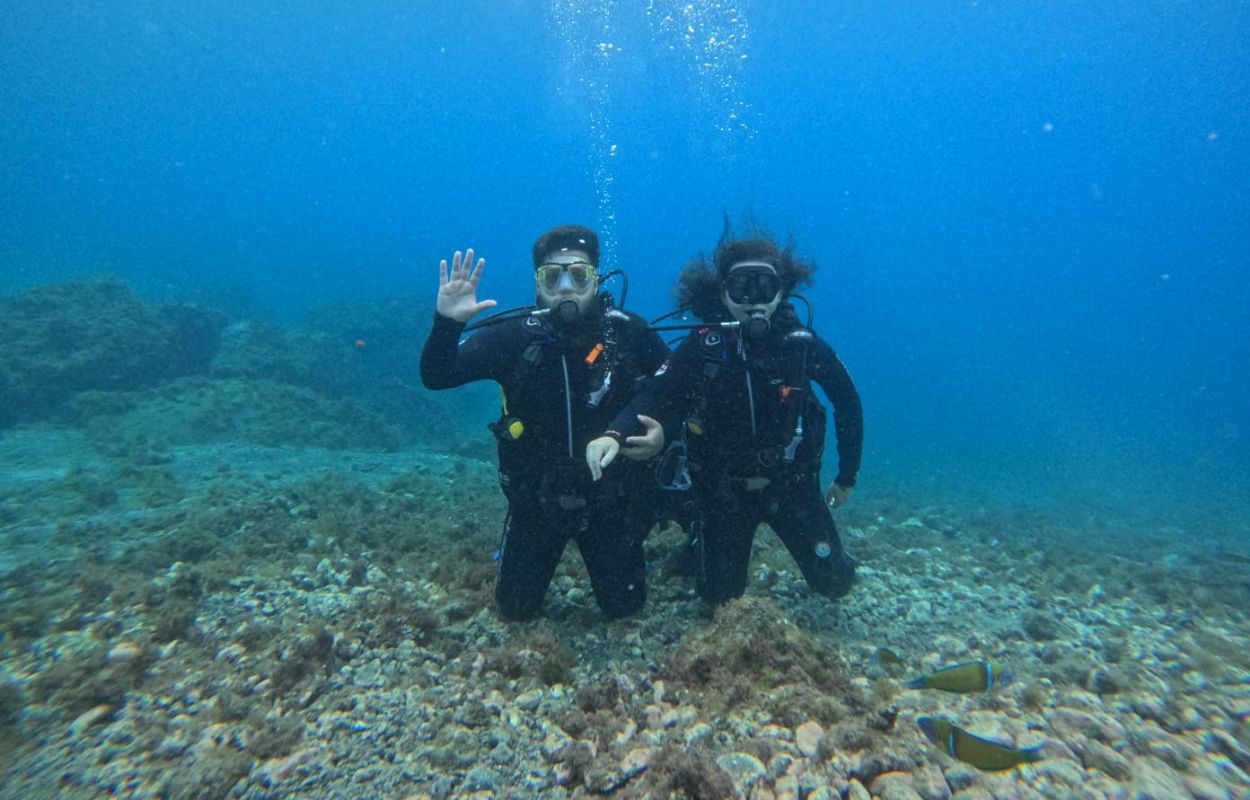
We started the briefing with Stéphane, who explained the different hand signals (the basic ones so we don’t get mixed up) and only those necessary for us: “I want to go up,” “everything is ok,” “my ears hurt or something else,” etc. He also explained how to equalize the pressure as we descended. That was something I remembered well, because during my first dive, I’d had some pain in my right ear, but nothing serious.
He also briefed us on the equipment: regulator, tank, BCD, mask, etc. The great thing is that we would simply have to manage equalizing the pressure, the regulator for breathing and purging water with a button, and the mask to clear water if needed. As for the BCD and buoyancy, each of the instructors would take care of it for us while holding our hand. Basically, we “just” had to breathe and, above all, enjoy. That’s when I thought the experience was going to be awesome. Especially since, even if every dive is a surprise, they told us a bit about the species we might see. In any case, we immediately felt confident with Stéphane and Lorenzo; we knew we were going to have a good time.
At that precise moment, all we had left to do was gear up with our wetsuits, dive boots (booties), weight belt, BCD, tank, etc. I won’t lie: all that equipment on your back is quite heavy. But once we had everything, we headed pretty quickly to the cove.
The big moment was approaching fast, ha ha! I was still just as excited and, with less apprehension, it was looking good! I would be diving with Stéphane and my partner with Lorenzo. After my first breaths underwater, I found the feeling weird at first. I needed a few minutes to adapt well. But Stéphane didn’t rush me; he listened, and I felt good. Once we set off again underwater, the show began very quickly. Already, a few meters down, we encountered the first fish.
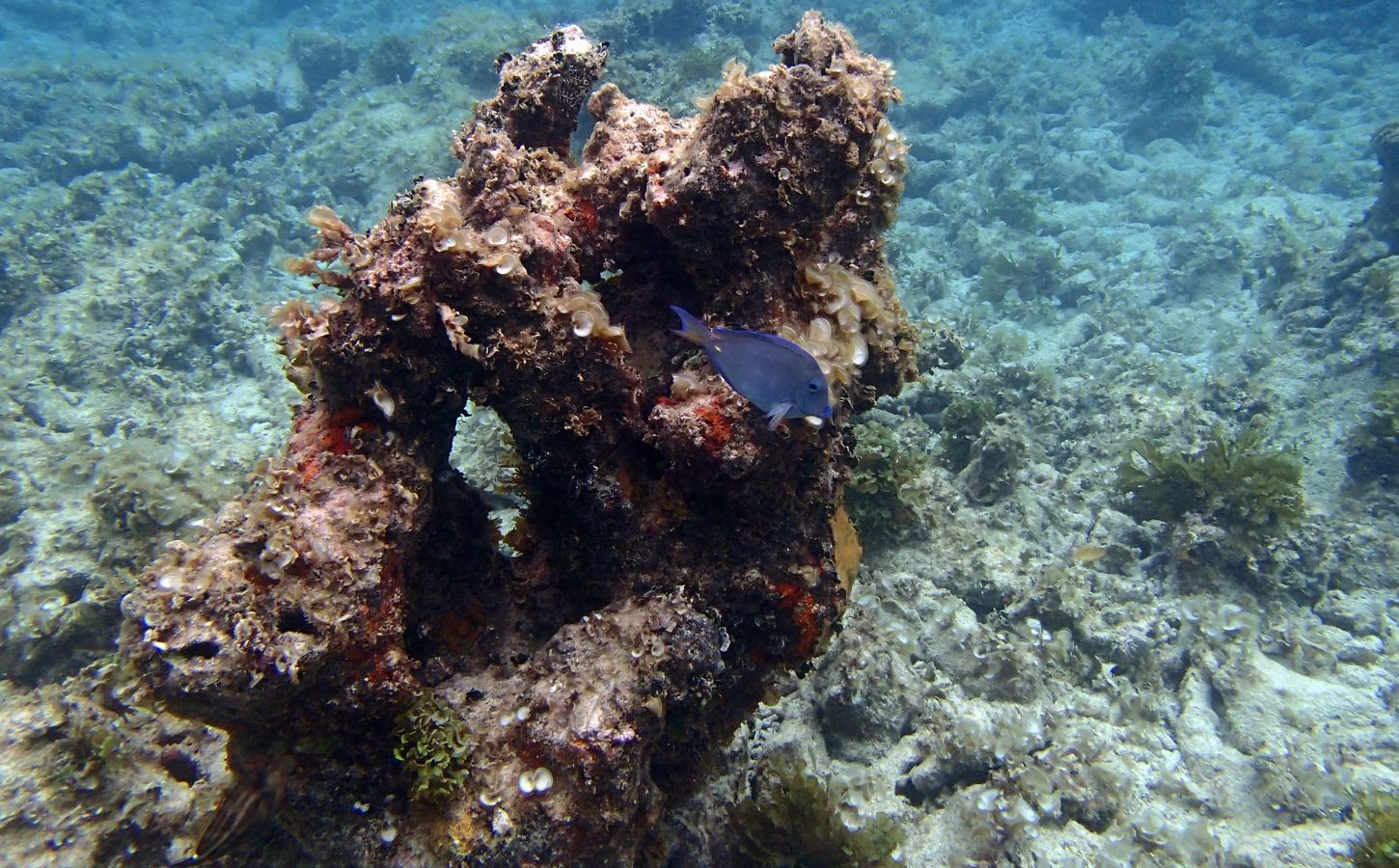
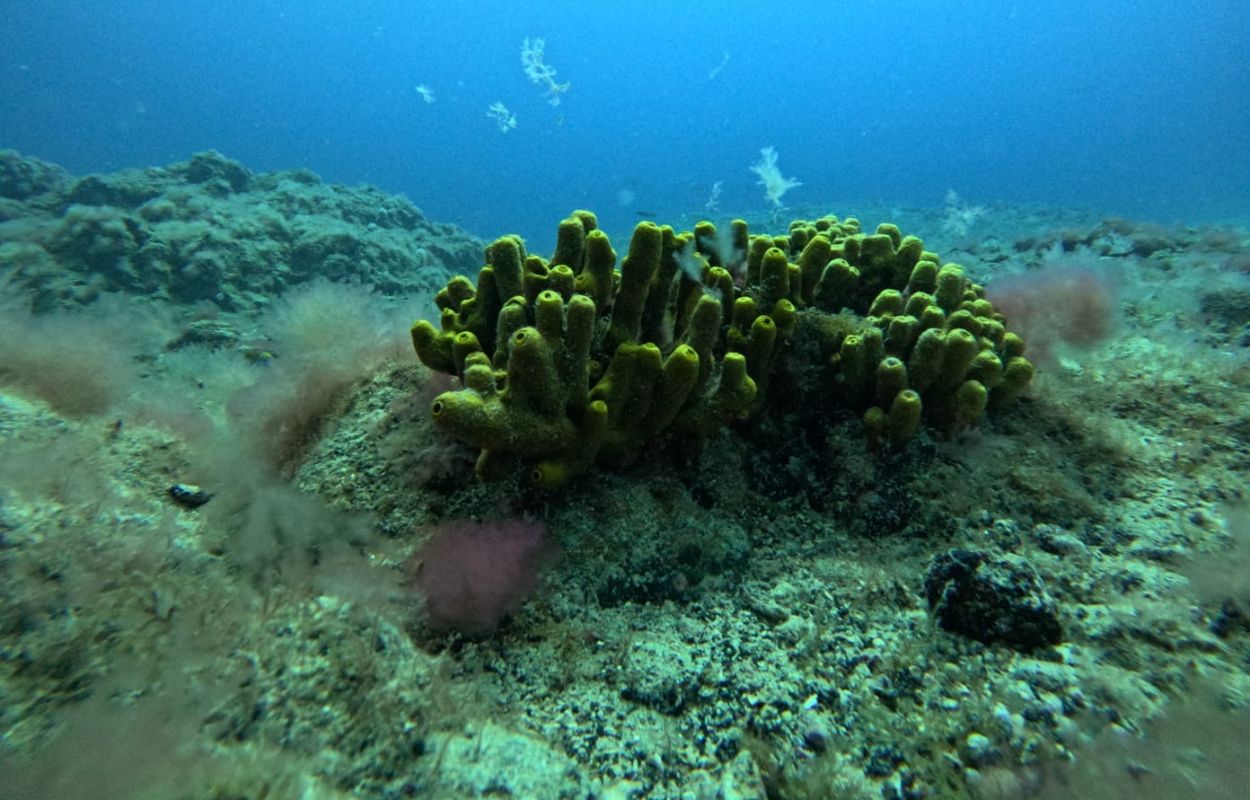
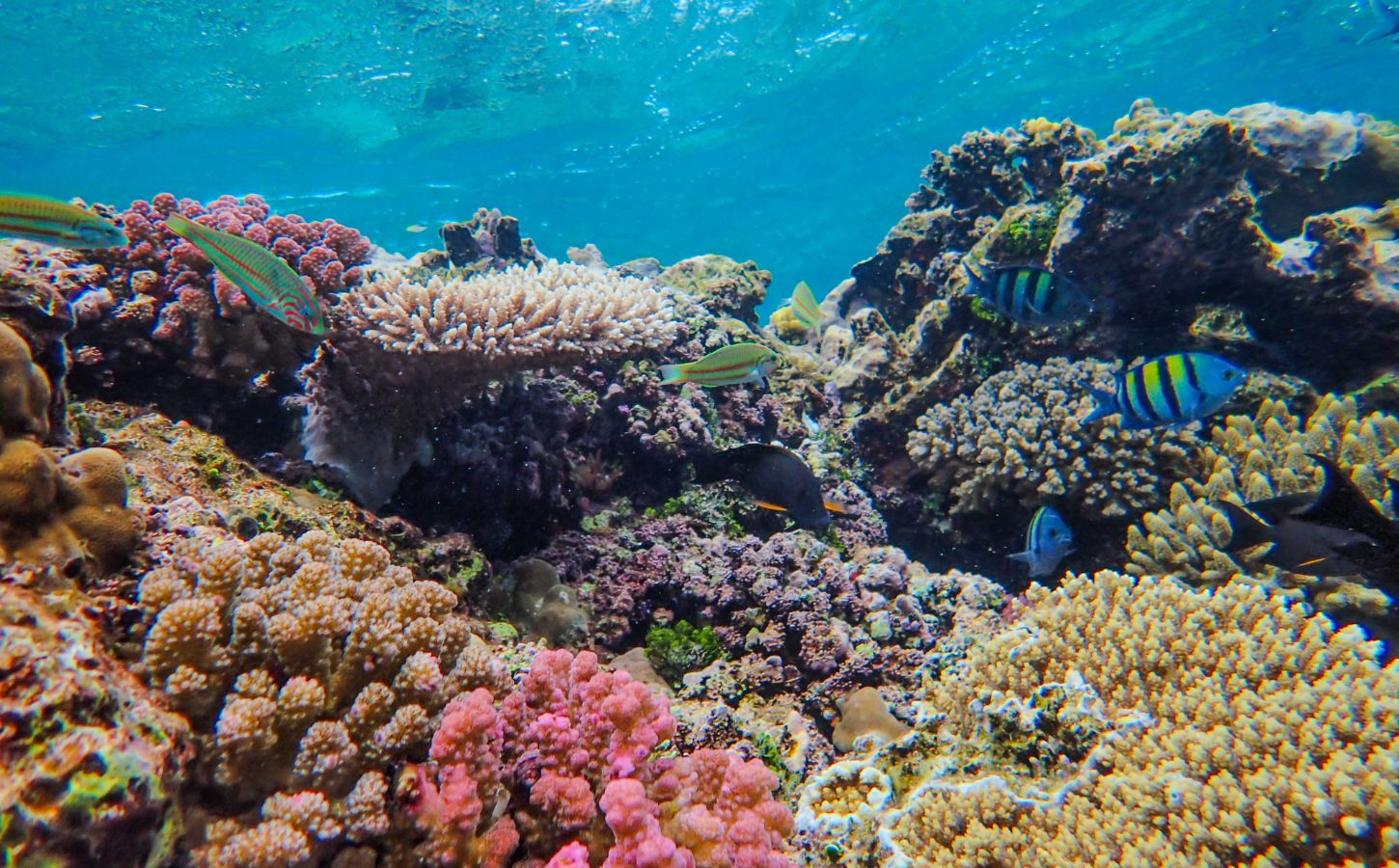
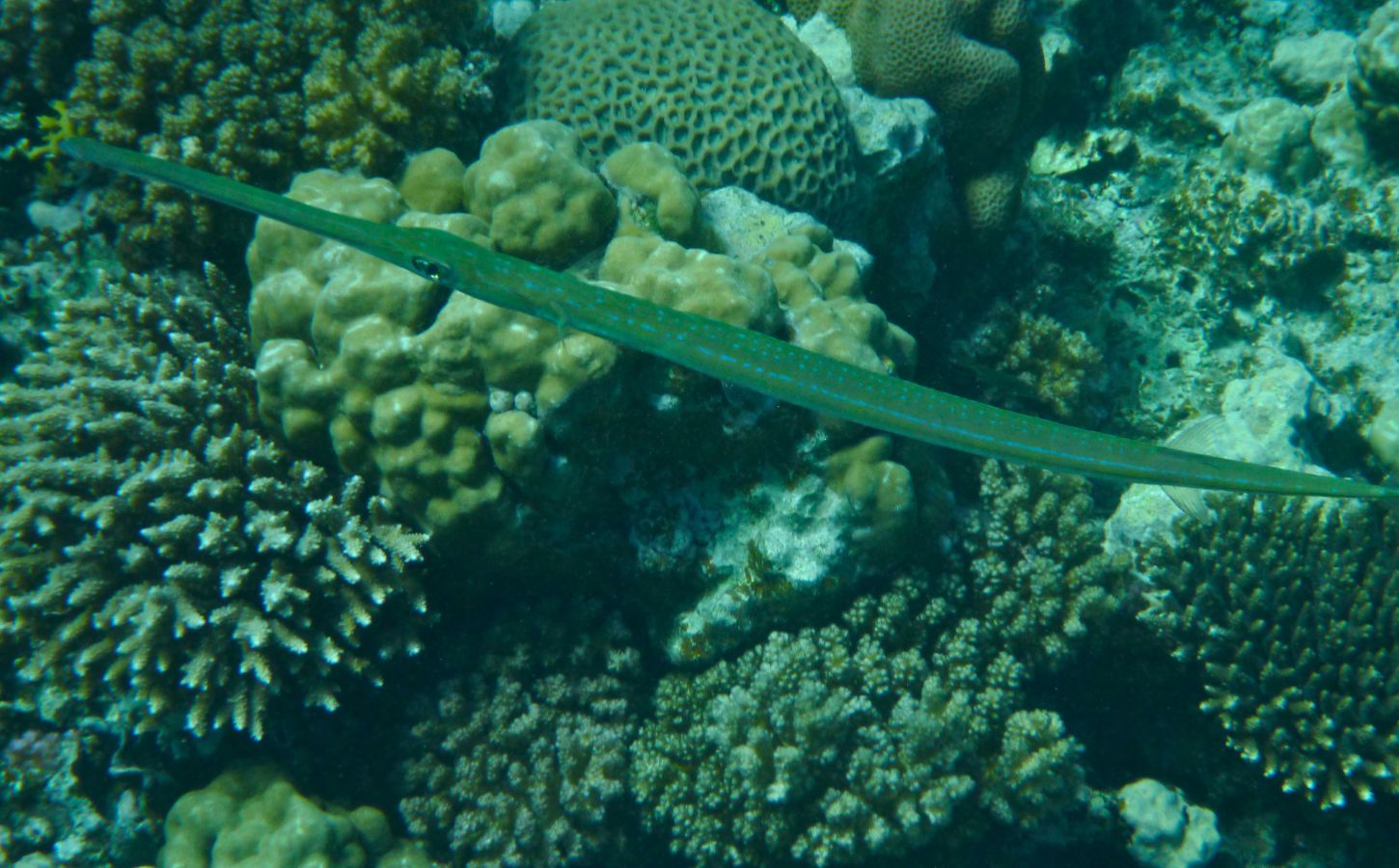
It was just incredible; it never stopped! I felt like I was watching the lives of different fish without disturbing them. I discovered underwater for the first time parrotfish, viejas, wrasses, damselfish, nudibranchs, flutemouths and even a trumpetfish (almost at the end of the session, I was lucky!). The whole time, I was like in a bubble of silence, captivated by all these species. As you can imagine, I didn’t see them all at once. Sometimes there were several in my field of vision, so Stéphane pointed out some that were more hidden. There were moments when I didn’t know where to look. That’s when you forget the practical side (breathing underwater, etc.); you’re focused on the life happening around you. I didn’t even realize the depth we were at (we went a little over seven meters). Stéphane was attentive, he guided me, I simply enjoyed!
Since I’d had some ear discomfort, I overdid the equalizing a bit, ha ha! But it didn’t stop me from savoring the moment! Forty minutes later, we started to ascend. I saw more and more light underwater. And here we were back at the surface! It was just incredible. I had a magical time. Same for my partner! We really thank Stéphane and Lorenzo for this dive. We felt confident and safe from start to finish. It was so smooth; everything followed naturally underwater. We came out of the water with images full in our heads and, above all, big smiles! Well, also with the weight of the gear that you really feel when you get out of the water. That was just a detail, and it’s part of the experience.
The four of us also debriefed all the marine species we’d seen in detail. For example, we saw a parrotfish with a broken jaw, probably because it had fought with one of its peers. Each in our own bubble, we had perceptions that were both different and similar. I’ll admit we were wiped after this session, so we went for a drink right after saying goodbye to Stéphane and Lorenzo. Over drinks, we got into a debate about what we’d seen and when. In any case, we’re keeping wonderful memories. We even asked about doing a dive course—that says it all!
Our opinion on our diving outing in Lanzarote
I think as you’ve read along, you’ve already figured it out, but I’ll say it anyway: I really loved this try dive in Lanzarote. If you want to try diving or get certifications, I wholeheartedly recommend the Active Scuba Divers club. The feedback is very positive on this club, and you quickly understand why. We were in good hands with Stéphane and Lorenzo!
On top of that, each of us had our own instructor, so they were really attentive and listened to us. It’s not only reassuring but also a great moment to share. As for wildlife, I didn’t expect to see so many species, and sometimes at the same time. The water was clear; we had very good visibility. It was simply up to us to be as attentive as possible. You had to look in every nook, near the rocks, but also on the seabed, in aquatic plants. Throughout the dive, I disconnected. I was simply focused on the present moment and the underwater world living around me. It felt so good! I’d even say it’s a unique sensation.
To give you more info about the club we dived with: Active Scuba Divers is a club that offers human-sized experiences, without pressure and adapted to everyone. Generally, the club organizes excursions in small groups of two to four divers. That immediately brings a feeling of trust and safety. You can feel that Stéphane and Lorenzo are truly passionate about diving and Lanzarote. They speak French, Spanish and English. For French speakers, that’s a real plus. It’s immediately more pleasant and easier when the excursion is in our own language. They also offer PADI, SDI, TDI and SSI courses. In other words, if you want to make progress or prepare your first level in a calm and professional atmosphere, I recommend this club first!
There were also thoughtful touches that I appreciated for my try dive with them: the photos taken are free and they send us a certificate to certify that we discovered diving. It’s nice and gives us a souvenir!
Scuba diving in Lanzarote: practical tips
As always, I’ve prepared a practical corner to answer all the most frequently asked questions. At a glance, you’ll find all your answers!
The animals to discover while diving in Lanzarote
I want to say that this is what makes the experience so magical: the richness of marine biodiversity. Lanzarote is part of the UNESCO biosphere reserve. That’s why the seabed is so rich and preserved. Even staying at the surface, with just your head underwater, you’ll already see schools of fish like seabreams and gilt-head breams. And if you’re attentive, you might see moray eels or cuttlefish.
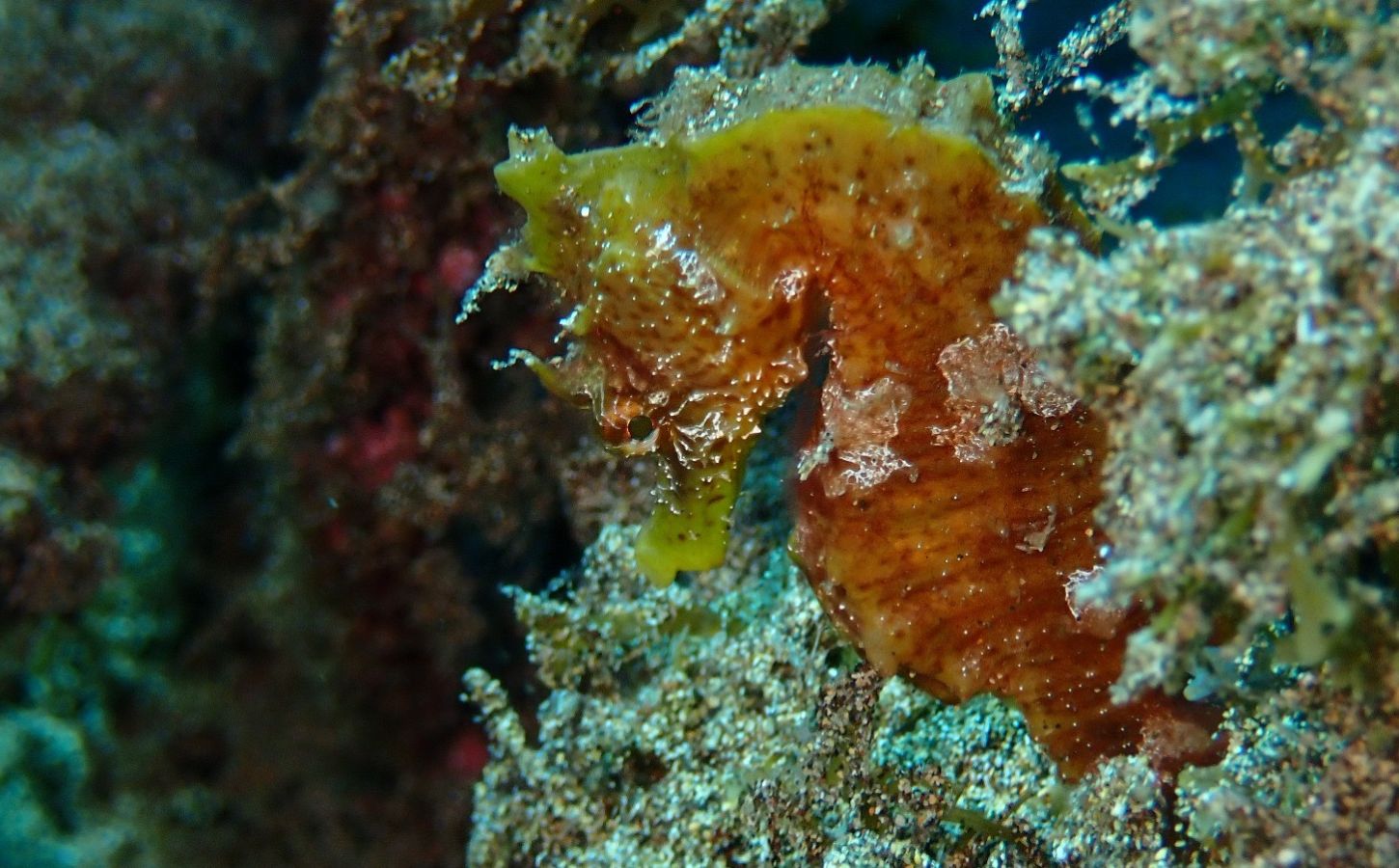
Going deeper, beyond the baptism dive depths, at around ten meters deep, you’ll encounter stingrays, butterfly rays, eagle rays or even loggerhead turtles. Around Playa Chica, you can also see barracudas, octopuses and even seahorses (even if they’re more discreet). So, a little tip: if you’re scuba diving, slow your movements and scan every nook and cranny! It’s precisely near volcanic rocks or in aquatic plants (anemones) that the best surprises hide!
Best times to go diving in Lanzarote
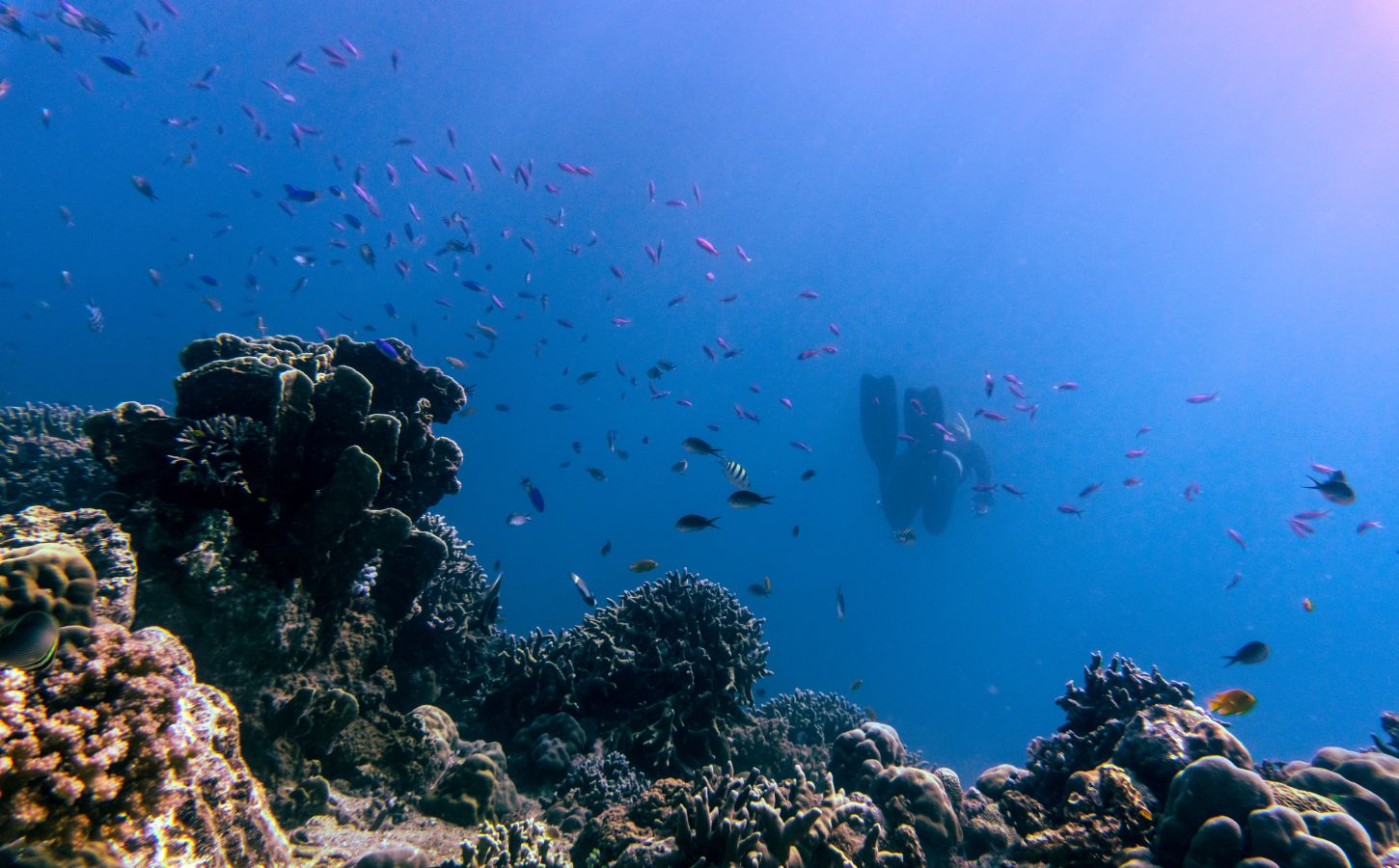
Another positive point for Lanzarote: you can dive there all year round. Indeed, it’s thanks to its mild year-round climate, as if it were continuous spring. Temperatures range between 18 °C in winter and 24 °C in summer. But there are still better times than others.
I’d say the best period runs from April to October! The water is warmer and calmer (which allows good visibility underwater). It’s also the time when many species are present around the island. Having dived in September, I can only confirm! If you prefer to avoid the crowds, the months from November to February are worth considering. You’ll see, visibility remains good. On the other hand, the water is cooler; you’ll likely need to add a wetsuit or wear a thicker one. But it works fine: the water is around 18 °C.
If you want more info to plan your trip, feel free to take a look at our article: When to go to Lanzarote.
The best spots to go diving in Lanzarote
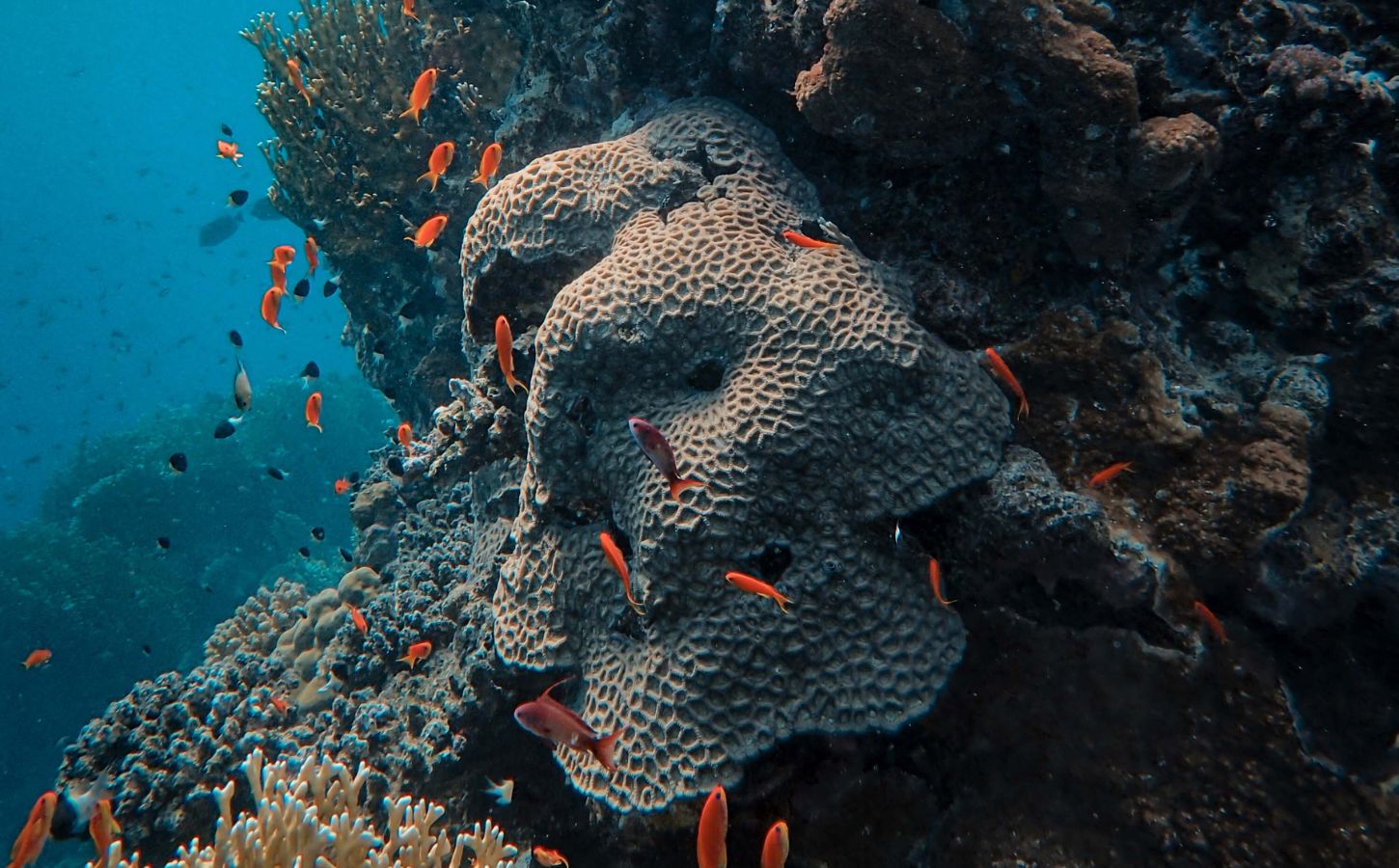
What’s great on the island of Lanzarote is that there are numerous dive spots for all levels. Each time, these spots offer a different setting: volcanic caves, underwater sculptures, schools of fish, etc. Whether you’re a beginner or an experienced diver, there’s plenty to explore in Lanzarote. I won’t say more and I’ll let you discover the best sites to dive:
Playa Chica (Puerto del Carmen)
This is Lanzarote’s best-known spot. It’s easy to get to, and it’s right next to the port of Puerto del Carmen (like the cove where I did my session). Simple: visibility is great; you’ll see everything: octopuses, seahorses, turtles, parrotfish, viejas and more.
Museo Atlántico (Playa Blanca)
It’s without a doubt the most unusual in Lanzarote. To give you an idea, it’s at 14 meters deep and it’s the first underwater museum in all of Europe! You’ll dive around more than 300 sculptures underwater, which are gradually covered with corals. It’s a unique experience blending art, nature and silence!
El Poril & La Catedral (Puerto del Carmen)
These are two deeper spots for seasoned divers. In fact, La Catedral is a volcanic cave at around thirty meters deep. You’ll have various encounters, such as giant groupers, barracudas and eagle rays. Suffice it to say it’s considered one of the most impressive in all of Lanzarote!
Charco del Palo (northeast)
For a bit more privacy, this dive site is less known and therefore wilder. You can move through volcanic canyons and observe varied marine life, such as moray eels, scorpionfish, rays and cuttlefish—in addition to crystal-clear water!
Mala
Also in the northeast of the island, Mala is recognized for its volcanic arches. You’ll be able to take beautiful photos: make sure to bring your camera! Conditions come together here with the winning combo: good visibility and little current.
If you have time and dive experience, I recommend doing Playa Chica and the Museo Atlántico: it’ll be a good mix between marine life and art underwater.
The best clubs to go diving in Lanzarote
To dive in Lanzarote, know that there’s no shortage of clubs on the island. I’ve prepared a selection of reputable dive clubs with good feedback. Of course, I primarily recommend diving with Active Scuba Divers. As I mentioned, my experience with them was very successful! I recommend this club 100%.
Safari Diving (Puerto del Carmen)
Also located on Playa Chica, this club is among the best known in Lanzarote. The team is professional, whether for a try dive or a more technical dive. Their location is convenient because from the beach you can access beautiful dive spots. To go further, they also offer boat dives and can even pick you up at your accommodation.
Dive College Lanzarote (Playa Blanca)
If your accommodation is in the south of the island, Dive College Lanzarote is a very reputable club. It’s located on the seafront, in Playa Blanca. Feedback is positive: the instructors are kind and passionate, always ready to share their anecdotes about the seabed. As a bonus, they offer dives at the Museo Atlántico (remember, it’s the famous underwater museum).
Pro Dive Lanzarote (Costa Teguise)
In Costa Teguise, this club is ideal if you prefer to avoid tourist sites. Pro Dive stands out for its personalized approach, with small groups, good equipment, all in a cheerful atmosphere. They organize outings both to Playa Chica and to more isolated spots.
How much does it cost to dive in Lanzarote?
So, prices for diving in Lanzarote often vary depending on the club and the type of dive. But overall, I find the rates more than reasonable.
- Try dive (initiation): expect between €60 and €80, depending on the duration and location (often at Playa Chica or Playa Flamingo). This includes full equipment (tank, BCD, weight belt, wetsuit, fins, booties), the briefing, the supervised dive and photos. For the try dive I did, it was €75 per person. Honestly, it was worth it given the quality of the gear and guidance. I’d do it again without hesitation.
- Certified dive (for holders of an Open Water level or equivalent): between €45 and €60 per dive, with decreasing rates if you do several.
- 2 to 6 dive package: often between €100 and €250, depending on the formula chosen. I think that’s quite reasonable!
- Museo Atlántico (Playa Blanca): since it’s a unique dive you can only experience in Lanzarote, it’s more expensive. Expect around €80 to €100, equipment included.
- PADI or SSI courses (Open Water, Advanced, etc.): generally between €380 and €500, depending on the duration and the dive center.
A small clarification: sometimes equipment rental is an extra, between €10 and €20 per dive. It’s not much, but it’s better when everything is included. Most dive clubs include equipment rental in the initial price, especially for beginners. Conversely, if you come with your own gear, some centers offer discounts. It’s always useful to know! Before booking, I recommend asking several dive clubs to see which option suits you best.
How long does a diving session in Lanzarote last?
As with price, the length of a diving session depends on the type of dive and your level. In general, it lasts between two and three hours, including preparation.
For a try dive (it’s a first dive, like the one I did), you’ll be in the water between 25 and 45 minutes. In my case, it lasted exactly 40 minutes. I didn’t see the time pass because I was captivated and focused on all my encounters with the fish. It’s a sufficient duration to get familiar with the underwater world and the sensations that come with it. I assure you that you still end up tired, ha ha. But it’s the good kind of tired.
Right before diving, the instructor takes the time to do the briefing to explain the basics: the signals to communicate underwater, equalizing ear pressure, how to clear water from the mask and regulator if needed, etc. The gear-up phase also takes time. Between all that, count on 1 h 30.
For certified divers, the time underwater is longer: between 45 and 60 minutes, taking into account depth and air consumption. Generally, plan for:
- 2h to 2h30 for a classic outing (welcome, briefing, gear-up, dive, debrief).
- 3h to 4h for a special excursion, like the Museo Atlántico.
So I advise you to plan your time well if you have other activities and outings scheduled during the day, especially since physical exertion is not recommended after a diving session.
I’m reaching the end of this article about diving in Lanzarote. I hope my experience made you want to discover the marine world around the island. I also hope that if you haven’t dived yet, you might take the plunge. Honestly, Lanzarote is a beautiful destination to start.
For experienced divers, I imagine my story brought back memories, ha ha. In any case, Lanzarote is a very good playground for you too! For those more comfortable on land, quad biking in Lanzarote is a fun outing to explore the island’s volcanic landscapes. Not to mention our guide to the best hikes in Lanzarote. I also recommend doing a hike in Los Volcanes Park on the island. There’s plenty to do! You’ll have to tell me what you think.
See you soon for more activities in Lanzarote!

Written by Laura CALLES
Thanks to Mélanie and Sylvain, I had the chance to discover the Canary Islands, specifically Tenerife and Lanzarote, so that I could share these island paradises with you. Two real favorites of mine!
Despite our vigilance, an error may have crept into this article. If you spot one, please don't hesitate to let us know so that we can correct it immediately and keep our information up to date!