Discovering Tahiti’s lava tubes with Natura Exploration
Last update: 04/17/2026
Our blog continues to grow thanks to you, our readers. This post may contain affiliate links, which means we can earn a small commission if you make a purchase through them, at no extra cost to you. This helps us to continue to bring you more and support our work!
As I write these few lines, I am on my return flight Papeete – Paris. We have just spent six years in Polynesia, six years discovering the Pacific Ocean. And yet, and that is often how it is in truth, when you live somewhere, you do not necessarily take the time to see and do the things that are right next to you. Melanie’s brother, Guillaume, came during our last three weeks in the territory and it was in particular an opportunity to go hiking in the heights of Vaitavere, here in Tahiti. During his stay, I also had the opportunity to join him to discover the famous Tahiti lava tubes with Natura Exploration.
I had already heard about the place several times, but I had not yet had the chance to go. That is done now. For those wondering, lava tubes are geological formations resulting from the erosion of successive lava flows from the period that formed the island of Tahiti. I will not go into the details, but the hike consists of discovering a huge lava tube, in a way a huge cave, all in a tropical setting! If you like the idea, we also wrote a complete guide to activities in French Polynesia.
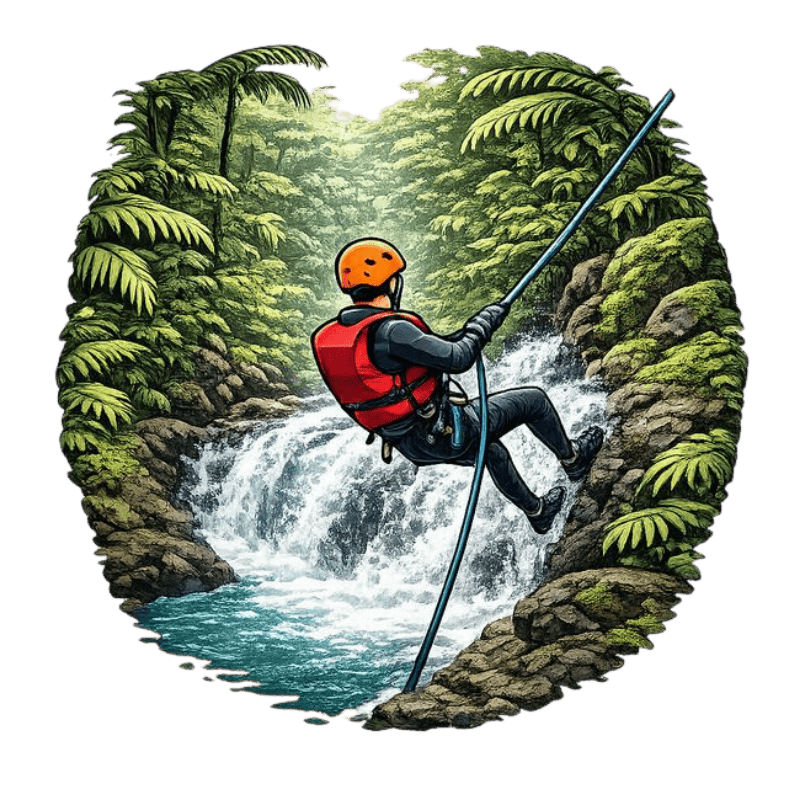
You should know that there are several areas on the island of Tahiti with other lava tubes, but it seems to me that the one we visit is one of the largest and best known. In this article, I present our day of exploring in this superb setting. At the end of the article, you will find, as always, the practical and necessary info to organize this great activity that I recommend to people who want to discover the riches of Tahiti’s interior, combined with a bit of sport. On today’s program: quite a bit of walking in the tropical forest, in the rivers, exploring several sections of the lava tube, several jumps (inside and outside), and finally rappelling.
All right, let’s go! For the record, for those wondering, this is not a partnership; we paid for our two days and wrote this article of our own free will to highlight this very cool activity to discover if you are into thrills and exploration!

Our day in the lava tubes
The day begins downtown when Arnaud and Tia, the two guides for the day, come pick us up in downtown Papeete. It is possible to arrange to be picked up elsewhere, but it was convenient for us and for the two girlfriends on vacation who came with us (they will probably recognize themselves if they come across this). An hour’s drive toward the East Coast takes us to PK 39.9 East (Hitiaa), to the entrance of the private road that provides access to the lava tubes.
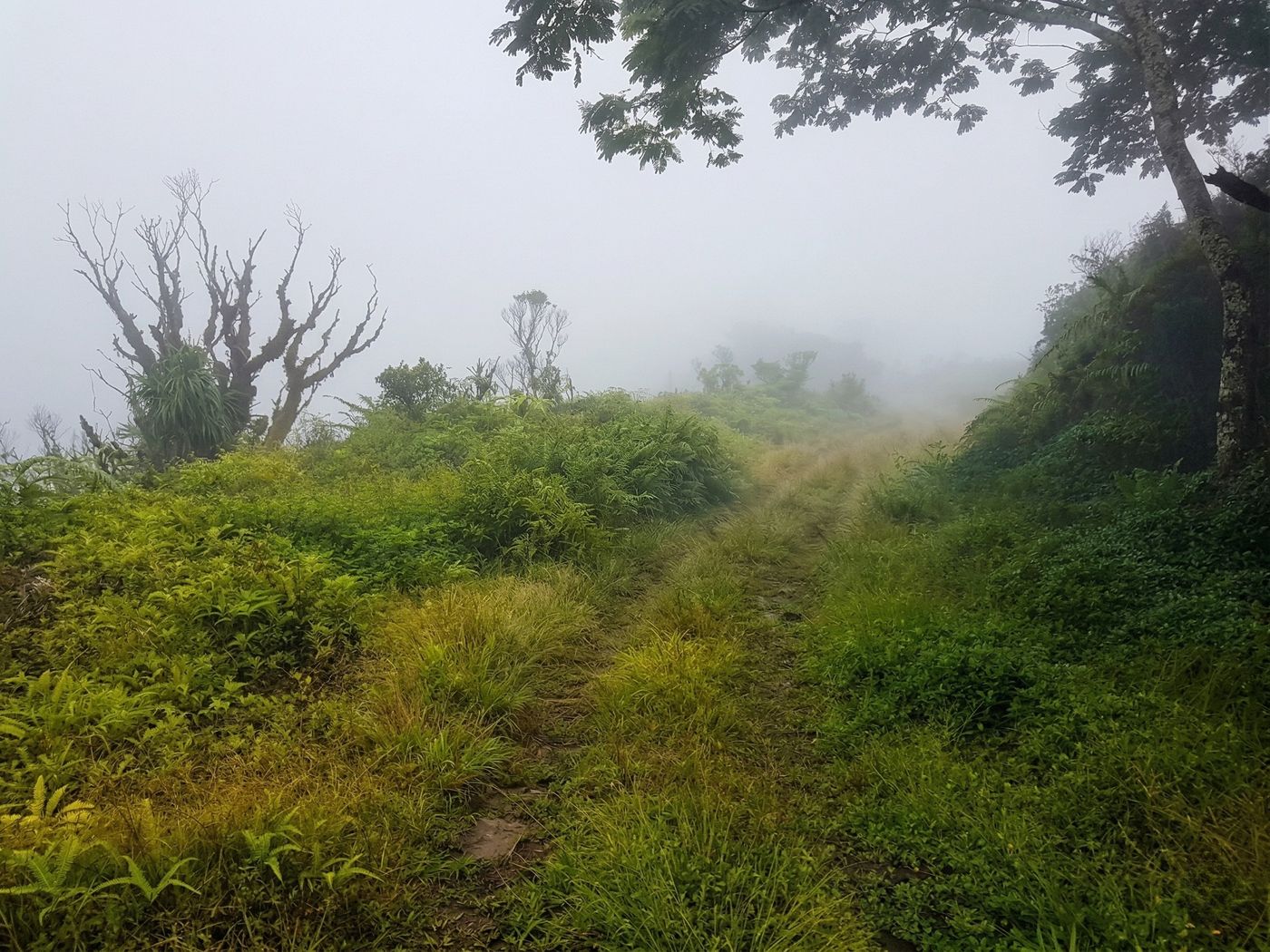
For now, the weather is very nice and we are lucky for once. Arnaud explains that the interior of the island, in this area, has a microclimate and that it really rains very (VERY) often. We start along the track in a 4×4 to reach the beginning of the hike, which offers superb views of the ocean and even the peninsula. A good half-hour on the dirt road brings us to the start of the walk. The humidity here is unbelievable. The vegetation is completely different from what you see down below, and you only have to look at the moss on all the tree trunks and the various ferns to realize it. We are at almost 850 m (2,790 ft) of elevation and clearly, it is not warm at all already. It must be said that we are “in the middle of winter,” and even if it might make you smile, it can be cool, even cold, in Tahiti, especially up in the heights.
Once we arrive at the starting point, we gear up for the expedition. On the agenda: a 3/4 mm wetsuit to protect us from the rain and especially the cold, suitable shoes (they could use a refresh, even though Arnaud explains he could not get a delivery because of Covid), a harness, and a helmet. We leave our change of clothes for the return in the car and take only the bare essentials (water + food + waterproof camera/GoPro). The dream team (there are only four of us) is ready.
This is actually one of the things that bothers me the most as soon as we take our first steps into the forest: I am not going to have nice photos to capture this day. It is a shame. No way I can bring my new mirrorless camera or even a DSLR. We knew it, but given the rappels, jumps into the water, etc., it is simply unthinkable… And I admit that even if the main thing is to live the experience for yourself, it is, in my opinion, frustrating not to be able to share it the way I want, with beautiful images…
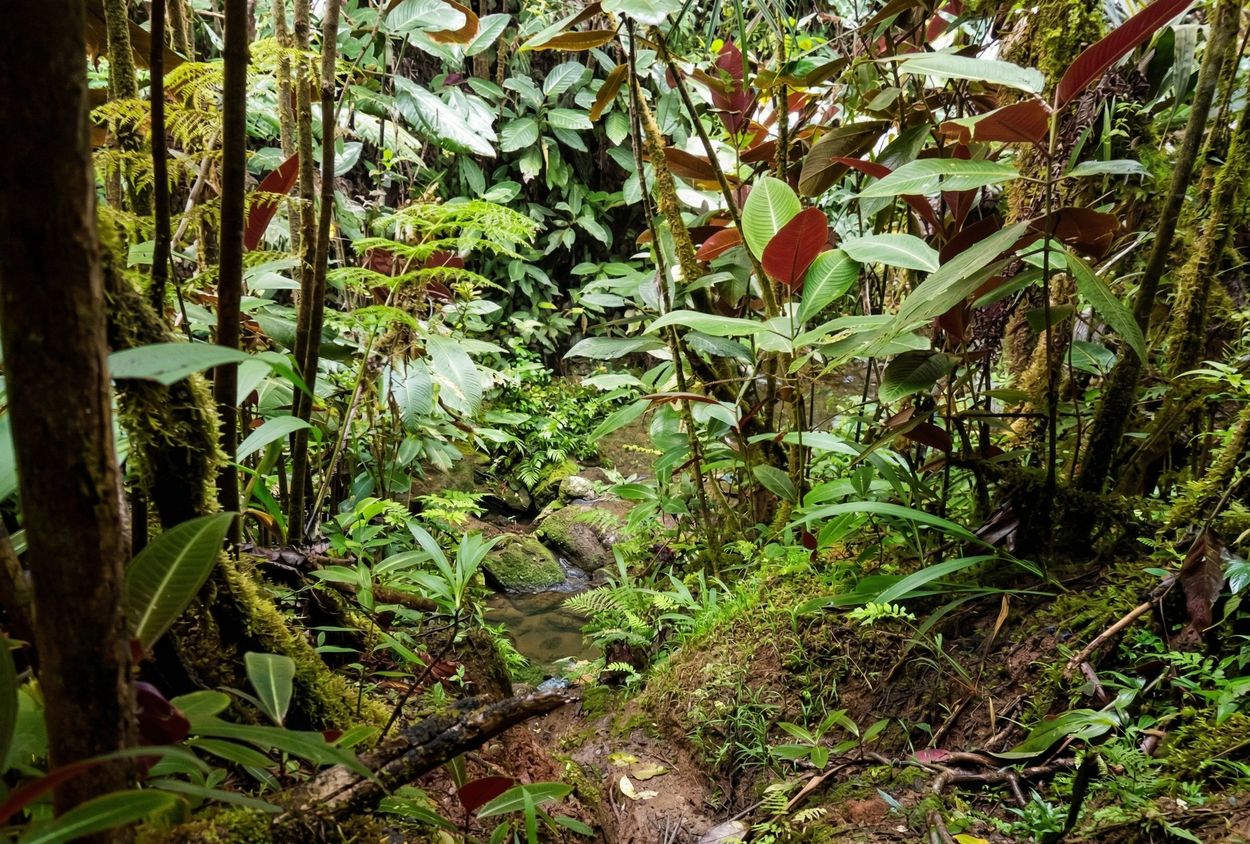
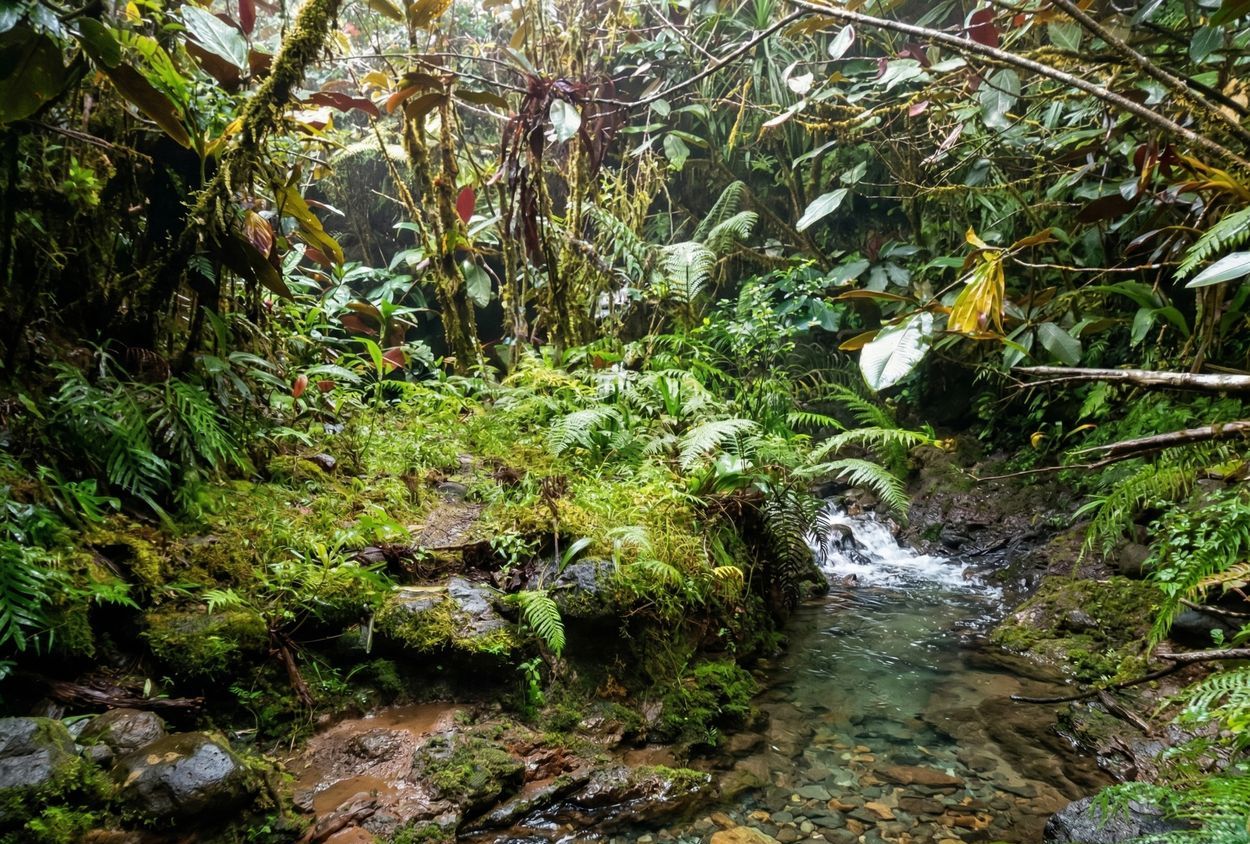
Anyway, we walk for about fifteen minutes in a magnificent tropical forest. There is moss, ferns everywhere, and the vegetation is truly lush. Even though everything is humid and more or less wet, the scenery is simply superb in my eyes. With time, we would need to come back here to take photos of all the vegetation and the details you can find. Arnaud tells me that he also offers “hiking” outings that do not require getting wet, jumping, or rappelling. They are perfectly suited for children, for example, or for people who want to discover the island’s interior and its heights, without the sporty side.
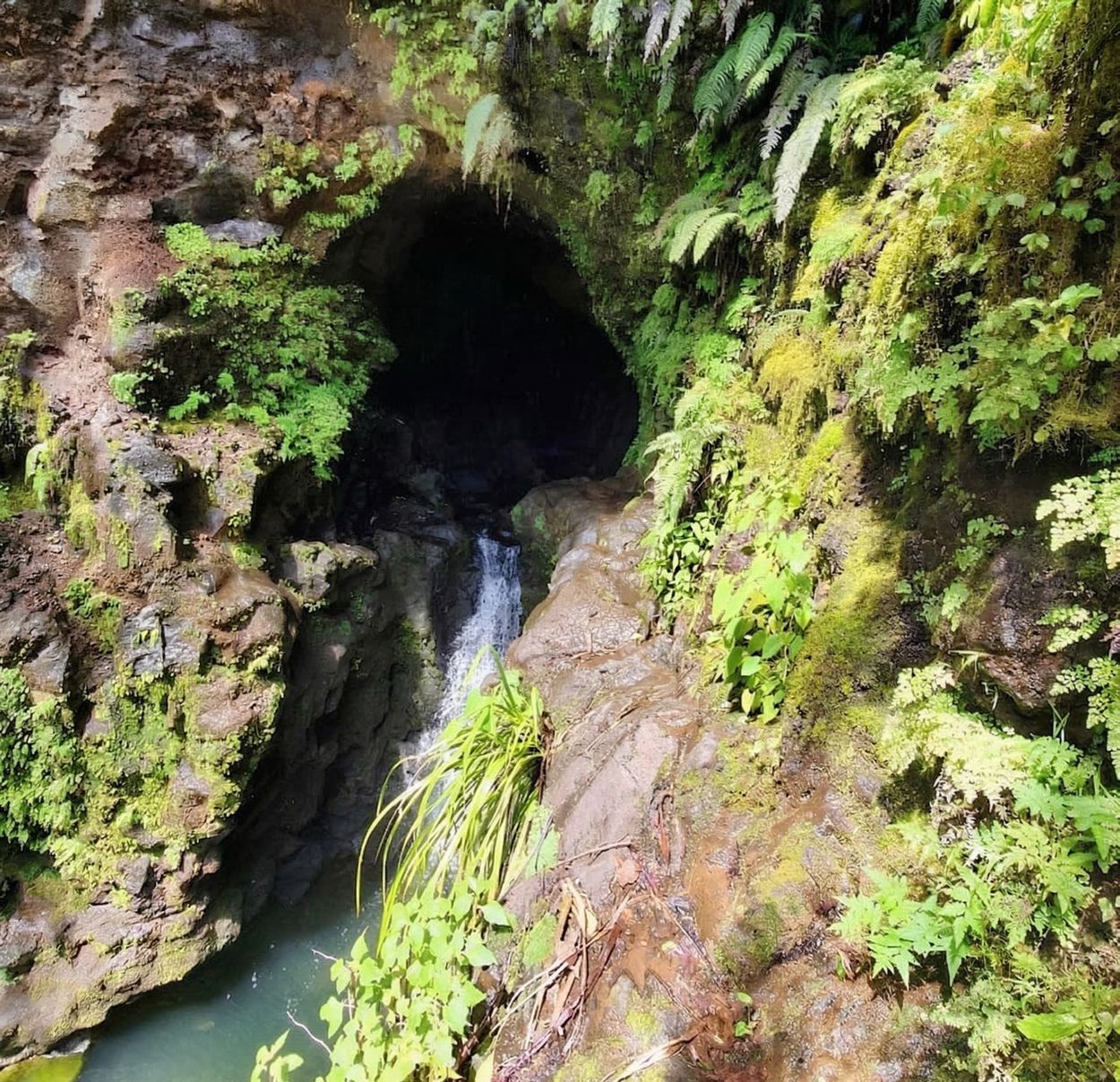
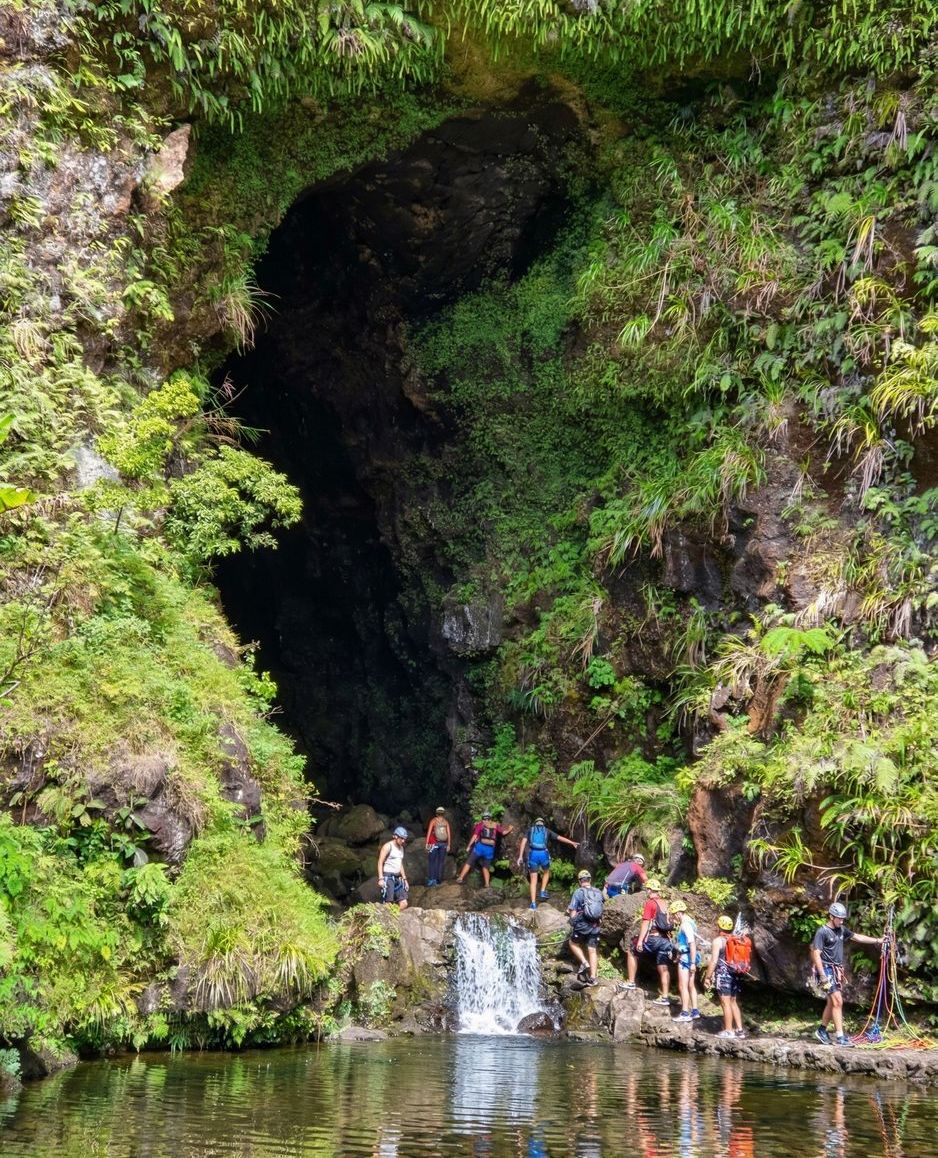
We arrive at the riverbank and can see a very beautiful waterfall coming down from the heights in several tiers. The path continues to a huge natural arch. It is impressive to see. The arch is probably about twenty meters high. The river flows underneath, and in the background we can see the famous entrance to the lava tube (well, the one we go into, the one located highest up. Arnaud explains that the two lower ones are of little interest). The place is awesome. From here, we have no choice: we are going to have to get wet. I am not exactly warm already (I am the only “local” living in Tahiti) and the others are not exactly acclimated to the tropics like we can be. The entrance to the lava tube is just behind a small stretch of water that we have to cross. The water is honestly freezing! I do not know the temperature, maybe 17/18°C (63/64°F)? Used to warm ocean water, it is seriously cold.
So we finally enter the first tunnel of the lava tube. It is quite impressive. I had never gone into a lava tube, to be honest. The ceiling is very high; there are no stalactites or stalagmites, because we are not in a limestone region but a volcanic one. You can, however, see what looks like “gold” on the ceiling. Arnaud explains that it is algae and fungi, quite simply. Walking in this first part of the lava tube is not difficult. It is simply a matter of walking in the lava tube, trying not to slip on the big rocks in places. Fifteen minutes of walking brings us to the exit of this lava tube. We put our meal down in a corner here since from this point on, we will do a loop and come back here to eat.
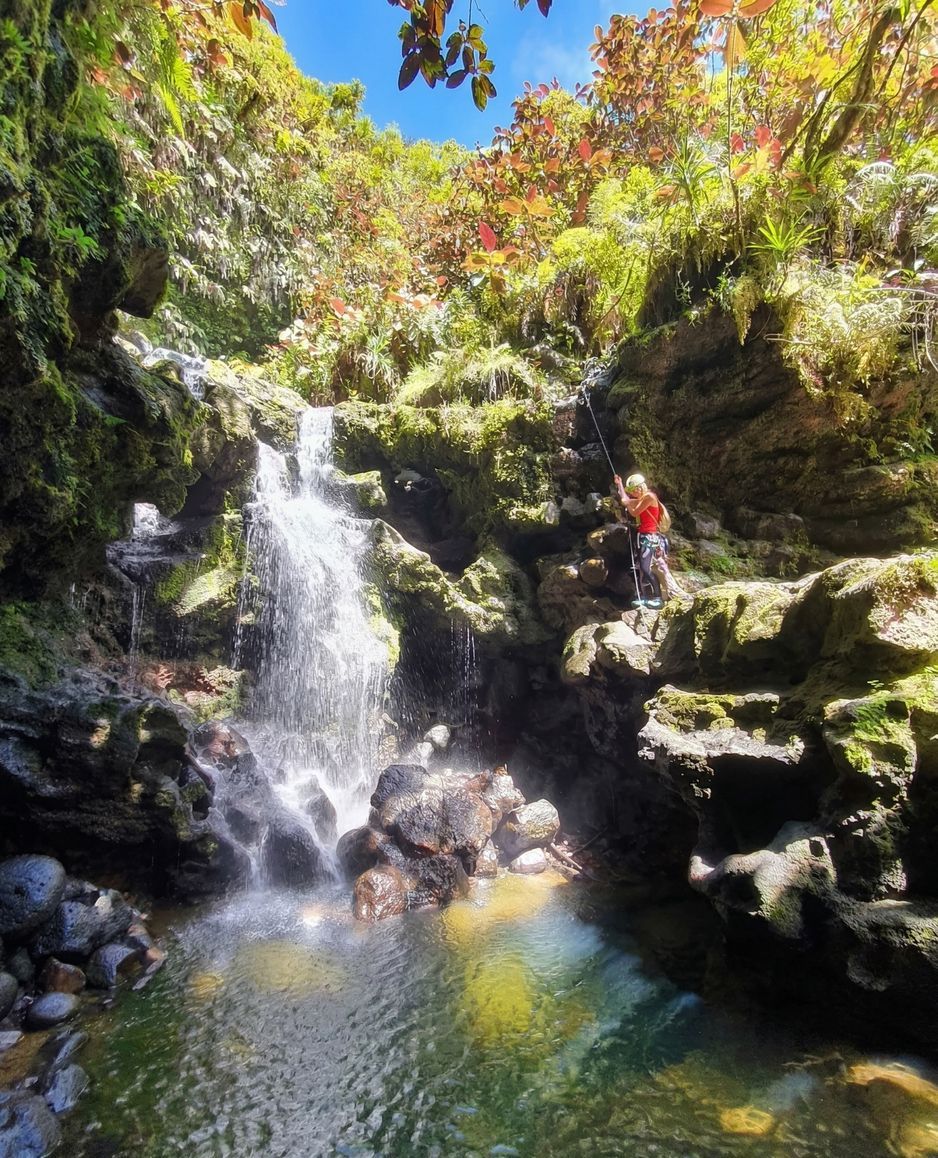
We continue walking outside in lush vegetation once again, mainly made up of large ferns and moss. No more coconut trees here, they are gone! A steep and slippery climb through the tropical vegetation allows us to reach the first and only rappel of our route. I do not think I remember ever rappelling, to be honest. Maybe a very long time ago at summer camp (who knows?), but I am starting to be too old to remember. Arnaud and Tia explain everything we need to know for this rappel section. We listen carefully; the rappel is about twenty meters high!
My turn. I gear up with the harness, the various ropes, and Arnaud of course belays everyone down. Tia waits for us at the bottom to make sure everything is fine. I have to say I go for it without thinking too much, but from the first meters where you have to (according to Arnaud) “throw yourself backward into the void while keeping your feet against the slippery wall,” I feel a lot less confident, haha. It is really not natural to have your back hanging over empty space. Weird feeling. I go down calmly after that, keeping my feet on the wall. At the end of the descent, you have to let go into the void because there is no more wall. It adds a bit of pressure, but the experience is really fun to do. When we get to the bottom, we see the entrance (well, the exit) of the lava tube on the other side. That is where we are going to go back in.
From there, things begin. Unfortunately, I already do not have nice photos of the outside since I could not bring my camera body with me, but the rest happens completely in the dark because we enter the lava tube from here. As I said at the beginning, this is more of an experience to live than to tell on a blog. The walk inside the lava tube continues in the dark with our headlamps. We walk through this unreal world, with algae/fungi on the ceiling and a river flowing between our legs. We had been warned, but here comes the first jump. The route inside this cavity involves two jumps of 6 and 8 m (20 and 26 ft) in the dark and between rocks. If you are afraid of heights, there is a way to lower you down calmly, of course, and avoid having a heart attack (which would be a shame given where we are!). I think I still lose my heart on the first jump, not necessarily when I launch myself (easy) but during the fall (which is indeed fast). I think about my parents, and especially my father, wondering whether they would have liked the experience. The second jump (higher) is even more impressive. The freezing water below does not help, it must be said! We continue our underground adventure, chaining together a few jumps, ladder descents here and there in the different chambers of this magnificent lava tube. We even have to crawl through small sections. It is playful, athletic, and fun. In short, I am loving it, and it is the same for everyone.
We come back out after 1h30 underground (I would say) at the spot where we left our bags with lunch. We eat there, calmly seated at the edge of the exit of this lava tube, in a great tropical atmosphere. From there, several options are available to us with three routes that Arnaud offers depending on our motivation. We choose the highest one, supposed to last two more hours. This one is outside, and most of the walk consists of hiking in the river this time and enjoying the tropical vegetation around us. We will have the chance to do several more jumps of a few meters. I admit I am already pretty cold and I gently step aside from the various jumps (which is good for people who do not feel like “jumping”). We finish this beautiful outing on the same path we took on the way in.
My thoughts on the day
As I said at the beginning, I had never tried a day of canyoning and honestly, I really loved it. It is a superb day to experience to observe mountain tropical vegetation, enjoy a great time with friends/family, and above all to try something different, something I personally was not used to doing after all. The outing is really very fun, playful, athletic, and you truly discover interesting things. For me, I am saying it now, it is a must for people who want to come spend a few days in Tahiti.
The practical side
As usual, a few words about the practical side and what to know for those who want to try this day’s experience. I did the full-day outing with Natura Exploration, the only truly qualified guides in Tahiti for this type of outing. I really would not recommend venturing out alone or with friends for an outing like this. You need a minimum amount of equipment and you can literally get lost in the vegetation and in the lava tube.
For the day, the only things to bring are a meal, something to drink, your electronic devices for photos/videos, a change of clothes, all in a dry bag. A small tip: I would tell people to bring a thermos of coffee or tea because it is not warm and it is always appreciated. For photo and video gear, I went with a GoPro and my very good Olympus TG7. I also really recommend a dry bag for those who do not have one.
The team picks you up in town at the bar “le Retro,” but it is probably possible to be picked up elsewhere. If you are preparing your trip, I invite you to check out our detailed article on the best accommodations in Polynesia, which will help you find places to stay. If you are looking for the cheapest flights to Polynesia from Paris, it is here.
I hope this walk made you want to do this great activity, in any case!
As I write this article, we have just arrived in Guadeloupe, after 6 years spent in Polynesia. We will continue, as best we can, to write about French Polynesia, and more articles should be coming!
See you soon,
Sylvain

Written by Sylvain PONS
From 2015 to 2021, French Polynesia was our home, with Mélanie and our children. I'm happy to share my experience and advice to help you organize an unforgettable stay in French Polynesia, based on my in-depth knowledge of the territory.
Despite our care, a mistake may have slipped into this article. If you find any, please don't hesitate to let us know so we can correct it as soon as possible and keep our information up-to-date!