How to shoot with a long lens
Last update: 06/21/2026
Our blog continues to grow thanks to you, our readers. This post may contain affiliate links, which means we can earn a small commission if you make a purchase through them, at no extra cost to you. This helps us to continue to bring you more and support our work!
Back in the photography tips and techniques section! It had been a while since I last wrote something here, and then the idea came to me: a topic I had not yet covered on the blog, shooting with a long focal length. I will mention quite a few technical terms in this article, so I invite you to read my guide on how to master exposure in photography if you need a refresher.
At first glance, this may seem like a simple topic to cover, but when you think about it, there is actually a lot to say. It is also a subject I particularly enjoy in photography. After buying my Canon 70-300 L IS and using it for quite some time, I finally feel ready to talk about it. Of course, I do not own very long focal lengths, the famous super-telephoto lenses beyond 300mm, but I have had the chance to test several of them. In the end, much of the advice that applies to a 300mm lens also applies to a 500mm lens.


So, what am I going to cover in this article, which may be a little long, I admit? First, I will explain what can be considered a long focal length, with a few reminders about angle of view, the link between sensor size and focal length, and the different types of telephoto lenses. I will also explain the main reasons for using a long focal length, and we will see that it goes far beyond wildlife or sports photography.
Then I will share all the tips I can give you for shooting with a long focal length, both technical and practical. At the end of the article, I will also give you some gear advice, especially on choosing a telephoto lens and the accessories that go with it. Let’s get started!
What can be considered a long focal length?
Let’s start with the basics. What exactly is a long focal length lens? How do you recognize one? And does the answer change depending on the type of camera you use? Let’s go through it.
Focal length, angle of view and quick reminders
To explain simply what can be considered a long focal length, or a long lens, I first need to briefly come back to the idea of focal length, which I already covered in detail in the article linked above. Simply put, focal length, always expressed in millimeters (mm), is one of the key technical characteristics of a lens. It can be fixed (for example 85mm or 200mm) or variable (18-55mm, 24-70mm). I also wrote a full article on the differences between a prime lens and a zoom lens (variable focal length), if you are interested.
The important thing to remember is that focal length refers to the distance between the sensor and the optical center of the lens. It has a direct impact on the angle of view you see through the viewfinder. That is why we talk about short focal lengths (for example 12mm) for wide-angle lenses, standard focal lengths (for example 50mm), and long focal lengths (for example 300mm).
With a short focal length, your field of view is very wide. In practical terms, you see much more of the scene in your viewfinder. Conversely, a long focal length gives you a much narrower angle of view. There is a reason why people often associate long focal lengths with “zooming in”: you are narrowing your field of view to a more precise detail, making that detail appear much larger in the viewfinder and in the final image. And of course, as with any type of lens, you can have long zoom lenses (for example 70-200mm or 200-400mm) or long prime lenses (for example 400mm or 600mm).
Because of their construction, especially the many optical elements required to achieve this narrow angle of view, long lenses are generally heavy, long, and quite expensive. As always, everything is relative depending on what you consider “long” or “expensive”.


A classic Sony telephoto lens for Sony full-frame mirrorless cameras: the Sony 70-200mm f/4 G OSS – More details on Amazon
Focal length and sensor size
I will keep this short and avoid getting too technical. As we saw above, focal length is an intrinsic characteristic of a lens. The reference point used to describe focal length is the full-frame sensor, equivalent to the old 35mm format. However, in today’s digital world, not everyone uses a full-frame camera.
Many manufacturers, if not all of them, also offer cameras with smaller sensors. There are mainly two common formats: APS-C and Micro 4/3. I know what you’re thinking: so what? I’m getting there. Contrary to what you might think, the focal length itself does not change. A 50mm lens always remains a 50mm lens, no matter which camera you mount it on. What changes is the field of view you get from that lens, depending on the size of the sensor.
With a full-frame camera, the crop factor is 1x. With an APS-C camera, it is about 1.5x, and with a Micro 4/3 sensor, it is 2x. This is simply because the sensor is smaller; a Micro 4/3 sensor is roughly half the size of a full-frame sensor. As a reminder, here are the main sensor sizes:
- Full-frame sensor: 36 x 24mm,
- APS-C sensor: 23.7 x 15.7mm (Canon APS-C sensors are 22.3 x 14.9mm, with a 1.6x crop factor),
- Micro 4/3 sensor: 17.3 x 13mm.
You can also refer to my article on sensor size in photography, available in the camera equipment section of our blog. To come back to our topic, the field of view obtained from the same focal length will vary depending on the sensor size used. Here are four examples of different focal lengths used on cameras with different sensors.
| Focal length | Full Frame | APS-C | Micro 4/3 |
|---|---|---|---|
| 12mm | 12mm | 18mm | 24mm |
| 24-70mm | 24-70mm | 36-105mm | 48-140mm |
| 85mm | 85mm | 136mm | 170mm |
| 200mm | 200mm | 300mm | 400mm |
So you need to be careful when choosing your camera equipment, especially because the camera/lens combination will determine the angle of view you actually get. Some lenses are designed for APS-C sensors, while others are designed for full-frame cameras. A full-frame lens can always be mounted on an APS-C camera. The opposite is also theoretically possible in many cases (except on Canon DSLR cameras), but you may see vignetting around the edges of the image. In practice, many full-frame cameras automatically crop the image because the APS-C lens does not cover the full sensor.
So be careful: a 12mm lens on a full-frame camera gives you an ultra-wide-angle view, but on a Micro 4/3 sensor, it gives a 24mm equivalent field of view, which is not the same at all. In general, brands offer focal lengths adapted to the sensor formats they produce. The most classic example is standard zoom lenses: you will often find a 12-35mm for Micro 4/3, a 17-55mm for APS-C, and a 24-70mm for full frame. The focal lengths are different, but the field of view in the viewfinder will be very similar.
The different long focal lengths
There are several types of long focal lengths, commonly called telephoto lenses. Here, we are always referring to a full-frame sensor. As a very general rule, the longer the focal length, the more likely the lens is to be stabilized, the smaller its maximum aperture tends to be, and the higher the price usually gets. For now, in my opinion, telephoto lenses remain more affordable on DSLR cameras. We generally distinguish between:
- Short telephoto lenses: between 85 and 135mm
- Telephoto lenses: between 135 and 300mm
- Super-telephoto lenses: beyond 300mm
So why use a long focal length?
Now that we have seen what can be considered a long focal length and in which cases, let’s briefly look at what long focal lengths are used for.
Sports photography
This is obviously a classic use case. Of course, everything depends on the sport you are photographing, but overall I am thinking of any sport where you cannot get close to the action: tennis, handball, baseball, volleyball, car rallies, aerobatics, and so on. In all these situations, the subject is usually too far away, and using a long focal length becomes essential if you want to capture details up close. I recently published a complete article explaining how to choose your camera equipment for sports photography.
Wildlife
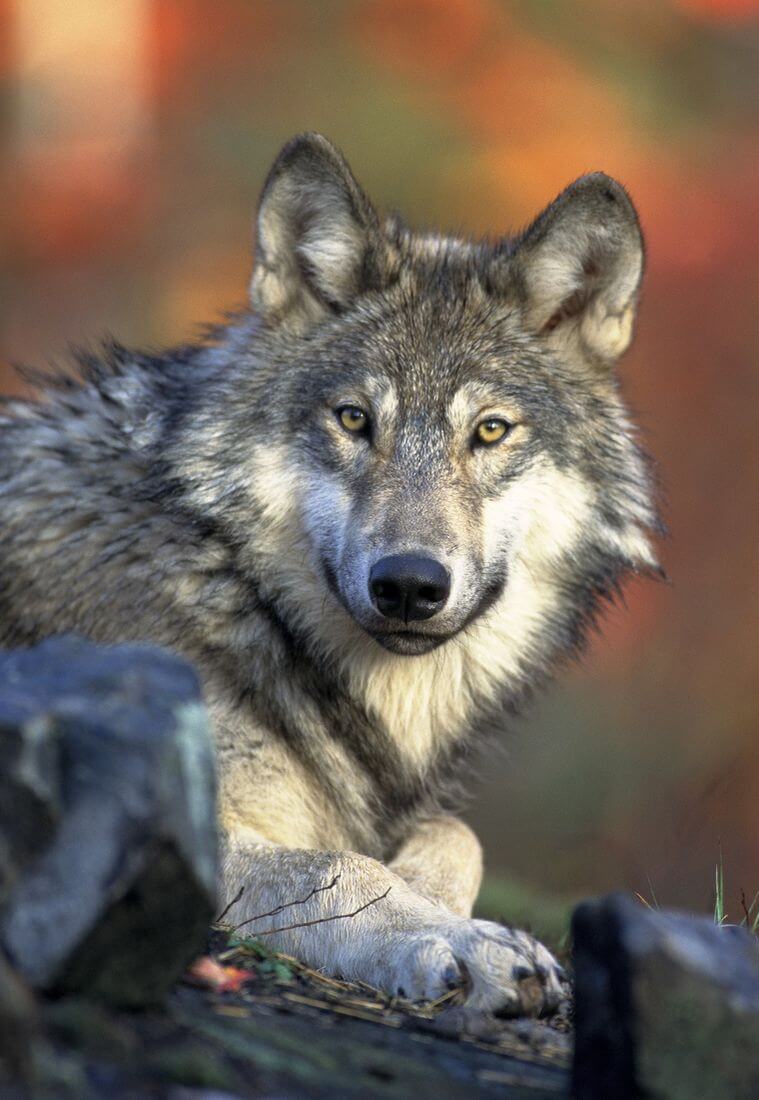
This is another classic use. Again, let’s be precise: you do not need a very long focal length to photograph your cat or rabbit in the garden, although it can still be interesting! But as with sports, as soon as you want to photograph distant or shy animals, a long focal length becomes essential. I am thinking of bird photography, safari photography, and more generally any animal photographed in its natural environment. Macro photography is a separate field with dedicated lenses.


Outdoor portraits
This is another frequent use. I insist on outdoor portraits because indoors, for example in a studio, you often will not have enough distance to use a 100mm or 135mm lens comfortably. Outdoors, you have more space, and using a long focal length helps isolate the subject from the background, especially when combined with a wide aperture. Contrary to what people sometimes think, it is not the focal length itself that distorts the subject, but the shooting distance. To put it simply: with a short focal length, if you want to frame tightly, you have to get closer, and that is what distorts the subject. In portrait photography, using a longer focal length helps preserve more natural facial proportions.
By the way, if you want to learn more about this field, we have written an article with our best tips for portrait photography.

Highlighting a subject by separating it from the background
As mentioned above, one of the main advantages of a long focal length, or at least one of its consequences, is that it allows you to separate the subject from the background and make it stand out. This is where the notion of depth of field comes into play, and I invite you to read the article linked above. Of course, this subject/background separation does not depend only on the focal length. It also depends heavily on the aperture, the focusing distance, the distance between the subject and the background, and the size of the sensor.
Compressing perspectives
Even though the word “compress” is not perfect, long focal lengths tend to flatten the perspective in an image. When you shoot with a long focal length, the different planes of the image seem closer together than they really are. A typical example is photographing buildings with a telephoto lens: you can make two buildings, one in the foreground and one in the background, appear very close to each other even though they may actually be several miles apart. Conversely, wide-angle lenses create a sense of space and distance, making the subject and background appear farther apart than they really are.
Highlighting a detail of some kind
Finally, this is almost a summary of all the points above. Using a long focal length usually allows you to highlight a detail, whether it is an animal, a person, a sport, or any other subject. You can also isolate a detail from a tree, a flower, a car, a building, and so on, simply by zooming in and framing precisely.


The two pictures above were shot with my Canon 70-300mm L IS USM f/4-5.6
Tips for shooting with a long lens
Below, I share my tips for shooting with a long focal length, covering both technical and practical aspects.
Use the right shutter speed
This is probably the most important piece of advice, and the one you should pay the most attention to, because a long focal length often means a heavy lens. Imagine carrying a camera of about 1kg, like my 6D, with a 70-200mm or 300mm lens attached, which can quickly weigh more than a kilo on its own. In the end, you can easily end up holding 2 to 2.5kg of gear, and that is not nothing. Inevitably, you will move slightly or shake when shooting. The result? A slightly blurry picture. It may not be catastrophic, of course, but sharp photos are always better. In fact, the tighter the framing, the more visible your movements become in the viewfinder.
As a rule of thumb, with a full-frame camera, it is generally recommended to use a shutter speed at least equal to the focal length used. For example, if you are shooting at 300mm, you should aim for at least 1/300s. If you can shoot faster, for example by raising the ISO by one stop, I think it is often worth doing. With smaller sensors (APS-C or Micro 4/3), this is even more important, and I would apply the crop factor. In other words, use around 1/450s on APS-C and around 1/600s on Micro 4/3. Of course, everything also depends on your ability to hold the camera steadily and whether the camera or lens is stabilized.
It is still possible to get great pictures at slower shutter speeds. That will also depend on the subject, whether it is still or moving, and whether you can rest the lens somewhere or use a tripod.
Finally, you should know that on some cameras, like my 6D, you can set a minimum shutter speed. It works in Av mode on my Canon 6D and allows me, for example, to set a minimum shutter speed of 1/80s when using my Canon 85mm f/1.8. This is just one example, but I often use it to avoid dropping too low.
Manage your ISO correctly
ISO is part of the famous exposure triangle, along with shutter speed and aperture. As we have just seen, using a long focal length often requires a fast shutter speed. Generally speaking, you will rarely use very small apertures with a telephoto lens, such as f/11. You will more often use fairly wide apertures, such as f/4, or even wider. Remember: a wider aperture means a smaller f-number.
The key here is to find the right balance between your gear, the situation, and the subject. To use a fast shutter speed, even with a wide aperture, you will often need to raise the ISO on your camera. In daylight, this is rarely a problem because there is usually enough light to avoid pushing the ISO too high, even with a fast-moving subject. But as soon as the light drops, things get more difficult.
Remember that every time you double the ISO, you can use a shutter speed twice as fast while keeping the same exposure. However, the higher the ISO, the more noise appears in the image, and overall image quality starts to deteriorate. The main thing is to find the right balance between having enough shutter speed to capture your subject safely, and keeping the ISO as low as possible. If you are not shooting wide open, this may also be the moment to open the aperture by one or two stops to gain speed, though you will lose some depth of field depending on the situation.
Everyone will have to find their own balance here, but in my opinion, it is better to go a little higher in ISO and successfully capture the subject, especially if it is moving, than to stay at a low ISO at all costs and completely miss the shot. It is not ideal, but it is better than nothing.
Note that many cameras also allow you to set an ISO range for auto ISO, which is the case on my 6D. This can be useful if you do not want the camera to go above or below a certain value.
Be careful with the aperture
After talking about ISO, I also wanted to say a few words about aperture when using long focal lengths. If we look at sports photographers, you will often see them shooting wide open, mainly for two reasons: they need a very fast shutter speed, and they usually want to blur the background. Long focal lengths combined with wide apertures make that possible. That is why you will see photographers using lenses such as a Canon 400mm f/2.8.
However, you will not always need to shoot wide open. Take an outdoor portrait or a distant detail, for example. You may want to isolate the background to highlight your subject, but you may also want more of your subject to be in focus. Closing the aperture by one or two stops, for example shooting at f/2 or f/2.8 instead of f/1.8 with my 85mm, will not only give you more depth of field, but often also better image quality. For portraits, stopping down slightly helps you gain depth of field and get more than just the subject’s pupil in focus, haha!
Wildlife photography is another good example. If your animal is already well separated from the background, the long focal length alone may be enough to produce a nice bokeh. You may then want to stop down a little for the reasons mentioned above: more depth of field and often better sharpness. This can be very useful in wildlife photography because some animals are long or large, and if you use too wide an aperture, only a small part of the animal may be sharp, depending on your framing.
I have mentioned this before on the blog: lenses usually have a “sweet spot”, an aperture at which image quality is at its best. Most of the time, you only need to look at MTF curves to see that a lens is rarely at its sharpest wide open, but rather two or three stops down. That said, if you need to shoot wide open because you lack shutter speed and opening the aperture allows you to get the shot, then there is no debate. And with high-quality lenses weighing several kilos, such as a 300mm f/2.8, the difference in image quality between wide open and stopped down is often quite small.


Limit the maximum focal lengths and get moving!
In addition to having an aperture where sharpness is at its best, lenses can also have a “best focal length”. In general, with telephoto and super-telephoto zooms, image quality can drop at the longest focal length, or at full zoom. In practice, if you use a Sigma 150-600mm, you should not be too surprised if the image quality is not at its best at 600mm.
If you have no choice, that is fine. But if, as in wildlife photography, you can sometimes move around and get a little closer to your subject, it may be better to do so and shoot at 500mm rather than staying where you are and shooting at 600mm. Of course, I am not telling you to get close to a bear just because you do not want to use your longest focal length!
Use the focus limiter
This is something we do not always think about, but it is very useful when using long focal lengths. To explain it simply, a focus limiter is a tool, available on most long lenses and also on some cameras, that limits the distance range within which the lens will try to focus. It is genuinely practical, especially for sports and wildlife, and it can even be useful for portraits.
Basically, you are telling your lens to focus only within a specific distance range. On telephoto lenses, there is often a switch on the side marked, for example, “10 – ∞”. If you already know your subject will never be closer than 10m, this is a great way to help the lens focus faster.
Some recent mirrorless cameras also allow you to set a precise near/far distance or even select the exact areas where the lens should focus. Using this trick can improve focus speed and increase your chances of getting sharp pictures, especially when the subject is moving.
Choose the type of stabilization
I will not go into too much detail here because the principle is fairly simple. There are several types of stabilization: in-body stabilization, as found in some Nikon Z cameras or recent Canon R bodies, and lens stabilization. In all cases, remember that stabilization allows you to shoot at slower shutter speeds while reducing camera shake. In other words, it compensates for your movements, not the movement of the subject.
Long lenses usually offer at least two stabilization modes. Mode 1 is the standard mode, useful for everyday shooting. Mode 2 is very useful when you want to follow a moving subject, for example while filming or panning.
Selecting the right camera mode
I have written a full article about the different camera modes in photography. Even though this article focuses on tips for shooting with a long focal length, camera settings obviously matter too. Most cameras offer several modes, the most common being Av, Tv and M, or A, S and M depending on the brand.
Overall, I would say that if you are shooting a still subject or one that does not move much, Av mode (aperture priority) works very well. You set your ISO, either manually or automatically, choose your aperture, and the camera calculates the ideal shutter speed.
If the subject is moving, it may be more useful to set the shutter speed yourself, for example 1/2000s. You can leave ISO on auto if you want, and the camera will calculate the aperture it needs. When there is not enough light, in most cases, the camera will simply choose the widest available aperture anyway.


Getting better backgrounds
Nothing too surprising here, you might say, and this is not only a tip for long focal lengths. Using a long focal length, a wide aperture, and a distant background helps create beautiful bokeh. If you want to learn more about this, I invite you to read my article on depth of field.
With long focal lengths, though, the potential for beautifully blurred backgrounds becomes even greater. You simply need the right settings and, sometimes, to move slightly so there is more distance between the subject and the background. With these focal lengths, changing your position or framing by just a few centimeters can make a big difference to the background and its quality.
Shooting on a tripod/monopod
This may seem obvious, but it is a very important tip. In addition to helping you support a camera + long lens combination that can weigh a lot, a tripod or monopod gives you more stability and can allow you to shoot at slower shutter speeds. This is especially true for sports, wildlife, and even portrait photography. Just look at photographers around a football stadium or similar event: almost all of them use tripods or monopods, and sometimes even a small stool. No one wants to hold 2, 3, or 4kg of gear for several hours.
Of course, it is not always mandatory. But if you are doing hide photography in your garden, or if you are waiting in a fixed place for an animal or a specific scene, for example during a safari, you will be glad to have a tripod or monopod.
For safari photography, you may also want to consider buying a bean bag, which is a very useful accessory for stabilizing your long lens and reducing camera shake.
Practice!
Finally, this is the last piece of advice I want to give here: practice. It may sound obvious, but you need time and practice to master a long lens and understand its limits, flaws, and strengths. Only experience will help you. I recommend practicing several days before the big day, for example if you are going on safari.
Camera equipment for long focal lengths
I wanted to finish this article with a few more technical points about choosing your long focal length and the accessories that go with it. If you have just landed on this article, there is a good chance you are about to buy a telephoto lens or replace your current one.
How to choose the right focal length for your use?
Let’s start here: how do you choose the right long focal length? I would say it depends on several factors, which I will summarize below.
Your level in photography
Right, this might make you smile. But do not make me say what I did not say. I would never say on this blog that one lens is for beginners and another is for professionals. In most cases, it comes down to budget, desire, and, less often when you are just starting out, actual needs. If you are beginning in photography and are about to buy your first telephoto lens, there are two ways to look at it:
-
- You may want to start with something basic. In that case, I would recommend choosing an affordable telephoto lens, which every major brand offers. Canon and Nikon, for example, offer 70-300mm lenses for around 500/600€ (or even less if you choose a telephoto lens designed for APS-C sensors, such as the Canon EF-S STM 55-250 mm F/4-5.6 IS or the Nikkor AF-S DX 55-200mm f/4-5.6G ED VR II). At this price, you obviously will not get the best lens in the world, but it is more than enough for a beginner and will already let you get familiar with this new type of lens. I personally started with a Canon 55-250mm…
- Or you may have a bit more budget and, even as a beginner, want to treat yourself to something better than the small-aperture kit lens mentioned above. In that case, you can look at classic 70-200mm or 70-300mm lenses with larger constant apertures, such as f/4 or f/2.8, but you should know that the price quickly doubles or triples.
Your photo practice
As we saw in the tips above, everything depends on what you want to photograph. If you want to focus on sports, it may be worth choosing a long focal length with a wide aperture, such as f/2.8, as it will help you freeze movement more easily. Remember, as mentioned earlier, an f/2.8 aperture lets you shoot twice as fast as f/4. Budget telephoto lenses often offer apertures of f/4-5.6, or even f/6.3.
If you are not especially focused on sports and mainly want to use your telephoto lens for travel and everyday life, the benefit of owning an f/2.8 telephoto lens is more limited. I am not saying it is useless. A telephoto lens opening at f/2.8 instead of f/4 lets you shoot twice as fast and also blur your backgrounds more easily. The downside is that the lens will be more expensive, larger, and heavier.

Here is the Canon EF 70-200mm f/2.8 L IS III USM, a telephoto lens offering outstanding image quality – More details on Amazon
Your budget
I agree, this is similar to what I mentioned above. We could summarize it like this: the longer the focal length of the telephoto lens you choose, the more expensive, longer, and heavier it will usually be, and the smaller its maximum aperture will tend to be.
You will struggle to find lenses with very large apertures once you go beyond 300/400mm. Also, be careful to compare like with like when making your choice. I talk about this in my article on sensor size, but a 200mm lens on a Micro 4/3 camera and a 200mm lens on a full-frame camera will not produce the same result in terms of field of view and depth of field. You need to compare equivalent focal length and aperture, but that is another subject…
Otherwise, below are a few serious options from Canon, Fuji, and Nikon, for example.
| Lens | Type | Focal length | Max. aperture | Ø filter | Stab. | Autofocus | Price |
|---|---|---|---|---|---|---|---|
| Canon RF 100-400mm f/5.6-8 IS USM | Telephoto zoom | 100-400mm | f/5.6-8 | 67mm | YES | YES | Amazon / B&H |
| Canon RF 100-500mm f/4.5-7.1 L IS USM | Telephoto zoom | 100-500mm | f/4.5-7.1 | 77mm | YES | YES | Amazon / B&H |
| Canon RF 200-800mm f/6.3-9 IS USM | Telephoto zoom | 200-800mm | f/6.3-9 | 95mm | YES | YES | B&H |
| Canon RF-S 55-210mm f/5-7.1 IS STM | Telephoto zoom | 55-210mm | f/5-7.1 | 55mm | YES | YES | Amazon / B&H |
| Nikon Z 100-400mm f/4.5-5.6 VR S | Telephoto zoom | 100-400mm | f/4.5-5.6 | 77mm | YES | YES | Amazon / B&H |
| Nikon Z 180-600mm f/5.6-6.3 VR | Telephoto zoom | 180-600mm | f/5.6-6.3 | 95mm | YES | YES | Amazon / B&H |
| Nikon Z 400mm f/4.5 VR S | Telephoto prime | 400mm | f/4.5 | 95mm | YES | YES | Amazon / B&H |
| Nikon Z DX 50-250mm f/4.5-6.3 VR | Telephoto zoom | 50-250mm | f/4.5-6.3 | 62mm | YES | YES | Amazon / B&H |
| Fujifilm XF 50-140mm f/2.8 R LM OIS WR X | Telephoto zoom | 50-140mm | f/2.8 | 72mm | NO | YES | Amazon / B&H |
| Fujifilm XF 70-300mm f/4-5.6 R LM OIS WR | Telephoto zoom | 70-300mm | f/4-5.6 | 67mm | YES | YES | Amazon / B&H |
| Fujifilm XF 100-400mm f/4.5-5.6 R LR OIS WR | Telephoto zoom | 100-400mm | f/4.5-5.6 | 77mm | YES | YES | Amazon / B&H |
| Fujifilm XF 150-600mm f/5.6-8 R LM OIS WR | Telephoto zoom | 150-600mm | f/5.6-8 | 82mm | YES | YES | Amazon / B&H |
How to choose the right tripod for you?
Again, this is a topic I have already covered in detail in my article on choosing a tripod, so I will not go through everything again here. If you plan to buy a tripod/head for your future or new telephoto lens, you need to consider the weight of your camera + telephoto lens combination. This is the main factor when choosing a tripod: the maximum load it can support. In other words, choose a tripod that can support at least twice the maximum weight of your setup, for extra safety.


Using extenders
I have not yet written a dedicated article on these accessories, also known as TCs, extenders, or teleconverters, but you should know that they allow you to “increase the focal length” of your lenses. They work like a magnifying glass and are placed between the camera and the lens. Once again, I will not go into detail here, but they can be useful if you occasionally find your lens too short and want to zoom in further.
Keep in mind, however, that:
- Teleconverters usually cause a more or less significant loss of sharpness. This depends on the brand and the TC used, but also on the quality of the lens,
- There are generally 1.4x and 2x teleconverters. Be careful: you lose one stop of light with a 1.4x TC and two stops with a 2x TC,
- Depending on the model and focal length used, you may sometimes lose autofocus with these accessories,
- Teleconverters are most useful when the lens already has a wide enough aperture, ideally f/2.8 or f/4.
In my opinion, they can be a useful occasional solution, but I would not use them continuously.
That’s it, we have reached the end of this article about tips for shooting with a long focal length. I hope you have learned a few useful things. Feel free to leave a comment below and tell me what you thought of it, especially if you have other tips I may have forgotten!
If you want more photo tips and advice on specific topics, feel free to check out the photography tips category page.
See you soon,

Written by Sylvain PONS
I've been passionate about photography since 2010, learning as I went along. Today, I dedicate myself to guiding others in their choice of camera gear and sharing a variety of tips to improve their photography skills.
Despite our care, a mistake may have slipped into this article. If you find any, please don't hesitate to let us know so we can correct it as soon as possible and keep our information up-to-date!