Olympus M.Zuiko Digital ED 75mm f/1.8 full review
Last update: 06/17/2026
Our blog continues to grow thanks to you, our readers. This post may contain affiliate links, which means we can earn a small commission if you make a purchase through them, at no extra cost to you. This helps us to continue to bring you more and support our work!
Back in 2012, Olympus announced a rather special lens: this 75mm f/1.8, with a focal length equivalent to 150mm on full frame. We’re used to seeing 135mm and 180mm lenses on full-frame cameras, and Olympus seems to have found a good middle ground here. The lens also has a wide aperture, which is useful on a Micro 4/3 sensor to help keep ISO values lower. It’s actually the lens that made me buy a Micro 4/3 camera as a backup to my old full-frame DSLR. I didn’t want to use zooms, and I’ve always liked this kind of focal length. Like the Leica Summilux 15mm f/1.7 and Panasonic 42.5mm f/1.7, the Olympus 75mm f/1.8 is fully compatible with Panasonic Micro 4/3 bodies and, of course, Olympus bodies.
By the way, we’ve gathered all the lenses for Micro 4/3 bodies (Panasonic and Olympus) on a single page. If you want to see what else is available, it should help.
Paired with the 20 MP sensor in my Panasonic G90, I’ll be doing a practical test here, along with a few more “technical” shots to see whether this Olympus 75mm f/1.8 can keep up with the G90’s resolution. You might think that a lens from 2012, when Micro 4/3 cameras were often “only” 12 MP, would no longer be suitable for a 20 MP sensor. In Micro 4/3, every extra megapixel puts a lot more pressure on the lens, equivalent to roughly four extra megapixels on full frame. In other words, a 12 MP Micro 4/3 sensor is about as demanding as a 48 MP full-frame sensor, while a 20 MP Micro 4/3 sensor is about as demanding as an 80 MP full-frame sensor! Check out our full guide to the latest Micro 4/3 cameras if you’re interested. We break down all the features and share our opinion on the best model to buy.
The images shown were taken in RAW format and processed in DxO PhotoLab 5 with standard color rendering and optical corrections enabled, except for the images used to show the results before correction and the gallery images, which received more advanced processing.
We’ve also published our full review of the Panasonic G90, the camera used for this test. You can read it here.
Lens presentation
| Features | Visual |
|---|---|
|

|
With a price tag of €950, it’s hard to call this an affordable lens, especially when you consider that it’s “only” a 150mm f/3.5 equivalent on a full-frame sensor. For exposure, however, the lens keeps its f/1.8 aperture, which is useful for limiting ISO increases on a Micro 4/3 sensor that is not exactly at its best in low light. In my opinion, the price also reflects the fact that there is very little competition for this type of lens in this format. Even today, the closest fixed focal lengths are a 60mm macro and the discontinued 150mm f/2, with Panasonic and Olympus otherwise covering this range mostly through lenses from around 42.5mm to 200mm.

This 75mm offers a focal length that is fairly unusual for Micro 4/3, and even quite rare in full-frame equivalent terms, unless you count Sigma’s 150mm f/2.8 macro for DSLRs. That lens costs about as much as the Olympus, but it is much larger and heavier (long focal length + full frame + 1:1 macro = no surprise there!). This is obviously not a very versatile lens, which explains why, despite all its qualities, many people describe it as “underrated”: it simply doesn’t suit every type of photography. Still, if Nikon’s 180mm f/2.8 has built such a good reputation, it’s because there is definitely a place for this kind of focal length.
This is a “small” telephoto lens that still requires a bit of working distance. It is therefore best suited to outdoor photography, especially portraits and outdoor sports, thanks to its large maximum aperture, the distance it lets you keep from your subject, and the pleasing compression it creates. If you’ve ever wondered why this lens isn’t more widely used, that’s probably the reason: the focal length is a little too long for fast-paced reportage and a little too short for wildlife, so it naturally sits in a fairly specific niche.
Ergonomics, build and handling
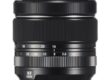
The lens is very well built, even though it is not weather-sealed. It has a metal barrel, yet the weight remains reasonable and the dimensions are still compact. It weighs 305 g and can be used on most Olympus and Panasonic Micro 4/3 bodies without any particular limitation, since it has neither optical stabilization nor an aperture ring that might create compatibility issues with a Panasonic body.
The focus ring is wide, smooth, and very pleasant to use. The barrel itself is just as enjoyable. Not only is it made of metal, but it is also beautifully machined, with grooves that make it easier to handle. It’s a shame, though, that Olympus doesn’t include a case or hood at this price.
The lens features 3 low-dispersion and 2 high-refractive elements, as well as Ultra-High Reflection Zuiko technology to reduce flare, maintain high quality across the frame, and limit chromatic aberration. The 9-blade aperture also helps keep the bokeh smooth, even when the lens is stopped down.


The lens is available in two versions, with either a black or silver finish. The silver version tends to stand out more, since most modern lenses are black (with the exception of some Fujifilm APS-C lenses, which are often available in both black and silver, like some of their bodies). Olympus has a similar “retro” philosophy. If you choose the silver version, especially alongside a set of mostly black lenses, it will definitely draw a little more attention.
Autofocus
Despite its age, the Olympus 75mm f/1.8 still has a fairly capable autofocus system. Olympus clearly paid attention to this point, probably with action photography in mind, even if newer lenses are now faster. In AF-S mode, you can rely on its speed, accuracy, and quiet operation.
In AF-C mode, however, we once again run into the drawbacks of using Panasonic bodies without phase-detection AF. The lens locks onto the subject quickly enough, but as soon as you try to track it, the camera starts pumping, which quickly becomes uncomfortable in the viewfinder, even if the final shots are sharp. If you want to use autofocus in video, the effect becomes even more noticeable.
Once again, the best way to get the most out of this lens in more “sporty” conditions is to pair it with an Olympus or OM System body with phase-detection AF, such as an E-M1 or OM-1-series camera.
Image quality
The Olympus 75mm is very good, even if it starts to show a few limits when pushed by the latest 20 MP sensors. In the center, image quality is already good at full aperture, but it improves easily when stopped down to f/2.8. The edges follow the same trend, although stopping down to f/4 still brings an additional gain. After that, the image becomes very even across the frame. From f/8 onward, diffraction starts to become slightly visible. It becomes a real issue at f/11 and especially at f/16, where it reduces sharpness significantly. For a camera like the G90, the sweet spot is therefore between f/2.8 and f/5.6.
Here’s an image from the test scene I shot for this article.

Here’s how center sharpness changes between f/1.8 and f/8. To switch images and compare image quality, simply move your mouse over the aperture values below the image.

To give you an idea of what you can do with this Olympus M.Zuiko Digital ED 75mm f/1.8, here are a few images taken with it. Click on the images to enlarge them.


Bokeh
Shooting with this Olympus 75mm produces a fairly soft, diffused bokeh. Of course, you need to stand back a little to avoid framing too tightly, but by combining this focal length, the sensor size, and the right distance from the subject, you can isolate your subject nicely against a pleasantly blurred background.


Distortion
Distortion is very low, almost imperceptible. You can correct it, but the difference will be minimal.


Vignetting
Vignetting is visible at full aperture and quickly decreases. It is still present at f/2.8, but only very slightly, and it becomes even more discreet at f/4. After that, it barely changes.

Chromatic aberrations
Chromatic aberrations are minimal, although you can see slight green and magenta fringing in this image. The issue is that they are so subtle that you have to push the correction quite hard, which then affects other areas that are not actually affected by aberrations.

Flare
Flare appears with bright, direct light sources when they sit near the edge of the frame. Since Olympus doesn’t supply a hood with this 75mm, I can’t say whether it would make much difference.

Coma
Coma and astigmatism are rarely major issues with focal lengths around 135mm on full frame. This 75mm, equivalent to 150mm on full frame, performs well, with good control right from full aperture. You really have to look at the extreme edges of the frame to see elongated stars. Stopping down to f/2 or even f/2.8 brings only a small improvement, so you might as well take advantage of the full aperture.


Sunstars
Before f/16, the sunstars are not very well defined and have a purple tint. Once again, we can see the fairly noticeable flare in direct sunlight.


Focus breathing
Focus breathing is noticeable, but it remains fairly unobtrusive when depth of field is shallow at wide apertures, as the change in framing blends into the bokeh.
Olympus M.Zuiko Digital ED 75mm f/1.8 alternatives
As mentioned above, there aren’t really any direct alternatives to this fixed focal length in Micro 4/3 format. So we have to look at zooms instead. I haven’t used these personally, but I’ve gathered enough reviews to compare them with this 75mm.
The Panasonic 35-100mm f/2.8, the Olympus 40-150mm f/2.8, and the f/4 version are obviously more versatile. However, they have a smaller aperture and slightly lower image quality. The Panasonic weighs about the same and is only slightly bulkier. It also costs roughly the same. The Olympus 40-150mm f/2.8 is larger and heavier, but it covers a wider range and still offers a fairly bright aperture. The f/4 version has an even smaller aperture, but it is lighter and more compact.


Olympus M.Zuiko Digital ED 75mm f/1.8 overview
| Pros | Cons |
|---|---|
|
|
Bottom line
Simply put, the Olympus M.Zuiko Digital ED 75mm f/1.8 is one of the best Micro 4/3 lenses around. Its price has dropped slightly to around €780, but it is still quite expensive, and its characteristics won’t suit every photographer. This is clearly not an entry-level lens.
However, if you like this kind of long focal length, this 75mm is a unique and compelling option—almost the kind of lens that could make you consider the Micro 4/3 format on its own. In fact, no other format lets you combine a slightly longer focal length, a large aperture, a lightweight and compact body, and such high image quality quite so easily.
And don’t forget to read our article on the best Micro 4/3 lenses currently available.
In the meantime, as we often say, if you enjoyed this review and want to support our work on the blog, you can buy this lens through the two links below. It helps us keep producing free, high-quality articles and avoid advertising on the blog.
See you soon for another review,
See you soon,

Written by Sylvain PONS
I've been passionate about photography since 2010, learning as I went along. Today, I dedicate myself to guiding others in their choice of camera gear and sharing a variety of tips to improve their photography skills.
Despite our care, a mistake may have slipped into this article. If you find any, please don't hesitate to let us know so we can correct it as soon as possible and keep our information up-to-date!