Getting Around Tenerife
Last update: 06/21/2026
Our blog continues to grow thanks to you, our readers. This post may contain affiliate links, which means we can earn a small commission if you make a purchase through them, at no extra cost to you. This helps us to continue to bring you more and support our work!
Tenerife is the largest island in the archipelago, so figuring out how to get around is essential. It can feel a little confusing at first, especially on your first visit. Believe me, it’s hard to imagine just how varied the island’s roads and landscapes are until you arrive. And chances are, you’re making the trip to discover all the must-sees in Tenerife. Between Teide National Park, remote towns and villages, the southern beach resorts, and the magnificent beaches of Tenerife, there’s plenty to explore—which means covering quite a bit of ground.
The good news is that Tenerife’s roads are generally well maintained and paved. The only challenge is that some stretches are both narrow and winding, particularly around Masca and Anaga Rural Park, so it helps to know what to expect. To make planning your stay as easy and enjoyable as possible, we’re sharing all our tips for getting around Tenerife with confidence. That way, you can map out your Tenerife itinerary without having to compromise.
And if you haven’t booked your flights yet, take a look at our complete guide to the best times to go to Tenerife, based on the weather, crowds, and more. Together with the articles mentioned above, this guide will help you plan your island trip from A to Z. Handy, right?
How to Get Around Tenerife: Your Transportation Options
Although Tenerife is the largest of the Canary Islands, it’s also the most developed and one of the most popular with visitors. As a result, there are plenty of ways to explore at your own pace. Car, bus, taxi, organized tour… each option has its advantages, depending on your itinerary, budget, and travel style. You’re bound to find something that works for you, and you can always combine several options. Your choice will also depend on where you’re staying. We’ve put together a guide to where to stay in Tenerife if you’d like a little help deciding.
Rent a car in Tenerife
A word of warning: renting a car is easily the best way to explore Tenerife. That’s what I did on both of my trips, and it allowed me to visit every place I had planned to see. There’s so much to do that I still have a whole list in mind—but that will have to wait until my next visit! I booked my rental through Discover Cars, and the process couldn’t have been easier. Within a few minutes, I could compare options, find good deals, and choose the car that suited me. To compare prices in Tenerife, take a look here:
rent a car in Tenerife.
If you’re planning to rent a car for your Tenerife vacation, I recommend choosing a medium-sized model with enough power to handle the island’s steep roads. Believe me, I saw several Fiat 500s struggling on some routes. Tenerife is a volcanic island, and there’s a lot of climbing involved! Between the road to Teide, the northern villages, and the scenic viewpoints, a more powerful car really does make a difference.
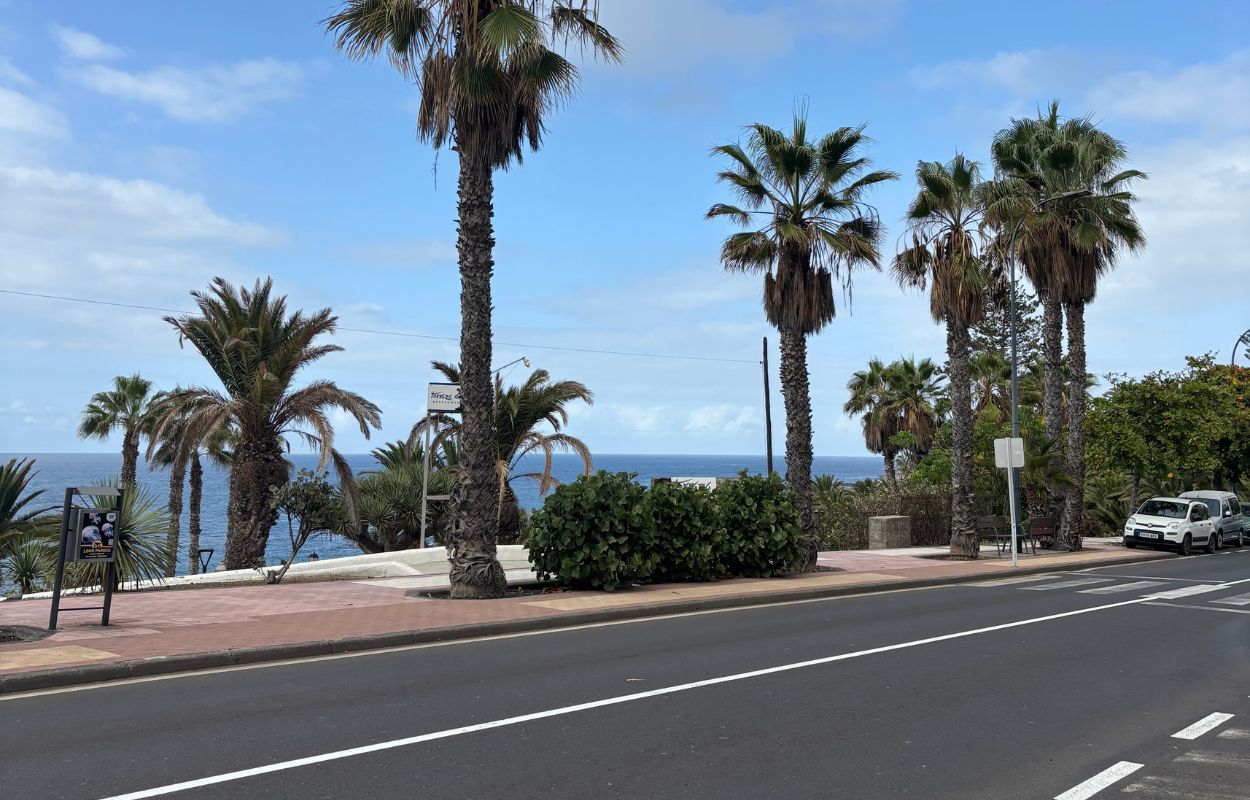
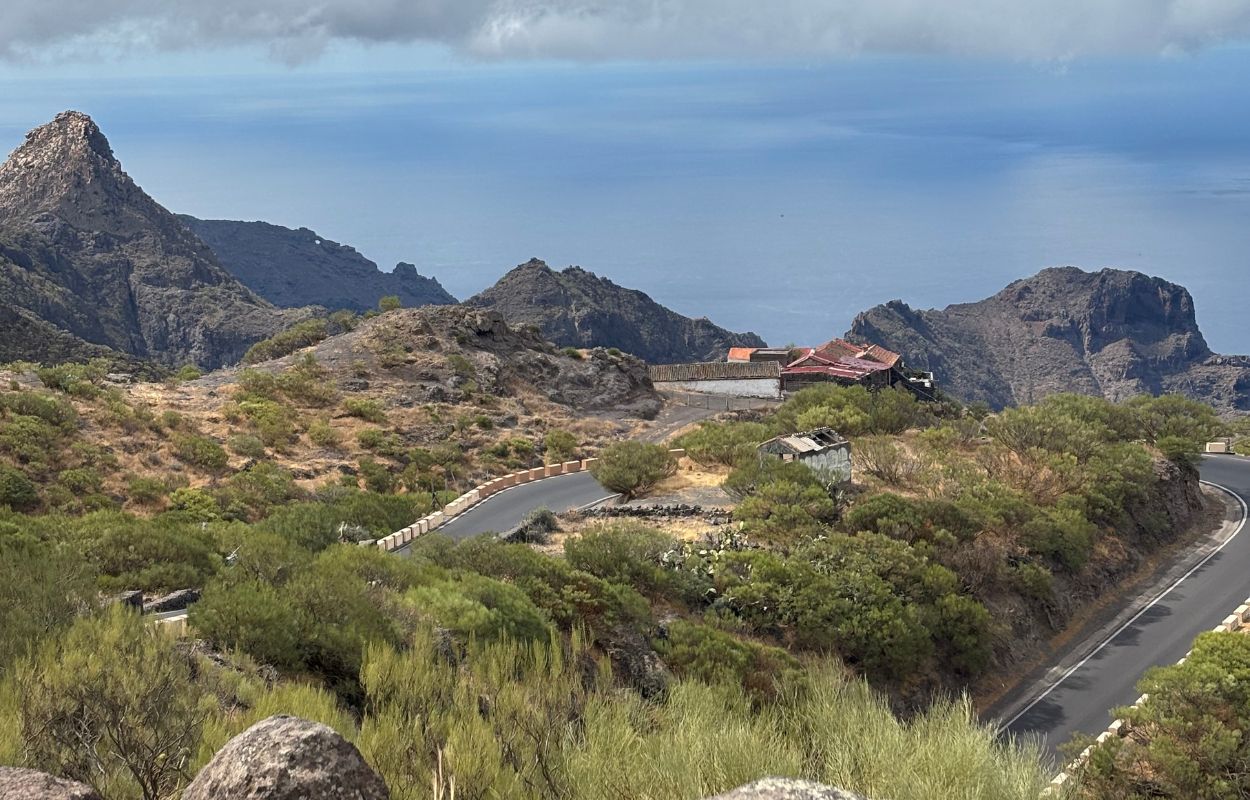
Another thing I loved about having a rental car was the freedom to stop wherever I wanted and take the occasional detour on a whim. I’d even say that driving around Tenerife is part of the adventure!
Getting around Tenerife by bus
If you’d rather not rent a car and want to keep costs down, traveling around Tenerife by bus is a good option. As I mentioned, Tenerife is the most developed island in the Canaries, and that extends to its public transportation network. TITSA buses connect most towns and beach resorts. Both Tenerife North and Tenerife South airports, for example, have bus links to major destinations such as Santa Cruz, Costa Adeje, Los Cristianos, and Puerto de la Cruz.
The network is extensive, and fares vary depending on the route. You can pay for a single journey or use the Ten+ system, which works on buses and trams. Current tourist passes include a €10 day travelcard and a €50 seven-day travelcard. If you plan to use public transportation frequently, one of these passes may be worth considering.
That said, some must-see places are difficult or impossible to reach by regular bus. Certain viewpoints and hiking trailheads in Anaga Rural Park, for example, have limited or no service. Masca itself is served by TITSA, but mountain routes can be infrequent and require careful planning. For Teide, line 348 runs from Puerto de la Cruz and line 342 from Costa Adeje, so you can use public transportation to visit Teide National Park. Services are limited, however, and the park covers a vast area, so check the latest timetable before setting out.
The bus is still an affordable and convenient choice if you’re mainly visiting the best-known towns. But if you want to explore Tenerife in depth, I won’t lie: relying on buses comes with limitations and requires more planning. At least now you know what to expect!
Taking the Tram (Metrotenerife) in Tenerife: From Santa Cruz to La Laguna
If you’re staying in the capital, Santa Cruz, the tram is a practical way to get around the metropolitan area in the north of the island. I have to admit, I was surprised to find a tram running through the heart of the city. It may sound a little clichéd, but I simply wasn’t expecting an island capital to have a system like Metrotenerife. Santa Cruz is compact enough to explore on foot, but when your legs need a break, the tram is a welcome alternative.

And that’s not all: the tram links Santa Cruz with San Cristóbal de La Laguna, a town I really recommend visiting. Its historic center is a UNESCO World Heritage Site, and it has retained plenty of character, with colorful colonial façades lining its streets. I loved wandering around and soaking up the local atmosphere. The tram runs every day, and the Ten+ card and app work on both the tram and bus network. Admittedly, the tram only covers a small part of the island, but it’s still a useful option during your stay.
Getting around Tenerife by taxi or rideshare
As in most destinations, taxis are another way to get around Tenerife. Compared with buses, they let you travel more quickly and freely, without planning your day around a timetable. Official taxis are regulated and use meters, which helps prevent unpleasant surprises at the end of the ride.
You’ll find them mainly in the island’s busiest tourist areas, particularly in the south around Costa Adeje, Playa de las Américas, and Los Cristianos, as well as in the north around Santa Cruz and La Laguna. Once you leave these towns, however, finding one can become much more difficult. Taxis are best suited to short trips, such as getting to the beach or the airport, rather than touring the whole island.
App-based ride services are also available in parts of Tenerife, but coverage is more limited than in many major cities and is concentrated in high-demand tourist areas. Neither taxis nor ride services can fully replace a car for exploring the island, but they can still be very handy in busier locations.
How to get from Tenerife to the other Canary Islands
Unsurprisingly, Tenerife has excellent connections with the rest of the Canary Islands. Whether you’re heading to La Gomera, La Palma, El Hierro, Gran Canaria, Lanzarote, or Fuerteventura, you’ll have several options. Reaching nearby islands such as La Gomera and Gran Canaria is naturally easier, but in general, you can travel either by ferry or by plane.
Inter-island ferries in the Canaries
As I’ve just mentioned, inter-island ferries are often the easiest way to reach Tenerife’s neighboring islands. The main operators are Fred. Olsen Express and Baleària Canarias, the service previously operated under the Naviera Armas name. Several departures are available on the busiest routes.
As a general guide, from Tenerife you can reach:
- La Gomera in about 50 minutes from Los Cristianos
- La Palma in about 2.5 hours
- El Hierro in about 2 hours 20 minutes
- Gran Canaria in about 1 hour 20 minutes on the fast ferry between Santa Cruz and Agaete, with other sailings varying by route
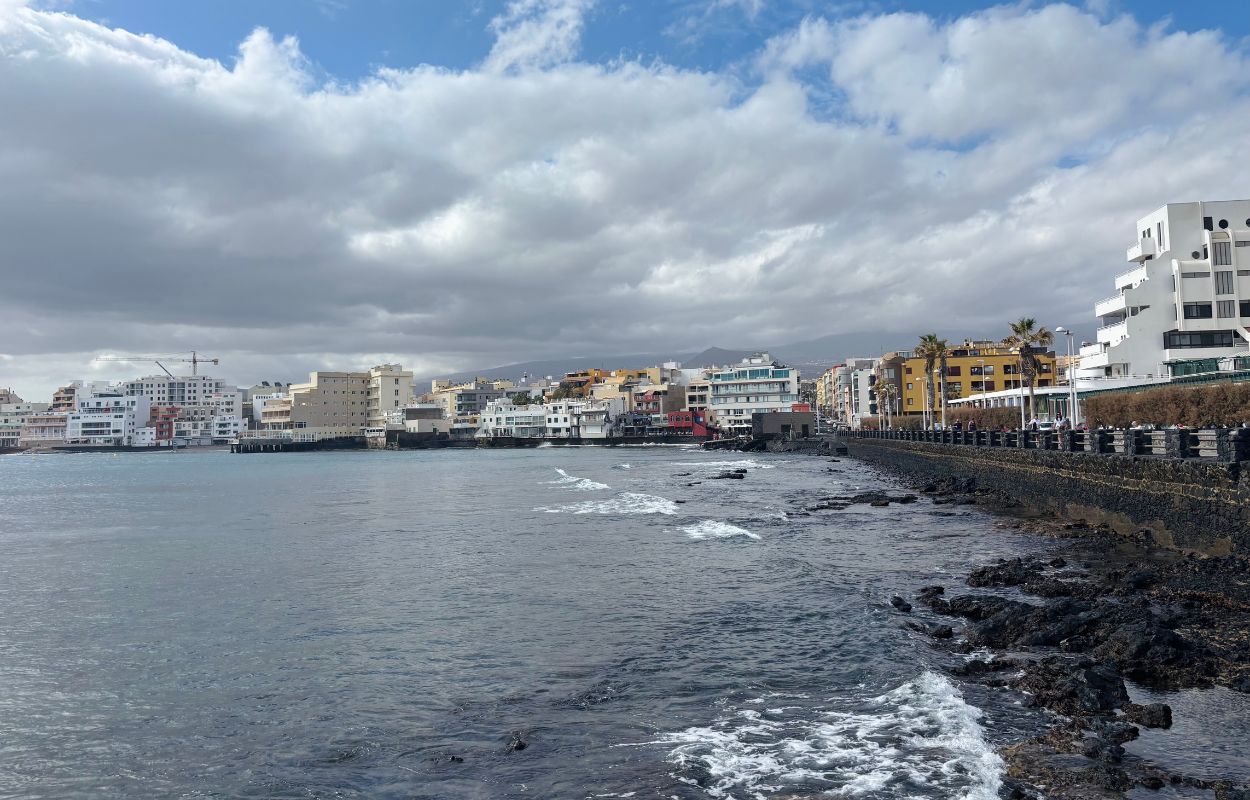
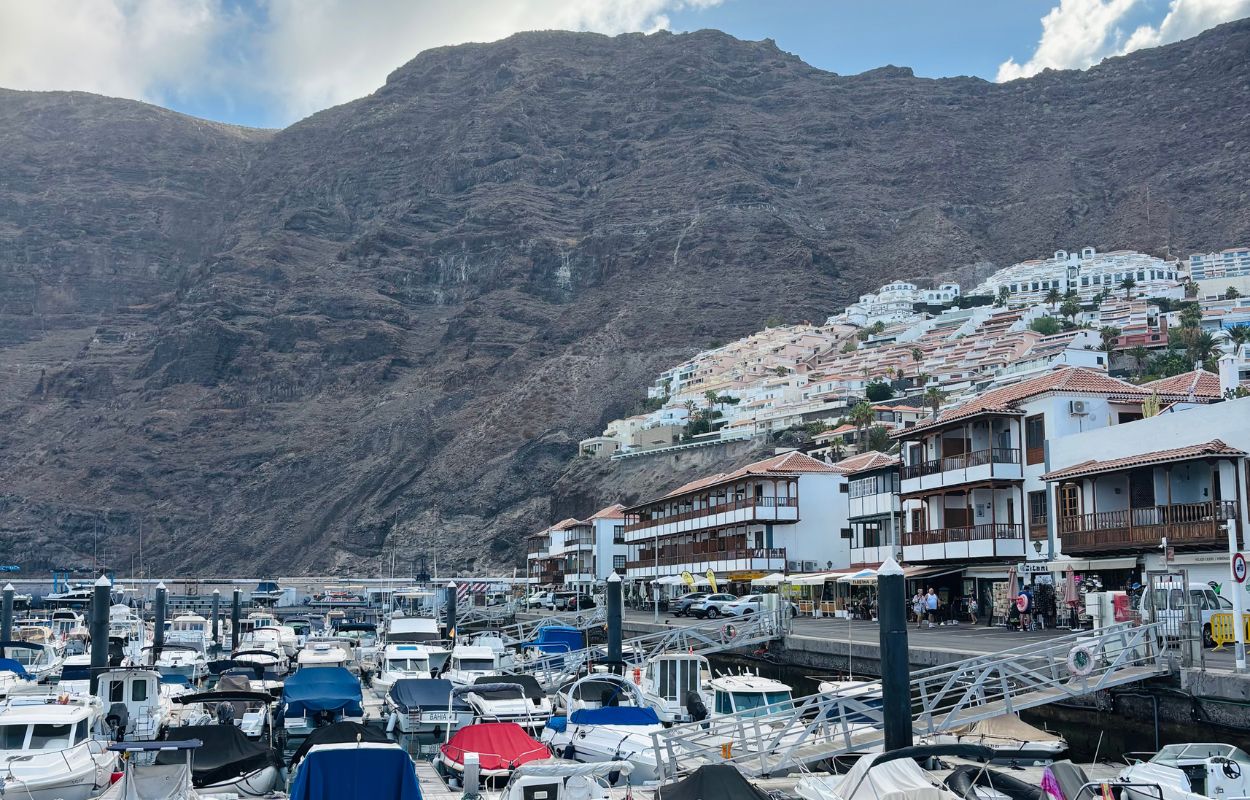
One advantage of the ferry is that vehicles can travel on board, although you must check that your rental agreement allows you to take the car to another island. That can let you continue your route through the archipelago without switching vehicles. I traveled from Tenerife to Lanzarote, and because the islands are far apart, flying and renting a different car on each island was more convenient, faster, and cheaper for me. I’d recommend the ferry for shorter crossings like the ones mentioned above; longer routes can take a while and may involve connections. Just remember to book ahead!
Domestic flights from Tenerife to the other islands
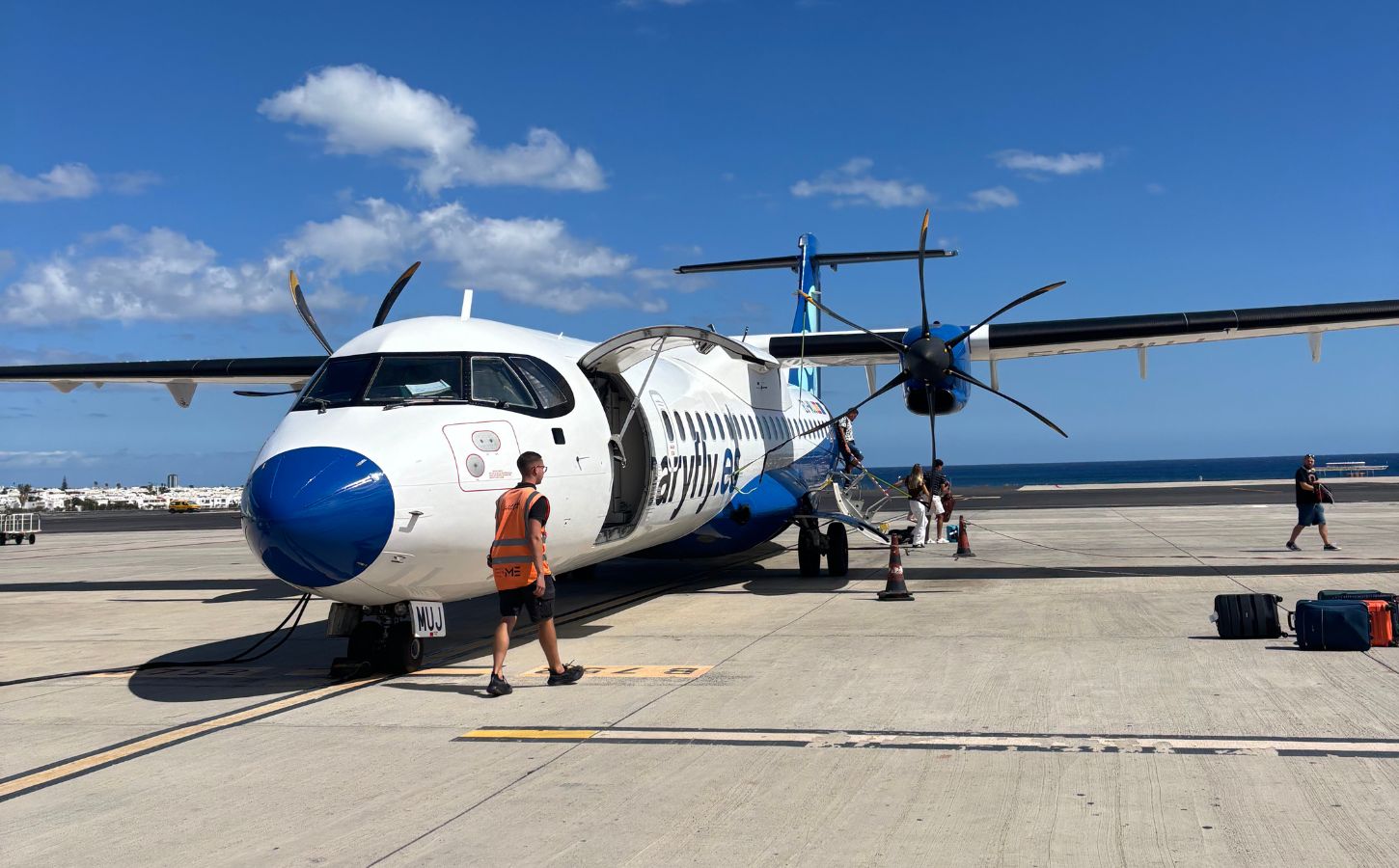
Inter-island flights in the Canaries are mainly operated by Binter, with Canaryfly also serving several routes. I flew with Canaryfly from Tenerife to Lanzarote because it was much more affordable at the time. My ticket was €100 cheaper than Binter’s—that’s a significant difference. Most inter-island flights use Tenerife North Airport, although some Binter services also operate from Tenerife South. Both airports serve domestic routes, and Tenerife South also handles a large number of international flights. That’s where I arrived from France.
Flights within the archipelago are often operated by smaller aircraft, sometimes with two seats on each side of the aisle. Naturally, you may feel turbulence a little more. It was quite windy on the day of my flight, but honestly, I had expected worse when I saw the size of the plane. Don’t worry—it was still perfectly manageable, haha.
How to get to Lanzarote?
Flying from Tenerife to Lanzarote is straightforward and fairly quick, with direct services operated by Binter and Canaryfly. Flight schedules vary by date, so it’s best to check both airlines when booking. The flight itself takes roughly 50 minutes. Honestly, it went by so quickly that I barely noticed the time passing! I was a little nervous when I saw the size of the plane, as I think it was my first flight on an aircraft that small. The landing was the bumpiest part because it was windy in Lanzarote. Takeoff from Tenerife, on the other hand, was wonderful: we climbed gradually, giving me time to see Teide and several of the island’s beaches, with a slight pang of sadness as I left.
Taking the ferry to Lanzarote is also possible, but it takes much longer and generally involves a connection in Gran Canaria. This option may make sense if you’re traveling with your own vehicle. With a rental car, believe me, it’s usually better to rent separately on each island. One-way rentals between Tenerife and Lanzarote can be expensive or unavailable, depending on the company.
Once you arrive, you’ll discover an island that feels completely different from Tenerife, with volcanic landscapes and small whitewashed villages. The change is immediate! I was struck by how quickly I had moved between two such different settings in less than an hour in the air. If you’re planning to visit Lanzarote too, we’ve written a guide on how to get around Lanzarote.
How to get to La Gomera?
I haven’t had the chance to visit La Gomera yet, but I’ve seen it several times from Tenerife. To give you an idea, it lies about 47 km off Tenerife’s southern coast. It’s much wilder and less developed than Tenerife, with a warm, humid climate that creates lush scenery and a wonderfully peaceful atmosphere. Honestly, the island intrigues me more and more. And given the short distance, getting there from Tenerife is very easy!
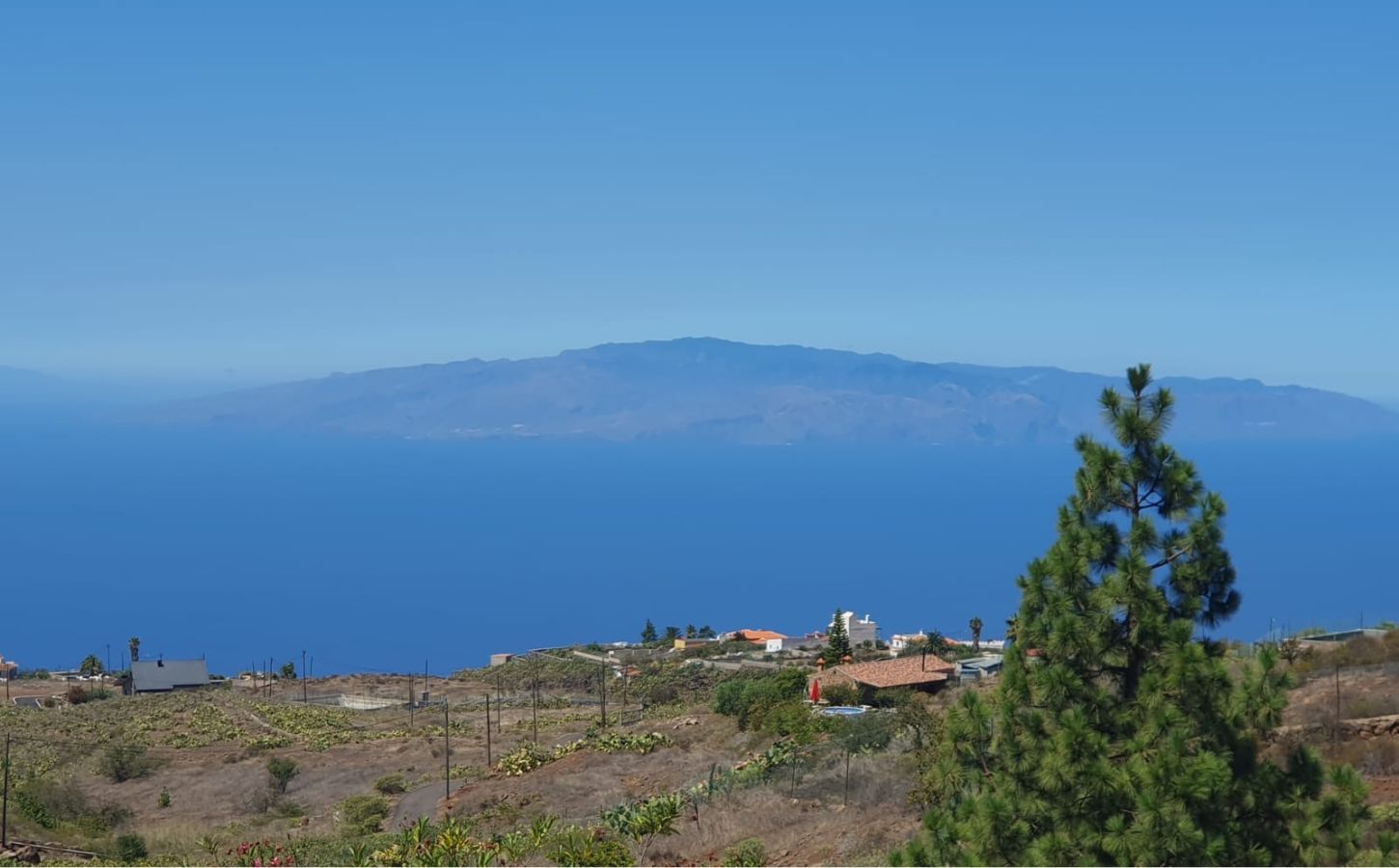
The easiest option is the ferry from Los Cristianos in southern Tenerife. The crossing to San Sebastián de La Gomera, the island’s capital, takes about 50 minutes. You can even make a day trip, although I think the island deserves more time! Vehicles can travel on the ferry, but check your rental company’s rules before taking a rental car off Tenerife. Flights also operate between Tenerife North and La Gomera. Since the flight is short but still requires time at the airport, it may not save much time overall—and, let’s be honest, it’s not the most environmentally friendly option.
How to get to Gran Canaria?
Tenerife and Gran Canaria are often compared. They sit close to each other and are the two largest islands in the Canary archipelago, so many travelers combine them in a single trip. To reach Gran Canaria from Tenerife, you have the same two main options:
- The ferry: this is a popular choice. The fastest regular crossing runs between Santa Cruz de Tenerife and Agaete and takes about 1 hour 20 minutes. Other services may arrive in Las Palmas and take longer, depending on the route. The journey is comfortable, and taking the ferry is especially practical if you want to travel with a vehicle.
- The plane: frequent flights connect the two islands. The flight itself takes around 30 to 45 minutes, making it a convenient option if you get seasick or don’t need to bring a car.
That brings us to the end of this guide to getting around Tenerife. As you’ve probably gathered, a rental car is the best option if you want to see the island from every angle. Still, it all depends on the kind of trip you’re planning. If you’re coming to Tenerife mainly to relax and visit the better-known towns in the north and south, the bus network may be enough, with taxis or app-based rides as backup for certain trips. Whatever you choose, I hope you take the time to explore Tenerife—it’s well worth the journey.
I’ve visited twice, and my second trip only deepened my fondness for the island. To keep planning, take a look at our guide to the budget to plan for traveling to Tenerife.

Written by Laura CALLES
Thanks to Mélanie and Sylvain, I had the chance to discover the Canary Islands, specifically Tenerife and Lanzarote, so that I could share these island paradises with you. Two real favorites of mine!
Despite our vigilance, an error may have crept into this article. If you spot one, please don't hesitate to let us know so that we can correct it immediately and keep our information up to date!