Maison de la banane in Guadeloupe
Last update: 04/23/2026
Our blog continues to grow thanks to you, our readers. This post may contain affiliate links, which means we can earn a small commission if you make a purchase through them, at no extra cost to you. This helps us to continue to bring you more and support our work!
In this article, I’ll take you to another place here in Guadeloupe (located in the Caribbean) that we’ve been meaning to visit for over a year: the Maison de la Banane (or Museum, depending on the signs). Whenever we have tourists or family visiting us, we take them to explore the must-sees, such as the Maison du Cacao in Pointe-Noire. You can find our day tour and report on this by clicking on the previous link.
So it was during Mélanie’s mum’s visit this year that we took the time to explore this famous Maison de la Banane. We’d heard about it, but didn’t really know where it was (even though it’s only 15 minutes from our house!). By the way, we’ve just been back from the discovery of another little tropical wonder, the island of Marie-Galante. After Terre-de-Haut, Terre-de-Bas and Desirade island, this was the last Guadeloupe island we hadn’t seen.

It turns out that if you don’t really pay attention to the signs, the place is not so easy to find. As always, at the end of this article I’ll give you the practical information you need to explore this banana museum.
I’m doing more and more of these “discovery” articles, as I like to call them, to make you want to visit the place, rather than filling you with pages and pages of text.
On the Leeward Coast, don’t hesitate to visit the Guadeloupe Zoo, a fun place to explore with children surrounded by nature.
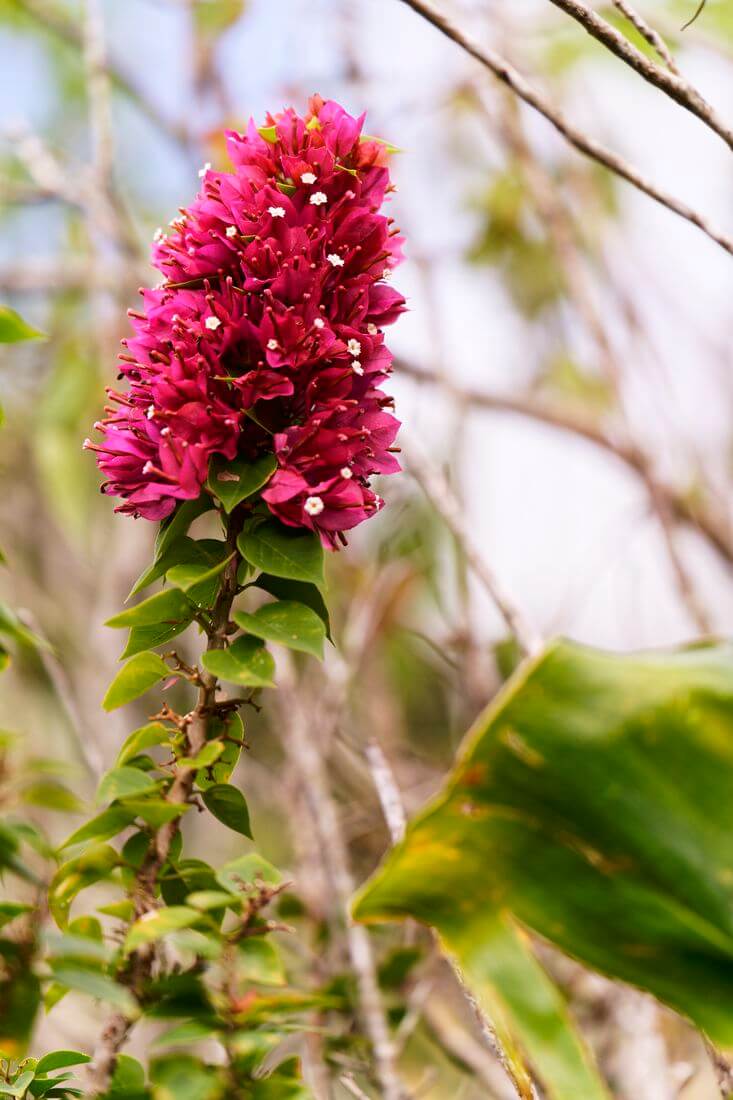
In case you’re wondering, I have no interest in encouraging you to visit the site. This is not a partnership with the Maison de la Banane. We paid the entrance fee like everyone else, so our opinion on the matter is completely impartial. That doesn’t mean that our opinion would be different if we had been given something for free. Don’t put words in my mouth haha.
Our arrival at Maison de la Banane
We took the beautiful and breathtaking coastal road from the house (Vieux-Fort) towards the town of Trois-Rivières. Later we realized that we should have taken the main road to Pointe-à-Pitre, as we didn’t know where the house was. But I’ll explain all that below. Once there, we parked in the large car park for visitors.
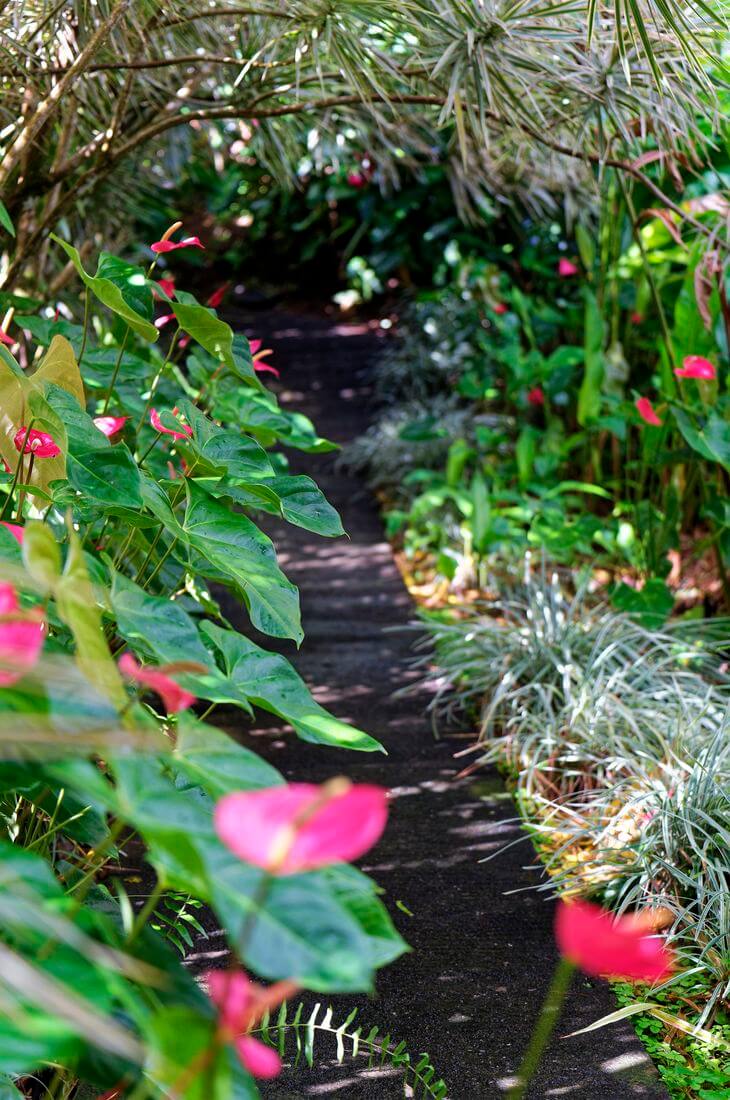
A concrete driveway with lots of flowers leads to the reception area. Although the layout looks more like a tropical garden with wildflowers than a banana plantation, it’s really quite nice, picturesque and colourful. We were greeted warmly by the two people in charge. After a brief introduction, we were given the tour, all in good humor. After paying the entrance fee, we were treated to a tasting of three bananas, the first being the pineapple banana, which is excellent.
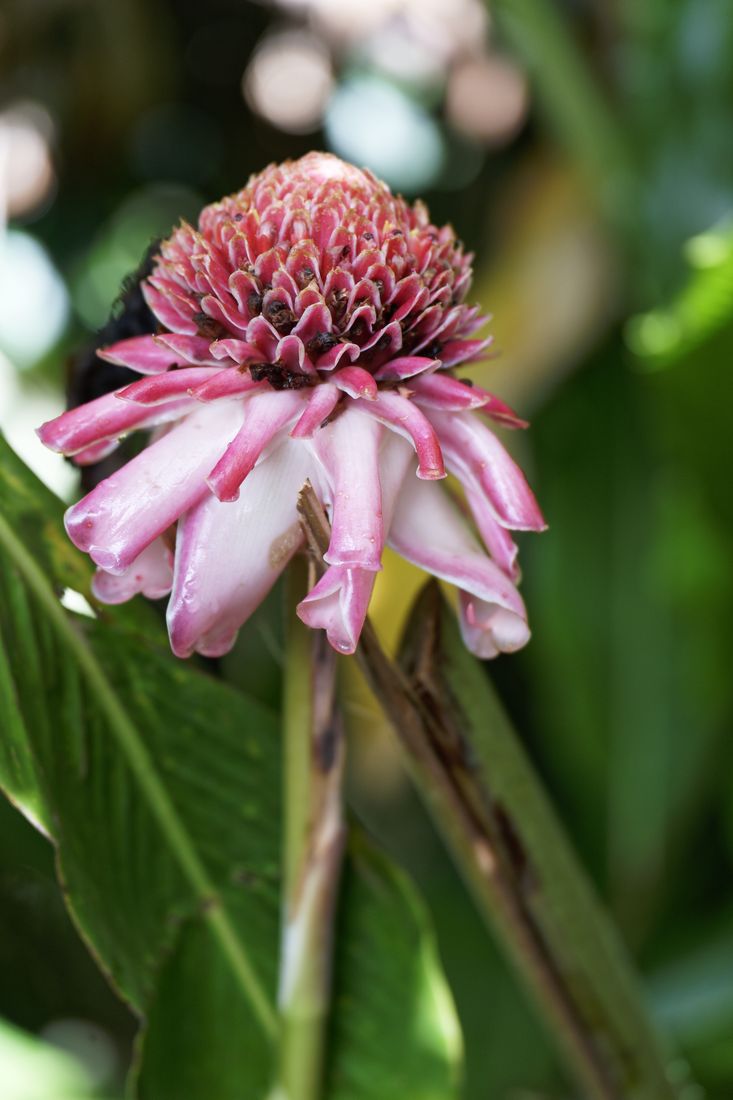
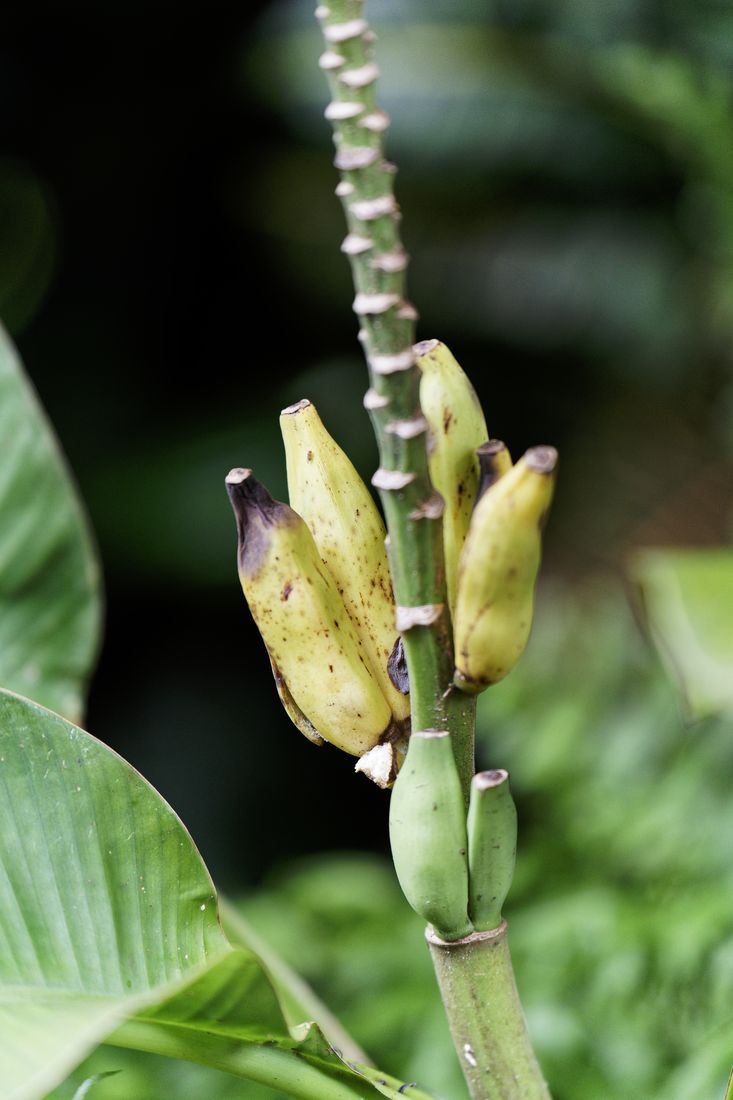
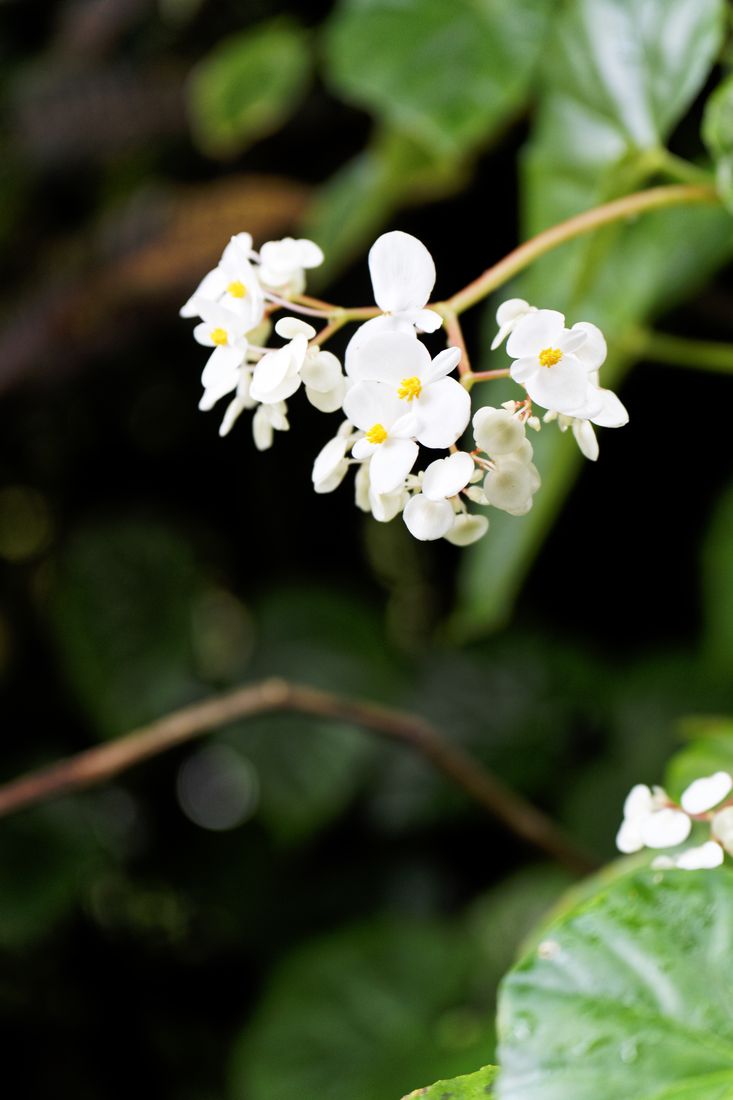
I remember a funny anecdote: When we returned to France (while living in Mayotte), Mélanie’s grandparents wanted to make us happy by buying bananas in the local supermarket. Mélanie and I had a good laugh comparing the taste of bananas from mainland France, which have nothing in common with those from the islands, be it Mayotte, Tahiti or the West Indies.
After the tasting, we visited the banana exposition.
The banana exposition
This is the first part of the visit. This series of rooms presents different themes related to the banana, where you can learn and discover in particular:
- Everything you need to know about the harvesting and production of bananas,
- And also about the cultivation, packing and export of bananas from the West Indies to Europe and the French mainland,
- Bananas’ nutritional value,
- Current banana standards (colours, sizes, shapes, etc.)
- Banana pests and how to deal with them,
- The different banana varieties in the world and their uses,
- The history of the banana and how it has evolved over the years to become the most consumed fruit in the world,
- And much more, including the fact that the banana tree is not a tree but a giant herb!
All this is presented in the form of explanatory panels, in a fun and well-designed way that will help you learn a lot. Allow about 20 to 25 minutes for your visit, depending on how much you want to read (or not!). You can then return to reception.
Banana videos
I’d say this is probably the least interesting part of the visit, as far as I’m concerned. We are treated to a series of 10-15 minute films after the welcome. They explain a lot about the life of the banana, its optimal biological development, how it is the banana production and how bananas are exported. It’s interesting, but not really exciting.
Then the banana house experience became more enjoyable as we had the chance to taste a second variety of banana, the Cavendish, which was really excellent. It was one of the best bananas I’ve ever had!
Finally, the highlight of the visit was the tour of the garden of Maison de la Banane, which was really interesting.
The Garden Tour
About ten people gathered at the reception and we made our way to the garden of the Banana Museum. A short briefing in a covered area at the entrance gave us some interesting information about bananas and the production. A few drops had fallen, but nothing too serious. They explained that they had done the best they could with what was available without destroying anything. That’s good.
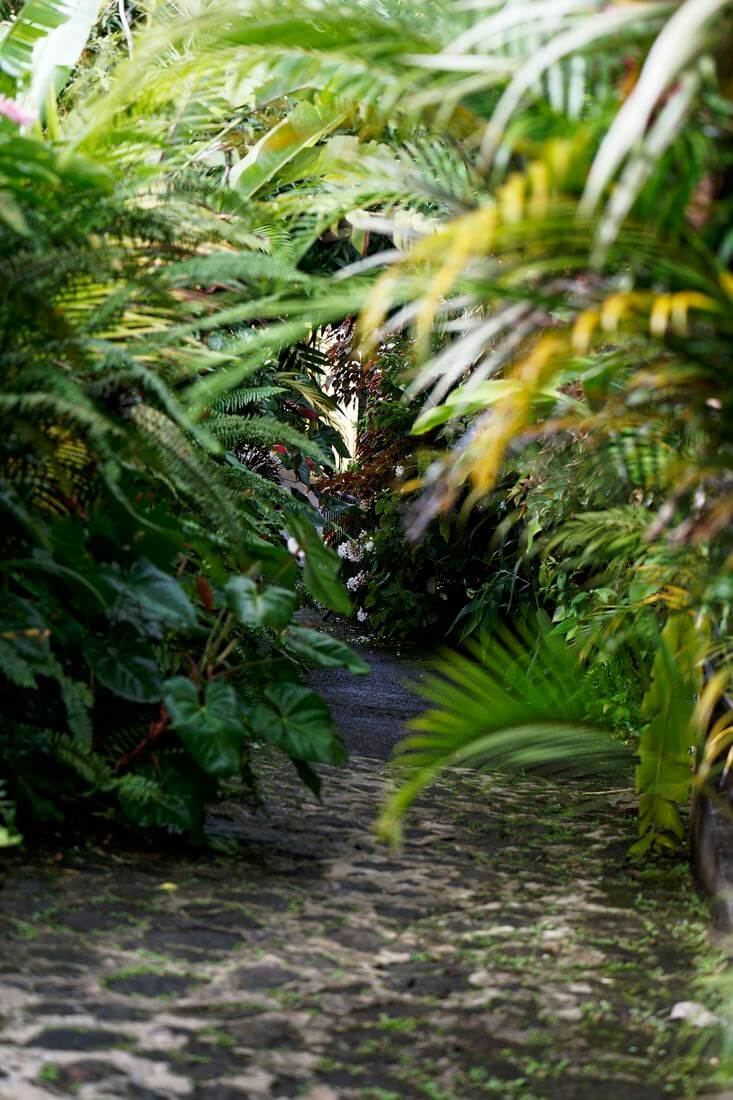
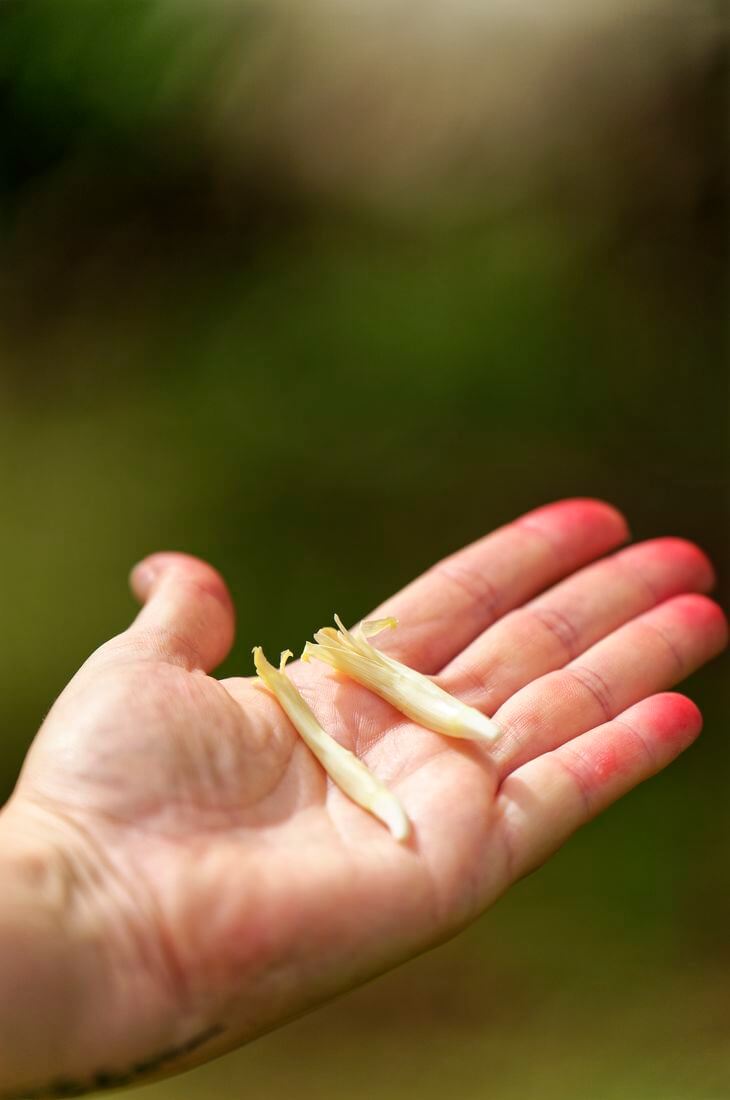
Finally, we entered the garden via a small path that had been laid and was passable. The atmosphere is excellent, in the middle of the vegetation, in the middle of nature. To be honest, I think it’s an idyllic setting. The lady who accompanied us let us taste a variety of edible white begonias right at the beginning of the path. It’s not great and quite bitter, with a sort of old grape skin taste! On the right, we can see the beautiful roots of a cursed fig tree, a characteristic tree that we often come across in Guadeloupe, for example on the walk to the Bassin Bleu.
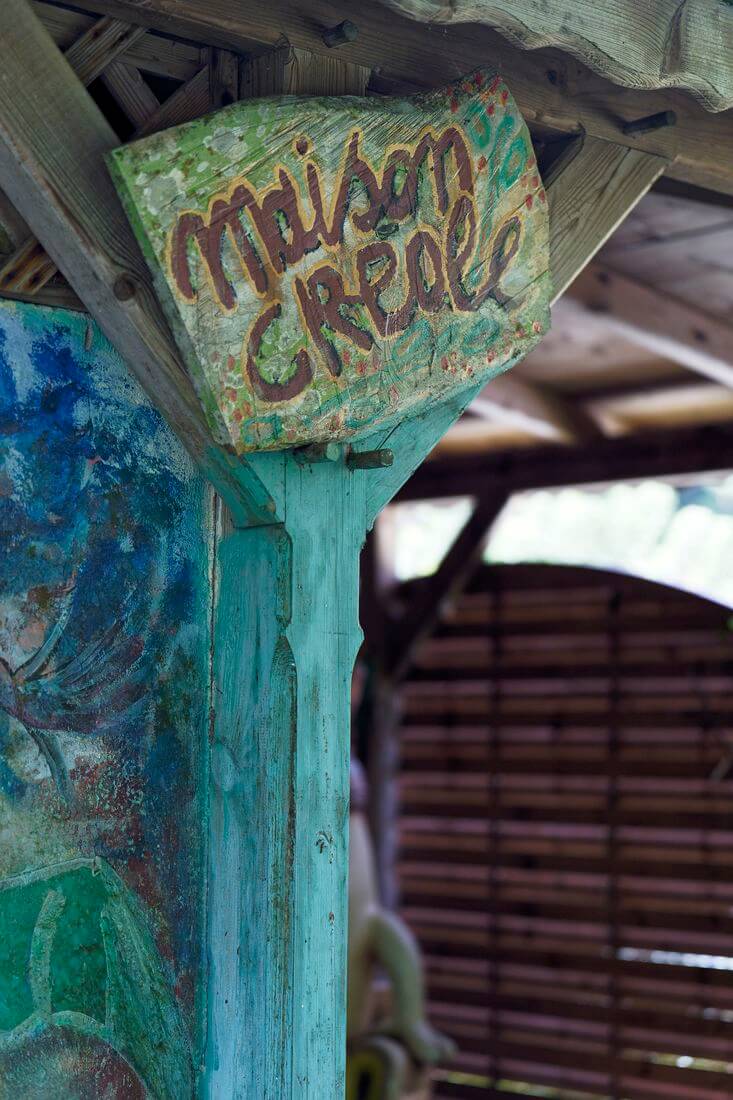
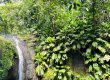
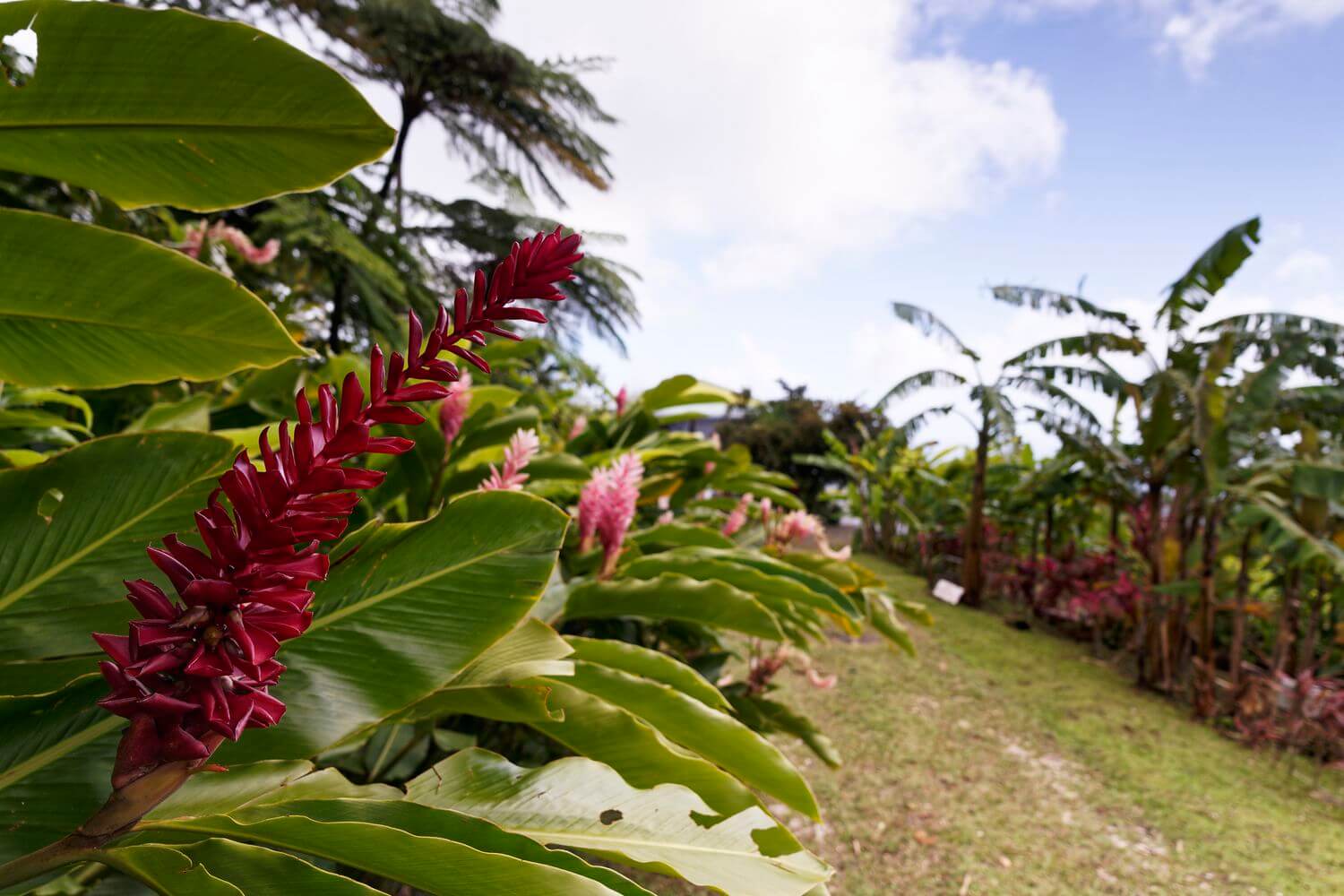
A beautiful path full of tropical flowers, each more beautiful than the last, continues the rest of the way. At the moment there are only a few banana trees on the horizon, but they will come later in the tour. There’s so much vegetation on the edges of the path that you’d be forgiven for thinking that it could invade the area without too much trouble. Among the most popular flowers are some beautiful balisiers, all kinds of heliconias, anthuriums in abundance and porcelain roses.
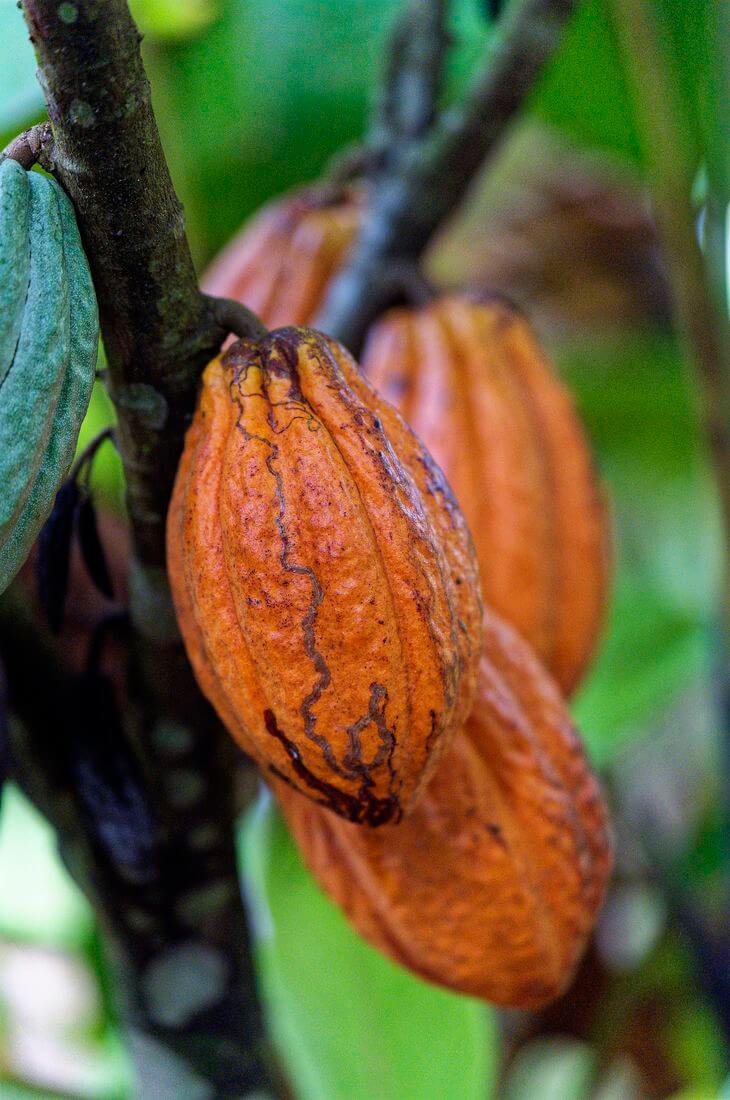
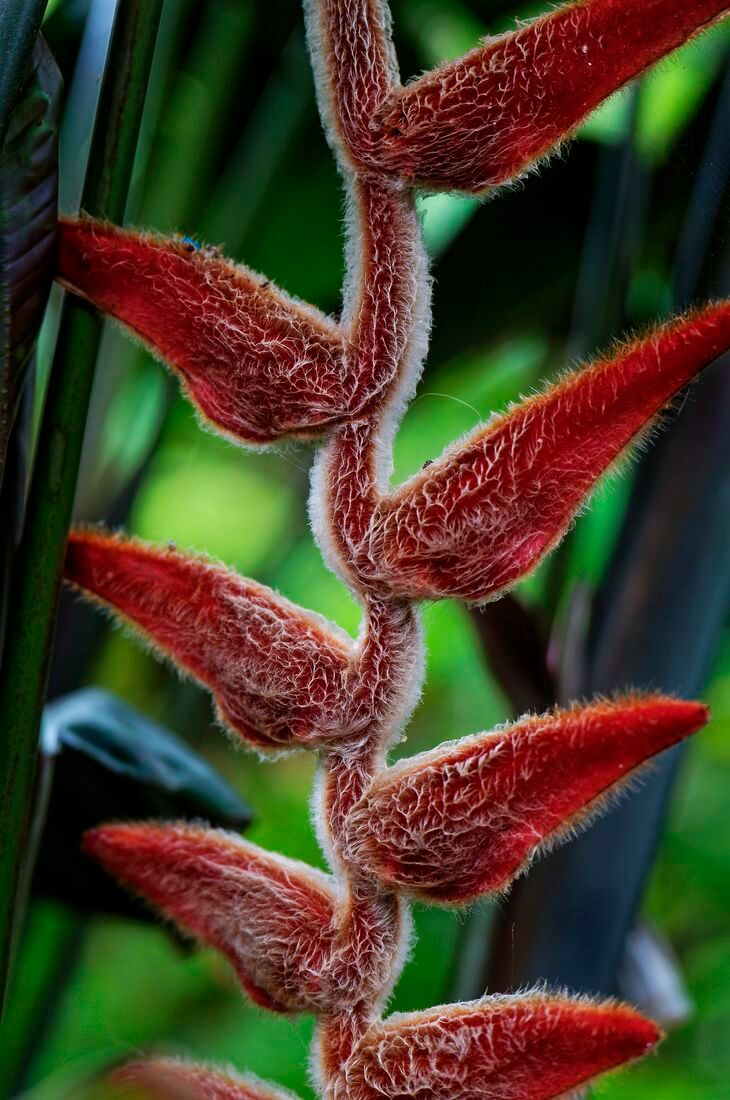
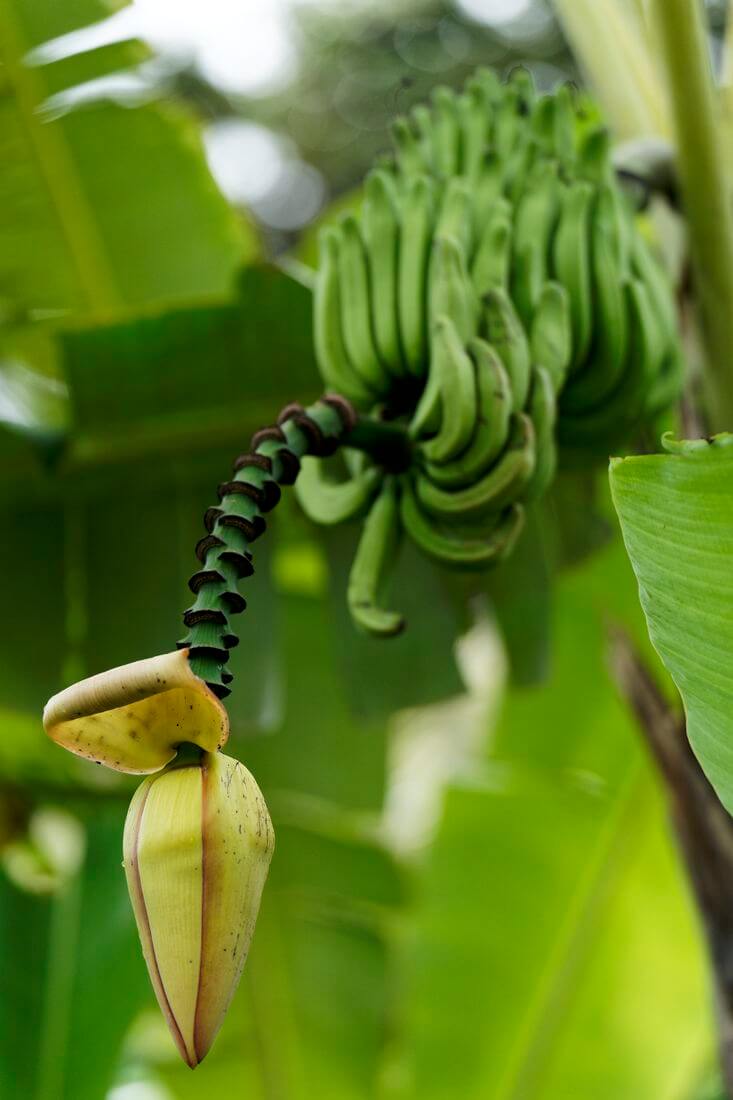
We continued on to a field that had been left fallow for two years. We received a presentation on the life cycle of the banana tree, which reminded us that a banana tree produces one bunch per year and that the plant that produced the bunch is then cut down. The new shoots then grow on their own and produce more bunches of bananas. We also learnt that bananas grow upside down at the beginning of their life cycle, before moving up again. We were shown different types of banana trees, including one with a beautiful yellow flower! We also discovered the little ‘male’ bananas inside the cut flower. We were able to see several varieties of ornamental banana trees as well as a huge chestnut tree, a species similar to the breadfruit tree. We’re in the process of growing one at home.

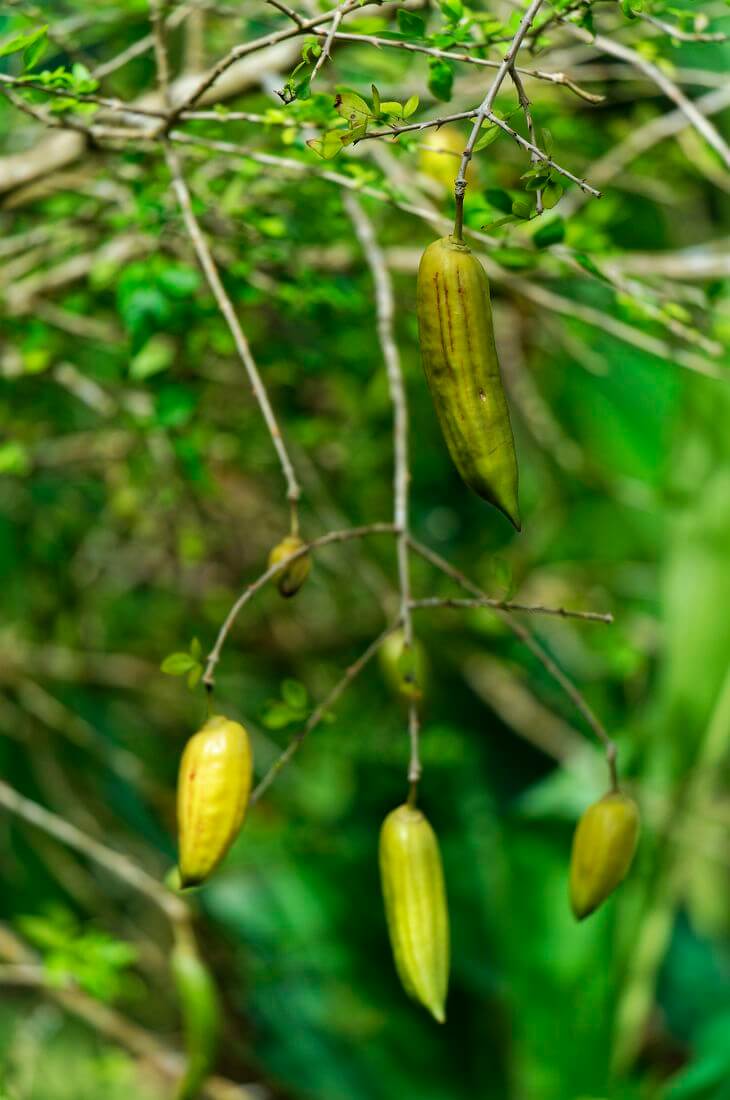
The next part of our walk took us to a little bush we didn’t know, the Jamaica cane, also known by its real name ‘guajilote’. It’s a bit like sugar cane in that you have to crush it to get the juice out. Not a bad taste. We also spotted the very rare ‘bleeding banana’, the Musa Sanguinea, a species of banana native to India, named for the red sap along its stem. There were also a few cacao plants with their famous pods.
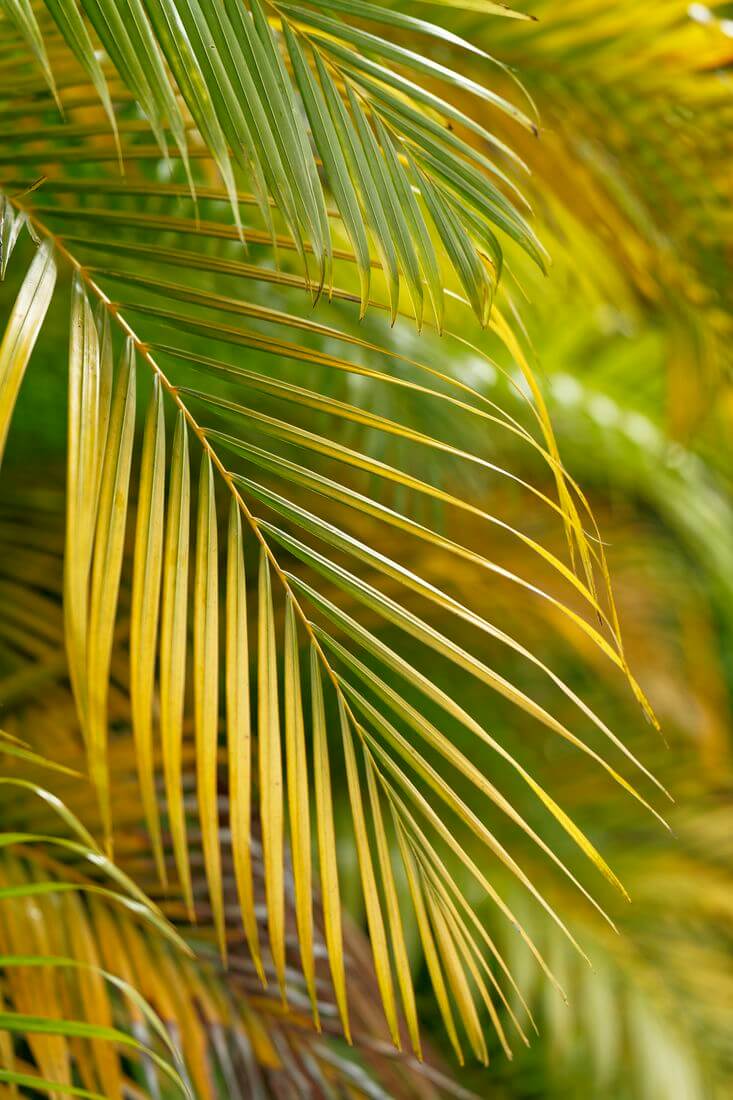
The tropical vegetation along the trail was as beautiful and lush as ever. To be honest, if I’d had more time, I would have liked to have stayed a couple of hours longer, just to take some more photos. We also came across a rare hairy Heliconia that I’d never seen before. Very beautiful. Lots of yukas too, and a few shots of vanilla here and there. Finally, the path climbs up a small mone, which offers a beautiful view of the surrounding area and Trois-Rivières, all the way down to the sea. The light was already difficult to photograph at this time of day, but I managed with my graduated filters placed on the sky. Along the climbing path, we came across the famous shrub ferns, the same species we see in the Bassin Bleu or when we reach altitude on any hike in Guadeloupe. By the way, this link takes you to a page that lists all the walks we’ve done in Guadeloupe, with lots of details, GPS tracks, photos, etc.
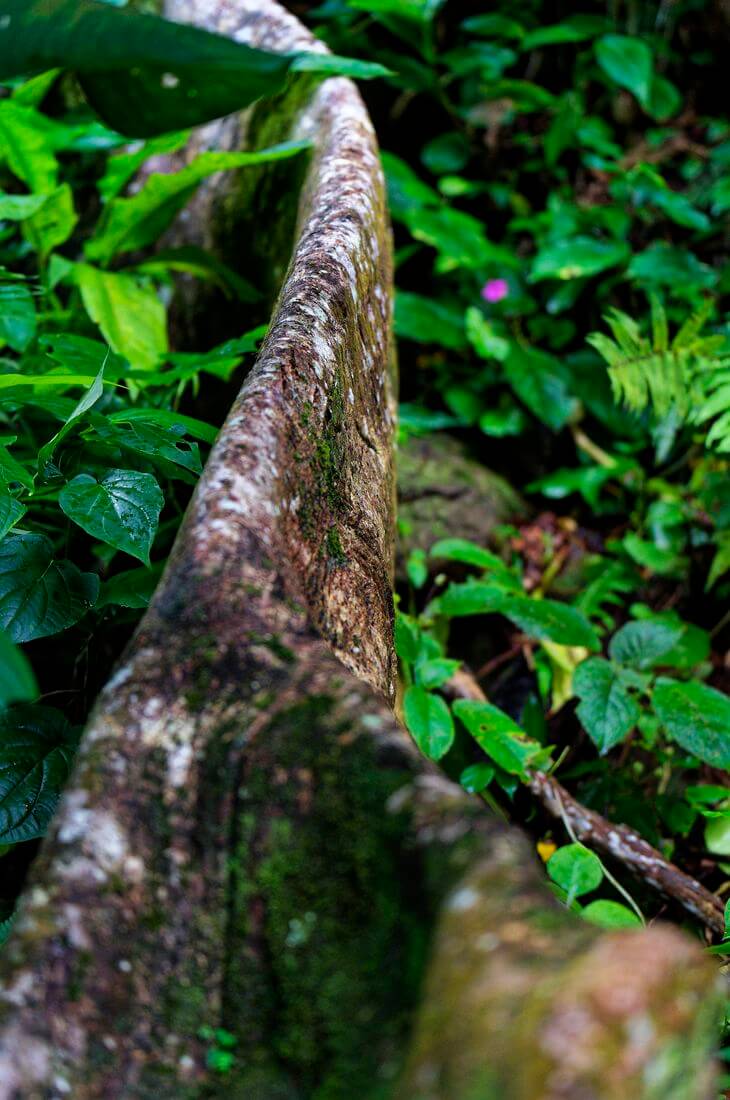
On the ridge and at the viewpoint, there is a relaxation area with various services such as massages, a jacuzzi and a swimming pool. We didn’t get all the details on the spot. But you can call the Maison de la Banane to find out more. Apparently there are even ‘Daily Packages’ which include eating, using the facilities, etc. This can be very interesting given the location. This can be very interesting given the location. We continued along the ridge, through the banana plantations on our left, and were able to see huge elephant leaves, a cinnamon tree and even the top of the cursed fig tree with its red fruit. The roots of the tree we had found below. Always impressive.
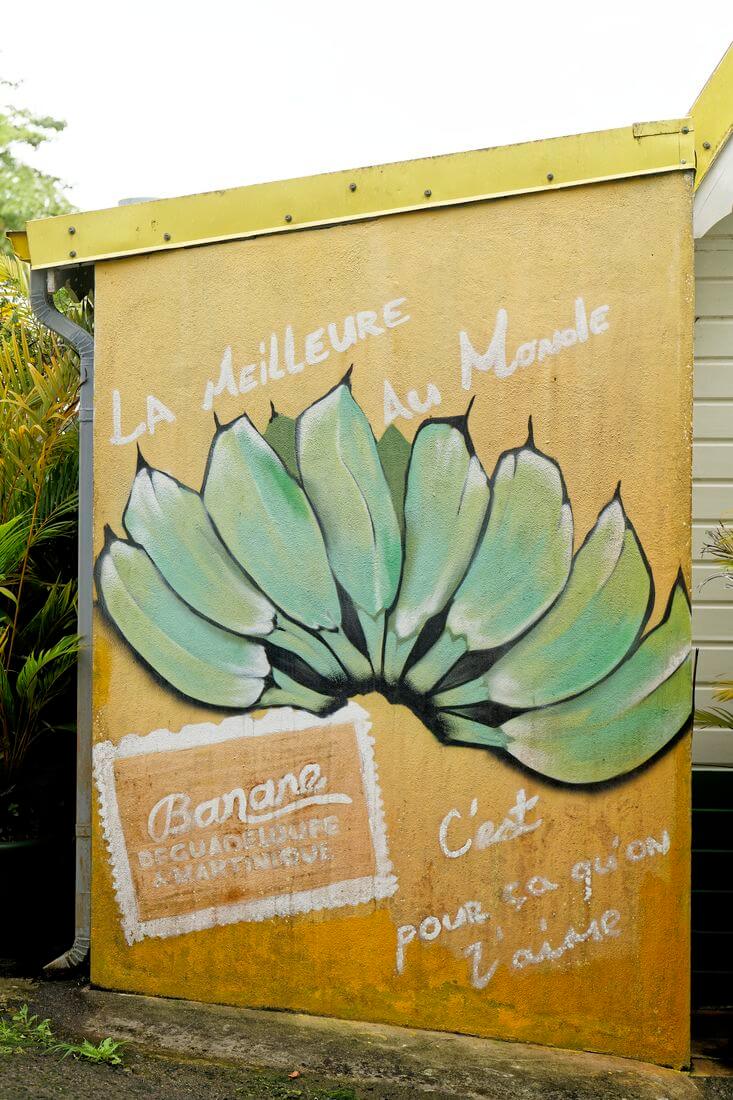
We make our way back down a slippery path to the reception area. We are treated to our last banana tasting, the apple banana, not as good as the other two, but not as ripe. We also have a demonstration of the board game that the Maison de la Banane has been the brainchild of. Children are even allowed to play little games and adults can taste the dried bananas that can be bought on the spot (I love them).
Our opinion of the excursion
A few words to give our general opinion of the excursion. Looking at the reviews on the net, they seem to be mixed. Digging deeper, the people who gave low marks complained that the ride was too short (10 minutes) and that they had to pay full price. I don’t know why, but I’d recommend calling ahead to ‘book’ and make sure there are other groups, for instance. Maybe they don’t give tours if there are very few people. A friend of ours did the walk on her own, without a guide. It’s not very clear, haha.
Anyway, we really enjoyed the whole visit. The banana exhibition was interesting and we learned a lot. Visiting the garden behind it is really great, and you can really see and feel that the two people accompanying us are passionate about what they’re doing. In the end, the tour is split into three parts, and that’s just as well, because there’s something for everyone. Based on the tour I took, which lasted about two hours, it’s clear that the 10 euro entrance fee is well worth it.
Useful information - Maison de la Banane
What you need to know about visiting Maison de la Banane
Here are some things you should know about visiting the Banana Museum/House in Trois-Rivières:
- Adults: €10
- Children (under 14): €8
- Group rates available
- Open from Monday to Saturday from 9.30 to 12 and from 14 to 17.
- Telephone number: 0590 92 70 75
How to get to Maison de la Banane?
I always end this article with the practical side of things, and it’s even more important in this case because although we’ve passed it hundreds of times since arriving in Guadeloupe, we hadn’t noticed it…
See my article on how to get to Guadeloupe (a beautiful archipelago to do some activities like snorkeling, visit beautiful sand beaches and admire Caribbean landscapes).
In summary, if you want to go to Guadeloupe, you’ll need to fly to the island first. From France, the cheapest and direct flights are from Paris to Pointe-à-Pitre, starting at €400 if you’re flexible enough. Recently, due to world events, ticket prices have risen relatively sharply and it’s not uncommon to find tickets for between €500 and €700… It’s also possible to find cheap and direct flights from some provincial cities, so it’s worth checking out the various options. You can also find the cheapest flights from Quebec or the United States for French speakers living abroad.
Once here, to get around and be independent during your holiday in Guadeloupe, you’ll have no choice but to hire a car. It’s the easiest and safest way.
Getting to Maison de la Banane depends on where you’re coming from. If you’re in Basse-Terre, it’s very easy, just follow this itinerary. It takes just under 15 minutes to get there. If you’re in Grande Terre, it’s about an hour’s drive from the airport.
What to do in the area?
As is often the case, I’ll try to give you some ideas of things to do and places to visit when you’re in the Lower Terre area. There really are so many things to do, to name just a few that come to mind and are close by:
- Swim at the sandy beach of Grande Anse, in Trois-Rivières,
- Hike the Grande Pointe hike (Trois-Rivières),
- Discover the Bassin Bleu at the foot of the Soufrière volcano,
- Explore the forest and the Galion waterfall in the National Park,
- Consider other hikes, in particular the ascent of La Soufrière.
Where to stay in the area?
As you would expect, there are plenty of accommodation options in the area. You can look for accommodation to rent in Trois-Rivières or Gourbeyre, for example.
Otherwise, I’ve selected three nearby places to stay:
- Bel Z’iguane: a whole villa to rent in a magnificent setting
- Le lodge des Bananes Vertes: a very nice eco-labelled place in the middle of natural landscapes
- Les Trésors de Laurëlia: a beautiful and breathtaking place with a great swimming pool!
I’ve come to the end of my discovery of this banana house. I hope you enjoyed the photos and the story of our walk around the place. Personally, as I said above, we had an excellent time and can really recommend it 100%.
See you soon for a new discovery.
Meanwhile, a hike to the Paradis waterfall in Vieux-Habitants is a great way to discover Guadeloupe Archipelago.
See you soon.

Written by Sylvain PONS
Since 2021, I've been living in the Guadeloupe archipelago with Mélanie and our two children. We are exploring these beautiful islands and discovering the treasures that we are happy to share with you!
Despite our care, a mistake may have slipped into this article. If you find any, please don't hesitate to let us know so we can correct it as soon as possible and keep our information up-to-date!