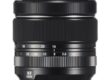
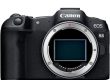
What mirrorless lens should I choose?
Last update: 05/16/2026
Our blog continues to grow thanks to you, our readers. This post may contain affiliate links, which means we can earn a small commission if you make a purchase through them, at no extra cost to you. This helps us to continue to bring you more and support our work!
After writing a complete guide this year in helping you to choose the best mirrorless camera for you, I have started, as promised, a huge project to help you choose your mirrorless lenses. I must admit it, I’m (originally) much more oriented towards DSLR’s and it took me a lot of time researching to be able to write this article. I would like to thank Alex (who will recognize himself) in advance for his important support in this work.
Choosing a camera lens is never easy in any case, especially when you’re just starting out, when you don’t know all the models of mirrorless lenses and when the choice is so wide depending on the brand that you’ll end up getting lost. In fact, I must admit that I myself got lost quite a few times. I’ve had to dive into hundreds (or even more) models! Indeed, the amount of interchangeable lenses available for mirrorless cameras is incredible….


As you will have understood, this article is the result of a lot of work. I summarize everything you need to know on how to choose a mirrorless lens in technical terms but also by giving you an overview of the generalities of the lenses according to the type of picture you want to produce. Simply put, “what is the purpose of this type of lens and for what situation?” Finally, by what interests you the most. I provide you with my recommendations for mirrorless lenses, classified by sensor type (Micro 4/3, APS-C and Full Frame), then by brand and situation. This article is obviously dedicated to all people who want to upgrade from their kit lens and/or diversify their photo equipment. I therefore took a big interest in sorting them by sensor size and brand. You can refer directly to the desired paragraph depending on the body you have. I will not speak about compact cameras in this article.
You will find under each category the most exhaustive tables possible of all the mirrorless lenses (click on the small magnifying glass to open them). I will update them as soon as new products are released! It’s a crazy job actually to list all the possibilities, and I’ve only included the classic native brands (Canon, Nikon, Sony, Olympus, Panasonic, Fuji), the lenses with autofocus (Sigma, Tamron) and the common third brands (Samyang/Rokinon, Zeiss).
Updated: 04/01/2020
For your information and to avoid repeating everything!
- FF: Full Frame / 24×36 sensor
- mFT: Sensor also called Micro 4/3, or Micro four third
- MF: Manual Focus
- AF: Autofocus
1. Technical terms
To be clear from the beginning, there is really no difference between choosing a DSLR camera lens and choosing one for a mirrorless digital camera. The different criteria to look into are identical. If you want to know more, I suggest that you to read the article on how to choose your camera lens. However, here is a summary of the things you need to be aware of to save some time.
a. The focal length
This is the most essential element in making your decision among mirrorless lenses. For beginners who do not know the term, it is basically the “zoom level” of your lens. These are the values indicated in millimeters on your lens (example: 35mm, 100mm, 300mm). There are fixed focal lengths (Ex: 14mm) and variable focal lengths (24-70mm). The focal length impacts your viewing angle. A short focal length (Ex: 11mm) allows a wider viewing angle than a long focal length (Ex: 300mm).
We usually separate the focal lengths into 3 groups:
- Wide angle / Ultra wide angle
- Standard / transtandard focal lengths
- Telephoto lenses
The difficulty (so to speak) to understand is that the focal length always refers to a full frame camera, therefore to the size of a precise sensor. For a mirrorless camera, you have essentially 3 types of sensors: Micro 4/3, APS-C and full frame, each with its own size. A Micro 4/3 sensor is half the size of a full frame sensor. The one of an APS-C sensor is 1.5 times smaller.
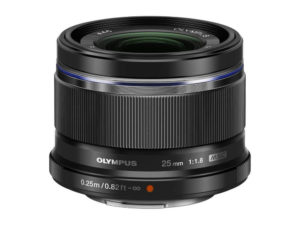

You have to understand that a focal length will not give the same result depending on the type of sensor that is used. The easy-to-understand example concerns transtandard lenses. You will choose between:
- A 24-70mm on a full frame sensor (large sensor),
- A 16-55mm on an APS-C
- A 12-35mm on Micro 4/3
As a general rule, brands offer dedicated lenses for the sensor sizes they offer. I invite you to read the article if needing to choose between a fixed focal length lens or a zoom lens to know the advantages and disadvantages of each.
b. The maximum aperture
This is the second most important parameter when choosing your mirrorless lens. We might say that it is the ability of your optics to “collect light to enter into the lens”. This is the number behind the “f/” on your lens. Remember that the smaller the number (Ex f/1.2), the larger the aperture, and inversely, the larger the number (f/16), the smaller the aperture. You get used to it after a while, don’t worry.
Having a large maximum aperture allows you to take pictures faster (faster response time), to help your shots in low light conditions and to blur your backgrounds to isolate a subject (reduce the depth of field).
The apertures can be fixed (Ex: f/2) or sliding (Ex: f/4-5,6). In the latter, your maximum aperture will be varied by the focal length. For instance, with my Canon 70-300mm f/4-5.6 at 70mm, I can open at f/4, and at 300mm, I am only able to open at f/5.6.
For mirrorless lenses, a nuance must also be specified according to the size of the sensor. It is not possible to compare an aperture of f/2.8 on a Full frame sensor to one on a micro 4/3 sensor that is half as small (diagonally). The result will not be the same. To compare the things that can be compared, you will need to compare a 35mm f/1.4 (APS-C) lens with a 50mm f/2 Full-Frame lens to get about the same result.
Another example for a similar result is to compare a 12mm f/1.4 mFT lens with a 24mm f/2.8 on a Full Frame sensor. You will notice that the diagonal of an mFT sensor is half as small in size as a Full Frame sensor. The equivalent focal length is therefore doubled to obtain a similar angle of view between the two sensor sizes. Regarding the maximum aperture (and therefore the depth of field), the surface of an mFT sensor is 4 times smaller than a full frame sensor, hence the difference of 2 stops. There is therefore a quasi-equivalence between an aperture of f/1.4 on mFT and an aperture of f/2.8 on Full Frame.
c. Stabilization
The stabilization of a lens is another one of the elements to be taken into account when making your choice. A stabilized lens allows you to generally limit motion blur in low-light conditions and also when using long focal lengths, which is where a higher shutter speed is usually desired. Remember that stabilized lenses are generally more expensive and heavier. Quite often, for each brand, you have an acronym reminding you of the stabilization.

d. Construction (range, tropicalisation)
This is also another point to be taken into account. With all brands, you have several ranges available, from entry-level lenses to the most expensive high-end lenses. In general, the more expensive the lenses are, the better and the more resistant the build of the lenses will be to the elements. After all, it depends on your hobbies. If it’s for everyday life, there’s no need to focus on a tropicalized lens. On the other hand, if you travel in difficult conditions (dust, wind, cold) or if you live in an area with a high humidity level (as I do), it will be worth it in my opinion to be able to take pictures with complete peace of mind (even if I store my photo equipment in a refrigerated “drybox”…).
e. Physical data (weight, dimensions, compactness)
Many of you who decide to switch to mirrorless format will be interested in the weight and size of the cameras and lenses. In general, if you start with an entry-level mirrorless camera, it will always be slightly lighter and smaller than an entry-level DSLR camera. For high-end mirrorless lenses combined with a Full Frame sensor, the difference between the weight/dimension in comparison to a DSLR still exists, but it is more limited.
f. The price
For most people, even if it is not really a technical element, it is one of the most important criteria for choice. Indeed, not everyone will be able to spend 1000$ on a lens. This is why choices will have to be made and compromises will have to be found between your needs, desires and your budget (as for the choice of a lens for DSLR’s). Whatever the camera, remember that in general, the larger the lens opens (smaller “f/”) the more expensive, heavy and cumbersome it will be.
g. The brand (native or third party)
Finally, last but not least, the brands. Each brand has built more or less lenses. You will have much more choice with Sony, Panasonic/Olympus and Fuji than at others such as Canon and Nikon. Also remember that both brands of Micro 4/3 sensors (Panasonic and Olympus) share the same sensor and that the lenses are compatible between the two brands, which offers quite a few more possibilities.
Finally, each brand offers specific acronyms to indicate, for example, compatibility with APS-C and Full Frame formats. The table below summarizes the acronyms of the brands.
| Brands | Full-Frame Compatibility | APS-C Compatibility | Compatibility with mFT (4/3) |
|---|---|---|---|
| Fujifilm | -- | X | -- |
| Sony | FE | E | -- |
| Canon | RF | RF-S | -- |
| Nikon | Z | Z DX | -- |
| Panasonic | L | L-APS-C | Lumix/Zuiko |
| Olympus | -- | -- | Lumix/Zuiko |
| Sigma | DG | DC DN | DC |
| Tamron | Di III | Di III | Di III |
Small specification (because there is enough to already be tearing your hair out), the Sony “A” labelled mounts are dedicated to DSLR type cameras and therefore do not fit on mirrorless cameras. You often find them under the term “SAL”. On the contrary, Sony optics that are compatible with mirrorless cameras are labelled “E-Mount” or “SEL”.
2. Which mirrorless lenses for what type of photos?
I wouldn’t say that you can really categorize everything perfectly for lenses and their use, but overall some lenses and their related characteristics will be much more suitable for some photographic practices. Again, everything will depend on the size of your sensor.
- For landscape or architecture: it is generally recommended to use a wide angle or ultra-wide-angle lens even if it is quite possible to take pictures of this type with a telephoto lens. Very often we will use these types of focal lengths:
- Micro 4/3: 7-14mm,
- APS-C: 10-17mm
- Full Frame: B14-20mm
- For portrait photography: fixed focal lengths are often preferred, depending on whether you want to shoot tight or distant portraits. It’s mostly uses focal length around:
- Micro 4/3: 35-50mm
- APS-C: 50-100mm
- Full Frame: 100-135mm
Here is a full guide to choose the right body and lenses for portrait photography.
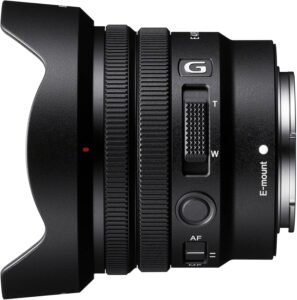
More details on Amazon
More details on Amazon

More details on Amazon
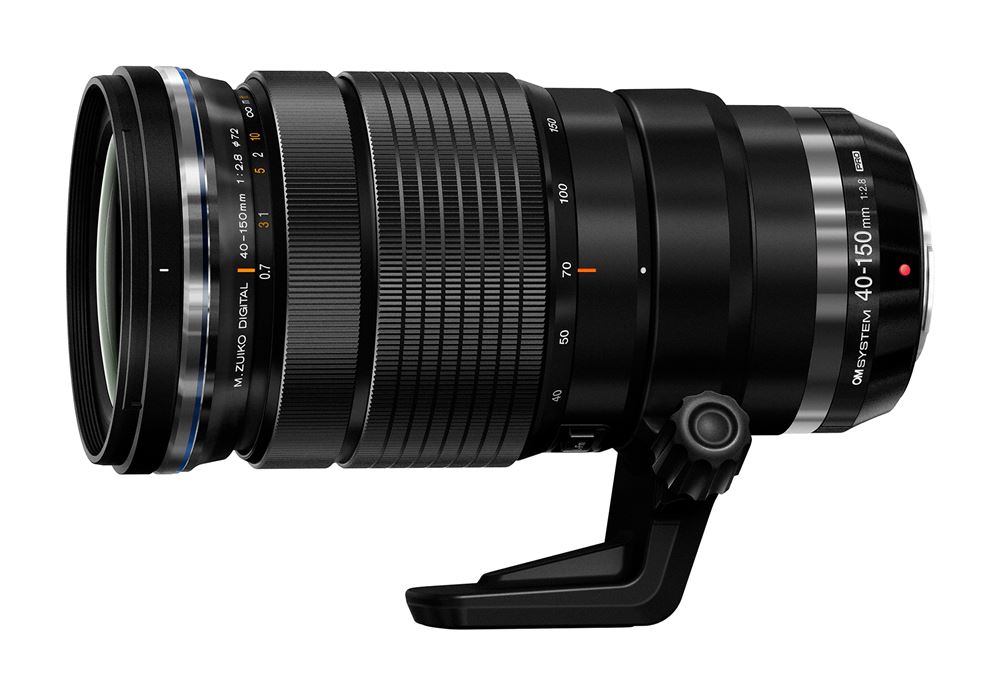
- For wildlife and sport photography: Telephoto lenses (fixed or zoom) will be used to capture these types of subjects. We will stick to focal lengths around:
- Micro 4/3 : 35-100mm
- APS-C : 55-200mm
- Full Frame : 70-200mm
Of course, the burst mode of your camera and its number of frames per second (ip/s) will be even more important in correlation with your lens.
- For macro photography: it all depends on your sensor again but generally you will have focal lengths of around:
- Micro 4/3 : 30-60mm
- APS-C : 60-80mm
- Full Frame : 100mm
Here is globally what should be remembered about the type of mirrorless lenses to use in correlation with your practices and the type of photos you want to take. Let us now get to the heart of the matter.
3. Mirrorless lenses for Micro 4/3 sensor (mFT)
Two brands mainly use this Micro 4/3 sensor size: Panasonic and Olympus. These offer different optics but remain compatible with each other (beware of the loss of certain functionalities such as stabilization for example). In general, you can’t go wrong because only Panasonic offers a few optics (called “L”) for its latest full-frame bodies.
Very often, the basic kit lenses of both brands offer a transtandard with a small sliding aperture, such as 12-32mm f/3.5-5.6 or 14-42mm f/3.5-5.6. Sometimes you may choose a 14-140mm f3.5-5.6 or 14-150mm f4.0-5.6 ED II type telephoto lens. I suggest below some serious recommendations for each type of photography for an evolution of your equipment. All the Micro 4/3 lenses mentioned in the paragraphs that follow are present in the summary table below. This table also includes all the current Micro 4/3 lenses.
To go further in detail, I wrote a full article of the best Micro four-third lenses available today, according to your photography needs.
3.a Landscape/architecture
For landscape photography, I particularly recommend the use of a wide-angle lens, a lens with a wider viewing angle than your “12 or 14mm kit”. From Panasonic, there are two excellent references at a price varying between 700-800€: the 7-14mm f/4, very well-known, and the 8-18mm f/2.8-4, brighter at 8mm, also useful for photography in low light or for landscapes at night. Olympus has the excellent 7-14mm f/2.8 (more expensive due to the fixed aperture at f/2.8). For those with a more limited budget but looking for a wide angle, you can consider the 9-18mm f/4-5.6 or the very good Olympus 12mm f/2 (but wider). To my knowledge, there are no third-party brands that offer wide angles for Micro 4/3. Only Samyang/Rokinon offers (in MF) a 10mm f/2.8 and a 12mm f/2 which are very well reputed for their quality/price ratio!
Since the sale of Olympus to OM System, the brand offers several wide-angle lenses to consider such as the OM System M.Zuiko Digital ED 8mm f/1.8 Fisheye PRO or the OM System M.Zuiko Digital ED 9-18mm f/4-5.6 II.
To my knowledge, there are no third-party brands (with autofocus) that offer wide angles for Micro Four Thirds. Only Samyang offers (in MF) a 10mmm f/2.8 and a 12mm f/2 that are very well regarded for their value for money!
Panasonic has also just released the 10-25mm f/1.7, a lens with a nice wide angle (equivalent to 20mm in FF) with a very large maximum aperture. Perfect for landscape, but also in low light, all at a price a little crazy!
The table below summarizes the wide-angle lens options available (with AF) for the Micro 4/3 mount.
| M4/3 wide-angle AF lenses | Focallength | Max.Aperture | Weight | Dim. (Ø x L) | Min. FocusDist. | Approx.price | Best price | |||
|---|---|---|---|---|---|---|---|---|---|---|
| + | Olympus M.Zuiko 7-14mm f/2.8 PRO ED | 7-14mm | f/2.8 | 1.2 lb / 534g | 3.1 x 4.2" / 79 x 106 mm | 7.9" / 20 cm | $1 199 | Amazon B&H | More info + | |
|
||||||||||
| + | Panasonic Lumix G Vario 7-14mm f/4 ASPH | 7-14mm | f/4 | 10.58 oz / 300g | 3 x 3.3" / 75 x 83 mm | 9.8" / 25 cm | $899 | Amazon B&H | More info + | |
|
||||||||||
| + | Olympus M.Zuiko 8mm f/1.8 Fisheye PRO ED | 8mm | f/1.8 | 11.11 oz / 315g | 2.4 x 3.1" / 62 x 80 mm | 4.7" / 12 cm | $1 195 | Amazon | More info + | |
|
||||||||||
| + | Panasonic Lumix G 8mm f/3.5 fisheye | 8mm | f/3.5 | 5.82 oz / 165g | 2.4 x 2" / 61 x 52 mm | 3.9" / 10 cm | $799 | Amazon B&H | More info + | |
|
||||||||||
| + | Panasonic Leica DG Vario-Elmarit 8-18mm f/2.8-4 ASPH | 8-18mm | f/2.8-4 | 11.11 oz / 315g | 2.9 x 3.3" / 73 x 83 mm | 9.1" / 23 cm | $1 099 | Amazon B&H | More info + | |
|
||||||||||
| + | Olympus M.Zuiko ED 8-25mm f/4 PRO | 8-25mm | f/4 | 0.9 lb / 411g | 3 x 3.5" / 77 x 89 mm | 9.1" / 23 cm | $699 | Amazon B&H | More info + | |
|
||||||||||
| + | OM System M.Zuiko Digital ED 8-25mm f/4 PRO | 8-25mm | f/4 | 0.9 lb / 411g | 3 x 3.5" / 77 x 89 mm | 9.1" / 23 cm | $1 099 | Amazon B&H | More info + | |
|
||||||||||
| + | Olympus M.Zuiko 9mm f/8 Fisheye Body Cap | 9mm | f/8 | 1.06 oz / 30g | 2.2 x 0.5" / 56 x 13 mm | 7.9" / 20 cm | $97 | Amazon | More info + | |
|
||||||||||
| + | Panasonic Leica DG Summilux 9mm f/1.7 | 9mm | f/1.7 | 4.59 oz / 130g | 2.4 x 2" / 61 x 52 mm | 3.7" / 9.5 cm | $499 | Amazon B&H | More info + | |
|
||||||||||
| + | Olympus M.Zuiko 9-18mm f/4-5.6 ED | 9-18mm | f/4-5.6 | 5.47 oz / 155g | 2.2 x 1.9" / 57 x 50 mm | 9.8" / 25 cm | $699 | Amazon B&H | More info + | |
|
||||||||||
| + | OM System M.Zuiko Digital ED 9-18mm f/4-5.6 II | 9-18mm | f/4-5.6 | 5.43 oz / 154g | 2.2 x 1.9" / 56 x 49 mm | 9.8" / 25 cm | $599 | Amazon B&H | More info + | |
|
||||||||||
| + | Panasonic Leica DG Vario-Summilux 10-25mm f/1.7 ASPH | 10-25mm | f/1.7 | 1.5 lb / 690g | 3.4 x 5" / 88 x 128 mm | 11" / 28 cm | $1 799 | Amazon B&H | More info + | |
|
||||||||||
| + | Olympus M.Zuiko 12mm f/2 ED | 12mm | f/2 | 4.59 oz / 130g | 2.2 x 1.7" / 56 x 43 mm | 7.9" / 20 cm | $399 | Amazon B&H | More info + | |
|
||||||||||
| + | Panasonic Leica DG 12mm f/1.4 ASPH | 12mm | f/1.4 | 11.82 oz / 335g | 2.8 x 2.8" / 70 x 70 mm | 7.9" / 20 cm | $1 299 | Amazon B&H | More info + | |
|
||||||||||

3.b Travel
Everything will depend on your usage and your budget. I often carry a transtandard lens with me, a wide angle, a telephoto lens and a bright/fast fixed focal length for street/night photography. If you want to upgrade to a better transtandard than the one of your kit, you can prefer the Panasonic 12-35mm f/2.8 II (superb with wide fixed aperture) or the 12-60mm f/2.8-4 (a little cheaper and a larger focal length). With Olympus, it will be necessary to go up to 12-40mm f/2.8.
For a good quality universal lens for people travelling quite a bit, I particularly recommend the Olympus 12-100mm f/4 or the excellent (but more expensive) 40-150mm f/2.8. For a fixed focal length for street photography, you can choose the Panasonic 25mm f/1.7, a very good lens at a low price.
In summary, the characteristics of the lenses mentioned above are presented in the following table.
Recommended M4/3 lenses for travel Focallength Max.Aperture Weight
Dim. (Ø x L) Min. FocusDist. Approx.price Best price
+
Panasonic Leica DG Vario-Elmarit 12-35mm f/2.8 ASPH. Power OIS
12-35mm f/2.8 10.79 oz / 306g 2.7 x 2.9" / 68 x 74 mm 5.9" / 15 cm $899 Amazon B&H
More info +
+
OM System M.Zuiko Digital ED 12-40mm f/2.8 II Pro
12-40mm f/2.8 13.47 oz / 382g 2.8 x 3.3" / 70 x 84 mm 7.9" / 20 cm $799 Amazon B&H
More info +
+
Panasonic Leica DG Vario-Elmarit 12-60mm f/2.8-4 ASPH Power OIS
12-60mm f/2.8-4 11.29 oz / 320g 2.7 x 3.4" / 68 x 86 mm 7.9" / 20 cm $999 Amazon B&H
More info +
+
Olympus M.Zuiko 12-100mm f/4 IS PRO
12-100mm f/4 1.2 lb / 561g 3.1 x 4.6" / 78 x 117 mm 5.9" / 15 cm $1 521 Amazon
More info +
+
OM System M.Zuiko Digital ED 12-100mm f/4 IS PRO
12-100mm f/4 1.2 lb / 561g 3.1 x 4.6" / 78 x 117 mm 5.9" / 15 cm $999 B&H
More info +
+
Panasonic Lumix G 25mm f/1.7 ASPH
25mm f/1.7 4.41 oz / 125g 2.4 x 2" / 61 x 52 mm 9.8" / 25 cm $249 Amazon B&H
More info +
+
Olympus M.Zuiko 40-150mm f/2.8 PRO ED
40-150mm f/2.8 1.7 lb / 760g 3.1 x 6.3" / 79 x 160 mm 2.3' / 70 cm $1 598 Amazon
More info +
+
OM System M.Zuiko Digital ED 40-150mm f/2.8 PRO
40-150mm f/2.8 1.9 lb / 880g 3.1 x 6.3" / 79 x 160 mm 2.3' / 70 cm $1 199 Amazon B&H
More info +
3.c Portrait
For close-up portrait photography, I particularly recommend the Olympus 75mm f/1.8. For larger shots, you can look at the Panasonic 42.5mm f/1.7 or the Olympus 45mm f/1.8 without hesitation. Both are very good and cheap. Sigma also offers a 56mm f/1.4, which has an excellent reputation for portrait photography.
3.d Low light
Everything will depend here on the focal length you want, of course, but a bright aperture lens like the Panasonic 42.5mm f/1.2 or for a much less expensive option the Panasonic 20mm f/1.7 is always preferred. Sigma also offers a nice reference, the 30mm f/1.4.
3.e Wildlife/sport
For telephoto lenses, I strongly recommend the Panasonic 35-100mm f/2.8 II (equivalent to 70-200mm in FF with large fixed aperture at f/2.8). If you want to zoom “further”, the Panasonic 100-300 f/4-5.6 is also a very good reference for a reasonable price. Regarding Olympus, I believe that the 40-150mm f/2.8 is the reference. For those who want to buy their first telephoto lens and who are limited in budget, you can go for the Panasonic 45-150mm f/4-5.6.
Since the acquisition of Olympus by OM System, the brand offers some great options for wildlife / sports, including the excellent OM System M.Zuiko Digital ED 150-600mm f/5-6.3 IS if you’re looking for a very long focal length at a price that’s “still acceptable”. For a more classic and brighter focal length, look at the OM System M.Zuiko Digital ED 40-150mm f/2.8 PRO. Other more expensive options exist but also versions to get started like the OM System M.Zuiko Digital ED 40-150mm f/4-5.6 R.
The table below summarizes the specifications of the telephoto lenses mentioned.
Lens Focallength Max.Aperture Weight
Dim. (Ø x L) Min. FocusDist. Approx.price Best price
+
Panasonic Leica DG Vario-Elmarit 35-100mm f/2.8 POWER O.I.S.
35-100mm f/2.8 12.7 oz / 360g 2.6 x 3.9" / 67 x 100 mm 2.8' / 85 cm $1 149 Amazon B&H
More info +
+
Olympus M.Zuiko 40-150mm f/2.8 PRO ED
40-150mm f/2.8 1.7 lb / 760g 3.1 x 6.3" / 79 x 160 mm 2.3' / 70 cm $1 598 Amazon
More info +
+
Olympus M.Zuiko 40-150mm f/4-5.6 ED
40-150mm f/4-5.6 6.7 oz / 190g 2.5 x 3.3" / 64 x 83 mm 3' / 90 cm $199 Amazon B&H
More info +
+
OM System M.Zuiko Digital ED 40-150mm f/2.8 PRO
40-150mm f/2.8 1.9 lb / 880g 3.1 x 6.3" / 79 x 160 mm 2.3' / 70 cm $1 199 Amazon B&H
More info +
+
Panasonic Lumix G Vario 45-150mm f/4-5.6 ASPH Mega OIS
45-150mm f/4-5.6 7.05 oz / 200g 2.4 x 2.9" / 62 x 73 mm 3' / 90 cm $249 Amazon B&H
More info +
+
Panasonic Lumix G Vario 100-300mm f/4-5.6 II Power OIS
100-300mm f/4-5.6 1.1 lb / 520g 2.9 x 5" / 74 x 126 mm 4.9' / 150 cm $649 Amazon B&H
More info +
+
OM System M.Zuiko Digital ED 150-600mm f/5-6.3 IS
150-600mm f/5-6.3 4.5 lb / 2060g 4.3 x 10.4" / 109 x 264 mm 1.8' / 56 cm $1 999 B&H
More info +
3.f Macro
For macro photography, there is the 30mm f2.8 (Panasonic) and the 60mm f/2.8 (Olympus). Om System also offers a very good 90mm f/3.5 Macro IS PRO


More details on Amazon
For those wishing to go deeper, you should take a look at our special page listing all the lenses suitable for the Micro 4/3 mount. You will find Olympus/Panasonic lenses but also many third-party brands.
4. Mirrorless lenses for APS-C sensor
Regarding mirrorless lenses for APS-C sensors, four brands offer this type of format: Sony, Fuji, Canon and Nikon. The acronyms corresponding to the mounts for APS-C sensors are: Fuji (X), Sony (E), Canon (EF-M) and Nikon (Z DX).
4.1 Sony mirrorless lenses for APS-C
For Sony, it is the “E” mount that refers to the lenses specially designed for an APS-C sensor. They can be adapted on a Sony Full frame camera but the camera automatically crops the image (necessary due to of vignetting). You therefore lose the benefit of owning a Full Frame body if you do not use optics specially designed for it (we’ll come back to it below). “FE” optics refer to special lenses for Sony Full frame cameras. They can be mounted on a Sony APS-C body. At Sony, you will also have the opportunity to look at third party brands, such as Sigma (DC DN), which offers bright quality optics. Finally, Rokinon and Zeiss also offer some very nice references (with or without autofocus (AF/MF)). The lenses mentioned below are listed in the table below, which also includes all the lenses for mirrorless Sony APS-C bodies.
For APS-C Sony camera, there is generally three kit lenses with a small sliding aperture: the 16-50mm f/3.5-5.6, the 16-70mm f/4 and finally the 55-210mm f/4.5-6.3. If you think more carefully, you realize that the choice of APS-C format lenses is limited and you will often have to look for lenses designed for Full Frame cameras, which many people seem to do.
4.1.a Landscape/architecture
If you own a Sony APS-C camera body, there are a large number of choices for this type of photo, both at Sony and from third-party brands ! At Sony, I would particularly mention the Sony E PZ 10-20mm f/4 G (the one we bought for Mélanie) as well as the very good Sony E 11mm f/1.8, Sony E 15mm f/1.4 G. Several third-party brands offer very nice alternatives such as from Tamron (Tamron 11-20mm f/2.8 Di III-A RXD) or Sigma (Sigma 10-18mm f/2.8 DC CN Contemp.). Other options exist to recommend for smaller budgets. I’ll let you look at the table below for more details !
Lens Focallength Max.Aperture Weight
Dim. (Ø x L) Min. FocusDist. Approx.price Best price
+
Viltrox AF 9mm f/2.8 Air E
9mm f/2.8 6.17 oz / 175g 2.6 x 2.2" / 65 x 56 mm 5.1" / 13 cm $199 B&H
More info +
+
Sony E 10-18mm f/4 OSS
10-18mm f/4 7.94 oz / 225g 2.8 x 2.9" / 70 x 73 mm 9.8" / 25 cm $880 Amazon B&H
More info +
+
Sigma 10-18mm f/2.8 DC CN Contemp.
10-18mm f/2.8 8.99 oz / 255g 2.8 x 2.5" / 72 x 64 mm 4.7" / 12 cm $599 Amazon B&H
More info +
+
Sony E PZ 10-20mm f/4 G
10-20mm f/4 6.28 oz / 178g 2.7 x 2.2" / 70 x 55 mm 5.1" / 13 cm $749 Amazon B&H
More info +
+
Yongnuo YN 11mm f/1.8S DA DSM WL E
11mm f/1.8 9.17 oz / 260g 2.6 x 2.7" / 66 x 69 mm 5.9" / 15 cm $299 B&H
More info +
+
Sony E 11mm f/1.8
11mm f/1.8 6.38 oz / 181g 2.6 x 2.3" / 66 x 58 mm 4.7" / 12 cm $549 Amazon B&H
More info +
+
Tokina atx-m 11-18mm f/2.8 E
11-18mm f/2.8 11.82 oz / 335g 2.9 x 2.9" / 74 x 74 mm 7.5" / 19 cm $399 Amazon B&H
More info +
+
Tamron 11-20mm f/2.8 Di III-A RXD
11-20mm f/2.8 11.82 oz / 335g 2.9 x 3.4" / 73 x 86 mm 5.9" / 15 cm $699 Amazon B&H
More info +
+
Samyang AF 12mm f/2 E
12mm f/2 11.04 oz / 313g 2.8 x 2.3" / 70 x 59 mm 7.5" / 19 cm $399 Amazon B&H
More info +
+
Sigma 12mm f/1.4 DC Contemporary E
12mm f/1.4 7.94 oz / 225g 2.7 x 2.7" / 68 x 69 mm 6.7" / 17 cm $629 B&H
More info +
+
Zeiss Touit 12mm f/2.8
12mm f/2.8 9.17 oz / 260g 3.5 x 2.7" / 88 x 68 mm 7.1" / 18 cm $849 Amazon B&H
More info +
+
Viltrox 13mm f/1.4 STM E
13mm f/1.4 0.9 lb / 420g 2.9 x 3.5" / 74 x 90 mm 8.7" / 22 cm $489 Amazon B&H
More info +
+
Sony E 15mm f/1.4 G
15mm f/1.4 7.73 oz / 219g 2.6 x 2.7" / 67 x 70 mm 6.7" / 17 cm $749 Amazon B&H
More info +
+
Yongnuo YN16mm f/1.8S DA DSM E
16mm f/1.8 9.63 oz / 273g 2.5 x 2.7" / 64 x 69 mm 6.7" / 17 cm $289 Amazon B&H
More info +
+
Sony E 16mm f/2.8
16mm f/2.8 2.4 oz / 68g 2.4 x 0.9" / 62 x 23 mm 9.4" / 24 cm $249 Amazon B&H
More info +
+
Sigma 16mm f/1.4 DC DN Contemp.
16mm f/1.4 0.9 lb / 405g 2.8 x 3.6" / 72 x 92 mm 9.8" / 25 cm $439 Amazon B&H
More info +
+
Sigma 19mm f/2.8 DN Art
19mm f/2.8 - - - - Amazon
More info +
+
Viltrox 23mm f/1.4 STM E
23mm f/1.4 9.17 oz / 260g 2.6 x 2.8" / 65 x 72 mm 1' / 30 cm $279 Amazon B&H
More info +
4.1.b Travel
If you want to upgrade to a better transtandard lens than the kit one, the best (but very expensive) one is the Sony 16-55mm f/2.8 G. You may prefer to include a lens with a wider focal length range such as 18-105mm f/4 G OSS or 70-200mm f/4 (Full Frame lens).
For fixed focal lengths for street photography or daily use, there is a whole series of 35mm f/1.8 and 50mm f/1.8 that can do the job very well for a small price, under 350€. The Sigma 30mm f/1.4 DC DN also has a great reputation and will be helpful as soon as the luminosity decreases.

4.1.c Portrait
For portrait photography with an APS-C Sony mirrorless camera, I would go to the 50mm for environmental portraits. I particularly recommend the excellent Sigma 56mm f/1.4 DC DN. For close-up portraits, there is also the Sony 85mm f/1.8 that has an excellent reputation (the f/1.4 version is unaffordable for most people). There is also the 50mm Rokinon/Samyang (MF) version with very large aperture (f/1.2), for less than 450€.
4.1.d Low light
For low-light situations, the Sony 24mm f/1.8 ZA remains a reference (but expensive). You can also use the Sigma 30mm f/1.4 DC DN or the Sigma 56mm f/1.4 DC DN I mentioned above, that work very well in low light (and will therefore be able to for both portrait / low light).
4.1.e Wildlife/sport
For wildlife and/or sport, the use of long focal lengths will be recommended. For your first telephoto lens, you can look at the Sony 55-210mm f/4.5-6.3 for example. Depending on your budget, you can choose a 70-200mm (the f/2.8 version is very expensive, the f/4 version much less for example). For a little cheaper and to “zoom in more”, there is also the 70-300mm f/4.5-5.6 G. You will also find a Sony E 70-350mm f/4.5-6.3 G OSS , dedicated to APS-C bodies, for a fair price (under 700€).
In summary below, the few lenses mentioned here
| Lens | Focallength | Max.Aperture | Weight | Dim. (Ø x L) | Min. FocusDist. | Approx.price | Best price | |||
|---|---|---|---|---|---|---|---|---|---|---|
| + | Sony E 55-210mm f/4.5-6.3 OSS | 55-210mm | f/4.5-6.3 | 12.17 oz / 345g | 2.5 x 4.3" / 64 x 108 mm | 3.3' / 100 cm | $299 | Amazon B&H | More info + | |
|
||||||||||
| + | Sony 70-200mm f/2.8 GM OSS II | 70-200mm | f/2.8 | 2.3 lb / 1045g | 3.5 x 7.9" / 88 x 200 mm | 1.3' / 40 cm | $2 799 | Amazon B&H | More info + | |
|
||||||||||
| + | Sony 70-200mm f/4 Macro G OSS II | 70-200mm | f/4 | 1.8 lb / 794g | 3.2 x 5.9" / 82 x 149 mm | 10.2" / 26 cm | $1 699 | Amazon B&H | More info + | |
|
||||||||||
| + | Sony 70-300mm f/4.5-5.6 G OSS | 70-300mm | f/4.5-5.6 | 1.9 lb / 854g | 3.3 x 5.6" / 84 x 144 mm | 3' / 90 cm | $1 279 | Amazon B&H | More info + | |
|
||||||||||
| + | Sony E 70-350mm f/4.5-6.3 G OSS | 70-350mm | f/4.5-6.3 | 1.4 lb / 625g | 3 x 5.6" / 77 x 142 mm | 3.6' / 110 cm | $999 | Amazon B&H | More info + | |
|
||||||||||
4.1.f Macro
For macro photography, there is the 30mm f/2.8, the 50mm f/2.8, but especially the excellent 90mm f/2.8 G Macro OSS. The latter is also renowned for portrait photography (which could be a “2 in 1”). Be careful this optic fixed on an APS-C sensor will give the equivalent of a 135mm.
—–
Some clarification on Sony mirrorless lenses. Some of the lenses mentioned in this paragraph are designed for full frame camera. Although they have the advantage of being fully usable in the case of a Full Frame upgrade in the future, they lose the advantage of being less heavy/bulky and less expensive if they had been initially designed for APS-C.
If you want to go further, you can have a look at my full guide on all lenses dedicated to Sony APS-C cameras. I include obviously all Sony lenses here, but also about a dozen of third-party brands (often with manual focus) that could be interesting for people with a more limited budget and/or who want to try a particular focal length.
4.2 Fuji mirrorless lenses for APS-C
With Fuji, things are simpler. The brand only offers APS-C sensors and dedicated lenses. Depending on the model of Fuji mirrorless camera you purchase, you may get different transtandards lenses. It is one of the only brands to offer a kit lens that opens at f/2.8 at 18mm. Indeed, you will find for example the XT-3 combined with the very good 18-55mm f/2.8-4 OIS. Two other transtandard kit lenses exist with Fuji: the 15-45mm f/3.5-5.6 and the 16-50 mm f/3.5-5.6 OIS. You will find all the Fuji lenses in the table below.
4.2.a Landscape/architecture
For landscape and architectural photography with a Fuji camera, two lenses exist that are wider than the kit lenses: the 8-16mm f/2.8 R LM WR, an ultra wide angle with constant aperture of f/2.8 (although very expensive) and the most affordable 10-24mm f/4R OIS (a very good reference that I personally rather recommend). The f/2.8 aperture of 8-16 mm can help you in low light, but I recommend saving your money to buy an even brighter fixed focal length (we come back to it below). Also note for a more limited budget the very good Fujifilm XF 8 mm f/3.5 WR.
On the third-party brands side, you will also have very good choices at lower prices at Samyang (Samyang AF 12mm f/2 X), Sigma (Sigma 10-18mm f/2.8 DC DN Contemporary X or Sigma 16mm f/1.4 DC DN Contemporary X), Tamron (Tamron 11-20mm f/2.8 Di III-A RXD X), or the Viltrox 13mm f/1.4 STM XF X.
Note that Samyang offers three manual focus lenses with a large aperture (for much less than the brand’s wide-angles) : a 10mm f/2.8 (MF), a 12mm f/2 (MF) or a 14mm f/2.8 (MF).
Here is a summary of the lenses mentioned above.
Lens Focallength Max.Aperture Weight
Dim. (Ø x L) Min. FocusDist. Approx.price Best price
+
Fujifilm XF 8 mm f/3.5 WR
8mm f/3.5 7.58 oz / 215g 2.7 x 2.1" / 68 x 53 mm 7.1" / 18 cm $799 Amazon B&H
More info +
+
Fujifilm XF 8-16mm f/2.8 R LM WR
8-16mm f/2.8 1.8 lb / 805g 3.5 x 4.8" / 88 x 122 mm 9.8" / 25 cm $1 499 Amazon B&H
More info +
+
Samyang 10mm f/2.8 ED AS NCS CS X
10mm f/2.8 10.23 oz / 290g 2.5 x 2.7" / 64 x 68 mm 1' / 30 cm $379 Amazon B&H
More info +
+
Sigma 10-18mm f/2.8 DC DN Contemporary X
10-18mm f/2.8 8.82 oz / 250g 2.8 x 2.5" / 72 x 64 mm 4.7" / 12 cm $599 Amazon B&H
More info +
+
Fujifilm XF 10-24mm f/4 R OIS WR
10-24mm f/4 13.58 oz / 385g 3.1 x 3.4" / 78 x 87 mm 9.4" / 24 cm $999 Amazon B&H
More info +
+
Tamron 11-20mm f/2.8 Di III-A RXD X
11-20mm f/2.8 11.82 oz / 335g 2.9 x 3.4" / 73 x 86 mm 5.9" / 15 cm $699 Amazon B&H
More info +
+
Samyang AF 12mm f/2 X
12mm f/2 7.51 oz / 213g 2.8 x 2.3" / 70 x 59 mm 7.5" / 19 cm $499 Amazon B&H
More info +
+
Samyang 12mm f/2 NCS CS X
12mm f/2 9.17 oz / 260g 2.8 x 2.3" / 72 x 59 mm 7.9" / 20 cm $239 Amazon B&H
More info +
+
Viltrox 13mm f/1.4 STM XF X
13mm f/1.4 0.9 lb / 420g 2.9 x 3.5" / 74 x 90 mm 8.7" / 22 cm $419 Amazon B&H
More info +
+
Samyang 14mm f/2.8 ED AS IF UMC X
14mm f/2.8 1.3 lb / 575g 3.4 x 4.8" / 87 x 122 mm 11" / 28 cm $229 B&H
More info +
+
Sigma 16mm f/1.4 DC DN Contemporary X
16mm f/1.4 0.9 lb / 405g 2.8 x 3.6" / 72 x 93 mm 9.8" / 25 cm $439 Amazon B&H
More info +
4.2.b Travel
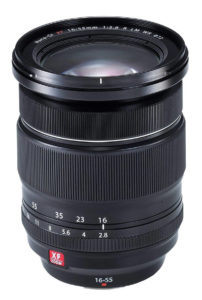
To replace your standard sliding aperture transtandard kit lenses, my recommendation would be to upgrade to the excellent 16-55 mm f/2.8 R LM WR, at the limit of the wide angle with a fixed f/2.8 aperture. But if you can buy the kit lens 18-55 mm f/2.8-4, why not stick to that instead, because it’s rare to have f/2.8 on a quality kit lens. Another alternative is to choose the very good 16-80mm f/4.
For travel, I would recommend something versatile like the 55-200mm f/3.5-4.8. It is sometimes found as a lens kit and with its 70-300mm equivalent in full frame format, it is a good lens to cover just about everything when travelling. The equivalent version or almost equivalent with a constant aperture at f/2.8 (50-140 mm f/2.8 R LM OIS WR) is much more expensive and heavier. On a limited budget, you can turn to the Fujifilm XF 70-300mm f/4-5.6 R LM OIS WR.
For street photography, I particularly recommend the 23mm f/1.4 R. It will also be used very well in low light situations for standard shots.

More details on Amazon
4.2.c Portrait
For portrait, you will find quite a few top references, both at Fuji and at third-party brands.
You have the choice depending on the type of portrait desired.
- For wide shots, I would go between a 23mm and a 35mm (equivalent 35/50mm in full-frame) : you can find for example : Fujifilm XF 23mm f/1.4 R LM WR, Sigma 23mm f/1.4 DC DN Contemporary X, Fujifilm XF 33mm f/1.4 R LM WR and others !
- For tighter portraits, we will be on focal lengths between 50 and 85mm (equivalent 85 to 100mm on full-frame), such as : Fujifilm XF 50mm f/2 R WR, Sigma 56mm f/1.4 DC DN Contemporary X, Viltrox 75mm f/1.2 AF X
Here are some lenses summarized in the table below, suitable for portrait. They are obviously not all there…
| Lens | Focallength | Max.Aperture | Weight | Dim. (Ø x L) | Min. FocusDist. | Approx.price | Best price | |||
|---|---|---|---|---|---|---|---|---|---|---|
| + | Fujifilm XF 50mm f/2 R WR | 50mm | f/2 | 7.05 oz / 200g | 2.4 x 2.3" / 60 x 59 mm | 1.3' / 39 cm | $449 | Amazon B&H | More info + | |
|
||||||||||
| + | Fujifilm XF 56mm f/1.2 R | 56mm | f/1.2 | 0.9 lb / 405g | 2.9 x 2.7" / 73 x 70 mm | 2.3' / 70 cm | $999 | Amazon B&H | More info + | |
|
||||||||||
| + | Sigma 56mm f/1.4 DC DN Contemporary X | 56mm | f/1.4 | 9.88 oz / 280g | 2.6 x 2.4" / 67 x 60 mm | 1.6' / 50 cm | $479 | Amazon B&H | More info + | |
|
||||||||||
| + | Fujifilm XF 56mm f/1.2 R WR | 56mm | f/1.2 | 1 lb / 445g | 3.1 x 3" / 79 x 76 mm | 1.6' / 50 cm | $999 | Amazon B&H | More info + | |
|
||||||||||
| + | Viltrox 56mm f/1.4 STM FX X | 56mm | f/1.4 | 10.23 oz / 290g | 2.6 x 2.8" / 65 x 72 mm | 2' / 60 cm | $259 | Amazon B&H | More info + | |
|
||||||||||
| + | Viltrox 75mm f/1.2 AF X | 75mm | f/1.2 | 1.5 lb / 670g | 3.4 x 4" / 87 x 101 mm | 2.9' / 88 cm | $499 | Amazon B&H | More info + | |
|
||||||||||
| + | Samyang AF 75mm f/1.8 X | 75mm | f/1.8 | 9.07 oz / 257g | 2.8 x 2.7" / 70 x 69 mm | 2.3' / 69 cm | $449 | Amazon B&H | More info + | |
|
||||||||||
| + | Fujifilm XF 90mm f/2 R LM WR | 90mm | f/2 | 1.2 lb / 540g | 3 x 4.1" / 75 x 105 mm | 2' / 60 cm | $949 | Amazon B&H | More info + | |
|
||||||||||
4.2.d Low light
For low light conditions, everything will depend on your budget and what you already own. From Fuji, 16mm, 23mm, 35mm and 50mm with maximum apertures of f/1.4 (more expensive and heavier) and f/2 (cheaper and lighter) can be found. An excellent reference for street, portrait and low light (“3 in 1”) photography is the superb 56 mm f/1.2 R. If you want a wider angle of view, go have a look at the 16 mm f/1.4 R WR.
Here is a brief summary of lenses that are well suited to low-light conditions.
Lens Focallength Max.Aperture Weight
Dim. (Ø x L) Min. FocusDist. Approx.price Best price
+
Viltrox 13mm f/1.4 STM XF X
13mm f/1.4 0.9 lb / 420g 2.9 x 3.5" / 74 x 90 mm 8.7" / 22 cm $419 Amazon B&H
More info +
+
Fujifilm XF 16mm f/1.4 R WR
16mm f/1.4 13.23 oz / 375g 2.9 x 2.9" / 73 x 73 mm 5.9" / 15 cm $999 Amazon B&H
More info +
+
Fujifilm XF 18 mm f/1.4 R LM WR
18mm f/1.4 13.05 oz / 370g 2.7 x 3" / 69 x 76 mm 7.9" / 20 cm $999 Amazon B&H
More info +
+
Fujifilm XF 18mm f/2 R
18mm f/2 4.09 oz / 116g 2.5 x 1.6" / 65 x 41 mm 7.1" / 18 cm $599 Amazon B&H
More info +
+
Sigma 23mm f/1.4 DC DN Contemporary X
23mm f/1.4 11.99 oz / 340g 2.6 x 3" / 66 x 77 mm 9.8" / 25 cm $549 Amazon B&H
More info +
+
Fujifilm XF 23mm f/2 R
23mm f/2 6.35 oz / 180g 2.4 x 2" / 60 x 52 mm 8.7" / 22 cm $449 Amazon B&H
More info +
+
Fujifilm XF 23mm f/1.4 R
23mm f/1.4 10.58 oz / 300g 2.8 x 2.5" / 72 x 63 mm 11" / 28 cm $949 Amazon B&H
More info +
+
Fujifilm XF 27mm f/2.8
27mm f/2.8 2.75 oz / 78g 2.4 x 0.9" / 61 x 23 mm 1.1' / 34 cm $488
More info +
+
Sigma 30mm f/1.4 DC DN Contemporary X
30mm f/1.4 9.7 oz / 275g 2.6 x 2.9" / 65 x 74 mm 1' / 30 cm $319 Amazon B&H
More info +
+
Fujifilm XF 33mm f/1.4 R LM WR
33mm f/1.4 12.7 oz / 360g 2.6 x 2.9" / 67 x 74 mm 1' / 30 cm $799 Amazon B&H
More info +
+
Fujifilm XF 35mm f/1.4 R
35mm f/1.4 6.6 oz / 187g 2.6 x 2.2" / 65 x 55 mm 11" / 28 cm $599 Amazon B&H
More info +
+
Fujifilm XC 35 mm f/2
35mm f/2 4.59 oz / 130g 2.3 x 1.8" / 58 x 47 mm 1.1' / 35 cm $199 Amazon B&H
More info +
+
Fujifilm XF 50mm f/1 R WR
50mm f/1 1.9 lb / 845g 3.4 x 4.1" / 87 x 104 mm 2.3' / 70 cm $1 499 Amazon B&H
More info +
+
Sigma 56mm f/1.4 DC DN Contemporary X
56mm f/1.4 9.88 oz / 280g 2.6 x 2.4" / 67 x 60 mm 1.6' / 50 cm $479 Amazon B&H
More info +
+
Fujifilm XF 56mm f/1.2 R WR
56mm f/1.2 1 lb / 445g 3.1 x 3" / 79 x 76 mm 1.6' / 50 cm $999 Amazon B&H
More info +
+
Viltrox 75mm f/1.2 AF X
75mm f/1.2 1.5 lb / 670g 3.4 x 4" / 87 x 101 mm 2.9' / 88 cm $499 Amazon B&H
More info +
4.2.e Wildlife/sport
For long focal lengths at Fuji, you have more and more choices and you will need to adapt according to your budget.
- For a “small budget”, you can look at the Fujifilm XF 70-300mm f/4-5.6 R LM OIS WR,
- For a bigger budget, I particularly recommend the 100-400 mm f/4.5-5.6 R LM OIS, the Fujifilm XF 150-600mm f/5.6-8 R LM OIS WR or the Tamron 150-500mm f/5-6.7 Di III VC VXD X
4.2.f Macro
There are two macros at Fuji, a 60mm f/2.4 (which, by the way, is not a “true macro” with a reproduction ratio of 1:2) and a 80mm f/2.8, which remains the major reference at Fuji. More recently, Fuji has also released another more affordable reference to look at, the Fujifilm XF 30mm f/2.8 R LM W Macro.
I’ve also written a complete guide to the best Fuji X macro lenses that covers these lenses in detail but also mentions manual focus options.
Here they are detailed in the table below
| Lens | Focallength | Max.Aperture | Weight | Dim. (Ø x L) | Min. FocusDist. | Approx.price | Best price | |||
|---|---|---|---|---|---|---|---|---|---|---|
| + | Fujifilm XF 30mm f/2.8 R LM W Macro | 30mm | f/2.8 | 6.88 oz / 195g | 2.4 x 2.7" / 60 x 70 mm | 3.9" / 10 cm | $599 | Amazon B&H | More info + | |
|
||||||||||
| + | Zeiss 50mm f/2.8 Touit X | 50mm | f/2.8 | 10.23 oz / 290g | 3 x 3.6" / 75 x 91 mm | 5.9" / 15 cm | $999 | Amazon B&H | More info + | |
|
||||||||||
| + | Fujifilm XF 60mm f/2.4 R Macro | 60mm | f/2.4 | 7.58 oz / 215g | 2.5 x 2.8" / 64 x 71 mm | 10.2" / 26 cm | $649 | Amazon B&H | More info + | |
|
||||||||||
| + | Fujifilm XF 80mm f/2.8 R LM OIS WR Macro | 80mm | f/2.8 | 1.7 lb / 750g | 3.1 x 5.1" / 80 x 130 mm | 9.8" / 25 cm | $1 199 | Amazon B&H | More info + | |
|
||||||||||
If you want to go further with your choice, I invite you to read my page listing all the Fujifilm lenses for the X-mount.
4.3 Canon mirrorless lenses for APS-C
It is necessary to distinguish 2 mounts for Canon APS-C mirrorless cameras: the old 2012 mount (Canon EF-M) which has not yet been officially discontinued but is probably nearing the end, and the RF-S mount, more recent.
Canon EF-M mount
Canon’s arrival on the mirrorless camera market is later (2012) and the number of lenses associated with this type of body is very limited. It is the EF-M designation that refers to Canon lenses for APS-C. For information, bodies will often be sold to you with the following kit lenses: EF-M 15-45mm f/3.5-6.3 IS STM and the EF-M 18-150mm f/3.5-6.3 IS STM.
To move towards a wider-angle lens (landscape/architecture), I recommend the EF-M 11-22mm f/4-5.6 IS STM. The Sigma 16mm f/1.4 DC DN Contemporary is a nice alternative with a very large aperture. If manual focus doesn’t bother you, you can look at Samyang, which offers three manual-focus, large-aperture lenses, which may be very interesting: the 10mm f/2.8, the 12mm f/2 and the 14mm f/2.8.
For street photography and low light, you can take the excellent EF-M 32MM f/1.4 STM. Finally for travel and wildlife/sports photography, you will turn to the EF-M 55-200mm f/4,5-6,3 IS STM.
Note that recently in 2019, Sigma now offers 3 large-aperture lenses compatible with the Canon EF-M mount: the 16mm f/1.4 and the 30mm f/1.4, which will work very well for night and low light, and a 56mm f/1.4 that will suit portrait very well.
For more details on lenses for Canon EF-M, I have written a complete page that lists all available lenses, both with autofocus and manual focus.
Canon RF-S mount
The mount is still recent at the time I am updating this article and the choices are not huge. But here are some interesting points to note.
If you are looking for a lens with a wide field of view (e.g., wide-angle for landscape), then you will have some nice options, both at Canon and among third-party brands with Sigma and Tamron. Here are the possibilities below.
| Lens | Focallength | Max.Aperture | Weight | Dim. (Ø x L) | Min. FocusDist. | Approx.price | Best price | |||
|---|---|---|---|---|---|---|---|---|---|---|
| + | Canon RF-S 3.9mm f/3.5 STM Dual Fisheye | 3.5mm | f/3.5 | 10.19 oz / 289g | 0.4 x 0.2" / 11 x 5 mm | 6.6' / 200 cm | $1 099 | B&H | More info + | |
|
||||||||||
| + | Canon RF-S 7.8mm f/4 STM Dual Lens | 7.8mm | f/4 | 4.59 oz / 130g | 2.7 x 1.7" / 69 x 42 mm | - | $449 | Amazon B&H | More info + | |
|
||||||||||
| + | Canon RF-S 10-18mm f/4.5-6.3 IS STM | 10-18mm | f/4.5-6.3 | 5.29 oz / 150g | 2.7 x 1.8" / 69 x 45 mm | 5.5" / 14 cm | $299 | Amazon B&H | More info + | |
|
||||||||||
| + | Sigma 10-18mm f/2.8 DC DN Contemporary RF-S | 10-18mm | f/2.8 | 9.17 oz / 260g | 2.8 x 2.5" / 72 x 64 mm | 4.7" / 12 cm | $659 | Amazon B&H | More info + | |
|
||||||||||
| + | Tamron 11-20mm f/2.8 Di III-A RXD RF-S | 11-20mm | f/2.8 | 12.52 oz / 355g | 2.9 x 3.4" / 73 x 86 mm | 5.9" / 15 cm | $659 | Amazon B&H | More info + | |
|
||||||||||
| + | Samyang 12mm f/2 AF RF-S | 12mm | f/2 | 7.51 oz / 213g | 2.8 x 2.2" / 70 x 57 mm | 7.9" / 20 cm | $449 | Amazon B&H | More info + | |
|
||||||||||
| + | Sigma 12mm f/1.4 DC Contemporary RF-S | 12mm | f/1.4 | 8.82 oz / 250g | 2.7 x 2.6" / 69 x 67 mm | 6.7" / 17 cm | $629 | B&H | More info + | |
|
||||||||||
| + | Canon RF-S 14-30mm f/4-6.3 IS STM PZ | 14-30mm | f/4-6.3 | 6.38 oz / 181g | 2.8 x 2.4" / 70 x 62 mm | 5.9" / 15 cm | $329 | Amazon B&H | More info + | |
|
||||||||||
| + | Sigma 16mm f/1.4 DC DN Contemporary RF-S | 16mm | f/1.4 | 0.9 lb / 415g | - | 9.8" / 25 cm | $489 | Amazon B&H | More info + | |
|
||||||||||
If you are looking for a longer focal length, there are only a few references for now. We find the Canon RF-S 55-210mm f/5-7.1 IS STM, at a very affordable price.
4.4 Nikon Mirrorless lenses for APS-C
With the 2019 launch of its Nikon Z50, the brand also enters the race for APS-C mirrorless cameras.
At the time I’m writing this article, as with Canon RF-S lenses, the choice of Nikon Z APS-C lenses is still quite limited. For rather wide shots (landscapes/architecture), you can look at the Nikon Z DX 12-28mm f/3.5-5.6 PZ VR which offers a wide 12mm focal length, but also at third-party brands that offer superb fast alternatives, like the Viltrox AF 13mm f/1.4 Z or the Sigma 16mm f/1.4 DC DN Contemporary Z !
| Lens | Focal length | Max. Aperture | Weight | Dim. (Ø x L) | Min. Focus Dist. | Approx. price | Best price | |||
|---|---|---|---|---|---|---|---|---|---|---|
| + | Viltrox AF 9mm f/2.8 Air Z | 9mm | f/2.8 | 190g | 65 x 56 mm | 13 cm | 183€ | More info + | ||
|
||||||||||
| + | Nikon Z DX 12-28mm f/3.5-5.6 PZ VR | 12-28mm | f/3.5-5.6 | 205g | 72 x 64 mm | 19 cm | 369€ | Fnac Amazon | More info + | |
|
||||||||||
| + | Viltrox AF 13mm f/1.4 Z | 13mm | f/1.4 | 455g | 74 x 90 mm | 22 cm | 510€ | Fnac Amazon | More info + | |
|
||||||||||
| + | Sigma 16mm f/1.4 DC DN Contemporary Z | 16mm | f/1.4 | 405g | 72 x 92 mm | 25 cm | 519€ | Fnac | More info + | |
|
||||||||||
| + | Sirui Sniper 16mm f/1.2 Z | 16mm | f/1.2 | 403g | - | 30 cm | 439€ | Amazon | More info + | |
|
||||||||||
| + | Yongnuo YN 23mm f/1.4 DA DSM WL Pro | 23mm | f/1.4 | 368g | 69 x 87 mm | 30 cm | 257€ | More info + | ||
|
||||||||||
You will also find several fairly standard options for portrait, street photography, such as the (inexpensive) Nikon Z DX 24mm f/1.7, the very bright Viltrox AF 27mm f/1.2 Z or the very good Sigma 30mm f/1.4 DC DN Contemporary Z. For a longer focal length, the choice is for now very limited, notably to the Nikon Z DX 50-250mm f/4.5-6.3 VR.
Note that “Z Dx” lenses will be compatible with Nikon’s full-frame mirrorless bodies (Z6, Z7) but only the central part of the sensor will obviously be used (normal since these are not full-frame lenses to begin with). Be aware that it is indeed a “Z” mount compatible with Nikon F lenses (DSLR). With the use of an FTZ adapter, Nikon DSLR lenses can be used on the Z50 body (and also on the Z6/Z7). Make sure to check compatibility anyway, as some people seem to have issues adapting certain lenses…
5. Mirrorless lenses for Full Frame sensors
The largest sensors that are still relatively affordable for a hybrid camera are full-frame sensors, also known as ‘full format’. It should be noted that these are the most expensive and heaviest cameras, but they are also often the most comprehensive. Only Sony full-frame lenses can be mounted on an APS-C sensor. For other brands, adapter rings are required. You then simply need to apply the conversion factor of 1.5 (on average) to calculate the equivalent focal length. For example, a 200 mm lens on a full-frame camera is equivalent to a 300 mm lens on an APS-C sensor.
In the world of full-frame hybrids, there are currently four brands: Sony, Nikon, Canon and Panasonic (plus Leica). Sony offers the widest choice of lenses. Canon, Nikon and Panasonic have only recently started offering full-frame cameras. It will be quite some time before their selection matches Sony’s.
As a reminder, here are the abbreviations used for full-frame lenses: Sony (FE), Nikon (Z), Canon (RF) and Panasonic (L). It’s also worth noting that with all four brands, you can choose lenses from third-party brands such as Sigma (DG), Tamron and Rokinon/Samyang. However, these will probably be offered by the others too, particularly Panasonic thanks to its alliance with Sigma. Canon and Nikon offer a few Samyang alternatives with manual focus, but these are much cheaper.
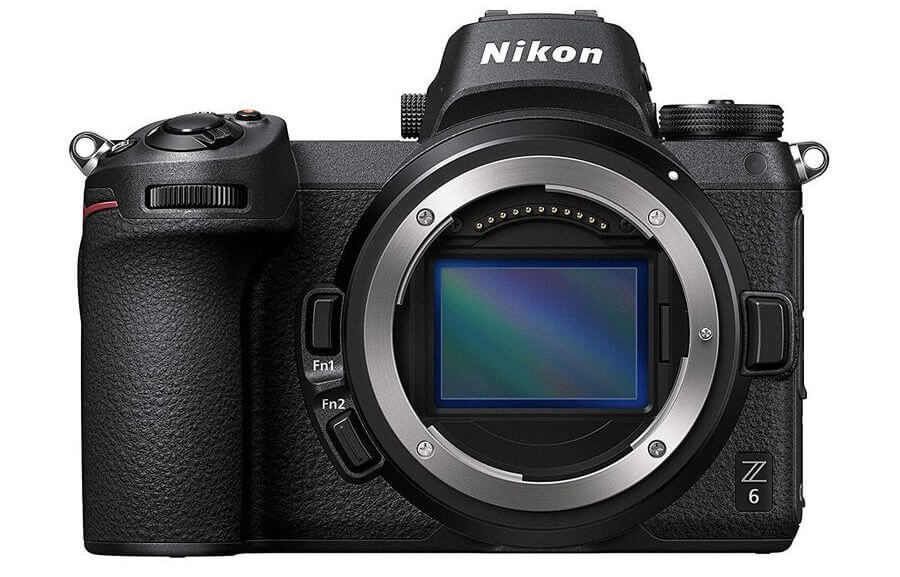
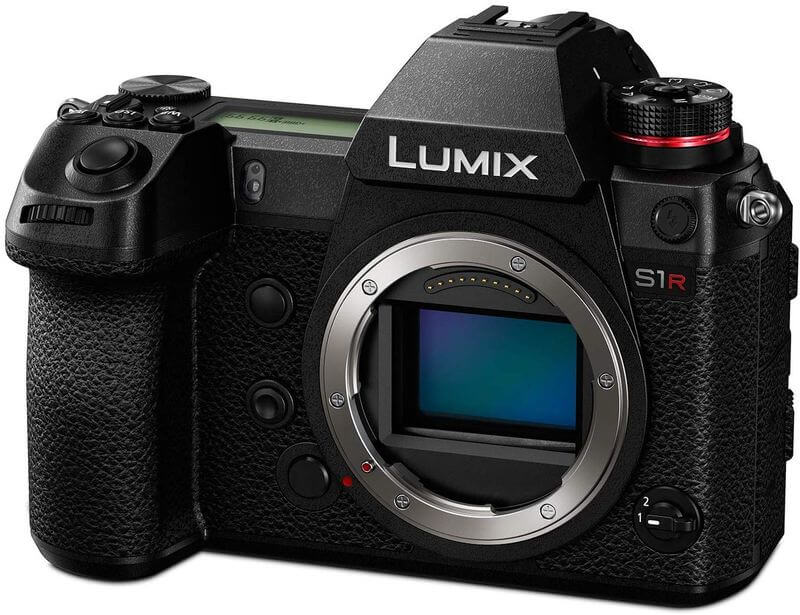

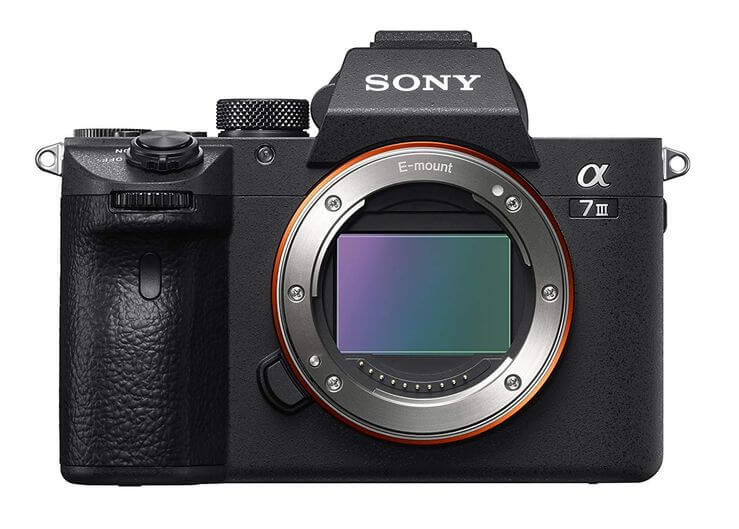
Here are the 4 brands that offer full frame mirrorless cameras (Nikon, Canon, Panasonic and Sony)
5.1 Sony full frame mirrorless lenses
If you purchase a full-frame kit (lens and camera body) from Sony, you will usually be offered one of the following lenses: a 28-70mm f/3.5-6.3, an 85mm f/1.8 or a 24-240mm f/3.5-6.3. Below are some suggestions for upgrading to better equipment according to your needs. The main focus will be on Sony lenses (Sony and Sony Zeiss), as well as well-known third-party brands such as Sigma and Tamron. However, there are many more options available if you consider other third-party brands and manual focus lenses.
5.1.a Landscape/architecture
As always, wide-angle lenses are often recommended. At Sony, you will have a great many options but prices remain generally high. I can’t list all the possible lenses here, but here are a few references :
- For a limited budget (<600€) : you will have only a few choices in the shortest focal lengths and you will necessarily have to turn to third-party brands, for example the Viltrox AF 16mm f/1.8 FE, Sigma 17mm f/4 DG DN I C, Tamron 20mm f/2.8 Di III OSD M 1:2 (the one I bought), or the Sony 24mm f/2.8 G FE. Here are these references summarized in the table below
Lens Focallength Max.Aperture Weight
Dim. (Ø x L) Min. FocusDist. Approx.price Best price
+
Viltrox AF 16mm f/1.8 FE
16mm f/1.8 1.2 lb / 550g 3.4 x 4.1" / 85 x 103 mm 10.6" / 27 cm $580 Amazon B&H
More info +
+
Sigma 17mm f/4 DG DN I C
17mm f/4 7.76 oz / 220g 2.5 x 2" / 64 x 51 mm 4.7" / 12 cm $549 Amazon B&H
More info +
+
Tamron 20mm f/2.8 Di III OSD M 1:2
20mm f/2.8 7.8 oz / 221g 2.9 x 2.5" / 73 x 64 mm 4.3" / 11 cm $249 Amazon B&H
More info +
+
Sony 24mm f/2.8 G FE
24mm f/2.8 5.71 oz / 162g 2.7 x 1.8" / 68 x 45 mm 7.1" / 18 cm $599 Amazon B&H
More info +
- For a larger budget (650-1200€) : here too you have a wide choice and it will all depend on your preferences between zooms and primes. In this price range, my best recommendation would go to the Sigma 16-28mm f/2.8 DG DN Contemp. and the Tamron 17-28mm f/2.8 Di III RXD if you’re looking for a zoom, and rather to the Sony 20mm f/1.8 G, Sigma 20mm f/1.4 DG DN Art. or Sigma 24mm f/1.4 DG DN Art. for bright primes. Here are these lenses summarized below, although others do exist !
Lens Focallength Max.Aperture Weight
Dim. (Ø x L) Min. FocusDist. Approx.price Best price
+
Sigma 16-28mm f/2.8 DG DN Contemp.
16-28mm f/2.8 1 lb / 450g 3 x 4" / 77 x 103 mm 9.8" / 25 cm $869 Amazon B&H
More info +
+
Tamron 17-28mm f/2.8 Di III RXD
17-28mm f/2.8 0.9 lb / 420g 2.9 x 3.9" / 73 x 99 mm 7.5" / 19 cm $799 Amazon B&H
More info +
+
Sony 20mm f/1.8 G
20mm f/1.8 13.16 oz / 373g 2.9 x 3.3" / 74 x 85 mm 7.1" / 18 cm $899 Amazon B&H
More info +
+
Sigma 20mm f/1.4 DG DN Art.
20mm f/1.4 1.4 lb / 630g 3.5 x 4.5" / 88 x 113 mm 9.1" / 23 cm $859 Amazon B&H
More info +
+
Sigma 24mm f/1.4 DG DN Art.
24mm f/1.4 1.1 lb / 510g 3 x 3.8" / 76 x 98 mm 9.8" / 25 cm $779 Amazon B&H
More info +
- For a large budget (> 1200€) : the choice will be immense here as well/ You will have access to the very high-end from Sony and Sigma, with the classic 12-24mm (f/2.8 or f/4), fixed 14mm (f/1.8 f/1.4), ultra wide-angle zooms as well such as 16-25mm, 16-35mm or the excellent 24mm f/1.4. My personal recommendations would be the Sigma 14mm f/1.4 DG DN Art, the unusual Sony FE 16-25mm f/2.8 G or the Sony FE PZ 16-35 mm f/4. I summarize in the table below all the Full Frame lenses for Sony FE in this price range. The choice is there !
| Sony FE wide-angle lenses > 1200€ | Focallength | Max.Aperture | Weight | Dim. (Ø x L) | Min. FocusDist. | Approx.price | Best price | |||
|---|---|---|---|---|---|---|---|---|---|---|
| + | Sony 12-24mm f/2.8 GM | 12-24mm | f/2.8 | 1.9 lb / 847g | 3.8 x 5.4" / 98 x 137 mm | 11" / 28 cm | $2 999 | Amazon B&H | More info + | |
|
||||||||||
| + | Sony 12-24mm f/4 G | 12-24mm | f/4 | 1.2 lb / 565g | 3.8 x 4.6" / 97 x 117 mm | 11" / 28 cm | $1 779 | Amazon B&H | More info + | |
|
||||||||||
| + | Sony 14mm f/1.8 GM | 14mm | f/1.8 | 1 lb / 460g | 3.3 x 3.9" / 83 x 100 mm | 9.8" / 25 cm | $1 599 | Amazon B&H | More info + | |
|
||||||||||
| + | Sigma 14mm f/1.8 DG HSM Art | 14mm | f/1.8 | 2.6 lb / 1170g | 3.8 x 5" / 95 x 126 mm | 10.6" / 27 cm | $1 279 | Amazon B&H | More info + | |
|
||||||||||
| + | Sigma 14mm f/1.4 DG DN Art | 14mm | f/1.4 | 2.6 lb / 1170g | 4 x 5.9" / 101 x 150 mm | 1' / 30 cm | $1 599 | Amazon B&H | More info + | |
|
||||||||||
| + | Sigma 14-24mm f/2.8 DG DN Art | 14-24mm | f/2.8 | 1.8 lb / 795g | 3.3 x 5.2" / 85 x 131 mm | 11" / 28 cm | $1 230 | Amazon B&H | More info + | |
|
||||||||||
| + | Sigma 15mm f/1.4 DG DN Art | 15mm | f/1.4 | 3.1 lb / 1400g | 4.1 x 6.3" / 104 x 160 mm | 1.2' / 38 cm | $1 999 | Amazon B&H | More info + | |
|
||||||||||
| + | Sony FE 16-25mm f/2.8 G | 16-25mm | f/2.8 | 0.9 lb / 409g | 2.9 x 3.6" / 75 x 91 mm | 7.1" / 18 cm | $1 199 | Amazon B&H | More info + | |
|
||||||||||
| + | Sony 16-35mm f/2.8 GM | 16-35mm | f/2.8 | 1.5 lb / 680g | 3.5 x 4.8" / 89 x 122 mm | 11" / 28 cm | $1 899 | Amazon B&H | More info + | |
|
||||||||||
| + | Sony 16-35mm f/2.8 GM II | 16-35mm | f/2.8 | 1.2 lb / 547g | 3.5 x 4.4" / 88 x 112 mm | 8.7" / 22 cm | $2 299 | Amazon B&H | More info + | |
|
||||||||||
| + | Sony FE PZ 16-35 mm f/4 | 16-35mm | f/4 | 12.45 oz / 353g | 3.2 x 3.5" / 81 x 88 mm | 9.4" / 24 cm | $1 199 | Amazon B&H | More info + | |
|
||||||||||
| + | Zeiss Batis 18mm f/2.8 Distagon T* | 18mm | f/2.8 | 11.64 oz / 330g | 3.9 x 3.1" / 100 x 80 mm | 9.8" / 25 cm | $1 549 | Amazon B&H | More info + | |
|
||||||||||
| + | Sony 24mm f/1.4 GM | 24mm | f/1.4 | 1 lb / 445g | 3 x 3.6" / 75 x 92 mm | 9.4" / 24 cm | $1 399 | Amazon B&H | More info + | |
|
||||||||||
5.1.b Travel
For those who want to upgrade to a better transtandard lens than the kit (28-70mm f/3.5-6.3), I particularly recommend taking a look at the excellent 28-75mm f/2.8 Di III RXD, which everyone loves. Sony also offers two 24-70mm f/2.8 but which remain very expensive in my opinion to explain the price difference with the Tamron (at half price).
If you want a versatile lens of high quality that is highly appreciated, I particularly recommend the Sony 24-105mm f/4. The disadvantage is that you will be limited to 105mm, which is not very long for a focal length. To “zoom in more” you can choose a 70-200mm (f/4 or f/2.8 depending on your budget and the desire to be carrying a heavy lens).
For street photography (and in low light), I recommend the Sigma 50mm f/1.4 or 85mm f/1.4 DG with my eyes closed. If you are a little tight on budget, look for the 50mm 1.8 versions from Sony, or the 85mm f/1.8 which also has a very good reputation.


5.1.c Portrait
For portrait photography, I would also recommend 50mm for a wide portrait and 85mm, or even 135mm for a close-up portrait. You will have the choice of staying at Sony or going over to Sigma. You could use a 50mm f/1.8 for example from Sony and a 135mm f/1.8 DC from Sigma. Samyang also offers the Samyang 135mm f/1.8 FE AF.
5.1.d Low light
For low light photography, a wide aperture lens such as the superb 24mm f/1.4 from Sony or the 20mm f/1.4 from Sigma is recommended.
5.1.e Wildlife/sport
For long focal lengths, Sony offers some very nice lenses above 300mm, such as the 100-400 mm f/4.5-5.6 or the very crazy 200-600mm f/5.6-6.3. For amateurs of very long focal lengths Sony offers a 500mm and a 600mm, out of reach in terms of price for 99.9% of us!
5.1.f Macro
For those who are passionate about detail, I particularly recommend the 90mm f/2.8 G Macro from Sony or the Tamron 90mm f/2.8 Di III VXD Macro.
If you want to know more about Sony FE lenses, I have listed in a page all the Sony FE lenses and a dozen of third-party brands offering lenses for this mount.
5.2 Panasonic Full Frame mirrorless lenses
Panasonic’s arrival in the Full Frame world is fairly recent, at the beginning of 2019, with the launch of the S1, S1R and S1H bodies. The selection of native lenses is therefore a bit limited but you will undoubtedly find what you’re looking for more and more now.
If you want to know all the lenses available for the L mount (full-frame and APS-C), just click on the link above!
Here are a few references I recommend by focal type :
- For landscapes/architecture/wide shooting :
- For zooms, I would say : Panasonic Lumix 14-28mm f/4-5.6 MACRO L, Panasonic Lumix S PRO 16-35mm f/4 L or Sigma 14-24mm f/2.8 DG DN Art L
- For primes : Sigma 14mm f/1.4 DG DN Art L, Sigma 17mm f/4 DG DN I C L or Panasonic Lumix S 18mm f/1.8 L
- For low-light photography, I recommend turning to the Sigma 35mm f/1.4 DG HSM Art L or the Sigma 28mm f/1.4 DG HSM Art L
- For portraits, opt for the Sigma 85mm f/1.4 DG DN Art L which has an excellent reputation,
- For street photography, you can turn to the Sigma 24mm f/1.4 DG HSM.

5.3 Canon Full Frame mirrorless lenses
Canon’s entry into the world of Full Frame mirrorless was made via the Canon R and Canon RP. With the update of this article, you can imagine that the number of lenses at Canon for this RF mount has indeed increased. So here are a few recommendations (there would be others, but we have to keep it limited)
- I particularly recommend the Canon RF 14-35mm f/4 L IS USM for landscape and architecture photography. If small budget, then, I would turn without hesitation to the Canon RF 16mm f/2.8 STM
- For portrait, there are several possibilities obviously. My heart would go to the Canon RF 50mm f/1.8 STM (small budget) or to the excellent Canon RF 85mm f/1.2L USM (but which remains very expensive). Note the Canon RF 85mm f/2 Macro IS STM as an alternative with a 1:2 ratio for macro as well
- For traveling, a Canon RF 24-105mm F4L IS will be very interesting in many situations. If you are looking for something more versatile but brighter, you can turn to the RF 28-70mm F2L USM.
- For street photography or low light, I would personally choose the 50mm f/1.2 or the 35mm f/1.8 (much cheaper and with a good reputation).
- For long focal lengths, the RF 70-200mm f/2.8 L IS remains a reference. But there are indeed more affordable options !
To go even further, you can dig into my page dedicated to the list of lenses for Canon RF. There you will find both all the current Canon RF updated daily, but also all the third-party brands that produce RF-mount lenses, such as Samyang and also Laowa.
5.4 Nikon Full Frame mirrorless lenses
Nikon is in the same vein as Canon on this front with a late arrival and a still limited selection of lenses, but things are moving fast.
A few references:
- For landscape photography, I particularly recommend the Nikkor Z 14-30 f/4 S. Also note the Nikon Z 17-28mm f/2.8
- The Nikkor Z 85mm f/1.8 S will be perfectly suited to portrait photography.
- The Nikkor Z 35mm f/1.8 S and the Nikkor Z 50mm f/1.8 S will work very well for street photography and in low light. For those looking for wide angles and a large aperture, there is also a 24mm f/1.8. There is no telephoto lens at the time I’m writing this article. For a standard zoom when traveling, for example, you can turn to the 24-70mm f/2.8 (or f/4, it all depends on the budget).
If you want more details on all the lenses available for the Nikon Z mount, here is the dedicated page!
So, I’m coming to the end of this post on choosing a mirrorless lens! I will try to keep this list as up-to-date as possible in order to integrate new releases. This article is the result of extensive investigation and cross-referencing of information. If you enjoyed the work put into this article, it helped you and you want to support this blog, you can decide (at no extra cost for you) to use one of the links in the article to choose your lens! I hope that this work will help you in choosing your future lens! If you see any errors or omissions (it’s possible…), don’t hesitate to contact me!
Have you found this post helpful for your next purchase or not? 🙂
I’ll see you soon,

Written by Sylvain PONS
I've been passionate about photography since 2010, learning as I went along. Today, I dedicate myself to guiding others in their choice of camera gear and sharing a variety of tips to improve their photography skills.
Despite our care, a mistake may have slipped into this article. If you find any, please don't hesitate to let us know so we can correct it as soon as possible and keep our information up-to-date!