Ua Pou island, a wonder in the Northern Marquesas
Last update: 06/30/2026
Our blog continues to grow thanks to you, our readers. This post may contain affiliate links, which means we can earn a small commission if you make a purchase through them, at no extra cost to you. This helps us to continue to bring you more and support our work!
Ah, the Marquesas Islands, the Land of Men… so many people dream of them. We all carry these images in our minds: remote islands, far away, almost lost in the middle of the Pacific Ocean. For nearly four years now, I’ve had the chance to explore this Polynesian archipelago, about 1,600 km from the island of Tahiti. I already knew the islands of the Southern Marquesas, Hiva Oa, Tahuata, and Fatu Hiva, although I didn’t spend enough time on the last two to write dedicated articles. As I write these lines, I finally had the chance to visit the northern part of the Marquesas archipelago. And what better way to start exploring this part of the territory than with the beautiful island of Ua Pou? I later had the chance to discover the island of Nuku Hiva. Ua Huka is the only one still unknown to me!
Unless you live in French Polynesia, this little paradise on earth probably doesn’t sound familiar. And yet, I had heard so much about this island, its famous airport runway climbing up the mountainside, and its remarkable phonolite pinnacles. I apologize in advance for the little geological detour, but my geography/geology background is catching up with me. Let’s be honest: very few tourists set foot on this remote island off the main island of Nuku Hiva, apart from a few curious travelers on the Aranui cruise ship. In 2019, the island was in the spotlight for hosting the Marquesas Islands Festival (in Marquesan, Matavaa o te Fenua Enata). By February, almost everything was already fully booked for December. It looked promising.

Are you planning your trip to French Polynesia?
We decided to make your life easier by creating our own travel guide, where everything is organized, categorized, and summarized. Save research time and start traveling already!
Yes, I'm interested!


Since I started writing about French Polynesia, I’ve received plenty of requests from people looking for advice and tips on itineraries, budgets, accommodations, or simply things to do on certain French Polynesian islands. But I don’t think anyone had ever asked me what to do on a vacation in Ua Pou. To be honest, hardly anyone goes there. I recently had the chance to spend a week on the island, and what a joy it was. You rarely end up on Ua Pou by chance. Most travelers head to Hiva Oa, especially to see the graves of Jacques Brel and Paul Gauguin, or to Nuku Hiva because it is the main island. In reality, very few dare to move away from this “classic route.” Ua Pou is the kind of island you have to make an effort to reach.
This article will be a little different from my other, more “travel guide” style posts. I’m not going to give you a “top 10 things to do on Ua Pou,” because honestly, that doesn’t feel quite right here. You come to this island to feel something: a particular atmosphere, the force of these Marquesan islands still (almost) cut off from the world. In my eyes, Ua Pou is a wonderful place for travelers looking for the Polynesian authenticity I love most. Simple moments, time spent with locals, extraordinary landscapes, fruit and vegetables in abundance… the kind of island you can easily fall in love with if you’re looking for a beautiful Polynesian experience. But if you’re looking for a long list of activities—boat trips, 4×4 tours, restaurants, and so on—you may want to move on. Of course, there are things to do and see on the island, and I’ll tell you about them throughout this article, which is more of a travelogue than a classic guide.
To learn more about the region (and perhaps tempt you to discover it), we recommend our detailed guide to the Marquesas Archipelago, which gives you a broader overview of the territory.


My first steps on Ua Pou
Everyone had already told me about this famous airstrip, tucked right into the mountains and too short for the classic ATRs used on other Polynesian islands. I was waiting to see the plane we were going to take with a mix of apprehension and excitement. After a 3.5-hour flight from Papeete to Nuku Hiva, I set foot on “Terre Déserte” (“Desert Land”), the well-known name given to the Nuku Hiva airport area. It is easy to understand why. As I stepped outside, I could already see a small plane on the tarmac: the one that would take us to Ua Pou, in the Marquesas Islands. It was a small Twin Otter with a maximum of about 15 seats. There were 10 of us boarding.
First impression: it is tiny, and it makes a tremendous noise when the engines start, and throughout the flight too. I didn’t even get the chance (so to speak) to experience a dramatic landing, as the weather was perfectly calm. Twenty minutes later, I saw the first steep basalt cliffs of Ua Pou. Magnificent. We landed almost smoothly on a runway that climbs toward the mountain and turns almost at a right angle at the end. It is quite something to see. I then collected my luggage and met Dora, the owner of the guesthouse where I would be staying, which had been recommended to me without hesitation in Tahiti.
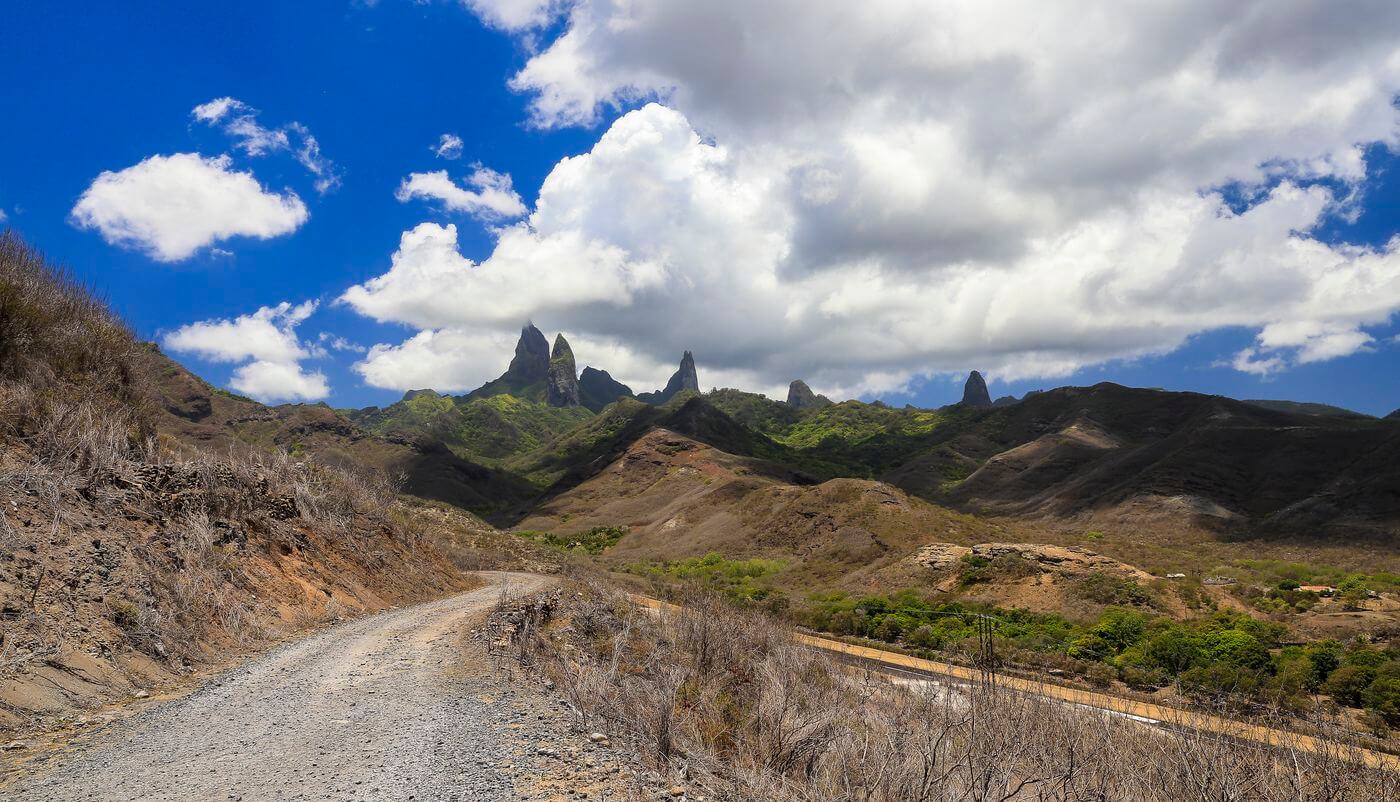
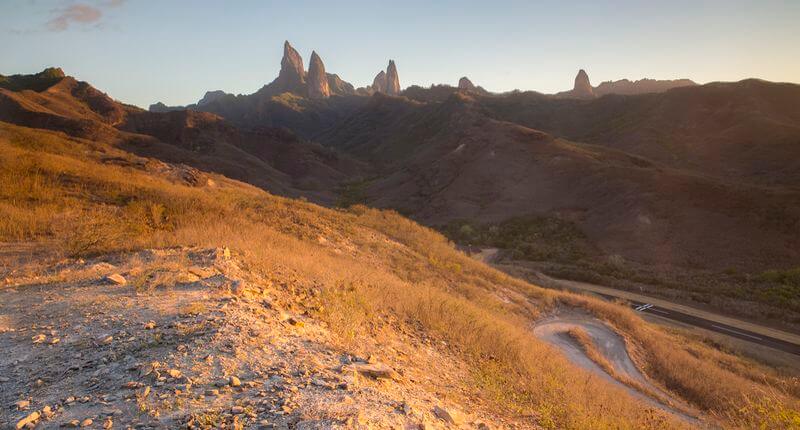
My first impression as soon as I left the airport terminal: this tropical island was very dry, and most of the vegetation looked almost burnt. Dora explained that it had barely rained and that they hadn’t seen a drop of water for quite some time. From the first few meters outside the terminal, we drove along a rough dirt road, which set the tone immediately. A few switchbacks carved into the mountain offer magnificent views of the surroundings. Even though the landscapes looked dry at first glance, they were already enough to make you dream.


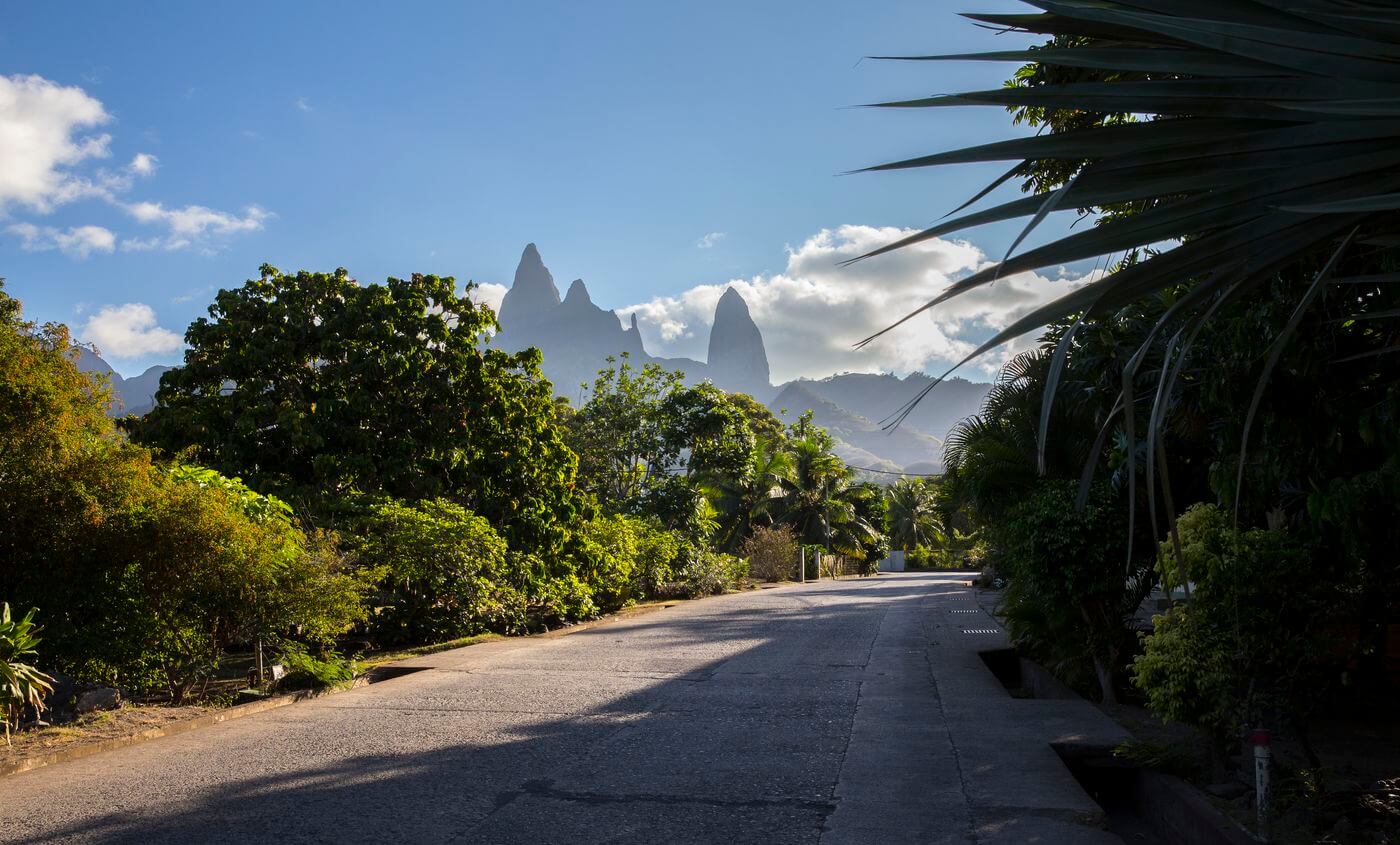
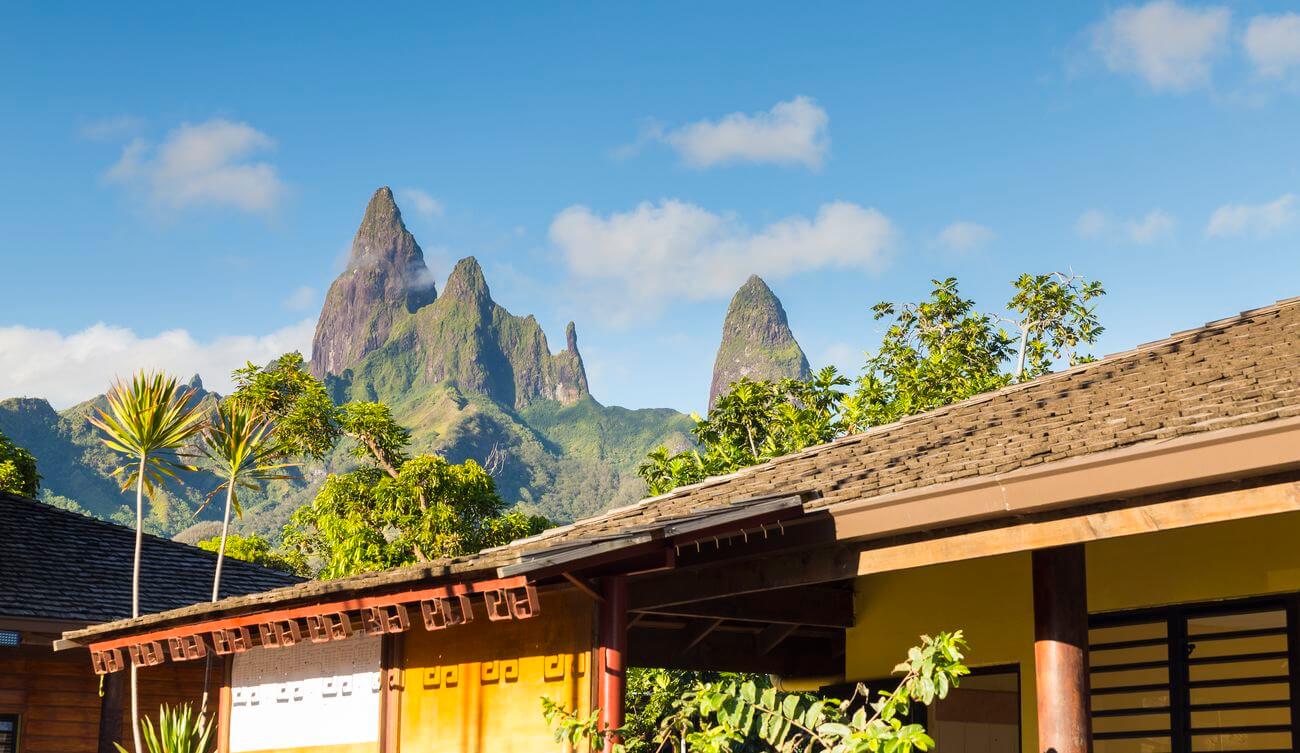
If you’re coming to spend a few days on the island, I really recommend stopping and taking the time to visit the small village of Hakahau, the island’s main town. If you’re lucky enough to visit on a clear, sunny day, you’ll be able to see the famous pillars from almost anywhere in the village. Take the time to wander through the narrow streets and let your mind drift as you look out at the magnificent scenery. For photographers, I really recommend coming early in the morning (7am) or in the late afternoon (5pm) to capture the softest, most beautiful light on the pillars. Let your imagination guide your photos, because you’ll have plenty to work with, and if the weather is clear, you’ll see the pillars almost everywhere.
There is nothing especially major to do in the village itself. What you feel instead is the calm of the remote islands: almost no noise, no music. You are far from Tahiti, and for a vacation, that feels really good. In the village, you can visit the beautiful church in the center, as well as the cemetery right beside it. Once again, the panoramic view of the pillars in the distance is splendid. Notice the lovely bell tower and the different frescoes decorating the church walls. The town hall is also worth a quick look, with more beautiful paintings and sculptures.


You can then continue your little walk toward the quay, passing by the village’s small beach, which is very pleasant for swimming. From the quay, in good weather, you once again get a beautiful panorama of the pillars rising toward the mountains. At the end of the village, deeper inside the valley, don’t hesitate to gain a little height on the dirt roads to take in the magnificent views. I was able to reach some superb viewpoints over the surrounding mountains, with the island of Nuku Hiva in the background when the weather was clear.
If you enjoy walking and climbing a little higher, I recommend going up to the crucifix above the village. You can see it from the village, not far from the antennas, on your right when you are facing the sea. From the beach, an asphalt road climbs up the mountain. You pass a guesthouse, then continue along a dirt road. Don’t forget to turn around from time to time to enjoy the views toward the mountain. Eventually, you reach a junction. Take the path on your right to climb up to the crucifix. The effort is well worth it, because the view from above is simply beautiful. In front of you, you get a 360° view (or almost) of the pillars and the entire village below. For photos of the pillars, go in the early morning rather than the afternoon, when the sun is directly in front of you!
Then head back down to the junction on the left and continue toward Anahoa Bay below. A beautiful beach of fine, light-colored sand awaits you, surrounded by basalt cliffs. Be careful, though: the beach is known for its nonos, a kind of tiny biting insect whose bites are not always very noticeable at first, but which you definitely remember the next day. I had no problem when I went there, but I experienced this once in Hiva Oa, where I was literally covered in more than a hundred bites. Some people recommend applying Monoï to avoid being bitten.


At the end of the afternoon, the more motivated among you can drive up toward the airport and the “plateau des ânes.” It is hard to describe the place in detail, but you need to climb all the switchbacks above the village and drive for about 10 to 15 minutes, as if you were heading back to the plane. At some point, you reach a kind of natural plateau, fairly flat. On your left, you’ll see 3 electric poles; you can park there. Below, you can see the end of the airport runway. Around 5:30pm / 6pm, the magical evening light starts to illuminate the pillars. I was really lucky to see them so clearly the evening I went there. At that hour, the views toward both the mountain side and the sea side are absolutely beautiful.


A drive along the east coast
In any case, if you visit Ua Pou, I recommend staying at least 3 to 4 days and renting a car (see the practical details below). Set aside a full day to explore the east coast of the island. I would suggest starting with the village furthest along this coast, Hakatao. It is actually on the southwest coast of the island, but it can only be reached from the east. Enjoy the magnificent viewpoints all along the road. Ideally, bring fruit and water for the day, as you’ll find almost nothing along the way.
The village of Hakatao has the charm of a small flower-filled village whose calm atmosphere makes you want to slow down. There is nothing specific to do in the village (as is the case in all the others, really). But there are two very nice walks, one on each side of the village. I went up behind the new church, following a small path that climbs onto the ridge and the rocks you can see from below. You can ask locals for directions. The view over the surroundings is superb, and you can enjoy a quiet break up on the rocks. On the other side of the village, I didn’t go myself, but you can reach the crucifix visible from below. You can even climb a little higher to reach the ridge. I imagine the view must be just as beautiful.


On the way back, you should definitely stop at the famous beach of Hohoi, especially known for the flowered stones found by the sea. This is where—and in the mountains too—the island’s sculptors collect some of their materials. You can see their work at the handicraft center, right next to the town hall in Hakahau. Finding the stones is honestly far from easy, and the best approach is to take off your shoes and search among the pebbles wet by the waves. When they are dry, you won’t see anything. I managed to find a few small ones. Take advantage of this beautiful beach to eat the fruit you brought and have your lunch break. The beach is perfect for swimming when the sea is not too rough.
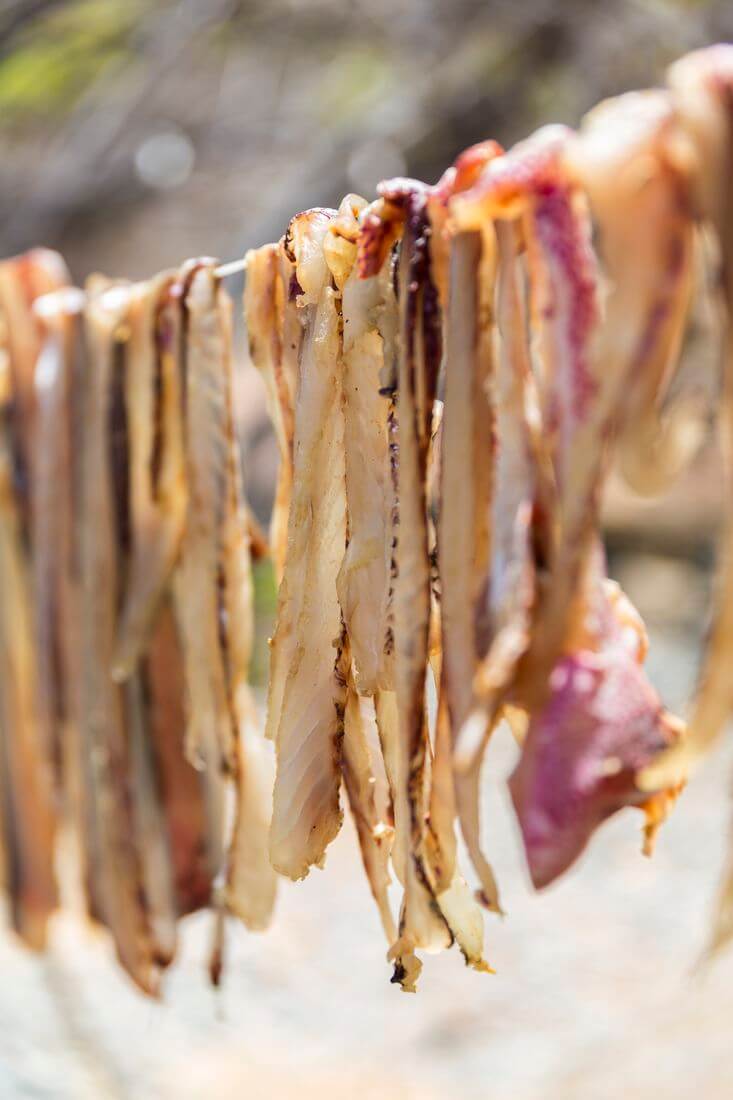
When I passed through, a farming/fishing couple was on the beach. They were drying octopus and fish, which they would later freeze and take out whenever they needed. I tasted the salted fish, and it was really good…
For the end of the afternoon, I suggest heading down to Hakamoui Bay with a few cold beers and some chips (why not?). You’ll see a “Hakamoui Beach” sign on the side of the road. Go down to the beach and enjoy a beautiful sunset in the distance, behind the pillars. There, you’ll find a lovely little beach of light sand with a few coconut trees where oxen have taken shelter. To me, the setting feels a bit like the end of the world. You can swim in small natural pools on the left side of the beach, about a 5-minute walk along the cliffs. One last little effort to climb the ridge above gives you a nice view of the bay and a small, isolated beach to the west. In short, spending the late afternoon there is a really lovely experience.


And why not the other side too?
Another full day should be devoted to exploring the west coast, from the village of Hakahau to the small village of Hakamaii. On the agenda for the day? Three small villages, a beautiful white-sand beach, superb panoramas, and a chocolate tasting. Sounds pretty good, doesn’t it?
I would definitely suggest leaving the main village early enough and heading up toward the airport area. Once you pass the airstrip, you’ll start seeing very beautiful viewpoints over the island’s rocky coast. Very quickly, you’ll discover the famous shark bay ahead of you: paradise. Stop on the heights by the roadside to take in the beauty of the place: a beautiful beach nestled between two cliffs, splendid turquoise water, and sharks lingering along the shore, visible thanks to the crystal-clear water. In the distance, there is no visible reef. I saw a pirogue passing by, probably out fishing. A great atmosphere.
You can either take the time to stop there right away for a swim in a true postcard setting, with no one around, or save it for your return at the end of the afternoon. In my eyes, it is a wonderful moment in a magical setting.


The rest of the day takes you through three villages tucked away in the island’s deep valleys, in the order you reach them: Hakahetau, Haakuti, and Hakamaii. Here, there is nothing special to do except enjoy the scenery, walk through the small villages, and talk with local people. You’ll notice that several sailboats are often anchored in some of the bays, sheltered from the swell and enjoying this beautiful mountainous island. The village of Haakuti, built entirely on a slope, was my favorite! I was personally lucky to have good weather on this coast.
On the way back, in the village of Hakahetau, ask locals to show you Manfred’s house. This German, married to a Marquesan woman, is very well known locally for making his own chocolate, which you can buy on site. Unfortunately, I didn’t get to meet him during my visit, but his wife welcomed us very warmly and showed us around. The couple lives in complete self-sufficiency in a small piece of paradise surrounded by lush vegetation, with hens, ducks, cats, roosters, and more. The place is really lovely and well worth the detour. As a bonus, you can buy some very good dark chocolate bars. A real treat.
How about getting closer to the pillars?
You may be wondering whether it’s possible to get closer to the pillars. And yes, as far as I know, there are at least two accessible trails that take you into the interior of the island.
The first is the famous “traversière,” a trail that starts in the village of Hakahau and reaches the village of Hakahetau. I had the chance to do half of this hike, up to the pass. I chose not to descend to the other village because I was told that section was less interesting, the main point being to climb to the top and admire the view of the pillars. As usual, I’ll remind you that you can download the GPS track for this hike on the Wikiloc website. Please note that you do not have to start the walk from the village. Ideally, ask your guesthouse to drop you off at the beginning of the hike. If you don’t want to go alone, Jérôme from Pension Pukuee can guide you. Given the moderate difficulty of the route (apart from the heat and the climb), I would actually recommend going on your own. Be careful, though: the trails cross private land belonging to local owners. Ask your guesthouse for advice, but from what I was told, it shouldn’t be a problem as long as you behave responsibly and respect the place.
Depending on your hiking level, the climb takes around 45 minutes to 1 hour overall. Be careful, as some sections are really steep, especially near the end. The path is well marked and it is almost impossible to get lost; you simply follow the trail (or your downloaded GPS track). You mainly wind through a forest of pandanus, banana trees, and a few coffee trees. The view from the top over the rocky peaks is truly splendid, and you feel well rewarded. If you’re interested, you can continue the descent toward the village of Hakahetau. You’ll come out on the track that leads to Manfred’s house. Note the small archaeological site on the side of the road. You will, however, need to arrange your return to the village (hitchhiking) or ask someone to come and pick you up, for example if someone dropped you off for the hike.


I didn’t have time to do the second hike, which starts behind Manfred’s place. With his permission, and again by following the GPS track on Wikiloc, you can reach the base of the famous Pumaka pillar. It is apparently very beautiful, and the view is worth the effort. Next time, perhaps.
For the return to Nuku Hiva, you can enjoy superb views as you arrive back on Desert Land. I must admit that taking off from Ua Pou on this tiny descending runway made my heart skip a beat for a few seconds! Sixteen minutes later, you are already on Nuku Hiva.
Ua Pou - practical information
To wrap up this article, here is the practical information you need to know before visiting Ua Pou.
How to get there?
Getting to the island requires two flights from Tahiti. In other words, unless you arrive by your own boat, you first need to travel to the main island of French Polynesia. For most of you reading these lines, that means looking for a flight from wherever you live. For cheap international flights to Papeete, you can click on this link. The main airlines serving the Fenua, as French Polynesia is called here, include Air Tahiti Nui, Air France, United, and French Bee, among others. In recent years, lower-cost airlines have also helped bring ticket prices down significantly compared with before.
Once there, you have several options. You can plan a trip around the Marquesas Islands and visit several islands. In that case, a Marquesas Pass can be worth considering (see the detailed article on Air Tahiti Passes). Or you can decide to visit only Ua Pou, in which case you’ll need to stop in Hiva Oa or Nuku Hiva after leaving Tahiti (there are direct flights from Tahiti to these 2 islands). Air Tahiti indicates a minimum flight time of 4 hours from Tahiti to Ua Pou. For now, even though an ATR 40 could technically land on the island, only about 15 seats are available on the plane used to reach this small island territory. With Air Tahiti, expect to pay roughly 130,000 XPF (around €1,090) for a round trip from Tahiti. It is also possible to fly to Nuku Hiva with Air Moana and then connect with Air Tahiti, but it is less convenient to organize. You should expect to pay around 14,000 XPF/person for a one-way ticket from Nuku Hiva to Ua Pou. On arrival, note that Ua Pou airport does not have a shuttle service, so you’ll need to arrange a car transfer to Hakahau, ideally with your guesthouse before you land.
If you are a group of several people in Nuku Hiva and there is no more room on the plane, you could consider renting a boat for the crossing and sharing the cost among the group. You can also book through a local travel agency to help organize your trip to French Polynesia. I share my point of view on the subject there.
Where to stay in Ua Pou?
Since I didn’t know the island, I asked people around me in Tahiti for advice on where to stay. Several times, the name “Pension Chez Dora” came up. So I didn’t hesitate. For me, it is the ideal place if you are looking for authenticity, simplicity, and good food. François and Dora welcome you as if you were at home, and you immediately feel comfortable with them. They have 2 large bungalows in the garden and a few rooms in the house. When I stayed there, I was alone! Dora confirmed that very few people pass through and that most of her guests come for work.
I really had no complaints about the week I spent with them: a very large and clean bungalow, daily cleaning, very generous meals served with them every evening, and the same for breakfast, exactly what you expect from a real family pension (as guesthouses are called here). You have free fruit, coffee, and water available, which is very much appreciated and rarely the case in all guesthouses. I was lucky enough to be spoiled every evening with raw fish, barbecued Uru (breadfruit), lobsters, and more. The guesthouse is about a 10 to 15-minute walk from the center, nothing too difficult.
There are other guesthouses too, including two in the village: Pukuee and Chez Claire (Pension Vehine). Finally, there is another one in Hakamoui Bay (Hakamoui Beach), but you are more isolated there. In my opinion, even though I don’t know the others personally, Dora remains a safe choice. Count around 9,000 XPF (€65) for half board for one person in a bungalow. These are the main accommodations I had heard about in Ua Pou. I haven’t received any feedback on hotels in Ua Pou.
Where to eat in Ua Pou
If you come to Ua Pou, there is a good chance you’ll be staying in a guesthouse. Very often, most travelers or people coming here for work choose half board because it is simply easier.
If you are not on half board, or if you want to grab something for lunch, there are several stores in the village selling the essentials, along with a few small snacks to eat on site and/or take away.
Be careful when you head into the valleys, because food options in the small village stores will be more than limited, when they are open at all.
Getting around Ua Pou
Given the state of the roads, almost everyone drives a 4×4. If you are spending a few days on the island, I really recommend renting a car; otherwise, you’ll quickly find yourself stuck and dependent on your guesthouse, which will of course charge you for transfers around the island.
I personally rented from Vanessa and Roby at Ua Pou Location. This friendly couple helped launch car rentals on the island, and I have no complaints! Rentals are quite expensive, as they are on other remote islands, but there aren’t many alternatives. Count around 13,000 XPF (€110) per day.
Considering the size of the island, I wouldn’t really recommend getting around by bike, assuming the guesthouses even rent them.

What to bring back from Ua Pou?
If you want to bring back a small souvenir from the island, you’ll find plenty of options at the handicraft center next to the town hall. On offer: sculptures in flowered stone or wood, tiki statues of all kinds, pearl necklaces, pearls, and seeds. If you like stones, you’ll find some really beautiful pieces made from the famous flowered stones of Hohoi. You can also take the opportunity to bring back a good jar of honey from the island. You can buy it directly from Vanessa and Roby’s store; they make their own honey too!
After your short stay in the Marquesas Islands, why not take the opportunity to relax on the beautiful beaches of the Tuamotu atolls, the turquoise lagoon of Moorea (where you can go scuba diving to discover marine life and coral reefs), Raiatea, Bora Bora (the Pearl of the Pacific), or Maupiti? Between you and me, along with the Gambier archipelago, the Marquesas Islands remain the most beautiful and authentic place I’ve seen in French Polynesia.
There, I’ve reached the end of this article about the things to do in Ua Pou, Marquesas Island. I sincerely hope you enjoyed the journey. Ua Pou really is a very beautiful island, and still wonderfully authentic. It is the perfect island for a full immersion in Polynesian culture. For those looking for peace and quiet, local encounters, and beautiful Polynesian landscapes, this is an idyllic Pacific island. So, did I make you want to visit?
See you soon
Sylvain

Written by Sylvain PONS
From 2015 to 2021, French Polynesia was our home, with Mélanie and our children. I'm happy to share my experience and advice to help you organize an unforgettable stay in French Polynesia, based on my in-depth knowledge of the territory.
Despite our care, a mistake may have slipped into this article. If you find any, please don't hesitate to let us know so we can correct it as soon as possible and keep our information up-to-date!